Osmanthus Vs. Holly: Which Is Best For Your Garden?
Osmanthus and holly offer very different fragrances, textures, and seasonal shows. One fills cool autumn air with honeyed perfume: the other announces winter with glossy leaves and bright berries. If you want scent, year-round structure, or wildlife value, your choice matters. This guide compares Osmanthus vs. Holly so you can match plant traits to your site, taste, and maintenance appetite. Expect clear contrasts, real planting tips, and honest trade-offs, plus a quick checklist to help you decide.
Quick Species Overview
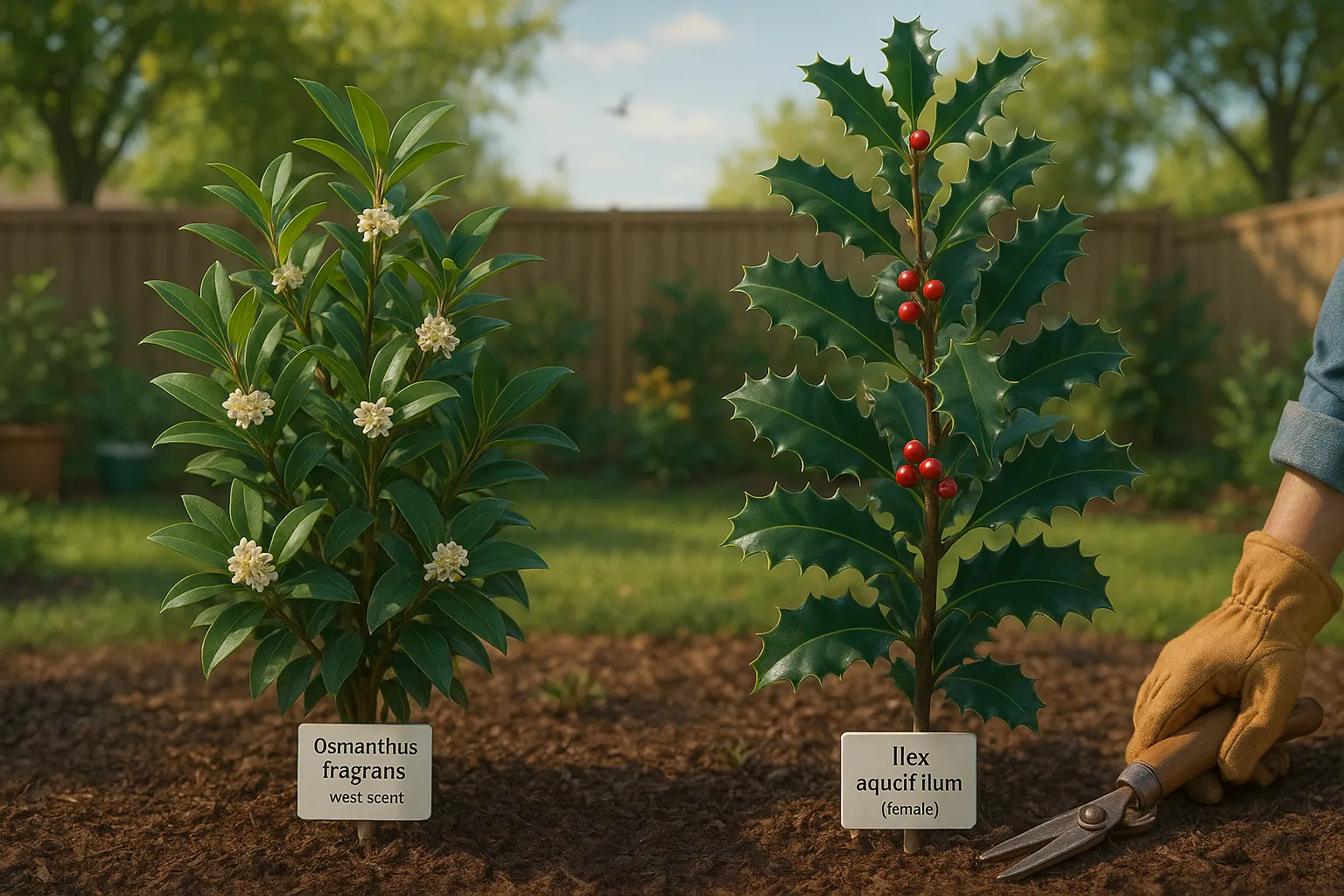
Fact: Osmanthus and holly belong to different plant families and serve different garden roles. Osmanthus is in the Oleaceae family: holly is in the Aquifoliaceae family. You will find named cultivars and wild species for both that suit small gardens and large properties.
Common Osmanthus Species
Osmanthus fragrans (sweet osmanthus), prized for intense, apricot-like fragrance. USDA Zones: typically 7–10. Native to China, Japan, and the Himalayas.
Osmanthus heterophyllus (holly osmanthus), has holly-like leaves and tolerates cooler conditions: often used as a hedge.
Osmanthus x fortunei, a hybrid with compact habit and longer flowering season: common in urban landscapes.
These species provide scent and evergreen structure. Nurseries such as Monrovia and Proven Winners list popular cultivars like ‘Aurantiacus’ and ‘Goshiki.’
Common Holly Species
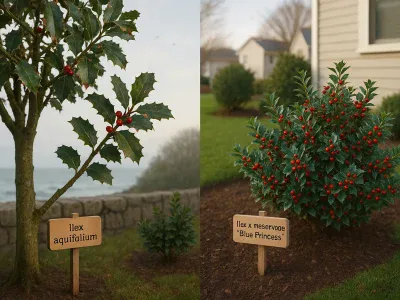
Ilex aquifolium (English holly), classic spiny leaves and red berries: hardy to USDA Zone 6 in many cases. Useful for formal hedges and winter interest.
Ilex crenata (Japanese holly), small, boxwood-like leaves: often used where a finer texture is desired. It tolerates shearing well.
Ilex opaca (American holly), native to eastern North America, supports local bird species and has sturdy growth.
Holly species vary in dioecy: many hollies have separate male and female plants. You must plant both sexes for berry production, but cultivars labeled ‘female’ plus a nearby male like ‘Ilex x meserveae’ will yield fruit.
Appearance And Seasonal Interest
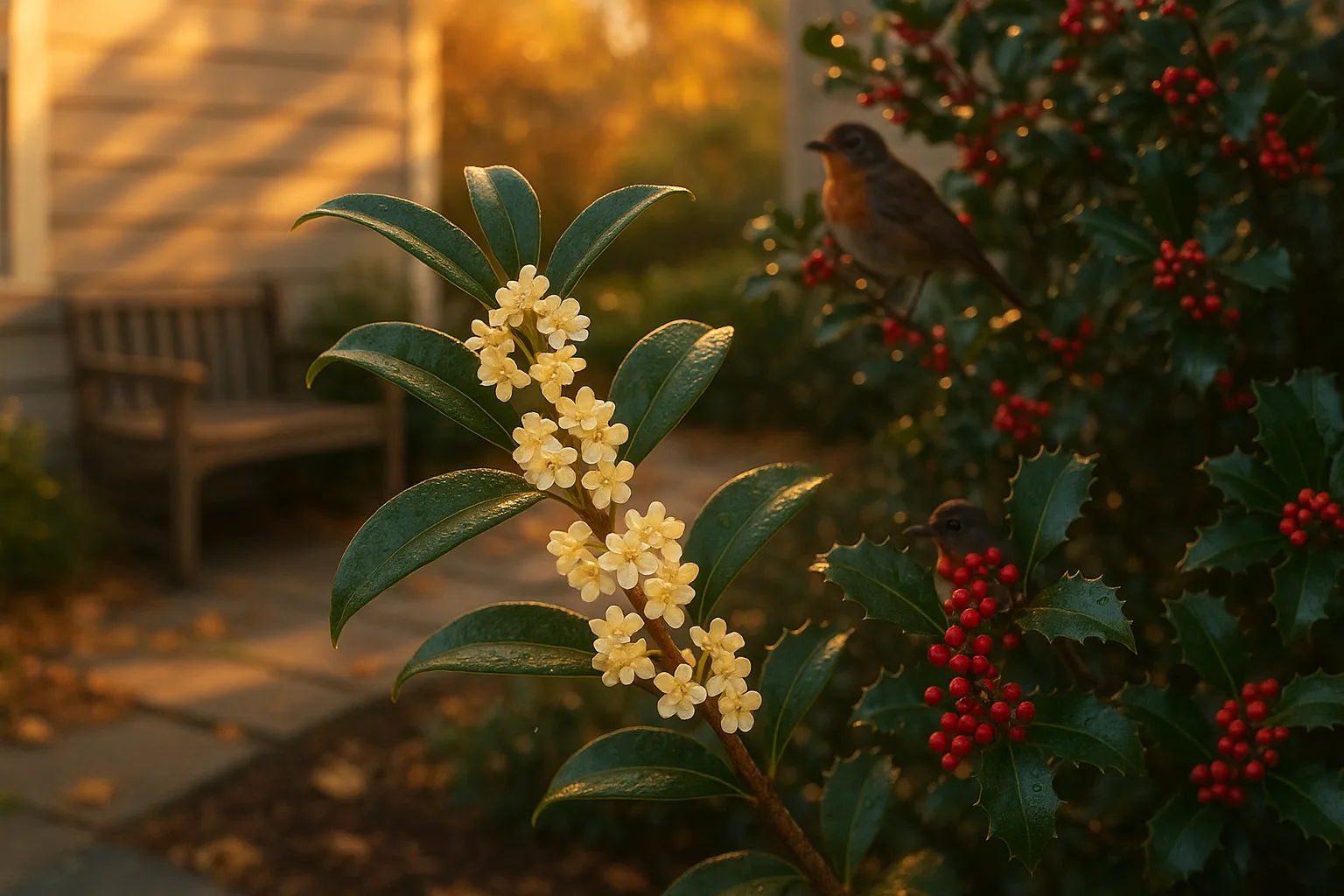
Fact: Osmanthus shines for fragrance and flowers: holly shines for foliage and berries. Each gives the garden distinct seasonal cues you can plan around.
Flowers And Fragrance
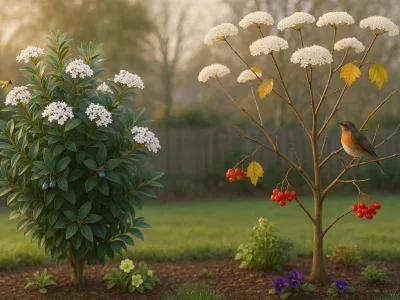
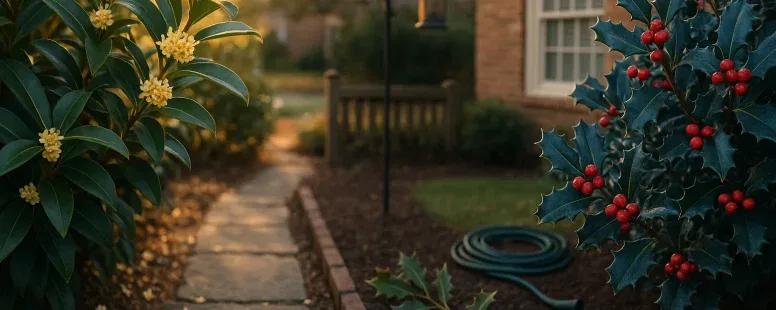
Osmanthus: Small, four-lobed white or pale yellow flowers appear in clusters. The scent is intense and sweet: some people compare it to jasmine, apricot, or ripe peaches. Flowers bloom in late summer to fall, and in mild climates they can scent the air in late autumn and even winter. The fragrance can transform a courtyard or entry path, plant near windows or seating areas to enjoy it.
Holly: Flowers are small and often overlooked. They are typically creamy and appear in spring. Most holly cultivars do not perfume the garden. Instead, their spring blooms are valuable for pollinators such as bees. If you want perfume, holly is not your choice.
Leaves And Foliage
Osmanthus: Leaves vary by species. Osmanthus fragrans has lanceolate, glossy evergreen leaves: O. heterophyllus has spiny, holly-like leaves. Overall, osmanthus foliage is dense and provides year-round green structure.
Holly: Leaves are iconic, glossy, often spiny, and deep green. Ilex crenata breaks that mold with small, round leaves resembling boxwood. Hollys keep their leaves through winter, giving strong visual bones during the dormant season. Be mindful: sharp leaf margins can scratch or snag clothing.
Fruit And Wildlife Value
Osmanthus: Fruit are small drupes, rarely showy and not a major wildlife food source. Birds may eat them, but osmanthus is grown primarily for flowers.
Holly: Berries (drupes) are the main winter attraction. Female hollies produce bright red, orange, or black berries, a critical food for birds like cedar waxwings and robins during cold months. But note: many garden hollies need a male pollinator close by to set fruit. Also, holly berries are mildly toxic to humans and pets if ingested in quantity: keep that in mind if small children use your yard.
Growing Conditions And Care
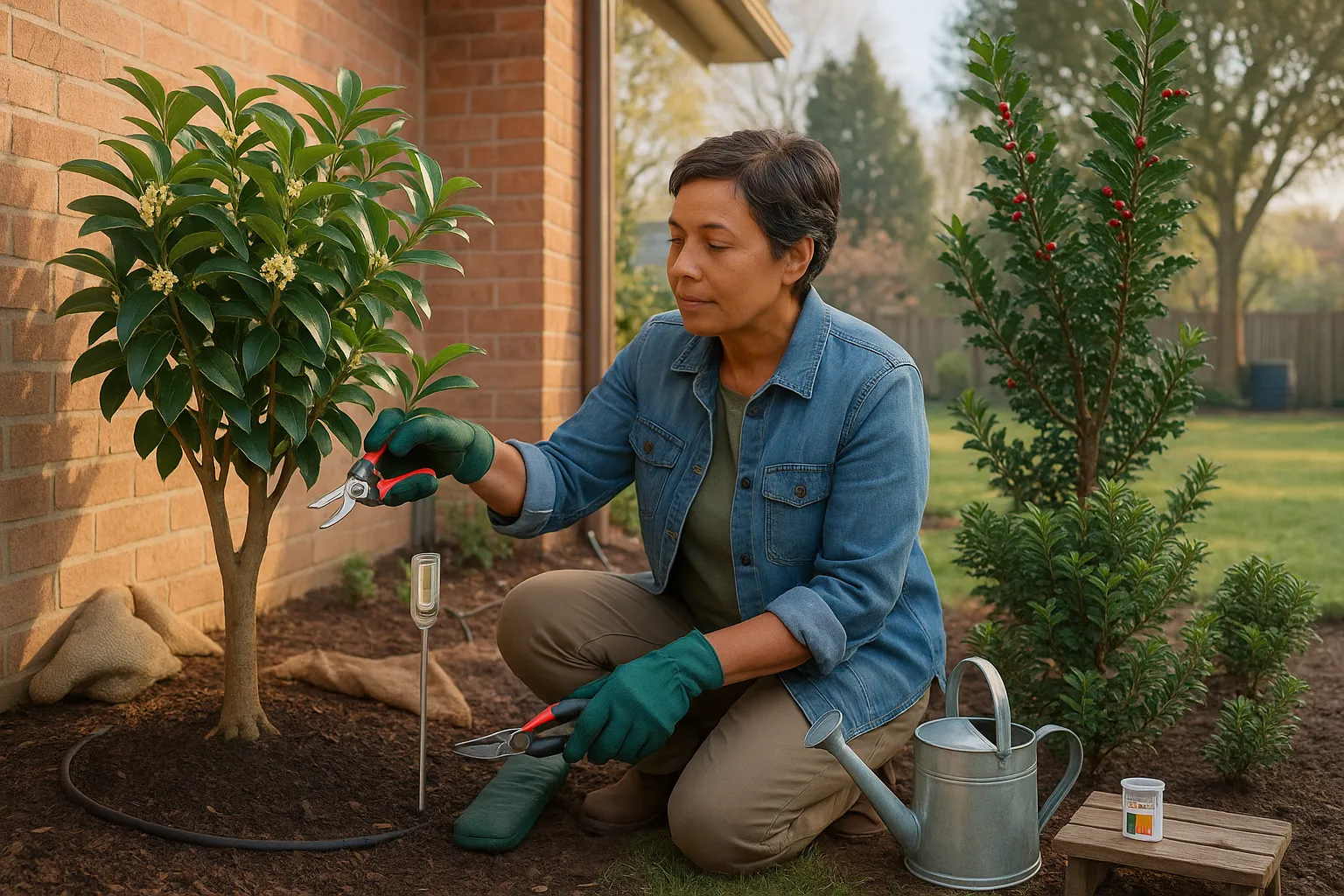
Fact: Both plants are forgiving in the right climate, but they prefer different microclimates and care routines.
Hardiness And Climate
Osmanthus: Generally suited to USDA Zones 7–10. Osmanthus fragrans is frost tender in colder zones but O. heterophyllus tolerates cooler temperatures down to Zone 6 in sheltered sites. Osmanthus likes mild winters and benefits from protected planting near walls in cooler areas.
Holly: Many holly species cover a broader hardiness range, from Zone 5 (some Ilex opaca selections) to Zone 9. Ilex crenata can handle colder winters and urban pollution. Choose species and cultivar that match your USDA zone and local microclimate.
Soil, Water, And Light Requirements
Osmanthus: Prefers well-drained, slightly acidic to neutral soil. It tolerates partial shade to full sun: flower production improves with more light. Water regularly during the first two years to establish deep roots.
Holly: Prefers acidic, well-drained soil with consistent moisture. Most hollies perform best in full sun to part shade. Japanese holly (Ilex crenata) tolerates heavier soils and can do well in urban street plantings.
Growth Rate And Mature Size
Osmanthus: Growth rate is slow to moderate. Osmanthus fragrans can reach 10–20 feet over many years: heterophyllus may reach 6–12 feet. They respond well to pruning but will not fast-fill a gap.
Holly: Growth rate varies widely. Ilex crenata is often slow to moderate (4–8 feet): English holly and American holly can reach 25–50 feet in mature woodland settings. Hollies can provide quick vertical structure if you choose faster-growing cultivars, but many will take years to reach large sizes.
Landscape Uses And Design Considerations
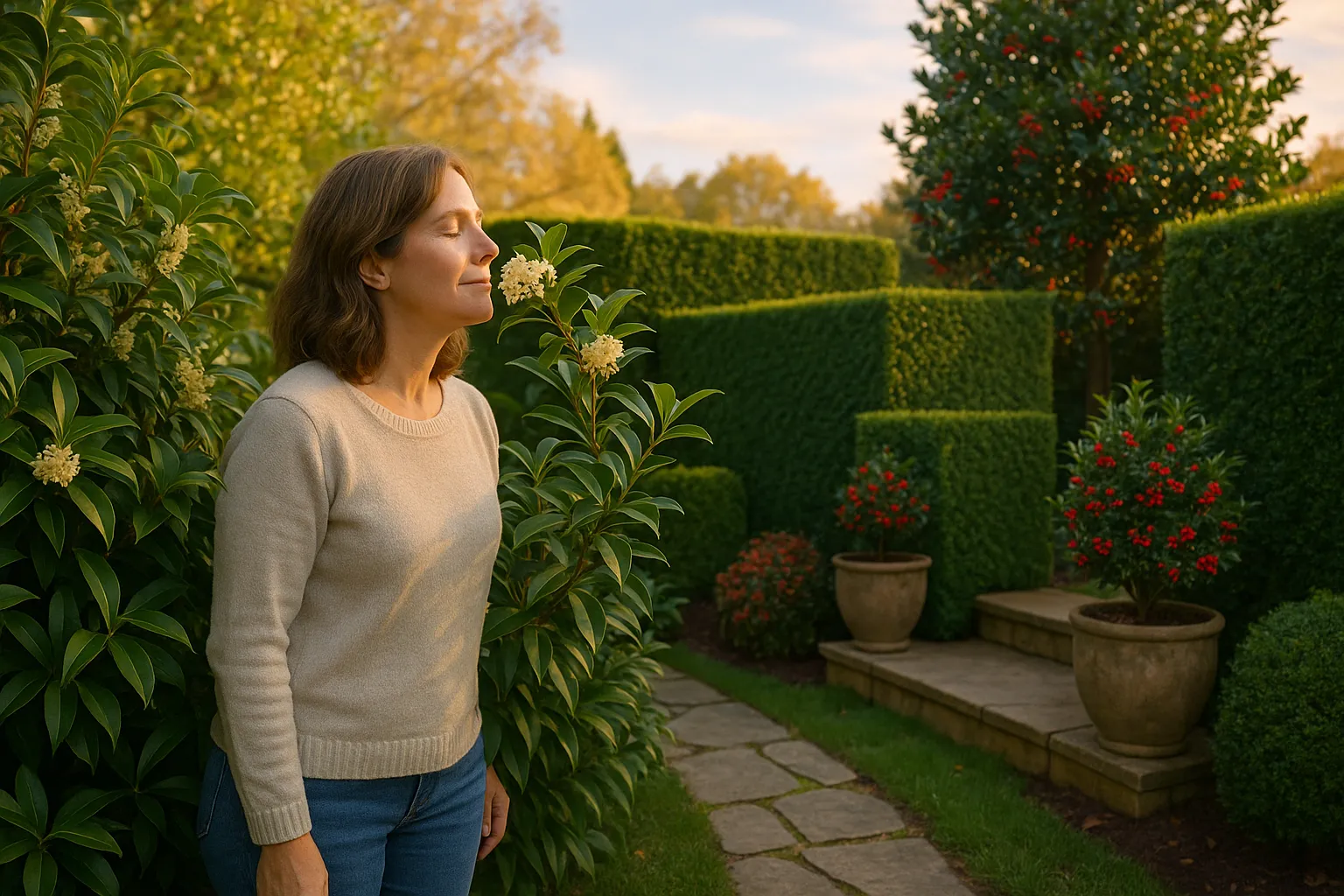
Fact: Use osmanthus where scent and intimate spaces matter: use holly where winter structure and berries matter. Both work in mixed borders, but their design roles differ.
Hedging, Screening, And Privacy Uses
Osmanthus: Good as a dense informal hedge. Osmanthus x fortunei and O. heterophyllus tolerate shearing and make attractive privacy screens up to 8–12 feet. The fragrance gives hedges extra value near patios and walkways.
Holly: Excellent formal hedge material. Ilex crenata often substitutes for boxwood in clipped hedges. Tall holly species create solid privacy screens and windbreaks: English holly can form an evergreen screen over time. Remember to plant male pollinator hollies within 50 feet when you want berries on female plants.
Specimen, Massing, And Container Use
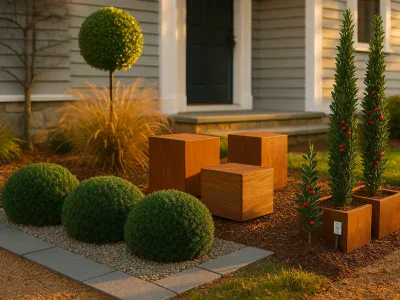
Osmanthus: Works as a scented specimen near entries, on terraces, or in large containers. Mass plant small osmanthus against a backdrop for a fragrant border.
Holly: Use holly as a specimen when you want bold winter interest. Dwarf hollies and Ilex crenata cultivars are superb in containers and formal plantings. Massing female hollies with a nearby male will create dramatic winter color from berries.
Pest, Disease, And Maintenance Issues
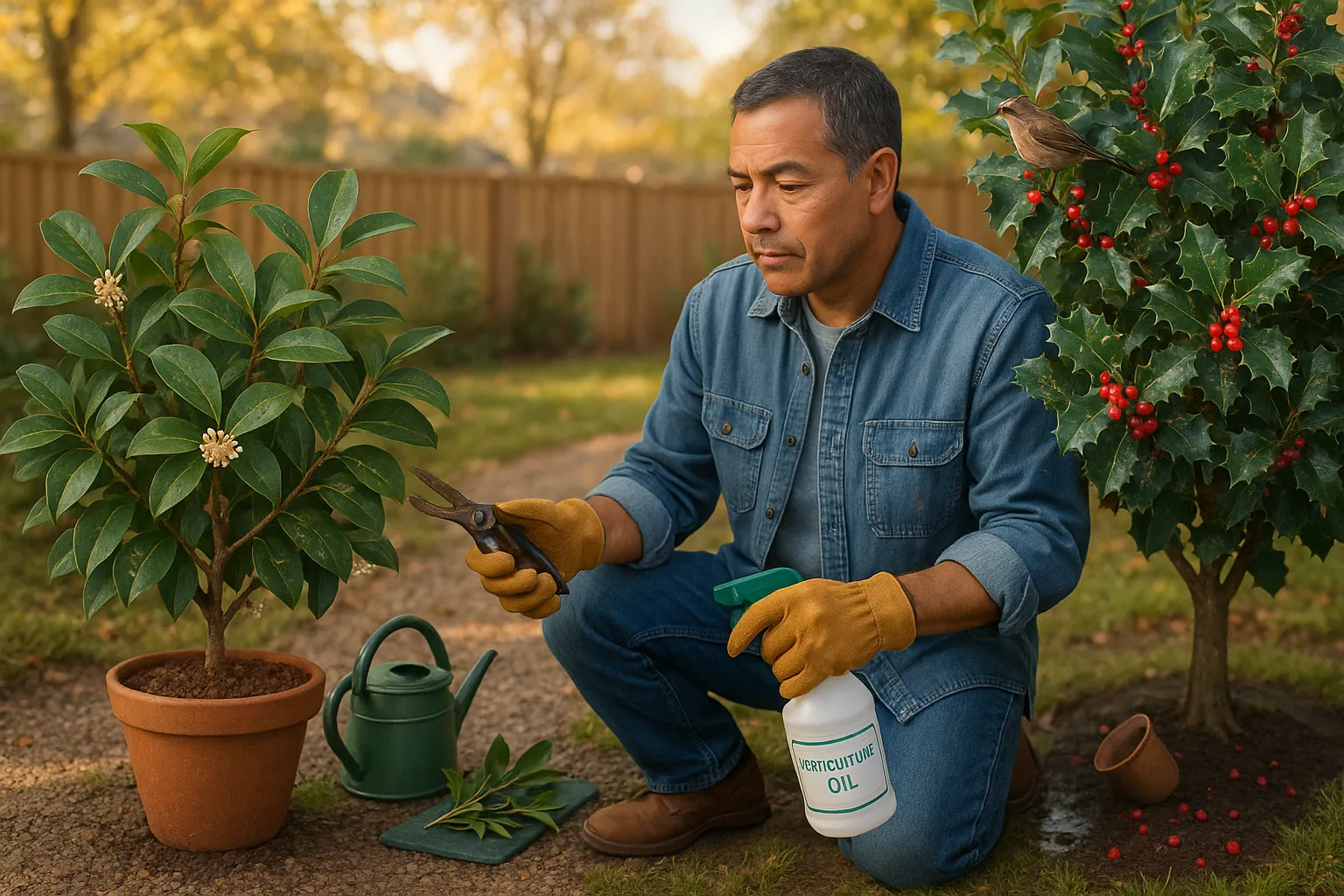
Fact: Both plants face pests and diseases, but holly berries and osmanthus fragrance mean different maintenance priorities.
Common Pests And Diseases
Osmanthus: Typically low-maintenance. Occasional scale insects, spider mites, or sooty mold appear in stressed plants. Root rot can occur in poorly drained soil. Treat scale with horticultural oil and keep watering consistent.
Holly: Susceptible to holly leaf miner, scale, and root weevils. Leaf spot and fungal issues appear in humid, poorly drained sites. Birds eat berries but sometimes cause mess. Choose disease-resistant cultivars and maintain good air flow.
Pruning, Training, And Longevity
Osmanthus: Prune lightly after flowering to shape or control size. It tolerates pruning well and can live decades when established. Young plants need regular watering in dry spells.
Holly: Prune in late winter to shape before new growth. Hollies respond well to regular training: clipped hollies live long when roots stay healthy. Female hollies may take several years to set substantial fruit, and you must protect young plants from harsh winter winds that can desiccate leaves.
Be honest: both plants require patience. You will not get instant maturity: you plant for gradual, dependable returns.
How To Choose Between Osmanthus And Holly
Fact: Your microclimate, desire for fragrance, and need for winter berries determine the better pick. Use the checklist below to make a fast decision.
Quick Decision Checklist
- You want scent near windows/paths: choose Osmanthus fragrans.
- You want winter berries for birds: choose female Holly + nearby male pollinator (Ilex aquifolium, Ilex opaca).
- You need a formal clipped hedge: choose Ilex crenata or other holly suited to shearing.
- You need a fragrant specimen in a container: choose compact osmanthus cultivars labeled for pots.
- Your site is cold (Zone 5–6): favor cold-hardy hollies or O. heterophyllus for osmanthus traits.
- Wildlife food is a priority: holly gives winter fruit: osmanthus gives nectar to pollinators but less food value overall.
Planting, Establishment, And Quick Care Tips
Planting: Dig a hole twice the root ball width and the same depth. Mix native soil with compost for good structure. Place male hollies within 30–50 feet of female plants.
Establishment: Water weekly in the first year: apply 2–3 inches of mulch to retain moisture and moderate soil temperature. Mulch should not touch the trunk.
Care tips: Fertilize in early spring with a balanced, slow-release fertilizer if growth is slow. Check soil pH for hollies: they prefer acidic conditions (pH 5.5–6.5). For osmanthus, avoid heavy pruning that removes flowering wood if you want fall scent.
Warnings and honest notes: Holly berries can be toxic to children and pets: avoid planting female berrying hollies where small kids play unsupervised. Osmanthus can become leggy without occasional thinning: you will need to prune to maintain a compact shape. You might choose both: plant osmanthus near the house for scent and holly at the property edge for winter structure, they complement each other well.

- BNP Competitors: Major Global Banking Rivals - October 2, 2026
- Best Alternatives to Bmw x5 - October 2, 2026
- JNJ Competitors: Major Players in Healthcare and Pharma - October 2, 2026
by Ellie B, Site Owner / Publisher