Agave Vs. Aloe
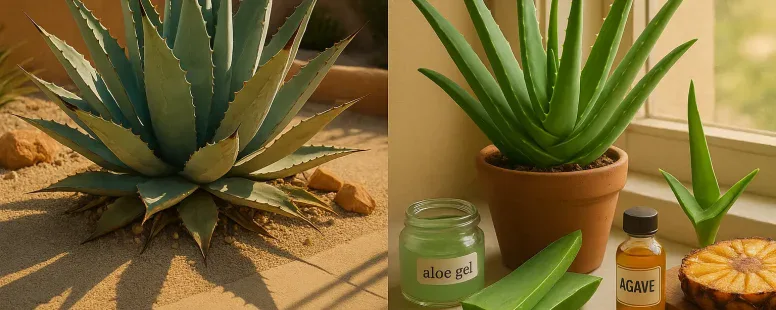
Agave and aloe look similar at a glance: both form thick, fleshy leaves arranged in a rosette, both survive dry spells, and both have rich cultural histories. But they are different plants with different uses, risks, and growing needs. Picture tasting a syrup made from a century plant, then rubbing a clear gel on a sunburn, those are two distinct experiences. This article cuts through the visual similarity and gives you clear, practical answers so you can choose the right plant for your home, kitchen, or project.
Quick Comparison Snapshot: Key Differences At A Glance
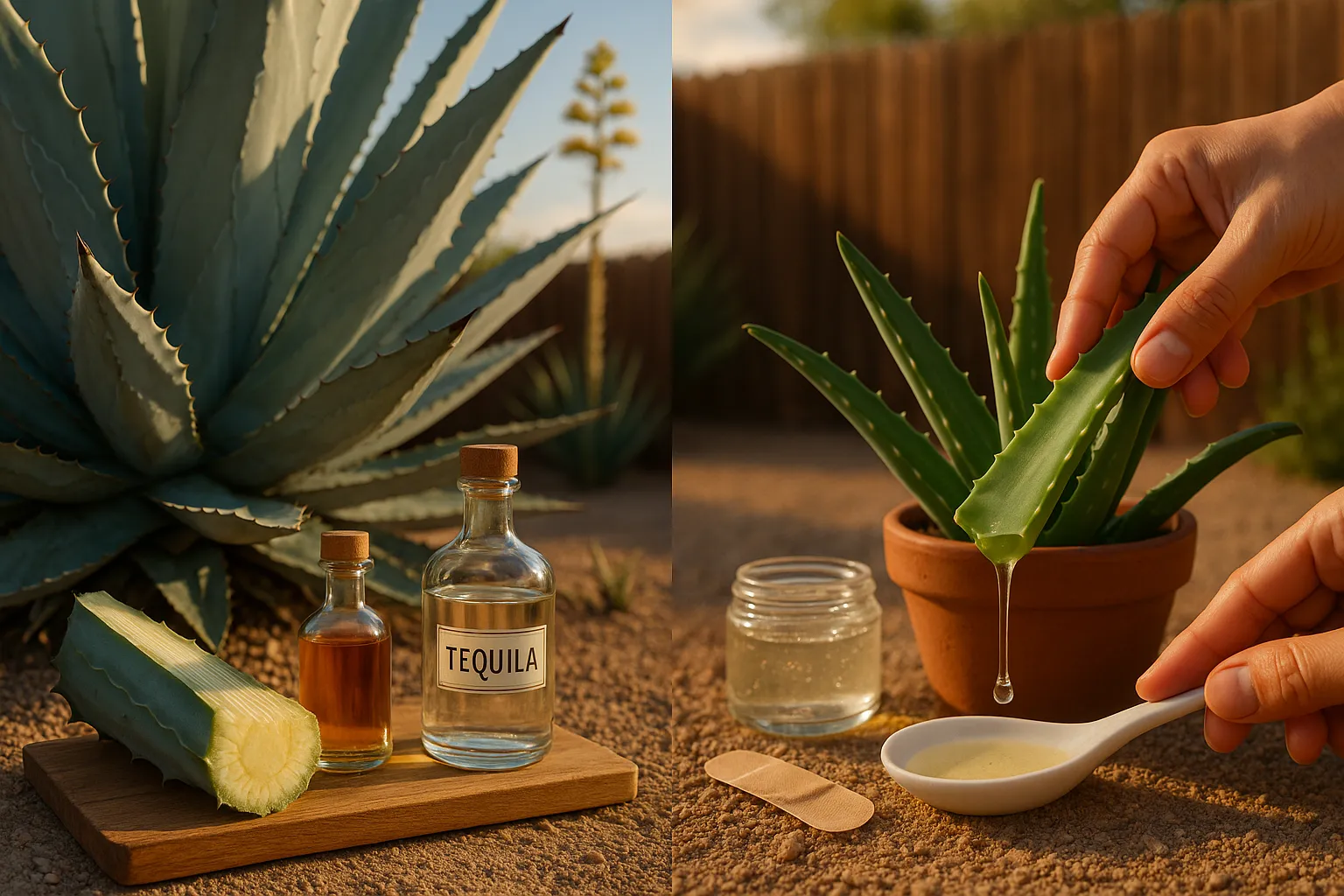
Fact: Agave is a succulent in the Asparagaceae family (often Agavoideae), while aloe belongs to the Asphodelaceae family (genus Aloe). In short: agave and aloe are not the same. Agave species tend to be larger, with fibrous leaves and a core used for sweeteners and spirits. Aloe leaves contain a clear mucilaginous gel prized for topical soothing.
- Lifespan: Many agaves are monocarpic (flower once then die): most aloes are polycarpic (flower multiple times).
- Texture: Agave leaves often feel fibrous and stiff: aloe leaves are softer and contain a distinct inner gel.
- Uses: Agave gives you nectar, tequila, and fiber: aloe gives you skincare gel and medicinal extracts.
- Toxicity: Some agave sap can irritate skin and is mildly toxic if ingested: many aloe species have bitter latex that can cause stomach upset if eaten.
Quick mental rule: choose agave for fiber, sugar, and dramatic landscape plants: choose aloe for first-aid, skin care, and compact houseplants.
Botanical Background And Identification
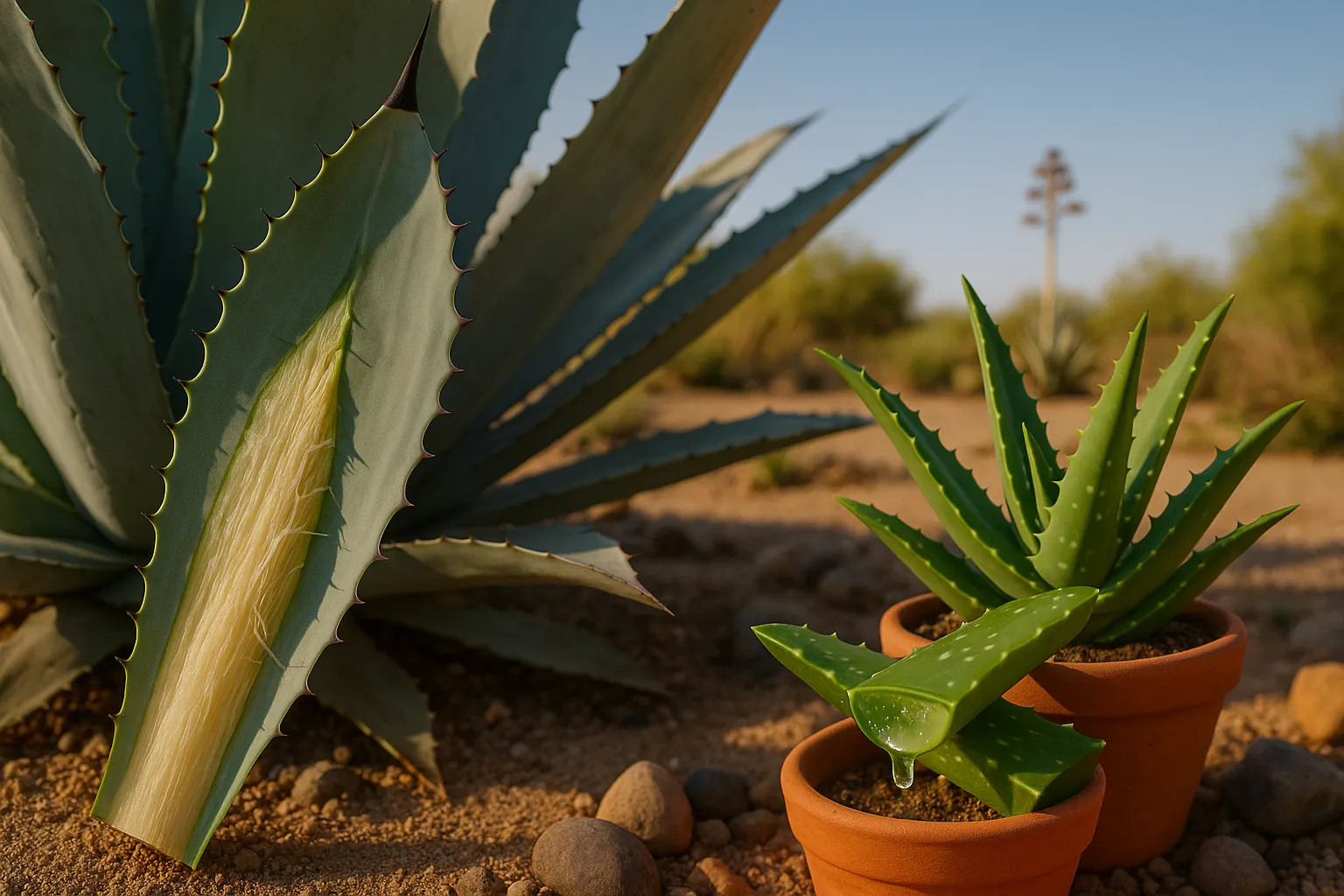
Fact: Agave and aloe come from different botanical families and evolved on different continents. That difference explains many of their traits.
Morphology And Growth Habit
Agave plants usually form a single large rosette with thick, pointed leaves that sometimes have marginal teeth and a terminal spine (Agave americana is a classic example). Many agaves produce a towering flower stalk that can reach 20–30 feet in large species. Aloe plants often form smaller rosettes, sometimes in clusters: aloe vera (Aloe barbadensis) and Aloe arborescens show softer margins and less fibrous tissue. Aloes generally keep producing offsets, so they create clumps over time.
Taxonomy And Native Ranges
Agave: genus Agave, native mainly to Mexico and the southwestern United States. Agave tequilana (blue agave) is the source plant for tequila. Agave sisalana gives sisal fiber.
Aloe: genus Aloe, native primarily to Africa and the Arabian Peninsula. Aloe vera is widespread in cultivation but likely originated in the Arabian Peninsula or nearby.
Common Species And Visual ID Tips
- Agave americana: large, blue-green leaves with sharp spines: dramatic centerpiece in xeriscapes.
- Agave tequilana: narrower leaves, grown in fields in Jalisco for tequila.
- Aloe barbadensis (A. vera): shorter, fleshy leaves with inner gel: common in kitchens and pharmacies.
- Aloe arborescens: branched shrub form, used traditionally in southern Europe for medicinal remedies.
ID tip: cut a leaf. If you see clear, mucilaginous gel in the center, it’s likely an aloe. If the leaf is fibrous and stringy when torn, it’s probably agave. Be careful, both can have irritating sap.
Uses, Benefits, And Cultural Roles
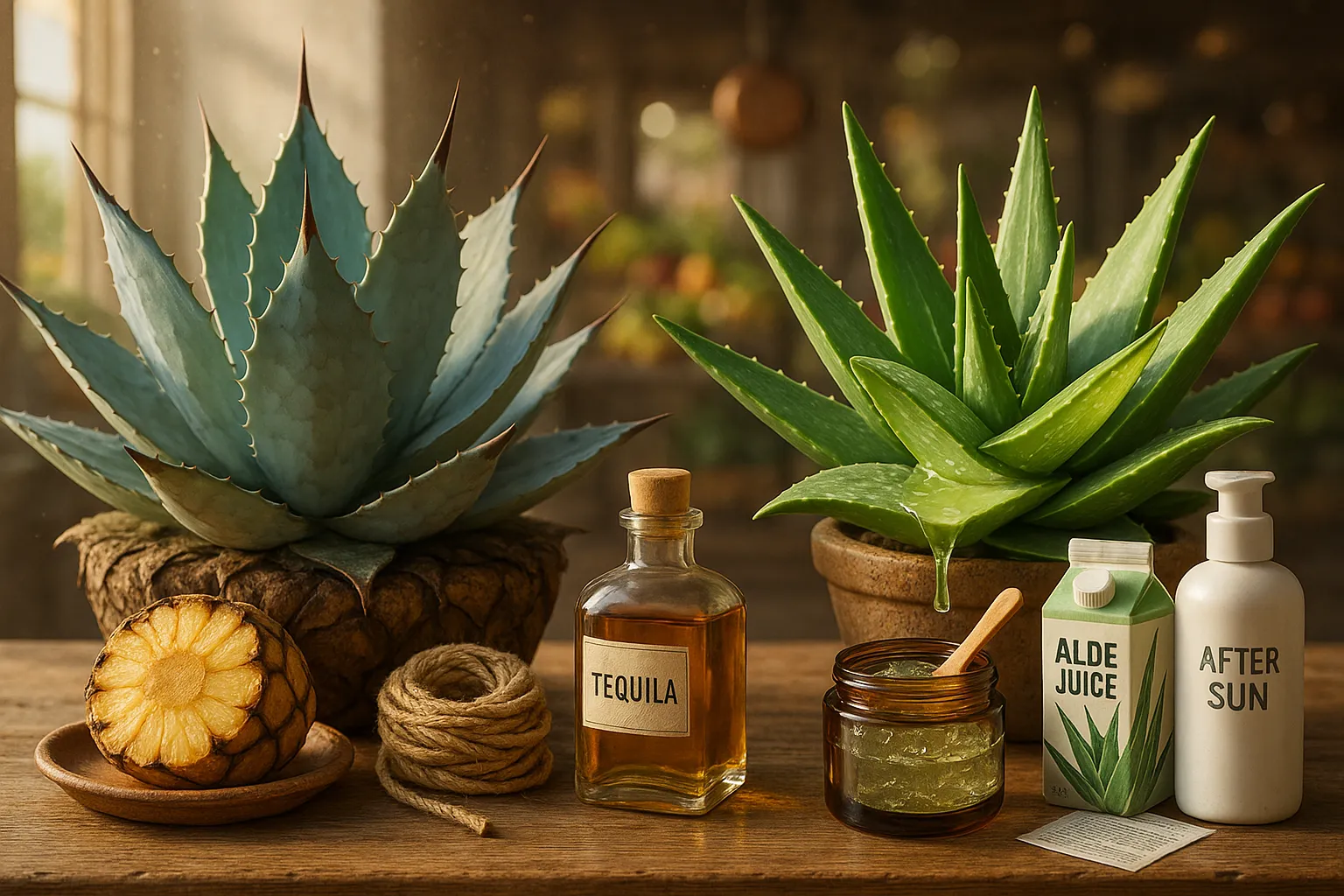
Fact: Agave and aloe support different cultural and commercial roles, agave for food, fiber, and spirits: aloe for medicine and cosmetics.
Traditional And Modern Uses Of Agave
People in Mexico have used agave for centuries. Agave hearts (piñas) are roasted and eaten. Agave nectar, extracted from some species, sweetens foods as a lower-glycemic alternative to sugar (note: it still contains fructose). The blue agave fuels tequila and mezcal industries. Agave sisalana produces sisal fiber used in ropes and rugs. Historically, agave also supplied pulque, a fermented beverage important in pre-Columbian and colonial societies.
Medicinal And Cosmetic Uses Of Aloe
Aloe vera has a long record in traditional medicine. Modern uses include topical applications for burns, minor wounds, and dry skin. Cosmetic brands like Burt’s Bees and The Body Shop include aloe extracts in lotions and after-sun products. Clinical aloe gel can aid superficial burn healing: but, results vary by formulation and concentration.
Nutritional And Commercial Applications
Agave nectar appears in grocery aisles labeled as a natural sweetener: it’s used in baking and beverages. Aloe products range from raw gel jars to processed supplements. Companies such as Tropicana and small herbal producers sell aloe juice for digestion, though scientific support for internal aloe use is mixed and sometimes controversial. Be cautious with supplements: quality and processing matter.
Cultivation, Soil, Watering, And Light Requirements
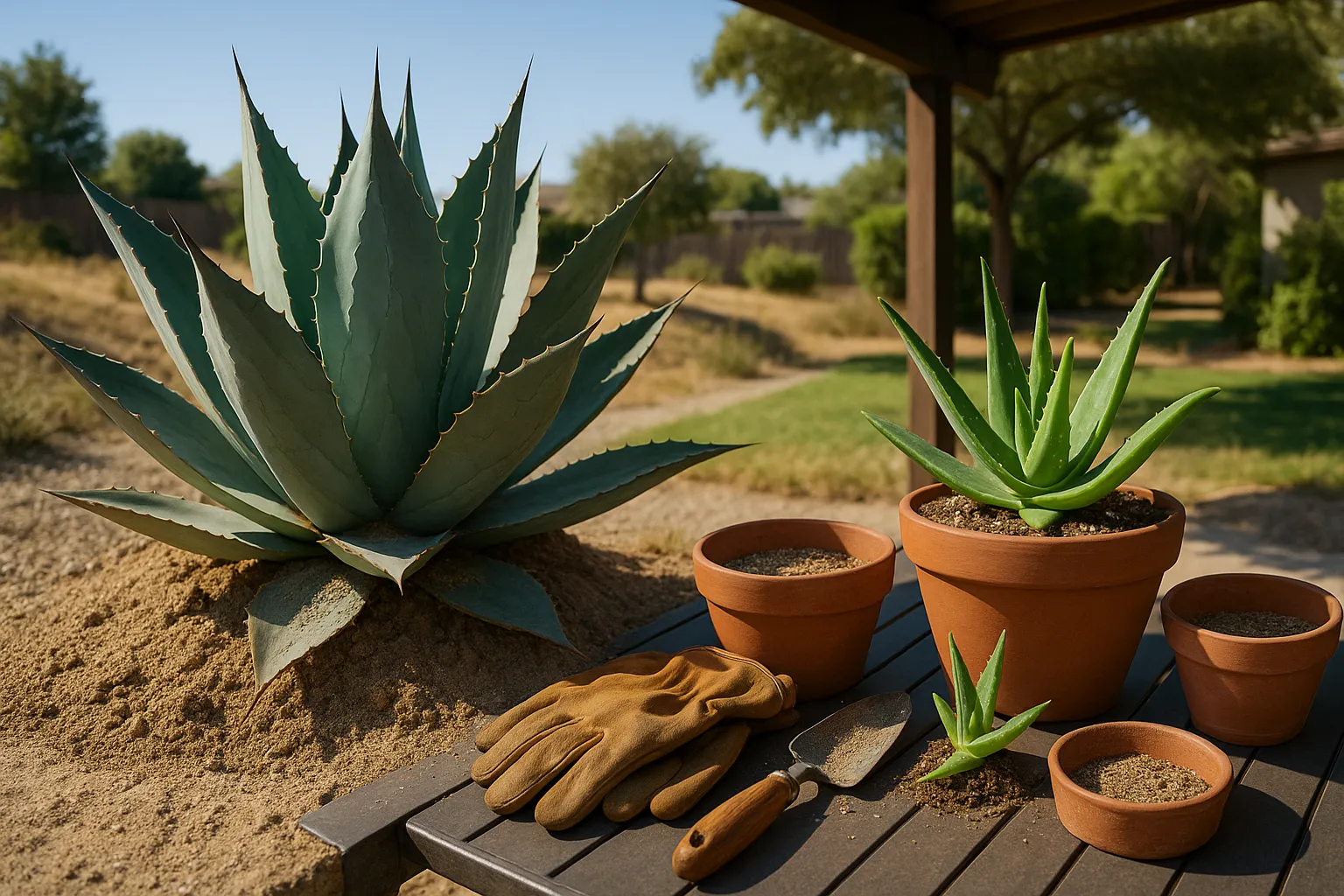
Fact: Both plants favor dry conditions, but their specific needs differ enough that mixing them in one pot rarely works well.
Preferred Growing Conditions For Agave
Agave likes full sun and well-draining soil. In USDA hardiness zones 8–11 many agaves thrive outdoors. You must plant agave where its mature size fits: some species span several feet. Water sparingly, established agave tolerate drought better than over-watering. In high rainfall areas, plant on mounds or slopes to improve drainage.
Preferred Growing Conditions For Aloe
Aloe prefers bright light but appreciates some afternoon shade in hot climates. Aloe vera grows well in pots with a cactus mix or soil amended with coarse sand. Water when the top 1–2 inches of soil dry out: overwatering causes root rot. Aloes tolerate cooler winter temps than many agaves, but they do not survive hard freezes well.
Potting, Propagation, And Winter Care Tips
Start agave from pups or seed: many species produce offsets you can separate. For aloe, remove pups and repot into fresh soil. Use pots with drainage holes. In winter, reduce watering and keep plants above freezing. If you live in zone 5–7, grow these in containers and bring them indoors when nights dip below 40°F. Remember: agave can have sharp spines, use gloves when repotting: aloe sap can cause skin irritation for some people, so wear protection.
Safety, Toxicity, And Culinary Considerations
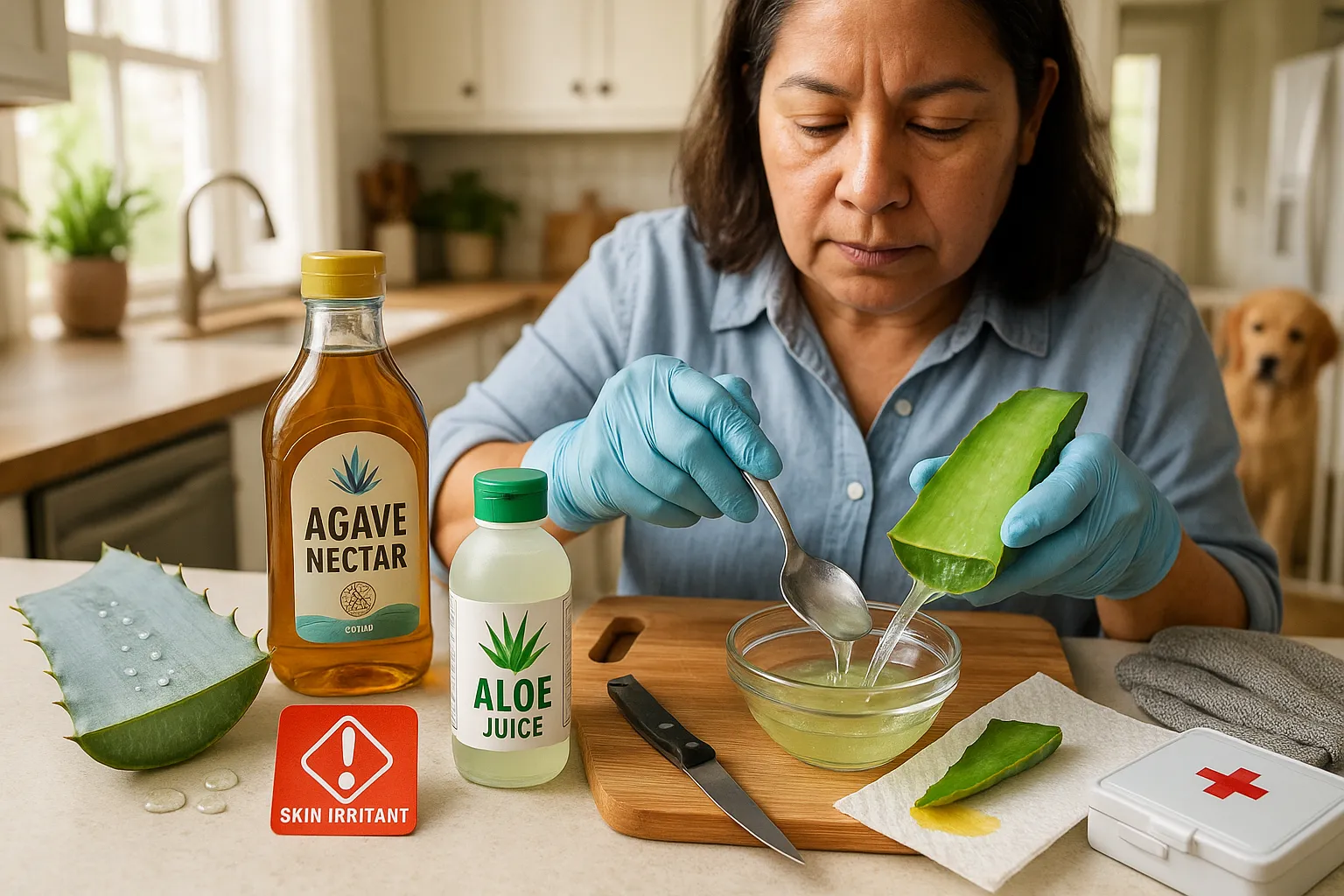
Fact: Both plants can be irritating or toxic in different ways: treat them with basic safety precautions.
Toxicity To Pets And Humans
Aloe latex (the yellow sap beneath the leaf skin) contains anthraquinones that can cause vomiting and diarrhea if ingested by dogs, cats, or people. Some aloe species have more potent latex than others. Agave sap can cause skin blistering and dermatitis: handling with bare hands can lead to painful contact reactions. Ingesting raw agave sap is not common, but it can cause stomach upset.
Edibility And Food Preparation Notes (Agave Nectar Vs. Aloe Gel)
Agave nectar: commercially processed agave nectar is safe for cooking. It’s high in fructose, so use moderately. Blue agave used for tequila must be cooked and fermented: you must not eat raw agave piñas without proper processing.
Aloe gel: the inner clear gel is used topically and sometimes consumed in small quantities after careful processing to remove latex. If you plan to drink aloe juice, use food-grade products that remove latex and come from reputable brands like Lily of the Desert. Homemade aloe preparations can be risky without proper cleansing of latex, do not feed raw aloe to pets.
Sustainability, Harvesting, And Ethical Sourcing
Fact: Commercial demand has environmental consequences for both plants, and responsible sourcing matters.
Environmental Impact Of Commercial Harvesting
Agave cultivation for tequila and mezcal has both positive and negative impacts. Well-managed agave fields can support pollinators like bats (Agave flowers feed nectar-eating bats). But overharvesting wild agave and converting native habitat to monoculture harms biodiversity. Aloe harvesting, when poorly regulated, can deplete wild populations in parts of Africa. Processing and transport add carbon costs too.
How To Source Responsibly And Grow Ethically
Buy agave-based products from producers who practice crop rotation, support native pollinators, or use certified sustainable methods. For aloe, prefer brands that use cultivated aloe and support fair-trade practices. Grow your own: both plants are easy to start from purchased nursery stock, reducing pressure on wild populations. If you harvest, take only what you need and leave enough for the plant to recover, and for pollinators to feed.
Which One Should You Choose For Your Needs?
Fact: Your choice depends on intended use: landscaping, food and drink, or skin care.
Selecting For Houseplants, Garden, Or Indoor Remedies
Choose aloe if you want a compact houseplant that serves as an on-hand topical remedy. Aloe vera suits windowsills, kitchens, and bathrooms. Choose agave if you want a dramatic garden focal point, erosion control, or a plant for producing fiber or nectar. If you want something low-care for indoors, select small aloe varieties like Aloe juvenna. For outdoor drought-tolerant gardens, Agave parryi or Agave americana work well in many warm climates.
Selecting For Culinary, Cosmetic, Or Commercial Use
Choose agave nectar (from Agave tequilana or related species) if you want a sweetener or plan to explore tequila/mezcal. Choose aloe gel for topical skincare, burns, and cosmetics, but buy processed products unless you know how to remove the latex safely. If you aim for commercial production, research local regulations: producing alcoholic beverages from agave requires specific permits: selling ingestible aloe products may require lab testing and compliance with food-safety laws.
Practical warning: don’t assume all store-bought products are pure. Read labels, check for additives, and, when possible, buy from trusted brands or local growers. Now, you can pick with confidence: pick agave for sugar and drama, pick aloe for skin relief and compact green friends.

- Nutanix Competitors - October 16, 2026
- Best Alternative for Hdfc Infinia Credit Card - October 16, 2026
- Must-Watch KK Menon Movies for Film Lovers - October 15, 2026
by Ellie B, Site Owner / Publisher