You can judge a shade garden by its leaves long before the flowers open. Pulmonaria (lungwort) and Brunnera (Siberian bugloss) both offer early-season perfume of color and texture, yet they serve very different jobs when you look closer. One gives loud foliage patterns that anchor a bed: the other delivers carpeted blue blooms that read like spring sky. This guide shows you the practical differences, real planting tactics, and selection cues so you pick the right plant for your light, soil, and design goals. Expect clear comparisons, honest mistakes gardeners make, and fast, usable steps you can apply this season.
At-A-Glance Comparison
Fact: Pulmonaria and Brunnera differ most visibly by foliage pattern and flower form.
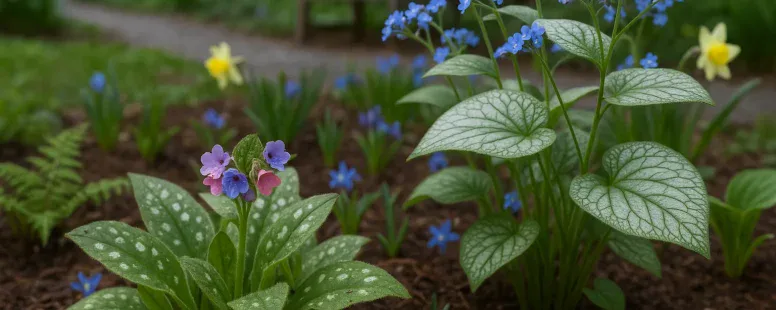
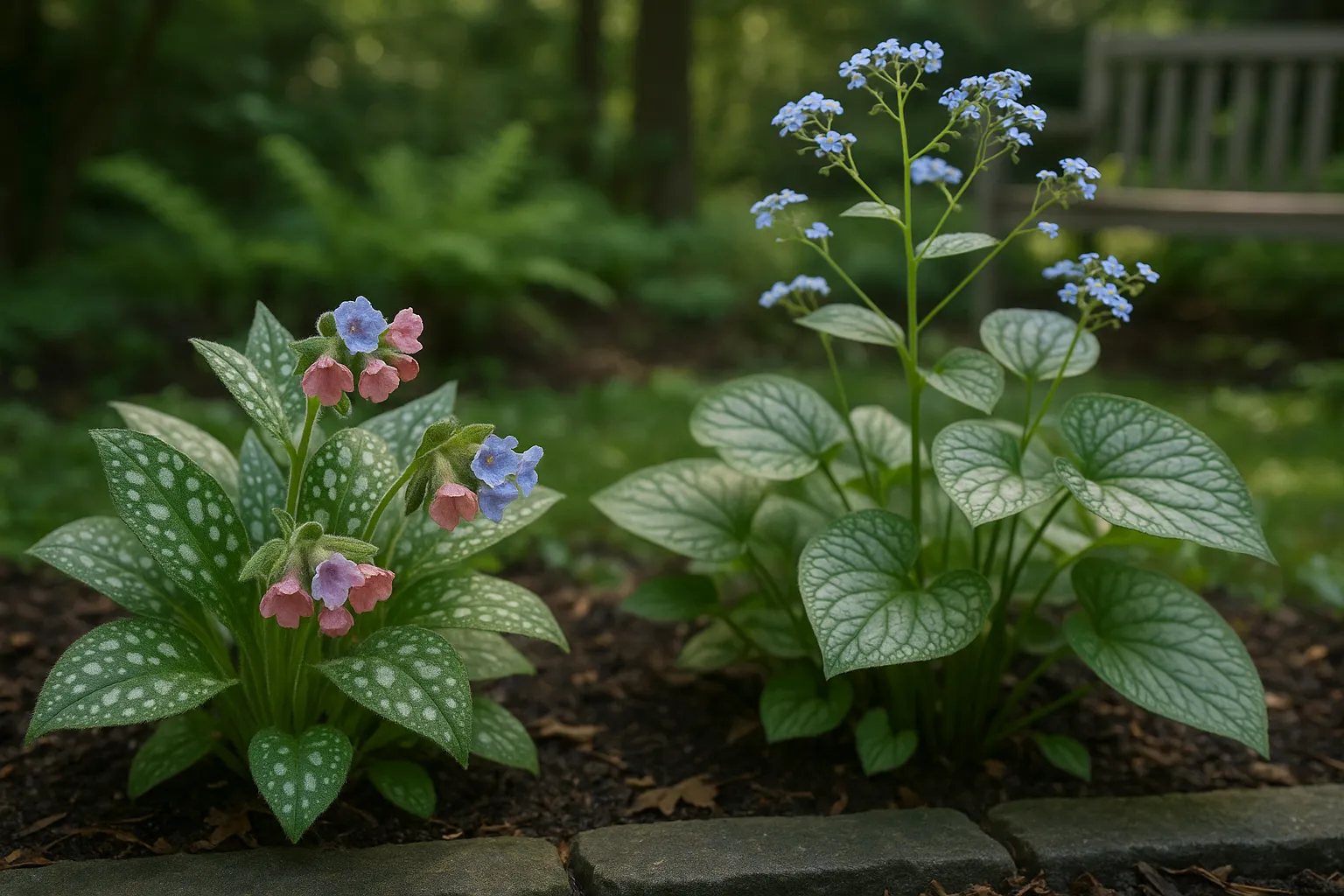
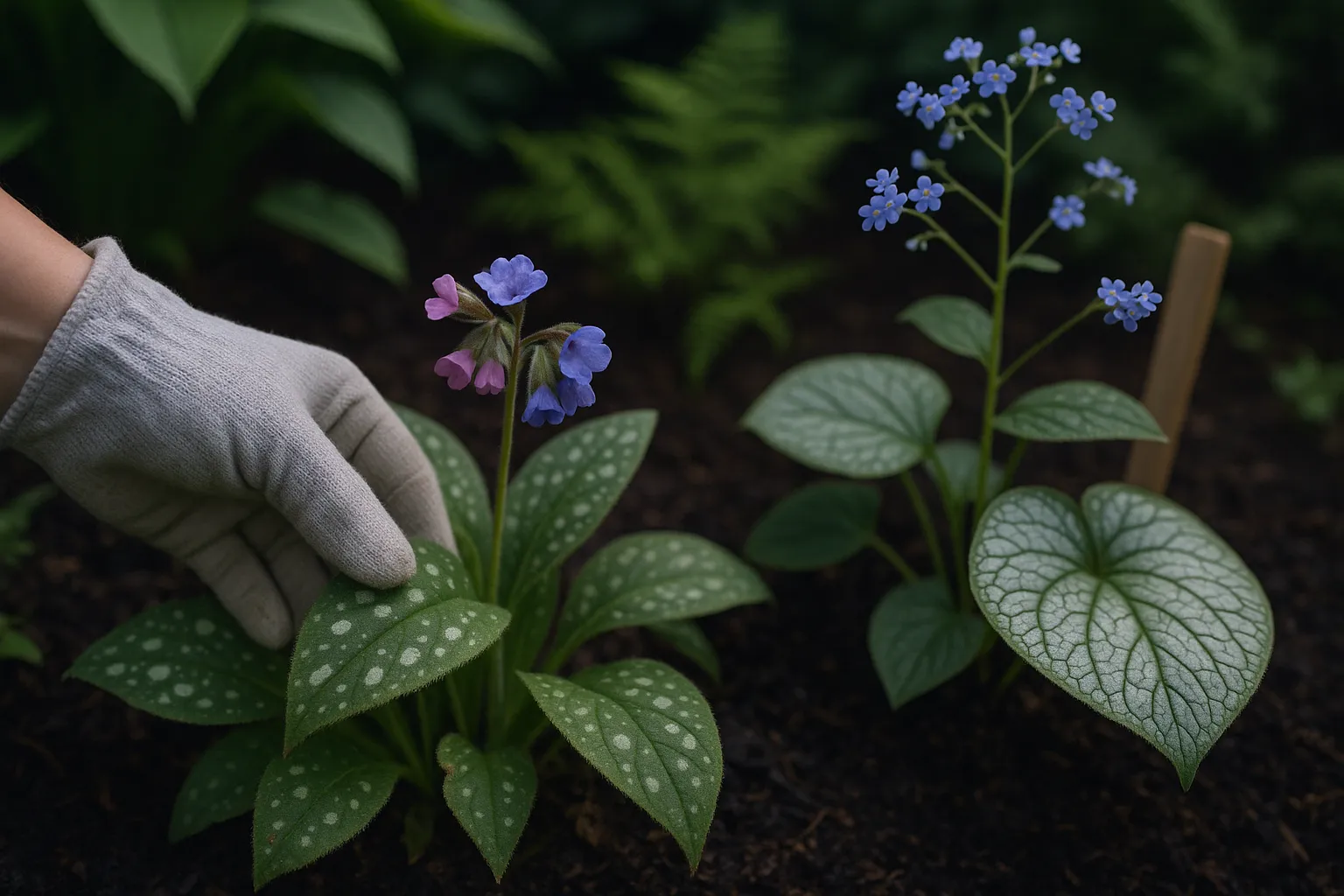
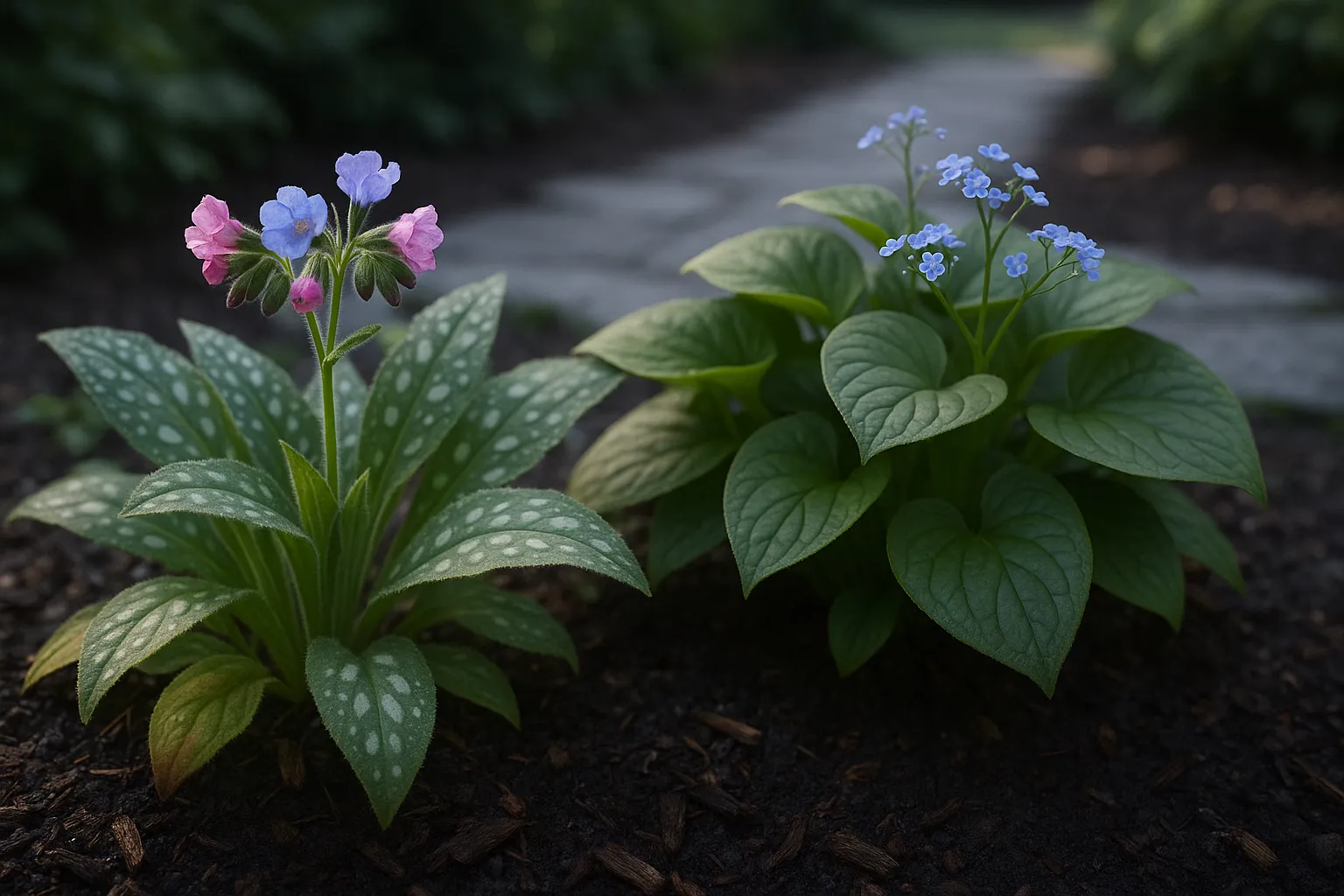
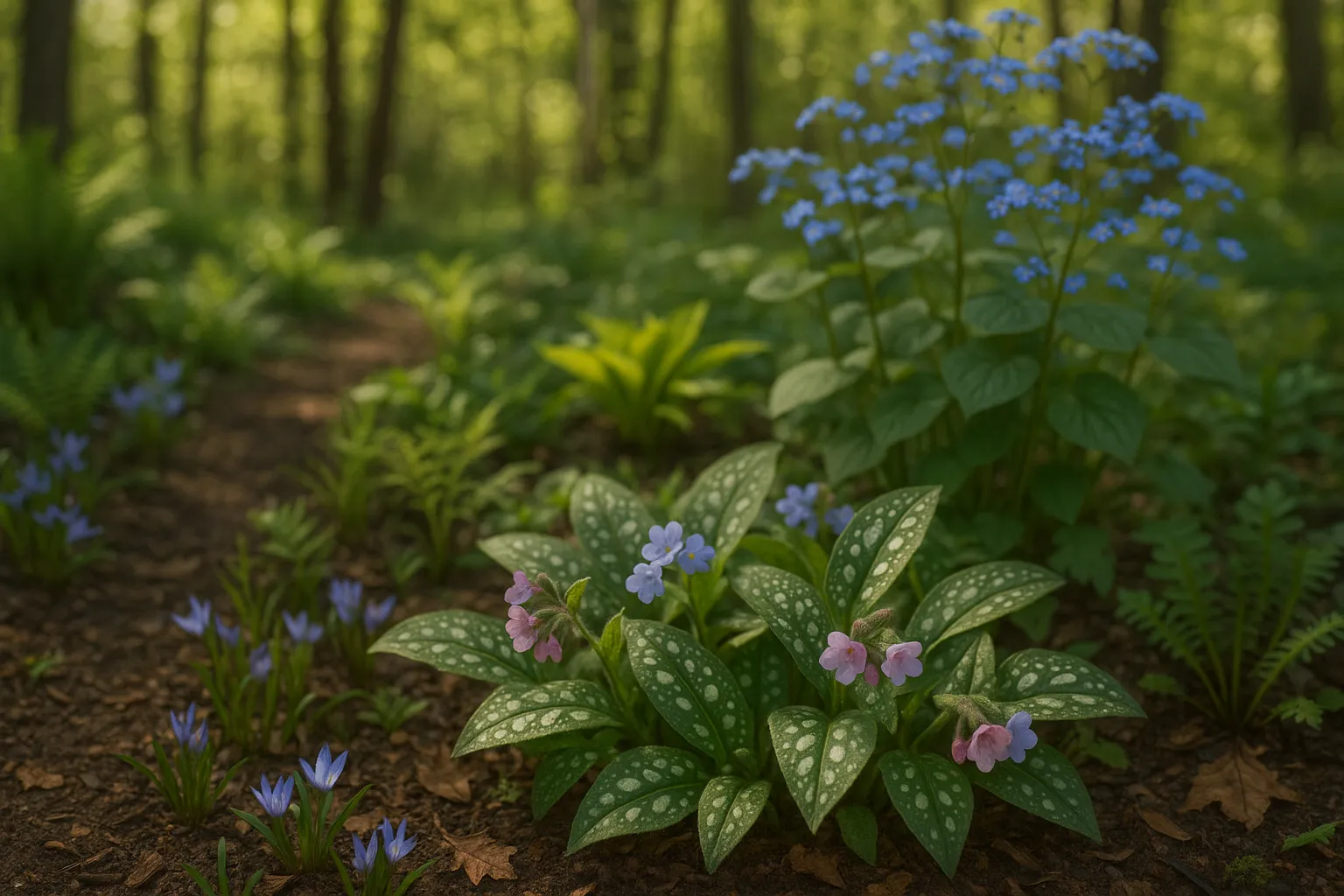
Pulmonaria (lungwort) wears spotted, silver-mottled leaves and produces clustered bell-shaped flowers in pinks, reds, or blues. Brunnera macrophylla shows heart-shaped green (often silver-variegated) leaves and produces sprays of true-blue, forget-me-not–like flowers. Both prefer shade, but your choice changes the visual charge of the bed.
Quick comparison table (at a glance):
Habit: Pulmonaria forms low clumps 8–18 inches tall: Brunnera can reach 12–24 inches and often spreads more by rhizomes.
Foliage: Pulmonaria has spotted, rough leaves: Brunnera has smooth, heart-shaped leaves with possible silver variegation.
Flowers: Pulmonaria, bell clusters, early spring: Brunnera, airy sprays of small blue flowers, mid- to late-spring.
Hardiness: Both handle USDA zones roughly 3–8 depending on cultivar.
If you want bold, patterned leaves that demand close inspection, choose Pulmonaria. If you need airy blue flowers that read from a distance, pick Brunnera. Simple. But there are exceptions, some Pulmonaria bloom deeper blue, and some Brunnera leaves take center stage with heavy silvering.
Key Botanical Differences
Fact: Pulmonaria sits in the Boraginaceae family alongside Brunnera, but their morphology separates them .
Appearance And Foliage
Pulmonaria: Leaves are oblong to lance-shaped. Many cultivars show white or silver spots. The texture is slightly rough because of fine hairs. You will notice the leaf pattern from close range: it invites touch. Pulmonaria often keeps older leaves that look tattered by summer heat.
Brunnera: Leaves are heart-shaped and smoother. Varieties like ‘Jack Frost’ display broad silver overlaying green veins. Brunnera leaves read as larger planes in the garden, which makes them excellent for providing scale and contrast next to delicate ferns or hostas.
Flowers And Bloom Timing
Pulmonaria: Flower clusters start in very early spring, sometimes before many bulbs finish. The bells start pink and can turn blue on the same plant as they age, that color shift fascinates many gardeners.
Brunnera: Flowers are small, bright-blue and sit on wiry stems above the foliage. They bloom a bit later than Pulmonaria, usually mid- to late-spring, and the floral display is more airy and visible at a distance.
Brunnera species: Brunnera macrophylla is the main species used in gardens. Popular cultivars: ‘Jack Frost’, ‘Looking Glass’, ‘Hadspen Cream’.
You can name these plants easily at the nursery by their leaves. If the foliage draws attention before flowers arrive, that tells you which genus you’re holding.
Growing Conditions And Care
Fact: Both plants prefer cool, moist shade, but they tolerate different stressors.
Light, Soil, And Hardiness Zones
Pulmonaria: Prefers part shade to full shade. It tolerates slightly drier soil but suffers in hot afternoon sun. Best in USDA zones 3–8. Soil should be well-draining and rich in organic matter.
Brunnera: Does best in part shade, tolerates deeper shade better than Pulmonaria. It demands moist, humusy soil and is reliable in zones 3–8 as well. On hot sites the leaves may scorch: in cool summer climates it will thrive.
Watering, Mulching, And Fertility Needs
Water: Both like regular moisture. Water deeply during dry spells. Mulch with 2–3 inches of compost or shredded bark to keep roots cool.
Fertility: Feed with a balanced slow-release fertilizer in early spring. Avoid high nitrogen in late season, it encourages weak, floppy growth.
Shade Management And Seasonal Behavior
Pulmonaria often goes semi-dormant in hot summers: leaves yellow and die back. Brunnera tends to keep tidy foliage longer but may show scorch patches in intense sun. Plan for seasonal refresh: place Pulmonaria where you can see its leaves up close: place Brunnera where its blue flowers can be seen from a walkway or patio.
If you live in a warm region and want to keep plants looking good, give them morning sun and afternoon shade. That simple placement will fix many problems.
Landscape Uses And Design Tips
Fact: Use Pulmonaria for texture and Brunnera for floral color at scale.
Groundcover, Borders, And Woodland Gardens
Pulmonaria: Works as a low, textured filler in woodland borders and near paths. Because of striking leaves, it pairs well with small-stature bulbs like scilla and crocus. It does not usually form an impenetrable mat, so combine with low ferns to fill gaps.
Brunnera: Makes an excellent groundcover under trees if you allow moderate spread. Its taller flower stalks add vertical punctuation in front of hostas or larger shrubs.
Companion Plants And Color Pairings
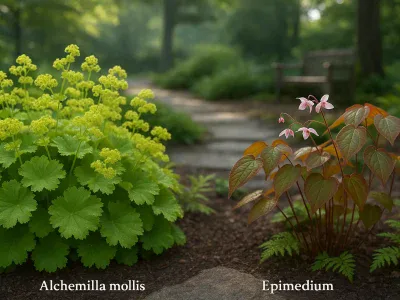
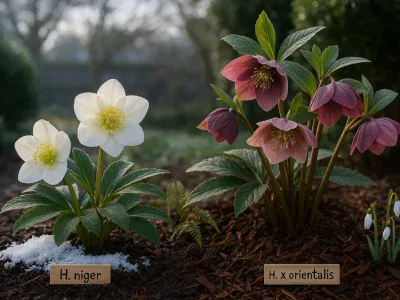
Pulmonaria pairs well with hellebores, heuchera, and shade-loving geraniums. Their deep foliage contrasts will read beautifully in low light.
Brunnera pairs well with hosta, astilbe, and early spring bulbs. Blue flowers work well with pale yellow daffodils or white anemones.
Using Each For Seasonal Interest And Texture
Pulmonaria gives immediate early-season texture with its spotted leaves and spring bells. Brunnera provides a bloom window just after Pulmonaria fades, extending visual interest through late spring. Use them together to create a staggered sequence of texture and color that keeps the shade bed lively.
Pests, Diseases, And Maintenance
Fact: Both are low-maintenance but have predictable issues you can spot early.
Common Problems And Diagnosis
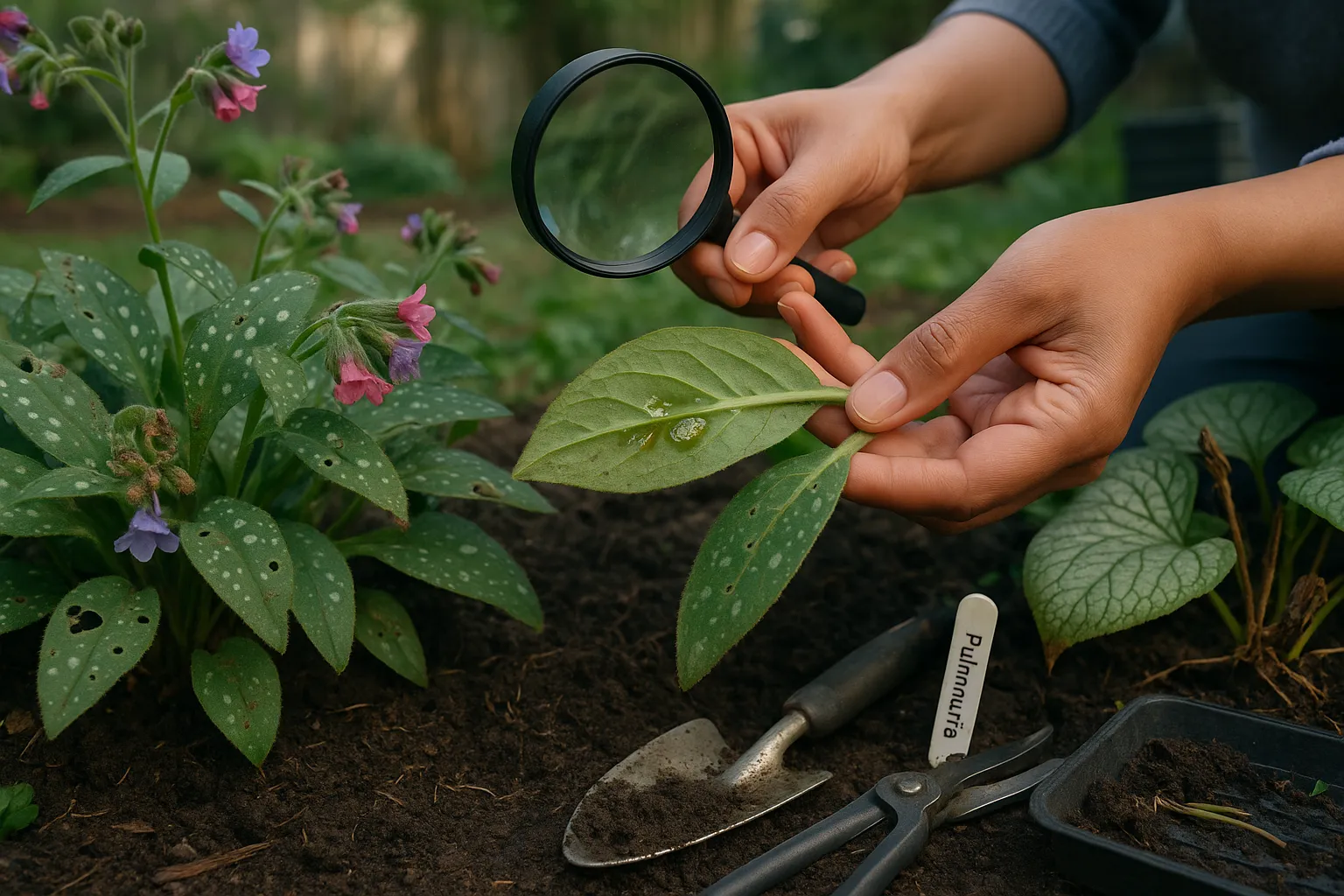
Slugs and snails love Pulmonaria leaves: you’ll see irregular holes and slime trails. Brunnera can suffer from leaf scorch and occasional slug damage too.
Fungal issues: Leaf spot and powdery mildew may appear in poor air circulation. Remove affected leaves and improve airflow. Overly wet crowns may rot.
Diagnosis tip: Check the underside of leaves for slugs or eggs. If lower leaves yellow while new growth is fine, the plant likely needs less sun or more organic matter in the soil.
Practical Maintenance: Deadheading, Cutting Back, And Dividing
Deadheading: Remove Pulmonaria spent flowers to tidy the plant and reduce self-seeding. For Brunnera, you can leave some stems for seed if you want volunteers, but removing spent blooms keeps the bed neat.
Cutting back: Trim Pulmonaria after the first flush if leaves look tired. Brunnera often benefits from a light trim after flowering if the foliage looks tatty.
Dividing: Divide every 3–5 years in early spring or fall to refresh vigor. Both respond well to division, but Pulmonaria can be more sensitive, keep roots moist during the process.
Be honest: I once lost a ‘Jack Frost’ to summer heat because I placed it in afternoon sun. You’ll make mistakes too, but they’re fixable.
Propagation And Planting Guidance
Fact: Division is the easiest propagation method for both genera.
Division, Seed, And Root Cuttings
Division: Lift clumps in early spring or autumn, cut into pieces with at least three crowns each, and replant at the same depth. Water in well.
Seed: Pulmonaria may not come true from seed: expect variation. Brunnera seed usually produces plants similar to the parent but with more variability in leaf variegation.
Root cuttings: Possible with Brunnera: less common for Pulmonaria. Root cuttings are taken in late winter and kept in cold frames until shoots appear.
When To Replace Or Renew Clumps
Replace clumps when centers die out or flowering declines markedly, typically every 4–7 years. When you see a hollow center with only peripheral growth, dig and divide the plant: the outer crowns will reestablish quickly.
Practical note: If you want immediate display, buy a larger pot-grown specimen rather than relying on slow divisions. Nurseries like Monrovia and local botanical gardens often stock named cultivars in season.
Buying, Sourcing, And Selection Checklist
Fact: Choose plants with healthy crowns, good root systems, and minimal stress signs.
What To Look For At The Nursery
Inspect the crown for rot or soft spots. Choose plants with fresh, firm roots and several active shoots. Avoid plants with much yellowing or large holes in leaves, these often hide slug damage.
Ask the staff for cultivar provenance. Reliable suppliers will tell you whether a plant is propagated by division, tissue culture, or seed.
Choosing Cultivars For Specific Conditions
For dry-ish shade, choose Pulmonaria cultivars known for tougher leaves like ‘Blue Ensign’. For showy variegation and a cleaner habit, choose Brunnera ‘Jack Frost’ or ‘Looking Glass’.
If you want Blue flowers at scale, choose Brunnera for massing. If you want pattern and close-up interest near a bench, choose Pulmonaria.
Action checklist before you buy:
Confirm your light conditions (morning vs afternoon sun).
Match cultivar to zone (check USDA zone rating).
Inspect roots and crown.
Plan spacing: give Brunnera slightly more room to spread.
If you buy online, prefer nurseries with return policies and clear images of live plants. This reduces surprises.
Small confession: I once bought an inexpensive Pulmonaria that turned out to be mislabeled and was mostly plain green. You will probably run into nursery labeling issues: check plant tags carefully and keep receipts.
To provide the best experiences, we use technologies like cookies to store and/or access device information. Consenting to these technologies will allow us to process data such as browsing behaviour or unique IDs on this site. Not consenting or withdrawing consent, may adversely affect certain features and functions.
Functional
Always active
The technical storage or access is strictly necessary for the legitimate purpose of enabling the use of a specific service explicitly requested by the subscriber or user, or for the sole purpose of carrying out the transmission of a communication over an electronic communications network.
Preferences
The technical storage or access is necessary for the legitimate purpose of storing preferences that are not requested by the subscriber or user.
Statistics
The technical storage or access that is used exclusively for statistical purposes.The technical storage or access that is used exclusively for anonymous statistical purposes. Without a subpoena, voluntary compliance on the part of your Internet Service Provider, or additional records from a third party, information stored or retrieved for this purpose alone cannot usually be used to identify you.
Marketing
The technical storage or access is required to create user profiles to send advertising, or to track the user on a website or across several websites for similar marketing purposes.