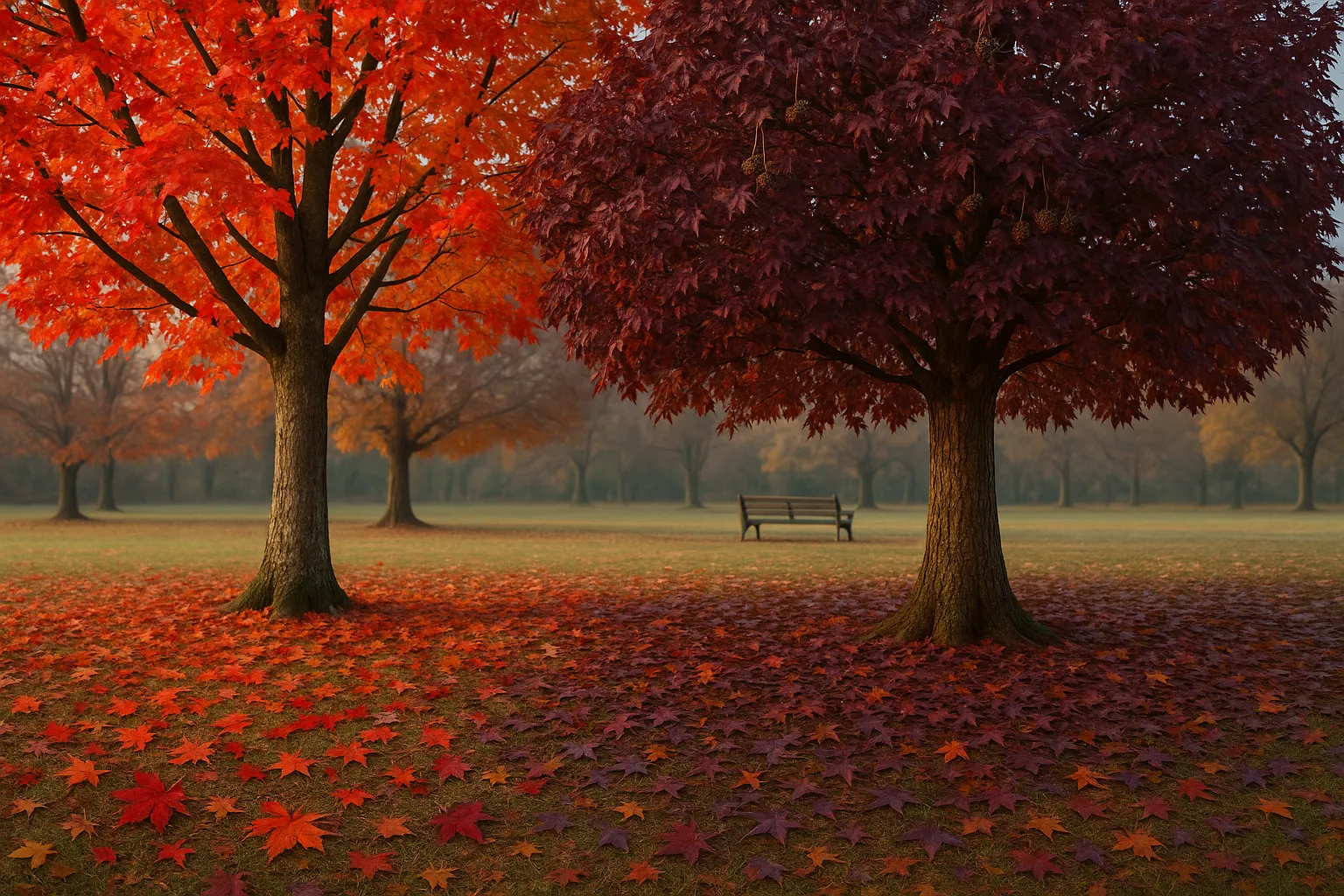
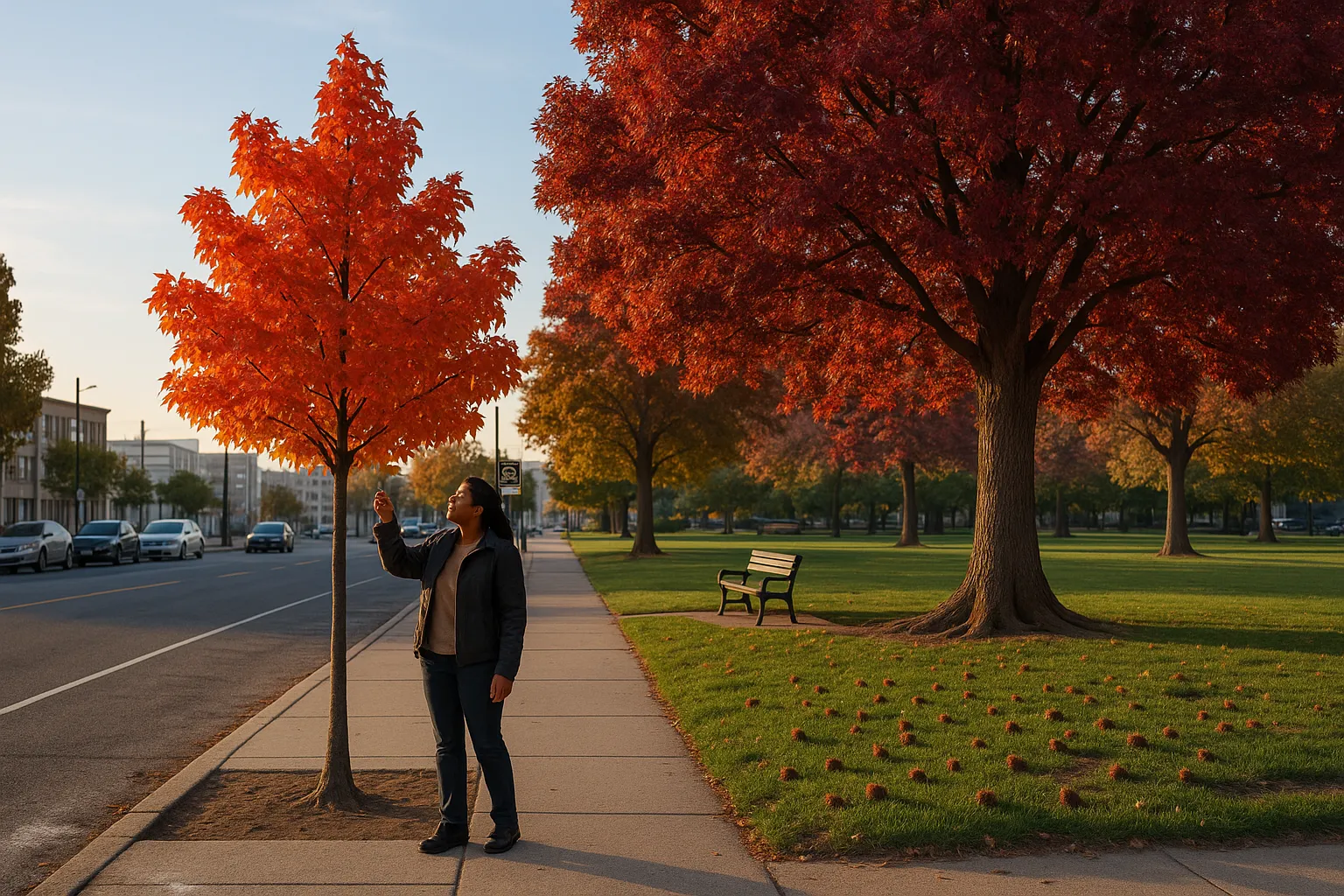
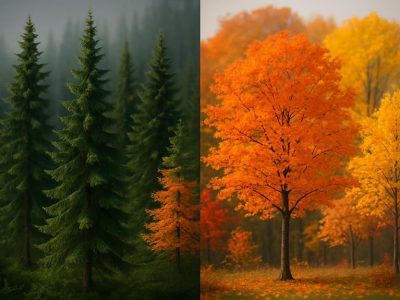
You can pick a tree for color, shade, or a tough street presence: both Liquidambar and Acer rubrum deliver, but they do it very differently. Picture a yard that flips from emerald to molten fire in a single month, that’s the promise of these two giants. This article compares Liquidambar styraciflua (sweetgum) and Acer rubrum (red maple) so you can choose the right tree for your goals, site, and patience. Expect clear ID tips, real maintenance trade-offs, cultivar recommendations, and honest pitfalls, including times I planted the wrong one and had to learn the hard way.
Quick Comparison: Key Differences At A Glance
Fact: Liquidambar and Acer rubrum differ in leaf shape, seed form, growth habit, and fall timing.
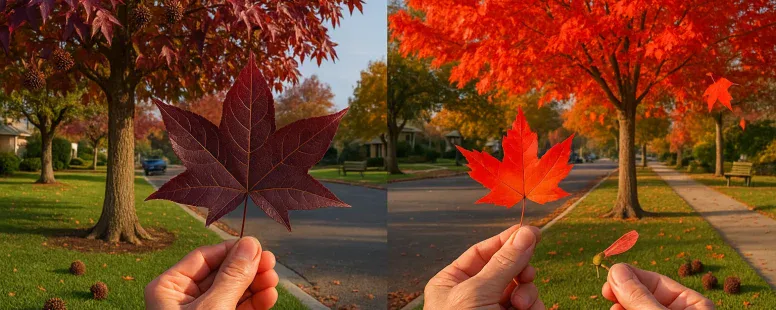
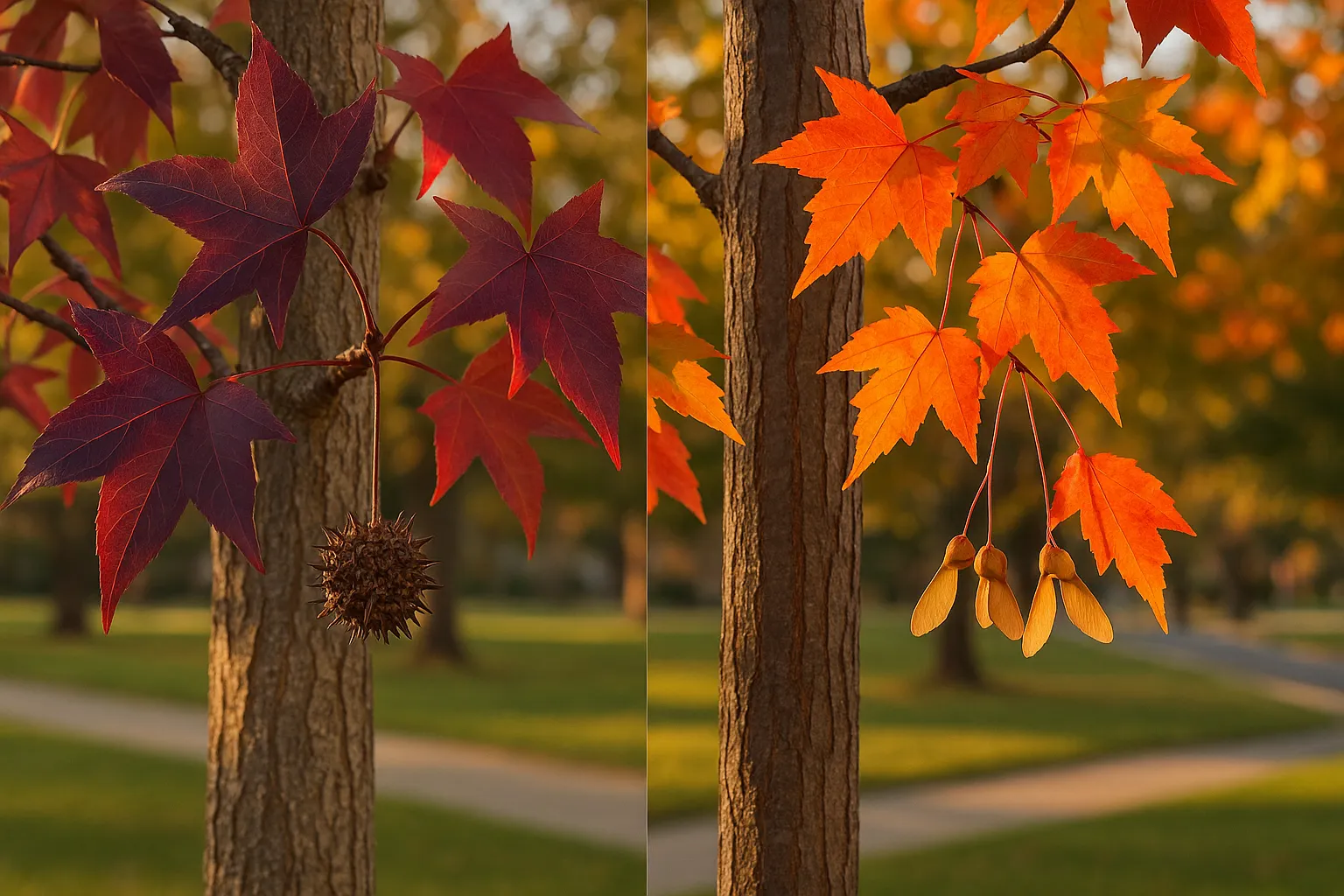
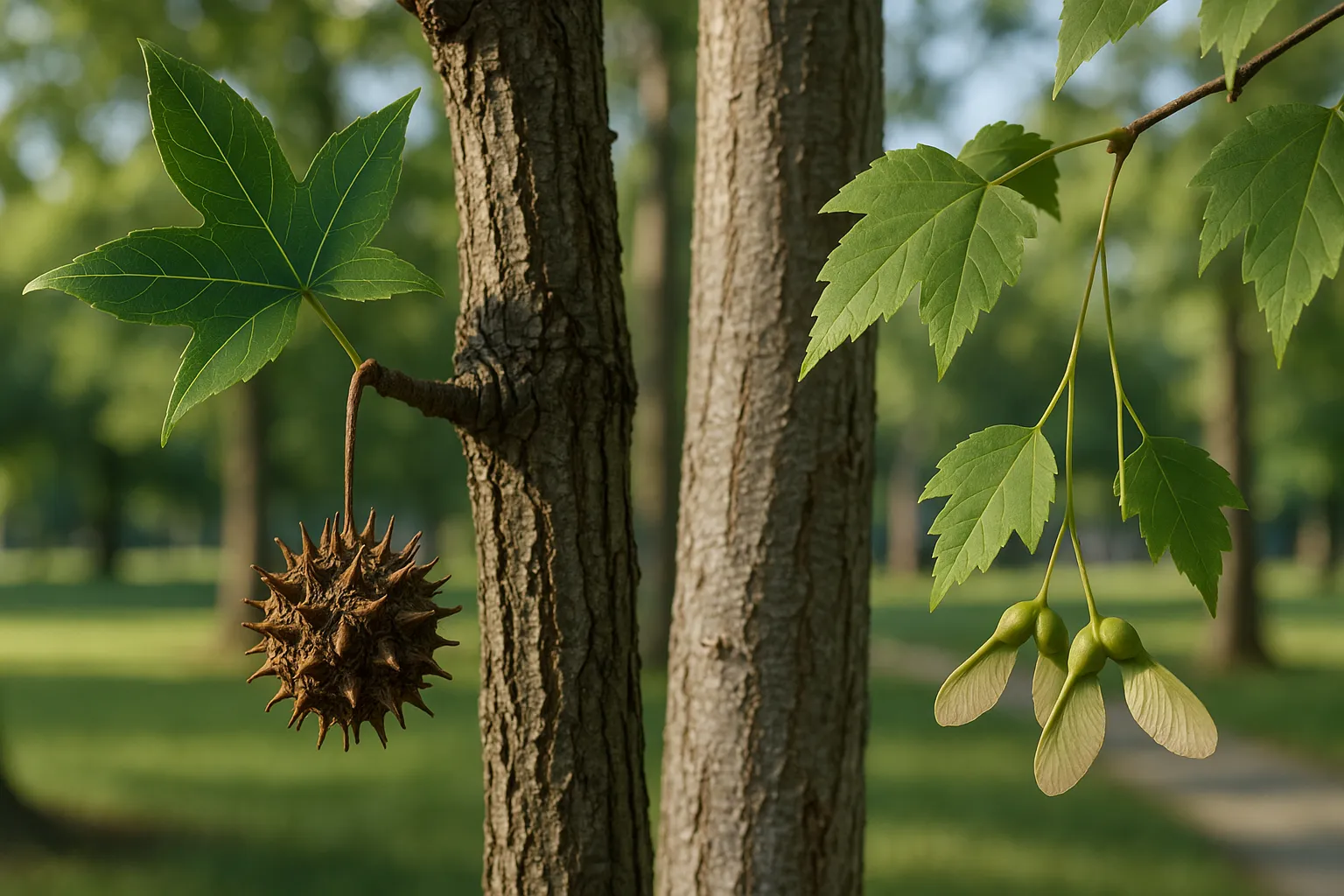
Liquidambar (sweetgum) usually shows star-shaped, five-lobed leaves, hard spiky seedballs, and strong autumn reds, purples, and oranges. Acer rubrum (red maple) presents three- or five-lobed leaves with softer sinuses, paired samaras (helicopter seeds), and a broader palette that can include scarlet, orange, and yellow.
Speed and size contrast: red maple often grows faster early, reaching maturity in 20–30 years under good conditions: sweetgum may be slower early but becomes a large, long-lived specimen. Cold hardiness and site tolerance also differ: red maple spans USDA zones 3–9 while sweetgum prefers zones 5–9 and warmer microclimates in colder zones.
Practical takeaway: choose red maple for faster shade and flexible sites: choose sweetgum when you want distinct seedball structure and dramatic, late-season color. If you need a short checklist: leaf, seed, bark, and fall timing will give you a quick ID and guide selection.
Identification: How To Tell Them Apart
Fact: You can tell them apart by starting with the leaves, then checking bark and reproductive parts.
Leaf Shape And Texture
Liquidambar leaves are star-shaped with five sharply pointed lobes and a glossy texture: veins run to each lobe tip. Acer rubrum leaves vary (three to five lobes) and have smoother, rounded sinuses and thinner tissue. Touch the leaf: sweetgum feels firmer: red maple is more papery. These are reliable cues during the growing season.
Bark, Growth Form, And Size
Liquidambar bark becomes deeply furrowed with age and shows corky ridges on some cultivars: trunks often develop stout, straight forms. Red maple bark tends to be smoother on young trees and becomes flaky or plated with age. Sweetgum usually forms a pyramidal crown when young then broadens: red maple may keep a rounded or oval crown. Mature sizes overlap, both can reach 60–80 feet in favorable sites, but form and bark help you distinguish them at a glance.
Fruit And Seed Structures
Liquidambar produces a single, hard, spiky seedball that hangs through winter. Red maple produces paired samaras that spin as they fall: you’ll see clusters of samara keys in spring and early summer. Those seedballs are messy on lawns and sidewalks, a practical ID and management issue you should consider.
Growth Rate, Lifespan, And Mature Size
Fact: Red maple grows faster in youth: sweetgum often lives longer and can reach larger girths.
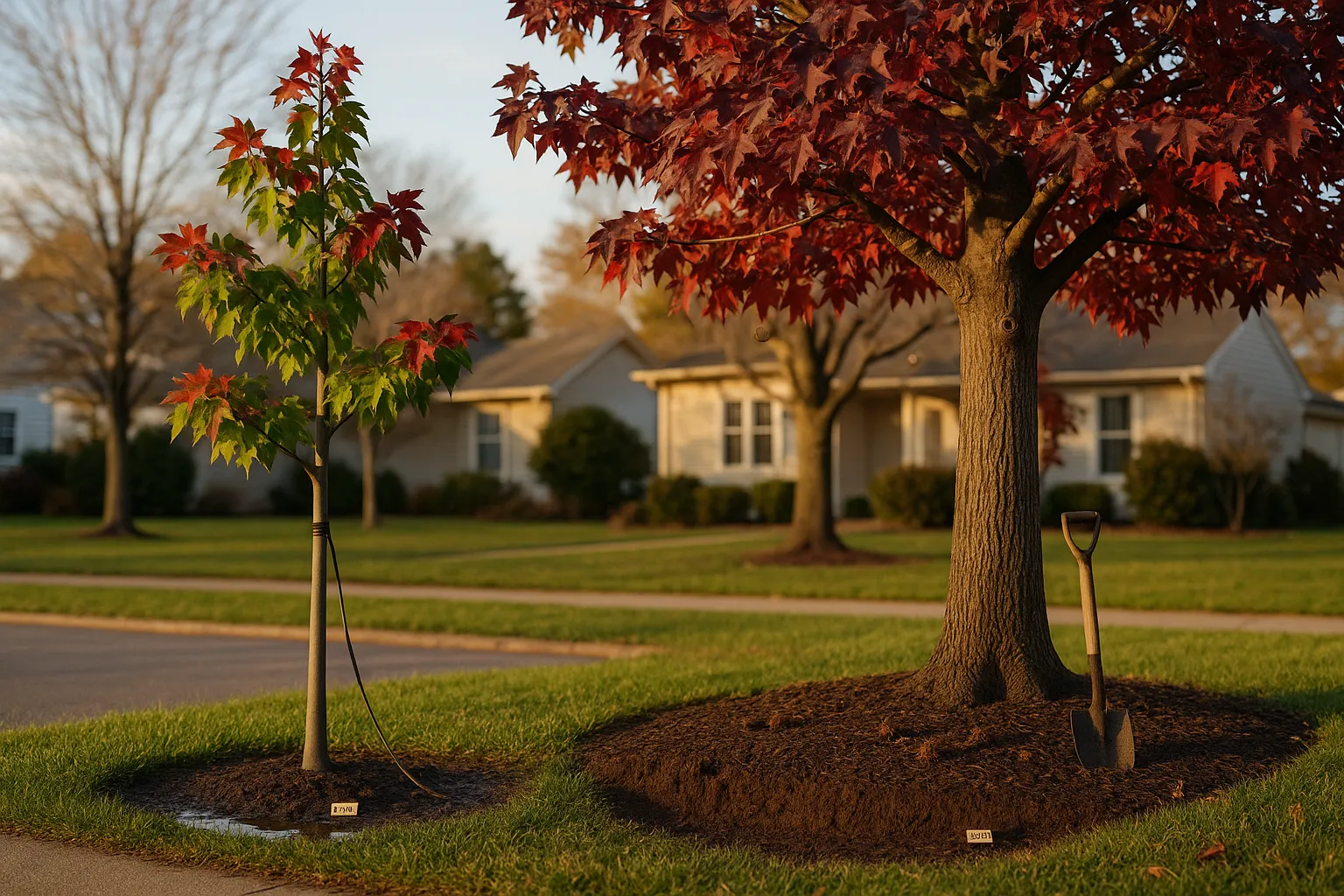
Red maple commonly adds 13–24 inches of height per year in good soil and adequate moisture. Sweetgum often adds 12–20 inches annually at best. Lifespan: red maples live 80–100 years in many landscapes: sweetgums often exceed 100 years in tolerant sites. Mature size varies with cultivar and site: urban trees are smaller due to stress.
Site Preferences And Soil Requirements
Red maple tolerates a wider soil pH range and grows in moist to moderately dry soils: it performs well in poorly drained sites. Sweetgum prefers well-drained, deep, loamy soils and struggles in persistent clay saturation. If your site floods occasionally, favor red maple. If you have a sunny, well-drained yard and want a classic lawn specimen, sweetgum will thrive.
Water, Sunlight, And Hardiness
Red maple accepts full sun to partial shade: sweetgum prefers full sun for best form and color. Red maple is hardy to USDA zone 3 (some sources say zone 4 commonly), while sweetgum is reliably hardy to zone 5. Both need regular water during establishment: mature red maples can tolerate moderate drought better than sweetgums.
Pruning, Propagation, And Maintenance Needs
Fact: Both respond to pruning but have different maintenance headaches.
Red maple tolerates formative pruning and responds well to crown thinning. Sweetgum produces adventitious roots and can develop multiple sprouts if not pruned correctly. Sweetgum’s seedballs create cleanup work annually. Both propagate from seed and grafted cultivars are common: red maple has many improved cultivars selected for compact size and fall color. A real-world tip: stake both young trees for a season, but remove ties quickly to avoid girdling, I once left a tie too long and the trunk scarred badly, it still lives but the bark never healed neatly.
Fall Color, Seasonal Interest, And Timing
Fact: Timing and color intensity differ: sweetgum often peaks later and holds dramatic tones longer.
Red maple produces early-to-mid fall color, often a bright red or orange, depending on soil and cultivar. Sweetgum tends to show late mid-to-late fall color with deep reds, purples, and bronzes that can persist longer into colder weather.
Color Range, Intensity, And Duration
Red maple gives reliable reds, oranges, and sometimes yellow, cultivar-dependent. Sweetgum shows a wide mix: deep burgundy, orange, gold, and even purple on the same tree. Intensity depends on light, drought stress, and soil nutrients. Duration: red maple often changes earlier and drops sooner: sweetgum can hold leaves later into fall, extending visual interest.
Other Seasonal Features (Flowers, Bark, Seed Displays)
Red maple produces inconspicuous red flowers in early spring that attract pollinators and herald the season. Sweetgum’s flowers are subtle but the spiky seedballs remain as winter sculpture. Bark differences add winter interest: sweetgum’s fissures and red maple’s mottled plates provide visual texture when leaves are gone.
Landscape Uses And Urban Performance
Fact: Both trees work in urban landscapes but serve different design roles and tolerances.
Best Uses: Street Trees, Shade, Specimens, And Screens
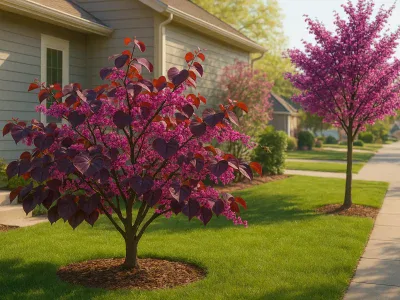
Red maple fits well as a street tree, park tree, or quick shade source due to its faster early growth and tolerance for varied soils. Compact cultivars like ‘Armstrong’ or ‘October Glory’ suit narrow planting strips. Sweetgum excels as a specimen or large shade tree where long-term size is acceptable: it can anchor big yards or parks. Use sweetgum sparingly in narrow sidewalks because of seedball litter and aggressive roots.
Tolerance To Compaction, Pollution, And Salt
Red maple tolerates compaction and urban pollution better than sweetgum and is more salt-tolerant, making it a safer bet for city streets and coastal sites. Sweetgum is less tolerant of heavy compaction and road salt. If you expect poor soil and winter de-icing, pick red maple.
Pests, Diseases, And Common Problems
Fact: Both face pests and diseases, but susceptibility and impact differ.
Major Pests And Disease Susceptibility
Red maple can suffer from verticillium wilt, leaf spot, and aphids. Sweetgum is less prone to verticillium but can attract webworms, scale, and leaf scorch in drought. Both can show chlorosis in high-pH soils. In urban settings, red maple sometimes shows more dieback under chronic stress.
Management And Prevention Tips
Choose disease-resistant cultivars, plant in recommended zones, and avoid planting in compacted, waterlogged soils. Prune during dormancy to limit stress and remove dead wood promptly. Mulch but keep mulch away from the trunk. For chemical controls, consult your state extension or a certified arborist: integrated pest management works best. Warning: late pruning can increase sap bleeding in maples, it won’t usually kill the tree, but it invites pests and looks messy.
Choosing Between Liquidambar And Acer Rubrum For Your Site
Fact: Pick the species that matches your primary goal: color timing, maintenance tolerance, or urban constraints.
Decision Checklist By Goal (Color, Maintenance, Site Constraints)
If you want fast shade and broad site tolerance: choose Acer rubrum. It handles compacted soils, salt, and quick growth.
If you want late, intense, multi-hued autumn color and a long-lived specimen: choose Liquidambar. Expect seedballs and slightly higher soil demands.
If low maintenance is essential (less litter, fewer seed messes): lean to red maple cultivars selected for minimal fruit.
If you have limited root space, salt exposure, or high pollution: prefer red maple.
Anecdote: I once planted a sweetgum under a small sidewalk and regretted it for years, those seedballs hammered my lawn mower and tripped guests. Lesson learned: place sweetgum where drop-zone is wide and cleanup is manageable.
Recommended Cultivars And Variants For Specific Needs
Acer rubrum ‘October Glory’: consistent red fall color and good urban tolerance.
Acer rubrum ‘Red Sunset’ (also sold as ‘Sun Valley’): fast color and strong growth.
Liquidambar styraciflua ‘Worplesdon’: compact habit for smaller sites, with good fall color.
Liquidambar styraciflua ‘Rotundiloba’: sterile (few/no seedballs) and lobed leaves, good where seed litter is a concern.
Source references: USDA plant profiles and the Arbor Day Foundation offer cultivar details and zone maps, consult them for final site matching. Choose a cultivar that fits your soil, space, and cleanup tolerance: and plant with a realistic view of long-term size and maintenance.
To provide the best experiences, we use technologies like cookies to store and/or access device information. Consenting to these technologies will allow us to process data such as browsing behaviour or unique IDs on this site. Not consenting or withdrawing consent, may adversely affect certain features and functions.
Functional
Always active
The technical storage or access is strictly necessary for the legitimate purpose of enabling the use of a specific service explicitly requested by the subscriber or user, or for the sole purpose of carrying out the transmission of a communication over an electronic communications network.
Preferences
The technical storage or access is necessary for the legitimate purpose of storing preferences that are not requested by the subscriber or user.
Statistics
The technical storage or access that is used exclusively for statistical purposes.The technical storage or access that is used exclusively for anonymous statistical purposes. Without a subpoena, voluntary compliance on the part of your Internet Service Provider, or additional records from a third party, information stored or retrieved for this purpose alone cannot usually be used to identify you.
Marketing
The technical storage or access is required to create user profiles to send advertising, or to track the user on a website or across several websites for similar marketing purposes.