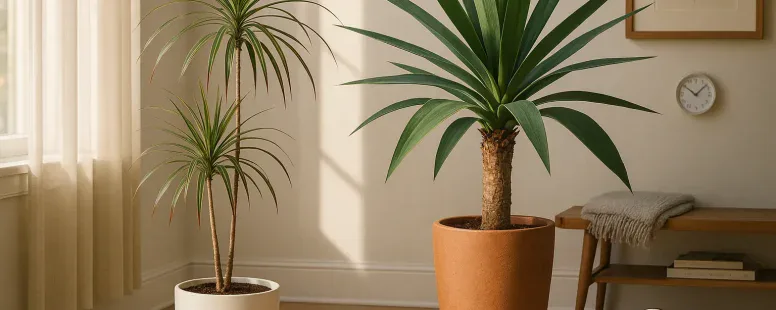
Both Dracaena marginata and Yucca elephantipes are popular, architectural plants that add vertical drama to homes and offices. Which one fits your light, schedule, and style? This comparison pares each species down to the essentials, how they look, what they need, how they behave, and gives you practical choices you can act on today. Expect clear differences in leaf texture, stem structure, watering tolerance, and pet safety. Read on to find the one that will thrive in your space and match your routine.
Quick At-A-Glance Comparison
Fact: Dracaena marginata is a graceful, thin-leaved houseplant: Yucca elephantipes is a bold, sword-leaved specimen.
Common names and entities: Dracaena (Madagascar dragon tree), Yucca (spineless yucca, Yucca elephantipes).
Best for: Dracaena marginata fits lower-light interiors and tight spaces: Yucca elephantipes excels in bright rooms, patios, and xeric landscapes.
Water tolerance: Dracaena prefers moderate, consistent moisture with brief dry spells: Yucca tolerates longer droughts.
Pet safety: Both contain saponins: Dracaena is more toxic to cats and dogs according to the American Society for the Prevention of Cruelty to Animals (ASPCA).
Maintenance: Dracaena needs lighter pruning and occasional repotting: Yucca demands less frequent attention but requires sturdier staking as it matures.
This section gives the quick facts you need to choose. If you want a leafy sculptural plant that tolerates dimmer rooms choose Dracaena. If you want dramatic, drought-tolerant architecture choose Yucca.
Appearance & Identification
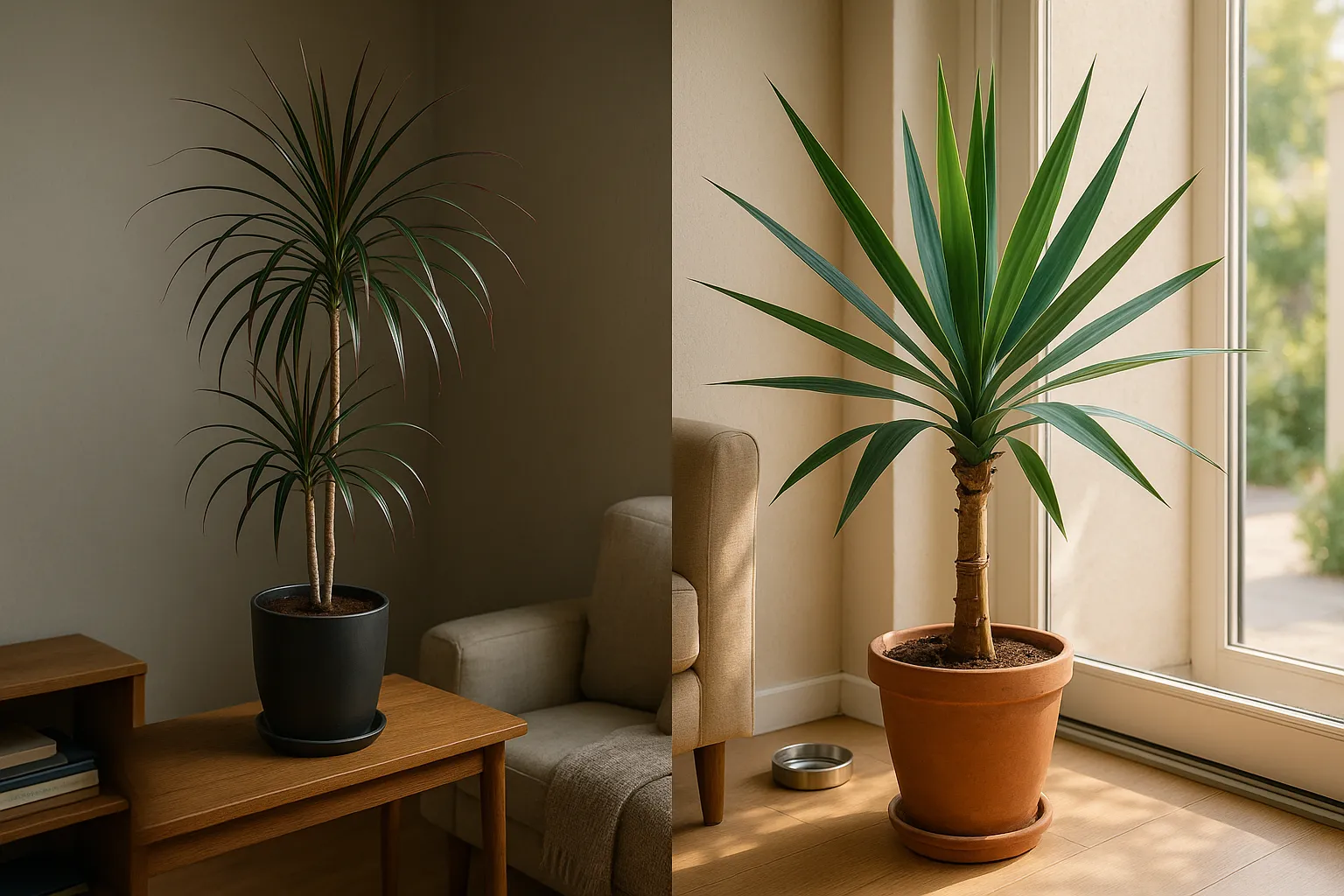
Fact: The two plants are easy to tell apart by leaf form and stem structure. Below you’ll find clear identifiers and visual cues to help you pick them out in a shop or catalog.
Leaves: Shape, Color, And Texture
Fact: Dracaena marginata has narrow, arching leaves: Yucca elephantipes has broad, rigid, sword-like leaves.
Dracaena leaves measure roughly 1–2 cm wide and can show red or purple margins on varieties like ‘Tricolor’. The blade is soft, flexible, and the surface is smooth. Yucca leaves reach 2–6 cm wide, with a tougher, fibrous texture. The color ranges from blue-green to deep green. You will feel the difference: Dracaena bends: Yucca snaps when bent sharply.
Trunk And Stem Characteristics
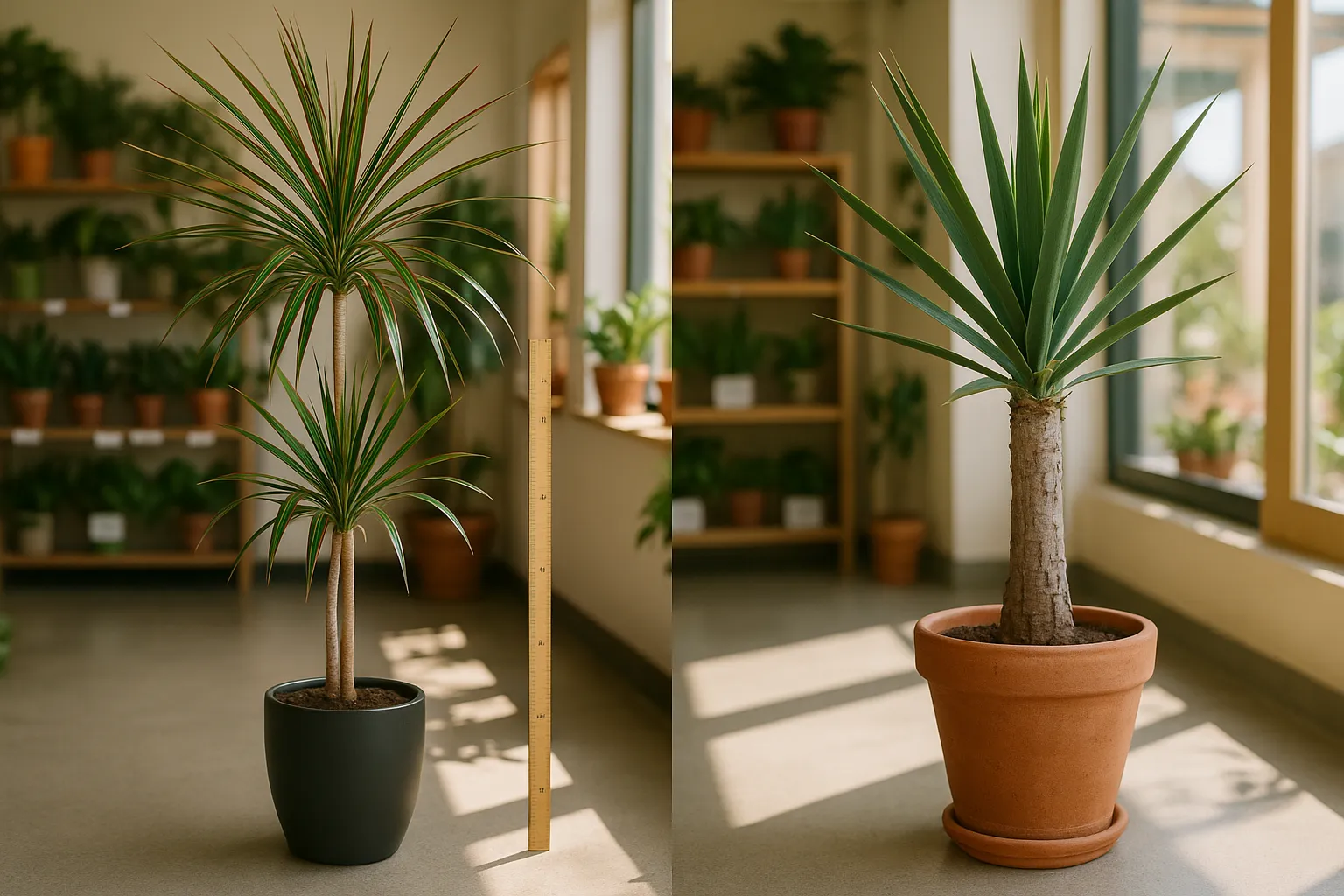
Fact: Dracaena produces cane-like stems that often twist: Yucca forms a thicker, woody trunk that supports rosettes.
Dracaena stems are thin and cane-like, often multiple canes in a single pot. They develop scars where leaves dropped. Yucca stems thicken into true trunks and may branch at nodes or after flowering. Yucca bark looks rougher and may peel lightly: Dracaena bark is smoother. These structural differences affect how you stake or prune each plant.
Size, Growth Habit, And Mature Dimensions
Fact: Mature Dracaena marginata commonly reaches 6–10 feet indoors: Yucca elephantipes can reach 10–30 feet in the landscape but stays smaller in pots.
Indoors, Dracaena grows upright with a thin profile, ideal for narrow corners. Yucca forms one or more upright stems topped by leaf rosettes: it looks like a small palm. Expect Yucca to grow slower in a pot and much faster in warm outdoor climates (USDA zones 9–11).
Care Requirements: Side-By-Side
Fact: Light and water needs diverge most: Dracaena performs in moderate light: Yucca demands bright light.
Light Requirements
Fact: Dracaena prefers medium, indirect light: Yucca thrives in full to bright light.
Place Dracaena near north or east windows or behind sheer curtains. Direct noon sun can scorch its thin leaves. Yucca wants direct sun for several hours: it tolerates southern exposures and bright patios. If you keep Yucca in low light, leaves will yellow and the trunk will weaken.
Watering And Moisture Needs
Fact: Dracaena needs more regular watering than Yucca and dislikes prolonged drought: Yucca tolerates dry soil between waterings.
Water Dracaena when the top 1–2 inches of soil feel dry. Overwatering causes yellowing and root rot. Water Yucca less often: let the top 2–3 inches dry out. In winter cut back watering for both. Use subject-verb-object clarity: you check soil, you water, you wait.
Soil, Potting, And Drainage
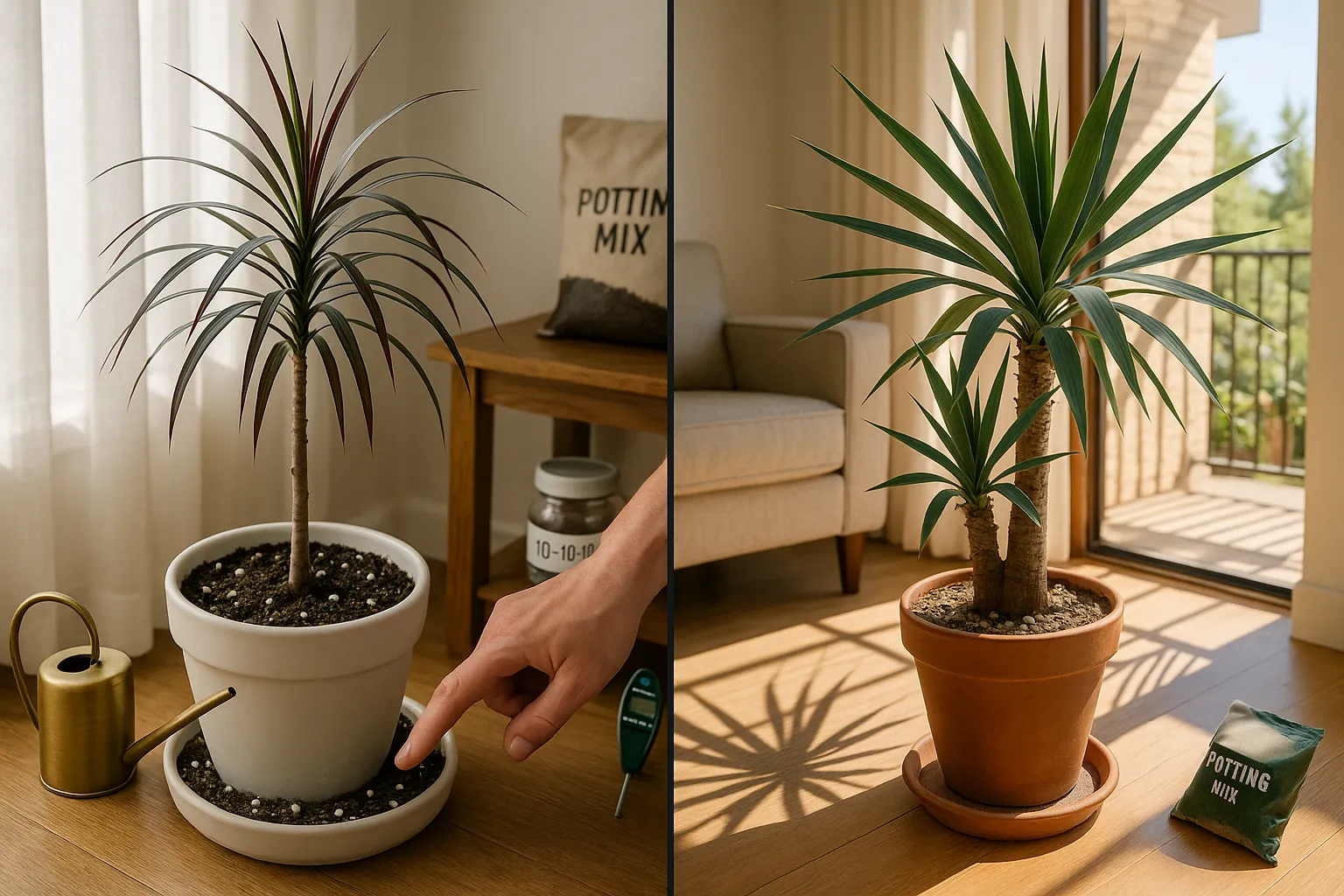
Fact: Both need well-draining mix: Yucca prefers slightly coarser, grittier soil.
Use a general indoor potting mix for Dracaena with added perlite for drainage. For Yucca, add pumice or coarse sand to increase drainage and mimic its native, rocky soils. Always use pots with drainage holes. Repot Dracaena every 2–3 years: Yucca can stay longer in one pot but may need repotting if rootbound.
Temperature, Humidity, And Climate Tolerance
Fact: Dracaena likes moderate indoor temps and moderate humidity: Yucca tolerates higher temps and lower humidity.
Keep Dracaena between 65–80°F and avoid cold drafts below 55°F. It enjoys higher humidity but adapts. Yucca tolerates 50–85°F and thrives outdoors in warm climates. In cool climates move Yucca inside before frost.
Fertilizing And Seasonal Care
Fact: Light feeding supports growth: both respond to balanced fertilizer during the growing season.
Feed both plants with a balanced 10-10-10 or 20-20-20 houseplant fertilizer diluted to half strength from spring to early fall. Stop or reduce feeding in winter. Remove dead leaves and check for pests when you fertilize.
Growth, Maintenance, And Propagation
Fact: Propagation methods differ: Dracaena is easy from cane cuttings: Yucca roots from tip or cane cuttings and from pups.
Growth Rate And Lifespan
Fact: Dracaena has a moderate growth rate and can live decades indoors: Yucca grows slower in pots but can live many decades outdoors.
Dracaena gains height more quickly under warm, bright conditions. Yucca often puts energy into thicker stems and can form large trunks over time. Lifespan depends on care: both can survive long with proper conditions.
Pruning, Shaping, And Routine Maintenance
Fact: Pruning controls height in Dracaena: Yucca benefits from removing spent rosettes and stabilizing trunks.
You prune Dracaena by cutting canes where you want branching: new shoots appear below cuts. For Yucca, cut dead rosettes and remove flower stalks after bloom. Wear gloves with Yucca, leaves can be sharp. Clean tools to prevent disease transmission.
Propagation Methods (Cuttings, Division, Seed)
Fact: Dracaena propagation is straightforward via cane cuttings: Yucca propagates by tip cuttings, division, and seed.
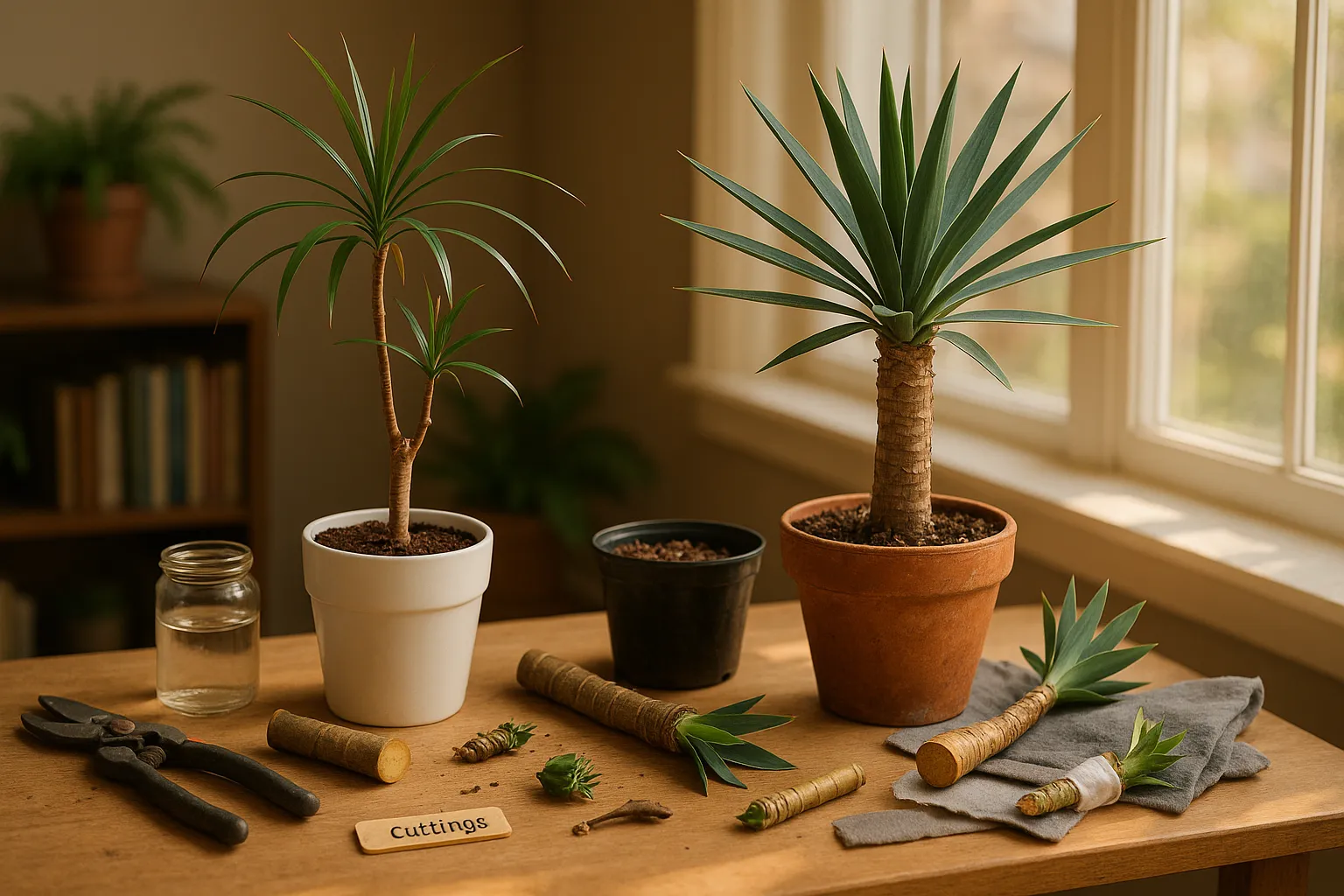
To propagate Dracaena, take 4–6 inch cane cuttings, let the cut callus, then root in soil or water. For Yucca, cut the top 6–12 inches, let it callus for a week, then root in gritty mix. Yucca pups at the base can be separated and potted. Seeds are slower for both and seldom used for home growers.
Common Problems, Pests, And Troubleshooting
Fact: Overwatering and low light produce the most issues for Dracaena: overwatering and cold damage trouble Yucca.
Leaf Discoloration And Environmental Stressors
Fact: Yellowing usually signals overwatering: browning tips point to low humidity or fluoride sensitivity in Dracaena.
Dracaena often shows brown leaf tips from dry air or fluoride in tap water, use distilled water if sensitive. Yucca shows yellowing when overwatered or when light is insufficient. Check your light first if leaves pale.
Root Rot, Overwatering, And Soil Issues
Fact: Root rot results from poor drainage and frequent wet soil: both species suffer but Dracaena is more vulnerable.
If soil smells sour or roots look black and soft, you have root rot. Reduce watering, remove affected roots, repot in fresh, dry mix, and treat with a fungicide if severe. Prevent recurrence by improving drainage and pot size.
Common Pests And Treatment Options
Fact: Spider mites, mealybugs, and scale attack both species: treatment is similar across pests.
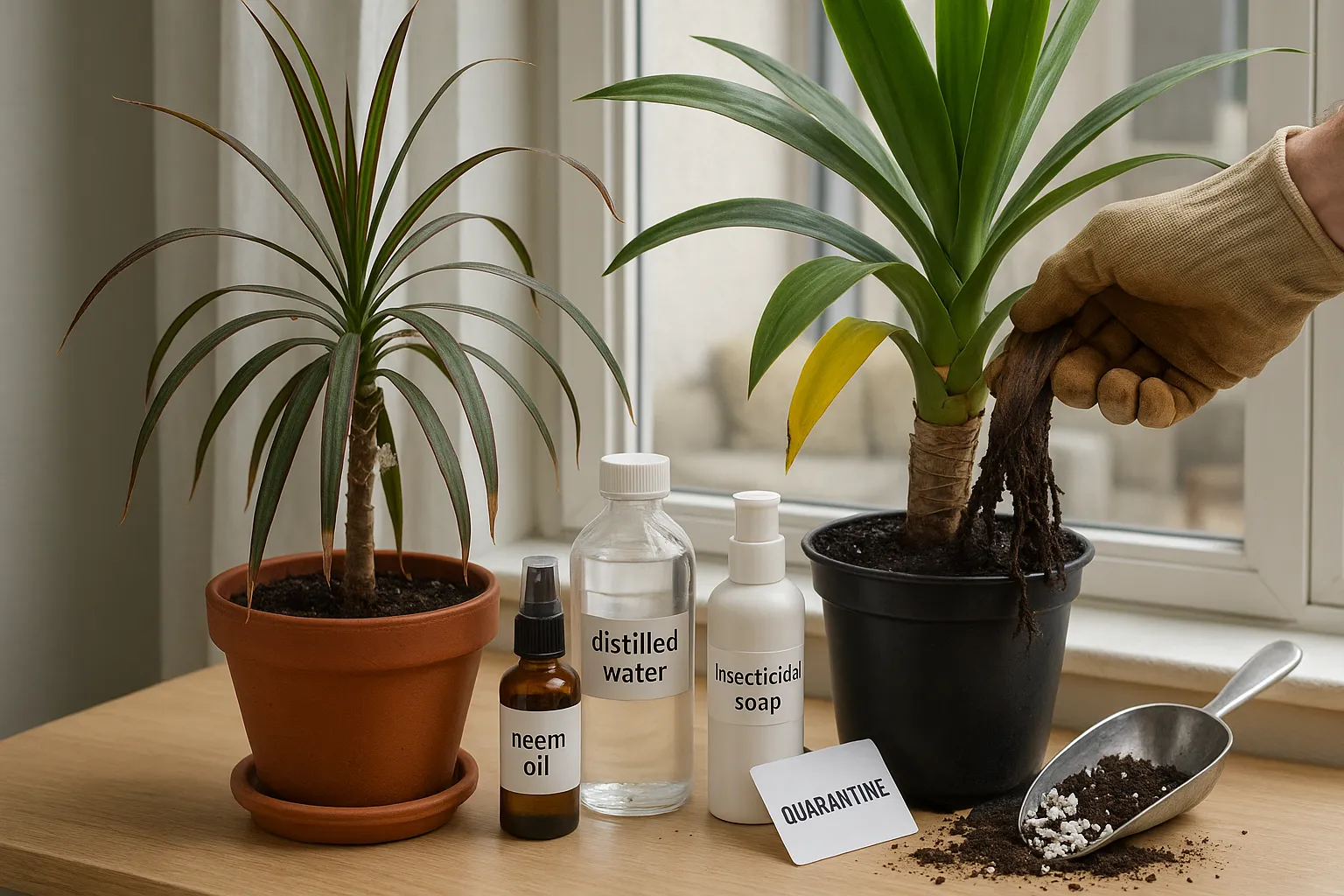
Inspect undersides of leaves and leaf axils. For light infestations wipe leaves with soapy water or neem oil. For heavier infestations use insecticidal soap or systemic treatments. Quarantine new plants for two weeks to stop spread. These actions protect other houseplants.
Choosing The Right Plant For Your Space
Fact: Choose Dracaena for shade-tolerant elegance: choose Yucca for bright, drought-tolerant drama. Below are practical selection tips.
Indoor Versus Outdoor Use And Climate Considerations
Fact: Dracaena is primarily indoor: Yucca can go outdoors in warm climates (USDA zones 9–11).
Keep Dracaena inside year-round in temperate regions. Move Yucca outdoors during summer if you live in mild climates, but bring it in before frost. Yucca will thrive in dry, Mediterranean-like settings.
Best Options For Beginners, Low-Light, Or Busy Owners
Fact: Dracaena suits low-light and busy owners who water on a schedule: Yucca suits owners who forget water and have bright light.
If you rarely water, pick Yucca. If you have a dim apartment or office, pick Dracaena. Both are forgiving, but each has limits, match the plant to your habits.
Pet Safety, Household Considerations, And Placement Tips
Fact: Both plants contain compounds that can upset pets: Dracaena is more toxic to cats and dogs.
Keep both out of pet reach: place them on raised stands or in rooms pets can’t access. For households with children, avoid low, accessible placements. Also avoid placing Dracaena near vents that blow hot or cold air directly onto leaves.
Use Dracaena in narrow corners, beside desks, or in layered plant groupings for texture contrast. Use Yucca as a statement piece in a bright entryway, sunroom, or patio. Combine both if you want varied leaf forms, Dracaena softens, Yucca commands attention.
To provide the best experiences, we use technologies like cookies to store and/or access device information. Consenting to these technologies will allow us to process data such as browsing behaviour or unique IDs on this site. Not consenting or withdrawing consent, may adversely affect certain features and functions.
Functional
Always active
The technical storage or access is strictly necessary for the legitimate purpose of enabling the use of a specific service explicitly requested by the subscriber or user, or for the sole purpose of carrying out the transmission of a communication over an electronic communications network.
Preferences
The technical storage or access is necessary for the legitimate purpose of storing preferences that are not requested by the subscriber or user.
Statistics
The technical storage or access that is used exclusively for statistical purposes.The technical storage or access that is used exclusively for anonymous statistical purposes. Without a subpoena, voluntary compliance on the part of your Internet Service Provider, or additional records from a third party, information stored or retrieved for this purpose alone cannot usually be used to identify you.
Marketing
The technical storage or access is required to create user profiles to send advertising, or to track the user on a website or across several websites for similar marketing purposes.