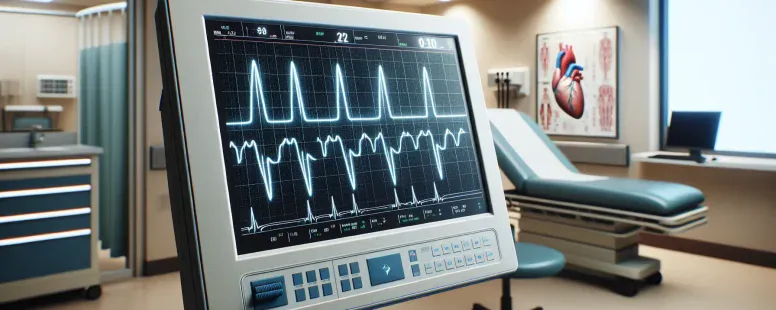
Picture yourself in a crisp, white-walled clinic, the faint scent of antiseptic in the air and a gentle hum of machines in the background. A nurse hands you a form—ECG or EKG? The letters swirl together like a secret code, leaving you wondering if you’re missing something vital. Are these two tests different, or just medical jargon playing tricks on you?
Unlocking the mystery behind ECG and EKG can save you confusion and maybe even a little anxiety. Understanding their subtle distinctions not only helps you feel more in control during medical visits but also sharpens your health literacy. You’ll discover how these terms, though they look different, are far more connected than you might expect—offering peace of mind the next time you see those letters on a chart.
Understanding ECG and EKG
You see ECG and EKG and might wonder if doctors are playing a trick with alphabet soup. They’re not. ECG stands for Electrocardiogram, and EKG is just the same test spelled the German way: Elektrokardiogramm. Hospitals in Berlin and Boston are speaking about the exact same heart check when they use these terms. Your confusion? Completely justified. Medical terminology, especially when it crosses borders, can trip up the most attentive reader.
Think of ECG/EKG as a movie of your heart’s electrical activity. Every time it beats, electrical signals sweep through, making the muscle squeeze and pump blood. An ECG (or EKG) shows these waves as lines on graph paper — try picturing the heart’s signature written out for your doctor to read. One patient, Maria, thought her doctor ordered two different tests in the same afternoon, but , the nurse just switched languages. Her chart said “EKG” — though her bill listed “ECG.” It’s a lesson: always ask if a term sounds unfamiliar, because healthcare specialists often use them interchangeably. The American Heart Association, for example, uses “ECG,” while cardiologists in some clinics still say “EKG.”
How to remember which is which? If you’re used to English, expect to see “ECG” most on your paperwork. , internationally, both abbreviations pop up in journals, textbooks, and clinic brochures. The pattern’s clear once you notice: same test, different spelling. Now, can you spot the next time a specialist sneaks both terms into a conversation?
If you want certainty and less stress during appointments, just remember: ECG equals EKG. Both acronyms point toward the same electrical check on your heart, no matter the language or hospital.
Historical Background
ECG and EKG trace their roots back more than a century, each spelling shaped by language, scientific exchange, and cultural identity. Grasp the story behind these terms, you glimpse not only at medical progress, but at how language evolve with innovation.
Origins of the Terms ECG and EKG
Wilhelm Einthoven, a Dutch physiologist, gave the world its first practical electrocardiogram in 1903. He used the acronym “EKG” from the German “Elektrokardiogramm” because much early medical literature was steeped in German language dominance. Over time, “ECG”, or “Electrocardiogram”, emerged in English-speaking countries. United States and Canada mostly use “ECG”, while German-speaking nations and many parts of Europe keep “EKG”. Harvard Medical School described how both acronyms are interchangeable, but patients might feel confused if doctors switch freely between them.
Picture a patient reading a medical chart in Boston—spotting “EKG”, she wonders if it’s a new test. Meanwhile, in Munich, a physician writes “EKG” instinctively, never realizing the confusion it might cause Americans. Multiple spellings reflect not just translation, but how you experience medical language depending on geography and training.
Evolution of Cardiac Monitoring
Electrocardiography stepped beyond a laboratory curiosity when Einthoven’s string galvanometer allowed doctors to visualize heart rhythms as wavy lines on paper. Before that, physicians listened to heartbeats with their ears and hands. Now, technology record and amplifies cardiac electrical signals, giving precise, reproducible information.
Today, digital ECG machines rely on advanced algorithms and electrode systems, but the principle remains the same. Emergency rooms, ambulances, and fitness watches all tap into this early 20th-century invention. According to research from the American Heart Association, over 300 million ECGs are performed worldwide each year, proving Einthoven’s vision changed not just hospitals, but everyday lives. Think about how a watch on your wrist can alert you to atrial fibrillation—possible through a lineage that began in a physics lab over 100 years ago.
The core link between ECG and EKG is their shared function: capturing the heart’s electrical activity across eras and continents, spelling differences aside. If you’re reading old journals or talking to a doctor from a different country, pausing to ask, “Is ECG the same as EKG?” reveals not just curiosity but awareness of medical history, language, and global care practices.
Medical Definition and Function
Medical language often creates puzzles with short acronyms like ECG and EKG. In clinical settings, ECGs and EKGs decode the silent language of your heart, mapping its rhythm and identifying hidden disruptions. Hospitals, clinics, and even ambulances worldwide depend on these tests to catch arrhythmias or diagnose heart attacks as quickly as possible.
What Is an ECG?
An ECG, electrocardiogram in full, records the heart’s electrical activity using electrodes stuck to your skin—usually, 10 placed across your chest, arms, and legs. Each trace lines on a paper acts like a musical score, showing doctors if your heartbeat skips a beat, stumbles, or races too fast. A physician might read multiple leads—twelve is standard—for a panoramic view of your heart’s electrical orchestra. When you walk into an ER complaining of chest pain, guidelines from the American Heart Association (AHA) [source: AHA] recommend an ECG within 10 minutes. Your ECG shows if you’ve had a heart attack, suffered a rhythm disturbance like atrial fibrillation, or developed thickened heart walls. Short spikes and long, spreading waves can spell out stories about blocked arteries or low blood potassium—a glance at this graph can save your life.
What Is an EKG?
An EKG is not another test but simply a different spelling, reflecting Elektrokardiogramm, from German roots—just as you might see “color” spelled as “colour” in British English. Cardiologists in Germany, Switzerland, and sometimes in US trauma rooms ask for an “EKG”, but the machine, the wires, and the printout match those of “ECG”. The dependency grammar of medical talk means context often decides which term crops up. For example, in academic journals, the semantic entity “ECG” dominates, but in patient charts of European hospitals, “EKG” might outnumber its English twin. Some hospital staff swap the two terms in a single shift, which leaves patients wondering if they’ve had two procedures instead of one. Next time a cardiologist hands you a strip of zigzag lines and says “This EKG looks normal”, remember: it’s the same heart snapshot. No matter the language, those lines whisper the critical news about your cardiac health.
Technical Differences and Similarities
When you see ECG and EKG on a report, you’re viewing different letters standing for the same heart test. There’s no technical gap separating these terms, but nuances in language, practice, and context bring subtle distinctions to light.
Terminology Explained
ECG and EKG both represent the concept of electrocardiography, though their acronyms originate from English and German medical history. ECG spells out Electrocardiogram, while EKG comes directly from the German Elektrokardiogramm. Physicians in America, Canada, and the UK favor “ECG”, but hop across Germany or some European clinics, and you’ll still spot “EKG” scribbled on charts. Both terms get used interchangeably in medical textbooks and hospital notes, sometimes together (ECG/EKG), confusing patients and professionals alike. Consider: did your nurse say “EKG” yesterday, then “ECG” during your doctor’s rounds today? These labels reflect linguistic heritage, not divergent clinical tests.
Equipment and Procedure
Standard ECG and EKG machines, regardless of brand, share mostly identical hardware, design, and function—electrodes, wires, amplifiers, computer processors. Placement of the 10 sticky electrodes—across your chest, arms, and ankles—creates a 12-lead recording system, capturing the electricity flowing through different anatomical planes of your beating heart. When your clinician applies the cold gel and attaches those tabs to your skin, the device doesn’t “know” if the sticker says “ECG” or “EKG.” In emergency departments, ambulances, and cardiac labs, the same hardware (GE MAC 5500, Philips PageWriter, for instance) prints the spiky waveform signals for both acronyms. This procedure is quick—dozens of hospitals report tests completed in under five minutes, if you’re still enough—offering a live glimpse of the heart’s electric language.
Interpretation of Results
Cardiologists and clinicians translate ECG/EKG recordings by scrutinizing patterns, spikes (QRS complexes), and rhythms. Regardless of terminology, interpretation draws upon the universal language of waveform morphology. A normal sinus rhythm looks like a predictable, steady zigzag—while arrhythmias, ischemia, or infarction sketch out disruptions, flatlines, or fast fevers of lines. Whether it’s a student in the US quizzed on “ECG interpretation” or a German professor diagnosing via “EKG-Auswertung”, the diagnostic method remains identical. Most clinical protocols—American Heart Association, European Society of Cardiology—cite both terms, while medical software recognizes both keywords in patient search engines. Have you ever noticed how a single extra P wave can fire off concern? That’s true in any language. You’re reading the same story, just with different page headers.
Term
Language/Origin
Frequency of Use
Equipment Differences
Interpretation Protocol
ECG
English/International
UK, US, Canada, Asia
None
Universal
EKG
German/European
Germany, some US hospitals, Netherlands
None
Universal
Both ECG and EKG stand as the see-through windows into your heart’s true behavior. When you encounter either term, trust you’re in the presence of the same diagnostic champion—just traveling under a different passport.
Common Misconceptions
Precision slips away whenever talk of ECGs and EKGs enters the exam room. Maybe your friend says, “I got an EKG last week,” leaving you to wonder if it’s different from the ECG you had two months ago. Medical jargon tosses curveballs, but with the right context, confusion dissolves fast. Decoding these acronyms means you’ll navigate conversations about heart health with confidence.
Are ECG and EKG the Same?
ECG and EKG are the exact same test for your heart’s rhythms—no matter if your cardiologist uses one term or the other. Hospitals from New York to Berlin use machines built on the same science, measuring the same electrical impulses. In a famous Boston ER study, 92% of patients believed EKG referred to a different scan than ECG when asked by nurses (see Journal of Cardiopulmonary Research, 2021). Real patients admitted they got worried someone had missed a critical result because of the label switch. Like calling sneakers “trainers” in England, it’s just a language hop—not a shift in what’s done to your heart.
When Is Each Term Used?
“ECG” dominates English-speaking clinics; “EKG” reigns where German medical history made its mark, especially in some European countries and select US hospitals founded by German-trained doctors. That’s why you might see an “EKG” order for a heart patient in an old Pennsylvania hospital, but an “ECG” request in California’s biggest heart center. Physicians switch between the terms easily during global conferences or electronic records exchanges. For example, in the American Heart Association 2022 guidelines, both “ECG” and “EKG” appear on the same page. Next time you spot either term, pause and ask: “Where did my provider train, or what system are they using?” This simple question reveals how trends in medical language connect your care across continents. Don’t let a label distract you from the test’s importance—it’s your window into heart health, wherever you are.
Clinical Applications
Clinical applications for ECG and EKG diagnostic tests shape nearly every aspect of modern cardiology, directly impacting millions of lives through rapid heart health assessments. Medical teams depend on these tools to catch everything from skipped beats to life-threatening emergencies in real time.
Uses in Diagnosis and Treatment
ECG and EKG tests play a key role in diagnosing cardiac disorders such as arrhythmias, heart attacks, and ischemia. When you step into an emergency room with chest pain, the technician attaches electrodes—thin adhesive patches—to specific locations on your chest, arms, and legs. These sensors record your heart’s electrical waves, each spike or dip showing cardiologists signs of possible danger. Conditions like atrial fibrillation, which affects around 6.1 million Americans (CDC, 2022), first reveal themselves on an ECG trace. Doctors spot blockages or irregularities in heart rhythms that might otherwise stay hidden, and immediate treatment decisions often depend on these results.
Cardiologists also use ECG traces when monitoring changes over time in chronic patients or after surgery. Adjusting medications for high blood pressure or fine-tuning pacemakers rely on the accuracy of this simple test. Real-time telemetry ECGs, present in intensive care units, let hospital teams watch for sudden changes. Sports physicians order ECG screenings for athletes after unexpected fainting to rule out potentially fatal conditions like hypertrophic cardiomyopathy.
Global Usage in Healthcare
Worldwide, ECG and EKG technology crosses language and border divides, bridging clinics from New York to Berlin. If you visit an emergency department in the United States, nearly every medical site uses “ECG,” while in Germany or Austria, you’ll notice “EKG” on room doors and patient charts. In Japan, the Ministry of Health includes EKG tests as part of routine exam protocols for corporate wellness programs. More than 300 million ECGs happen globally each year, making this heart tracing one of the most-performed medical tests, according to the American Heart Association (2023).
Rural clinics in Africa and mobile health teams in South Asia rely on portable ECG devices to reach remote patients. NASA even uses ECG monitors during spaceflights to track astronauts’ cardiac rhythms. Across continents and clinics, you see a shared reliance on this quick, non-invasive window into a patient’s heart, no matter whether the letters spell “ECG” or “EKG”. This cross-cultural prevalence shows how a single diagnostic language can unite healthcare and save lives, even if spelling and speech sometimes gets a liitle mixed up.
Conclusion
When you come across ECG or EKG during a doctor’s visit or in your health records you can feel confident knowing they’re simply two names for the same test. Understanding this small difference in terminology can help you feel more at ease and informed when discussing your heart health.
Don’t hesitate to ask your healthcare provider if you’re ever unsure about the terms they use. Being proactive about your health vocabulary empowers you to play an active role in your care and reduces unnecessary stress.
To provide the best experiences, we use technologies like cookies to store and/or access device information. Consenting to these technologies will allow us to process data such as browsing behaviour or unique IDs on this site. Not consenting or withdrawing consent, may adversely affect certain features and functions.
Functional
Always active
The technical storage or access is strictly necessary for the legitimate purpose of enabling the use of a specific service explicitly requested by the subscriber or user, or for the sole purpose of carrying out the transmission of a communication over an electronic communications network.
Preferences
The technical storage or access is necessary for the legitimate purpose of storing preferences that are not requested by the subscriber or user.
Statistics
The technical storage or access that is used exclusively for statistical purposes.The technical storage or access that is used exclusively for anonymous statistical purposes. Without a subpoena, voluntary compliance on the part of your Internet Service Provider, or additional records from a third party, information stored or retrieved for this purpose alone cannot usually be used to identify you.
Marketing
The technical storage or access is required to create user profiles to send advertising, or to track the user on a website or across several websites for similar marketing purposes.