Picture the aroma of a freshly cooked meal—warm, bold, and inviting. Now picture the subtle heat that lingers on your tongue, a flavor that transforms ordinary dishes into unforgettable experiences. What if the secret behind that magic lies not just in the spice, but in its color?
You might think pepper is just pepper, but there’s a world of difference between the white and black varieties sitting in your kitchen. Each grain holds its own story, unlocking unique flavors and surprising health perks. As you sprinkle them over your favorite foods, you’re not just seasoning—you’re choosing between two culinary powerhouses, each with its own hidden strengths. Ready to discover what sets them apart?
Overview of White and Black Pepper
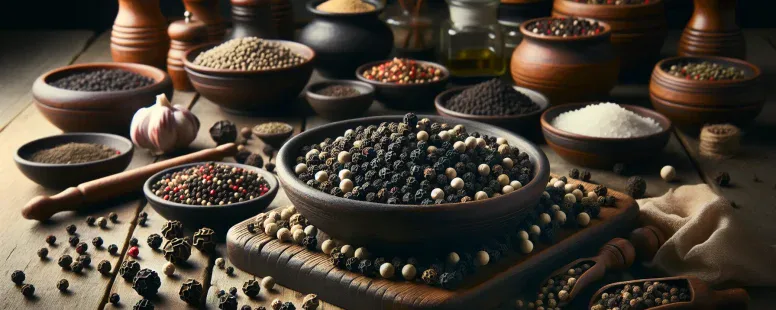
White and black pepper come from the same botanical species, Piper nigrum, yet your senses notice striking differences. You might recognize black pepper faster by its wrinkled, dark spheres that add bitey heat to a steak or fragrant complexity to a tomato sauce. White pepper, instead, looks pale beige, smooth, even a bit unassuming, but quietly releases earthy, musty undertones onto creamy potato soup or a Cantonese crab dish.
You might wonder why the same fruit creates two such distinct flavor profiles. The answer lies in processing: black peppercorns dry with their skins intact, which preserves sharp, piney notes—think the hit on your tongue when biting into pepper at a bistro. In contrast, growers soak pepper berries to remove the outer skin before drying, revealing white cores that taste milder but can linger with funkier hints; curious chefs in parts of Asia often use them for their subtler punch and invisibility in pale sauces (Cook’s Illustrated, 2023).
Picture a family dinner where an uncle sprinkles white pepper onto his mashed potatoes, claiming its less fiery nature “don’t scare away the flavor of the cream.” Another guest prefers the robust kick of black pepper, remembering old Sunday roasts where the aroma alone stirs up a sense of home. Flavor chemists at the University of Oxford report that piperine, the compound responsible for the heat in both types, varies in its intensity and perceived bitterness depending on outer skin presence.
You taste their contrasts with every meal: black creating fireworks on grilled meats, white blending in savory elegance with chowder or béchamel sauce. Have you ever noticed how one spice shard sneaks up on you, while the other grows slowly, kind of like a story that unfolds in chapters? Chefs experiment with both peppers in test kitchens, seeking new combinations that surprise and delight, with studies from the American Spice Trade Association highlighting usage increases in global fusion cuisine.
Every time you reach for that mill or jar, you’re not just seasoning—you’re making a choice rooted in centuries of culinary evolution, cultural tradition, and even a dash of chemistry. So, have you decided which pepper makes your food sing yet, or will you try blending them for a symphony of flavor?
How White and Black Pepper Are Produced
Production methods set white pepper and black pepper apart, even if both come from Piper nigrum vines. Each process crafts distinctive spice characteristics and unlocks unique flavors you’ll notice with every pinch.
Harvesting and Processing Differences
Pepper producers use different harvesting times and cleaning steps when preparing each peppercorn variety. When farmers harvest black pepper, they pluck unripe green berries, then dry them under the sun. Drying with the outer skin intact triggers enzymatic browning, producing the black, wrinkled exterior and intense aroma. In Vietnam, the world’s top black pepper exporter, smallholder farmers sometimes still sun-dry batches on woven bamboo mats, echoing centuries-old methods.
White pepper involves a slower, more selective process. Harvesters wait until berries ripen fully to a red hue, then soak them for up to two weeks. Removing the softened skins—a method called retting—reveals the pale inner seed. Water quality can change the taste at this stage: a Sumatran producer may rely on river water, while Southern Chinese facilities opts for clean wells, leading tastier or even muddy flavors.
Did you ever taste white pepper’s gentle heat and wonder why it’s less spicy? Skin removal strips away pungent compounds that black pepper keeps. This subtlety ranks white pepper as a favorite for delicate European sauces, like French béchamel, where flecks of black would stand out too much.
Key Physical Characteristics
Peppercorns from the same vine look remarkably different after processing. Black pepper’s outer hull wrinkles and darkens, creating a coarse, pebblelike sphere you can crush with a grinder. By contrast, white pepper appears cream or tan, with a smoother, smaller surface.
If you crush both, black pepper releases clouds of spicy, citrusy aroma, while white pepper gives a milder, earthy scent sometimes described as musty. In professional kitchens—from classic Parisian bistros to Shanghai hotels—chefs select peppercorn type based on color, volatility, and how smooth the final dish should taste.
Curious which to try in your next soup or marinade? Ask yourself: Do you want a bold, spicy pop or a mellow, hidden warmth? The answer lies in the pepper’s journey from berry to bottle.
Flavor Profiles and Culinary Uses
White and black pepper shape the mood of every dish—from a bold steak crust to a delicate bisque. Taste these two, and instantly, you catch how they dance on your taste buds, contrasting but related, like distant cousins at a family reunion.
Taste Differences
Black pepper explodes with sharp, pungent heat, its essential oil piperine dominating your first bite. Think about that classic snap you get when biting into a Caesar salad or a freshly ground steak. This heat comes from the dried outer skin that’s left clinging to the kernel, carrying earthy, citrus, and woody notes.
White pepper delivers a different performance. Because processors soak off the skin before drying, white peppercorns taste clean, musty, and sometimes even slightly fermented. You notice this in dishes like hot and sour soup or creamy mashed potatoes—where it slides in like a subtle background note, not shouting but deeply present. Some French chefs insist only white pepper works in béchamel sauce, arguing that visible black dots distract from the creamy visual purity (source: Harold McGee, “On Food and Cooking”).
Best Uses in Cooking
Black pepper works as the bold lead in spice rubs, pepper steak, or spiced tomato sauces. Try tossing it onto grilled vegetables or pasta aglio e olio, and you’ll notice its aromatic punch won’t fade, even against robust flavors.
White pepper blends into dishes where you want heat, but not the speckled look or the overtly spicy aroma. Drop it in creamy chowders, Chinese congee, or potato leek soup. Some pastry chefs even sneak a pinch into shortbread for an earthy kick. Which pepper you reach for—it’s about what mood you want on your plate.
Chefs around Southeast Asia favor white pepper for its nuanced heat, especially in Cantonese or Thai cuisine, where strong black pepper would overwhelm subtler flavors. Experiment at home: make one dish twice, swapping the pepper each time. Do you taste the quiet whisper of umami, or the unmistakable voice of heat? Your spice rack, with its two peppers, is a toolkit for culinary inflection.
Nutritional Value and Health Benefits
White and black pepper both pack a nutritional punch, but dig a little deeper and you’ll find the grains tell separate stories. Think about what’s in your grinder—are you seasoning with more than just taste?
Nutrient Content Comparison
Explore white and black pepper through the lens of nutrition, and their differences start to matter more than you’d guess. Black pepper retains the outer layer of Piper nigrum, bringing with it higher levels of dietary fiber—about 2 grams in a 10g serving—plus marginally more phytonutrients and essential oils. This layer’s where you’ll find a tiny boost of vitamin K, iron, and manganese (USDA FoodData Central).
Peer closer at white pepper, and the absence of the skin means a smaller fiber content—less than 1.5 grams per the same serving size—and slightly fewer antioxidants, since many reside in the discarded peel. Is a smoother taste the trade-off for reduced micronutrients? Most cooks can’t answer that on the spot.
Nutrient
Black Pepper (10g)
White Pepper (10g)
Fiber
2g
<1.5g
Protein
1.2g
1g
Iron
3mg
2.5mg
Vitamin K
13mcg
11mcg
Manganese
0.9mg
0.8mg
Antioxidants
Higher
Lower
Does that mean you can feel a difference on your plate, or do these numbers fade into the background of your daily meals? Integrate both peppers into your diet, and you’re already diversifying trace minerals with every pinch.
Potential Health Effects
White and black pepper aren’t just there for flavor—they’re subtle supporters, nudging your well-being with each grind. Black pepper’s piperine—for example, the compound behind its trademark heat—boosts bioavailability of certain nutrients, so that more curcumin from turmeric or selenium from food gets absorbed (Journal of Food Science, 2015). White pepper, although less robust in piperine content due to processing losses, still offers antioxidant activity, helpful against oxidative stress but in a quieter way.
Ever catch yourself sneezing when black pepper’s in the air? Piperine causes that, but it’s also been shown, in human clinical studies, to mildly stimulate digestion and even assist with metabolic rate. Folklore in Southeast Asia claims white pepper’s gentler spice soothes the gut, but scientific evidence supporting this is lighter. Still, both peppers do contain trace amounts of minerals linked to bone and immune health—manganese and iron, giving each variety its role in a balanced meal.
Why do global cuisines, like Chinese hotpots and French béchamel, depend so heavily on these peppers, beyond their flavor? Their micronutrient profile—small but meaningful, especially if your pantry’s full of processed foods—fills gaps that plain salt, for example, will never bridge.
Next time you reach for pepper, are you looking for sharp, vivid energy, or maybe a softer, earthy note with underlying nutritional value? Every sprinkle tells a health story, if you care to listen.
Price and Availability
You glance at shelves in a bustling supermarket aisle, noting that black pepper fills rows of containers, while only a small handful display white pepper. The numbers paint the scene: in global markets, black pepper’s average retail price often ranges from $5 to $7 per pound, but white pepper can stretch from $9 up to $15 per pound (USDA Market Report, 2023).
Pepper Type
Average Retail Price (USD/lb)
Shelf Prevalence Example
Black Pepper
$5–$7
Common in US supermarkets, bulk bins
White Pepper
$9–$15
Limited to gourmet stores or ethnic shops
Price sets a marker for rarity, but you might wonder, why does this discrepancy exist? Black pepper’s production process relies mostly on sun-drying green berries—quick, efficient, and far less labor-intensive. White pepper goes through lengthy soaking, fermenting, and skin removal, raising cost, limiting production, and increasing risk for spoilage (International Pepper Community, 2022). For every 10 pounds of black pepper exported from India, Vietnam, or Brazil, you may see only 2 pounds of white pepper reach global shelves.
Availability often hinges on culinary culture, too. Asian chefs pick white pepper for Cantonese braised dishes because it dissolves invisibly in soups or sauces; American kitchens usually reach for black pepper for everything from barbecue rubs to simple scrambled eggs. Try calling your local grocery—chances are the staff stocks double the brands and grind choices for black over white, reflecting consumer demand.
Sometimes, pepper prices shoot up after monsoon delays or pest infestations hit Indian and Vietnamese crops. While you may treat pepper as a humble staple, each spike in global commodity exchanges can make its price sway dramatically—consider the 2020 harvest shortfall, when white pepper’s spot price temporarily eclipsed coffee.
If you’re choosing which to buy, ask yourself: How important is visual appearance? Are you exploring new dishes from Southeast Asia, or updating classics like cacio e pepe? Price, access, and culinary tradition all tie into your pepper adventure, making every sprinkle a story about history, geography, and culture—one that invites you, the home cook, to seek variety and savor even the smallest difference in flavor.
Conclusion
When you reach for the pepper grinder or shaker, you’re making more than a simple flavor choice—you’re tapping into centuries of culinary tradition and craftsmanship. Whether you prefer the bold kick of black pepper or the subtle complexity of white pepper, each brings its own personality to your kitchen.
Let your palate guide you as you experiment with both varieties. You might discover that the right pepper can transform your favorite recipes and even inspire new ones. Embrace the possibilities and enjoy the journey of seasoning your dishes with intention and curiosity.
To provide the best experiences, we use technologies like cookies to store and/or access device information. Consenting to these technologies will allow us to process data such as browsing behaviour or unique IDs on this site. Not consenting or withdrawing consent, may adversely affect certain features and functions.
Functional
Always active
The technical storage or access is strictly necessary for the legitimate purpose of enabling the use of a specific service explicitly requested by the subscriber or user, or for the sole purpose of carrying out the transmission of a communication over an electronic communications network.
Preferences
The technical storage or access is necessary for the legitimate purpose of storing preferences that are not requested by the subscriber or user.
Statistics
The technical storage or access that is used exclusively for statistical purposes.The technical storage or access that is used exclusively for anonymous statistical purposes. Without a subpoena, voluntary compliance on the part of your Internet Service Provider, or additional records from a third party, information stored or retrieved for this purpose alone cannot usually be used to identify you.
Marketing
The technical storage or access is required to create user profiles to send advertising, or to track the user on a website or across several websites for similar marketing purposes.