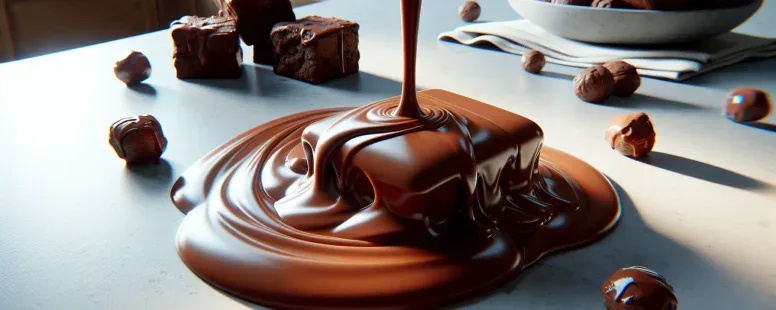
Picture breaking a chocolate bar in half—snap, the pieces tumble apart, but the taste and smell remain deliciously familiar. Now picture baking that same chocolate into gooey brownies. The aroma fills your kitchen, the texture transforms, and suddenly you’ve got something entirely new. What’s really happening beneath the surface?
Understanding the difference between chemical and physical change isn’t just for science class; it can spark creativity in your kitchen, help you care for your belongings, or even save you money. When you grasp how matter shifts and transforms, you unlock a hidden layer of the world—a world where simple actions can lead to dramatic results. Whether you’re curious about why ice melts or how rust creeps onto metal, exploring these changes reveals a universe of surprises waiting in the everyday.
Understanding Changes in Matter
You notice chocolate melting in your palm, but have you wondered if that gooey puddle’s a new substance, or just another form of same chocolate? Matter—whether in kitchen, garage, or wild outdoors—follows intriguing rules when transforming. Some changes—like freezing water into ice or dissolving sugar into tea—don’t mess with a substance’s identity. Others—like baking bread or rusting iron—bring something totally new into the world.
Ask yourself: If you reverse what happened, do you get original stuff back, or do you end up with something hopelessly different? Physical changes—by entity, melting, boiling, cutting—shuffle molecules but keep chemical structure same [1]. When you freeze the juice, ice cubes keep taste and properties. That’s physical. But toss a match on firework powder, and color plus sound reveal a permanent shift; atoms rearrange, new substances appear, energy’s released—that’s chemical [2].
You think a rainbow of examples, yet sometimes difference’s not obvious. Rotting fruit looks different than fresh, but so does frozen fruit—one’s chemical decay, other’s just a phase change. Scientists use evidence like color, gas production, and energy change to figure out transformations (e.g. National Science Foundation, 2022). Next time you cook, paint, or polish silver, stop and ask, what’s really changing? Curiosity is the doorway to discovery.
References
[1] American Chemical Society. “What Is a Physical Change?”, acs.org
Defining Chemical Change
Chemical change describes a process where substances combine or break apart to form entirely new materials, with distinct properties and identities. During these changes, the particles rearrange, creating something you didn’t start with.
Key Characteristics of Chemical Change
Substance Formation
New substances appear during chemical changes, for example when iron rusts and forms reddish-brown iron oxide.
Irreversible Process
You can’t easily reverse chemical changes; burning wood turns it into ash and gases, and you can’t get that original log back.
Energy Flow
Chemical changes often release or absorb energy—baking soda and vinegar fizz because they release carbon dioxide gas.
Property Alteration
Physical and chemical properties shift, so cooked eggs change color and texture since proteins break and connect in new ways.
Observable Clues
Color shifts, heat generation, gas bubbles, and unexpected odors often signal chemical change. Have you ever noticed the sharp smell when citrus meets bleach? That’s new chemicals forming on the spot.
Common Examples of Chemical Change
Combustion
Lighting a match sparks a rapid change, as the wood and chemicals transforms into smoke, ash, and new gases. According to the American Chemical Society flame reactions always change chemical structure (ACS Publications, 2023).
Rusting
When bikes rust after rain, they’re undergoing a chemical reactions between iron, oxygen, and water, making iron oxide.
Cooking
Frying eggs, toasting bread, and browning meat create new flavors and aromas, due to the Maillard reaction.
Photosynthesis
Plants use sunlight to convert carbon dioxide and water into sugar and oxygen—an essential chemical transformation for life on Earth.
Baking
When you bake a cake, you mix flour, eggs, milk, and sugar. The oven’s heat causes irreversible new chemical bonds.
Picture every time you strike a match or bake a batch of cookies, you’re performing a chemistry experiment in your kitchen—just don’t breath in the burning match fumes! Think about which daily moments surprise you by revealing the hidden world of chemical change around you.
Defining Physical Change
Physical change means that a material alters its appearance or state, yet keeps its original substance intact. You might catch yourself watching ice cubes fizz and melt in your lemonade and then wonder, has the ice changed or only its form? Most of the time, you’re just seeing a new side of the same stuff, not a new creation.
Key Characteristics of Physical Change
Physical changes share several noticeable traits you can spot easily:
No New Substance
You keep the same chemical identity throughout the change. The melted ice remains water, and torn paper remains paper, just in smaller pieces.
Reversible Processes
Many physical changes can flip back to their starting points. Consider liquid wax solidifying or a glass of frozen lemonade thawing at a summer picnic.
No Chemical Reactions
The basic particles, molecules, and atoms all stays the same, unlike when you fry an egg or caramelize onions.
Changes in State, Shape, or Size
Physical changes often change how a thing looks or feels, like breaking a mirror or condensing steam on a cold window.
Energy Involved
You might need energy to cause a change—such as boiling water on the stove—but the structure stays unaltered.
Common Examples of Physical Change
Everyday, physical changes surround you, show themselves in countless shapes:
Melting Ice Start by plopping a cube into tea. It disappears, but if you freeze the tea again, you can get it back.
Shredding Paper Think about recycling: paper gets torn, pulped, shredded, and pressed—always just paper, in different forms.
Dissolving Sugar Stirring crystals into coffee, they vanish, yet taste returns if the water evaporates.
Hammering Metals Bang on metals like copper or gold, and you can flatten, stretch, or mold them, but there’s no new element—just a change in shape.
Evaporation and Condensation Your bathroom mirror fogs up during a hot shower, the water disappearing from your skin and clinging to cool glass.
These ordinary wonders—verified by science educators like Science Learning Hub and American Chemical Society—remind you that change doesn’t always mean transformation. Consider the next time you melt butter for popcorn or snap a pencil in two: the pieces different, the material unchanged.
Difference Between Chemical and Physical Change
You often see chocolate melting on a summer day, or sparks flying when metal rusts. But underneath, something deeper’s happening—matter’s either taking on a new identity or just changing its clothes. Knowing the difference between chemical and physical change let’s you catch the subtle clues hidden in everyday moments.
Observable Effects
You see, chemical changes treat your senses to a little show. Color changes—look at the deep brown crust on baked bread, or the green turning brown in a cut apple (Brown et al., 2017). Bubbles might rise when vinegar meets baking soda, hinting at gas formation. Sometimes, you’ll catch a whiff of a new scent—as in acrid smoke from burning toast. These effects says: something new is born.
Physical changes act quietly. Water freezing just rearranges its molecules—same taste, same smell, just colder and hard. Tear a piece of paper, you’ll still get paper bits. Sugar dissolving in tea; crystals vanish, but taste tells the same story (Zumdahl & Zumdahl, 2020). You see change, but identity stays.
Energy Changes
Chemical changes energy dance gets dramatic. Heat’s either sucked in or spit out—burning wood warms rooms, mixing vinegar and baking soda feels cold. That means energy’s not just moving, it’s transforming (Silberberg, 2019). Sometimes light flashes—fireworks show off both new compounds and energy leaps.
Physical changes energy moves gently. Ice melting? Energy’s absorbed, but molecules stay water. Steam kissing your mirror after a shower? Water just shifts state, energy just floats in or out. No new substance crashes the party—energy just speaks softly.
Reversibility
Reversing chemical changes’s tough. Try un-baking a cake! Once new substances pop up, you can’t just go back—you’ve made a permanent leap. Rusted iron won’t simply shine again without chemical intervention.
With physical changes, rewind comes easy. Melted chocolate chills back to a bar, spilled salt can be re-crystalized from brine, and if you compress a spring it just leaps back. Matter’s old identity sits just a step away; undoing the change only alters form, not the core.
Table: Key Contrasts
Criteria
Chemical Change
Physical Change
Observable Effects
New color, gas, odor (Bread crust, fizzing)
Shape, state shifts (Ice melting, paper torn)
Energy Changes
Large energy swap, temperature jumps (Combustion, neutralization)
Minor energy flow (Melting, dissolving)
Reversibility
Not easily reversed (Rust, baking)
Usually reversed (Freezing/thawing)
Look at the world; is something truly new, or did it just rearrange its face? Next time you cook, clean, or craft—watch for these signals and ask: what changed, and what story does it tells?
Importance of Distinguishing Between the Two Changes
Spotting the difference between chemical and physical change turns ordinary moments into science sleuthing. When you toss a log on a campfire, do you notice the smoky scent rising as the log crackles and morphs into ash? Burning wood isn’t just drying out—it’s forming new compounds like carbon dioxide and water vapor (EPA, 2022). Recognizing that, you get why you can’t ever glue those ashes back into a log. Misjudging the type of change leads to wasted time, or worse, broken gadgets—picture trying to “freeze” a burnt pizza back into dough!
Think of your smartphone’s battery. Charging it, you cause electrons to flow, which is a physical change. But over years, chemical reactions permanently reduce the battery’s capacity (DOI:10.1038/s41560-020-0645-7). If you mistake a spent battery for one that just needs a recharge, you’ll end up stranded mid-call. Separating the reversible from the permanent gives you a practical edge, whether you’re maintaining a car, restoring artwork or mixing cement on a construction site.
Chefs master this science every time they caramelize onions. The golden hue and rich flavor signal a Maillard reaction—a chemical change you can’t undo (National Center for Biotechnology Information, 2020). Meanwhile, chilling chocolate is only shifting its state; melted chocolate can harden again, making physical change a baker’s secret weapon when fixing a dessert disaster. This skill turns ordinary cooks into kitchen magicians.
Teachers prompt students with questions: “Can you unboil an egg?” That riddle sparks curiosity. In the kitchen, in classrooms or on the factory floor, you gain power by asking what’s really happening when things transform. If you assume all changes are reversible, that thinking sets up for disappointment or costly mistakes. By distinguishing these changes, you unleash creativity—designing experiments, troubleshooting repairs or inventing new recipes.
You probably encounter hundreds of changes every day. Peeling an orange, ironing a shirt, lighting a scented candle—all governed by the rules of physical and chemical change. Next time you spot a rainbow of rust on bike handlebars, ask: did water just wash off, or has the metal itself changed forever? This awareness doesn’t just save you money or effort—it’s a superpower that turns daily tasks into discovery.
Conclusion
Recognizing the difference between chemical and physical changes gives you a sharper eye for the world around you. Whether you’re in the kitchen experimenting with new recipes or tackling everyday challenges, this knowledge helps you make smarter decisions and appreciate the science behind each transformation.
Stay curious and keep exploring how things change—you might discover new ways to solve problems, save resources, or simply enjoy the wonders hidden in daily life.
To provide the best experiences, we use technologies like cookies to store and/or access device information. Consenting to these technologies will allow us to process data such as browsing behaviour or unique IDs on this site. Not consenting or withdrawing consent, may adversely affect certain features and functions.
Functional
Always active
The technical storage or access is strictly necessary for the legitimate purpose of enabling the use of a specific service explicitly requested by the subscriber or user, or for the sole purpose of carrying out the transmission of a communication over an electronic communications network.
Preferences
The technical storage or access is necessary for the legitimate purpose of storing preferences that are not requested by the subscriber or user.
Statistics
The technical storage or access that is used exclusively for statistical purposes.The technical storage or access that is used exclusively for anonymous statistical purposes. Without a subpoena, voluntary compliance on the part of your Internet Service Provider, or additional records from a third party, information stored or retrieved for this purpose alone cannot usually be used to identify you.
Marketing
The technical storage or access is required to create user profiles to send advertising, or to track the user on a website or across several websites for similar marketing purposes.