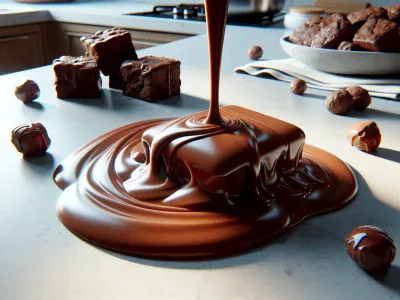
Picture yourself in a bustling kitchen—the aroma of melting chocolate swirls through the air and your hands hover over two mysterious kitchen staples: wax paper and parchment paper. They look almost identical, smooth and whisper-thin, yet choosing the wrong one could spell disaster for your next baking adventure. what really sets them apart?
Most people grab whichever roll’s closest, missing out on the subtle yet powerful differences that can transform your culinary creations. From unlocking effortless cookie releases to preventing sticky messes, knowing when to use each paper gives you an edge that even seasoned bakers sometimes overlook. Let’s peel back the layers and discover why this small choice makes a big difference in your kitchen.
What Is Wax Paper?
Wax paper, a semi-translucent kitchen essential, uses thin paper that’s coated with paraffin wax on both sides. You might reach for it when sandwiches needs to stay separate or when fudge demands a nonstick wrapper. Did you ever wondered why grandma never baked cookies on wax paper? The waxy surface, like a raincoat for breadcrumbs, repels moisture but melts and smokes when exposed to direct oven heat above 200°F. Food Network explains that wax paper excels at cold storage and rolling out pie dough, but it just can’t stand up to the oven.
Some folks line their countertops with wax paper, prepping veggies while catching sticky drips. Cake decorators layer cooled cakes with it, so frosting never tears the crumb. If you crumple wax paper and shake it, do you hear that soft crinkle? That’s the sound of cellulose fibers, tangled and glossy from wax, holding firm against water but surrendering to flame.
Ask yourself: if wax paper and parchment paper look so similar, why don’t bakers swap them freely? Although their appearance mimics twins in a deli, their chemistry splits like oil and water. You might discover this the hard way during a bake sale, when a sheet of wax paper fuses to brownies, leaving flecks of wax in every bite.
Next time you consider which paper to grab, remember how wax paper shines: keep cold foods fresh, candies neat, or counters clean. Would you risk your famous chocolate chip cookies just to save a sheet?
What Is Parchment Paper?
Parchment paper stands out in your kitchen when you’re aiming for flawless baking lined with reliability and safety. This silicone-coated cellulose sheet resists heat, usually up to 420°F (215°C), which means you can put parchment paper directly into most ovens without worrying about a smoky disaster. Bakers like you might ask, “Is this just a fancy wax paper?” Not at all. Unlike wax paper, the silicone layer won’t melt or leach, not even if you leave it in as your chocolate chip cookies brown to perfection.
Consider this scenario: you’ve spread gooey brownie batter on a metal tray, worried about sticking or burning. Slip a piece of parchment paper underneath, though, and you’ll lift the finished brownies out in a single clean sheet, no chisel required. Picture covering fish fillets for en papillote—a French method where steam and seasoning gets locked inside. Parchment paper’s steam resistance makes these classic techniques simple and mess-free.
Food scientists with Cook’s Illustrated found that parchment paper acts as an effective shield between food and direct heat sources, reducing burnt bottoms on cookies and providing even browning. Its nonstick surface isn’t magic, but material science: you’ll see delicate macarons or sticky granola clusters pop right off, leaving no frustrating residue behind.
Some even use parchment for creative endeavors—drawing swirling chocolate patterns, folding it into piping bags, or wrapping sandwiches for picnics. Ever tried tracing a pie dough circle with a pencil on parchment? Precision comes easy, and cleanup is a breeze because parchment paper resists oil and moisture.
When you reach for baking essentials, you might ask, “Does it really matter which paper I choose?” It does, especially if you prize consistency in your baking results or want to replicate the methods of professional pastry chefs (source: King Arthur Baking Company). Which recipe do you want to conquer next—pillowy meringues, rustic French bread, or just a weeknight roasted dinner? Parchment paper’s versatility adapts to any of those goals.
You and many home bakers may once tossed a roll of parchment into your cart out of curiosity. But after your first perfect pan of cookies, you probably forget old kitchen habits quick. Isn’t it time to let parchment paper earn a permanent spot beside your rolling pin and spatulas?
Key Differences Between Wax and Parchment Paper
Knowing the difference between wax paper and parchment paper keeps your pastries from turning into sticky disasters. Each paper answers a specific kitchen problem, shaping your baking experience and influencing your results.
Material Composition
Wax paper uses a thin layer of paraffin wax on both sides, so it feels almost glossy and smooth to the touch. Brands like Reynolds and If You Care use food-grade paraffin, making wax paper safe for direct contact with cheese, sandwiches, or fudge. Parchment paper, but, emerges from cellulose pulp that’s treated with silicone. This silicone coating, found in most major baking parchment brands, creates a heat-safe shield and a dry touch. Wax repels liquids, but silicone shrugs off heat and grease with ease.
Heat Resistance and Usage
Parchment paper withstands oven heat up to approximately 420°F (215°C), letting you roast vegetables and bake cookies without worrying about smoking sheets or ruined pans (Cook’s Illustrated, 2021). Wax paper, in contrast, warps and melts above 140°F (60°C), so it’s best left far from the oven or stovetop. Someone using wax paper under chicken wings in a hot oven ends up scraping fused, sticky shreds off the food—this isn’t a rare kitchen mishap.
Non-Stick Properties
Parchment paper supplies a reliable non-stick surface for sticky batters, fragile meringues, and toffee. It doesn’t even need oil or butter for most recipes. Professional bakers in Paris line their macaron trays only with parchment for the cleanest release. Wax paper, while non-stick for cool items like chocolate truffles or caramel candies, loses that trait once you introduce heat. The wax melts and can transfer to your treats.
Typical Applications in the Kitchen
Wax paper covers counters for kneading bread, wraps sandwiches, and separates stacked cookies or burgers. Delis often use wax paper squares for layered cheeses or sliced meats. Parchment paper lines baking trays for sheet cakes, roasts fish en papillote, and even pipes homemade piping bags for icing. Bread bakers use it to lift fragile doughs into Dutch ovens, and home cooks rely on it for roasting vegetables without sticking.
Feature
Wax Paper
Parchment Paper
Coating
Paraffin wax (food-grade)
Silicone (food-safe)
Max Temperature
140°F (60°C)
420°F (215°C)
Non-Stick Use
Cold, room temperature only
Both cold and hot
Common Tasks
Wrapping sandwiches, rolling dough
Baking, roasting, cake lining
Choosing between these two can seem simple, but using the wrong paper at the wrong moment could waste your time, ingredients, or even a batch of cookies. What could happen if you swapped wax for parchment on your next cookie tray—would your kitchen fill with smoke? Matching the properties of each paper to your exact kitchen task always preserves both your flavors and your peace of mind.
Pros and Cons of Wax Paper and Parchment Paper
Wax paper and parchment paper each bring something unique to your kitchen routine but their functions drift apart like two roads in a forest. Wax paper’s paraffin wax coating offer a dreamy non-stick shield for cold food prep—think separating gooey chocolate-dipped strawberries or lining countertops for a flurry of flour while you roll out pie dough. Many home cooks use wax paper to wrap sandwiches and cheese, it’s almost like having an edible raincoat for your lunches. But, if you pop wax paper in a 350°F oven during a cookie craving, you’ll witness an unplanned science experiment: melting wax and curling edges plus smoke that not even your dog loves. Nobody on America’s Test Kitchen or Food52 recommends wax paper for heat, since paraffin turns to oil above 140°F (60°C), and that’s barely above bathwater. If you’ve ever tried peeling it off a hot roasted veggie—well, you know the heartbreak.
Parchment paper, on the other hand, can be the backstage pass that every baker craves. Its silicone finish stands firm under a broiler’s glare—no wilting, no melting, just gentle browning. You’ll get clean, easy releases for meringue cookies or baked salmon: no scraping, no goo, no uneven bottoms. Is it a magician’s cloak in the oven, or just smart science? Professional kitchens and brands like King Arthur Baking tout parchment’s reliability. Some bakers say that its structure even encourages cookies to spread evenly. Critics do point out, but, that parchment adds to waste in busy kitchens, and costs more—with a single roll averaging $4-6 compared to $2-3 for wax paper in June 2024. Ever tried reusing it for batch after batch? Many do, and results stay consistent.
Would you swap one for the other in a pinch next time? If you value non-stick magic in the oven, parchment paper’s your loyal sidekick. For those picnics or chilled fudge-crafting marathons, wax paper still wears the crown. Which will safeguard your next culinary masterpiece—science or tradition? Maybe choosing your sheet is more than just kitchen logistics; it’s about deciding how much certainty you want alongside creativity on your next big bake.
Which One Should You Use?
Selecting between wax paper and parchment paper depend on your baking plans, but think: are you crafting fudgy brownies, or prepping sandwich wraps for a picnic under blue skies? Parchment paper, that trusty silicone sidekick, lines your cookie sheets when you’re chasing that elusive golden-brown edge and quick, non-stick release. America’s Test Kitchen found that parchment delivers even baking for macarons or roasted vegetables, while wax paper’s paraffin coating can start to smoke with just a hint of oven heat—picture your kitchen filled with more smoke than the Fourth of July.
For cold jobs, wax paper steps onto the stage like a dependable understudy. Sandwiches stay fresh in your kid’s lunchbox, or you might use wax paper to measure confectioner’s sugar on a busy countertop. But, if you ever tried baking cookies on wax paper, you might recall scraping melted wax off your pan, muttering “Never again!” That’s not a memory you soon repeating.
Is cost your priority? Parchment tends to cost a bit more, but if a stress-free baking experience matters to you, that money spends itself. Bakers at the Culinary Institute of America rely on parchment for the sort of pristine results you see in glossy magazines; wax paper, on the other hand, finds li’l moments of glory in casual prep, wrapping cheese or prepping fudge before it hits the fridge.
So, before reaching for whichever roll sits closer, pause and ask: Where’s the heat? What’s sticking? Whose taste and texture are you trying to preserve? Each paper brings its own magic, as unique in the kitchen as the memories you’ll create using them. If crispy croissants line your weekend agenda, let parchment be your guide; if afternoons call for layered chocolate bark, wax paper keeps things neat until dessert graces the table.
Conclusion
Choosing between wax and parchment paper doesn’t have to be complicated once you know their strengths. By keeping both on hand, you’ll be ready for any kitchen task, from rolling out dough to baking perfect cookies.
Let your baking projects shine by picking the right paper for the job. With this knowledge, you can avoid kitchen mishaps and enjoy smooth, stress-free results every time.
To provide the best experiences, we use technologies like cookies to store and/or access device information. Consenting to these technologies will allow us to process data such as browsing behaviour or unique IDs on this site. Not consenting or withdrawing consent, may adversely affect certain features and functions.
Functional
Always active
The technical storage or access is strictly necessary for the legitimate purpose of enabling the use of a specific service explicitly requested by the subscriber or user, or for the sole purpose of carrying out the transmission of a communication over an electronic communications network.
Preferences
The technical storage or access is necessary for the legitimate purpose of storing preferences that are not requested by the subscriber or user.
Statistics
The technical storage or access that is used exclusively for statistical purposes.The technical storage or access that is used exclusively for anonymous statistical purposes. Without a subpoena, voluntary compliance on the part of your Internet Service Provider, or additional records from a third party, information stored or retrieved for this purpose alone cannot usually be used to identify you.
Marketing
The technical storage or access is required to create user profiles to send advertising, or to track the user on a website or across several websites for similar marketing purposes.