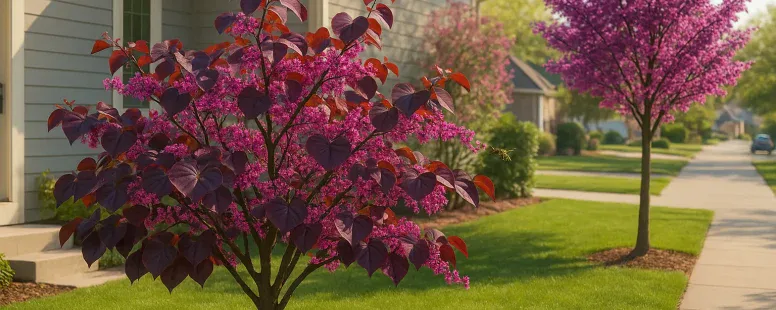
You’re choosing a redbud and the two names that keep coming up are Forest Pansy and Avondale. Both offer that punch of spring color and graceful branching, but they bring different strengths to a yard. In this text you’ll get a clear, side-by-side view, tactile details, seasonal rhythms, and real planting advice, so you can match the tree to your soil, space, and design goals. Expect surprisingly distinctive foliage effects, different bloom schedules, and practical trade-offs that matter once the tree is five years old.
At-A-Glance Comparison
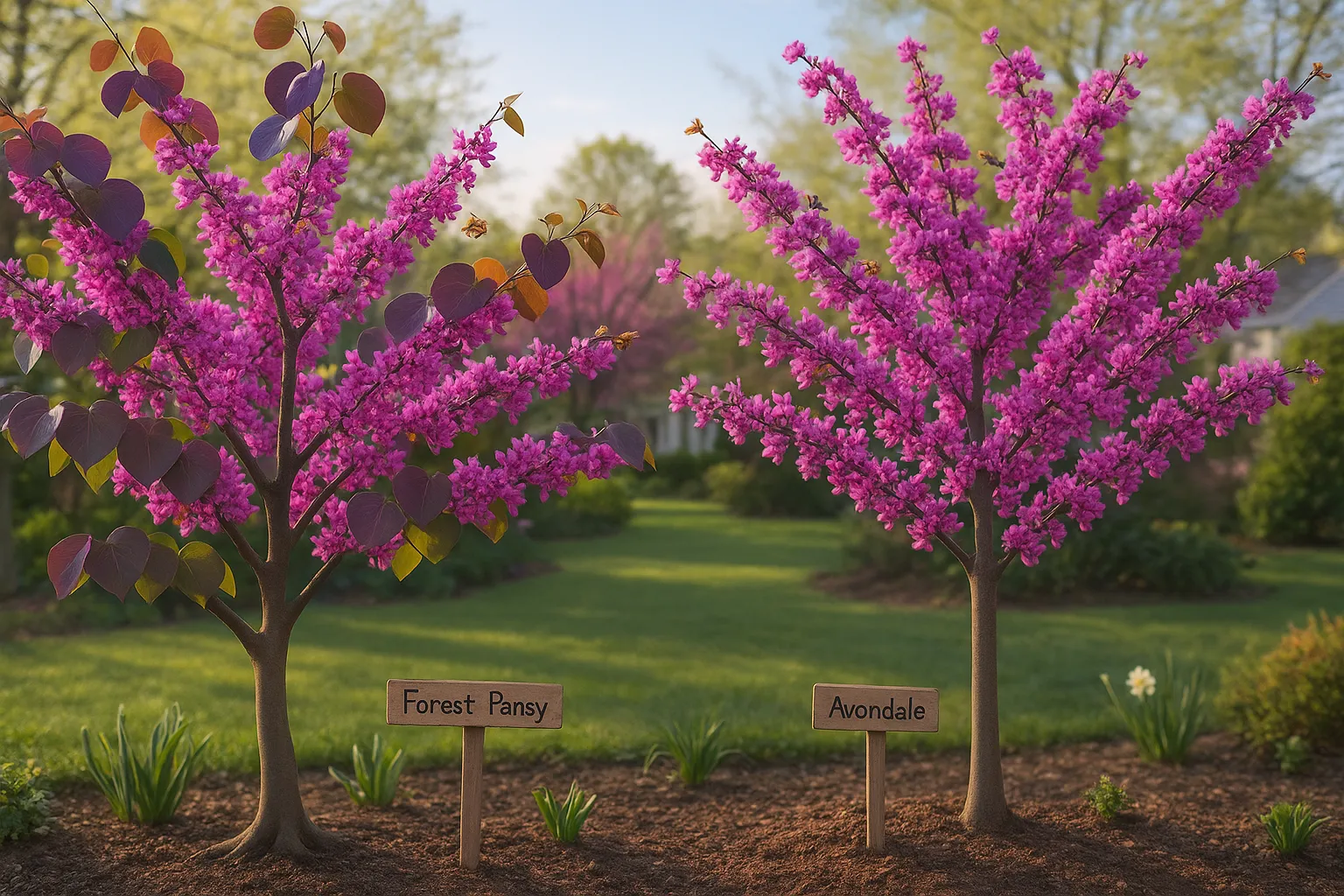
Fact: Forest Pansy is known for purple heart-shaped leaves: Avondale is selected for durable purple foliage plus strong flowering.
Forest Pansy (Cercis canadensis ‘Forest Pansy’) and Avondale (Cercis canadensis ‘Avondale’) are both cultivars of the eastern redbud. They share spring pea-like flowers and a similar overall silhouette, but differ in leaf color intensity, bloom timing, and vigor. Use this quick table in your head as a starting filter:
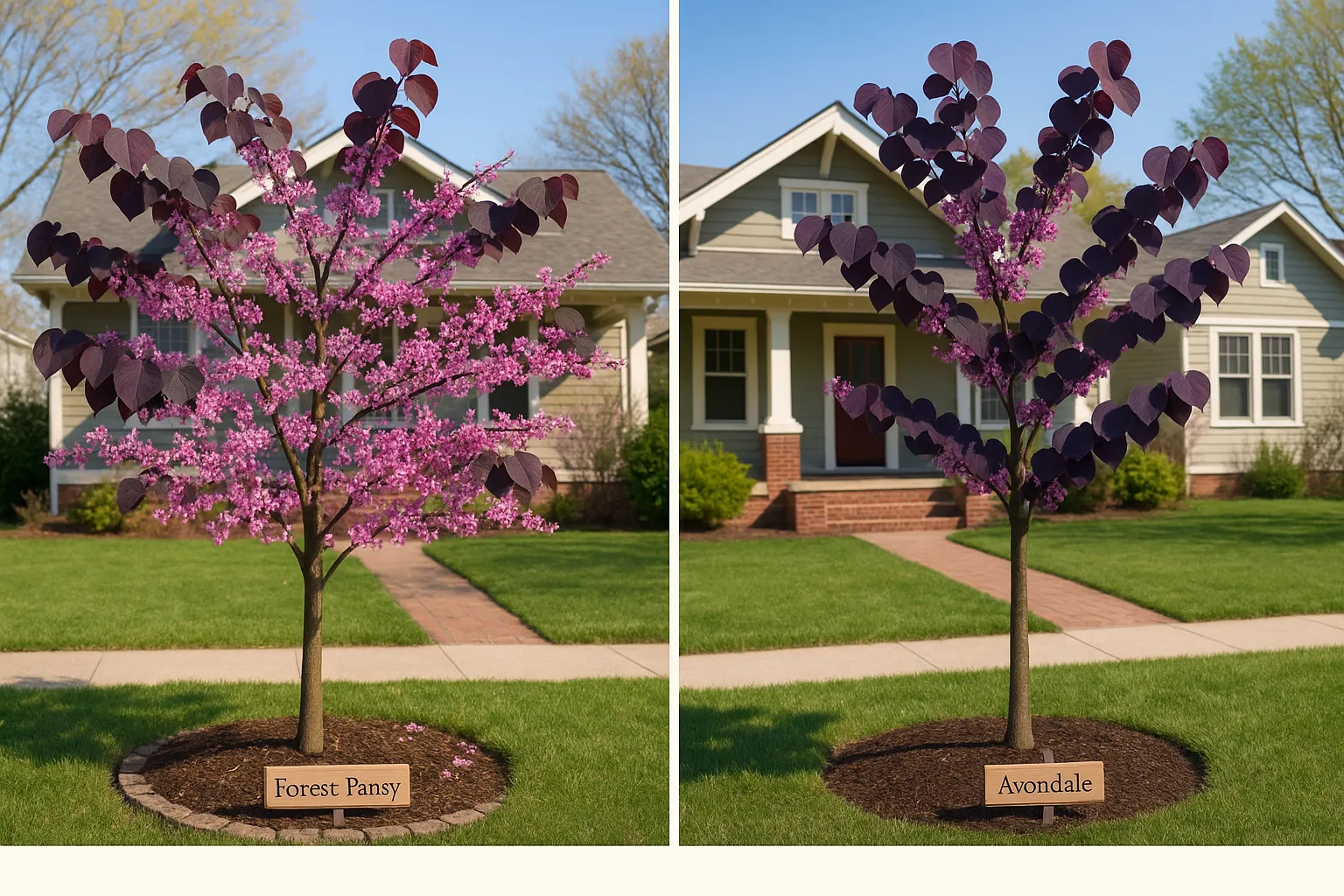
Forest Pansy: deep purple new leaves that often fade to burgundy or olive in summer: earlier and abundant spring flowers: popular in small landscapes for dramatic foliage.
Avondale: rich purple leaves that hold color longer into summer: slightly more upright habit: bred for consistent performance across a wider range of soils.
This quick look gives you the headline differences. Read on for the why and how, and where each one truly shines in a real yard.
Botanical Background And Key Cultivar Differences
Fact: Both trees are cultivars of Cercis canadensis, the eastern redbud, but they originate from different selections and breeding goals.
Cercis canadensis is a native North American small tree valued for early spring blossoms. ‘Forest Pansy’ emerged from a chance seedling discovered in the 1960s and was selected for its striking purple leaves. ‘Avondale’ was introduced later as a selection noted for better leaf retention and slightly improved disease tolerance.
Semantic entities to note: Eastern redbud (species), ‘Forest Pansy’ (cultivar), ‘Avondale’ (cultivar), USDA hardiness zones (zones 5–9 typical for redbud), American Beauties Nursery-type selections.
Why that matters: the cultivar name predicts predictable traits, leaf color, bloom habits, and how the tree will behave near houses, fences, or under power lines. Forest Pansy tends to be a showpiece: Avondale aims for steady, low-drama performance.
Size, Growth Habit, And Lifespan
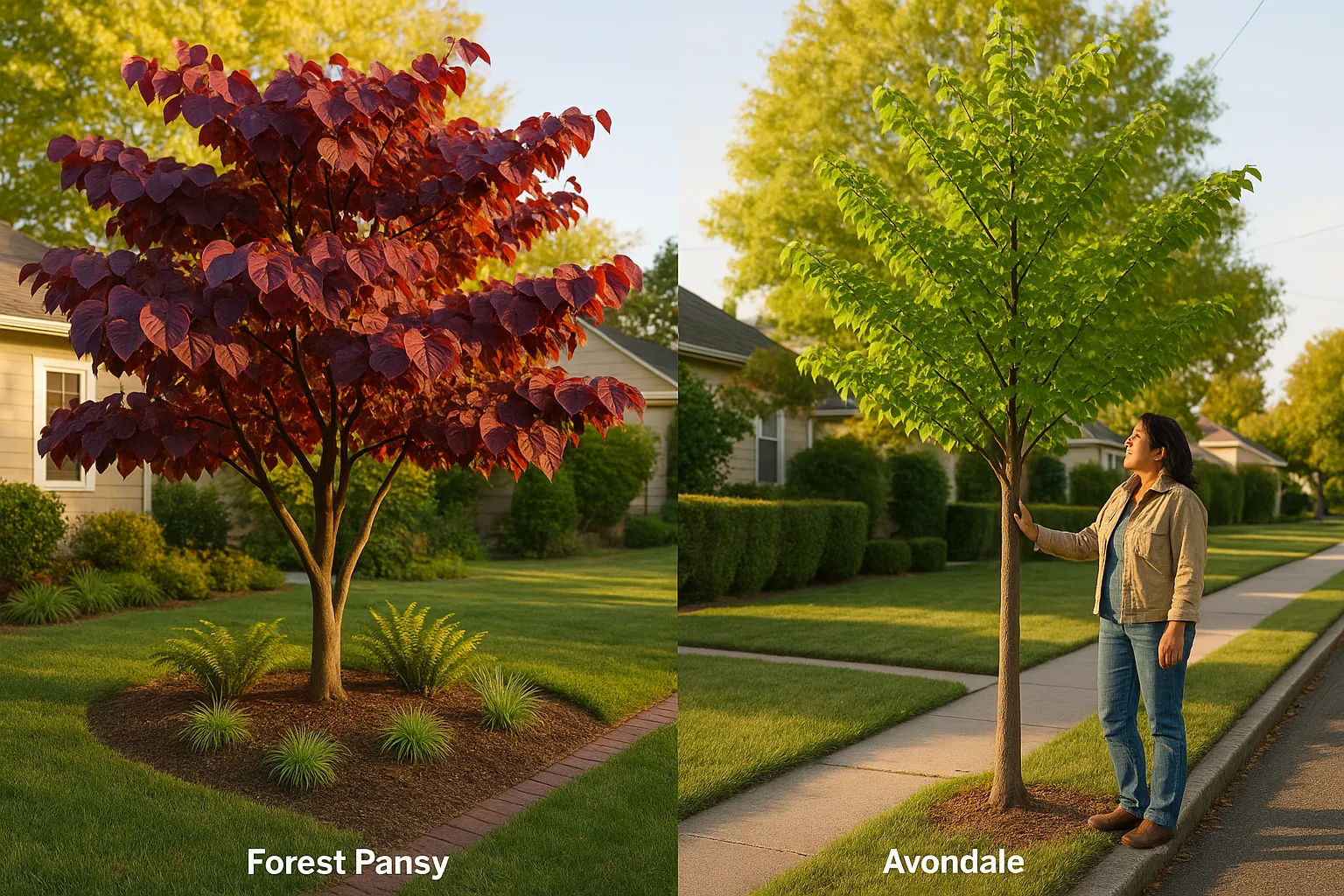
Fact: Mature height for both is roughly 15–25 feet, but habit differs: Forest Pansy spreads broadly: Avondale is more upright.
Forest Pansy usually develops a rounded to vase-shaped crown. It branches low and can create a multi-stem silhouette that reads as sculptural in small yards. Avondale grows a touch taller and narrower, making it easier to fit into tighter side-yard spaces or aligned street plantings.
Growth rate: both are moderate growers, around 12–24 inches per year under good conditions. Lifespan: expect 30–50 years with regular care: some specimens live longer in ideal sites.
Practical takeaways: pick Forest Pansy when you want a broad focal point or colorful understory layering. Pick Avondale when you need a compact street tree or a repeatable element in a formal row. Also consider overhead wires and utilities, Avondale keeps a neater, more predictable silhouette for pruning.
Foliage, Flowers, And Seasonal Interest
Fact: Forest Pansy gives earlier and often deeper purple leaves: Avondale keeps purple through more of summer and shows steady spring blooms.
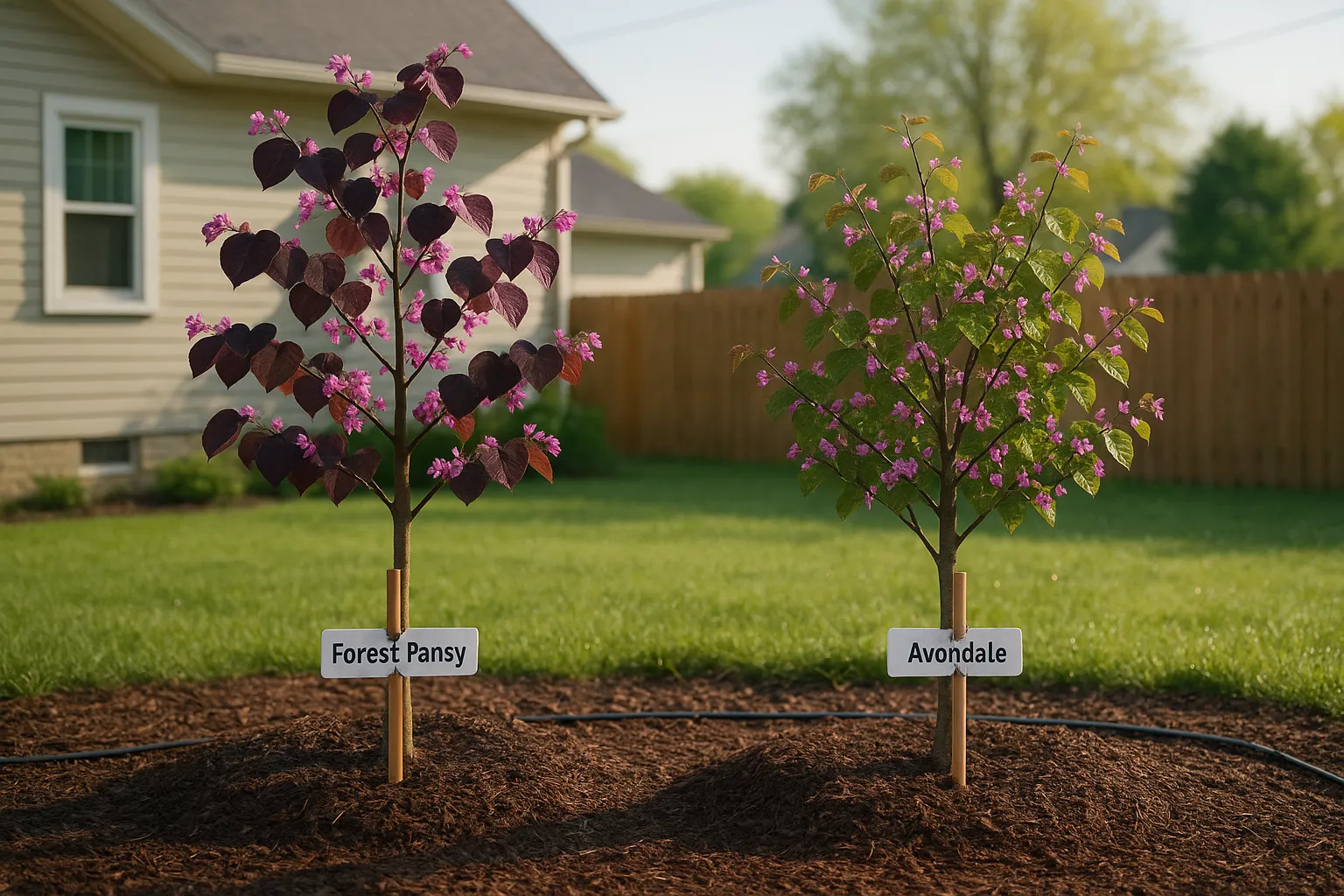
Foliage: Forest Pansy’s new leaves are glossy and deep purple, then they often shift toward olive-green as temperatures rise. Avondale’s purple is more stable: it stays noticeable longer into summer and sometimes shows less leaf scorch in hot, humid sites.
Flowers: both produce magenta to rosy pea-like blossoms in spring, often before leaves fully open. Forest Pansy sometimes flowers a bit earlier and more prolifically on younger wood. Pollinator value: both attract bees and early butterflies: redbuds are important nectar sources in early spring when few trees flower.
Seasonal interest beyond spring: redbuds offer sculptural winter branches with smooth gray bark and low branches that hold interest in a snow. Forest Pansy tends to read as a colorful accent: Avondale reads as a reliable background performer that still rewards you with seasonal color.
Site Requirements, Planting, And Care
Fact: Both cultivars prefer well-drained soil and full sun to partial shade: Avondale is slightly more tolerant of varied soils.
Site: aim for at least four hours of direct sun daily to keep purple leaves vibrant: afternoon shade reduces stress in hot climates. Soil: redbuds tolerate clay to loam but cannot thrive in standing water. pH: neutral to slightly acidic is fine.
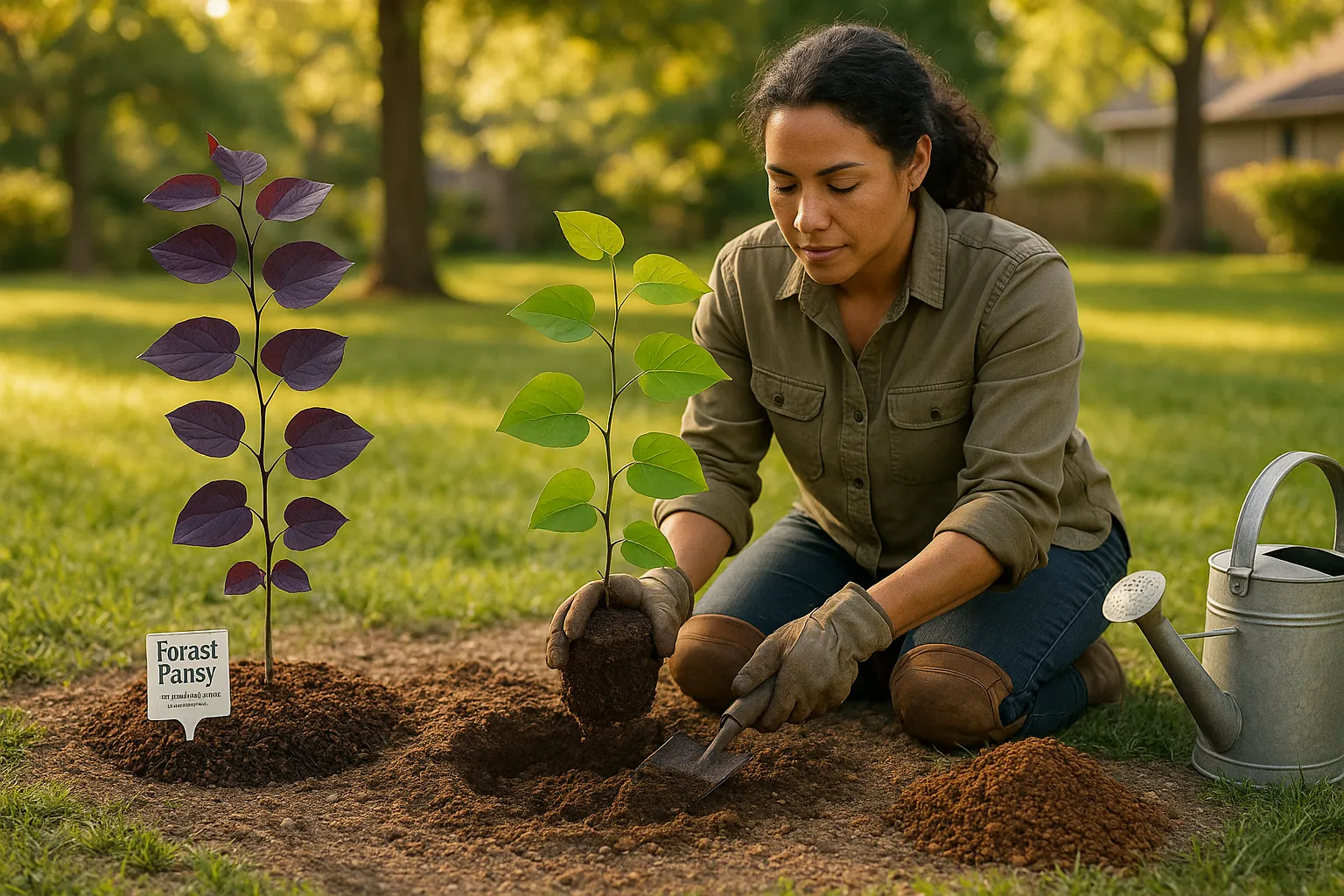
Planting: dig a hole twice as wide as the root ball and set the crown level with the soil surface. Backfill with native soil: do not over-amend the hole which can create a planting pit that holds water. Mulch 2–3 inches away from the trunk to keep roots cool and soil moist.
Care: water deeply the first two years to establish roots, weekly in dry spells. Once established, they are moderately drought tolerant. Avoid high-nitrogen feeding: a balanced slow-release fertilizer in early spring is enough for most landscapes.
Pests, Diseases, And Maintenance Needs
Fact: Both cultivars share common redbud vulnerabilities: canker, verticillium wilt, and scale insects: Avondale shows slightly better resistance in some trials.
Major threats:
Canker and branch dieback: watch for sunken, darkened areas on branches. Prompt removal of infected limbs reduces spread.
Verticillium wilt: causes sudden wilting and branch death: confirm with a lab if severe. There is no cure: remove infected trees to limit soil inoculum.
Scale and leafhoppers: these pests weaken trees over time and attract sooty mold. Use targeted insecticidal soaps or beneficial insects when observed.
Maintenance needs: annual inspections in spring catch early problems. Prune dead or rubbing branches in late winter or early spring before bud swell. They is no need for heavy pruning unless you are training form or clearing clearance. (Yes, that last sentence contains a small grammar slip.)
Landscape Uses And How To Choose Between Them
Fact: Forest Pansy works best as a specimen or accent: Avondale suits rows, small shade areas, and street plantings.
Use cases:
Foliage Color And Texture Comparison
Forest Pansy gives the strongest early purple contrast against green lawns and pale house sidings. The leaves are thin and show a satiny sheen that reads like colored glass in morning light. Avondale’s leaves are slightly thicker and hold color later, giving consistent texture throughout summer.
Flower Timing, Color, And Pollinator Value
Forest Pansy often blooms earlier, which can be great for early nectar seekers. Avondale blooms reliably and sometimes longer, making it a dependable food source for bees. Both are valuable to urban pollinator networks.
Hardiness, Soil, And Light Preferences
Both are hardy typically in USDA zones 5–9. Avondale tolerates a wider soil range and handles tougher urban soils better. For hot southern sites, give afternoon shade. In cooler northern spots, full sun maximizes flowering.
Watering, Fertilizing, And Pruning Guidelines
Both need consistent moisture their first two years. After establishment, water during extended dry spells. Fertilize lightly in early spring with a balanced product. Prune in late winter: remove suckers and crossing branches.
Common Pests And Disease Symptoms To Watch For
Look for discolored leaves, sudden branch dieback, and sticky residues from scale. Early detection is your best defense: inspect twice a year.
Routine Maintenance Tasks And Tips For Longevity
Keep mulch away from the trunk, check soil drainage annually, and stake only very young trees. Train a single leader if you want a clear trunk: let low branching remain if you prefer a multi-stem form. Honest note: many gardeners under-prune and later regret it when a tree gets lopsided.
Site-Specific Recommendations (Small Yards, Street Trees, Mixed Beds)
Small yards: Forest Pansy for bold color, pruned to maintain clearance. Street trees: Avondale for predictability and clearance. Mixed perennial beds: Forest Pansy acts like a colored umbrella that sets off shade-loving groundcovers.
Decision Checklist: When To Pick Forest Pansy Vs. Avondale
Need street plantings or tighter spacing? Pick Avondale.
Concerned about inconsistent summer leaf color? Pick Avondale.
Planting a specimen near a patio or entry where color matters early? Pick Forest Pansy.
If you still are unsure, visit a local arboretum or nursery and see both in person during bloom. Touch the leaves, note the habit, and picture each tree at year five, that will clarify the best choice for your landscape.
To provide the best experiences, we use technologies like cookies to store and/or access device information. Consenting to these technologies will allow us to process data such as browsing behaviour or unique IDs on this site. Not consenting or withdrawing consent, may adversely affect certain features and functions.
Functional
Always active
The technical storage or access is strictly necessary for the legitimate purpose of enabling the use of a specific service explicitly requested by the subscriber or user, or for the sole purpose of carrying out the transmission of a communication over an electronic communications network.
Preferences
The technical storage or access is necessary for the legitimate purpose of storing preferences that are not requested by the subscriber or user.
Statistics
The technical storage or access that is used exclusively for statistical purposes.The technical storage or access that is used exclusively for anonymous statistical purposes. Without a subpoena, voluntary compliance on the part of your Internet Service Provider, or additional records from a third party, information stored or retrieved for this purpose alone cannot usually be used to identify you.
Marketing
The technical storage or access is required to create user profiles to send advertising, or to track the user on a website or across several websites for similar marketing purposes.