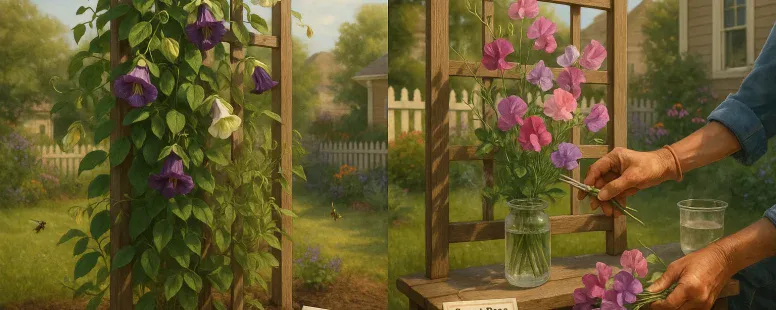
Cobaea Scandens Vs. Sweet Peas
You’re choosing a twining annual for a sunny trellis and two names keep surfacing: Cobaea scandens and sweet peas (Lathyrus odoratus). Both climb, both reward you with flowers, but they differ in scent, growth speed, hardiness, and the way they behave around supports. Picture fragrant, papery blossoms drifting on a summer breeze versus bell-shaped, dramatic purple cups that unfurl like tiny lanterns, each offers a different sensory promise. This comparison shows which plant gives you long-lasting cut blooms, which one needs a sturdy support, and which will forgive beginner mistakes. Read on to match your garden goals with the right climber.
Quick At-A-Glance Comparison
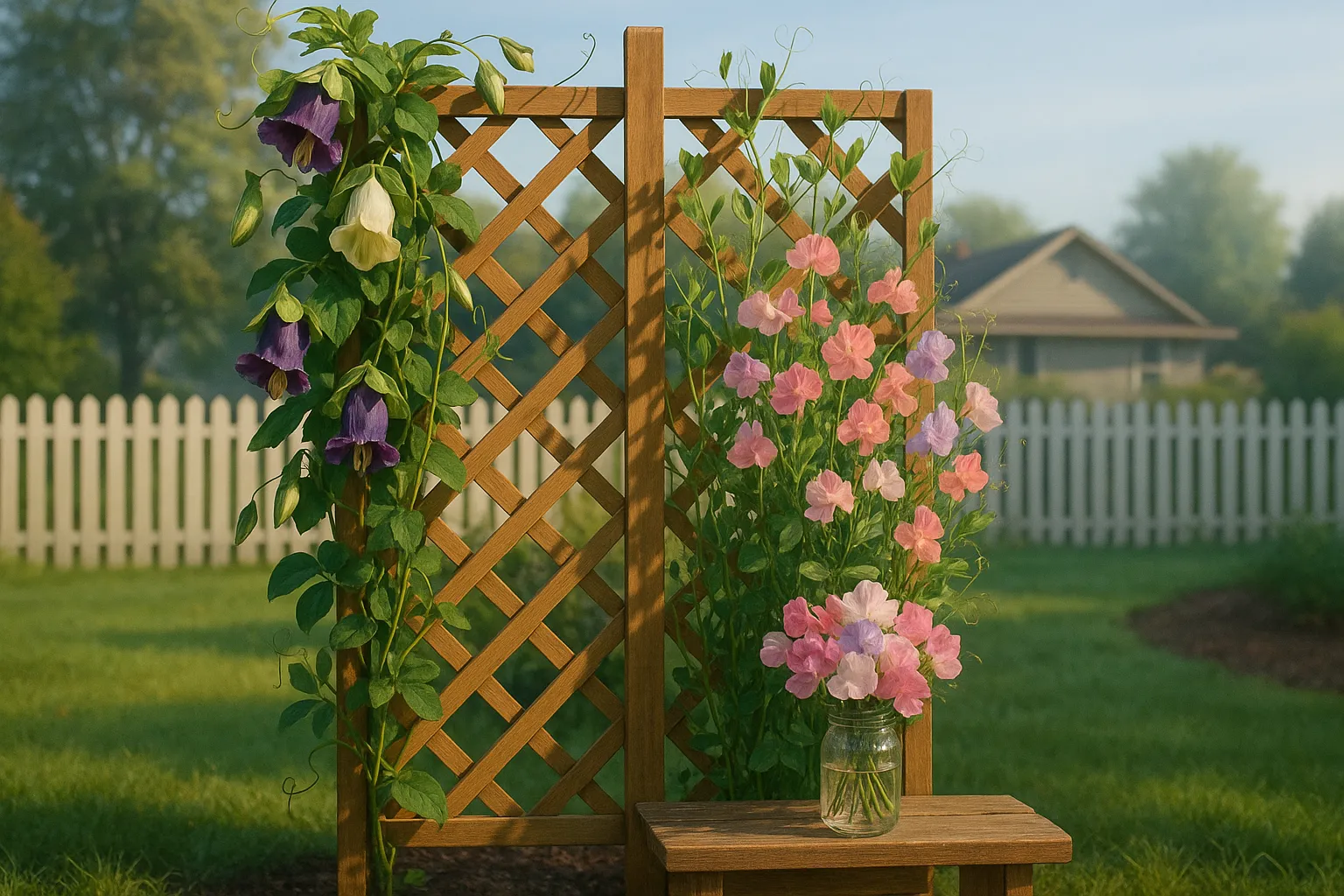
Fact: Cobaea scandens grows faster and taller: sweet peas offer stronger fragrance and better cutting life.
- Growth habit: Cobaea scandens is a vigorous annual vine reaching 10–30 ft in one season in warm sites. Sweet peas typically reach 6–8 ft and are bushier but still twining.
- Flowers and scent: Cobaea has bell-shaped, often purple or white cups with light scent: sweet peas produce ruffled, fragrant blooms in many colors.
- Hardiness and season: Cobaea is frost-tender and treated as an annual in most areas: sweet peas can be cool-season annuals or short-lived perennials in mild climates.
- Care level: Cobaea needs less pinching and is forgiving: sweet peas reward pinching, regular feeding, and cool nights for best fragrance.
- Best use: Choose Cobaea for quick vertical coverage and dramatic height: choose sweet peas for scent, bouquets, and close-view borders.
If you want a quick screen, pick Cobaea: if you want fragrance for cut flowers, pick sweet peas.
Botanical Overview And Growth Habit
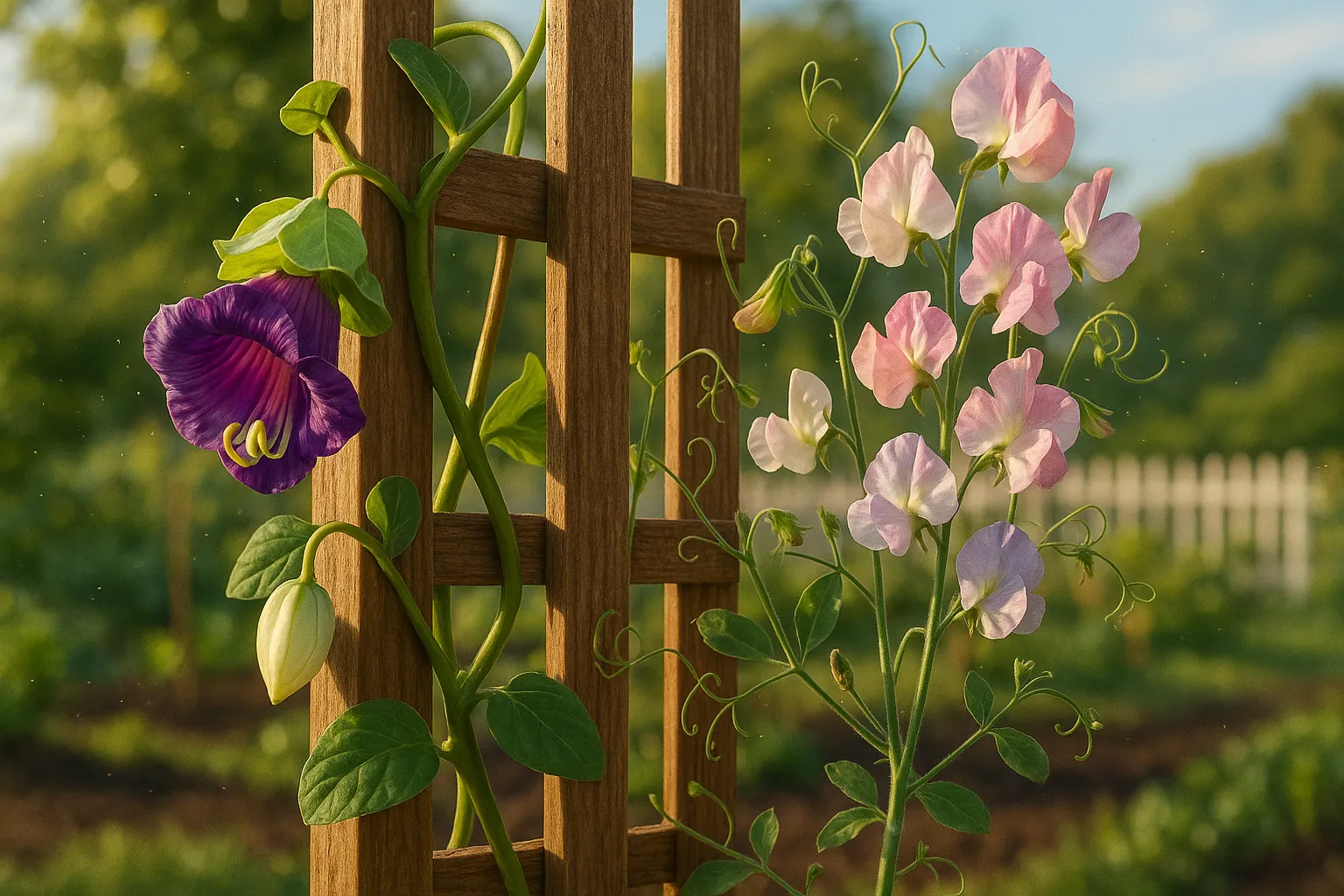
Fact: Cobaea scandens (family Campanulaceae) and sweet peas (Lathyrus odoratus, family Fabaceae) are distant relatives with different strategies.
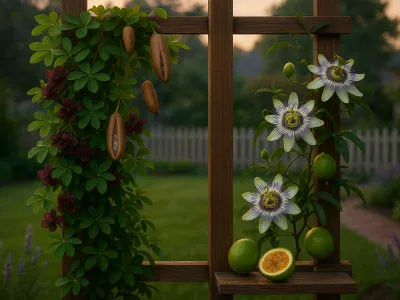
Cobaea scandens is native to Mexico and Central America. It produces rapid, twining stems and large tendril-like petioles that grab support. The flowers are cup or bell-shaped, often violet or white, and the plant invests in quick vertical growth to reach light. Cobaea climbs by coiling leaf stalks around structures.
Sweet peas come from the eastern Mediterranean and were extensively bred in 18th–20th century Britain by breeders like Henry Eckford. They climb using true leaf tendrils and produce compound leaves with pinnate leaflets. Sweet peas focus on repeated flowering and scent: many varieties set seed quickly, which shortens bloom if not managed.
Both are annuals in most gardens, but sweet peas can act as short-lived perennials in USDA zones 8–10. Cobaea behaves as a fast, annual climber and rarely survives frost.
Cultivation Requirements
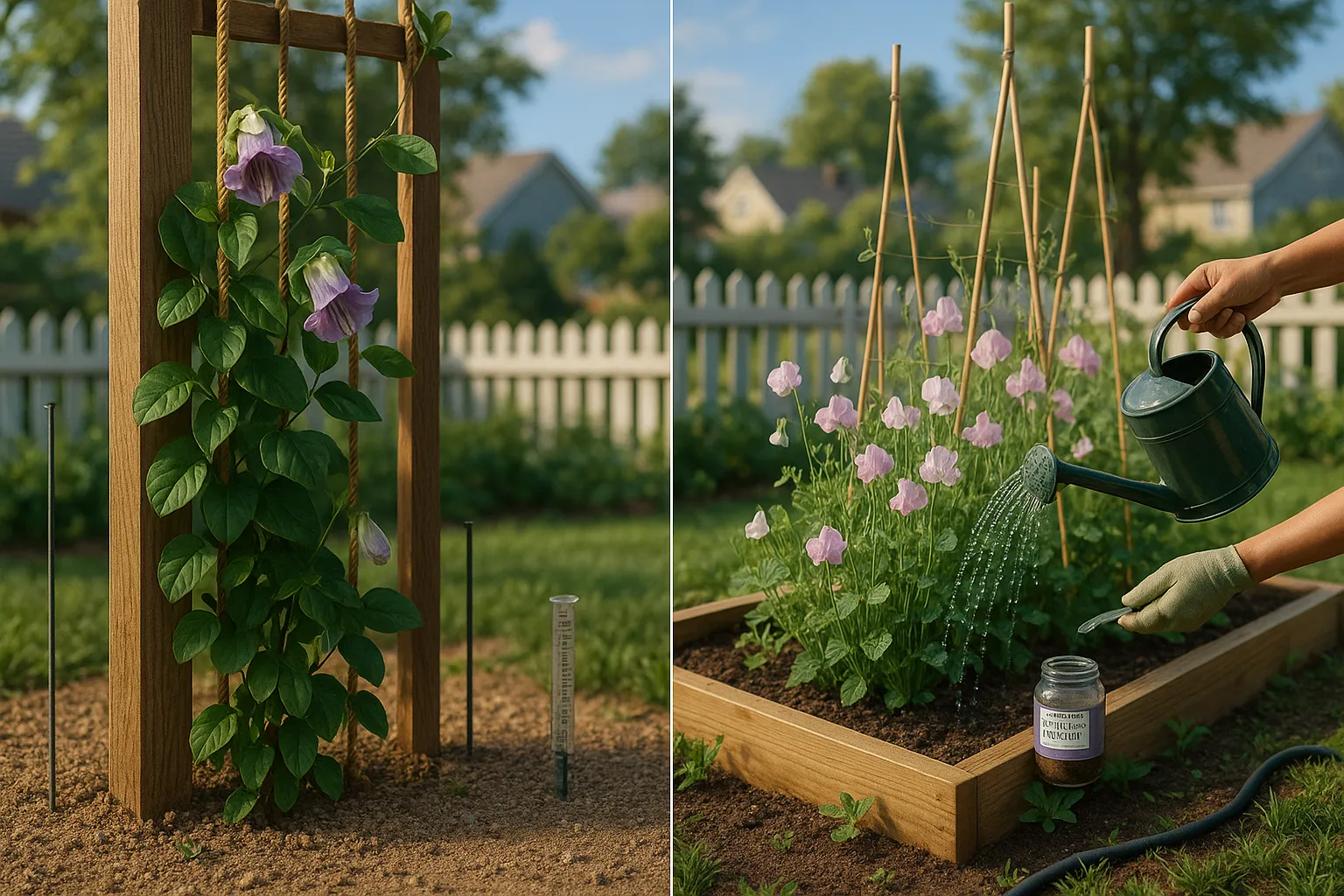
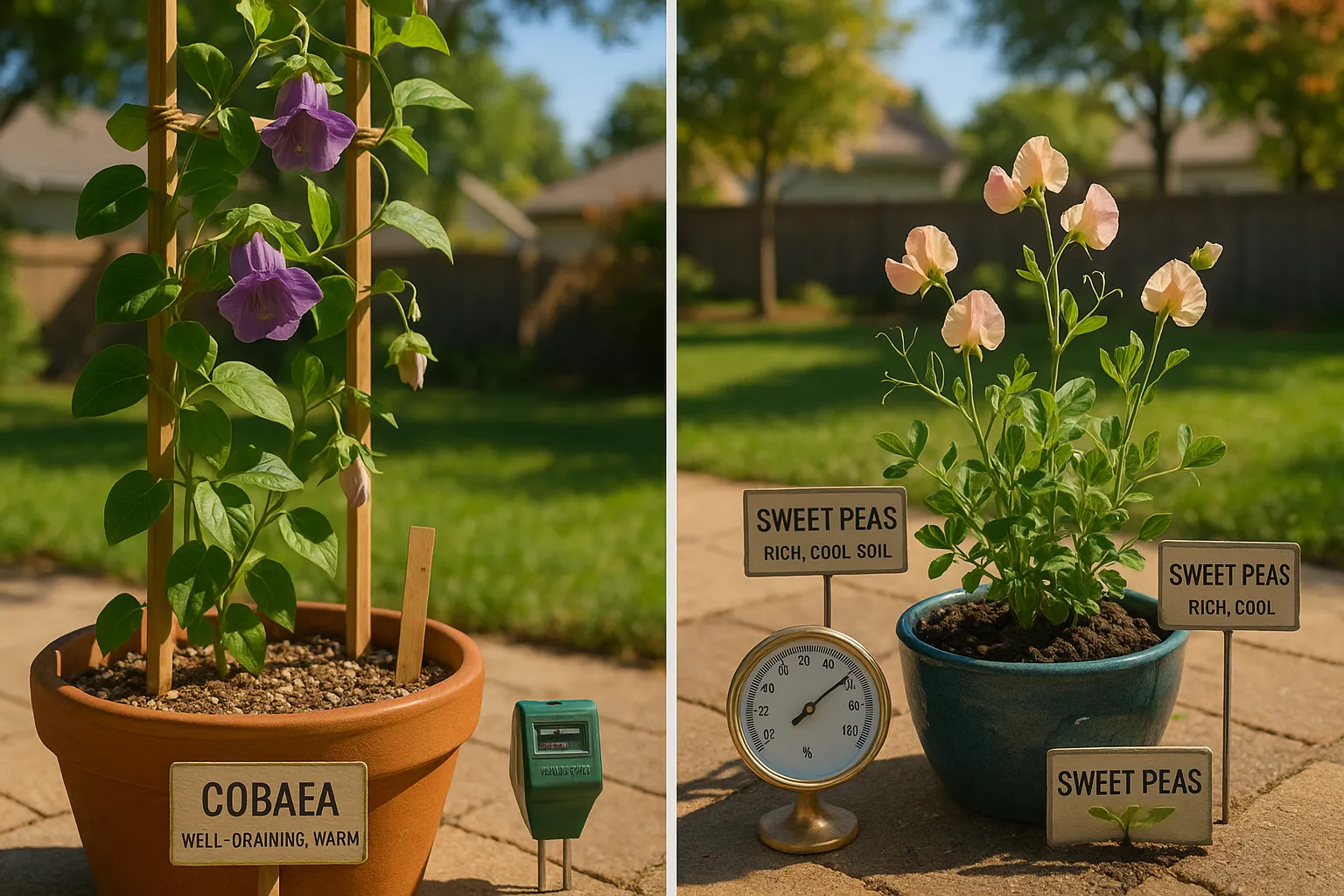
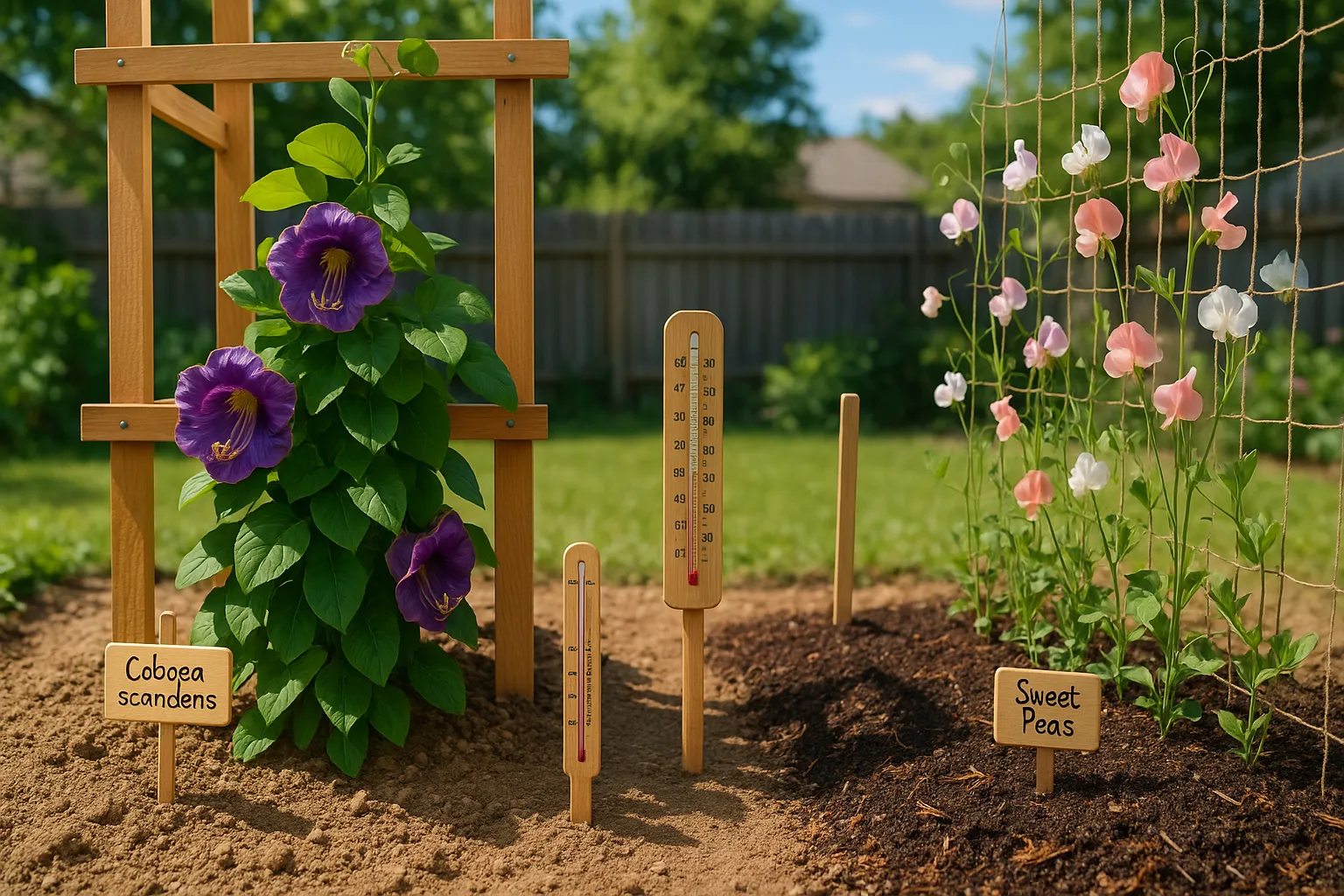
Fact: Both prefer full sun, but soil and temperature needs differ enough that your site will influence the better choice.
Flowering, Fragrance, And Bloom Timeline
Fact: Sweet peas generally beat Cobaea for scent and cutting life: Cobaea offers dramatic flowers later in the season.
Flower Form, Color Range, And Scent
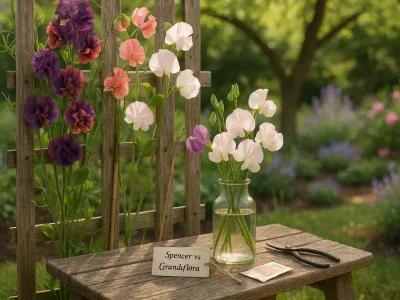
Sweet peas display ruffled, multi-petaled blossoms in pastels and deep magentas. The scent ranges from sweet and honeyed to citrusy depending on cultivar, ‘Old Spice’ and ‘Mars’ lines are noted names. Cobaea flowers are bell-shaped, often purple or white: they open from tubular buds and lack the heavy perfume of sweet peas but can have a light vanilla or green note.
Typical Bloom Period And Cutting Life
Sweet peas bloom from late spring into early summer when sown appropriately: with deadheading and cool nights they continue longer. Cut sweet peas often last 5–7 days in a vase and continue producing stems if you pick regularly. Cobaea blooms later in mid to late summer into early fall and each cup lasts several days on the plant: cut flowers are shorter-lived than sweet peas, often 3–5 days.
Propagation, Planting, And Care Routine
Fact: Both propagate readily from seed: starting technique changes success rates.
Starting From Seed Versus Transplants
Sweet peas: Sow seed outdoors in early spring or autumn in mild areas. Scarify seed or soak overnight to speed germination. You can start indoors 6–8 weeks before last frost, but transplants dislike root disturbance.
Cobaea: Seeds germinate best when started indoors in warm conditions (70–75°F) 6–8 weeks before last frost. Seeds often benefit from nicking the hard coat and soaking. Transplant once soil warms, Cobaea dislikes cold soil and early sowing often fails.
Pruning, Deadheading, And Nutrient Tips
Fact: Deadheading extends bloom in both: sweet peas reward pinching and Cobaea needs occasional trimming to control vigor.
Prune sweet peas by pinching tips until the plant has several nodes: this promotes side shoots and more flowers. Deadhead spent blooms promptly to stop seed set. For Cobaea, remove straggly shoots and spent blooms to keep a tidy screen: you can trim mid-season to redirect energy into fresh growth. Both plants like a monthly balanced feed during active bloom.
Pests, Diseases, And Troubleshooting
Fact: Sweet peas face more fungal issues in cool, damp conditions: Cobaea is generally pest-resistant but can attract common pests.
Common Pests And Symptoms By Species
Sweet peas: Aphids cluster on new shoots and buds, causing distortion and sticky honeydew. Slugs and snails chew young leaves. Pea weevil and powdery mildew can appear in humid seasons.
Cobaea: Cabbage white caterpillars and snails may nibble foliage: occasional aphid colonies appear. You’ll rarely see severe viral outbreaks on Cobaea.
Fungal, Viral, And Cultural Problems
Sweet peas: Powdery mildew forms white patches in dry, dusty conditions: downy mildew and root rot occur in waterlogged soils. Avoid overhead watering and ensure airflow. Viral mottling often comes from aphid vectors: rogue infected plants quickly.
Cobaea: Root rot occurs in poorly drained soil. Cultural problems usually stem from planting too early in cold soil or overcrowding. Both plants suffer if you let them go to seed, flowering typically drops off.
Garden Uses, Design Ideas, And Companion Plants
Fact: Use Cobaea for tall screens and sweet peas for scented, close-view borders.
Where Each Shines In The Garden Or Containers
Cobaea works well on pergolas, tall fences, and obelisks: it creates dramatic vertical mass quickly and makes a strong backdrop. It also grows in large containers with a robust frame. Sweet peas excel at the front of borders, on low trellises near seating areas, or in cottage-garden mixes where scent matters.
Best Companion Plants And Pollinator Value
Sweet peas pair with roses, lupines, foxgloves, and herbs like rosemary, plants that benefit from early-season color and fragrance. They attract honeybees and hoverflies.
Cobaea pairs with sun-loving perennials like echinacea, salvia, and ornamental grasses. Its large flowers attract bees and sometimes hummingbirds to nectar-rich cups.
Sourcing, Popular Varieties, And Cost Considerations
Fact: Seed is the common, inexpensive route: price varies by variety and provenance.
Notable Cultivars And What To Expect
Sweet peas: Popular cultivars include ‘Matucana’, ‘Spencer’ types (large-flowered), and fragrant old-fashioned lines like ‘Cupani’. Expect a wide color range and variable scent intensity.
Cobaea: Look for Cobaea scandens ‘Alba’ (white) and purple forms. ‘Purpurea’ produces deep violet bells. Expect fast growth and bold flowers rather than fragrant blooms.
Where To Buy And Timing For Planting
Buy seeds from reputable suppliers like Thompson & Morgan, Suttons, or regional seed houses. Sweet pea seed is often sold as named cultivars: plant early or in fall where suitable. Cobaea seed is cheap and best started indoors once you can maintain warm soil and air temperatures.
Which To Choose: Decision Guide For Gardeners
Fact: Choose by fragrance need, support height, and season timing, each plant meets different goals.
Choosing By Climate, Purpose, And Maintenance Level
If you garden in a cool spring climate and you want strong fragrance and cut flowers, pick sweet peas. They need more attentive care, pinching, feeding, and cooler nights, but reward you with scent and vase life. If you need rapid vertical cover, low-maintenance drama, or you have a long, warm season, pick Cobaea. It gives big impact with less fuss, but it lacks strong scent.
Quick Decision Checklist For Different Garden Goals
- You want scent and bouquets: Sweet peas.
- You need a fast screen or tall climber: Cobaea scandens.
- You have a short growing season and cool nights: Sweet peas (sown early).
- You have heat, long frost-free season: Cobaea.
- You prefer low-maintenance vines: Cobaea.
A vulnerable note: I once planted sweet peas too late and they produced only foliage, lesson learned. Start sweet peas early and be patient: they repay you. Or, if you’re impatient, sow Cobaea and enjoy a nearly instant green wall. Decide what matters most to your senses and routine, then plant with confidence.

- Best Qhd Ips Monitor - October 5, 2026
- The Best Cyberflix Alternative for Streaming Movies - October 4, 2026
- 7 Free Alternatives to Mobbin for UI/UX Design - October 4, 2026
by Ellie B, Site Owner / Publisher