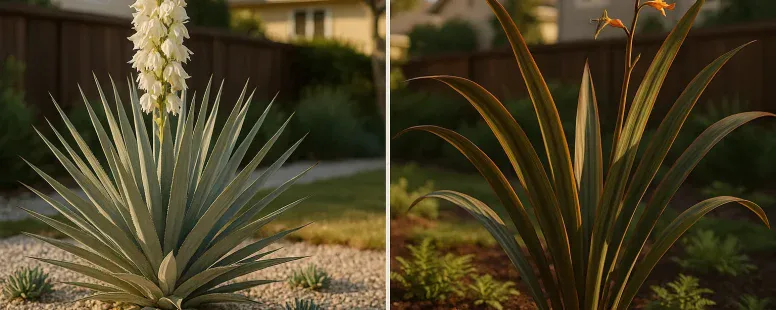
Yucca Vs. Phormium: Choosing The Right Architectural Perennial
Yucca vs. Phormium is a common dilemma for gardeners who want a strong vertical accent that survives heat and drought. Both plants declare presence from across a yard: stiff sword-like leaves or rich, fan-shaped foliage that feels like sculpture in the garden. But they differ in feel, climate tolerance, and the kind of maintenance they demand. Read on to learn which one will hold up in your soil, shine in your climate, and fit the look you’re after, with practical trade-offs and real-world tips you can use on planting day.
At-A-Glance Comparison
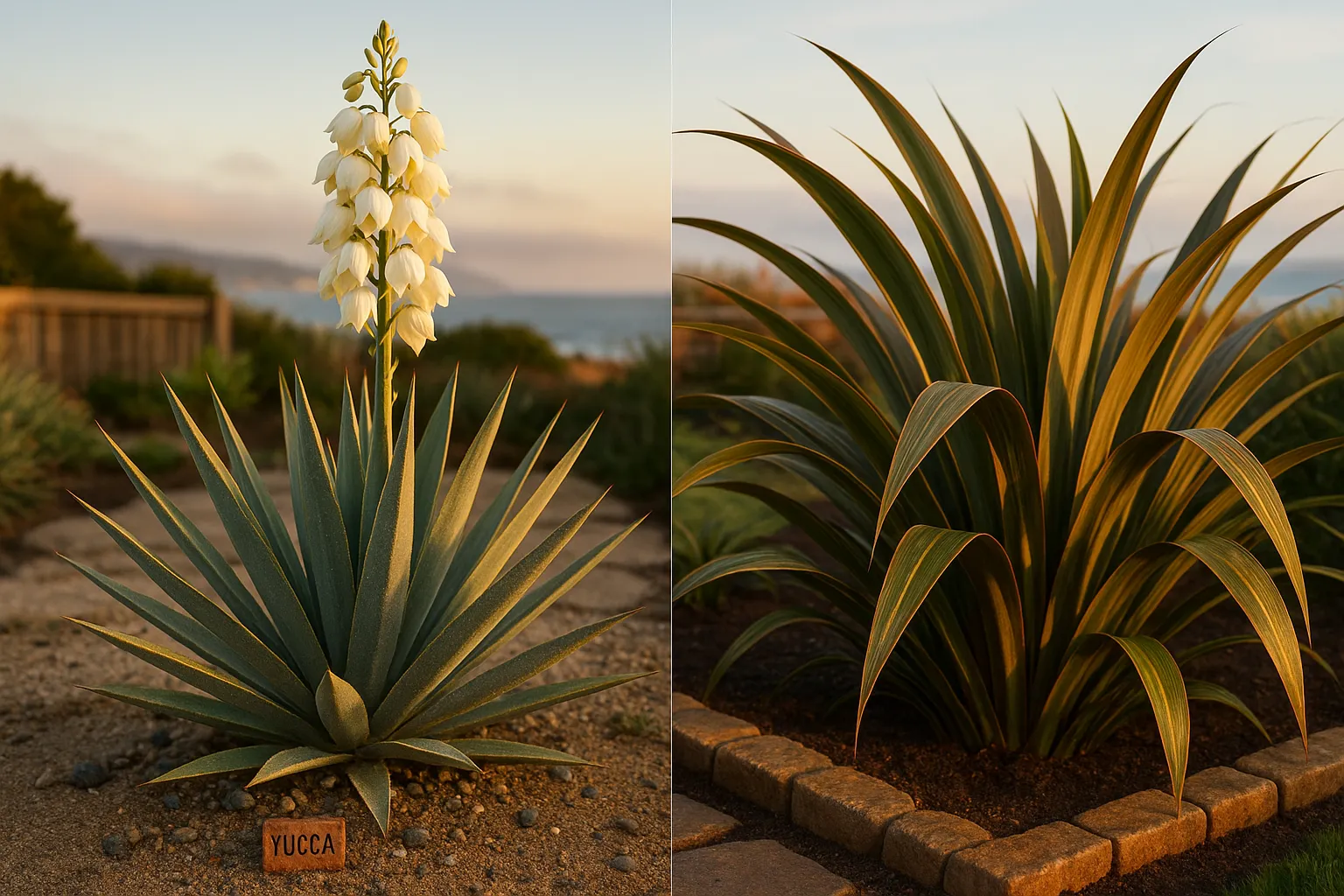
Fact: Yucca and Phormium serve similar roles as architectural perennials but suit different climates and styles.
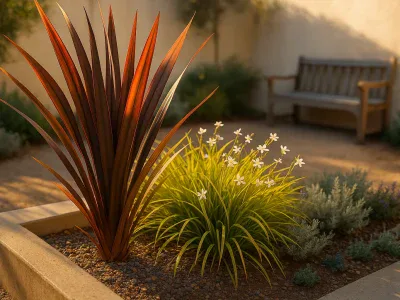
Yucca: A spiky, tough genus (Yucca filamentosa, Yucca gloriosa) with white bell flowers and exceptional drought tolerance. You get rigid form, dramatic flower spikes, and low water needs once established. Yucca excels in hot, dry, coastal, and many USDA zone 6–11 gardens.
Phormium: Also called New Zealand flax (Phormium tenax, Phormium cookianum), Phormium gives broad, arching leaves with vivid colors from bronze to chartreuse and strong tolerance for coastal exposure and wind. It prefers milder climates (USDA zones 8–11) and a bit more moisture than yucca.
Quick-use takeaway: Choose yucca for arid sites and low water maintenance. Choose phormium for color, softer lines, and sheltered or maritime spots. This comparison guides your next steps: soil prep, siting, and aesthetic pairing.
Appearance And Growth Habit
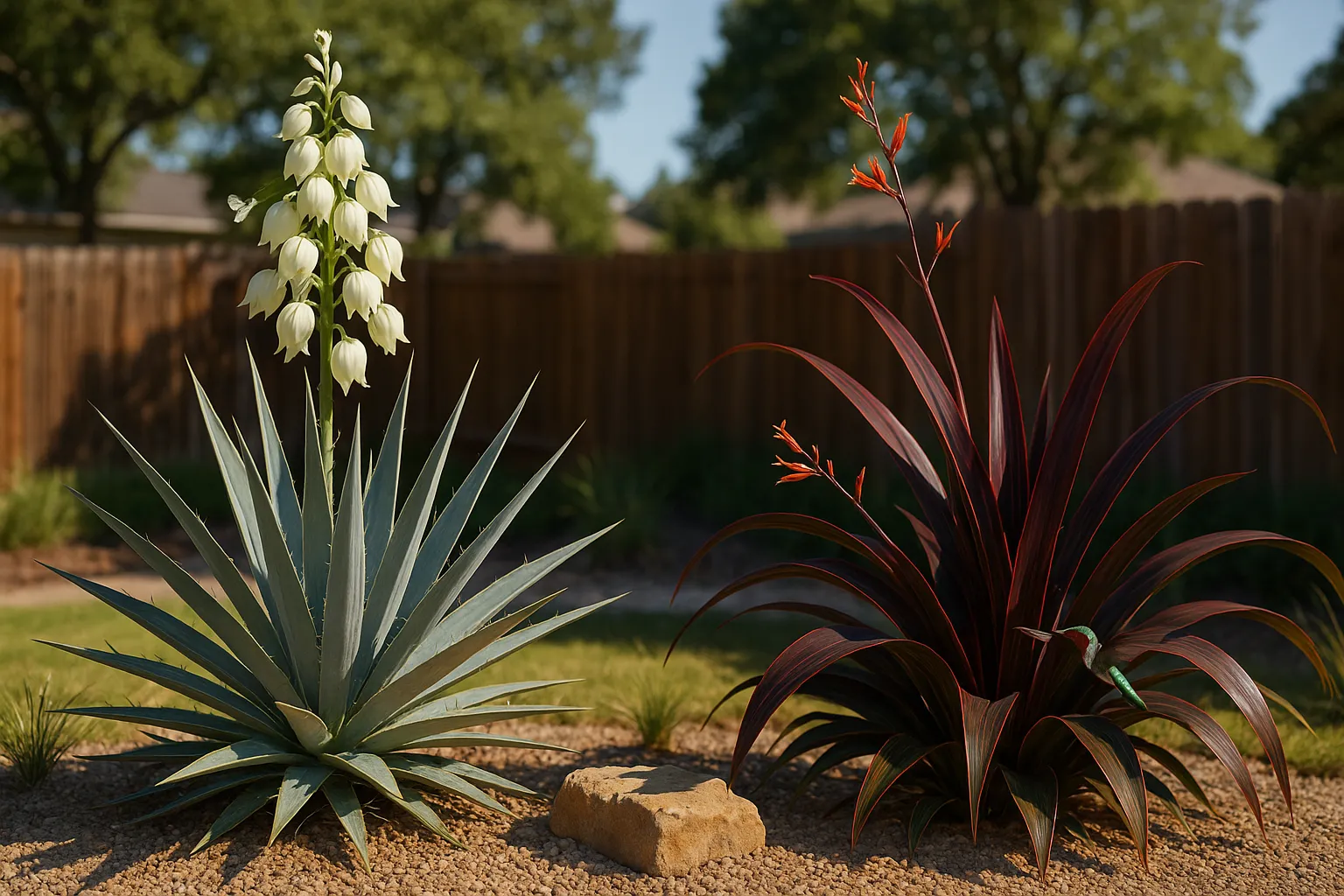
Fact: Leaves and flowers give you the clearest visual difference between these plants.
Leaves: Texture, Color, And Edge
Yucca leaves are stiff, lance-shaped, and usually have sharp tips and fibrous edges (the species name filamentosa refers to thread-like fibers). Leaves often appear bluish-green or gray-green. They create a vertical, sculptural silhouette.
Phormium leaves are softer, broader, and arching. Colors range from deep purple (Phormium ‘Platt’s Black’) to variegated yellow and green (Phormium ‘Yellow Wave’). Edges are smooth: some cultivars have waved margins. The overall effect reads as architectural but with a flowing, less aggressive mood.
Flowers: Shape, Timing, And Impact
Yucca flowers form tall spikes of pendulous, cream-white bells in summer. Hummingbirds and yucca moths pollinate some species, an interesting co-evolution story you might witness. Flower spikes can reach several feet and create a strong vertical accent.
Phormium flowers are tubular, on long stalks, often orange or red, and they attract nectar feeders like birds. They tend to appear in spring or early summer and are less dominant than a yucca spike, more a soft punctuation than a headline.
Size, Form, And Growth Rate
Yucca sizes vary: small clumping yuccas stay 2–3 feet: tree-form yuccas grow 10–30 feet with a trunk. Growth rate is moderate: many yuccas take a few years to form a substantial rosette.
Phormium generally reaches 2–6 feet tall and wide depending on cultivar. It grows faster in fertile soil with regular moisture. Both plants can form multi-headed clumps that you can divide later.
Cultural Requirements
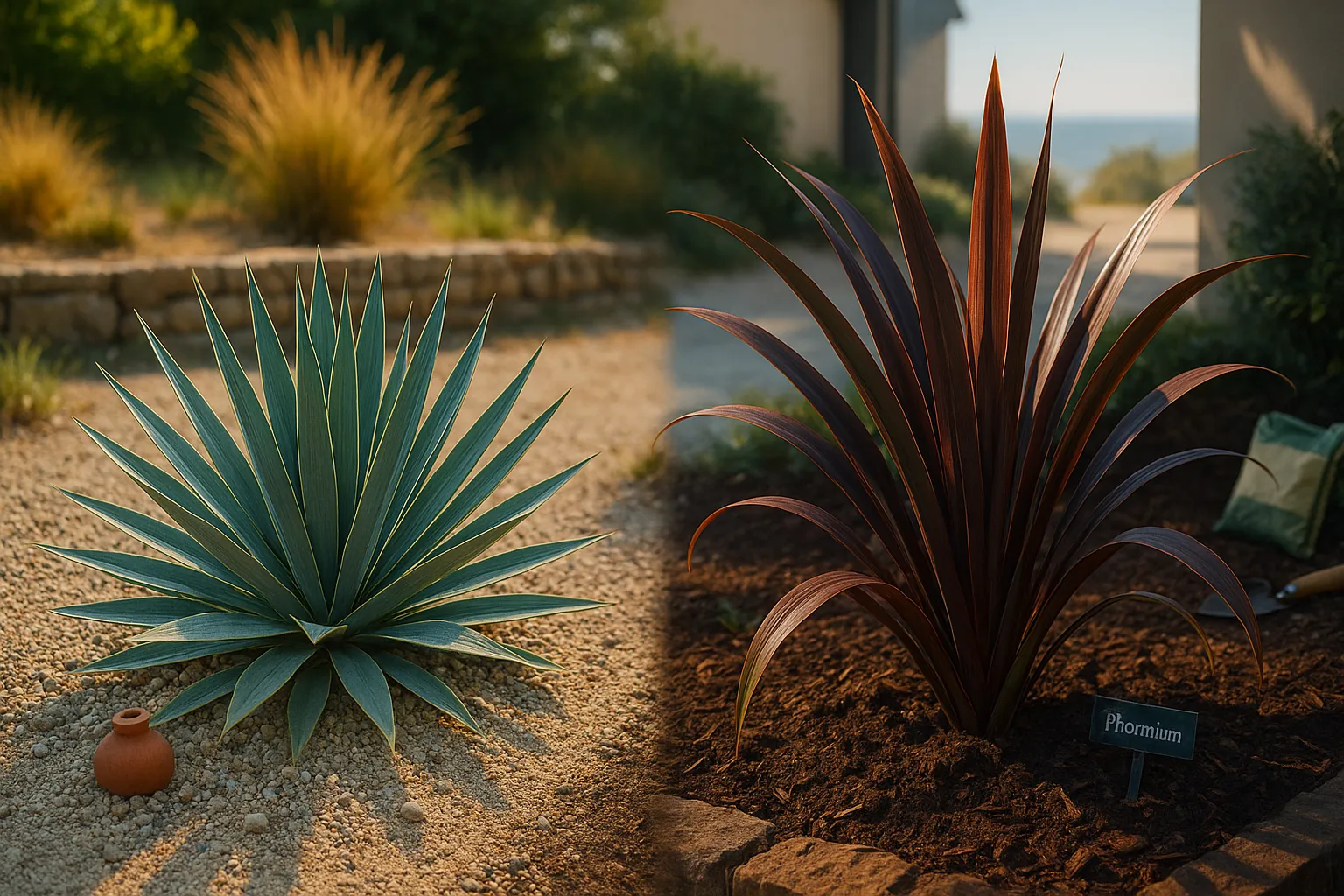
Fact: Soil and climate determine long-term success more than aesthetics alone.
Hardiness Zones And Climate Tolerance
Yucca tolerates a wider range of temperatures. Hardy species like Yucca filamentosa survive USDA zone 4–5 with winter protection: many others prefer 6–11. Yucca handles heat, reflected sun, and occasional frost.
Phormium prefers mild winters and rarely survives prolonged subfreezing conditions. Most cultivars thrive in USDA zones 8–11. Phormium handles coastal salt spray better than many tender perennials.
Soil Preferences And Drainage
Yucca needs well-draining soil. It tolerates poor, sandy, or rocky mixes and resents waterlogged roots. Amend heavy clay with grit or sand before planting.
Phormium likes fertile, well-drained soil with organic matter. It tolerates heavier soils if drainage is adequate. Mulch helps retain moisture and feed the plant.
Light, Watering Needs, And Drought Tolerance
Yucca prefers full sun and minimal supplemental water once established. You can rely on natural rainfall in arid sites.
Phormium accepts full sun in cool climates but often benefits from afternoon shade in hot inland zones to avoid leaf scorch. It needs more regular watering: drought stress shows as browning tips. If you want vibrant leaf color, consistent moisture helps.
Maintenance And Propagation
Fact: Both are relatively low-maintenance, but they ask for different kinds of attention.
Routine Care: Pruning, Division, And Winter Prep
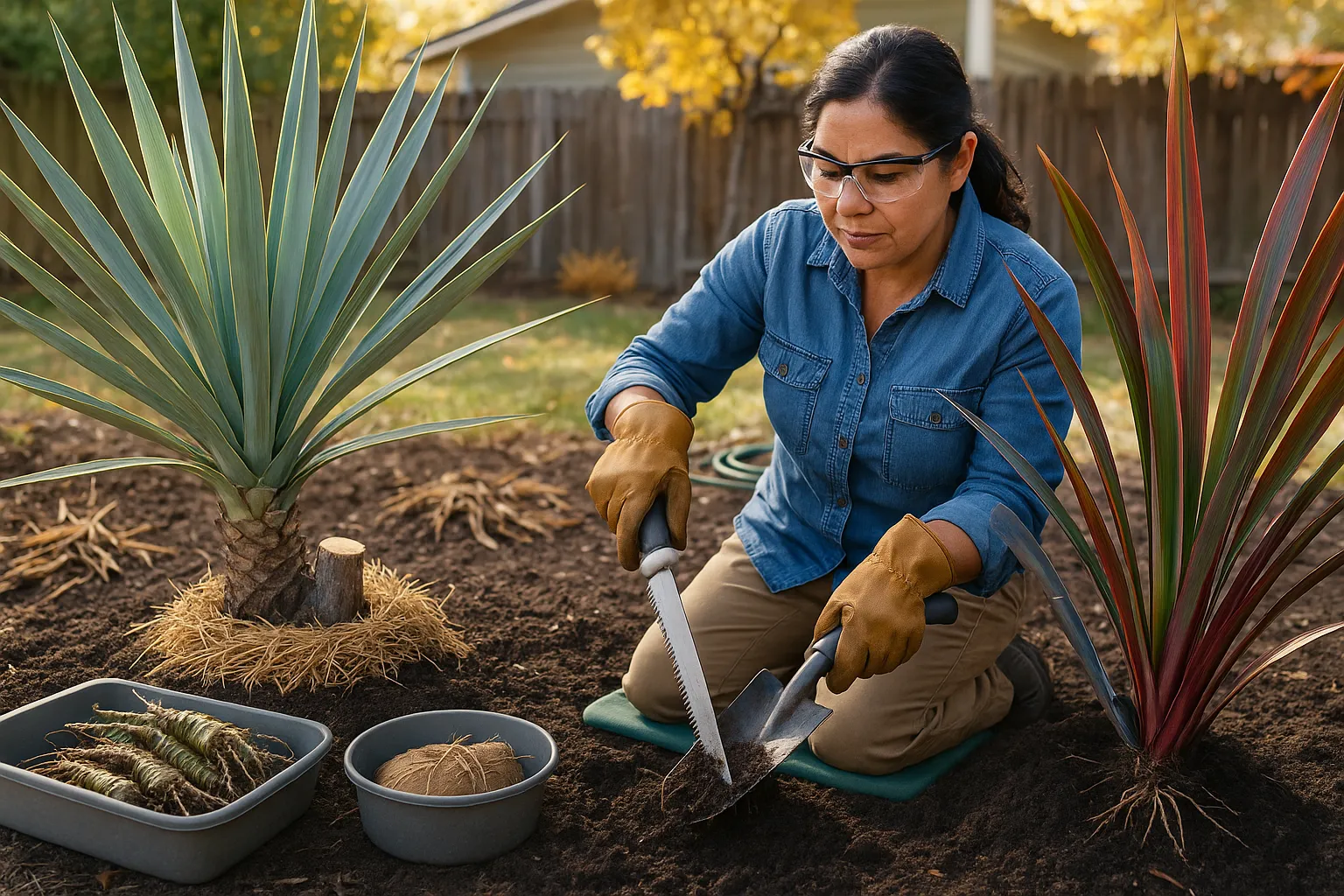
Yucca needs safety-first pruning because leaves are sharp. Remove spent flower stalks at the base. Trim damaged or dead leaves with thick gloves and a pruning saw. Some yuccas produce tall trunks: you can cut and re-root the crown if you want a new offshoot. In colder zones protect crowns from deep freeze with straw or mulch.
Phormium needs periodic removal of dead foliage and flower stalks. Cut back older outer leaves to the base to reveal fresh growth. In frost-prone areas, wrap the crown or move containers indoors. Division every 3–5 years refreshes vigor for both plants.
Propagation Techniques: Seeds, Offsets, And Cuttings
Yucca propagates by offsets (pups) and by seed. Offsets are easiest: dig, separate roots, and replant. Seeds produce variability and may take longer to flower.
Phormium propagates by division, split the rootball with a sharp spade or saw into sections with 3–5 growing points. You can also propagate from rhizome cuttings in moist potting mix. Phormium rarely is grown from seed for predictable cultivars.
Landscape Uses And Design Tips
Fact: Both species give strong bones to a garden: your planting choice steers the design mood.
Where Each Plant Works Best: Beds, Borders, And Xeriscapes
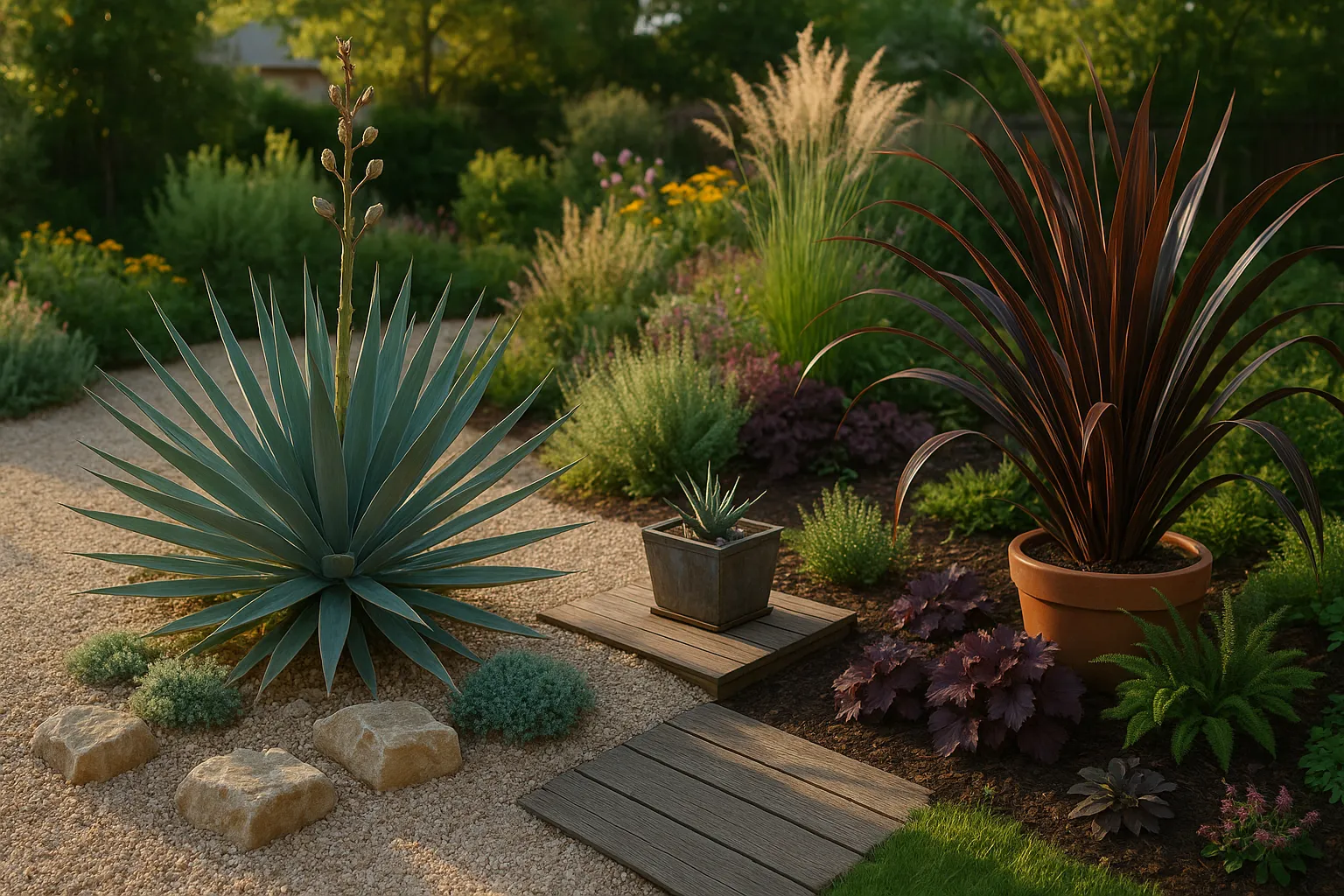
Yucca anchors xeriscapes, Mediterranean gardens, and desert-style plantings. Use it as a focal point in gravel beds or rock gardens near succulents, Agave, and Salvia.
Phormium fits coastal gardens, cottage borders with an architectural note, and mixed perennial beds where color and texture vary. It also works well in rain gardens where drainage is good but moisture returns seasonally.
Containers, Indoor Use, And Specimen Planting
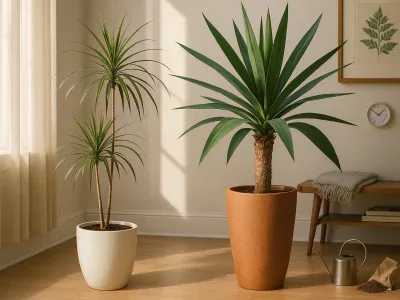
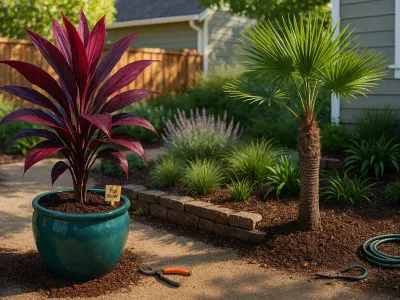
Phormium adapts well to large containers and brings color to decks and patios. Yucca can be container-grown when young, but large species need ground space. Indoor use: Phormium tolerates bright indoor light: yucca can survive indoors in very bright rooms but it grows slowly.
Combining With Other Plants And Seasonal Interest
Combine yucca with low groundcovers like thyme or sedum to soften the base. Phormium pairs nicely with Heuchera, Miscanthus, and ferns for layered color and texture. Both add winter structure: yucca’s seed pods and phormium’s persistent leaves keep interest when other perennials die back.
Common Problems And Pest Management
Fact: Pests are usually minor: environmental stress causes most issues.
Pests To Watch For And Organic Controls
Yucca faces yucca weevils in some regions: signs include wilting and holes at the crown. Remove and destroy heavily infested plants. Use diatomaceous earth around crowns for small outbreaks and encourage beneficial predators like birds.
Phormium can attract scale, mealybugs, and snails. Handpick snails and use horticultural oil or insecticidal soap for soft-bodied pests. Ladybugs and lacewings control scale and aphids .
Diseases, Environmental Stresses, And Remedies
Root rot affects both if drainage is poor. Treat by improving soil, raising beds, or replanting in gritty mix. Leaf scorch on phormium comes from heat plus reflected sun: provide afternoon shade or more water. Frost can blacken phormium leaves: prune damaged parts in spring. If yucca shows crown collapse, check for weevils or saturated roots and address drainage quickly.
How To Choose Between Yucca And Phormium For Your Site
Fact: Match plant traits to your site’s climate, soil, and desired look, that determines success.
Site And Climate Factors To Prioritize
Prioritize frost risk and summer heat. If you get long freezes, prefer hardy yucca species. If you garden near the coast with mild winters, phormium will reward you with bolder color. Check your USDA zone and local microclimates (south-facing slopes run warmer: basements of houses can create frost pockets).
Aesthetic And Maintenance Considerations
Prioritize form vs. color. Choose yucca when you want rigid vertical form and minimal watering. Choose phormium when you want color variety and softer movement. For low maintenance pick yucca: for colorful, slightly higher care pick phormium. Be honest: yucca’s sharp leaves require caution around children and pets.
Quick Buying And Care Checklist
- Climate: cold winters? buy yucca (hardy species). Mild coastal? consider phormium.
- Soil: poor, rocky? pick yucca. Rich, moist? phormium will perform better.
- Light: full sun? both will work. Hot inland sun? give phormium some afternoon shade.
- Space: narrow bed? choose upright yucca. Wide border or container? phormium fits.
- Maintenance tolerance: low, yucca. Moderate, phormium.
Practical note: When I planted a yucca in a sandy front yard, rabbits chewed lower leaves the first year. I learned to stake new pups and apply organic rabbit repellant. You might face similar surprises, plan for small setbacks and you’ll be fine.

- Must-Watch KK Menon Movies for Film Lovers - October 15, 2026
- Free Alternatives to Mobbin - October 15, 2026
- Kia Seltos Competitors: Top Compact SUVs - October 14, 2026
by Ellie B, Site Owner / Publisher