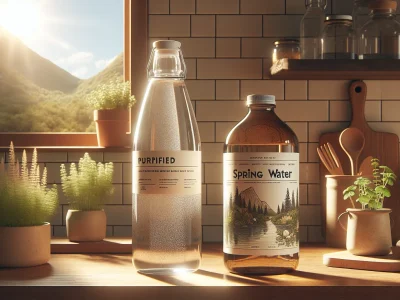
When you reach for a bottle of water, do you ever wonder what’s really inside? The labels might say “purified” or “spring,” but the differences go far beyond just words. One promises pristine filtration, while the other boasts natural origins straight from underground springs. Each has its own journey and benefits, leaving you to decide which is truly better for your health and lifestyle.
Your choice isn’t just about taste—it’s about understanding what aligns with your needs. Purified water offers a clean slate, stripped of impurities through advanced processes, while spring water carries trace minerals that some believe add vitality. But which one deserves a spot in your daily routine? By diving into their unique qualities and surprising perks, you’ll discover which type of water suits you best.
Understanding Purified Water
Purified water undergoes advanced treatment processes to remove impurities and contaminants. This ensures a high standard of cleanliness and safety for consumption.
What Is Purified Water?
Purified water refers to water that has been filtered or processed to eliminate harmful chemicals, bacteria, viruses, and other impurities. Treatment methods like reverse osmosis, distillation, or deionization are commonly used. These processes reduce contaminants such as lead and chlorine by over 99%, according to the Environmental Protection Agency (EPA). Unlike spring water, purified water does not retain natural minerals unless reintroduced after filtration.
Key Benefits Of Purified Water
Improved Safety: Impurities like heavy metals and pathogens are removed during purification, making it safer for drinking.
Consistent Quality: Regardless of the source, purification delivers standardized water quality that’s free from variations often found in untreated sources.
Allergen-Friendly Option: For individuals sensitive to trace elements or specific minerals in natural sources like spring water (e.g., sodium), purified water offers an ideal alternative.
Enhanced Taste: Removal of chlorine and other chemical residues improves flavor.
The Centers for Disease Control and Prevention (CDC) confirms that treated water systems significantly lower risks associated with microbial contamination.
Common Sources Of Purified Water
Municipal Supplies: Tap water is purified through municipal facilities using chlorination or UV treatment before distribution.
Bottled Options: Many bottled brands label their products as “purified,” indicating they underwent rigorous processing steps.
Home Filtration Systems: Devices such as reverse osmosis units allow you to purify tap water directly at home.
If you’re prioritizing health benefits while minimizing exposure to toxins or pollutants in untreated sources, purified options provide a reliable solution across various settings.
Understanding Spring Water
Spring water originates from natural underground aquifers, surfacing through springs or being extracted via wells. It’s often untreated, retaining its natural composition and mineral content.
What Is Spring Water?
Spring water is filtered as it travels through soil and rocks, absorbing essential minerals like calcium, magnesium, and potassium. These minerals contribute to the water’s taste and potential health benefits. The U.S. FDA defines spring water as derived directly from an underground source that flows to the surface or is collected at the spring itself.
Unlike purified water, spring water isn’t heavily processed unless required by safety standards for contaminants like bacteria or nitrates. This minimal treatment preserves its unique characteristics but may vary in quality depending on the source.
Key Benefits Of Spring Water
Mineral Content: Provides trace amounts of beneficial nutrients such as calcium (important for bone health) and magnesium (supports muscle function).
Natural Taste: Retains a distinct flavor profile influenced by its mineral composition.
Eco-Friendly Collection: Often sourced sustainably when obtained responsibly without over-extraction.
Hydration Support: Offers hydration with added electrolytes for replenishment during physical activity or hot weather.
For example, many athletes prefer spring water due to its balanced electrolyte levels compared to highly treated waters that lack these natural components.
Common Sources Of Spring Water
Bottled Options: Brands like Evian and Poland Spring market their products as sourced directly from protected springs.
Local Springs: In some areas, individuals collect fresh spring water themselves where accessible public springs exist.
Delivery Services: Companies provide home delivery of bulk spring water containers for convenience.
When choosing bottled options, ensure labels state “spring” instead of misleading terms like “natural” or “artesian,” which may not meet strict definitions regulated by agencies like the FDA.
Comparing Purified And Spring Water
Understanding the differences between purified and spring water helps you make informed decisions for your health, lifestyle, and preferences. Each has distinct characteristics that appeal to different needs.
Taste And Quality
Purified water offers a neutral taste due to the removal of impurities like chlorine and chemical residues through advanced filtration methods. This consistency makes it ideal for cooking or mixing with beverages.
Spring water, on the other hand, has a natural flavor profile influenced by its mineral content. For example, calcium and magnesium contribute subtle sweetness or earthy notes. Brands like Fiji highlight their unique geological sources to enhance their taste appeal.
Health Benefits
Purified water ensures safety by eliminating contaminants such as bacteria, heavy metals, and pesticides. It’s an allergen-friendly option if you’re sensitive to trace elements in untreated water sources.
Spring water contains essential minerals—like potassium for muscle function or calcium for bone health—that support hydration better during intense physical activities. But, quality varies depending on the source; not all spring waters meet high purity standards.
Environmental Impact
Purified water often relies on municipal supplies and energy-intensive processes like reverse osmosis or distillation. While home filtration systems reduce plastic waste from bottled options, they still consume resources during production.
In contrast, spring water collection involves minimal processing but raises concerns about over-extraction harming ecosystems near springs. Bottled spring brands frequently use single-use plastics that contribute significantly to environmental pollution unless recycled properly.
Cost And Accessibility
Bottled purified water is widely accessible at grocery stores but can become costly over time compared to installing a home filter system upfront. Municipal tap-based purification also provides convenience at lower recurring costs.
Factors To Consider When Choosing Water
Deciding between purified and spring water involves evaluating several factors. Each aspect can influence your choice based on health needs, lifestyle habits, and environmental priorities.
Personal Preference
Your taste preferences often play a significant role in choosing water. Purified water has a neutral flavor due to the removal of impurities like chlorine or organic matter. This makes it ideal for mixing with beverages or using in cooking. Spring water, enriched with natural minerals like magnesium and calcium, carries a crisp, distinct taste that some people find more refreshing.
Consider how you use water daily. If you’re sensitive to tastes or prefer consistency across all uses, purified water might align better with your needs. On the other hand, if you value the unique essence provided by natural mineral content, spring water may be more appealing.
Local Water Availability
The availability of purified or spring water depends on your location. Urban areas may offer easier access to municipal tap sources compatible with home filtration systems for purified options. Bottled purified brands are also widely available at grocery stores.
In contrast, finding authentic spring water could be challenging depending on regional geography. Some rural areas have direct access to local springs where individuals can collect their own supply; but, bottled spring waters from companies such as Poland Spring or Fiji Water provide an alternative for those without nearby sources.
Evaluate whether logistical constraints affect your ability to consistently obtain one type over another when making a decision.
Environmental Concerns
Environmental impacts differ significantly between these two types of drinking water. Purified methods often involve energy-intensive processes like reverse osmosis or distillation—contributing indirectly to carbon emissions if powered by non-renewable energy sources.
Conclusion
Choosing between purified and spring water eventually depends on your personal needs, lifestyle, and values. If you’re looking for a consistently clean option free of impurities, purified water is an excellent choice. On the other hand, if you prefer a natural source with added minerals that support hydration and vitality, spring water might be more suitable.
Consider factors like taste preference, accessibility in your area, and environmental impact when making your decision. Both options offer unique benefits that can align with different priorities. By understanding what matters most to you, you’ll be better equipped to select the type of water that fits seamlessly into your daily routine.
To provide the best experiences, we use technologies like cookies to store and/or access device information. Consenting to these technologies will allow us to process data such as browsing behaviour or unique IDs on this site. Not consenting or withdrawing consent, may adversely affect certain features and functions.
Functional
Always active
The technical storage or access is strictly necessary for the legitimate purpose of enabling the use of a specific service explicitly requested by the subscriber or user, or for the sole purpose of carrying out the transmission of a communication over an electronic communications network.
Preferences
The technical storage or access is necessary for the legitimate purpose of storing preferences that are not requested by the subscriber or user.
Statistics
The technical storage or access that is used exclusively for statistical purposes.The technical storage or access that is used exclusively for anonymous statistical purposes. Without a subpoena, voluntary compliance on the part of your Internet Service Provider, or additional records from a third party, information stored or retrieved for this purpose alone cannot usually be used to identify you.
Marketing
The technical storage or access is required to create user profiles to send advertising, or to track the user on a website or across several websites for similar marketing purposes.