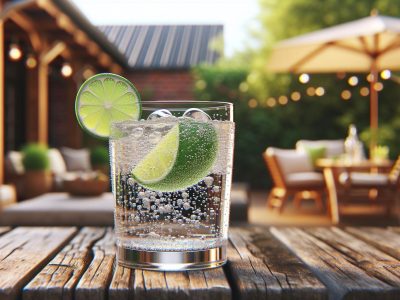
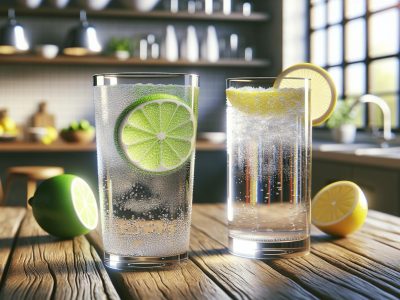
Picture pouring a glass of water so pristine it almost glows in the sunlight—crisp, clear, and seemingly perfect. But is all clear water truly the same? You might reach for a bottle labeled “pure” or “distilled” without a second thought, yet there’s a world of difference swirling in each sip.
What if the water you choose could change the taste of your morning coffee or even impact your health in subtle ways? The journey from tap to table isn’t always as straightforward as it seems. Unraveling the secrets behind distilled and pure water opens up surprising benefits and hidden qualities you might never have considered. Get ready to rethink what’s really in your glass.
What Is Distilled Water?
Distilled water holds a precise identity—it’s water that’s undergone distillation, a purification process using boiling and condensation. Picture you set up a kettle: as water boils, only the pure steam rises, leaving minerals, salts, and even most bacteria behind. After the vapor cools, it condenses into a clean, clear liquid. That’s what fills those jugs in grocery store aisles labeled “Distilled Water.”
Community hospitals, research labs, and automotive shops often choose distilled water for important tasks. When a lab tech needs water for solutions, using distilled water prevents unwanted chemical reactions—one drop of tap water can throw off whole experiments. Mechanics pour distilled water into batteries, since trace minerals in regular water might damage or shorten a battery’s lifespan.
Think you could taste the difference between tap, distilled, and spring water? Some coffee enthusiasts insist that using distilled water brings out subtler flavors from single-origin beans, while others argue you loose essential minerals that boost taste. This debate highlights how subtle yet significant the purity of water really is in everyday life.
Still, distilled water lacks the dissolved minerals—magnesium, calcium, and sodium—that you’ll often find in natural sources. According to the CDC, distillation also removes contaminants like lead and copper, making distilled water a common choice for medical equipment cleaning and some infant formulas. If you ever wondered why some aquariums specify distilled water, it’s because sensitive fish species react to even small mineral imbalances.
But will drinking only distilled water help your health? Some nutritionists warn that relying solely on it might mean missing minerals your body needs, which can be gotten from regular water or food. Others say that mineral intake from water is fairly small compared with your daily diet.
Distilled water offers an extreme example of water purity—utterly clear and nearly devoid of anything but H2O molecules. Next time you see that clear jug on the shelf, you’ll know it’s more than just “really clean water”—it’s a product of precise separation, intended for when purity isn’t just preferred: it’s required.
What Is Pure Water?
Pure water, in the strictest sense, refers to H₂O with minimal contaminants. Picture water that’s untouched, like rainfall before it hits the earth or travels through pipes—it’s just you and the molecule, nothing else in the mix. Sometimes, commercial “pure water” claims rest on figures, promising less than 10 parts per million (ppm) of dissolved solids, according to EPA standards. But, can water truly be pure outside a chemistry lab? Most sources introduce tiny quantities of minerals, organic material, or microbial traces.
Consider this: even “spring water,” a favorite among health-focused brands, passes through earth, picking up calcium, magnesium, and trace elements that add flavor but complicate purity claims. If you pour a glass of “purified water” from a store-brand bottle, you’re probably drinking water that’s been filtered, treated by reverse osmosis, or refined via UV radiation. Each process strips away different impurities, but few guarantee total sterility, as only distillation or highly controlled deionization can achieve.
Anecdotes from baristas show how the hidden minerals in your water can change coffee’s acidity or smoothness—one batch might taste bright while another’s dull. Contrastingly, researchers in Stanford’s environmental sciences department find that trace contaminants—from chlorine byproducts to microplastics—linger in most municipal water supplies, even after multiple filtration cycles (Stanford Water Center, 2023). The question becomes: is “pure” a goal, or just a best attempt?
You could ask yourself: is water from your tap pure enough for a science experiment, or would a chemist shake their head and reach for reagent-grade? If clarity is your sole metric, you’d miss invisible differences—like sodium traces in softened water or organic volatiles in bottled samples (NSF International, 2022).
If you’re blending your own skincare or filling your aquarium, pursuing higher purity might seem excessive, unless you’re managing allergies or sensitive instruments. For families with newborns, using water labeled as “purified” or “sterile” reassures against potential bacteria, as the CDC’s infant care guidance suggests. Yet, outside lab scenarios, most drinkers rely on purification’s peace of mind, weighing taste, mineral content, and price.
Key Differences Between Distilled and Pure Water
Grasping how distilled and pure water diverge means examining more than their transparent appearance. You’ll find distinctions in their journey from source to container, in their molecular makeup, and in how you interact with them daily.
Source and Production Methods
Distilled water comes from a boiling-cooling cycle. Producers heat tap water until it vaporizes, then condense the steam into sterile liquid, leaving most impurities behind. Pure water, meanwhile, draws from multiple paths—reverse osmosis, deionization, carbon filtration, or direct capture of rain. Laboratory “ultrapure” quality (like ASTM Type 1) filters every detectable contaminant, while supermarket “pure” water often results from a less rigorous process.
Think of the production process like cooking: distilled water is soup boiled down until only bare essence remains; pure water is soup carefully strained, yet small particles could sneak through. If you ever taste rain in a mountain clearing and compare it to water from a chemist’s beaker, you’ll sense the history in each drop.
Chemical Composition and Purity
Distilled water is nearly only H₂O molecules, because the distillation process removes over 99% of dissolved solids and most organic material (US Environmental Protection Agency, 2023). Pure water, as labeled in stores, usually contains fewer than 10 ppm (parts per million) of total dissolved solids, but trace minerals—sodium, magnesium, calcium—often remain (Water Quality Association, 2022).
You’ll sometimes hear scientists talk about “laboratory grade” water. That means almost total freedom from ions and bacteria, a feat only rigorous multi-stage purification or repeated distillation achieves. Yet, no home filter or bottled “pure” water matches this unless it’s labeled and certified for analytical standards. Most bottled “pure” water still lets minerals tiptoe in through plastic packaging or atmospheric contact—nobody seals off the world outside quite like a research lab does.
Common Uses and Applications
Distilled water performs when absolute purity dictates outcomes. Hospitals fill autoclaves and laboratory glassware with it. Car mechanics top batteries with it. Coffee enthusiasts sometimes experiment with it for controlling extraction variables, though most miss the “brightness” that magnesium brings.
Pure water as found in bottles shows up in daily hydration, childcare (mixing formula), aquariums, and skincare routines. If you’re making French press coffee at home and want rich flavor, some trace minerals are your friend. Aquarium owners debate water sources, since fish health depends on baseline purity but thrives with the right balance of dissolved minerals.
Doctors sometimes suggests distilled water for people with compromised immune systems, but point out that for most others, a diet rich in whole foods supplies crucial minerals absent in distilled water (Harvard T.H. Chan School of Public Health, 2023). Yet urban legends still swirl: does pure water hydrate better, or is it taste alone that sets it apart? You’ll only find out by pouring two glasses and letting your senses be the judge.
Water Type
Typical Source/Process
TDS (ppm)
Common Applications
Key Entities
Distilled
Boiling, Condensation (Distillation)
0–1
Labs, medical sterilization, batteries, coffee
Hospitals, laboratories, EPA
Pure
RO, Deionization, Filtration, Rain
<10 (often 2-10)
Drinking, aquariums, baby formula, skincare
Water Quality Association, retail, baristas
Health and Safety Considerations
You drink a glass of water and trust it’s safe, but ever wondered if every drop is identical your health? For distilled water, the process wipes away almost everything, so pure H₂O—no minerals, almost no contaminants. If you use it daily in your coffee or tea, the flavor comes out sharper, but some experts from the CDC warn that the absence of minerals like calcium and magnesium may make you miss out on electrolytes—think of sports drinks that add them right back in (CDC, 2022).
Some parents chose distilled water for infant formula, fearing pathogens or chemicals, yet the American Academy of Pediatrics (AAP, 2023) points out that plain pure filtered water usually works fine unless local tap is questionable. If you’re sensitive to heavy metals like lead, then both distilled and high-grade pure water offer peace of mind—at least assuming the bottler maintains sterile practices, which don’t always happen. Last year, multiple bottled water companies in Texas issued recalls after bacteria contamination (FDA, 2023).
Athletes and older adults often reach for mineral-rich “pure water,” especially if their diets lack certain nutrients. Many marathon runners say spring water refreshes faster or tastes, as one Boston runner described, like “liquid energy compared to standard distilled.” That’s partly psychological—nutritionists at Mayo Clinic confirm that mineral waters can contribute up to 20% of your daily magnesium and calcium in low-mineral diets (Mayo, 2023).
Curious about exposure to trace chemicals? In 2021, researchers at Stanford University found pharmaceuticals and microplastics lingering in municipal water after routine treatment but almost never detected them in distilled samples. Could microplastics matter to your health? Scientists still debate the risks, though anecdotal evidence grows—one fish tank enthusiast on YouTube claims his guppies bred more successfully after switching to ultra-distilled water, though he had to remineralize the tanks to keep fish from dying.
So which is safer: distilled or pure water? That depends on the contaminants lurking in your local supply and your unique needs. For example, if your home uses lead pipes, you might prefer distilled for everything from cooking rice to brewing morning coffee. If you crave taste and trace minerals, then locally sourced pure water makes everyday hydration feel indulgent. If you run a bakery, the difference between “clean” and “mineral-rich” water could change your sourdough entirely.
Ask yourself—is your water source regularly tested? Would you trade flat flavor for maximum purity? Can you trust your bottler or filter producer? No universal answer exists, but you can always choose the clarity, taste, and mineral profile that fits your own story.
Which Type of Water Should You Choose?
Picture your kitchen tap as a crossroads: on one side, a bottle stamped “distilled”; on the other, “pure.” Surgeons use distilled water for rinsing scalpels, trusting in its void—no minerals, just H₂O. Now, picture a mom mixing infant formula at 2 a.m., she reaches for the same cleanness, worried about unseen contaminants in city pipes. You may ask, is that level of purity always necessary for your glass?
Distilled water, with its laboratory pedigree, works best where minerals bring more harm than help. For example, you’re filling an iron—distilled keeps mineral crusts from gumming up the works. Or maybe you’re topping off a humidifier, because pure water leaves less white dust on your furniture. Hospitals use only distilled to prepare medications or clean wounds, following strict American Medical Association protocols (AMA, 2021).
Yet, athletes chasing hydration with each gulp often chase something more. Their bodies, sweating out electrolytes—calcium, sodium, magnesium—need replenishment. Pure water, often processed by reverse osmosis but carrying traces of those minerals, tastes fuller to many. One marathoner swaps her distilled bottle for mineral-bright spring water after cramping mid-race. Baristas can’t help but agree: pure water, not distilled, enhances coffee’s nuanced flavors, praising each cup’s complexity (Specialty Coffee Association, 2023).
Your region shapes your needs. Living in Flint, Michigan, in 2016? You remember the fear of lead, the sudden switch to bottled purity. Rural communities, using well water, sometimes discover sulfur smells or high iron, turning to store-bought pure options for relief. Others living in places with strict EPA standards trust their tap, except during boil advisories after storms.
So, which fits your daily life? If you’re immunocompromised, prepping baby formula, or mixing medications, lean toward distilled—safety takes the front seat. For everyone else, pure water brings familiarity, minerals, and a taste closer to mountain air. Even so, don’t assume “pure” always means safe. Some brands, citing “less than 10 ppm,” still carry algae traces or chlorine byproducts, so checking Consumer Reports might save your peace of mind.
Ask yourself, do you want a blank slate or a subtle painter’s palette with each sip? No answer fits all households. What’s in your pipes, your mug, your priorities—and sometimes, your memories—shapes the perfect water for you.
Conclusion
Choosing between distilled and pure water depends on your unique needs and priorities. Whether you’re brewing the perfect cup of coffee or preparing formula for your baby it’s worth considering more than just clarity or taste.
Think about your local water quality and what matters most to you—purity mineral content or specific health concerns. With so many options available you have the power to make an well-informed choice that fits your lifestyle and supports your well-being.
To provide the best experiences, we use technologies like cookies to store and/or access device information. Consenting to these technologies will allow us to process data such as browsing behaviour or unique IDs on this site. Not consenting or withdrawing consent, may adversely affect certain features and functions.
Functional
Always active
The technical storage or access is strictly necessary for the legitimate purpose of enabling the use of a specific service explicitly requested by the subscriber or user, or for the sole purpose of carrying out the transmission of a communication over an electronic communications network.
Preferences
The technical storage or access is necessary for the legitimate purpose of storing preferences that are not requested by the subscriber or user.
Statistics
The technical storage or access that is used exclusively for statistical purposes.The technical storage or access that is used exclusively for anonymous statistical purposes. Without a subpoena, voluntary compliance on the part of your Internet Service Provider, or additional records from a third party, information stored or retrieved for this purpose alone cannot usually be used to identify you.
Marketing
The technical storage or access is required to create user profiles to send advertising, or to track the user on a website or across several websites for similar marketing purposes.