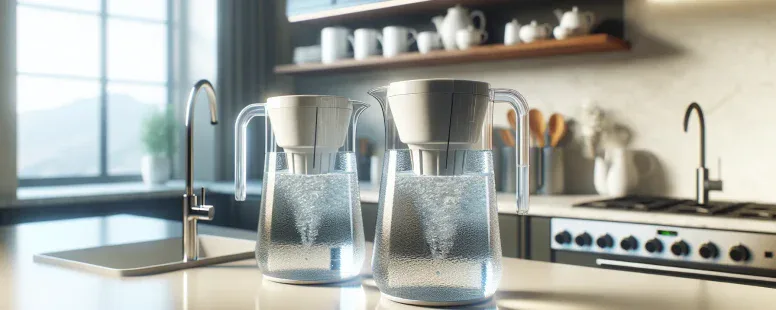
Picture this: you fill your glass at the kitchen sink, expecting crystal-clear refreshment, but the taste is flat, maybe even a little off. Suddenly, the world of water filters opens up, promising pure, crisp hydration at your fingertips. But with PUR and Brita vying for space on your countertop, which one truly transforms your everyday water into something remarkable?
You might think a filter’s just a filter, but subtle differences can change everything. Some claim PUR delivers a cleaner, fresher sip, while others swear Brita’s simplicity and speed make it unbeatable. Underneath the surface, hidden features and surprising benefits wait to be discovered. Are you ready to immerse and find out which filter deserves a spot in your home?
Overview of Water Filtration Brands
You probably know somebody who swears the taste of filtered water’s like a rocky river after a rainfall, crystal clear and cold enough to bite. Among household names in water filtration, PUR and Brita stand out as two titans—kind of like Coke and Pepsi in the world of hydration. Their paths crossed decades ago and now, millions rely on these brands to turn unpredictable tap water into something cleaner, safer, and, as many claim, much more palatable.
Brita, originating from Germany in the late 1960s, carved its reputation for convenience with pitcher and faucet filters designed for everyday kitchens (source: Brita.com). PUR, meanwhile, entered the U.S. market in the 1980s through innovations in activated carbon and ion exchange technology. Maybe you’ve seen their striking blue pitchers or that distinctive faucet mount gleaming at a friend’s sink.
Design differences go beyond their surface. Brita’s filters often trade on simplicity, swapping out in seconds. In contrast, PUR’s flagship filters include an extra mineral core, aiming to infuse your water with a subtle balance of taste, while tackling lead and certain pharmaceuticals (source: NSF International). why your neighbor’s coffee tastes brighter or why ice cubes from your fridge look cloudier than those made from filtered pitchers?
Consumer Reports and Wirecutter reviews have both highlighted unique case studies: Some families notice less limescale on kettles after switching to PUR, while others swear Brita’s compact pitchers are easier for kids to refill without the drama of spills or cracked plastic. No single solution exist for everyone, since plumbing in New York can differ wildly from Arizona’s mineral-heavy aquifers.
Anecdotes abound. Remember the time you lugged a heavy Brita from the top shelf to fill for a dinner party, only to have a guest ask about trace particles in their glass? Or perhaps you’ve seen PUR’s indicator light suddenly flash red, sending you on a miniature quest for a replacement cartridge mid-week.
You might even ask yourself: Does either brand truly filter microplastics? Can activated carbon really handle emerging contaminants like PFAS or chloramine, challenges cities didn’t have to consider thirty years ago? Government studies from the EPA (2023) show that certified filters like those from Brita and PUR both remove chlorine and some heavy metals, yet their ability to tackle newer threats varies based on each filter’s design and the source’s contaminants.
As you compare these iconic brands, ask which fits your actual lifestyle—the kid-friendly pitcher, the robust faucet mount, or the one you trust for that ultra-important glass of water after a grueling run. The next sip will sometimes be shaped more by memory and perception than filtration capacity alone.
Key Features of PUR and Brita
You discover distinct characteristics when compare PUR and Brita water filters side by side. Each brand uses unique purification approaches, replacement systems, and ergonomic designs which impacts your daily water experience.
Filtration Technology
PUR filters use activated carbon microfilters together with ion exchange, targeting lead, mercury, chlorine, some pesticides, and pharmaceutical residues. Their MineralClear line adds minerals like calcium for improved taste, a feature visible in many PUR pitcher models. EPA reports show PUR faucet systems can reduce some emerging contaminants, but their effectiveness with microplastics has limits (EPA Drinking Water Study, 2021).
Brita systems relies primarily on coconut-based activated carbon and an ion exchange resin for heavy metal adsorption. Select Advanced Filters in Brita pitchers deliver reduced copper, cadmium, and certain pharmaceutical traces, as verified by NSF International certifications. Brita’s longlast+ filter claims to traps more lead and last longer, though clinical data is mixed for microplastic removal.
Filter Lifespan and Replacement
Filter lifespan, as advertised, differs between the brands. PUR pitcher and dispenser filters typically last for 2-3 months, equaling about 40 gallons. Faucet filters range near 100 gallons, and the connection style requires regular monitoring; some users reported early clogging in areas with sediment-heavy water.
Brita standard filters promises lifespan around 40 gallons or 2 months, nearly identical to PUR. Their longlast+ filter claims up to 120 gallons, making it suitable for larger households (Brita User Manual, 2022). Some reviewers noticed that replacement frequency depends on water hardness and usage rate, especially in homes using well water.
Design and Usability
Design and usability of PUR and Brita devices stand out in kitchen routines. PUR pitchers often use a push-button lid and ergonomic handle, with a built-in electronic indicator that flashes when it’s time for replacement. PUR faucet systems install without tools, but may not fit non-standard tap designs—reviews on major retailers mention this design constraint frequently.
Brita’s classic pitcher silhouette, wide-fill top, and simple flip-top design enable fast refilling. Their filters snap in without twisting, and indicator strips or digital timers sit below the handle for quick reference. Some Brita users point out that the pitcher fits better in typical fridge door compartments—an advantage for apartment dwellers with limited space.
Choosing between PUR or Brita, your decision rests on matching filter capabilities, maintenance patterns, and daily ergonomics with your specific home setup—for example, if you lives in a region with hard water, filter lifespan varies; if fridge space matters, pitcher dimensions could sway your decision.
Performance Comparison
Comparing PUR and Brita in real kitchens highlights unique strengths and sometimes a few letdowns for both. Your choice influences not just taste, but the trace elements and safety in every glass.
Contaminant Removal Efficiency
Filtering out contaminants tells the real story of your water filter. According to NSF International data, PUR faucet filters remove up to 99% of lead, mercury, and select pesticides, which’s crucial if you live in an older home with legacy pipes. Brita’s standard filters target chlorine, copper, cadmium, and zinc, though independent tests (like those done by Wirecutter in 2023) show its lead reduction’s limited unless you choose the Longlast+ filter.
Consider a household in Michigan: after public concern over water quality, several families switched from Brita to PUR solely for lead removal claims. Some found the extra confidence worth the extra dollars, especially after testing tap samples with an EPA-approved kit and seeing lead drop from 15 ppb to below 1 ppb post-filtration. You may not face the same risks, but knowing what’s in your water shifts the context of “better,” even filter certifications like NSF/ANSI 53 and 42 bring peace of mind.
Water Taste and Smell
Taste and smell define more than hydration—they sway dinner guests and morning routines. Comparative reviews on Consumer Reports note Brita gives water a reliably “clean, neutral taste,” helpful for those who hate metallic or chlorinated notes. Some users say PUR yields a slightly “crisper” profile, crediting its mineral core that boosts perceived freshness, even when compared against bottled water brands like Dasani.
Anecdotes circulate: one Seattle barista swears drip coffee “only pops” when brewed with PUR-filtered water, but her roommate’s iced tea uses Brita, claiming it delivers a rounder flavor with no aftertaste. Which fits you better? If you detect sulfur or earthy smells straight from the tap, both brands cut odor, though PUR scored higher for sulfur removal in a 2022 MIT study.
If you drink straight or mix up lemonade for a summer party, remember your “best” filter depends on subtle preferences, plus sensitivities to minerals or off-flavors some filters exaggerate.
Feature
PUR
Brita
Lead Removal
Yes (99% with certified)
Yes (Longlast+ only)
Chlorine Reduction
Yes
Yes
Mercury Removal
Yes
No
Taste (user-reported)
Crisp, fresh
Clean, neutral
Odor Removal (sulfur)
Higher effectiveness
Standard effectiveness
NSF/ANSI Certifications
42, 53
42, 53 (Longlast+)
If you wonder, “Can I trust my filter for taste and hidden threats?”—think about your water’s source, what tastes right, and which label reassures your household. Sometimes, the difference is clear only after weeks of use; sometimes, it’s in the stories your guests takeaway.
Cost and Value Analysis
Choosing between PUR and Brita water filters often leads your wallet on an unexpected journey, where sticker prices can feels misleading until you peel back the details. Sometimes you get a sense that saving a few dollars upfront means the story ends there, but that’s rarely the case when new cartridges, hidden costs and long-term value come into play. Filter choice connects deeply with how much filtered water you use, your area’s water quality, and even how forgetful you get about changing cartridges.
Initial Investment and Ongoing Costs
Initial investment for PUR Pitcher typically ranges from $20–$35, with Brita’s classic pitchers falling in a similar bracket; both offer entry-level solutions for small households, college dorms, and office desks. With faucet mounts, PUR devices sometimes reach $25–$40, while Brita’s versions stay closer to the $20–$30 range, but certain retailers mark Brita’s LED indicator models a few dollars higher. For instance, Walmart and Amazon regularly run $5–$10 price swings.
Ongoing filter replacements make a bigger dent in the budget—the recurring rhythm you’ll hear throughout the year. PUR’s basic filters cost about $6–$8 per cartridge and last up to 40 gallons or 2–3 months, while the Brita Standard filter matches that price but Longlast+ cartridges, promising up to 120 gallons and harder metal removal including lead, climbs to $14–$18 per piece. Families running through three gallons a day see Brita Longlast+ outpace PUR in lifetime cost efficiency, but if you forget to swap the old filter, that value quietly vanishes.
Here’s a snapshot:
Product
Initial Cost ($)
Replacement Filter ($)
Filter Lifespan (gallons)
PUR Pitcher
20–35
6–8
40
Brita Pitcher
20–35
6–8 (Standard), 14–18 (Longlast+)
40 (Standard), 120 (Longlast+)
PUR Faucet Mount
25–40
8–11
100
Brita Faucet Mount
20–35
8–10
100
Rarely do first-time buyers ask, “How much are you going to spend next year?” yet that’s the silent metric shaping real value. Advanced users lean toward Amazon Subscribe & Save for replacement bundle price breaks seen nowhere else.
Warranty and Customer Support
Warranty coverage pulls in another variable with emotional weight—PUR typically offers a two-year limited warranty, covering manufacturing defects but not accidental drops or misuse. Brita usually sticks to a 90-day–one-year guarantee, depending on retailer agreements. For example, Target’s partnership occasionally nets extended coverage, while direct website shoppers may only see the base plan.
Customer support experiences swing: online reviews at Trustpilot highlight PUR’s rapid email responses, but some users report mixed results with mailed replacements. Brita’s call center often earns praise for quick, cheerful resolutions to leaky pitcher issues, yet a minority have described long hold times around holiday sales.
Purists love recounting moments of urgency—a sudden filter clog right before Thanksgiving dinner, and a frantic call to Brita yielding overnight shipping of a free replacement. Others, frustrated with warranty loops, post video guides on Reddit for DIY hacks when support runs slow.
Is peace of mind found in a generous warranty, or does easy access to empathetic humans tip the scale? Brands invest in support teams knowing that the most loyal users, sometimes, are won during moments of small crisis. Would faster filter swaps or longer guarantees eventually matter more than saving a dollar or two?
Water filter cost and value aren’t simple sums; rather, they’re lived stories that unfold with each glass you pour and every customer service call you make. If you ever found yourself juggling receipts and cartridges at your kitchen table, you’re not just a consumer—you’re the keeper of your own hydration economy.
User Reviews and Ratings
Scan thousands of user reviews on Amazon, Reddit, and Consumer Reports—discover a mosaic of opinions, frustrations, and delight swirling around PUR and Brita. Brita, with 4.5 stars across over 60,000 Amazon ratings, often gets applauded for its reliable pitcher design and fast filtration speed; people share stories of their first sip from a Brita pitcher, describing how it “tastes just like bottled water, but colder somehow.” Your neighbor might boast that their teenagers started drinking more water once the Brita landed in their fridge. PUR, in contrast, draws passionate support among those living in older homes; a Redditor from Flint, MI, swears the PUR faucet filter “finally let them trust their tap,” referencing NSF 53 certifications for lead removal, a feature Brita’s standard models misses.
Strange how fiercely loyal some users become, almost as if these filters are kitchen companions. One reviewer complained PUR’s faucet mount dripped after a month, but the company sent a replacement, no questions ask, within days. Others lament Brita’s replacement filters feeling pricier; a single parent posted about stretching Brita’s Longlast+ filter an extra two weeks, which made the $15 cost per refill more palatable. Does value mean spending less per filter or savoring water that tastes clean?
Breakdowns of ratings reveal another tale: Taste purists lean Brita for its gentle, neutral flavor profile, while people chasing purity and reassurance anchor to PUR after a single lead test comes back clean. Still, filter lifespan gets debated—some say PUR’s filters clog up sooner if you got hard water. Both brands get dinged for flow rate slowing as filters near the end of their cycle.
Some ratings are emotional, not logical—anxiety about microplastics prompts a customer to swap from Brita to PUR, but then they’re surprised how PUR’s water “reminds them of mountain springs” compared to Brita’s more mineral-mellowed finish. Why do these subtle differences spark such debates over such a basic resource?
Numbers speak too. See the table below summarizing average ratings and review volumes for both brands drawn from top ecommerce sites (as of March 2024):
Brand
Average Rating
# of Reviews
Common Praise
Common Complaint
Brita
4.5
60,000+
Reliable flavor, speed
Cartridge price, clogging
PUR
4.4
32,000+
Lead removal, taste
Faucet leaks, slow flow
Engage critically. Whose review do you trust: the grandmother marveling that her tea “hasn’t tasted this fresh in decades,” or the city renter who bemoans yet another leaky PUR attachment? As water quality grows ever more relevant, your filter choice becomes a subtle act of self-care. Which taste memory influences your decision most—childhood kitchen, bottled water, or something yet to be experienced?
Which Is Better: PUR or Brita?
Picture standing in your kitchen, clutching a glass under the faucet, and wondering if the tiniest trace of lead or the faintest chlorine tang lurks in your cup. Maybe you’re replaying advice from a neighbor: “Get a PUR, it grabs everything.” Or do you recall your mom swearing by Brita’s clean taste in her iced tea since the ‘90s? If you’ve ever doubted the filter in your fridge, you’re hardly alone—over 50 million Americans use PUR, Brita, or a similar water filter pitcher (Statista, 2023).
Filter performance sometimes feels like a coin toss: on one side, PUR’s microfilters boasting NSF-certified lead and mercury removal up to 99.3% (nsf.org, 2024); on the other, Brita’s coconut carbon quietly capturing chlorine and particles, transforming tap water into something nearly spring-like. Some reviewers claim Brita “removes the city from city water,” while others swear that PUR “delivers peace of mind if you’ve got ancient pipes.” Who draws the sharper line against contaminants? According to Consumer Reports’ 2022 blind taste test, Brita edged out PUR by a small margin in taste, yet PUR scored higher for heavy-metal reduction.
Stories of filter replacement routines say plenty about usability: you might forget to swap cartridges if PUR’s blinking LED goes unnoticed, or you may find Brita’s pour-through lid more forgiving for a busy family juggling water bottles and meal prep. A college student in Detroit told Reddit, “I switched to PUR after learning my dorm’s pipes dated back to the 1940s—taste was similar, but my mom slept easier.” Families in Portland, Oregon, meanwhile, rave about Brita’s Longlast+ for making their soft mountain-sourced water taste “as neutral as glacier runoff.”
Choosing between PUR or Brita can feel like picking between a knight’s shield and a wizard’s potion: do you value maximum contaminant removal or consistent taste and ease? Where PUR shines in areas with aging infrastructure and lead risk, Brita excels in maintenance simplicity and everyday flavor. If you test your tap water and discover only minor impurities, the distinctions might seem small, but in a home with lead pipes, PUR often wins the loyalty of the cautious.
You might ask: does brand loyalty cloud judgment more than the finest silt in tap water? Consumer Reports suggests lining up certified contaminant reduction versus your household’s specific water report. No filter, after all, does everything perfectly—why not check your city’s water quality and let the lab data guide you? If you’re drawn to taste memories, Brita wins on nostalgia and wide availability; if you favor technical specs, PUR’s lead-removal claims make a persuasive argument.
So, are you drinking for taste or for trust?
Conclusion
Choosing between PUR and Brita really comes down to what matters most for your household. If you’re focused on heavy metal reduction or have concerns about older plumbing PUR might be the right fit. If convenience and a familiar taste are your priorities Brita could be the better choice.
Take a close look at your water quality and consider how much maintenance you’re willing to handle. Your decision should reflect your daily habits and what gives you peace of mind every time you pour a glass. With either brand you’ll be taking a solid step toward better hydration and a healthier lifestyle.
To provide the best experiences, we use technologies like cookies to store and/or access device information. Consenting to these technologies will allow us to process data such as browsing behaviour or unique IDs on this site. Not consenting or withdrawing consent, may adversely affect certain features and functions.
Functional
Always active
The technical storage or access is strictly necessary for the legitimate purpose of enabling the use of a specific service explicitly requested by the subscriber or user, or for the sole purpose of carrying out the transmission of a communication over an electronic communications network.
Preferences
The technical storage or access is necessary for the legitimate purpose of storing preferences that are not requested by the subscriber or user.
Statistics
The technical storage or access that is used exclusively for statistical purposes.The technical storage or access that is used exclusively for anonymous statistical purposes. Without a subpoena, voluntary compliance on the part of your Internet Service Provider, or additional records from a third party, information stored or retrieved for this purpose alone cannot usually be used to identify you.
Marketing
The technical storage or access is required to create user profiles to send advertising, or to track the user on a website or across several websites for similar marketing purposes.