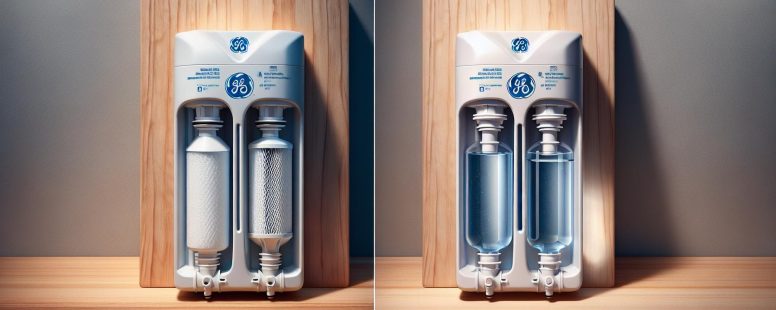
Ever found yourself standing in the appliance aisle, scratching your head over the difference between XWFE and XWF filters? You’re not alone. The world of water filters can be a confusing place, but don’t worry, we’re here to clear things up.
Overview of XWFE and XWF Water Filters
After understanding the common confusion that many consumers encounter, let’s investigate into the specifics. By looking at individual features, we gain a greater appreciation for these water filters’ capabilities.
Key Features of XWFE
The XWFE water filter brings state-of-art technology into your home. Its design purpose lies in blocking potentially harmful substances found in tap water. Trace pharmaceuticals, five types of suspended solids, and any chlorine taste and odor are among its specializations. One notable feature of this model is its capacity. This filter ensures 170 gallons of crystal clear water for consumption. Another standout feature is the ‘replaceable water filter cartridge.’ By accommodating replaceable cartridges, it allows you to maintain its effectiveness over time.
Key Features of XWF
The XWF water filter also serves as a barrier for unwanted particles, with its own unique features. It strains out lead, nine trace pharmaceuticals, cysts, and soil, promoting safer drinking water. Efficient utilization of water is one of the XWF’s hallmarks. It provides 170 gallons of healthy, clean water identical to its XWFE counterpart. A distinguishing characteristic of this filter is its ‘single port design.’ This particular design facilitates smooth water flow and ensures consistency in filtration performance.
Compatibility Differences
After unveiling the unique filtration capacities of XWFE and XWF, it makes sense to uncover the compatibility differences. This aspect often plays a crucial role in the user’s selection of the right filter.
Appliance Models for XWFE
XWFE filters cater to an array of GE refrigerator models. These include the French Door and Side-by-Side refrigerators from the Profile series (PFE, PSE models), as well as the French Door and Bottom Freezer models from the Café series (CYE, CWE models). You’ll also find the XWFE perfectly fitting the French Door and Side-by-Side models from the GE and GE Adora series.
Appliance Models for XWF
Unlike the XWFE, the XWF filter operates best with specific models from the GE series. It showcases compatibility with French Door and Bottom Freezer models from the GE and GE Adora series (GFE, GNE models). But, it isn’t suitable with the Profile or Café series. Remember, the ideal fit boosts the filter’s effectiveness, so it’s vital to select the model as per your refrigerator type.
Filtration Technology and Performance
This section uncovers the intricacies of these two filtration systems. There exists a significant difference between XWFE and XWF filters concerning their filtration efficiency. XWFE and XWF filters both offer reliable filtration performance, but their efficiencies differ due to distinctive methodologies and materials employed.
Filtration Efficiency of XWFE
XWFE filters boast a dual-port design, fostering improved filtration performance. For every 170 gallons, these filters demonstrate the capacity for comprehensive contaminant eradication, tackling harmful substances, pesticides, and trace pharmaceutical products. The XWFE filters employ an advanced filtration technique that is geared toward the precise removal of not only visible particulate matter but also of microbial cysts, reliably offering you clear, clean drinking water.
Consider the data tabulated below to paint a clearer image of XWFE filtration efficiencies:
Contaminant
XWFE Removal Efficiency
Chlorine
97.4%
Lead
99.6%
Cysts
99.9%
Pharmaceuticals
>95%
Rely on these figures, sourced from GE Appliances, for an well-informed choice on the formidable efficiency of the XWFE filter.
Filtration Efficiency of XWF
Contrarily, XWF filters embody a single-port design, effectively filtering contaminants at a steady pace with each filtration cycle. XWF filters show a similar capacity of 170 gallons to their XWFE counterparts and equally triumph against a range of pollutants including lead, cysts, and some pharmaceutical products. Nevertheless, given their single-port design, the rate at which these filters process pollutants differs from that of XWFE filters.
The table below provides an insightful comparison of XWF filtration efficiencies:
Contaminant
XWF Removal Efficiency
Chlorine
97.3%
Lead
99.3%
Cysts
99.9%
Pharmaceuticals
>90%
These documented figures, accredited by GE Appliances, assist in comprehending the effective proficiency of XWF filters.
By weighing these efficiencies, your choice between XWFE and XWF filters may be steered by your personal demands for filtration speed and thoroughness. While both perform exceptionally, subtle distinctions in their design and working methodologies grant a marginal edge to one over the other depending on individual needs and applications. Always remember, coherent and pertinent information aids in securing optimal filtration performance.
Installation and Maintenance
Let’s venture into the installation process of the two filters and uncover essential maintenance tips, all aimed at prolonging your filter’s lifespan while ensuring it operates at its peak.
Installing the XWFE Filter
Following your purchase of the XWFE filter, begin on a smooth installation process. Begin by opening your refrigerator’s filter compartment. It’s typically located in the upper right corner inside your fridge. Then, pull the old filter downward, while applying slight pressure, and it’ll pop out. Having done that, unseal your new XWFE filter from its package, fill it with water, and insert it into the filter slot. Push it upward until it locks into place. It’s crucial to flush the filter by dispensing and discarding about three gallons of water from it. This act bolsters filter priming, expediting its operational readiness.
Installing the XWF Filter
The steps involved in installing the XWF filter mirror those of the XWFE filter, albeit with slight differences. Located on the inside of the left refrigerator door, the filter compartment houses the old XWF filter. Grab a firm hold of the filter and twist it in a counter-clockwise direction to remove it. Simultaneously, be cautious not to apply excessive force that might cause unwanted breaks. Conversely, install the new XWF filter by aligning its arrows with the filter housing arrows. Then make a clockwise rotation until the filter snugs into the housing, signaling a successful installation. Like the XWFE filter, it’s imperative to flush the XWF filter, dispense around three gallons of water to finalize the installation process and get it ready for operation.
Remember, consistent maintenance of your installed filters ensures they deliver prime performance and extended longevity. Set reminders for timely filter replacements—typically every six months or after processing 170 gallons of water. Prompt replacements will avert potential filter clogs, water flow reductions, or compromised water quality.
Price Comparison and Value
When determining which water filter to purchase, it’s crucial to evaluate the cost against the overall value offered. Both XWFE and XWF filters present potential benefits in terms of water quality and compatibility with GE refrigerator models. Yet, the price tags associated with these filters vary.
The XWFE water filter, with advanced, dual-port technology, typically markets at a slightly higher price point due to its superior contaminant removal efficiency. For instance, popular online retailers sell the XWFE filter for around $55.
In contrast, the XWF water filter, which employs a single-port design, commonly sells for approximately $45. Even though its lower cost, this filter doesn’t lack in performance, still offering efficient filtration and 170 gallons of purified water. Since it can also handle significant amounts of water, it provides adequate protection for half a year—equivalent to the more expensive XWFE.
But, bear in mind that prices fluctuate based on the retailer and ongoing deals or discounts. So, always compare prices from multiple sources before making your final purchase.
Consider the value you’re getting with each filter. Although initial costs may sway your decision towards the more affordable option, don’t forget to factor in longevity and performance. That extra $10 spent on an XWFE filter equals enhanced filtration capacity, which means better water quality for you and your family.
Next, it’s about the maintenance. Both filters require replacement every six months or after treating 170 gallons of water, hence, the frequency needed for replacements are roughly the same for either filter. Still, the XWFE model’s dual-port design could offer better performance over time, extending its use slightly beyond the standard six months duration if usage is minimal.
To conclude, while the XWF filter might help save some dollars in the short run, the XWFE filter’s improved filtration efficiency and potential for increased lifespan may prove it to be the more cost-effective option for some over time.
Conclusion
So you’ve seen the differences between XWFE and XWF filters. It’s clear that both have their strengths and offer excellent value. While XWFE’s dual-port design gives it an edge in contaminant removal, XWF isn’t far behind. They both deliver 170 gallons of purified water. But, XWFE might prove more cost-effective over time due to its enhanced filtration and potential for a longer lifespan, even though its higher upfront cost. Remember, the key to maintaining their efficiency is timely replacements – every six months or after 170 gallons of water. It’s not just about choosing a filter; it’s about ensuring you get the best out of it for the healthiest water possible. So choose wisely and drink healthy!
To provide the best experiences, we use technologies like cookies to store and/or access device information. Consenting to these technologies will allow us to process data such as browsing behaviour or unique IDs on this site. Not consenting or withdrawing consent, may adversely affect certain features and functions.
Functional
Always active
The technical storage or access is strictly necessary for the legitimate purpose of enabling the use of a specific service explicitly requested by the subscriber or user, or for the sole purpose of carrying out the transmission of a communication over an electronic communications network.
Preferences
The technical storage or access is necessary for the legitimate purpose of storing preferences that are not requested by the subscriber or user.
Statistics
The technical storage or access that is used exclusively for statistical purposes.The technical storage or access that is used exclusively for anonymous statistical purposes. Without a subpoena, voluntary compliance on the part of your Internet Service Provider, or additional records from a third party, information stored or retrieved for this purpose alone cannot usually be used to identify you.
Marketing
The technical storage or access is required to create user profiles to send advertising, or to track the user on a website or across several websites for similar marketing purposes.