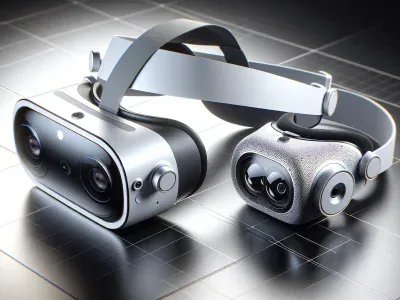
Picture slipping on a sleek headset that transports you to another world where every detail feels astonishingly real. Virtual reality isn’t just a futuristic dream anymore—it’s at your fingertips. But choosing between Oculus and Meta Quest, which one truly delivers the immersive experience you crave?
Both promise cutting-edge technology and mind-blowing adventures, yet subtle differences can make or break your VR journey. From crystal-clear visuals to seamless controls, understanding what sets these devices apart can unlock a new level of gaming, socializing, or exploring.
Ready to dive deep into the features, performance, and hidden perks? Let’s unravel the mystery and find out which headset fits your world best.
Understanding Oculus and Meta Quest
You stand at the crossroads of virtual reality innovation when choosing between Oculus and Meta Quest. Both brands trace a path of technological breakthroughs shaping your immersive experiences.
History and Evolution
Oculus, launched in 2012, sparked the modern VR revolution after its Kickstarter success. Facebook’s acquisition in 2014 fueled rapid development, transforming Oculus into a household name known for tethered VR headsets, such as the Oculus Rift. Meta Quest emerged as an evolution, rebranding Oculus devices under Meta’s vision to unify VR and social connectivity. Meta Quest introduced standalone headsets eliminating cables and the need for external hardware. This shift reflects Meta’s strategy to make VR accessible and mobile, enabling your adventures anywhere.
Key Features of Each Device
Oculus devices, like the Oculus Rift S, rely on powerful PCs to deliver high-fidelity visuals, supporting room-scale tracking and complex games. You experience sharp graphics and precise controls best suited for dedicated gaming setups. Meta Quest line, including Meta Quest 2 and Quest Pro, offers wireless freedom with inside-out tracking using cameras embedded in the headset. This autonomy fosters easy setup and portability, catering to users valuing convenience alongside quality.
Feature
Oculus Rift S
Meta Quest 2
Meta Quest Pro
Connection
Wired to PC
Standalone wireless
Standalone wireless
Display Resolution
2560×1440 total
1832×1920 per eye
1800×1920 per eye
Tracking
External sensors
Inside-out cameras
Inside-out cameras + sensors
Use Case
High-end gaming
Casual to moderate gaming
Professional, Mixed Reality
Price Range (USD)
~$399
~$299
~$1499
Ask yourself: Do you prefer tethered performance or wireless freedom? Oculus offers intense graphical fidelity demanding a PC, while Meta Quest trades some performance for mobility. Neither choice is strictly better; your use case and environment dictate which headset truly fits your virtual lifestyle.
Dive deeper into how each platform supports apps and social interactions – Meta Quest’s integration with social VR apps may redefine your experience beyond gaming. Keep questioning which headset shapes your vision of virtual reality’s future.
Performance Comparison
Understanding how Oculus and Meta Quest stack up in performance helps you make an informed choice. Each excels differently in graphics, tracking, and software, offering distinct VR experiences tailored to your needs.
Graphics and Display Quality
Oculus Rift S relies on a PC connection, tapping into powerful GPUs like NVIDIA’s RTX series, you get sharp visuals with up to 2560 x 1440 resolution combined for both lenses. Meta Quest 2, while standalone, features a single fast-switch LCD with 1832 x 1920 pixels per eye, delivering vibrant colors and reduced screen-door effect thanks to its higher pixel density. The choice narrows down to whether you prefer raw graphical power from your PC or the convenience of crisp visuals anywhere with wireless freedom. For instance, players seeking photorealistic textures in games like Half-Life: Alyx benefit from Oculus’s PC tethering, while casual adventurers exploring Beat Saber find Meta Quest’s display quality more than sufficient. The variance in refresh rates—Oculus Rift S generally supports 80Hz, Meta Quest 2 up to 90Hz or 120Hz via update—also influences smoothness, especially during fast movement scenarios.
Tracking and Controllers
Oculus uses external sensors for tracking, granting precise positional data, yet setting up multiple cameras may clutter your play space. By contrast, Meta Quest employs inside-out tracking with integrated cameras in the headset, simplifying setup and enhancing mobility without external dependencies. Controllers in both systems share intuitive designs with finger triggers and thumbsticks, but Meta Quest’s controllers include improved haptics and better battery efficiency post Quest 2 updates. Tracking sometimes falters in low light or complex room environments on Meta Quest, contrasting Oculus’s more stable tracking where sensor coverage is optimal. Your decision hinges on whether you value flawless tracking precision—crucial for competitive FPS games—or prefer hassle-free, standalone use that lets you roam freely and spontaneously.
Software and Content Ecosystem
Meta Quest hosts a robust library with many exclusive titles and a growing social VR scene, including apps like Horizon Worlds and VRChat, creating immersive communities accessible without a PC. Oculus benefits from the extensive SteamVR and Oculus Store catalog, offering high-end games and professional-grade VR simulations. While Meta Quest apps run Android-based OS optimized for mobile hardware, Oculus connected to PCs runs full desktop software, widening content variety but tethering you physically. Consider your content appetite: do you crave the expansiveness and graphics fidelity of PC VR or the self-contained, plug-and-play ecosystem Meta Quest delivers? Both ecosystems embrace cross-buy options, but exclusive titles like Lone Echo (Oculus) versus The Climb (Meta Quest) highlight divergent developer focuses.
Feature
Oculus Rift S
Meta Quest 2
Display Resolution
2560 x 1440 combined
1832 x 1920 per eye
Refresh Rate
80Hz
90Hz (up to 120Hz)
Tracking Method
External sensors
Inside-out tracking
Controllers
Oculus Touch
Updated Quest Touch Controllers
Content Platform
Oculus Store, SteamVR
Meta Quest Store, Social VR
Mobility
Tethered to PC
Standalone wireless
Analyzing these factors deepens your understanding of how Oculus and Meta Quest cater to different VR priorities. Whether you lean towards uncompromised graphical fidelity tethered to a versatile PC or embrace untethered mobility with an expanding social ecosystem, both platforms reflect how virtual reality evolves to meet varied user expectations. Questions linger: will wireless tech overtake PC-based VR completely? How will future software boost standalone devices’ capabilities further? You’re invited to explore, test, and decide how these innovations fit your virtual horizons.
User Experience and Comfort
Your VR journey hinges on how comfortable and intuitive your headset feels. Both Oculus and Meta Quest offer distinct experiences, shaping how long you can stay immersed without distraction.
Design and Ergonomics
You find the Oculus Rift S designed with a rigid halo headband, securing it firmly but sometimes causing pressure points during extended sessions. The device balances weight primarily on the back of your head, which minimizes facial strain yet may lead to neck fatigue. In contrast, the Meta Quest 2 sports a lighter, more streamlined form factor that enhances portability. Its adjustable straps let you customize the fit for diverse head shapes, reducing discomfort. But, some users report that its soft foam facial interface can cause sweat build-up after hours of use. With the Quest Pro, Meta advances ergonomic design by introducing a balanced battery placement and improved facial padding that better breathes and cushions. When you consider prolonged gaming marathons or social VR meetups, this small shift in comfort can mean the difference between memorable adventures and premature headset removal.
Battery Life and Wireless Capabilities
Oculus devices tethered to PC, such as the Rift S, rely on uninterrupted power and data flow. This wired dependence ensures consistent high performance, yet it restricts your movement to the cable’s reach and might kink immersion for some players. Wireless freedom arrives with the Meta Quest lineup, where internal batteries power every experience on the go. The Quest 2 offers roughly 2 to 3 hours of continuous playtime per charge, which suffices for casual sessions but you want extra power, a portable battery pack adds convenience on longer explorations. Meta Quest Pro extends this longevity slightly with enhanced battery efficiency, but 3 to 4 hours remain the practical ceiling. Wireless convenience trades off raw performance for mobility — so if you prefer dropping into virtual realms anywhere, anytime, Meta Quest excels; if top-tier graphics and steady connectivity drive your choice, Oculus holds edge.
Balancing design with usage behaviors gives you critical insights to elevate your VR deployment; consider whether staying untethered suits your style more, or if tethering aligns with your priority on uncompromised visuals. Your ideal headset complements your rhythm—and that choice improves every virtual moment.
Pricing and Value for Money
When weighing the choice between Oculus and Meta Quest, understanding the pricing and overall value becomes essential. You aim to get the most immersive VR experience without overpaying or sacrificing features that matter.
Cost Differences
Oculus headsets, particularly the Rift S, typically demands a higher upfront investment. It costs around $399 but needs a powerful PC, which adds hundreds more dollars if you lack compatible hardware. Meta Quest devices, including the Quest 2 and Quest Pro, start at $299 and climb to $499, yet operate entirely standalone, ticking off one big cost — the PC. You get wireless freedom out of the box, which many users find outweighs the higher fidelity visuals tethered headsets can provide.
Pricing fluctuates based on specs and bundles. Quest 2’s sweet spot hits around $299 to $399, a steal for a completely untethered VR system. Quest Pro, on the other hand, at $499 or more, targets enthusiasts with better visuals, more comfortable design, and improved tracking — offering value if your VR use cases demand extra performance.
Real-life example: a gamer invested $2500 in a top-tier gaming PC and an Oculus Rift S, while a casual VR user chose the Quest 2 for $299 and enjoyed the convenience of wireless play anywhere in their home without extra gear. Which model offers better value hinges on your lifestyle, needs, and budget flexibility.
Available Packages and Accessories
Oculus and Meta Quest both offer bundles that affect overall value. Oculus bundles often include the headset, controllers, and base stations for tracking, pushing total cost higher. Meta Quest packages tend to focus on the headset and controllers with fewer extras but offer optional accessory packs, like elite straps with battery packs or prescription lens adapters, that add comfort and convenience.
For example, Quest 2’s base model gets ultra-light weight and portability to you immediately, but adding a battery pack strap ($49) extends playtime significantly, a practical upgrade for any serious user. Oculus demands external sensors for accurate tracking, which adds more expense and setup time.
Accessories shape your VR experience. Oculus’s PC-tethered design calls for higher initial costs and physical space considerations, while Meta Quest’s modular accessories balance affordability and performance, offering you tailored enhancements without bloated pricing.
If you’ve a limited budget but want VR quality, Meta Quest provides more headsets for fewer dollars. If you prioritize high-end graphics and immersion, Oculus’s traditional PC-based system shows it’s no bargain, but delivers in fidelity.
Both brands adapt to users who expect different value equations—whether it’s ease, fidelity, or expandability—making the pricing and accessory landscape a deciding factor in your buying decision.
Pros and Cons of Oculus vs Meta Quest
You find yourself weighing the advantages and drawbacks of Oculus and Meta Quest headsets, aiming for the best VR experience. Each device offers distinctive benefits while posing certain limitations.
Oculus Pros
High Fidelity Visuals: Oculus Rift S connects to powerful PCs, delivering sharper graphics and smoother frame rates, perfect if immersive gameplay excites you.
Robust Software Library: Oculus supports SteamVR and the Oculus Store, granting access to thousands of titles, including high-end VR games that demand strong hardware.
Precise Tracking: External sensors used by Oculus provide accurate hand and room tracking, minimizing lag and enhancing realism.
Oculus Cons
Requires External Hardware: Oculus depends on a gaming PC, which increases upfront costs and reduces mobility since the headset tethers you.
Less Portable: The wired setup limits freedom of movement, making it harder to use in casual or shared spaces.
Bulkier Design: The halo headband, while secure, can cause discomfort over long sessions due to its rigidity.
Meta Quest Pros
Standalone Operation: Meta Quest runs without a PC or external sensors, offering wireless freedom and straightforward setup wherever you go.
Affordability: Lower price points begin around $299 for the Quest 2, making it accessible to a broader audience without extra gear.
Comfort and Portability: Lightweight designs with adjustable straps let you play longer comfortably and carry your VR world easily.
Growing Content Ecosystem: Exclusive games and social VR apps foster connections in virtual spaces, appealing if you prioritize interaction over raw hardware power.
Meta Quest Cons
Reduced Visual Fidelity: Quest’s mobile chipset limits graphics performance compared to PC-powered Oculus, creating less sharp images.
Shorter Battery Life: Expect 2 to 3 hours of playtime before recharging, which may interrupt longer sessions.
Less Accurate Tracking: Inside-out tracking with integrated cameras can struggle in low-light or cluttered environments.
Real-World Considerations Table
Aspect
Oculus Rift S
Meta Quest 2
Connection
Wired to PC
Standalone, wireless
Visual Resolution
2560 x 1440 (combined)
1832 x 1920 per eye
Tracking
External sensors
Inside-out cameras
Battery Life
N/A (tethered)
2-3 hours
Price Range
$399 + PC Required
Starting at $299
Software Library
SteamVR, Oculus Store
Oculus Store, Meta exclusives
Critics argue Oculus’s reliance on a PC restricts casual use, while others insist the superior visuals justify the hassle. Conversely, Meta Quest’s wireless experience appeals to those prioritizing convenience, yet some feel its graphical compromises lessen immersion.
Picture hosting a VR party; Quest lets you effortlessly pass the headset between friends, sparking spontaneous fun. Oculus offers the depth for a solo adventure but tethered to a setup best suited for dedicated spaces.
Consider how your lifestyle aligns with these traits. Choosing Oculus works if you crave graphically intense experiences and own gaming rigs. Meta Quest suits travelers, casual gamers, or social VR devotees who value ease of use over peak performance.
To maximize your VR investment, balance design comfort, software preferences, mobility needs, and budget constraints. Want to jump into VR worlds anytime, anywhere? Meta Quest delivers. Crave ultra-realistic visuals and complex games? Oculus meets the challenge. Think critically and select what fits your virtual reality journey.
Conclusion
Choosing between Oculus and Meta Quest comes down to what fits your lifestyle and VR goals best. If you want top-tier visuals and don’t mind being tethered to a PC, Oculus offers a powerful experience. But if freedom, portability, and ease of use are your priorities, Meta Quest’s standalone design is hard to beat.
Your budget and comfort preferences also play key roles in making the right choice. Both platforms have unique strengths that cater to different types of VR users. By weighing these factors carefully, you can find a headset that delivers the immersive experience you’re looking for without compromise.
To provide the best experiences, we use technologies like cookies to store and/or access device information. Consenting to these technologies will allow us to process data such as browsing behaviour or unique IDs on this site. Not consenting or withdrawing consent, may adversely affect certain features and functions.
Functional
Always active
The technical storage or access is strictly necessary for the legitimate purpose of enabling the use of a specific service explicitly requested by the subscriber or user, or for the sole purpose of carrying out the transmission of a communication over an electronic communications network.
Preferences
The technical storage or access is necessary for the legitimate purpose of storing preferences that are not requested by the subscriber or user.
Statistics
The technical storage or access that is used exclusively for statistical purposes.The technical storage or access that is used exclusively for anonymous statistical purposes. Without a subpoena, voluntary compliance on the part of your Internet Service Provider, or additional records from a third party, information stored or retrieved for this purpose alone cannot usually be used to identify you.
Marketing
The technical storage or access is required to create user profiles to send advertising, or to track the user on a website or across several websites for similar marketing purposes.