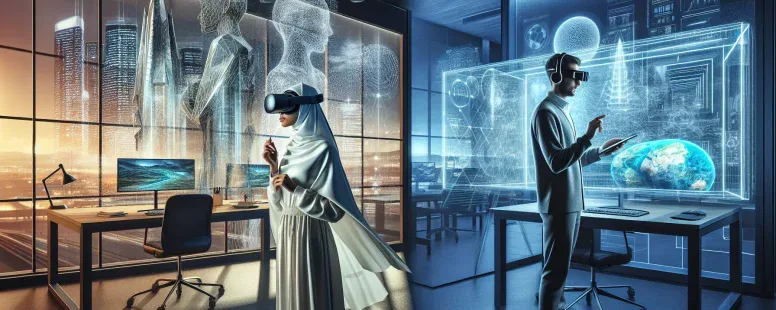
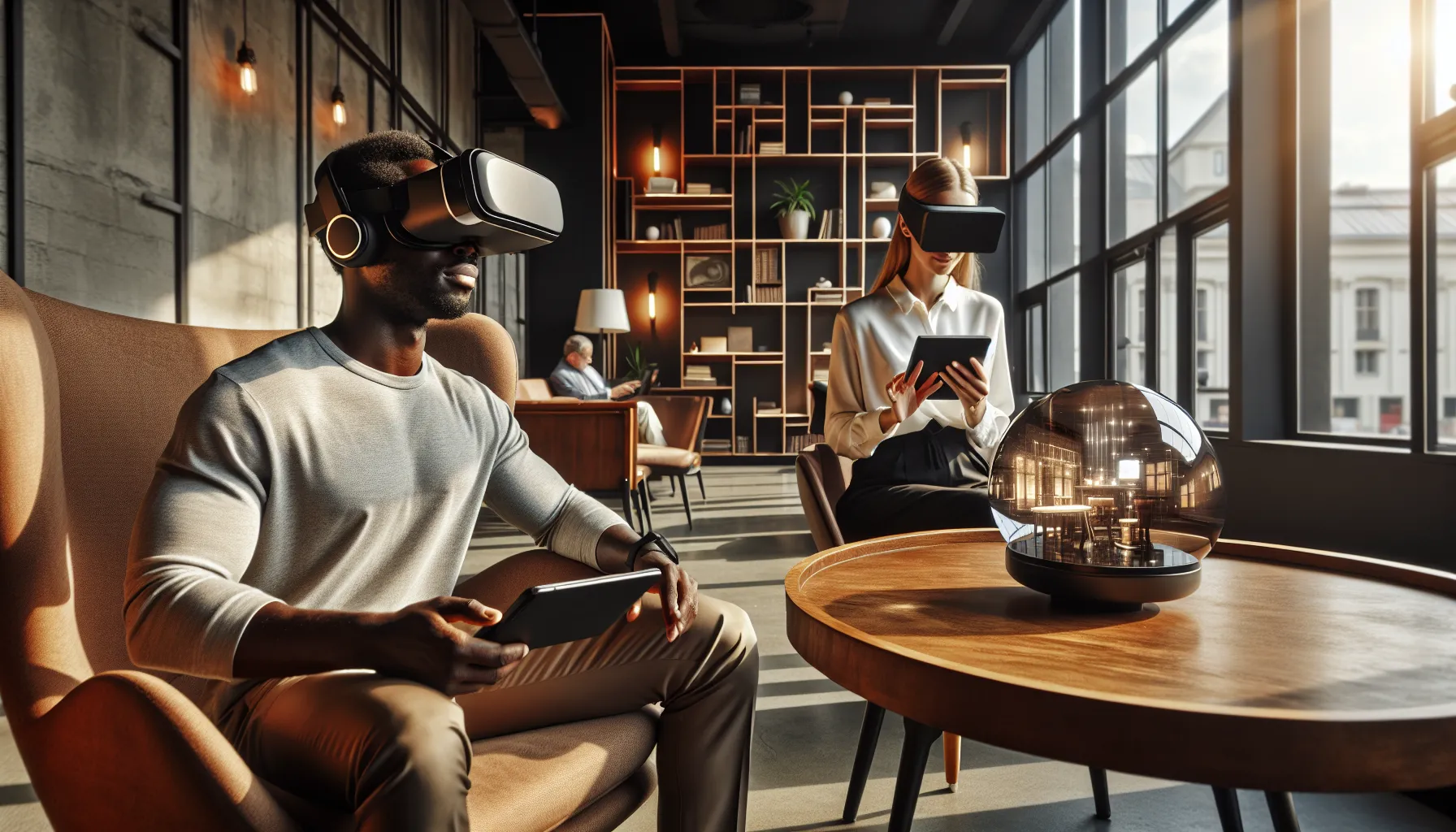
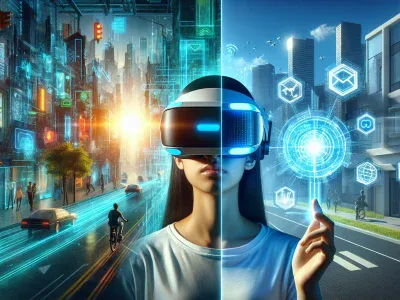
Picture exploring an entirely digital universe or seeing digital elements seamlessly overlaying your physical world, these are the captivating realities created by Virtual Reality (VR) and Augmented Reality (AR), respectively. While both VR and AR deploy advanced technologies to manipulate our perception of reality, they serve distinct purposes and offer unique interactions. In this text, we’ll investigate into how these technologies work, their applications, and what makes each of them stand out in the evolving field of digital innovations.
Understanding Virtual Reality (VR): A Complete Immersion
Components and Functionality of VR Systems
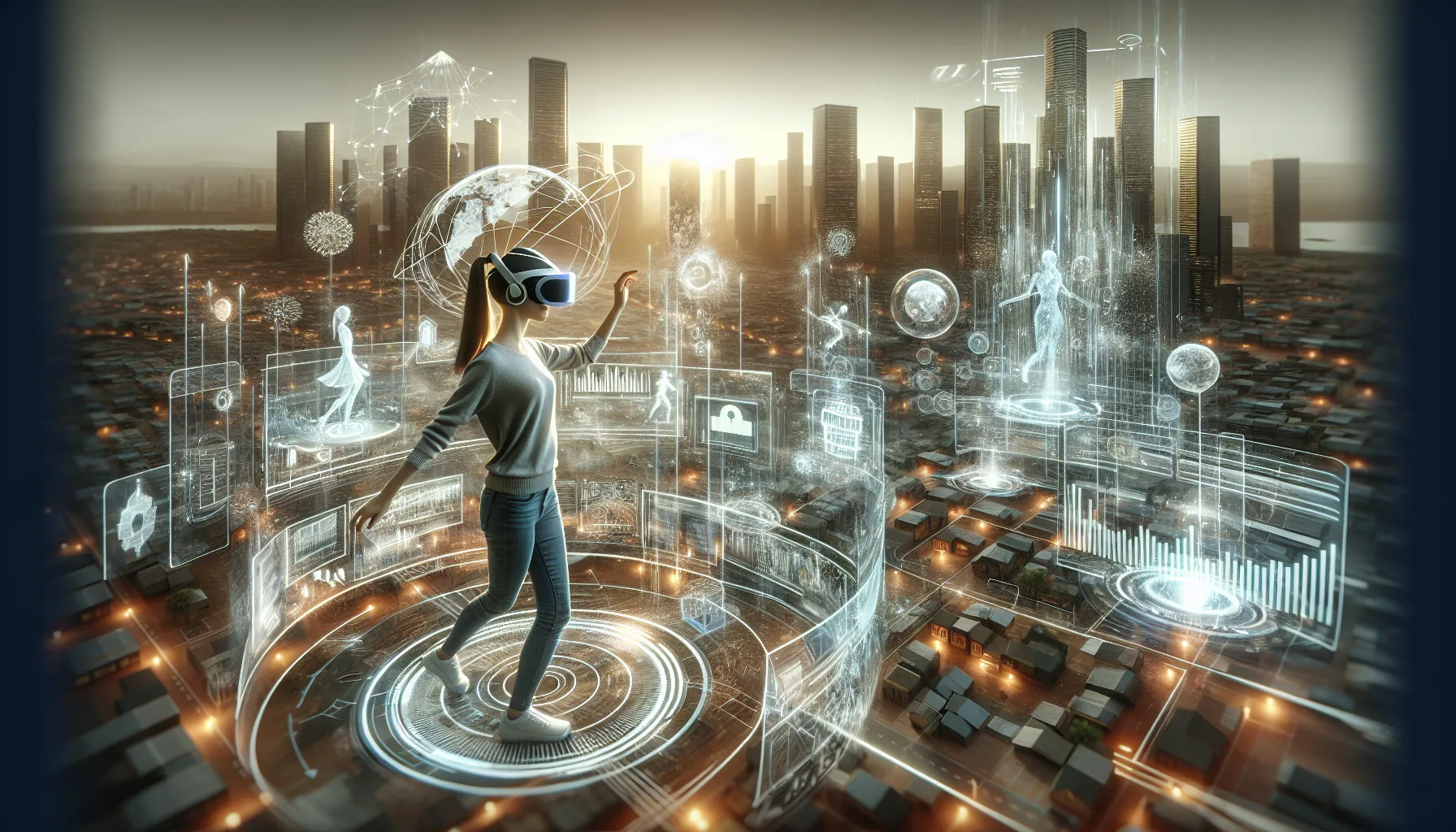
Virtual Reality (VR) involves creating a completely immersive digital environment that replaces the real world. Key components of a VR setup include head-mounted displays (HMDs), motion tracking sensors, and interactive controllers. These technologies work together to immerse users into a computer-generated environment, allowing them to interact with this simulated space as though they were physically present.
Applications of VR Across Various Industries
The practical implementations of VR are vast, ranging from entertainment to educational training. In the gaming industry, VR enables players to interact with immersive storylines. In healthcare, VR is utilized for surgical simulations, offering a risk-free training platform for professionals. Also, VR serves as a powerful tool in architecture, where designers can visualize structures in 3D before they are built.
Exploring Augmented Reality (AR): Enhancing the Real World
Key Elements of AR Technology
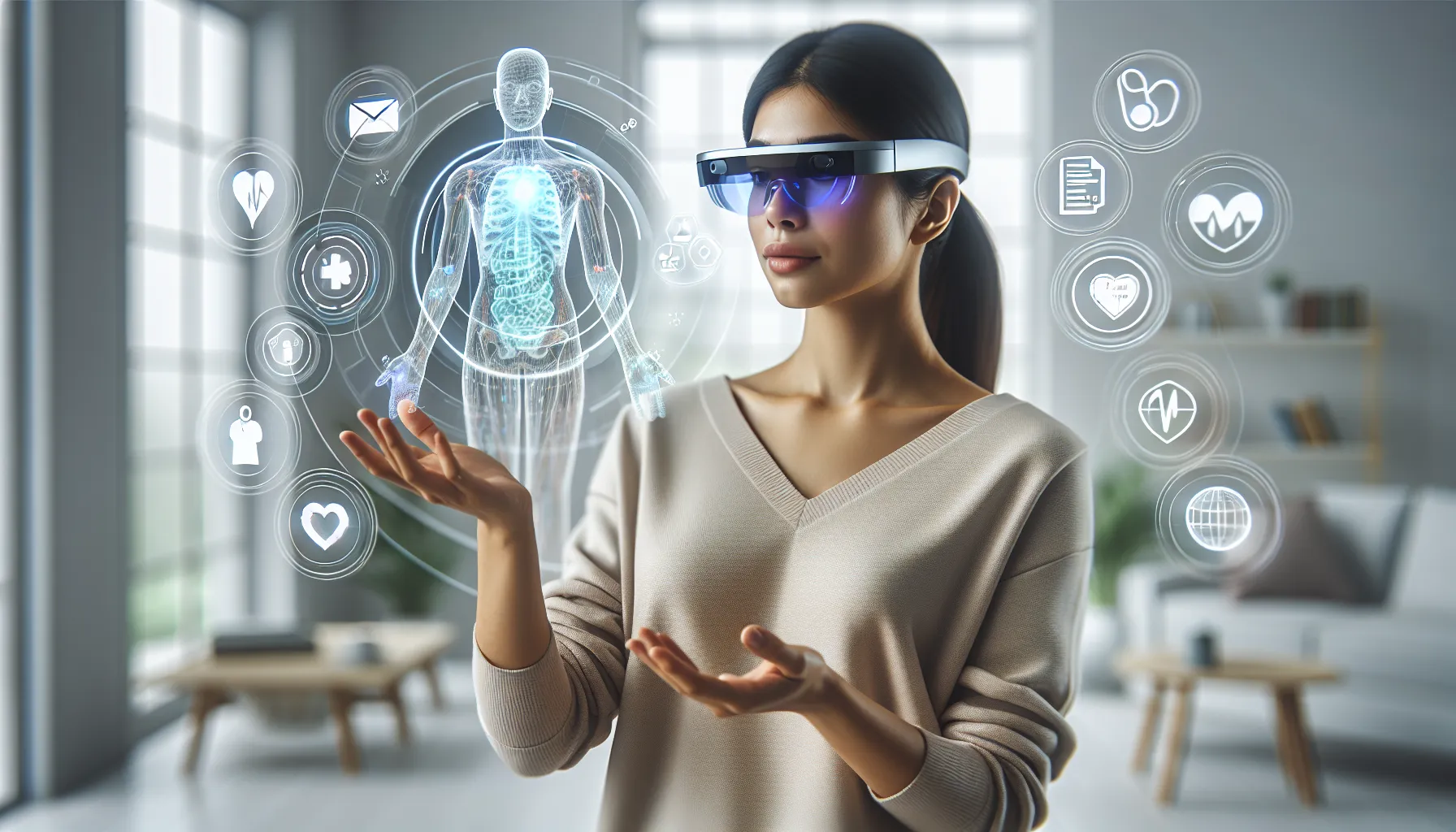
Augmented Reality (AR) overlays digital elements (like images, text, and 3D models) onto the physical world, enhancing the user’s perception of their environment. This requires devices equipped with cameras and advanced processing capabilities, such as smartphones or AR glasses, alongside software platforms capable of recognizing and mapping surroundings.
AR Use Cases and Their Growing Impact
AR transforms various sectors by providing innovative experiences. In retail, AR enables virtual try-ons for products like clothing or eyeglasses. Healthcare practitioners use AR for advanced diagnostic visualizations and guiding surgical procedures. Besides, education leverages AR to create interactive learning environments, enhancing student engagement and understanding of complex concepts.
Comparing Virtual Reality and Augmented Reality
Distinct Technological Frameworks and User Experiences
The fundamental difference between VR and AR lies in the user’s level of immersion. VR immerses users entirely in a virtual environment, detaching them from the real world. On the other hand, AR enhances the real world by adding interactive virtual elements, maintaining a connection with the physical surroundings. Both technologies use different devices and software tailored to their unique operational principles.
Strengths and Limitations of VR and AR Solutions
While VR excels in creating immersive simulations, it often requires expensive and specialized equipment, which can limit accessibility. AR, being implementable on common consumer devices like smartphones, is more readily accessible, though it may be less immersive than VR. Understanding these differences allows for informed decisions when choosing between these technologies for specific applications.
The Future of VR and AR: Where the Technologies Might Converge
As both VR and AR continue to advance, their convergence appears increasingly likely, forming what some term “Mixed Reality” (MR). MR combines the immersion of VR with AR’s ability to overlay digital content onto the real world, creating experiences that are both interactive and seamlessly integrated. This innovation will expand possibilities across industries, ranging from entertainment to education, redefining how we perceive and interact with our surroundings.
To provide the best experiences, we use technologies like cookies to store and/or access device information. Consenting to these technologies will allow us to process data such as browsing behaviour or unique IDs on this site. Not consenting or withdrawing consent, may adversely affect certain features and functions.
Functional
Always active
The technical storage or access is strictly necessary for the legitimate purpose of enabling the use of a specific service explicitly requested by the subscriber or user, or for the sole purpose of carrying out the transmission of a communication over an electronic communications network.
Preferences
The technical storage or access is necessary for the legitimate purpose of storing preferences that are not requested by the subscriber or user.
Statistics
The technical storage or access that is used exclusively for statistical purposes.The technical storage or access that is used exclusively for anonymous statistical purposes. Without a subpoena, voluntary compliance on the part of your Internet Service Provider, or additional records from a third party, information stored or retrieved for this purpose alone cannot usually be used to identify you.
Marketing
The technical storage or access is required to create user profiles to send advertising, or to track the user on a website or across several websites for similar marketing purposes.