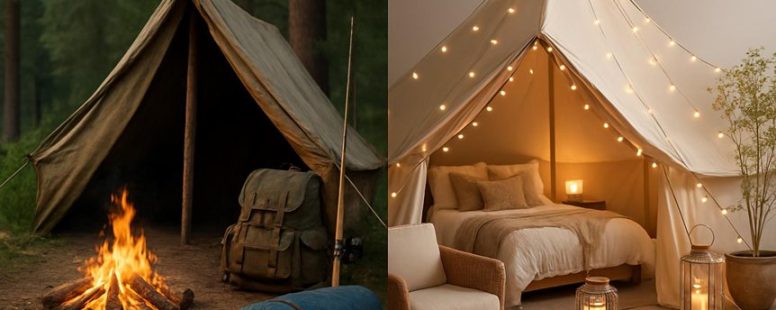
Imagine waking up to the gentle rustle of leaves and the crisp scent of morning air—whether you’re sleeping under a star-studded sky in a tent or lounging in a plush bed surrounded by soft lighting. Camping and glamping represent two very different ways to embrace the outdoors, each with its own charm.
Camping delivers a raw, earthy experience—think crackling fires and the feel of rough-hewn fabric—while glamping offers a luxurious escape with cozy beds and climate control that feel like a five-star retreat in nature.
Surprisingly, glamping can also boost your mental well-being by combining adventure with comfort, making outdoor relaxation easier than ever.
Curious which style suits your spirit—raw wilderness or polished pampering? Let’s explore the key differences.
What Are the Main Differences Between Camping and Glamping?
Camping is a way to enjoy the outdoors with just the basics. It usually involves setting up a simple tent, packing your gear, and cooking meals over a campfire. The goal is to connect with nature and learn basic survival skills. For example, you might carry a lightweight tent and learn how to start a fire with matches. Camping can be challenging because it requires effort and patience, but it also gives a real sense of adventure.
Glamping is more about luxury and comfort. It means glamorous camping with fancy tents, cabins, or yurts that already have beds, electricity, and sometimes even Wi-Fi. Glamping makes it easy to enjoy nature without giving up comfort. Think of it like staying in a cozy hotel that is surrounded by trees. Some popular glamping spots include places like Under Canvas in Yellowstone or The Resort at Paws Up in Montana.
People choose camping if they want to learn survival skills or save money. It’s also good for those who love being active and roughing it a little. But camping can be uncomfortable if the weather is bad or your gear isn’t right. On the other hand, glamping is perfect for people who want a beautiful outdoor experience but don’t want to sleep on the ground or cook over a fire. However, glamping can be more expensive and less adventurous.
Which Experience Is Better for Your Comfort and Convenience?
Glamping is the better outdoor experience for comfort and convenience. It is a mix of camping and luxury. Glamping offers nice beds, climate control, and private bathrooms. These features make it easier and more relaxing for people who want to enjoy nature without giving up comfort.
Camping, on the other hand, usually means using simple gear like tents and sleeping bags. It often means being okay with fewer comforts and more basic living. If you want a quick getaway with little hassle, glamping is a good choice. It feels like staying in a hotel but outside in nature.
Some people may think camping is more fun because it’s more traditional and cheap. But it can also be uncomfortable, especially if the weather is bad or if you forget important gear. Glamping costs more, but it saves you from many worries.
In the end, if your main goal is to relax without giving up convenience, glamping is the way to go. It offers a comfy escape that still lets you enjoy the outdoors. Would you prefer a cozy bed or sleeping under the stars? The choice depends on what matters most to you.
Where Do You Stay: Tents, Cabins, or Luxury Yurts?
Where Do You Stay: Tents, Cabins, or Luxury Yurts?
The best way to enjoy the outdoors depends on what you want from your trip. Tents, cabins, and yurts each offer different experiences. Here’s a simple guide to help you decide what works for you.
Tents are the most basic choice. They are lightweight and easy to set up, making them perfect for backpackers or people who want to stay close to nature. If you like sleeping under the stars and feeling the breeze, tents are a good pick. Just remember, setting up a tent can take some time, especially if the ground is uneven or wet. Also, tents offer less protection from weather and bugs. Still, they are the most affordable and flexible option.
Cabins are cozy and more comfortable. They usually have walls, windows, and sometimes electricity or heat. A cabin can feel like a little home in the woods. If you want to relax after a day of hiking or fishing, cabins give you a place to rest and store your gear safely. Keep in mind, cabins are less portable and might require reservations. They are a good choice if you want comfort without giving up the outdoor feel.
Yurts are unique structures that blend the charm of camping with luxury. They are round, strong, and often include features like climate control, comfy furniture, and stylish interiors. Staying in a yurt is like camping in a fancy hotel. They are perfect if you want a special experience and don’t want to give up comfort. However, yurts can be more expensive than tents and may be limited in availability. Some yurts are located in scenic places like national parks or private resorts, making your trip more memorable.
Some people prefer tents for adventure, while others choose cabins or yurts for comfort. Each has its pros and cons. Think about what matters most to you: simplicity and closeness to nature, or comfort and style. No matter what you pick, each option offers a different way to enjoy the outdoors. Just choose what suits your style best and get ready for a great trip.
What Amenities and Facilities Can You Expect in Camping vs. Glamping?
Camping usually means staying in simple setups with few amenities. You might sleep in a tent or a basic cabin. Facilities often include shared bathrooms, a campfire area, and a small cooking space. There are no fancy comforts, so you’re mostly focused on being close to nature. If you like roughing it and don’t mind basic needs, camping is a good choice.
Glamping, on the other hand, is a fancy way to camp. It gives you many comforts you find at home. Expect to sleep on comfortable beds, have heating or air conditioning, and enjoy private bathrooms. Some glamping sites even include kitchens, so cooking is easy. These amenities make your stay more relaxing and less stressful. People who want to enjoy nature with some luxury usually pick glamping.
Both options have their good and bad points. Camping is cheaper and more authentic but can be uncomfortable. Glamping costs more but offers more comfort and convenience. If you want to feel like you are camping but with luxury, glamping might be the best choice. But if you want to connect with nature and don’t mind simple facilities, camping will fit your needs.
In the end, your choice depends on what you want from your outdoor stay. Do you want basic fun or a luxury escape? Both options let you enjoy the outdoors in different ways.
What Activities Are Usually Included in Camping and Glamping Trips?
Camping trips usually include outdoor activities like hiking, fishing, and cooking food over a campfire. These activities are part of the fun and help people enjoy nature. When you go camping, you often spend time exploring the area, watching wildlife, and relaxing by a fire.
Here are some common activities during camping trips:
Cooking meals over a campfire or portable stove
Watching birds and wildlife
Fishing in lakes or streams nearby
Walking on trails and exploring nature
Setting up for stargazing at night
Some people also choose glamping, which is a more comfortable way to camp. Glamping might include staying in cozy tents, cabins, or yurts with beds and electricity. The activities in glamping trips are similar but often include relaxing and enjoying amenities, like reading or sitting by a fire pit.
Both camping and glamping give you a chance to connect with nature, but camping is often more active and simple, while glamping offers more comfort. No matter what you choose, these trips help you enjoy the outdoors and make memories.
How Much Do Camping and Glamping Cost, and Is It Worth It?
Camping costs less money upfront, making it a good choice for people on a tight budget. You can usually find a tent site at a national park or campground for around $20 to $50 a night. It’s simple, and you bring your own gear like a tent and sleeping bag. But keep in mind, camping can be less comfortable, especially if the weather is bad or you don’t like roughing it.
Glamping, on the other hand, is more expensive but offers more comfort. Think of it as staying in a fancy hotel that’s outdoors. Glamping sites might cost $100 to $300 a night, and they often include things like cozy beds, electricity, and even hot showers. Places like Under Canvas or Canopy & Stars offer these luxurious outdoor stays. Some people love glamping because it feels like a vacation with nature, but it’s not for everyone if you want to keep costs low.
Budget Differences Between Types
Camping and glamping are two ways to enjoy the outdoors, but they cost very different amounts of money. Camping is usually much cheaper and is a good choice if you want to save money. Glamping, which means glamorous camping, offers fancy tents or cabins with amenities like beds, electricity, and bathrooms. These luxury features make glamping more expensive.
Here’s a simple cost comparison:
Camping usually costs between 10 and 50 dollars per night. You can bring your own gear, which you can reuse for many trips. This makes camping a budget-friendly option, especially for long stays.
Glamping can cost from 100 to over 500 dollars per night. It includes all-in-one packages with comfortable beds, heating, and sometimes even Wi-Fi. Because of these added comforts, glamping is more expensive than traditional camping.
Some people prefer camping because it is more affordable and flexible. Others choose glamping because it feels more like a hotel and less like roughing it.
Keep in mind that the cost of gear is different too. With camping, you might need to buy tents, sleeping bags, and cooking supplies, but you can reuse these items for many trips. With glamping, everything is often included, so there are fewer things to buy beforehand.
If you plan to stay outdoors for many days, camping can stay budget-friendly. Glamping might add up quickly if you stay for a long time, but it gives you more comfort and convenience.
Knowing these differences can help you decide what fits your budget and what kind of experience you want. Whether you choose simple camping or fancy glamping, both can give you a fun outdoor adventure without spending too much—or too little.
Cost vs. Experience Value
Camping and glamping are two popular ways to enjoy outdoor stays. The main difference is how much comfort and amenities you get for the price. Camping is usually cheaper because you sleep in tents or simple setups. It’s like sleeping under the stars with only a sleeping bag and basic gear. If you like adventure and don’t mind roughing it, camping can save you money. But it may mean giving up things like running water, electricity, or cozy beds.
Glamping, which is short for glamorous camping, offers more luxury. Think of staying in a fancy tent with a real bed, heating, and even a bathroom. It costs more upfront but can feel like a mini vacation. Some people prefer glamping because it makes outdoor stays more comfortable and less stressful. It’s like turning camping into a luxury hotel experience in nature.
When choosing between the two, consider what you value most. Do you want to save money and enjoy the simple side of camping? Or do you want comfort and convenience even if it costs more? Both options have their benefits and limits. Camping may not have all the amenities but can be more affordable. Glamping might cost more but offers an easier, more relaxing experience. Think about what matters most to you before making a decision.
Long-Term Investment Considerations
Long-term investment in camping or glamping depends on what you want and your budget. The key question is which option makes more sense over time.
Camping gear usually costs less upfront. You can buy tents, sleeping bags, and cooking tools for a lower price. But these items may need to be replaced after a few years because of wear and tear. If you camp often, the costs can add up.
Glamping, on the other hand, involves more initial spending. You might buy a cozy cabin, a fancy tent, or a luxury trailer. These setups are more comfortable but cost more at the start. Over time, you also have to pay for site fees, utilities like water and electricity, and possible upgrades.
Thinking about long-term costs is important. Camping can be cheaper overall if you don’t mind less comfort and replacing gear. Glamping might be better if you want convenience and comfort, but it costs more to keep up.
Another thing to consider is how much value each option might hold if you decide to sell later. A well-built glamping setup could keep its value if maintained properly. Camping gear is easier to sell but usually less valuable.
Both choices have good and bad points. Camping is cheaper but less comfortable. Glamping costs more but offers more luxury. Decide what fits your lifestyle and budget best.
Knowing these facts can help you choose if investing in camping or glamping makes sense for your future outdoor adventures.
Who Should Choose Camping, and Who Will Love Glamping?
Camping is a great choice if you enjoy adventure and want to be close to nature. It usually involves sleeping in tents, camper vans, or rustic cabins. If you like waking up to fresh air, cooking over a campfire, and exploring trails, camping might be perfect for you. It’s a good fit for outdoor lovers who don’t mind some dirt and a simple setup. For example, families who love hiking or fishing often choose camping because it’s fun and affordable.
Glamping, on the other hand, is for people who want to enjoy nature but also like comfort. Glamping is short for “glamorous camping.” It includes fancy tents, yurts, or small cabins with beds, electricity, and sometimes even air conditioning. If you prefer relaxing with a hot shower or a cozy bed after a day outside, glamping is a better option. It’s great for people who want a bit of luxury while still being outdoors. For instance, some resorts in California offer glamping sites with beautiful views and stylish furnishings.
Some families might choose camping if they want a hands-on adventure, camping in a tent and cooking meals together. Others might prefer glamping because it makes the outdoor experience easier and more comfortable. Both options have their good and bad points. Camping can be cheaper but requires more effort and gear. Glamping costs more but saves time and offers more comfort.
In the end, it depends on what you want. If you love the outdoors and don’t mind roughing it, camping is the way to go. If you want to enjoy nature but still have hotel-like comforts, glamping is a good choice. Think about what makes your perfect trip, and you’ll find the right fit.
Adventure Seekers Prefer Camping
Adventure seekers prefer camping because it offers real outdoor experiences. Camping is about using your skills to live in nature, rather than just relaxing in comfort. They enjoy setting up tents, cooking over open fires, and exploring wild places. These activities give them a sense of adventure and challenge.
Many adventure lovers look for rugged terrains and remote spots where few people go. Places like national parks or mountain areas are popular. They use special gear like hiking boots, climbing ropes, and portable stoves to stay safe and have fun. For example, brands like MSR and Black Diamond make trusted gear for these trips.
Cooking outdoors is a big part of camping. Many enjoy preparing meals over a campfire, which can be both fun and satisfying. Imagine roasting marshmallows or cooking fish caught fresh from a stream. It’s a different experience than cooking in a kitchen. However, it takes practice to cook well over open flames, and weather can sometimes make it hard.
Physical activities like hiking and climbing are common for adventure campers. These activities push them to their limits and give a real sense of achievement. For instance, climbing Mount Rainier or hiking through Yellowstone can be both challenging and rewarding.
Camping also means living without modern comforts. Some people love the feeling of being self-sufficient, testing their survival skills. But it’s not for everyone. If you don’t like roughing it or dealing with unpredictable weather, camping might not be the best choice.
Some adventure seekers prefer remote spots because they want peace and untouched nature. Others enjoy trying new gear and techniques to improve their skills. While camping offers many benefits, it’s important to remember that it can be tough and sometimes dangerous.
Luxury Lovers Opt for Glamping
Glamping is a type of outdoor stay that combines comfort with nature. If you want to enjoy the outdoors but don’t want to give up luxuries, glamping might be just right for you. It offers cozy beds, electricity, climate control, and stylish furniture inside a tent or cabin. Think of it as a fancy hotel in the woods.
Many luxury lovers choose glamping because it gives them a chance to see nature without sacrificing comfort. For example, you can wake up to the sound of birds and still have a soft bed and a warm shower. Some glamping spots even have hot tubs or gourmet meals. It’s perfect if you want a relaxing break that feels special but still close to nature.
People often wonder if glamping is better than traditional camping. If you like roughing it with only a tent and a sleeping bag, then glamping might not be for you. Glamping is more expensive than camping and can be harder to find in remote areas. But if you want a hassle-free way to enjoy the outdoors with style, it is a good choice.
There are two sides to the story. Some say glamping is a great way to experience nature without discomfort. Others feel it takes away from the true outdoor experience because it feels more like a hotel than camping. If you decide to try glamping, be sure to pick a spot that matches what you want from your trip.
Family-Friendly Experiences
Camping and glamping are two ways to enjoy the outdoors, and each suits different family needs. Camping is a simple, outdoor experience where families set up tents and sleep under the stars. It’s a good choice if your kids love exploring nature and trying hands-on activities. For example, setting up a tent together can teach teamwork, and making simple campfire recipes can be a fun family project.
Glamping, on the other hand, combines outdoor fun with comfort. It usually means staying in cozy cabins or fancy tents with beds, electricity, and bathrooms. Families who want to relax without dealing with camping gear might prefer glamping. It’s perfect if your family wants a break from roughing it but still wants to be outside.
Here are some points to help decide:
Kids who like outdoor adventures will enjoy camping more because they can explore and learn.
Families who want to avoid packing and setup might choose glamping for its ready-made comfort.
If your kids love cooking, making campfire recipes can make camping even more exciting.
Families with children of different ages can find a good balance. They can camp for adventure and glamp for relaxation.
Both options create chances for bonding. You can decide what fits your family’s style best.
How Do These Experiences Affect Your Connection to Nature?
Camping and glamping both place you in nature, but they change how you connect with the environment. Camping is about being directly in the outdoors. You sleep under the stars, hear birds sing, and feel the wind on your face. This kind of experience helps you see and understand nature better. For example, when you camp near a lake, you might watch fish jump or listen to frogs at night. It makes you feel more connected and aware of how fragile and beautiful nature is.
Glamping is different. It gives you many comforts like a cozy bed, electricity, and a bathroom. Since these amenities create a barrier, you don’t get as close to the environment. You might miss out on hearing the sounds of nature or feeling the weather. Some people like glamping because it’s more comfortable, but it can make you less aware of the natural world and how your actions can affect it.
Both ways have good and bad points. Camping can give you a stronger bond with nature, but it also requires more effort and can be uncomfortable. Glamping is easier and more relaxing, but it might lessen your understanding of the environment. If your goal is to really connect with nature, camping is the better choice. But if you want comfort and convenience, glamping can be a good option. Just remember, the way you experience nature shapes how much you care for it.
Where Are the Best Camping and Glamping Spots Around the World?
Camping and glamping spots around the world are great ways to enjoy nature or relax in comfort. If you want the best places, look for sites that stand out for their scenery, sustainability, and cultural experience.
In New Zealand, many eco-friendly campsites are set in beautiful places like Fiordland and Queenstown. These spots focus on protecting the environment while giving visitors stunning views of mountains and lakes. Some campsites even use solar power and composting toilets to stay green. They are perfect if you want to connect with nature and see untouched landscapes.
Costa Rica is famous for eco-lodges that respect the environment and let you experience local culture. Many of these lodges are built from natural materials and offer activities like rainforest hikes and wildlife watching. They are great for travelers looking to learn about the environment while enjoying comfort.
Africa’s Serengeti is known for safari camping. Here, you can sleep in tents that feel close to nature while still having beds and meals provided. This gives an authentic adventure and a chance to see lions, elephants, and zebras. Be aware that some safaris can be expensive and crowded during peak seasons.
For luxury lovers, the Maldives has glamping tents on private islands. These tents are plush, with air conditioning, fancy beds, and even pools. They offer a fancy way to enjoy the ocean without giving up comfort. But keep in mind, these places can be pricey and may require long flights.
Japan’s ryokans are traditional inns that often sit beside hot springs. They give a peaceful, cultural experience with beautiful, calm surroundings. Many ryokans now include eco-friendly practices, like energy-saving heating. They are perfect for travelers who want to relax and learn about Japanese culture.
In short, whether you want adventure, comfort, or culture, these spots offer great options. Just remember to think about your budget and what kind of experience you want before booking. Some places are more eco-conscious than others, so check reviews and details carefully.
How Should You Pack and Prepare for Camping or Glamping?
When packing for camping or glamping, the first step is making a checklist. This helps you remember the essentials like clothes, toiletries, and gear. For example, bring layers of clothing for different weather conditions or rain gear if rain is expected. Checking the weather forecast before packing helps you decide what to include.
Next, think about where you are going. If you are camping in the mountains, bring warm clothes and sturdy shoes. If you’re glamping by the beach, pack swimsuits and sun protection. It’s also smart to bring extra supplies like flashlights, batteries, and a first aid kit. These are safety items that keep you prepared for surprises.
Some people prefer to pack light and focus on comfort. For instance, they might bring a comfy sleeping bag and a cozy blanket. Others want to be ready for any problem, so they pack tools like a multi-tool or repair kit. Both ways have benefits and limits. Packing too much can be heavy, but packing too little might leave you unprepared.
Lastly, always double-check your list before leaving. Make sure you haven’t forgotten important items. Remember, being well-prepared makes your trip more fun and safe. Whether you are camping in a tent or glamping in a fancy yurt, packing right makes all the difference.
Essential Packing Checklist
Packing the right items is key to having a safe and fun camping or glamping trip. A good packing list helps you be ready for any surprises and makes sure you stay comfortable. When you pack, think about safety first. Bring things that protect you from bad weather and emergencies. Here are some must-have items to include:
First aid kit: This is your safety net if someone gets hurt or sick. It should have bandages, antiseptic, and pain relievers.
Weather-appropriate clothing: Pack clothes for rain, sun, or cold weather. For example, bring a rain jacket if rain is expected or warm layers for chilly nights.
Reliable flashlight or headlamp: Darkness can surprise you. A good flashlight or headlamp helps you see at night and find your way.
Multi-purpose tools: Tools like a Swiss Army knife or a multi-tool can help you fix things or prepare food.
Enough water and snacks: Staying hydrated and energized is important. Bring plenty of water and snacks like trail mix or granola bars.
Some people think you need to pack everything just in case. Others say you should only bring what you really need to keep your backpack light. Both ideas have good points. Too much stuff can be heavy, but missing an important item can ruin your trip.
Before you leave, check your list twice. Missing something like a flashlight or enough water can make your trip less fun or even dangerous. Packing carefully is like building a strong foundation for a house. It makes your adventure better and safer. So, be prepared and enjoy your trip!
Weather and Location Prep
Knowing the weather and the area of your trip is very important for your comfort and safety. The first step is to check the weather forecast before you leave. This tells you if you need rain gear, sunscreen, or warm clothes. For example, if rain is expected, packing a waterproof jacket and boots will keep you dry. If the weather looks hot, lightweight clothes and sun protection are best.
Next, research the area you will visit. Find out about the terrain, altitude, and possible hazards. For example, if you’re hiking in the mountains, the air might be thin and the ground steep. Knowing this helps you prepare the right gear, like hiking boots or a tent with good ventilation. If you plan to camp, decide if a tent, hammock, or a cozy glamping setup with climate control works best for the weather and location.
It’s also good to learn about local rules, nearby water sources, and emergency options. Some parks or camping sites have rules about fires or noise, so check these ahead of time. Knowing where water is available saves you from carrying too much or running out.
Getting ready for sudden weather changes is smart. Sometimes the forecast can be wrong or the weather can shift quickly. Having extra clothes or gear can make a big difference. For example, a sudden rainstorm might catch you off guard, but with the right prep, you can stay dry and comfortable.
Comfort and Safety Gear
Comfort and safety gear are key for a good trip, whether you are camping or glamping. The right gear makes sure you sleep well and stay safe from dangers.
First, a good sleeping pad or air mattress is best for comfort. These keep you off the ground and add cushioning. Pair it with warm blankets or sleeping bags to stay cozy during cold nights. Would you rather pack a lightweight sleeping bag for summer or a thick one for winter? Think about the weather where you’ll stay.
Next, bring a flashlight or headlamp. These are helpful if you need light at night. A small, bright flashlight from brands like Maglite or SureFire can be a lifesaver. Don’t forget extra batteries too, because dead batteries mean darkness. Some headlamps also work as spotlights, which can be handy.
Safety gear is just as important. A first aid kit can treat cuts or scrapes. You can buy ready-made kits from stores like Walmart or Amazon, which include bandages, antiseptic, and pain relievers. It’s smart to learn basic first aid skills before your trip.
Insect repellent helps protect you from bugs, especially in mosquito-heavy areas. Brands like OFF! or Repel are popular choices. Some repellents last longer than others, so check the label. Also, a multi-tool like a Leatherman has pliers, screwdrivers, and knives all in one. It can fix gear or prepare food.
Some people warn against overpacking. Too many items can make your pack heavy, while others say it’s better to be prepared for anything. For example, you might not need all your gear if the weather stays warm. But having essentials like a flashlight and first aid kit is always smart.
When you pack your gear right, you can focus on having fun. Imagine sleeping peacefully under the stars or fixing a small problem quickly. Being ready for surprises makes your trip safer and more enjoyable. So, take time to choose your gear carefully and pack smart.
To provide the best experiences, we use technologies like cookies to store and/or access device information. Consenting to these technologies will allow us to process data such as browsing behaviour or unique IDs on this site. Not consenting or withdrawing consent, may adversely affect certain features and functions.
Functional
Always active
The technical storage or access is strictly necessary for the legitimate purpose of enabling the use of a specific service explicitly requested by the subscriber or user, or for the sole purpose of carrying out the transmission of a communication over an electronic communications network.
Preferences
The technical storage or access is necessary for the legitimate purpose of storing preferences that are not requested by the subscriber or user.
Statistics
The technical storage or access that is used exclusively for statistical purposes.The technical storage or access that is used exclusively for anonymous statistical purposes. Without a subpoena, voluntary compliance on the part of your Internet Service Provider, or additional records from a third party, information stored or retrieved for this purpose alone cannot usually be used to identify you.
Marketing
The technical storage or access is required to create user profiles to send advertising, or to track the user on a website or across several websites for similar marketing purposes.