You can get prolific clematis blooms with the right pruning plan. Clematis Group 1 vs. Group 2 vs. Group 3 is the simplest way to match pruning to a vine’s flowering habit so you won’t cut away next season’s flowers. Smell the damp soil and picture a lattice heavy with petals: that visual depends on timing and technique. This guide gives clear, actionable care steps, surprising tips gardeners often miss, and quick rules you can memorize. Read on to know which group your plant is in, when to prune it, and how to use it in a garden that looks intentionally wild but performs reliably.
How Clematis Are Classified: The Three‑Group System
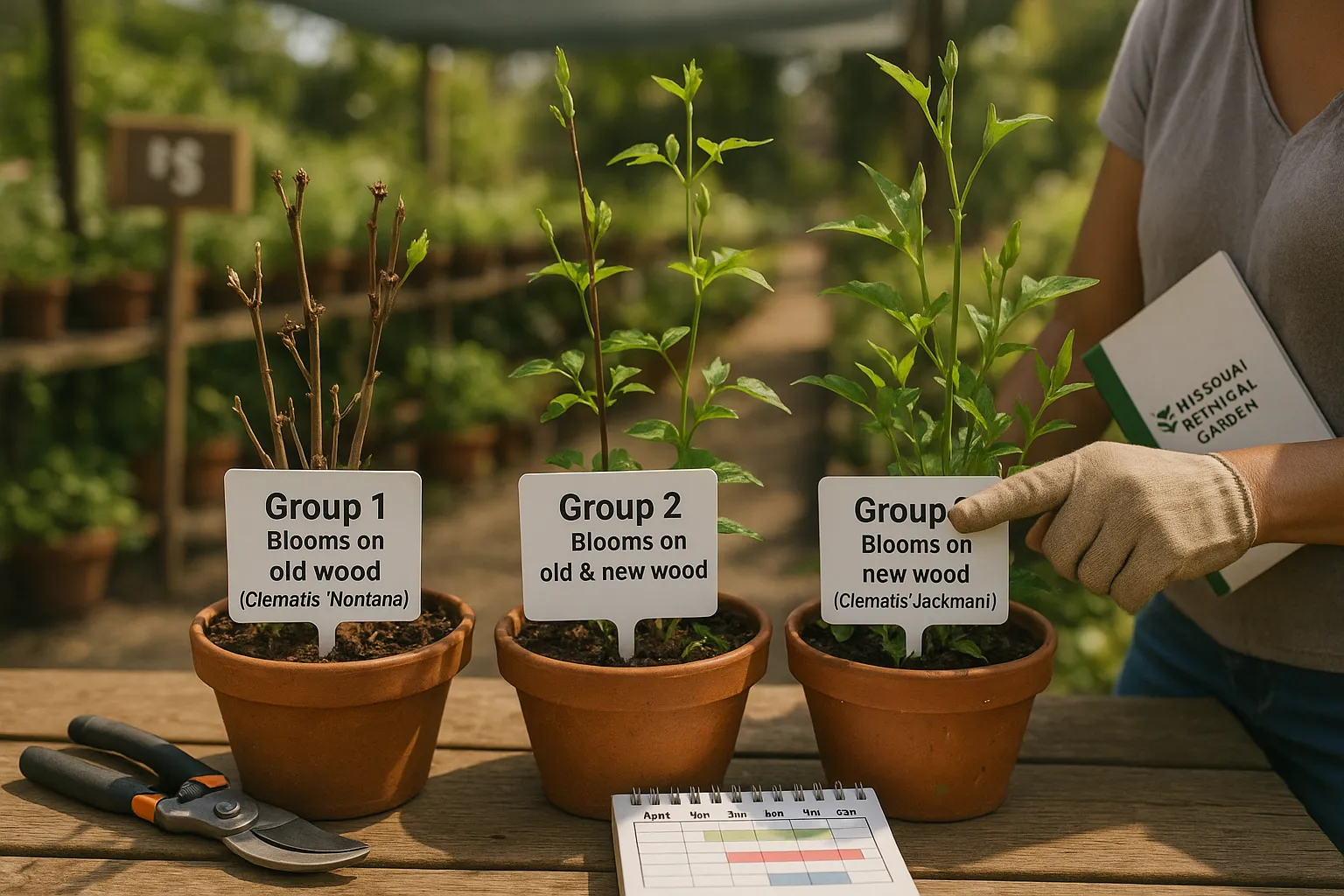
Fact: Clematis are classified by when and on what wood they flower. The three‑group system groups clematis by flowering timing and pruning needs so you prune correctly and preserve blooms.
The Royal Horticultural Society and many nurseries use this system because it matches plant physiology to care. Group 1 blooms on last year’s growth or on very old wood: Group 2 flowers on both old and new wood: Group 3 blooms only on new wood. That simple distinction controls your pruning calendar.
Why classification matters: if you cut a Group 1 hard in spring you remove the flower buds that formed the previous year. If you treat a Group 3 like Group 1 you miss opportunities to encourage bigger late-season displays. The classification ties to specific genera traits (for example, Clematis ‘Montana’ types often sit in Group 1), and to named cultivars sold by brands such as Thompson & Morgan and Jackson & Perkins. Use the group label on plant tags or consult reference sites like the RHS or Missouri Botanical Garden when in doubt.
Group 1 (Early‑Flowering) — Characteristics and Care
Fact: Group 1 clematis flower in late winter to spring on previous season’s stems.
Flowering Habit
Group 1 plants often bloom before leaves fully expand. You see large sweeps of flowers in spring, sometimes a second light flush in summer, but the main show comes on old wood. Species like Clematis montana and many early hybrids show vigorous, often scented displays. They start growth early, and buds form on wood that survived the previous year’s season.
Pruning Guidelines
Prune Group 1 right after the main spring bloom. Remove dead or weak stems, and train the rest lightly. Do not cut the plant to ground level, most of the flowers set on last year’s branches. If your vine becomes overgrown, thin a few of the oldest stems to the base each spring for renewal: avoid heavy winter pruning.
Quick steps:
After flowering, inspect for dead wood. Remove it at the base.
Thin crowded stems to allow air and light.
Shorten long whippy stems only if they interfere with supports.
Best Uses and Popular Varieties
Fact: Group 1 works best on large structures and early spring displays.
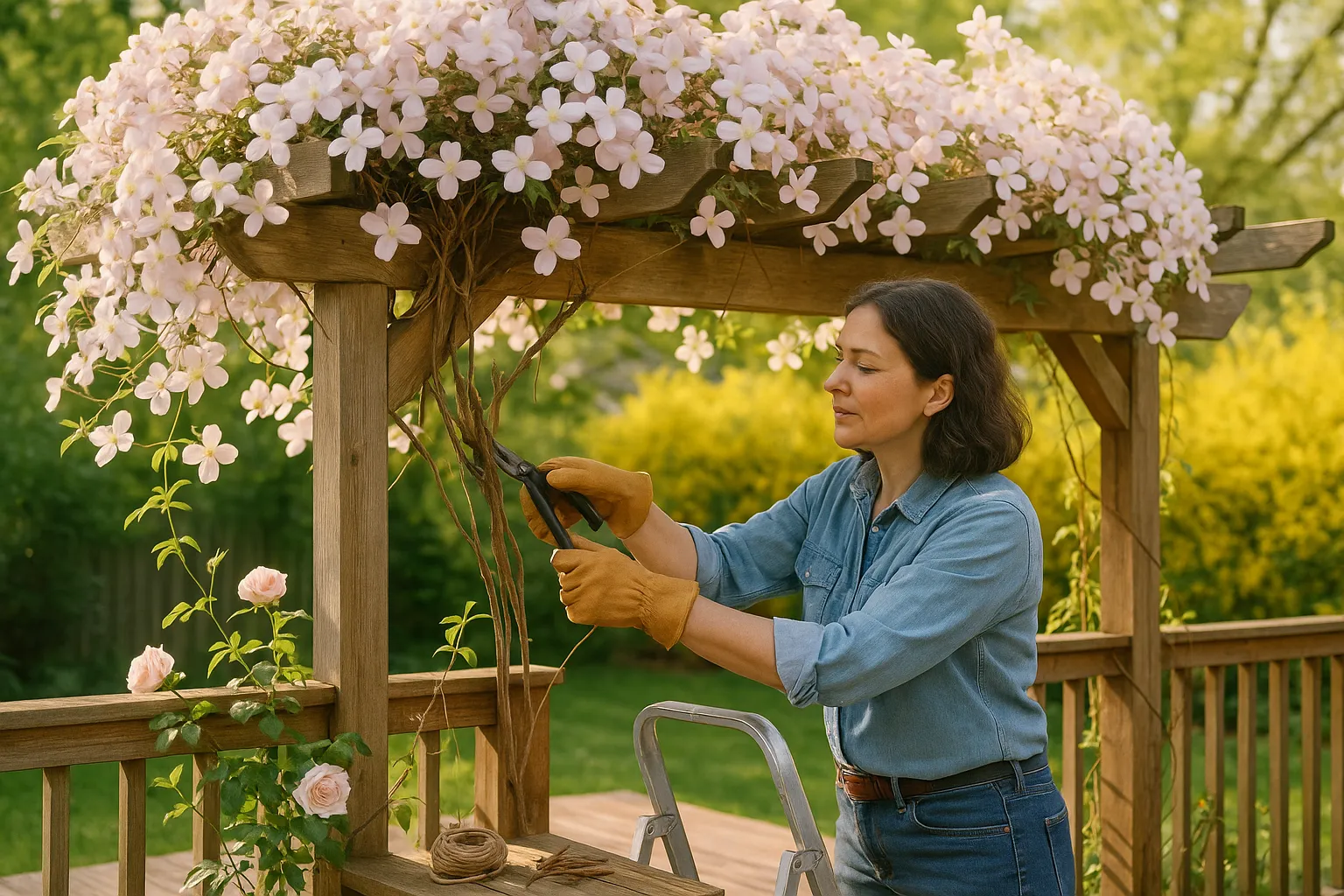
Use Group 1 clematis on pergolas, fences, and as foundation climbers where a spring show is wanted. Popular varieties include Clematis montana ‘Grandiflora’, Clematis alpina ‘Blue Bird’, and older hybrids labeled as spring‑flowering. Pair them with roses like ‘New Dawn’ or with early‑blooming shrubs (for instance, forsythia) to extend the season of interest.
Group 2 (Repeat‑Flowering/Intermediate) — Characteristics and Care
Fact: Group 2 clematis produce flowers on both old and new growth, giving a spring flush and a later repeat.
Flowering Habit
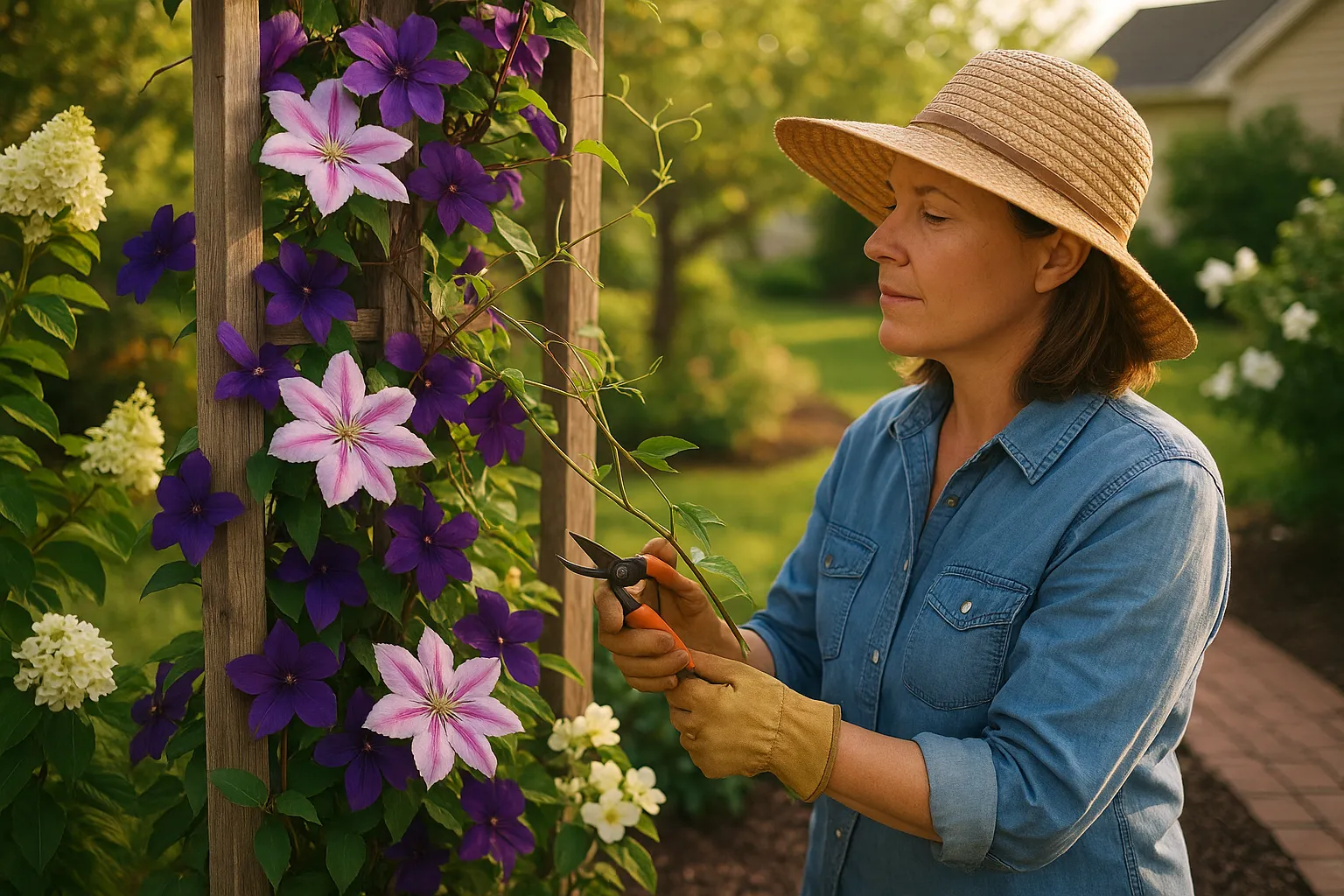
Group 2 gives you a spring bloom on last year’s wood and then a second, lighter flush on current season growth. The two‑flush habit makes this group versatile. Varieties such as Clematis ‘Nelly Moser’ and Clematis ‘Jackmanii’ (some clones) show strong spring growth and then rebloom through summer into fall when deadheading and light pruning are applied.
Pruning Guidelines
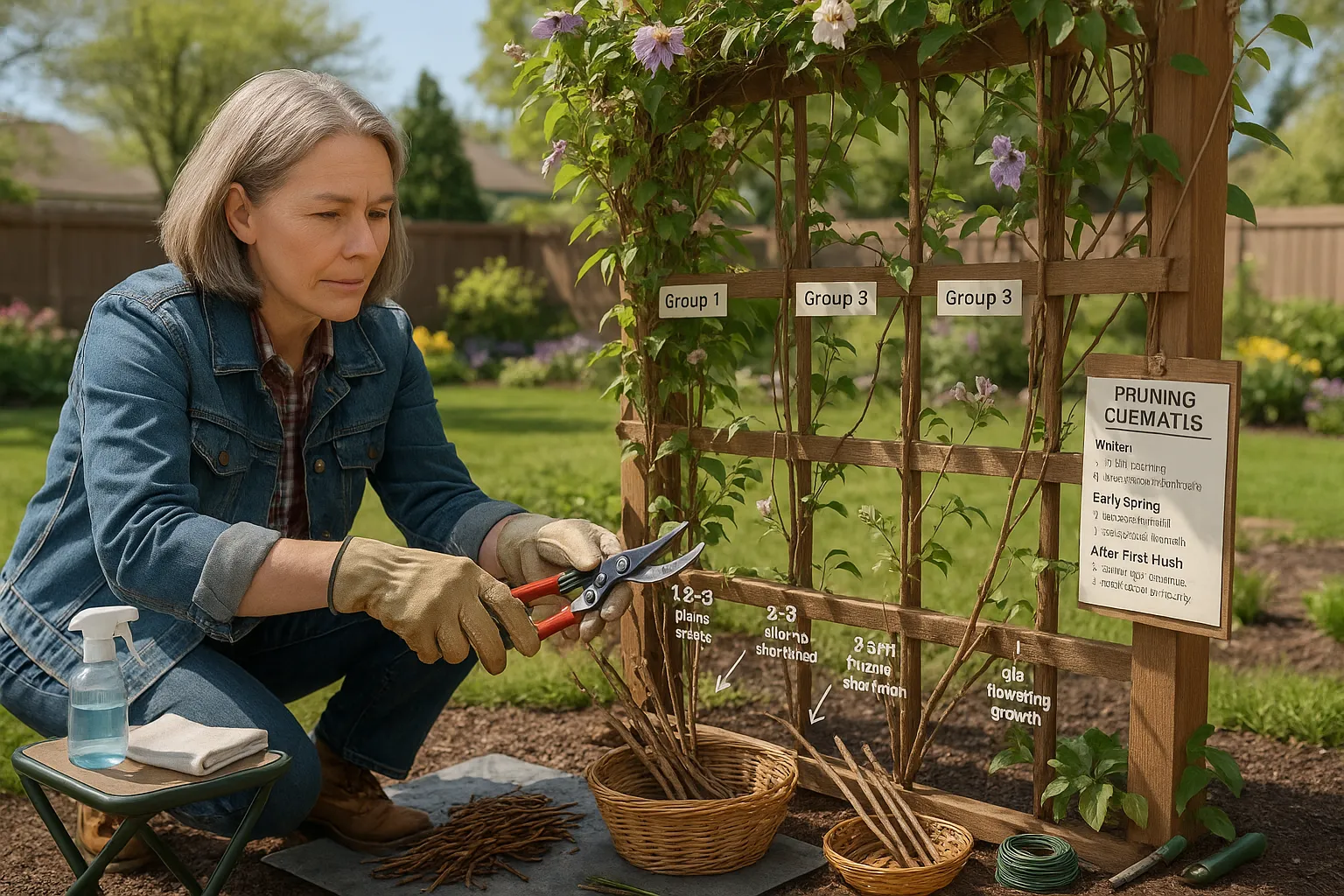
Prune Group 2 carefully: light pruning in late winter or early spring and after the first flush helps shape the vine while preserving spring buds. You should:
Remove dead wood in late winter or early spring.
In early spring, lightly shorten the healthiest stems by about one‑third to encourage branching.
After the first flush, tip prune or deadhead to promote new shoots that will carry the repeat bloom.
If your climate has harsh winters, leave a little extra growth to protect buds. If you want a stronger second flush, cut back more after the first bloom to six to eight pairs of healthy buds.
Best Uses and Popular Varieties
Fact: Group 2 suits mixed borders and trellises where staggered bloom matters.
Use Group 2 in mixed borders with shrubs that give structure between blooms, Hydrangea paniculata and Philadelphus are good partners. Popular cultivars include Clematis ‘Etoile Violette’, Clematis ‘Nelly Moser’, and many modern herbaceous hybrids labeled as repeat flowering.
Group 3 (Late‑Flowering) — Characteristics and Care
Fact: Group 3 clematis flower only on new growth and respond well to hard pruning.
Flowering Habit
Group 3 produces blooms in mid‑summer through fall on shoots that arise in the same season. These varieties often show the largest single flowers and long-lasting displays late in the season. Examples include Clematis ‘Comtesse de Bouchard’, Clematis ‘Niobe’, and many of the ‘Florida’ series. Group 3 is ideal when you want color after spring shrubs have finished.
Pruning Guidelines
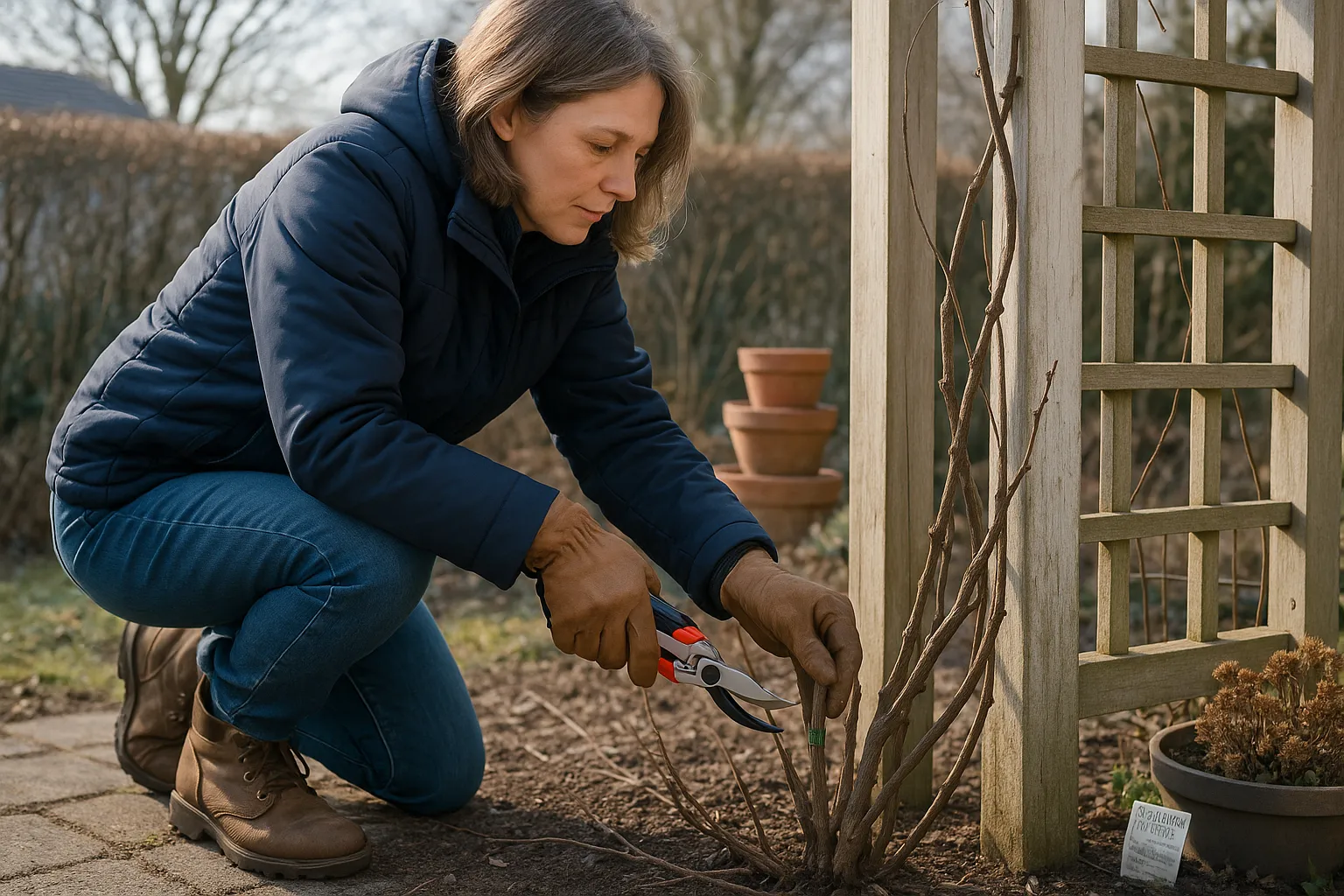
Prune Group 3 hard in late winter or very early spring. Cut stems back to 12–18 inches (30–45 cm) above the ground, leaving 2–3 strong buds per stem. This aggressive pruning encourages vigorous new shoots and abundant late blooms. For example:
Late winter: clear away dead stems and cut remaining stems to 12–18 inches.
Early summer: remove weak new shoots, train strong ones onto support.
If you fail to prune, the plant will still flower but on a tangled mass of old wood and the display will be weaker.
Best Uses and Popular Varieties
Fact: Group 3 fits small gardens and containers where late-season color is needed.
Plant Group 3 on arbors, cubes, or near summer‑flowering perennials like asters and sedum. Good choices include Clematis ‘Multi Blue’, Clematis ‘Henryi’ (late cultivars), and modern late-blooming hybrids from breeders such as Raymond Evison.
Practical Pruning Calendar and Step‑By‑Step Tips
Fact: A seasonal calendar prevents pruning mistakes and preserves blooms.
Seasonal Checklist (Winter, Early Spring, After First Flush)
Winter (Group 3 and Group 2 light clean):
Group 3: prune hard to 12–18 inches: leave 2–3 buds per stem.
Group 2: remove dead wood only: avoid heavy cuts.
Group 1: do nothing unless you remove dead or damaged stems.
Early Spring (after frost risk but before vigorous growth):
Group 1: trim lightly if needed after flowering time approaches.
Group 2: shorten long stems by one‑third: thin to improve air flow.
Group 3: check new buds and secure stems to supports.
After First Flush (late spring to early summer):
Group 2: deadhead and trim back to healthy side shoots to encourage rebloom.
Group 1: remove spent flowers but otherwise leave growth.
Step‑by‑step pruning tips:
Use clean, sharp bypass pruners. Sterilize if plants show disease.
Identify dead wood (brown, brittle) and remove it to base.
For thinning, cut oldest stems at the crown to encourage younger shoots.
Tie new shoots loosely to the support: avoid binding.
Common Pruning Mistakes and How To Avoid Them
Fact: The common errors are wrong timing and over‑pruning.
Mistake: Pruning Group 1 hard in spring. Result: lost blooms. Avoid by learning the group’s identity before cutting. Mistake: Not thinning crowded stems. Result: poor air circulation and more disease. Avoid by cutting one or two oldest stems yearly. Mistake: Using dull tools. Result: ragged cuts that invite pests. Keep blades sharp and clean.
Remember: when in doubt, prune less. You can always remove more later, but you can’t recover a season’s lost buds.
Choosing the Right Clematis Group for Your Garden
Fact: The right group depends on site, desired bloom time, and support style.
Site, Soil, and Support Considerations
Clematis prefer cool roots and sun on their foliage. Plant roots in fertile, well‑drained soil with organic matter. Mulch or plant low companions (like geraniums or lavender) to shade the crown. In hot climates (for example, Phoenix or southern Spain), give afternoon shade. In cold areas (Vermont, Saskatchewan) choose hardy cultivars and protect crowns with mulch.
Support matters: Group 1 often needs sturdy, long‑lasting supports because the stems are woody and heavy. Group 3 tolerates lighter trellising since new shoots can be trained each year. For containers, choose compact Group 3 or repeat‑flowering Group 2 cultivars and provide a small obelisk or wigwam.
Design and Companion Planting Ideas
Fact: Combining clematis with compatible plants extends seasonality and hides bare stems.
Companion ideas:
Place a spring‑flowering Group 1 against a south wall with shrubs that leaf out later, camellias or evergreen box works.
Pair Group 2 with roses (for example, David Austin varieties) to create overlapping bloom sequences.
Use Group 3 with late perennials like asters and ornamental grasses for autumn color.
Design tip: mix a fast‑growing clematis with slower climbers. If you train Clematis ‘Jackmanii’ through a climbing rose, the rose provides structure while clematis fills gaps with color. A final note, label your plants when you buy them. Cultivar names and group info save you time and grief later.
(Warning: do not plant clematis too deep: crown should sit just below soil surface. Also, some varieties are sensitive to Clematis wilt, remove affected stems quickly and burn them if practical.)
To provide the best experiences, we use technologies like cookies to store and/or access device information. Consenting to these technologies will allow us to process data such as browsing behaviour or unique IDs on this site. Not consenting or withdrawing consent, may adversely affect certain features and functions.
Functional
Always active
The technical storage or access is strictly necessary for the legitimate purpose of enabling the use of a specific service explicitly requested by the subscriber or user, or for the sole purpose of carrying out the transmission of a communication over an electronic communications network.
Preferences
The technical storage or access is necessary for the legitimate purpose of storing preferences that are not requested by the subscriber or user.
Statistics
The technical storage or access that is used exclusively for statistical purposes.The technical storage or access that is used exclusively for anonymous statistical purposes. Without a subpoena, voluntary compliance on the part of your Internet Service Provider, or additional records from a third party, information stored or retrieved for this purpose alone cannot usually be used to identify you.
Marketing
The technical storage or access is required to create user profiles to send advertising, or to track the user on a website or across several websites for similar marketing purposes.