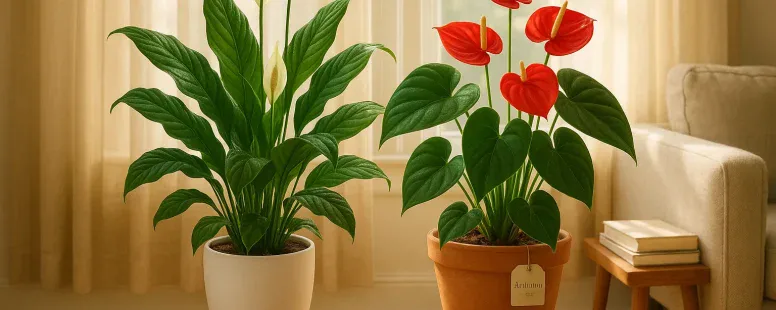
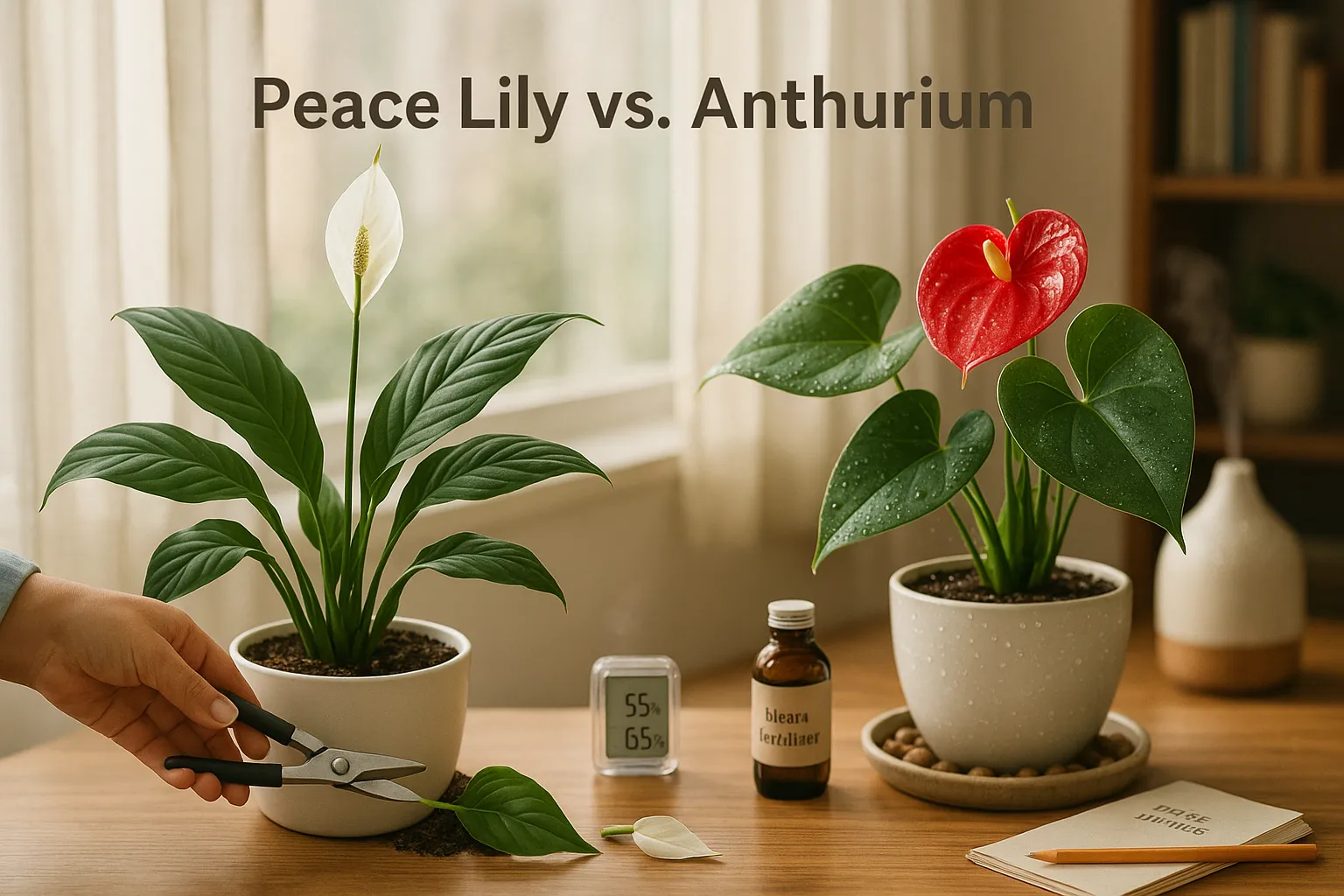
You can get a room that breathes easier and looks elegant with either a Peace Lily or an Anthurium, but they are different plants with different needs and rewards. The clear difference starts at first glance: Peace lilies offer glossy green leaves and white spathes that feel calming: anthuriums give you long-lasting, often red or pink, waxy flowers that steal the show. In this text you’ll learn practical, side‑by‑side facts about Peace Lily vs. Anthurium so you pick the right plant for your space, schedule, and style. Expect plain comparisons, real troubleshooting tips from my own mistakes, and simple care steps you can use tonight.
Quick Side‑By‑Side Comparison
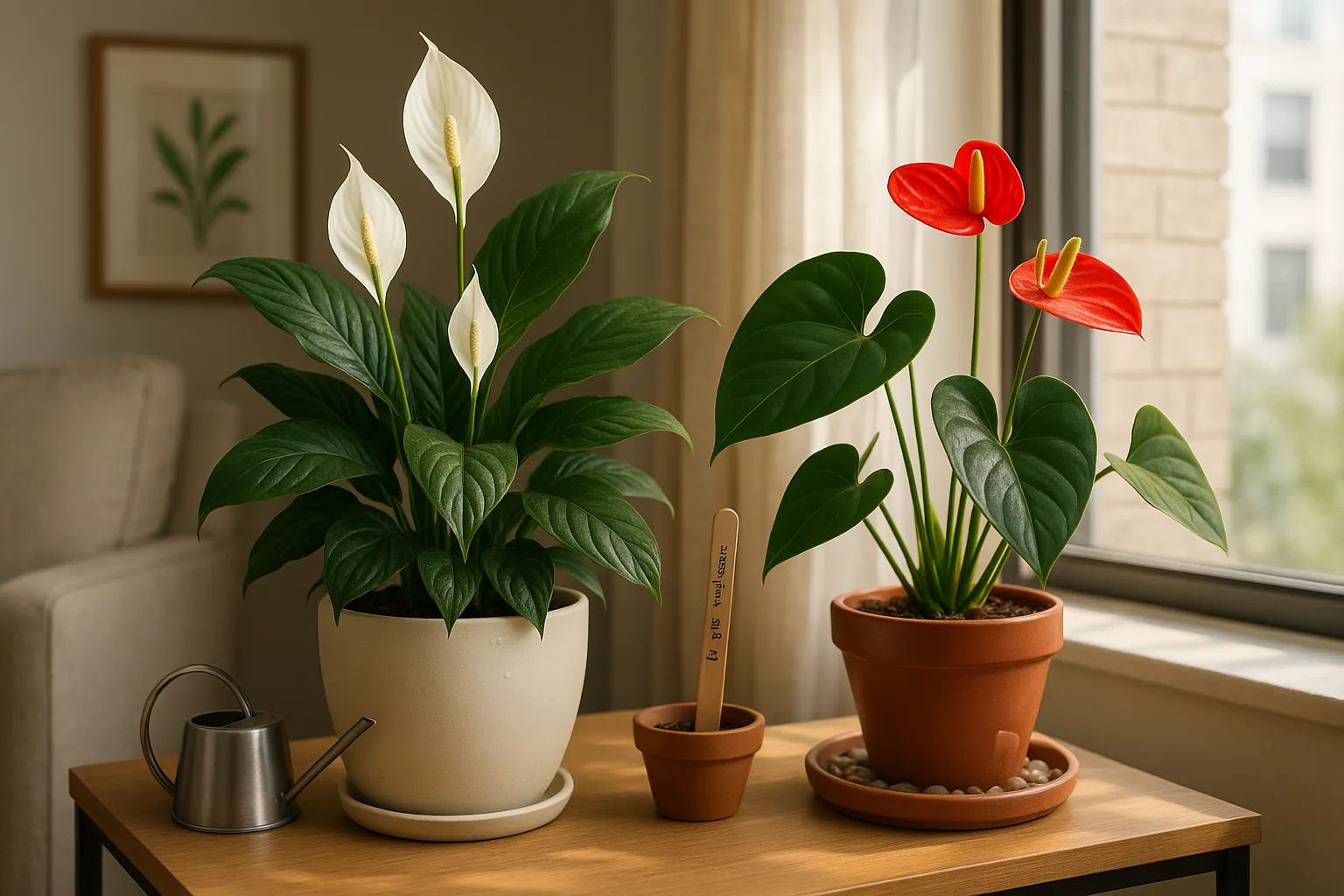
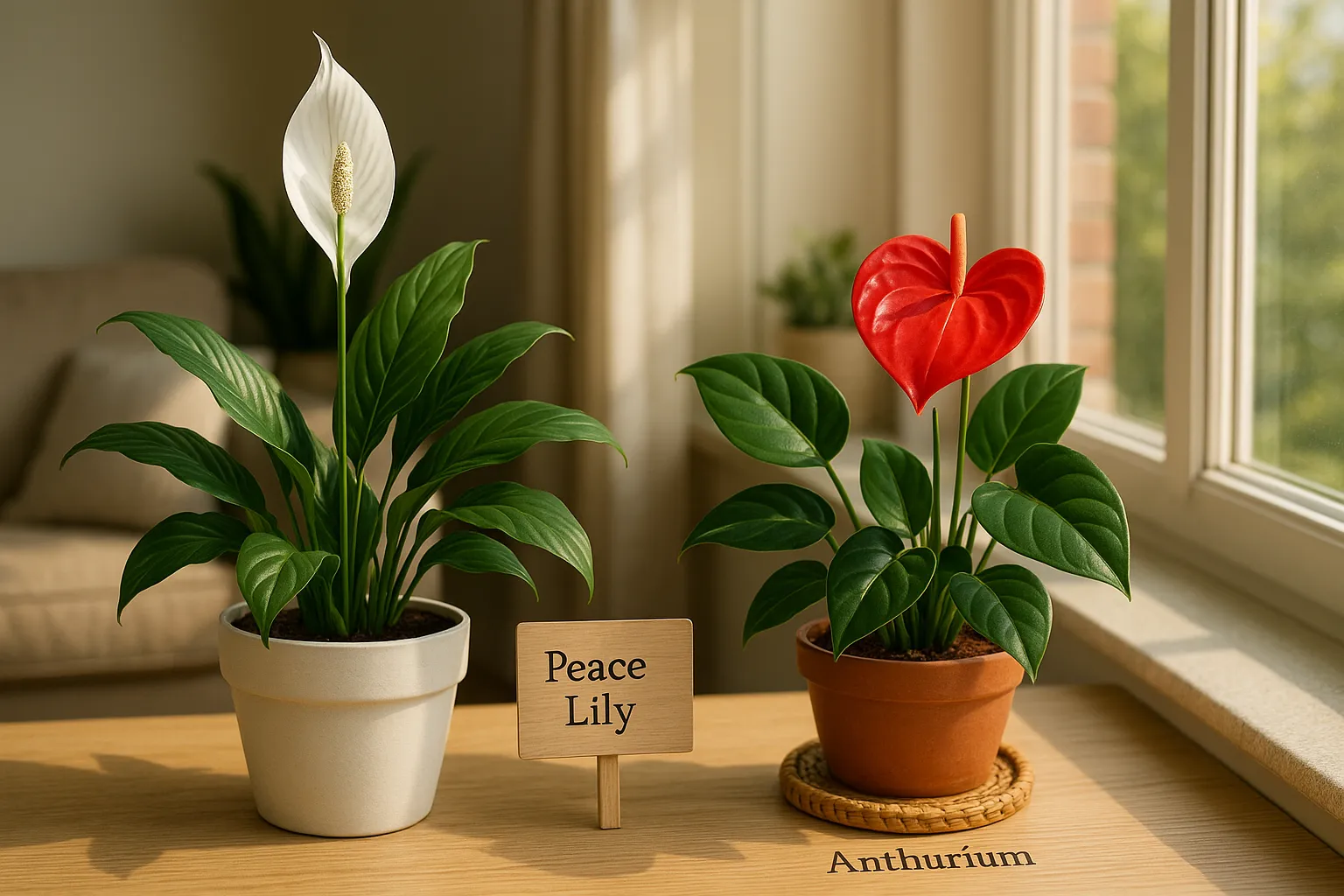
Fact: Peace lilies (Spathiphyllum) are primarily grown for foliage and white spathes: Anthuriums (Anthurium andraeanum and relatives) are grown for colorful, long‑lasting spathes and glossy leaves.
At a glance: Peace lily gives you understated white blooms and a forgiving nature. Anthurium gives you bright, sculptural flowers and a showier look. Both are tropical plants native to Central and South America. Both prefer warm indoor conditions, but their light, water, and humidity preferences differ enough that your choice should match the place where you live and how much time you’ll spend on care.
Quick data points:
Light: Peace lily = low to medium: Anthurium = medium, bright indirect for best color.
Water: Peace lily = likes steady moisture: Anthurium = prefers to dry slightly between waterings.
Bloom color: Peace lily = white: Anthurium = red, pink, white, or green depending on cultivar.
This quick view answers the main why: pick Peace Lily for ease and soft style: pick Anthurium for bold color and statement blooms. Later sections unpack the tradeoffs and realistic care steps.
Appearance Differences
Fact: Leaves and flowers tell you which plant you have immediately.
Leaves And Growth Habit
Peace lily leaves are lance-shaped, matte to slightly glossy, and they grow from central clumps. You will see arching stems and a fountain-like habit in mature plants. Anthurium leaves are often thicker, more leathery, and sometimes heart-shaped: some species like Anthurium clarinervium have striking venation that looks decorative by itself. Anthuria (a common misspelling you’ll find) often has a more upright habit and can form a low-growing shrub or a single-stemmed plant with few leaves.
Flowers And Bloom Structure
Peace lily ‘flowers’ are spathes: a white bract wrapped around a cream spadix. They open for several weeks and then fade to green. Anthurium spathes are glossy and long-lasting: the spadix sits off to one side or center and can carry tiny true flowers. Anthurium spathes are often mistaken for petals because they’re so vivid and firm.
Typical Sizes And Varieties
Peace lilies range from small tabletop cultivars like ‘Domino’ and ‘Petite’ to larger floor models that reach 2–4 feet. Anthuriums vary more: compact cultivars stay under a foot, while species like A. scherzerianum can reach 2–3 feet. Popular Anthurium cultivars include ‘Andreanum’ and ‘Pink Champion’. Both genera include varieties bred for leaf patterning, bloom color, and size.
Care Requirements Compared
Fact: Peace lilies tolerate lower light and more irregular watering: Anthuriums demand more consistent bright, indirect light and slightly drier cycles.
Light Needs
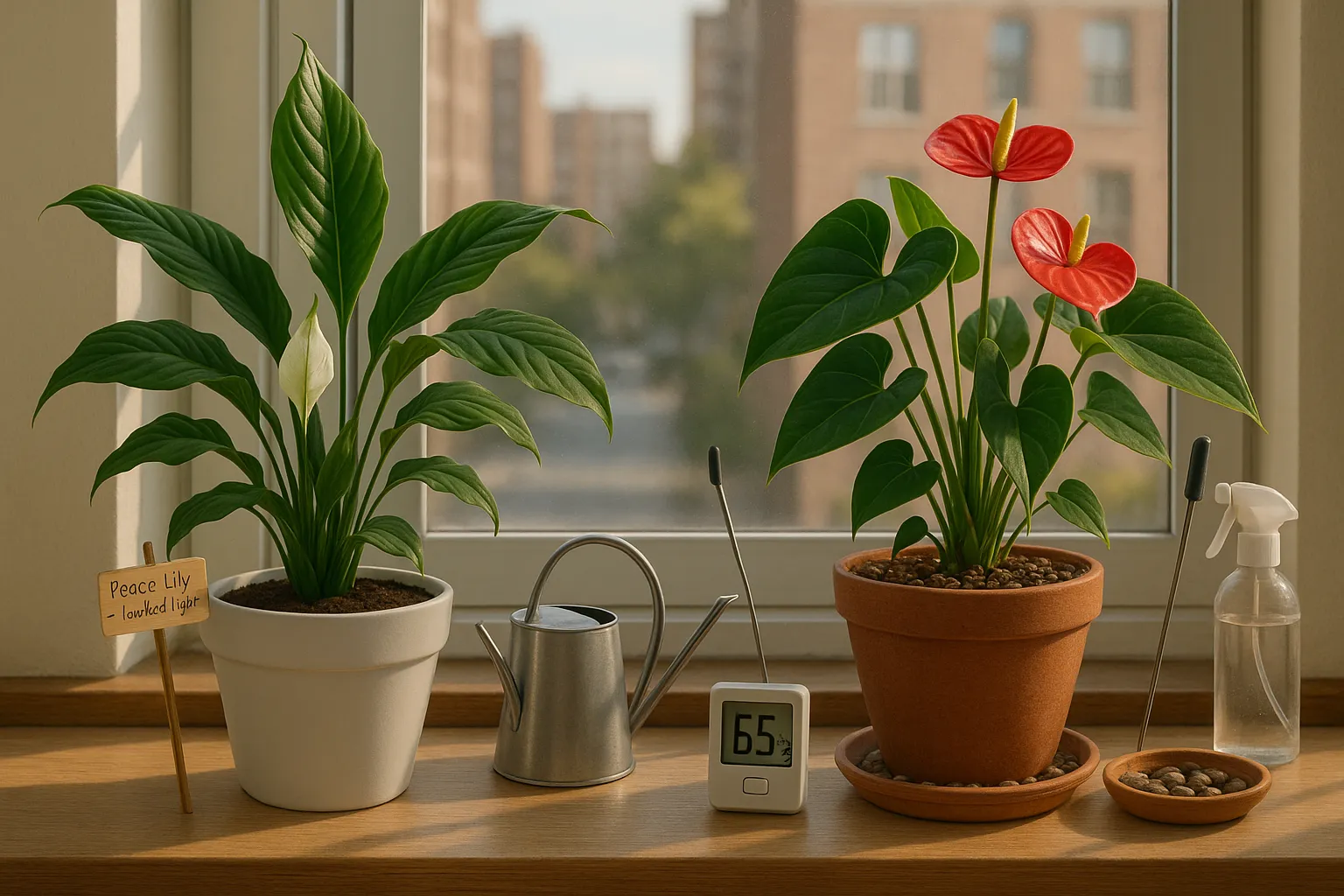
Peace lily: Put them in low to medium indirect light. They will survive in low light but bloom less. Anthurium: Needs bright, indirect light to produce the vivid spathes. If anthurium sits in deep shade it will drop blooms and look leggy.
Watering And Moisture
Peace lily: Water when the top inch of soil feels dry. It wilts dramatically when thirsty, and usually perks up after watering, a forgiving trait. Anthurium: Water when the top 1–2 inches dry out. It dislikes sitting in soggy soil and shows root‑rot signs faster if you overwater.
Soil, Drainage, And Repotting
Peace lily: Use a well-draining potting mix with peat or coco coir plus perlite. Repot every 1–2 years when roots crowd. Anthurium: Use a chunky, airy mix (orchid bark, perlite, and peat) to mimic epiphytic conditions for many species. Repot every 2–3 years or when the medium breaks down.
Temperature, Humidity, And Fertilizer
Peace lily: Prefers 65–85°F and moderate humidity: feed lightly with balanced houseplant fertilizer during the growing season. Anthurium: Prefers 68–86°F and higher humidity (60%+ helps blooms). Feed with a fertilizer higher in phosphorus during bloom season to support spathes. Both dislike cold drafts and temperatures below ~55°F.
A real-life note: I once kept an Anthurium in a window sill near morning sun, the leaves scorched. You will learn by small, visible cues: trust them.
Blooming Behavior And Seasonal Care
Fact: Peace lilies bloom seasonally with multiple spathes: Anthuriums can bloom year-round under ideal conditions.
When And How They Flower
Peace lily: Typically flowers in spring or early summer indoors. You’ll see a spathe rise on a leafless stalk. Anthurium: With consistent light and humidity, many Anthurium cultivars produce sporadic blooms throughout the year. They set spathes more reliably when given brighter light and steady warmth.
Encouraging Repeat Blooms
For both plants, consistent care encourages repeat blooms. For Peace Lily, modest fertilizer and slightly brighter light than a dark corner helps. For Anthurium, increase humidity, keep light bright (but indirect), and use a bloom‑focused fertilizer during growing season. Prune old or spent spathes to redirect energy to new growth.
Longevity And Maintenance Of Spathes/Flowers
Peace lily spathes last several weeks then yellow: remove them promptly to keep the plant tidy. Anthurium spathes can last months: they often stay glossy and firm. If anthurium spathes dull, they may be water-stressed or underfed. Both plants benefit from regular cleaning of leaves to keep pores clear and to help photosynthesis.
Toxicity, Safety, And Indoor Use
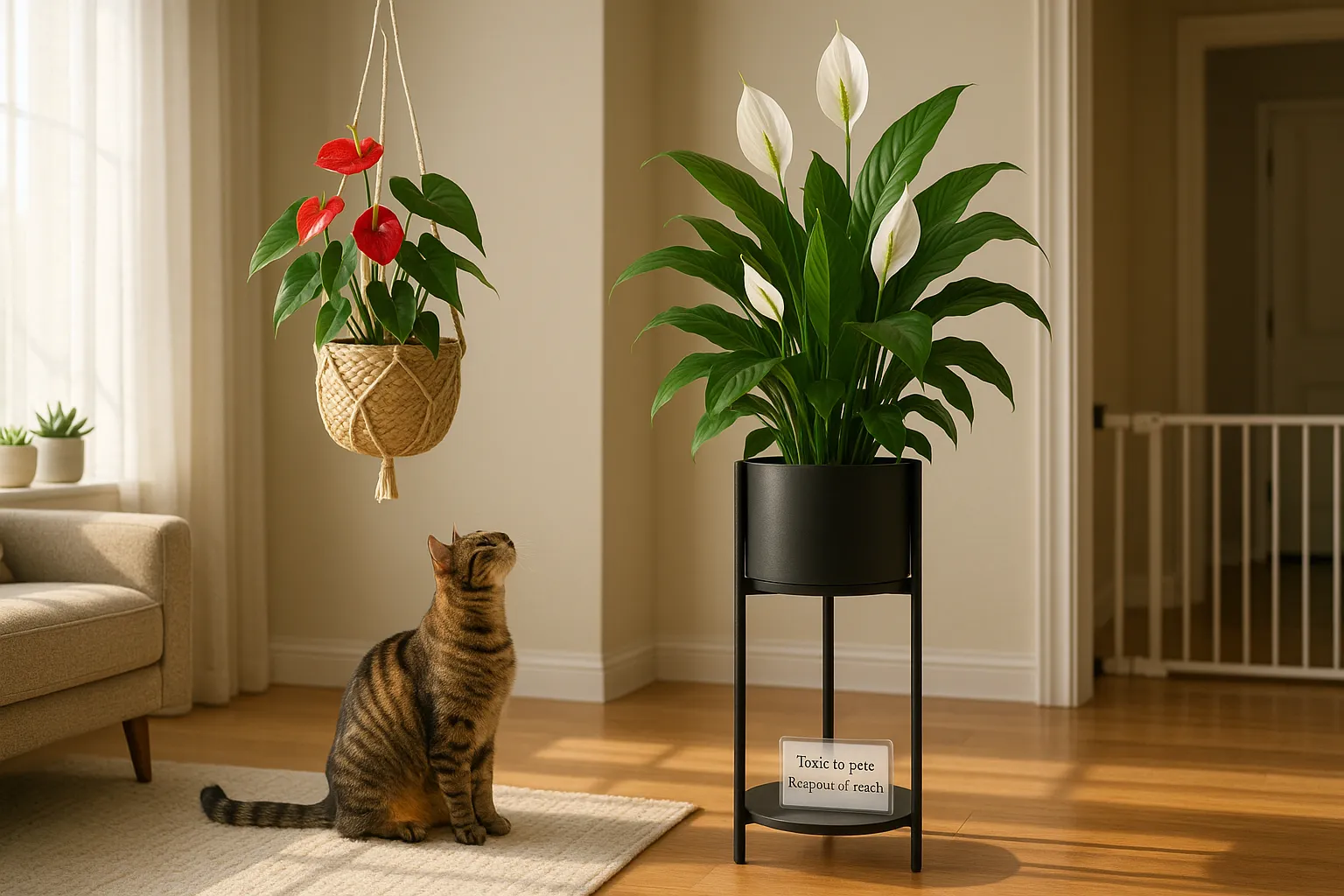
Fact: Both Peace lilies and Anthuriums contain calcium oxalate crystals and are mildly to moderately toxic to pets and humans if chewed or ingested.
Toxicity To Pets And Humans
Symptoms: Drooling, oral irritation, vomiting, and difficulty swallowing in pets or small children who eat parts of the plant. Severity varies with amount ingested. If ingestion occurs, call your veterinarian or local poison control. The ASPCA lists Spathiphyllum and Anthurium species as toxic to cats and dogs.
Safe Placement And Precautions
Place both plants out of reach of pets and toddlers. Use hanging baskets or tall stands for Anthuriums if you have curious cats. Teach older children not to touch or taste leaves. If you have severe allergies, test one small area of contact, both plants can cause skin irritation in sensitive individuals. A simple precaution: move plants to rooms pets don’t access and use training or deterrents to reduce chewing.
Common Problems And Troubleshooting
Fact: Most issues, yellow leaves, brown tips, and root rot, point to water or light imbalances.
Leaf Yellowing, Brown Tips, And Wilting
Cause: Overwatering or inconsistent humidity often causes yellow leaves on both plants. Brown tips usually mean low humidity, salt buildup from fertilizer, or underwatering. Fix: Flush the soil with clean water if salts build up, raise humidity with a tray or humidifier, and adjust your watering schedule. I once overfertilized a Peace Lily: it developed crispy brown edges. I flushed the pot and cut back feeding, and the new leaves recovered slowly.
Root Rot, Overwatering, And Soil Issues
Cause: Poor drainage and constant wet soil. Peace lily is forgiving but not immune. Anthurium is less tolerant. Fix: Repot into fresh, airy mix with drainage holes. Trim rotten roots with sterile scissors and let the crown dry before resuming light watering.
Pests And Disease To Watch For
Common pests: Spider mites, mealybugs, scale, and fungus gnats. Diseases: Leaf spot and fungal root rot in poorly drained soil. Treatment: Wipe leaves, isolate the plant, use insecticidal soap or neem oil, and improve air circulation. For gnats, let the top soil dry more and use sticky traps or a biological control like Bacillus thuringiensis israelensis (BTI).
Which One Should You Choose? Practical Recommendations
Fact: Choose Peace Lily if you want low-effort greenery: choose Anthurium if you want dramatic, colorful blooms and don’t mind a bit more care.
Best Pick For Beginners And Low‑Light Spaces
Peace lily is the best beginner choice. It tolerates low light, forgives missed waterings, and improves room air quality (it was featured in the NASA Clean Air Study). If your room gets limited indirect light and you want a verdant, easy plant, pick a Peace Lily.
Best Pick For Showy Colorful Blooms And Styling
Anthurium is the better stylistic pick. It offers bright, long‑lasting spathes and suits modern interiors, tropical displays, and cut-flower use. If you sit near a bright, indirect window and can provide moderate humidity, anthurium will reward you with striking color and form.
Budget, Availability, And Long‑Term Care Considerations
Peace lilies are widely available at garden centers and big-box stores and are usually cheaper per plant. Anthuriums can be pricier, especially specialty cultivars, and may be harder to find locally. Long-term: Peace lilies multiply into clumps you can divide: anthuriums may need more patience and careful repotting. If you plan to gift a cutting or trade plants with friends, Peace Lily is easier to propagate by division: Anthurium may require stem cuttings or careful division.
Practical tip: If you want both, place anthurium near brighter windows and peace lily in a nearby nook. They complement each other visually and help you learn the small cues each plant gives when something is off.
To provide the best experiences, we use technologies like cookies to store and/or access device information. Consenting to these technologies will allow us to process data such as browsing behaviour or unique IDs on this site. Not consenting or withdrawing consent, may adversely affect certain features and functions.
Functional
Always active
The technical storage or access is strictly necessary for the legitimate purpose of enabling the use of a specific service explicitly requested by the subscriber or user, or for the sole purpose of carrying out the transmission of a communication over an electronic communications network.
Preferences
The technical storage or access is necessary for the legitimate purpose of storing preferences that are not requested by the subscriber or user.
Statistics
The technical storage or access that is used exclusively for statistical purposes.The technical storage or access that is used exclusively for anonymous statistical purposes. Without a subpoena, voluntary compliance on the part of your Internet Service Provider, or additional records from a third party, information stored or retrieved for this purpose alone cannot usually be used to identify you.
Marketing
The technical storage or access is required to create user profiles to send advertising, or to track the user on a website or across several websites for similar marketing purposes.