Imagine holding a brush that can whisper delicate secrets or shout bold statements on paper. The choice between watercolor and gouache shapes your artistic voice, transforming a simple scene into a luminous reflection or a vibrant explosion of color.
Watercolor’s translucent washes shimmer like sunlight through a window, while gouache’s opaque layers pack a punch, adding depth and intensity.
Surprisingly, gouache can be reactivated with water even after drying, offering a flexibility that feels like having a secret weapon in your toolkit.
Understanding these subtle differences unlocks new possibilities, turning your everyday sketches into captivating works of art.
What Are the Main Differences Between Watercolor and Gouache?
Watercolor and gouache are both paint types that look similar but have big differences in how they work and how the final artwork looks.
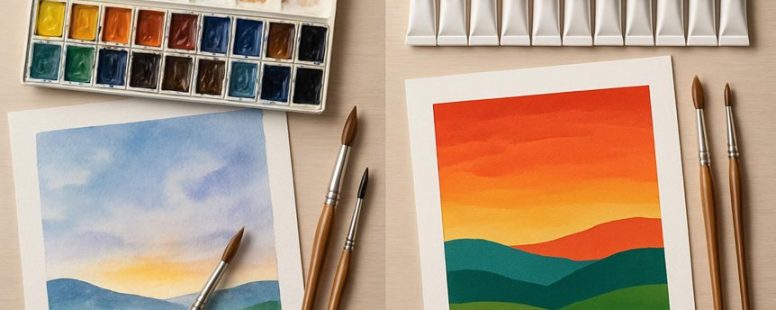
Watercolor is transparent and creates soft, delicate colors. When you paint with watercolor, the colors blend smoothly because the paint is watery and light. It’s best for gentle shading and subtle color changes. For example, a soft sky or a gentle flower can be made with watercolor. You need to use light brush strokes since too much water can make the paint spread too much.
Gouache is opaque and shows bold, vibrant colors. It covers up layers underneath better than watercolor. Artists use gouache for bright details or strong colors that don’t show through. It can also be layered easily because it dries with a matte finish that doesn’t let light shine through. For example, bright posters or detailed illustrations often use gouache. You can paint with thicker strokes and add more details easily.
Some artists prefer watercolor for its soft look and blending abilities, but it can be tricky since it’s so fluid. Gouache is good for making bold, solid colors but can sometimes look flat if not used carefully. Knowing these differences helps you choose the right paint for your art style. Do you want subtle blending or bright, sharp colors? That choice depends on what kind of look you want.
How Do Composition and Texture Affect the Look of Watercolor and Gouache?
Composition and texture are key factors that influence how watercolor and gouache artworks look.
Watercolor is transparent, which means you can see through the paint. This allows for soft color blending and gentle brush strokes. When you arrange elements carefully, the viewer’s eye flows smoothly through the painting. This helps create a calm and delicate mood. For example, a watercolor landscape can look like a misty morning with light washes overlapping each other. The way you place objects and use light washes makes a big difference in how realistic or dreamy the painting feels.
Gouache is opaque, so it covers the paper more completely. It makes bold textures and bright color blocks. Gouache can look flat and matte, like a poster or cartoon. Artists often layer gouache thickly to create texture, giving the painting a more solid feel. For example, a flower painted in gouache can have vibrant petals that seem to pop out from the background. How you choose to layer or smooth the paint affects the overall look.
Some artists prefer watercolor for its softness and transparency, but it can be tricky to control because the paint spreads easily. Gouache is easier to control since it covers well and dries quickly, but it can look less delicate.
In both mediums, composition and texture are tools to express your idea. For instance, a loose composition with flowing textures might feel peaceful. A tight arrangement with bold textures can feel energetic. Understanding how these choices affect the final piece can help you create the look you want.
In the end, whether you use watercolor or gouache, experimenting with different arrangements and textures will help you find your style.
Which Medium Is Better for Layering and Creating Details?
Gouache is better than watercolor for layering and creating detailed artwork. The reason is that gouache is opaque, meaning it covers colors underneath easily. This makes it simple to add fine lines, highlights, and build up depth without messing up what you already painted. Artists can use different brush techniques, like stippling or dry brushing, to add texture and small details with gouache.
Watercolor, on the other hand, is transparent and tends to blend unpredictably. This makes it harder to add sharp details, but it is good for soft color changes. If you want crisp, layered details in your art, gouache gives you more control. Watercolor works better if you want gentle transitions and subtle color shifts.
Some artists like watercolor for its natural flow, but for precise work, gouache is usually the better choice. Keep in mind that gouache can sometimes look flat if overused, so mixing techniques might be needed. Both have their strengths, but if sharp, detailed layers matter most, gouache is the best option.
How Do Watercolor and Gouache Behave When Mixed or Overlaid?
Watercolor and gouache behave differently when mixed or layered. Watercolor is transparent, so it lets light pass through and creates soft, blended colors. Gouache is opaque, meaning it covers what’s underneath completely and dries with a matte, flat finish.
When you layer gouache over watercolor, it can hide the colors below. This makes gouache good for adding bold details or thick textures. But if you put watercolor over dried gouache, the watercolor can rehydrate the gouache slightly, changing how it looks. Sometimes, this causes unexpected color shifts or streaks.
Mixing the two mediums directly can also create interesting effects. For example, blending watercolor with small amounts of gouache can give you more control over opacity and texture. However, because gouache dries quickly and is thicker, it can sometimes crack or lift if applied over wet watercolor.
Some artists like to use watercolor for soft backgrounds and then add gouache for sharp highlights or details. Others prefer to keep them separate to get the best of both worlds. Remember, layering gouache over watercolor can obscure previous layers, so plan your work carefully.
What Are the Key Techniques for Achieving Transparency in Watercolor?
Transparency in watercolor means letting light pass through the paint so the colors look bright and clear. To do this, artists use some simple but effective techniques. One key method is working wet-on-wet. This means applying new paint onto wet paper or wet color, which helps the colors blend softly and stay see-through. For example, blending blue and yellow to make gentle green shades works best with wet-on-wet. This technique helps create smooth color transitions without heavy pigment blocking the light.
Another important tip is using light brushwork. When you use a damp brush with thin layers of paint, your washes stay transparent. Think of it like painting with see-through glass—thinner layers let the light come through better. Building up several light washes gradually adds depth without making the paint look muddy or thick. A good rule is to let each layer dry before adding the next, so the colors stay clear.
It is also helpful to avoid overworking your paintings. Pushing too hard with your brush can make the paint thick and block the light. Sometimes, less is more. For example, instead of painting over a small area many times, try to keep your strokes light and quick. This keeps the painting fresh and luminous.
Some artists prefer to use transparent pigments from brands like Winsor & Newton or Daniel Smith. These colors are made to stay see-through, making your paintings more vibrant. But beware, if you layer too many washes or press too hard, the transparency can be lost. You might end up with a muddy look, which is not what you want in a transparent watercolor.
How Can Gouache Be Used to Create Bold, Opaque Colors?
Gouache is a type of paint that creates bright, opaque colors. It has more pigment and a matte binder than other paints, which makes it thick and velvety. To get the most vivid and bold colors with gouache, you can follow these simple steps:
Layer colors carefully—putting down multiple layers of paint makes the colors richer and more opaque. Think of it like stacking blankets to keep warmth in better.
Use less water—keep your paint thick. If you add too much water, the colors become lighter and less vibrant.
Mix colors well—blend your paints thoroughly to make smooth, consistent colors that stay bright.
Try layering colors—painting one color over another can deepen the hues and create more interesting effects. For example, layering a bright yellow over a dark blue can turn into a glowing green.
Some artists prefer to use gouache with no water at all for the boldest look. Others like to thin it out slightly for softer blending. Both ways work, but remember that thicker paint generally gives you more opacity and vividness.
Gouache is great for creating striking artwork, but it can be tricky if you add too much water because the colors might lose their strength. Practice these tips to make your paintings stand out with bright, bold colors.
How Do You Correct Mistakes in Watercolor and Gouache?
Mistakes in watercolor and gouache are common, but you can fix them with simple steps. Watercolor is a transparent paint that can be tricky to correct, while gouache is opaque and easier to cover up. Knowing how to fix errors helps your artwork look clean and professional.
For watercolor, the best way to fix a mistake is to gently lift the paint. You can do this with a clean, damp brush or a sponge. Lightly blot the area, and the excess paint will lift off. If the mistake is small, you can also try adding a new layer of paint over it to hide the error. Sometimes, adding more water or color can turn a mistake into a new part of your painting.
Gouache is easier to correct because it is opaque. If you make a mistake, let it dry completely and then paint over it with the same color or a matching one. You can also scrape off dried gouache with a knife or a rubber eraser if needed. This makes corrections quick and simple. However, be careful because scraping too much can damage the paper.
Some artists prefer to work carefully to avoid mistakes in the first place. Using light pencil sketches to plan your work before adding paint is a good idea. But if errors happen, don’t worry. With patience and the right tools, you can fix most mistakes and keep your artwork looking great. Remember, practice makes perfect, and every mistake is a chance to learn.
Correcting Watercolor Mistakes
When working with watercolors and gouache, mistakes are common. But you can fix many of them easily if you know the right steps. Here are some simple ways to correct watercolor mistakes:
Lift color to remove unwanted paint. Use a damp brush or sponge and gently dab the area. This works well for small errors or if you want to brighten a dull spot. Just be careful not to disturb the paper too much.
Use clean water to blend or dilute colors. If colors are too harsh or have blended incorrectly, gently brushing with clean water can soften the edges. This helps correct color problems without starting over.
Apply fresh paint or glazes over mistakes. If an area is too dark or the wrong color, add a new layer of paint on top. Use a light touch so you don’t disturb the layers underneath. This works like fixing a typo with whiteout.
Work gradually by layering thin washes. Instead of trying to fix everything at once, build up your colors slowly. This makes it easier to correct mistakes without overworking the paper or ruining the painting.
Some artists prefer to lift paint because it’s quick and easy for small errors. Others like to layer fresh paint since it can cover big mistakes well. However, lifting color might not work if the paint is too dry, and applying too many layers can make the paper warp.
Practicing these steps can help you turn mistakes into part of your art. Sometimes, fixing a mistake can lead to a new creative idea. Have you ever fixed a watercolor mistake that turned out better than the original? It’s a great way to learn and improve your skills.
Fixing Gouache Errors
Gouache errors are easier to fix than watercolor mistakes because of its thick, opaque paint. Unlike watercolor, which can be lifted or blended away easily, gouache allows you to cover mistakes more simply. However, fixing errors still needs the right brush techniques and patience.
If you want to correct a blending mistake, wait until the paint is completely dry. Then, use a damp brush to gently lift or soften the edges of the mistake. You can also paint over it with a new layer of gouache. For small details, use a tiny brush and layer carefully. This helps you build up or correct parts of your painting smoothly.
Remember, because gouache is opaque, you can cover mistakes without worry. But, it’s best to wait for each layer to dry fully and use gentle brush strokes. Rushing or scraping too hard can damage your work. Some artists find it helpful to practice corrections on scrap paper first, so they get used to the technique.
While gouache makes fixing errors easier than watercolor, it still takes practice. Some people like to use a light touch, while others prefer layering more paint. Both ways work, but be patient and take your time to keep your painting neat.
Is Watercolor or Gouache Better for Beginners or Quick Sketches?
Choosing between watercolor and gouache for beginners or quick sketches depends on what you want to do and how you like to work. Here are some helpful points to consider:
Color blending: Watercolors blend easily, making soft color changes that are perfect for gentle effects. Gouache is more opaque and easier to layer, giving you more control, but it does not blend as smoothly. If you want smooth color shifts, watercolor might be better. If you like bold, flat colors, gouache is a good choice.
Paper selection: Watercolors work best on textured, thicker paper that can handle lots of water. Gouache can be used on smoother paper because it doesn’t need as much water. If you want quick, simple sketches, gouache on smooth paper could be easier.
Ease of use: Gouache dries fast and can be reworked easily, which makes it good for beginners. Watercolors take more patience because they need careful planning, but they give bright, luminous colors. If you are new to painting, gouache might feel less frustrating.
Speed and flexibility: Gouache dries quickly and covers well, making it great for fast sketches. Watercolors are transparent and need more planning to get the right effects. If you want to sketch quickly, gouache might be more practical. But if you enjoy layering and soft effects, watercolor can be more rewarding.
Some artists prefer watercolor for its natural glow, while others pick gouache because it’s easier to control. Both have their good and bad sides. Try both if you can, and see which one suits your style best.
How Understanding These Differences Can Improve Your Painting Results?
Watercolor and gouache are two popular painting mediums, and understanding how they differ can help you get better results.
Watercolor is a transparent paint. When you use it, colors blend softly and smoothly because you see through each layer. This makes it great for gentle washes and subtle color changes. Gouache is an opaque paint, which means it covers what is underneath. Its thick, matte finish allows you to layer colors without them mixing into muddy shades. If you want bold, solid colors, gouache is a good choice.
Knowing these differences helps you pick the right technique. For example, dry brushing works well with gouache because it creates flat, matte areas. Wet-on-wet blending is perfect for watercolor, helping you make smooth transitions. If you want a transparent, delicate look, watercolor is best. For bright, opaque effects, gouache is better.
Some artists prefer watercolor for its light, airy feel, but it can be tricky to control. Its transparency means small mistakes show through, so you need practice. Gouache is more forgiving because it covers mistakes with a new layer. However, gouache can dry quickly and become dull if you layer too thick.
Understanding these differences means you can experiment more confidently. You can decide whether to use watercolor or gouache based on what kind of effect you want. For example, if you want a soft sky in a landscape, watercolor works well. If you need strong, bold details, try gouache.
In the end, knowing how each medium handles color and texture helps you create artwork that looks intentional and professional. Some artists even combine both to get the best of both worlds. Just remember, each medium has its own strengths and limits, so try both and see what works for you.
When Should You Use Watercolor Versus Gouache in Your Artwork?
Watercolor is a paint that is transparent, so it lets light pass through and shows the paper underneath. Gouache is similar but more opaque, which means it covers the paper completely and can hide what’s beneath.
Use watercolor when you want soft, see-through washes that blend gently. For example, painting a sky or a delicate flower looks best with watercolor because of its transparency. It’s great for creating a light and airy feel.
Choose gouache if you need to build up color or add bright highlights. Because it’s opaque, you can layer it over other colors without losing vibrancy. Artists often use gouache for bold illustrations or when they want to correct mistakes easily.
But beware, gouache can crack if it dries too thick, and it’s harder to create soft transitions compared to watercolor. Watercolor can be tricky because it’s harder to control, especially for beginners.
Transparency and Opacity Balance
When choosing between watercolor and gouache for your artwork, the main difference is how transparent or opaque they are. Watercolor is see-through, which lets you blend colors softly and show what’s underneath. It’s great for gentle washes and glowing effects. Gouache is more solid and covers layers completely, making bold, flat colors that stand out. Use watercolor when you want delicate transitions and light effects. Use gouache when you need strong, vivid colors or to cover mistakes.
Here are some tips:
Use watercolor for transparent washes and smooth color changes.
Use gouache to fix errors or add bright highlights that need to stand out.
Mix both types carefully to make exciting textures and effects.
Try different brush strokes to control how transparent or opaque your paint is. This helps you get better control over your artwork.
Some artists prefer watercolor for its softness and blending ability. Others like gouache because it’s easier to make bold shapes and corrections. Remember, each has its strengths and limits. Watercolor can be tricky if you want solid colors, and gouache might look too flat if not used carefully. So, experiment with both to find what works best for your style.
Layering and Overpainting Techniques
Layering and overpainting techniques are different depending on whether you use watercolor or gouache. Watercolors are transparent, so layering creates soft color blends and adds depth. But you need to be careful because too much overworking can make colors muddy. Gouache is opaque, so you can paint over previous layers more easily without losing brightness. That makes it good for fixing mistakes or adding highlights. The paper you use also matters. Rough paper can trap pigment and make colors less smooth. With watercolor, smooth paper helps create gentle color transitions. Gouache works well on textured paper for a matte look. Knowing when to layer or overpaint depends on what kind of effect you want. Watercolor needs careful planning because of its transparency, while gouache allows for bolder strokes and corrections. Both have their strengths and limitations, so understanding how each medium reacts helps you decide which technique to use.
Ideal Artistic Styles and Effects
Watercolor and gouache are two popular art supplies that give different styles and effects. Watercolors are transparent and flow easily, making them good for soft, airy pictures. Gouache is opaque and thick, which lets artists add bright, bold colors and fine details.
Watercolors are best when you want light, see-through colors that blend softly. For example, they are great for painting gentle skies or delicate flowers. They create subtle color changes and smooth transitions, similar to how water flows in a stream. But because they are transparent, it can be hard to fix mistakes or add bright highlights without covering up parts of the painting.
Gouache is better for strong, vivid colors and sharp details. Artists often use it to make bold brush strokes or precise lines. It works well for illustrations or artwork that needs contrast and solid color blocks. Because it is opaque, you can layer colors on top of each other without losing what’s underneath. However, gouache can sometimes look flat if not used carefully, and it dries quickly, so you have to work fast.
Here are some key effects you can create with each medium:
Soft, luminous effects are easier with watercolor because of its transparent quality. This makes skies or water look gentle and glowing.
Bold, opaque coverage is a strong point of gouache. Artists can paint bright flowers or detailed characters with sharp lines.
Subtle color progressions happen naturally with watercolor because of its fluid movement. Think of a watercolor sunset blending from orange to pink.
Sharp, crisp details are better with gouache, which allows for layering and fine brushwork.
Some artists prefer watercolor for its delicate, flowing look. Others like gouache for its bright colors and ability to cover up mistakes. Both have their strengths and limitations, and choosing between them depends on what kind of art you want to make.
Would you like to try a light, airy painting or a bold, detailed picture? Your choice of watercolor or gouache can help you get the look you want.
To provide the best experiences, we use technologies like cookies to store and/or access device information. Consenting to these technologies will allow us to process data such as browsing behaviour or unique IDs on this site. Not consenting or withdrawing consent, may adversely affect certain features and functions.
Functional
Always active
The technical storage or access is strictly necessary for the legitimate purpose of enabling the use of a specific service explicitly requested by the subscriber or user, or for the sole purpose of carrying out the transmission of a communication over an electronic communications network.
Preferences
The technical storage or access is necessary for the legitimate purpose of storing preferences that are not requested by the subscriber or user.
Statistics
The technical storage or access that is used exclusively for statistical purposes.The technical storage or access that is used exclusively for anonymous statistical purposes. Without a subpoena, voluntary compliance on the part of your Internet Service Provider, or additional records from a third party, information stored or retrieved for this purpose alone cannot usually be used to identify you.
Marketing
The technical storage or access is required to create user profiles to send advertising, or to track the user on a website or across several websites for similar marketing purposes.