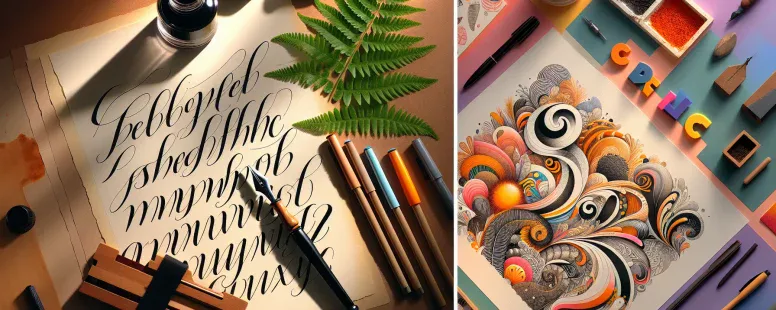
The written word is both a practical tool and a form of artistic expression. Throughout history, humans have sought aesthetic ways to present text, leading to the creation of disciplines such as calligraphy and hand lettering. While seemingly similar, these art forms possess distinct characteristics that influence techniques, applications, and materials used.
Understanding the Basics
Defining Calligraphy
Calligraphy serves as the art of forming beautiful, flowing letters, often executed with a single, continuous stroke per character. The rhythmic precision and variation in stroke weight differentiate calligraphy from ordinary handwriting.
Defining Hand Lettering
Hand lettering, on the other hand, resembles illustrative typography, where each letter is drawn as a unique element. This often involves outlining and filling letters with colors, patterns, or textures, creating an artwork out of textual content.
Tools and Materials Used
Calligraphy Essentials
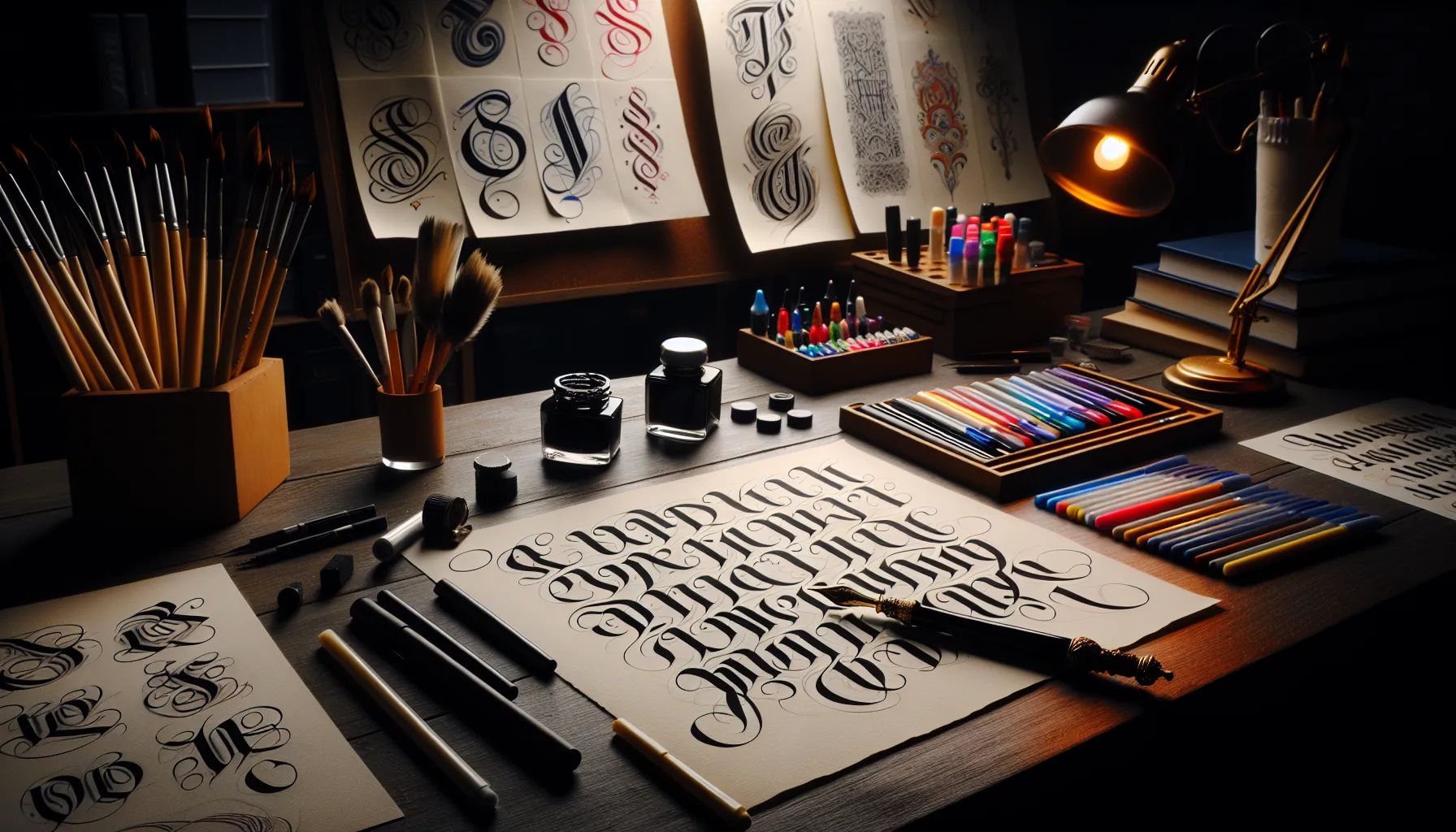
Common tools for calligraphy include dip pens, calligraphy brushes, and specific types of ink and paper that accommodate the flow and absorption needed for clean strokes.
Hand Lettering Supplies
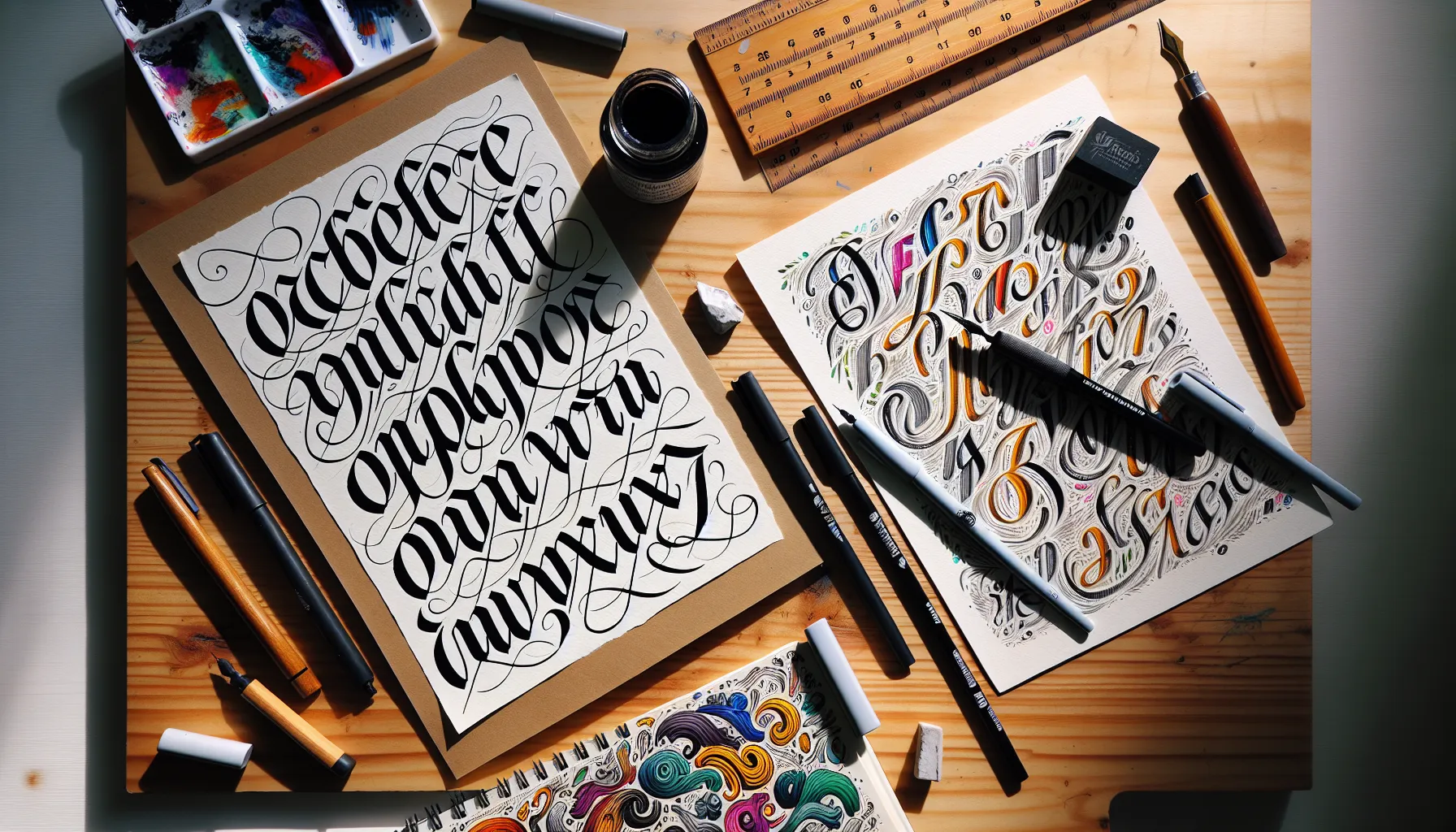
Hand lettering enthusiasts often use pencils, fine liners, markers, and drawing paper graded for usability with various mediums. Experimentation with mixed media is also prevalent in this field.
Techniques and Styles
Techniques Used in Calligraphy
Calligraphy techniques focus on maintaining proper pressure to achieve thick downstrokes and thin upstrokes, next to other nuances that contribute to its elegance.
Styles Seen in Hand Lettering
Hand-lettering styles allow for significant creative liberty, incorporating bold, whimsical layouts and blending letter shapes influenced by modern design aesthetics and personal flair.
Key Differences Summarized
Though calligraphy emphasizes consistency and flow, hand lettering thrives on variety and illustrative quality. While the aim of both is to render letters beautifully, each follows a uniquely different approach and execution.
Practical Examples and Applications
Applications of Calligraphy
Calligraphy finds its use in invitations, formal documents, and artistic expressions where refined elegance is key.
Uses of Hand Lettering
Hand lettering excels in marketing graphics, custom signage, and illustrative projects where creativity and uniqueness stand out.
To provide the best experiences, we use technologies like cookies to store and/or access device information. Consenting to these technologies will allow us to process data such as browsing behaviour or unique IDs on this site. Not consenting or withdrawing consent, may adversely affect certain features and functions.
Functional
Always active
The technical storage or access is strictly necessary for the legitimate purpose of enabling the use of a specific service explicitly requested by the subscriber or user, or for the sole purpose of carrying out the transmission of a communication over an electronic communications network.
Preferences
The technical storage or access is necessary for the legitimate purpose of storing preferences that are not requested by the subscriber or user.
Statistics
The technical storage or access that is used exclusively for statistical purposes.The technical storage or access that is used exclusively for anonymous statistical purposes. Without a subpoena, voluntary compliance on the part of your Internet Service Provider, or additional records from a third party, information stored or retrieved for this purpose alone cannot usually be used to identify you.
Marketing
The technical storage or access is required to create user profiles to send advertising, or to track the user on a website or across several websites for similar marketing purposes.