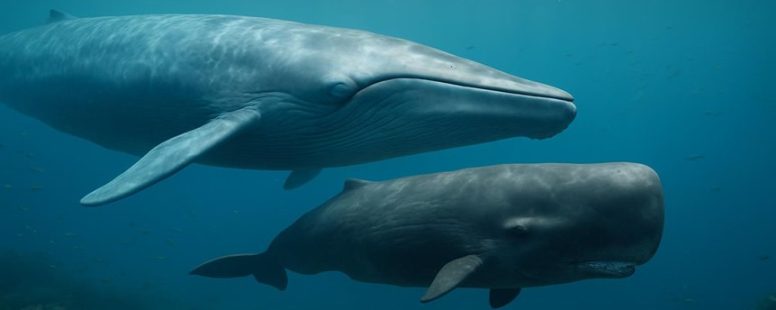
Imagine standing at the shoreline, hearing the thunderous songs of whales echoing through the ocean. The blue whale and the sperm whale may seem similar at a glance, but beneath the surface they are worlds apart—giants that differ not only in size but in their very nature.
These marine titans play unique roles in their ecosystems, like different chapters in the story of the sea. Grasping what sets them apart isn’t just fascinating; it’s vital for safeguarding their future in a rapidly changing world.
Uncovering these differences can reveal surprising insights—like how one’s gentle giant demeanor masks a powerful predator, or how their distinct diets help maintain ocean health in ways we rarely see.
How Do Blue Whales and Sperm Whales Differ in Size and Appearance?
Blue whales and sperm whales are very different in size and look, making them easy to tell apart. Blue whales are the biggest animals on Earth. They can grow up to 100 feet long. Their bodies are sleek and blue-gray, and they have a wide, flat head. Sperm whales are smaller, about 60 feet long. They have a big, block-shaped head and a thicker, more muscular body.
Their sounds are also different. Blue whales make low sounds that travel very far. Sperm whales use high-pitched clicks to find food and talk to each other. Their fat, called blubber, is also different. Blue whales have a thick, dense layer of blubber to stay warm in cold water.
Knowing these differences helps scientists and whale watchers identify each whale in the ocean. For example, if you see a giant blue-gray whale with a wide head, it’s probably a blue whale. If it has a big square head and a smaller body, it’s most likely a sperm whale. These physical and sound differences make each whale unique.
What Are the Behavioral Differences Between Blue and Sperm Whales?
Blue whales and sperm whales live in the ocean, but they behave very differently. Blue whales are mostly solitary or live in small, loose groups. They tend to feed and migrate quietly without much social activity. Sperm whales, however, have strong social bonds. They live in tight groups called pods and work together.
Their ways of talking to each other are quite different too. Sperm whales use echolocation clicks that help them find food and stay aware of their surroundings. They also produce special sounds called codas, which help them stay connected and share signals. Blue whales mainly make low sounds that can travel far across the ocean. These sounds help them communicate with others over long distances. Their social groups are not very organized and tend to change often. Sperm whales are more active socially. They hunt together and care for each other, showing clear teamwork.
These differences show how each whale is built for its own life. Blue whales stay mostly quiet and alone or in small groups, while sperm whales form strong social teams. Both are amazing, but they have very different ways of living and talking to each other.
How Do Their Diets and Feeding Strategies Vary?
Blue whales and sperm whales have very different diets and ways of finding food. Blue whales mostly eat tiny organisms called plankton. They filter large amounts of water using baleen plates in their mouths to catch the plankton. They usually swim deep and slowly, waiting for food to pass by. They rest in rich feeding areas where plankton is plentiful. This method is passive, meaning they do not actively chase their food.
Sperm whales, on the other hand, hunt using echolocation, which is a way they send sound waves to find prey. They chase after bigger animals like squid and fish. Sperm whales make quick, deep dives to find their prey at great depths. They actively hunt, swimming fast and using sounds to locate their food. Unlike blue whales, they go after larger, more active prey that moves around.
Some people might think blue whales are easier to feed because they just filter water. But they need to eat huge amounts of plankton to survive. Sperm whales need to be good hunters, and their quick dives and echolocation make that possible. Both strategies work well for their specific needs, but they also have limits. Blue whales can’t catch larger prey, and sperm whales might miss prey if they don’t locate it correctly.
What Roles Do Blue and Sperm Whales Play in Marine Ecosystems?
Blue and sperm whales play very important roles in keeping the ocean healthy. They are like natural caretakers that help balance marine life.
One main role is controlling prey populations. Blue whales eat large amounts of tiny creatures called krill, while sperm whales hunt fish and squid. By eating these animals, whales keep their numbers in check. This prevents any one species from taking over and helps the whole food chain stay in balance. For example, if there were too many krill, they might eat all the plankton, which is a key food for many small fish and other creatures.
Whales also help move nutrients from deep waters to the surface. When they feed deep down and come up to breathe, they bring nutrients with them. These nutrients help tiny plants called phytoplankton grow. Phytoplankton are like the plants of the ocean and are really important because they produce much of the oxygen we breathe. Sometimes, whales’ dead bodies sink to the ocean floor. These carcasses are a feast for scavengers like sharks and crabs and help feed creatures living on the ocean floor.
Another important point is that the number of whales can show how healthy the ocean is. When whale numbers go down, it might mean there is pollution or overfishing. When whale populations are strong, it often shows the ocean is in good shape.
Some people think whales are just big animals, but they really help keep the ocean balanced. Others warn that hunting whales or harming their habitats can upset this balance. So, protecting whales is important for keeping our oceans healthy for future generations.
Where Do Blue and Sperm Whales Migrate, and What Are Their Habitats?
Blue and sperm whales move long distances each year to find the best places to feed and breed. These trips are called migrations. The routes they take depend on the season and ocean conditions. Sometimes, they travel across big parts of the ocean.
Blue whales usually go from cold, high-latitude waters near the poles to warmer, tropical areas. They do this to find food in the summer and then go to warmer places to breed in the winter. For example, they might feed in the icy waters near Alaska and then travel to the warm waters near Mexico for breeding.
Sperm whales stay mostly in deep, offshore waters. Some groups migrate to specific breeding spots in tropical or subtropical regions. These areas are perfect for giving birth and caring for their young. Sperm whales often stay in deep ocean zones where they can hunt squid and other big prey.
Understanding where these whales go helps scientists learn how they survive and stay safe. It also shows how they change their routes based on seasons and ocean changes. Sometimes, these journeys can be thousands of miles long. If you ever see a whale, remember that it might be on a long trip to find food or a safe place to have babies.
What Are the Main Threats Facing Blue Whales and Sperm Whales?
Blue whales and sperm whales face many threats that put their survival at risk. The biggest dangers include climate change and human activities. Rising ocean temperatures and pollution hurt their homes and food sources. For example, warmer waters can change where fish and krill live, making it harder for whales to find enough to eat. Pollution, like plastic and chemicals, can also harm whales directly or make their food unsafe. Some people worry that if these threats continue, blue and sperm whales might become endangered or even disappear. Understanding these dangers is the first step to saving these amazing animals. But, some argue that efforts to reduce pollution and fight climate change can help protect whales, though these solutions take time and global cooperation.
Climate Change Impacts
Climate change is a big threat to whales like blue whales and sperm whales. It changes their homes and makes it harder for them to survive. For example, warmer ocean temperatures can mess up their migration paths and breeding areas. This means whales might have to travel further or find new places to live, which takes more energy and can be dangerous.
The acid in the ocean is also rising because of climate change. This makes it harder for tiny creatures like krill and small fish to survive. These small animals are what whales eat most. When their food becomes scarce, whales have to go farther to find enough food. This can leave them tired and hungrier.
Ice caps melting and ocean currents changing also hurt whales’ habitats. Melting ice can destroy places where whales breed or rest. Changing currents can move the food supply away from where whales usually find it. Some people think these changes might not be so bad, but many believe they are very serious for whales’ survival.
For example, some scientists from the Marine Conservation Society say that if climate change continues, whale populations could decline. Others warn that we still have time to help by reducing pollution and greenhouse gases. But it is clear that climate change makes it harder for whales to live and thrive. Protecting their homes and food sources is very important for their future.
Human Activity Threats
Human activity is one of the biggest threats to whales today. These activities directly threaten their safety and survival. For example, noise pollution from ships, construction, and sonar makes it hard for whales to communicate. Whales use sounds to find food, stay safe, and share with each other. When human-made noise is loud, it can disorient or stress whales. Sometimes, whales get hurt or killed by ships hitting them or getting caught in fishing nets. These dangers can cause fewer whales to reproduce and more whales to die.
There are two sides to this issue. Some say that we need ships and construction for progress, but we also must protect whales. Reducing noise from ships and using safer shipping rules can help. For example, slowing ships down or avoiding key whale areas can prevent accidents. However, stopping all noise pollution is hard because it’s part of modern life.
Protecting whales means understanding how human activities affect them. We need to find ways to keep their homes safe and quiet. If we don’t, whale populations might keep shrinking, and some species could disappear completely. It’s up to us to balance human needs with protecting these important creatures.
How Can Understanding Their Differences Improve Conservation Efforts?
Knowing how blue whales and sperm whales are different helps us protect them better. Each whale has its own behaviors and needs, so understanding these differences makes conservation work more effective.
First, focusing on their specific habitats is key. Blue whales live in open oceans and often travel long distances, while sperm whales prefer deeper waters near underwater canyons. Protecting these areas makes sure each whale has the space it needs to survive.
Second, knowing that blue whales are important culturally in some places can help us get local support. For example, in some coastal towns, people see blue whales as symbols and want to keep them safe. Sharing these stories can help communities join conservation efforts.
Third, noise pollution affects sperm whales because they use sound to find food and communicate. Reducing loud noises from ships or underwater drilling can help them stay connected and safe.
Fourth, understanding their feeding and migration patterns helps us create better rules. Blue whales eat mostly tiny krill and travel thousands of miles, while sperm whales hunt squid deep in the ocean. Protecting their specific feeding spots and migration routes stops them from accidentally getting harmed.
Finally, teaching the public about how different whales play roles in the ocean helps more people care. Blue whales help control tiny ocean creatures, and sperm whales keep the balance by eating squid. Learning about these roles can inspire more efforts to protect them.
What Do Blue and Sperm Whales Teach Us About Ocean Health?
Blue and sperm whales are good indicators of ocean health because their health shows what is happening in the marine environment around them. If these whales are healthy, it usually means the ocean is in good shape. But if they are sick or dying, it can be a sign that something is wrong in the ocean.
One way whales tell us about ocean health is through noise. Ships, drills, and military exercises make loud sounds that can disturb whales. These noises make it hard for them to communicate, find food, or stay safe. This kind of noise pollution is a warning that the ocean is becoming noisier because of human activity. For example, in places like the Gulf of Mexico, heavy shipping traffic has increased ocean noise, impacting whale populations.
Another way whales show us ocean problems is through pollution. Plastic trash and chemicals build up in their bodies. When whales eat contaminated fish, harmful substances can gather in their fat and tissues. This shows how pollution is spreading through the food chain. In some areas, whales have been found with plastic pieces in their stomachs, which can be deadly. Their health decline can be a sign that our oceans are becoming more polluted.
Some people say monitoring whales helps scientists understand how humans affect the ocean. When whales are sick or show signs of stress, it can be a red flag that pollution or noise levels are too high. But others warn that not all whale health problems come from human activity. Natural changes and other factors can also hurt whales.
To provide the best experiences, we use technologies like cookies to store and/or access device information. Consenting to these technologies will allow us to process data such as browsing behaviour or unique IDs on this site. Not consenting or withdrawing consent, may adversely affect certain features and functions.
Functional
Always active
The technical storage or access is strictly necessary for the legitimate purpose of enabling the use of a specific service explicitly requested by the subscriber or user, or for the sole purpose of carrying out the transmission of a communication over an electronic communications network.
Preferences
The technical storage or access is necessary for the legitimate purpose of storing preferences that are not requested by the subscriber or user.
Statistics
The technical storage or access that is used exclusively for statistical purposes.The technical storage or access that is used exclusively for anonymous statistical purposes. Without a subpoena, voluntary compliance on the part of your Internet Service Provider, or additional records from a third party, information stored or retrieved for this purpose alone cannot usually be used to identify you.
Marketing
The technical storage or access is required to create user profiles to send advertising, or to track the user on a website or across several websites for similar marketing purposes.