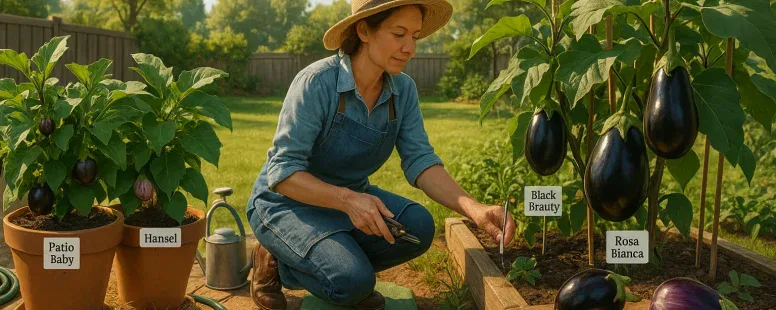
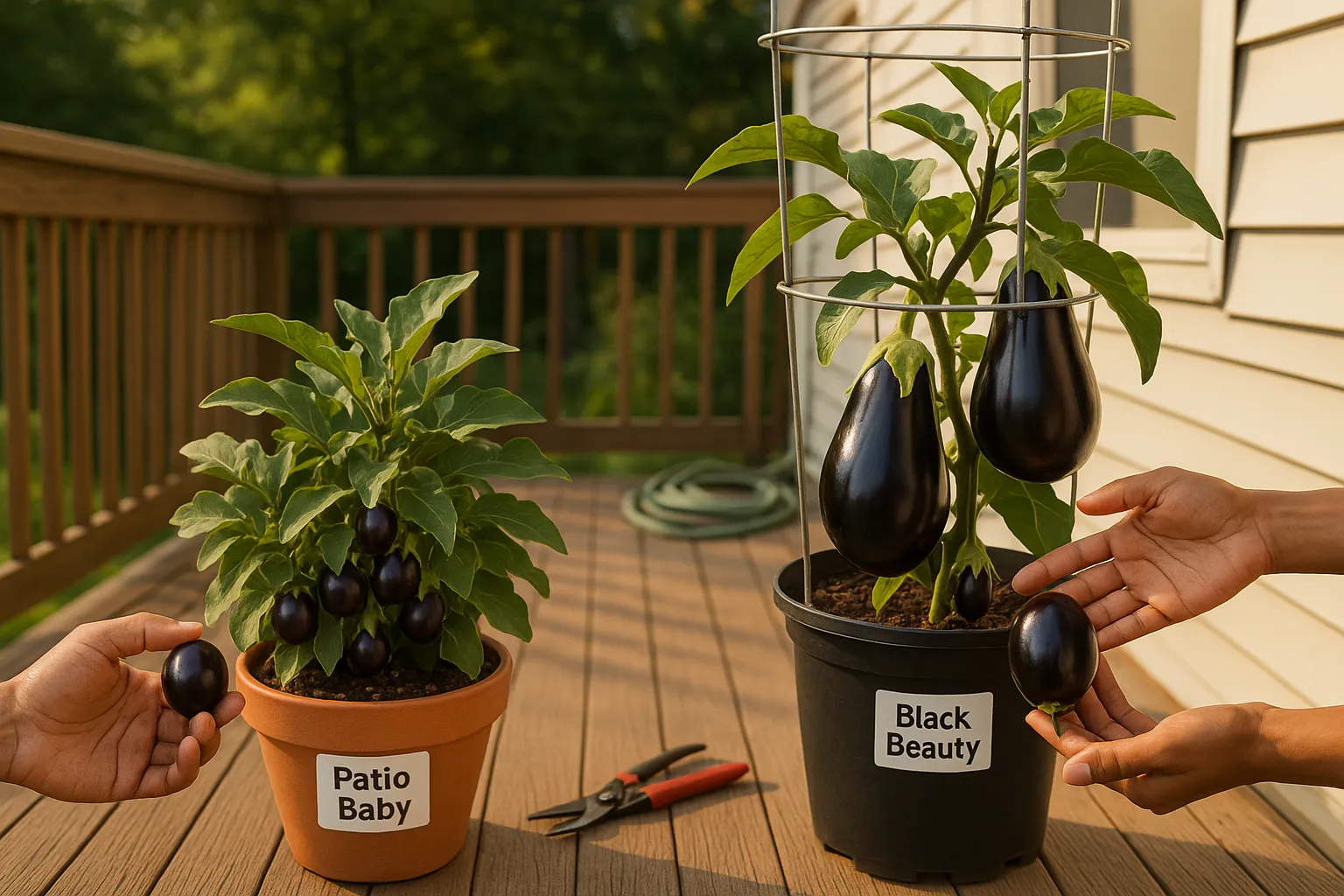
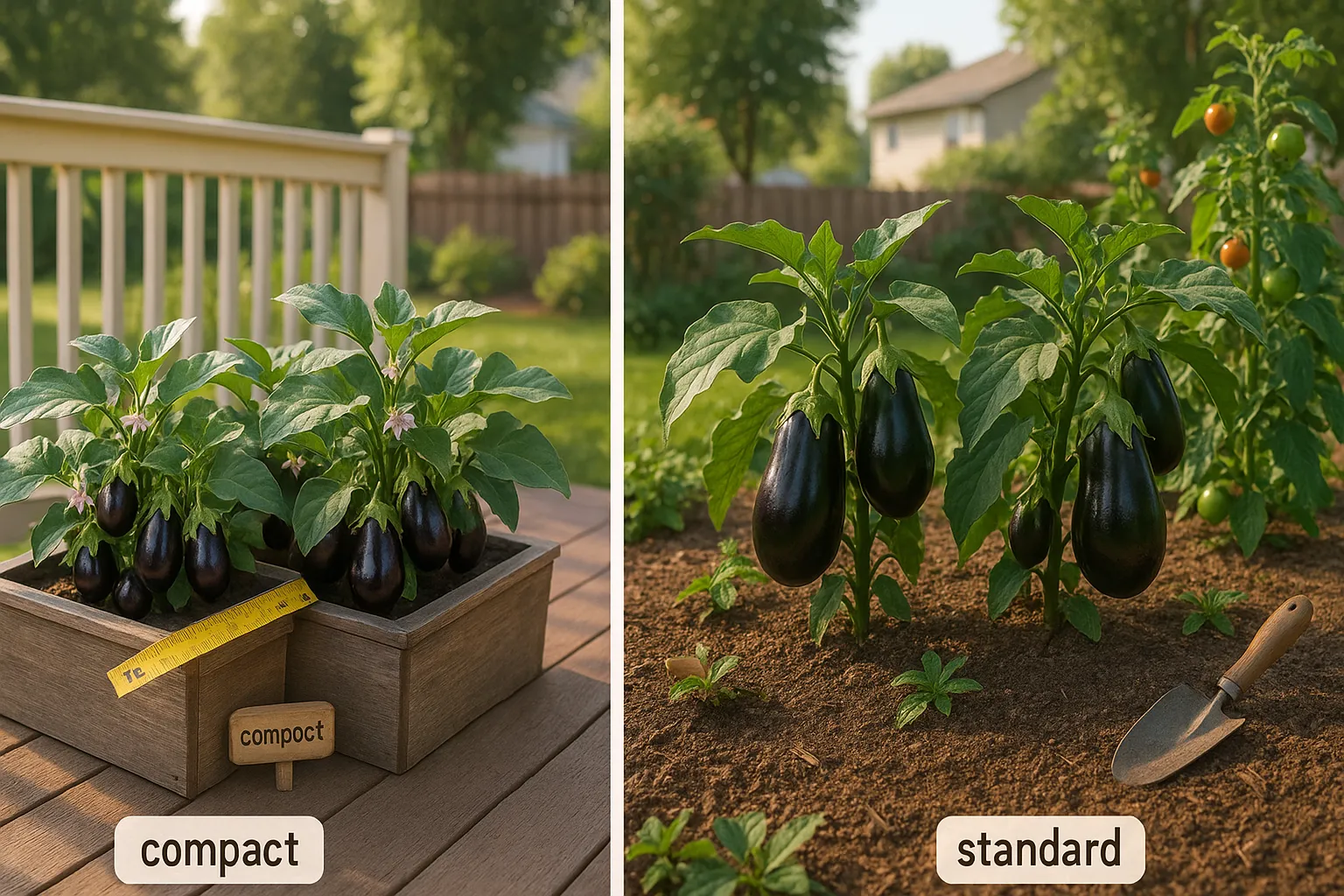
You can grow aubergines (eggplants) whether you have a balcony or a half-acre, but the variety you pick changes everything. Compact aubergines are bred to fit tight spaces and turn out fruit sooner: standard varieties spread wider and often produce larger, classic fruits. That difference affects how you plant, water, feed, cook, and even how you troubleshoot pests. In this guide you’ll get clear, directly usable comparisons so you can match plant type to your garden, climate, and kitchen needs. Expect practical tips, named varieties (like ‘Patio Baby’ and ‘Black Beauty’), and real-world trade-offs so you won’t waste a season on the wrong plant.
Key Differences At A Glance
Fact: Compact and standard aubergines differ mainly in plant size, fruit dimensions, and harvest rhythm.
Growth Habit And Plant Size
Compact aubergines form a smaller, bushier plant that often tops out at 18–30 inches. Standard varieties produce taller, open vines or large bushes that can reach 3–5 feet. Compact types (for example, ‘Patio Baby’, ‘Hansel’) keep their foliage close and demand less staking. Standard types like ‘Black Beauty’ or ‘Listada de Gandia’ will need sturdy stakes or cages because their branches grow heavy with fruit.
Fruit Size, Shape, And Appearance
Compact aubergines usually set smaller fruits: golf-ball to small-apple size, oval or rounded. Standard varieties often produce long, teardrop, or large globe fruits you picture in recipes. Skin color varies across both groups, deep purple, lavender, white, striped, but compact varieties trend toward smaller, uniformly shaped fruits that ripen more consistently on each plant.
Typical Yield And Harvest Timing
Compact varieties often fruit earlier and more frequently per square foot, so you’ll harvest sooner. Standard varieties may yield larger fruit per stem but need more time to reach full size and can produce over a longer season if well managed. Expect compacts to start bearing 60–80 days after transplant: many standard types take 80–110 days. Yields depend on climate and care, but compact planting density often wins for total fruit count in small spaces.
Growing Requirements Compared
Fact: Both types need warm conditions, but compact aubergines tolerate container and short-season setups better.
Light, Temperature, And Season Length
Aubergines are heat lovers. They need full sun, at least 6–8 hours, and warm night temperatures above 55°F. Compact varieties cope slightly better with marginal light and shorter seasons: they will set fruit when nights dip a bit cooler. Standard varieties want steady heat: fruit set will stall if temperatures stay under 60°F. If you live in USDA zones 7–9, most standards do fine outdoors. In zone 5–6 you may prefer compact types or start seeds indoors early.
Soil, Fertility, And Water Needs
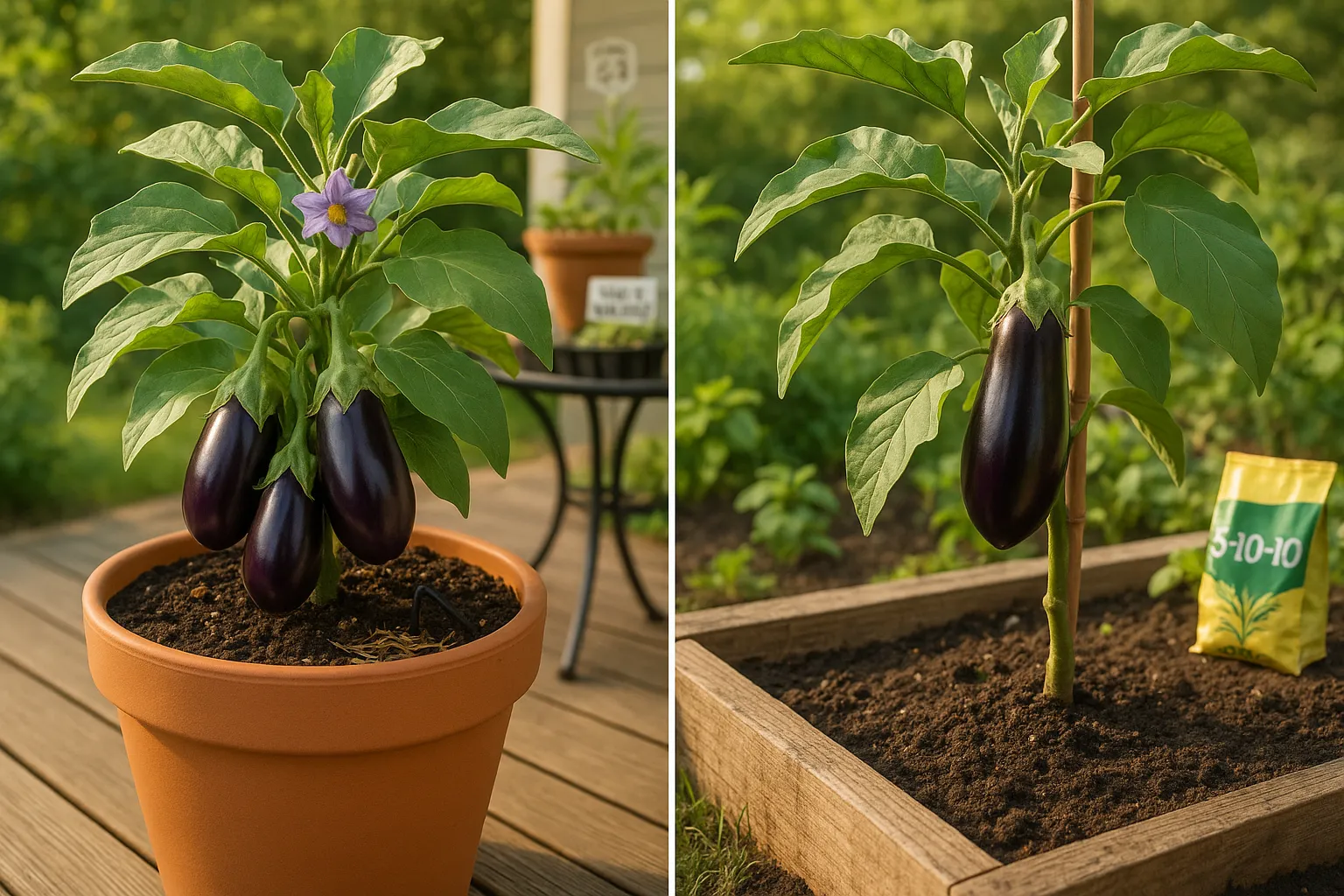
Both need well-draining soil rich in organic matter. Aim for pH 6.0–6.8. Use a balanced fertilizer like 5-10-10 at planting and side-dress with nitrogen-low mixes once fruit sets. Compact plants require less total fertilizer but benefit from steady feeding because they fruit quickly. Water consistently: aubergines dislike drought stress: inconsistent moisture causes blossom drop and bitter flesh. Mulch and drip irrigation ease this.
Container Growing Vs. In-Ground Cultivation
Fact: You can grow compact aubergines in containers: most standard varieties do better in-ground or in very large pots.
Compact aubergines thrive in 5–7 gallon containers. They root deeply enough for sustained fruiting and fit patios. Use a premium potting mix with added compost and a slow-release fertilizer. Standard varieties benefit from larger beds or 15+ gallon containers and strong support. If you try a standard in a pot, expect more frequent watering and feeding, and watch for root restriction that lowers yields.
Space, Yield Efficiency, And Productivity
Fact: Compact varieties give higher per-square-foot productivity in tight spaces: standard varieties yield more per plant in roomier plots.
Planting Density And Garden Layout Strategies
For compact types plant 12–18 inches apart in rows or grids. That spacing allows 2–3 plants per square foot in intensive beds or raised boxes. For standard varieties use 24–36 inch spacing and 3–4 feet between rows. If you have a small balcony, place two compact plants in 12-inch square planters and rotate them for sun. In bigger beds, alternate standards with tomatoes or peppers to manage canopy and pollination.
Per-Square-Foot Yield And Seasonal Output
Compact aubergines can produce more pieces per square foot because you pack more plants. For example, four compact plants in a 2×2 foot area might yield 20–30 small fruits over a season: two standard plants in the same area might yield 6–12 large fruits. Yield per plant tends to be higher for standards, but output per area favors compacts when space is the limiting factor. Remember: fruit weight matters too. If you need mass for canning or storing, standards might be preferable.
Flavor, Texture, And Culinary Uses
Fact: Flavor overlaps widely, but size and flesh density guide the best cooking methods for each type.
Taste And Mouthfeel Differences
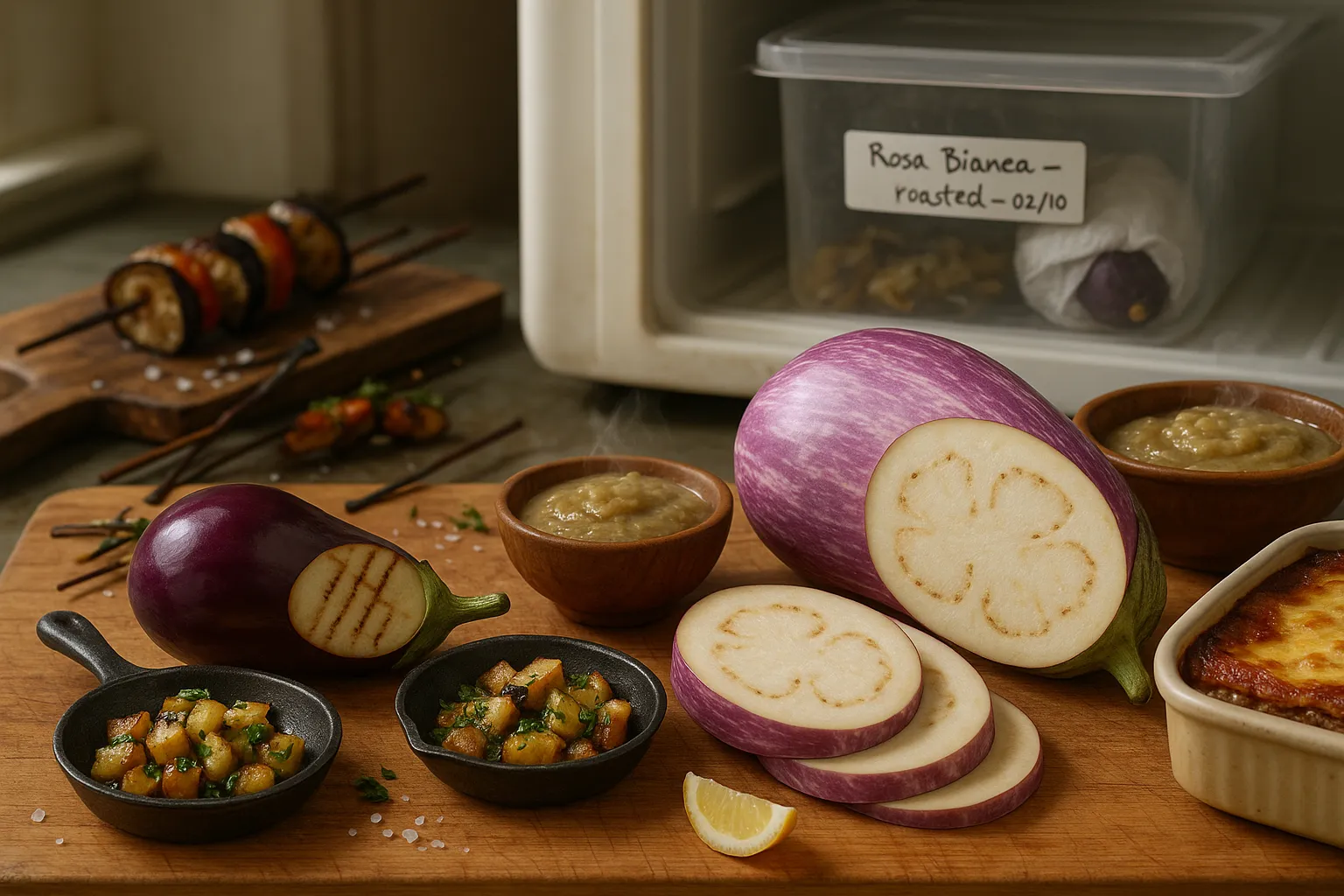
Compact fruits often have thinner skin and tender flesh: they cook quickly and absorb flavors fast. Standards can have denser flesh with a more pronounced, sometimes slightly bitter, eggplant flavor. Cooking technique mutes bitterness: salting or roasting brings out sweetness. Varieties like ‘Rosa Bianca’ (standard) are prized in Italian cooking for creamy texture, while compact types suit quick sautés, skewers, and grilling.
Best Cooking Methods For Each Type
Use compact aubergines for quick pan-frying, kebabs, and fast stews. Their small size means you can cook them whole or halve them for quick char. Standard varieties excel when you need structure: layering in moussaka, baking for stuffed eggplants, or slicing thick for frying. If you want smoky baba ghanoush, both work, but standards give a creamier mash when roasted slowly.
Storage And Shelf Life Considerations
Fact: Small fruit lose water faster: standards store longer.
Compact fruits are best eaten within a week: refrigerate in high-humidity drawers and use within 5–7 days to avoid shriveling. Standard fruits, because of thicker skin and larger mass, can keep 1–2 weeks under the same conditions. For longer storage, blanch and freeze slices or roast and freeze purees. Label with variety and date, you’ll thank yourself later.
Pest, Disease, And Maintenance Challenges
Fact: Both types share pests and diseases, though compact plants can be easier to inspect and treat.
Common Pests And Diseases For Compact And Standard Types
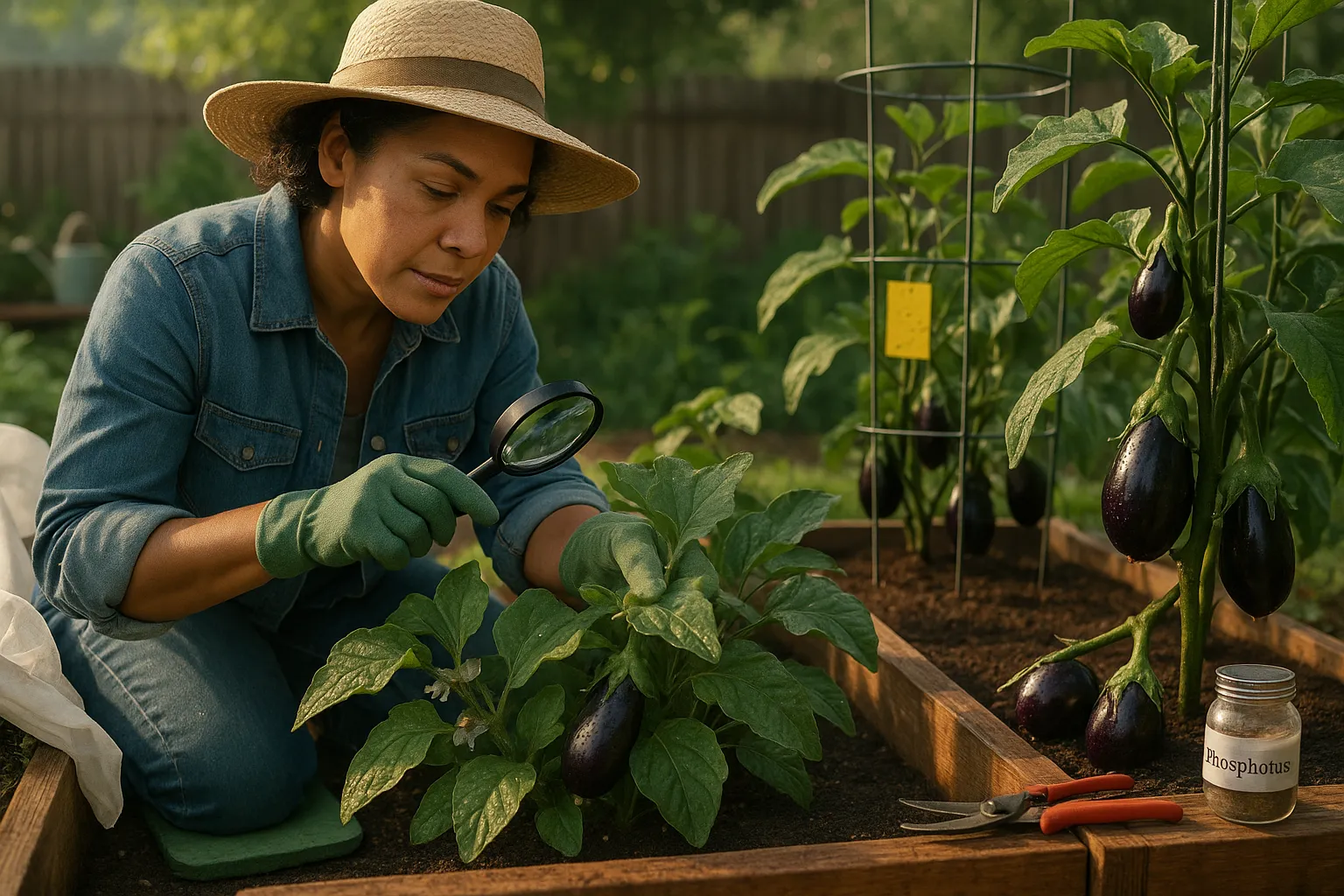
Aubergines attract flea beetles, aphids, Colorado potato beetles, and spider mites. They also catch fungal diseases like verticillium wilt and leaf spot, and viral issues such as mosaic virus. Compact plants’ lower canopy makes spotting flea beetle damage and aphid colonies easier: standards hide problems higher in the canopy and require more thorough checks. Use row covers early for flea beetles and scout weekly for eggs and nymphs.
Routine Care: Pruning, Staking, And Feeding
Fact: Compact plants need less staking but still benefit from simple pruning and feeding.
Prune suckers that crowd the center to improve air flow for both types. Stake standards early, install cages or stakes at planting, because fruit-laden branches can snap. Feed with a phosphorus-heavy fertilizer at bloom to encourage fruit set, and top-dress with compost mid-season. If you notice blossom drop, check for heat stress, irregular watering, or poor pollination.
Troubleshooting Low Yield Or Poor Fruit Quality
Fact: Most low-yield problems trace to temperature, pollination, or inconsistent water.
If fruit set is poor, check night temperatures and reduce nitrogen if plants are lush but fruitless. For small or bitter fruit, ensure steady moisture and harvest promptly: overripe or sunscalded fruit taste off. If branches break, reassess support. I once planted ‘Black Beauty’ in a small plot without cages: the heavy branches splayed, and half the season’s fruit fell, a costly lesson, and a reminder to be honest about a plant’s space needs.
How To Choose Between Compact And Standard Aubergines
Fact: Choose compact types for limited space or short seasons: choose standards when you have room and want bigger fruit.
Deciding Factors: Space, Climate, And Culinary Goals
If you have a balcony, container, or short growing season, pick compact aubergines. If you want large, slicing fruit for baking and long-term storage, pick standard varieties. Climate matters: in cool climates you’ll get more reliable results from compact types or greenhouse-grown standards. Think about the kitchen: do you make kebabs and quick sautés often? Compact is your friend. Do you preserve and roast large batches? Standard will serve you better.
Recommended Varieties And When To Choose Them
Choose ‘Patio Baby’ or ‘Hansel’ for containers and small beds. Pick ‘Black Beauty’, ‘Rosa Bianca’, or ‘Listada de Gandia’ for classic large fruit and restaurant-style dishes. In hot southern climates, try heat-tolerant hybrids like ‘Florida Highbush’ (standard) or ‘Clarabella’ (compact) to avoid blossom drop. When you’re unsure, grow one of each and compare, you’ll learn fast which fits your table.
Practical Planting Plans For Small Gardens And Containers
Fact: A simple plan wins: two compact plants per 2×2 foot box or one compact in a 5–7 gallon pot.
Place compact plants in the sunniest spot, rotate pots occasionally, and feed every 2–3 weeks with a balanced liquid fertilizer. For small gardens, plant compact types in grids to maximize yield. If you use standards, allow room for cages and prepare richer soil with compost and aged manure. Mark planting dates and variety names on stakes: that record will help you refine choices next season.
To provide the best experiences, we use technologies like cookies to store and/or access device information. Consenting to these technologies will allow us to process data such as browsing behaviour or unique IDs on this site. Not consenting or withdrawing consent, may adversely affect certain features and functions.
Functional
Always active
The technical storage or access is strictly necessary for the legitimate purpose of enabling the use of a specific service explicitly requested by the subscriber or user, or for the sole purpose of carrying out the transmission of a communication over an electronic communications network.
Preferences
The technical storage or access is necessary for the legitimate purpose of storing preferences that are not requested by the subscriber or user.
Statistics
The technical storage or access that is used exclusively for statistical purposes.The technical storage or access that is used exclusively for anonymous statistical purposes. Without a subpoena, voluntary compliance on the part of your Internet Service Provider, or additional records from a third party, information stored or retrieved for this purpose alone cannot usually be used to identify you.
Marketing
The technical storage or access is required to create user profiles to send advertising, or to track the user on a website or across several websites for similar marketing purposes.