Imagine spotting a sleek black bird darting through the trees, its glossy feathers shimmering in the sunlight. Magpies and crows often blur into one shadowy figure, yet they are as different as night and day.
With over 120 crow species worldwide and only a few magpie types, telling them apart can feel like unraveling a tangled puzzle.
Surprisingly, learning to distinguish these birds not only sharpens your birdwatching skills but also unlocks a deeper connection to nature’s subtle artistry. Recognizing their unique features is easier than you think, turning confusion into clarity with just a glance.
Quick Ways to Tell Magpies and Crows Apart
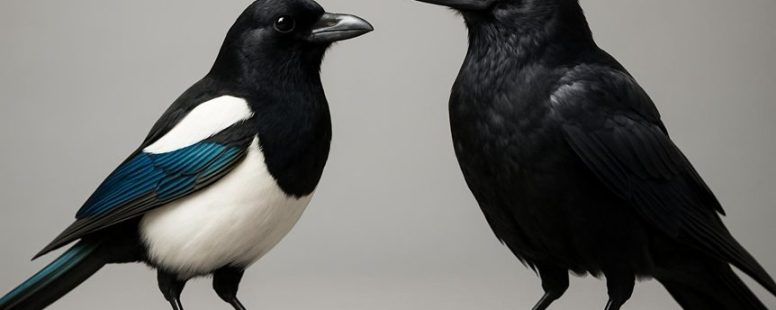
Magpies and crows are both black birds, but you can tell them apart easily. The main difference is their appearance. Magpies have a lot of white on their wings and belly, making them stand out. Crows are all black with no white markings.
When it comes to how they act, magpies tend to be more social. You might see them in pairs or small groups. Crows are more independent and are often seen alone. If you watch their behavior, you will notice magpies are more playful and curious, while crows seem more serious.
Folklore also shows how people see these birds differently. Magpies are often linked to cleverness and trickery. They are quick thinkers and like to play tricks. Crows, on the other hand, are seen as mysterious and smart. Some stories even say they can predict changes or tell secrets.
To tell these birds apart quickly, look at their size, shape, and markings. Magpies are a little smaller with a more rounded tail. Crows are bigger with a straighter tail. A good way to remember is that magpies are more colorful because of their white patches, and crows are all black.
Knowing these differences helps you appreciate how special each bird is. Whether you watch magpies for their clever tricks or crows for their mysterious presence, both are fascinating birds worth noticing.
How to Recognize the Size and Shape of Each Bird
The best way to tell magpies and crows apart by size and shape is to look at their bodies and tails. Magpies are usually a little smaller and have longer, more narrow tails. Crows are bigger and have wider, shorter tails. You can also compare their wings and beaks. Magpies tend to have more pointed beaks and longer wings, while crows have stockier bodies and broader wings.
To tell them apart, follow these steps: first, look at how long their bodies are. Next, check the shape of their tails. Is it long and narrow or short and wide? Then, look at their wings. Are they slim or broad? Finally, observe their beak shapes. Magpies have sharper, more pointed beaks, and crows have thicker, more rounded beaks.
Remember, size can sometimes be tricky because younger birds are smaller. Also, if you see a bird in flight, wingspan can help, but it’s harder to judge. Sometimes, crows and magpies are close in size, so looking at the tail and beak shapes makes a bigger difference.
In some places, magpies and crows live close together, so it can be confusing at first. Practice looking at their differences, and soon it will be easier to tell them apart just by how they look.
Body Size Differences
Magpies and crows are easy to tell apart because of their size and shape. Crows are generally bigger with a stronger body. Magpies are slimmer and have a longer, more narrow body. You can also look at their feathers. Magpies often have shiny, iridescent feathers that change color in the sunlight. Crows usually have dull, matte black feathers that don’t shine much.
Their nests also help you tell them apart. Magpies usually build their nests high in tall trees and like open areas where they can easily see around. Crows often build nests in thick trees or on cliffs, which are more hidden.
Knowing these differences can make it much easier to identify these birds when you see them outside. For example, if you see a bird that looks long and shiny, it’s probably a magpie. If it’s bigger and duller black, it’s a crow. Sometimes, both birds can be in the same area, so paying attention to their size and nest habits helps you tell them apart.
Beak and Tail Shapes
The shape of a bird’s beak and tail helps tell magpies from crows apart. Magpies usually have beaks that are slightly more curved, thinner, and pointed. These beaks are good for eating different kinds of food, like insects and small animals. Crows have straighter, stronger beaks that are better for scavenging and tearing food apart.
The tails are different too. Magpies have long tails with a slight fork, which means the tail feathers are a little separated at the end. Crows have more uniform tails, which are slightly rounded. Their tail shape makes it easier to tell them apart when they are flying or standing.
Feather shine also helps. Magpies often have shiny, iridescent feathers that reflect light in bright colors. Crows’ feathers are usually duller and not as shiny.
If you want to tell these birds apart quickly, look at their beak shape, tail shape, and how shiny their feathers are. These clues, combined with how big they are, how they stand, and how they move, make identification easier. Some people might mistake a crow for a magpie when they see a quick glimpse, so it helps to check all these features carefully.
Wing Span Variations
Birds with different wing spans can tell us a lot about what kind they are. The wingspan is the distance from one wingtip to the other when the bird’s wings are spread out. For example, magpies usually have a wingspan of about 18 to 20 inches. Their wings look broad and rounded. Crows have a slightly bigger wingspan, around 20 to 24 inches, and their wings come to more of a point.
Feather shine is another way to tell them apart. Magpies often have shiny, iridescent feathers that shimmer in the sunlight, especially on their wings. Crows, on the other hand, tend to have dark, matte feathers that don’t shine as much.
Where they build their nests can also help. Magpies like open, high nests in trees. Crows prefer to hide their nests in more secret spots.
Knowing about their wing span, feather shine, and nesting habits makes it easier to tell magpies and crows apart. Some people might find it tricky at first because the differences are small. But once you look closely, these signs can help you identify these clever birds more easily.
Spotting the Distinctive Feathers and Markings
Magpies and crows are easy to tell apart because of their feathers and markings. The main difference is in the colors and patterns on their wings and necks. Magpies have shiny, iridescent feathers that seem to change color when the light hits them. You can often see this shimmer around their necks and on their wings. Crows, on the other hand, have duller, matte feathers that look flat and less shiny.
To tell them apart, look at their wing patterns and beak markings. Magpies usually have black and white feathers with a distinctive pattern, and their beaks are often a little more pointed. Crows are mostly all black with a more uniform appearance and a slightly thicker beak.
A good way to spot these differences is to watch them in your yard or park. If you see a bird with shiny feathers that glow in the sunlight, it is probably a magpie. If the bird looks all black and has a duller shine, it is a crow. Keep in mind, sometimes their markings can be tricky to see from far away, so getting a closer look helps.
Some people prefer to use binoculars or bird guides to make sure they are identifying the birds correctly. Remember, these tips work best if you observe the birds when they are still and not flying too high.
There are some opinions that argue these differences are enough for quick identification. Others warn that in some regions, the birds may look similar and cause confusion. For example, young crows can sometimes have feathers that look shinier, and magpies can vary in their markings. So, it is good to use more than one clue when trying to identify them.
Iridescent Feather Colors
Iridescent feather colors are a quick way to tell magpies apart from crows. Magpies have shiny feathers that change color when you look at them from different angles. These feathers often show bright blues, greens, and purples that seem to glow in the sunlight. When you see a magpie’s wings or tail, the shimmering colors are most noticeable. This makes magpies look very colorful and eye-catching.
Crows, on the other hand, have dull black feathers that do not change color. Their feathers look flat and matte, without any shiny or iridescent shine. Because of this, crows look more plain compared to magpies. If you want to tell them apart from a distance, look for the shiny, color-changing feathers of the magpie.
Some people might think the iridescent colors are just pretty, but they also help identify the birds. Keep in mind that lighting can affect how bright or colorful the feathers look. On a cloudy day, the iridescence might be less visible.
Unique Wing Patterns
Magpies and crows are easy to tell apart by their wing patterns. Magpies have white patches on their wings that stand out against their black feathers. These patches create a clear pattern when they fly. The feathers of magpies often look shiny and colorful, especially in sunlight. Crows, however, have all dark wings without the white patches, and their feathers usually look duller and less shiny.
Another way to tell them apart is how they fly. Magpies often flap their wings and make sweeping, fancy movements. They tend to flick their wings often while flying. Crows fly more steadily and directly, with fewer wing flicks.
If you want to tell these birds apart, look at their wing markings and watch how they fly. Magpies have bright white patches and a lively flight style. Crows have dark wings and a steady, straight flight. Both clues can help you identify them in the wild, but sometimes it can be tricky if the light is poor or the birds are far away.
Distinctive Beak Markings
Magpies and crows can be told apart by looking at their beak markings. The main difference is that magpies usually have a lighter, sometimes shiny or iridescent beak. This makes their beak stand out a little more and gives their feathers a shiny look. Crows, however, have dark, plain beaks that match their overall black color. The difference is small but can be seen if you look closely.
Magpies often build nests in open areas like bushes or on building ledges. When they do this, their beak and head get more sunlight, which can make their beak markings more noticeable. Crows tend to build nests higher in trees. This keeps their beak markings in the shade, so they look darker and more uniform.
If you want to tell these birds apart, pay attention to their beak color and where they build their nests. Be aware that you might need to look carefully because the differences are small. Sometimes, the light or the way the bird is sitting can make it hard to see the markings clearly. Both birds are smart and interesting, so taking a close look can help you understand them better.
Behavioral Traits That Help Identify Magpies Versus Crows
Magpies and crows are easy to tell apart because they behave differently in many ways. If you want to identify them, look at how they move and where they nest.
Magpies usually have more complicated migration patterns. They often travel in small groups or sometimes go alone, depending on the time of year. For example, in spring, you might see a single magpie or a few flying far away. Crows, on the other hand, stay in larger flocks all year and do not migrate as much. They tend to move around less often.
When it comes to nesting, magpies are more territorial. They build nests high up in trees using many twigs and often do this in pairs. If you see a nest high in a tree with a lot of twigs, it is probably a magpie. Crows also nest in trees but are more flexible. Sometimes they make their nests in shrubs or even on man-made structures like building ledges or light poles.
These differences help birdwatchers and nature lovers tell the two birds apart. If you see a bird in a small group flying far away or nesting high in a tree with lots of twigs, it is likely a magpie. If you see large flocks staying in one place or nests in different spots, it is probably a crow.
Listening to Their Calls: How Do They Sound Differently?
Listening to the calls of magpies and crows can help you tell them apart, even if you don’t see them. Magpies usually make clear, musical whistles and have many different calls. Sometimes, they copy sounds from other birds or noises they hear. Crows, on the other hand, make deep, rough caws that sound more guttural. Their calls are steady but not musical like magpies. Magpies often use their varied calls to warn other birds about dangers or to talk to their mates. Crows mostly use their calls for simple, practical reasons like alerting others or marking their territory. Listening carefully can help you tell these birds apart, even if they are hidden.
Some people find it easier to recognize magpies because their calls are more musical and changing. Crows’ sounds are more uniform and duller. But keep in mind that both birds can sometimes mimic sounds, which makes it harder to tell them apart just by sound alone. For example, during nesting season, magpies might be more vocal and use different calls to protect their nests. Crows tend to be quieter or use the same caw repeatedly. So, it helps to listen for the tone, melody, and rhythm of their calls to identify them correctly.
Where Do Magpies and Crows Live? Habitat and Range
Magpies and crows are both smart birds that can live in many places. But they prefer different kinds of habitats and have different ranges.
Magpies usually live in open woodlands, farmland, and cities with many trees. They like areas where they can find food and build nests. Some magpie populations move to warmer places during winter, while others stay in the same place all year. For example, in Australia, the Eurasian magpie often stays put, but in colder regions, they might migrate.
Crows are more flexible. They can live in forests, fields, cities, and even near beaches. They build nests high in trees or sometimes on buildings. Crows often travel over larger areas and can adapt to many different environments. They are found almost everywhere, from rural farms to busy city streets.
Both birds are very adaptable, but magpies usually stay in smaller areas, especially during breeding season. Crows tend to have larger territories and can be seen in many different places at once. Knowing where each bird prefers to live can help bird watchers find them more easily.
Some people think magpies are more tied to trees and quiet areas, while crows are more comfortable in noisy cities. But both birds show how animals can adjust to many kinds of habitats. Just remember, their ranges and nesting habits can change depending on the region and season.
What Roles Do Magpies and Crows Play in Their Ecosystems?
Magpies and crows are important birds in their ecosystems because they do many helpful jobs. They are both predators and scavengers, which means they hunt small animals or insects and eat dead animals. This helps keep nature clean and balanced. For example, when a bird eats leftover meat or insects, it prevents diseases from spreading and controls pests that could damage plants or crops.
These birds also play a role in spreading seeds. When they eat fruits, they carry seeds to different places, helping plants grow in new spots. Some people see magpies and crows as symbols of cleverness or mystery. Because of this, many cultures protect them and try to keep their habitats safe. If these birds disappear, it can cause problems for other animals and plants that depend on them.
Magpies and crows are very adaptable. They can live in forests, grasslands, and even in cities. In urban areas, they often scavenge trash or find food in parks, which shows how flexible they are. However, their presence also warns us about the health of an area. When their populations are healthy, it usually means the environment is balanced.
Some people worry that these birds can become pests or damage crops when they gather in large numbers. Also, because they are so smart and adaptable, they sometimes compete with other animals for food. Despite these worries, protecting their homes is important because losing them could cause big changes in the ecosystem. Overall, magpies and crows help keep nature healthy, and understanding their roles makes it clear why we should take care of them.
Birdwatching Tips: How to Accurately Identify Magpies and Crows
Birdwatching Tip: How to Tell Magpies and Crows Apart
Magpies and crows are common birds you might see outside, but they can look alike if you’re not paying close attention. The best way to tell them apart is by looking at their size, shape, and sounds.
Magpies are usually a little bigger than crows. They have long, elegant tails that stand out when they fly. Their feathers are black and white, with a shiny, striking appearance. Many stories and myths talk about magpies because of their cleverness and curiosity. When they chirp, their sounds are melodious and sweet, kind of like a song.
Crows are mostly all black. They have a stocky body and a shorter tail compared to magpies. Their build looks sturdy and strong. Crows tend to make deeper, guttural sounds, which are more croaking than singing. This makes their calls easier to recognize once you get used to it.
If you want to identify these birds while birdwatching, start by observing their size and tail shape. Then listen to their calls. Remember, magpies often seem more playful and curious, while crows are more mysterious and adaptable.
Some people believe magpies bring good luck, especially in stories from Europe and Asia. Crows are seen as clever survivors in many cultures, sometimes even messengers from the spirit world. Learning about what these birds symbolize can make watching them more interesting.
Keep in mind that sometimes it can be hard to tell them apart, especially when they are flying high or hiding in trees. Practice makes perfect, and paying attention to small details will help you become a better birdwatcher.
To provide the best experiences, we use technologies like cookies to store and/or access device information. Consenting to these technologies will allow us to process data such as browsing behaviour or unique IDs on this site. Not consenting or withdrawing consent, may adversely affect certain features and functions.
Functional
Always active
The technical storage or access is strictly necessary for the legitimate purpose of enabling the use of a specific service explicitly requested by the subscriber or user, or for the sole purpose of carrying out the transmission of a communication over an electronic communications network.
Preferences
The technical storage or access is necessary for the legitimate purpose of storing preferences that are not requested by the subscriber or user.
Statistics
The technical storage or access that is used exclusively for statistical purposes.The technical storage or access that is used exclusively for anonymous statistical purposes. Without a subpoena, voluntary compliance on the part of your Internet Service Provider, or additional records from a third party, information stored or retrieved for this purpose alone cannot usually be used to identify you.
Marketing
The technical storage or access is required to create user profiles to send advertising, or to track the user on a website or across several websites for similar marketing purposes.