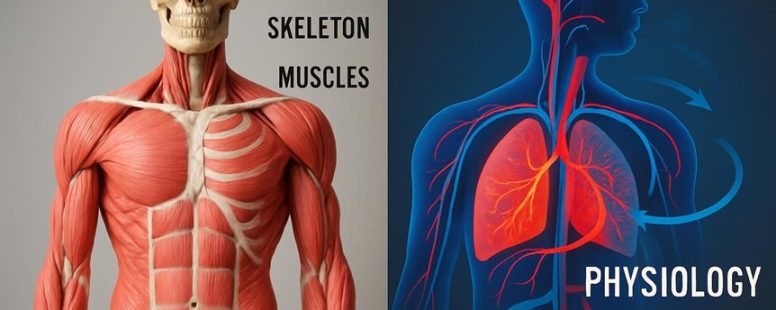
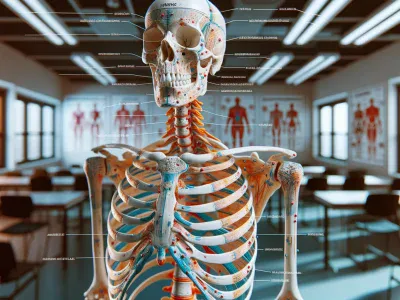
Imagine stepping into a bustling city where every building hums with purpose and every street pulse with activity. Your body is just that—a complex metropolis. Anatomy uncovers the intricate blueprint of its structures, revealing what parts look like and where they sit.
Physiology, meanwhile, is the city’s invisible traffic flow—how those parts work together to keep everything alive and thriving. Understanding this duo is like unlocking a secret map that not only shows you the city’s layout but also how its heartbeat keeps it alive.
Surprisingly, grasping these differences can boost your health choices by revealing the hidden symphony behind everyday functions.
What’s the Difference Between Anatomy and Physiology?
Anatomy and physiology are two fields that help us understand the human body, but they focus on different things.
Anatomy is the study of the body’s structure. It looks at what body parts are made of, like tissues and organs. For example, anatomy tells us where the heart is located or what bones make up the skeleton. It also classifies tissues, such as muscle tissue that makes muscles move, nerve tissue that helps send signals, and connective tissue that holds parts together. Think of anatomy as the blueprint of the body, showing us what it looks like and how its parts fit together.
Physiology, on the other hand, is about how those parts work. It explains how the heart pumps blood or how muscles contract during exercise. Physiology focuses on functions and processes, like how cells communicate with each other to keep the body balanced. For example, it studies how the brain controls movements or how your lungs bring in oxygen. Physiology helps us understand what happens inside the body to keep us alive and healthy.
Some people wonder why both fields are needed. Well, anatomy tells us what the body is made of, while physiology explains how those parts work together. Imagine building a car: knowing the parts is important, but understanding how the engine runs is equally essential. Both fields work together to give us a full picture of human biology.
However, it’s worth noting that studying anatomy alone might not show how the body responds to exercise or illness. And studying physiology without knowing body parts might make it harder to understand the processes. So, learning both helps us get a complete understanding of how our bodies function.
How Do Body Structures Help Us Understand Anatomy?
Understanding body structures is key to learning about how our bodies work. These structures include muscles, bones, and joints. Knowing what they are and how they fit together helps us see how we move and stay healthy.
Muscle groups are collections of muscles that work together. For example, the biceps help lift objects, while the leg muscles help us run and jump. Recognizing these groups shows us how muscles team up during activities. If one muscle weakens, it can affect the whole movement.
Bone density is how strong our bones are. Thicker bones can hold more weight and resist breaking. For instance, athletes often have higher bone density because they exercise a lot. But, if bones become too brittle, it can lead to fractures or diseases like osteoporosis.
Bones support muscles by giving them a place to attach. Think of bones as the frame of a house and muscles as the walls and roof. Without strong bones, muscles can’t do their jobs properly. For example, the shoulder bones allow arm muscles to move freely.
Joint structures are the areas where bones meet. They let us bend, twist, and move in different ways. Knees and elbows are examples of joints. The way joints are built affects how much we can move and how easily we can do daily tasks.
Body size also affects how our structures work. Larger people may have stronger bones and bigger muscles, but they might also move differently than smaller people. Both sizes have advantages and challenges, like how bigger bodies need more energy to move.
Learning about these structures helps us understand our health and how to stay active. It also shows why injuries happen and how to prevent them. Whether you want to play sports or just move comfortably, knowing your body helps you take better care of it.
Why Is Physiology Key to Understanding How Our Bodies Work?
Understanding how our bodies work is important because it shows us how everything inside us moves and functions. Physiology, which is the study of body processes, helps us see how muscles, organs, and systems work together. For example, when you run, your heart beats faster, your lungs take in more air, and your muscles move smoothly. Knowing these things helps us understand why our bodies feel tired or healthy.
Some people think knowing physiology can help in staying healthy. For example, if you understand how exercise affects your heart and muscles, you can make better choices about staying active. But others warn that knowing too much about how everything works can sometimes make people worry more about small problems or injuries.
In simple words, physiology is like the instruction manual for our bodies. It explains how each part works and how they all team up to keep us alive and well. Without it, we might not understand why we need to eat, sleep, or exercise. So, learning about physiology is like having a map to better health.
Functions Reveal Body Mechanics
The body functions reveal how our body mechanics work because they show how different systems team up to keep us alive and moving. When we understand these functions, we see how muscles work together and how nerve signals help control our actions. For example, when you reach for a glass, your brain sends signals through nerves to tell your muscles to move smoothly. This system works fast and precisely so that we can do everyday tasks without thinking. Recognizing how muscles and nerves work together helps us see how complicated simple movements are.
Muscle coordination makes movements smooth and controlled
Nerve pathways send signals to muscles quickly
The nervous system controls how muscles move
Reflexes show how fast our body responds
Different body systems work together to keep us steady and balanced
Some people might think muscles alone make us move, but it’s the nerves that send the messages. Without nerves, muscles can’t know what to do. On the other hand, nerves need muscles to move. This shows how both are needed for our body to work right. However, sometimes nerves or muscles can get hurt, which makes moving hard or painful. Knowing this helps us understand why taking care of our health and avoiding injuries is so important.
Dynamic Processes Explain Health
The body’s functions are not just simple actions. Instead, they are ongoing processes that help us stay alive and healthy. One key process is cell communication. It helps cells work together by sending signals back and forth. For example, if skin gets cut, cells send messages to start fixing the wound. Without this process, our tissues would not rebuild properly, and injuries would heal very slowly.
These dynamic processes are constantly happening inside us. They keep our organs working well and help us respond when we are stressed or hurt. For instance, when you run, your heart beats faster to pump more blood, and your lungs take in more air. All these activities happen because of quick signals traveling between cells.
Understanding how these processes work can help us see why our bodies are so good at staying healthy and fixing problems. For example, doctors can look at how cells communicate to find out why someone is sick. However, some processes may not work right, leading to health problems like infections or diseases.
Some people think these processes are perfect, but they are not always flawless. Sometimes, signals get mixed up, or cells stop working properly. This can cause issues like cancer or other illnesses. So, while these ongoing activities are vital for health, they can also cause problems if they don’t work as they should.
Learning about these processes helps us understand our bodies better. It shows us how we stay healthy and recover from injuries. This knowledge is important for medicine and health care, helping us find new ways to treat sickness and keep us well.
How Do Anatomy and Physiology Work Together in Medicine?
Anatomy and physiology are two parts of understanding how the body works. Anatomy is the study of the body’s parts, like bones, muscles, and organs. Physiology is about how these parts work and move together.
Knowing both helps doctors find the best way to treat patients. For example, if a doctor knows the anatomy of the knee and how it moves, they can better treat knee injuries. The body parts influence how they function, and how they work affects their shape and structure.
Some people think that understanding anatomy is enough, but knowing how the body functions is just as important. For example, a person might have a healthy heart structure, but if the heart does not pump blood well, they could still get sick. This shows how anatomy and physiology work together closely.
However, there are limits. Sometimes, a body part may look healthy but not work right. So, doctors need to use both knowledge of structure and function to get a full picture.
In medicine, understanding this connection helps create treatments that really work. It is like fixing a machine: you need to know what each part looks like and how it should work. Only then can you find the best way to repair it.
Structural and Functional Interdependence
Understanding how the body’s structure and function work together is very important in medicine. Anatomy is about the parts of the body, like organs, tissues, and cells. Physiology is about how these parts work and do their jobs. The body’s structure supports its function. For example, the shape of the heart helps it pump blood effectively. When tissues adapt, they change to meet new needs, like muscles getting stronger after exercise. This makes sure the body performs well.
The structure of the body provides the framework for how it works. For instance, blood flows smoothly because blood vessels are shaped to carry blood efficiently. At the same time, physiology makes sure that signals from nerves and blood flow happen without problems. If a part of the body becomes damaged or changes shape, it can affect how well it works. For example, a broken bone can hinder movement. On the other hand, if something in the body’s function is off, it can cause changes in the structure.
Some people think studying anatomy without understanding physiology is like knowing the parts of a car but not how it drives. Both are needed to understand health or disease. For example, understanding how the heart looks is helpful, but knowing how it beats and pumps blood is equally important. Doctors need to see how the body parts and their functions work together to diagnose and treat problems.
Some argue that focusing too much on structure or function alone can lead to mistakes. For example, a doctor might see a swollen organ but not realize what it means without understanding how it normally works. But knowing both helps doctors see the full picture. This connection between structure and function is key to keeping our bodies healthy and fixing problems when they happen.
Enhancing Medical Treatments
Understanding how the body works is key to good medical treatments. Anatomy is the study of body parts and their structure. Physiology is about how these parts work together. Knowing anatomy helps doctors find the right body parts quickly, while understanding physiology explains how they do their jobs. For example, knowing where blood vessels are and how blood flows helps doctors perform procedures like angioplasty, which opens blocked arteries. Medical words link these two ideas so everyone on the medical team understands each other clearly. When doctors combine knowledge of body parts and how they function, they can create better treatments that fit each person. This can help prevent mistakes and lead to better health results. Some say focusing on anatomy is enough, but others believe understanding physiology is just as important. Both are needed to diagnose problems and find the best way to fix them.
What Tools Do Scientists Use to Study Anatomy?
Scientists use many tools to study anatomy and understand how the body works. These tools help us see small details and explore inside the body without cutting it open.
One of the most common tools is the microscope. Microscopes let scientists see tiny structures like cells and tissues that our eyes alone cannot see. For example, looking at a drop of blood under a microscope shows us red and white blood cells.
Dissection is another important method. Scientists carefully cut into animals or human bodies to study organs and tissues directly. This helps them learn how different body parts are connected. However, dissection can be difficult and requires special training to avoid damaging important parts.
Imaging tools like X-ray machines and MRI scanners are also very useful. X-rays make images of bones and teeth, which helps doctors find broken bones or cavities. MRI scans give detailed pictures of soft tissues like muscles and brain parts. These tools are non-invasive, meaning they do not harm the body, which is safer for patients.
Scientists also compare anatomy across different animals. For example, studying bird wings and bat wings helps us learn about how flight evolved. This type of study is called comparative anatomy and can show us how different species are related.
Finally, staining techniques help scientists see specific tissues better. They add special dyes to tissues, making muscles, nerves, or other parts easier to recognize. For example, scientists might stain brain tissue to see nerve connections more clearly.
While these tools are very helpful, each has its limits. Microscopes cannot see very large structures, and images from X-rays or MRIs may sometimes be unclear. Combining different tools gives scientists a better understanding of anatomy.
Knowing how these tools work helps us learn about the human body and other animals, and it can even help doctors find problems early. Do you think these tools will get better in the future?
How Do Researchers Explore Human Physiology?
Researchers study human physiology by using special tools that show inside the body in real-time. These tools include MRI machines and ultrasound devices. They help scientists see how organs and tissues work without surgery. For example, a doctor might use an ultrasound to watch a baby move in the womb.
Researchers also do experiments with models like animals or computer simulations. These models help them test ideas and see how the body reacts in different situations. For example, they might give a medication to a lab rat to see what happens or use a computer program to model how the heart beats.
Another way researchers learn about the body is by analyzing data from people. They record heart rates, blood pressure, or brain activity. By studying this data, they understand how different parts of the body work together. For example, they might find out how stress affects the heart or how muscles respond during exercise.
Some scientists believe that combining these methods gives the best picture of human physiology. Others warn that experiments on animals or computer models may not always reflect what happens in humans. So, researchers need to be careful when they use these tools and always check their results.
Utilizing Advanced Imaging Techniques
Advanced imaging techniques are tools that let us see inside the human body in great detail. These methods are very useful for understanding how our organs and tissues work. For example, MRI scans and CT scans can show us pictures of the brain, heart, or bones. Ultrasound uses sound waves to look at blood flow or see a developing baby.
Some people wonder how these tools help doctors and researchers. They can find problems like tumors or blood clots without needing surgery. They also help track how diseases get worse or better over time. For example, a doctor might use an MRI to see if a brain tumor is growing.
However, these imaging tools do have limits. MRI scans take time and can be expensive. CT scans expose patients to a small amount of radiation. Ultrasounds are quick and safe but may not give as much detail as MRI or CT.
Employing Experimental Models
Experimental models are tools scientists use to learn how our bodies work. These models, like animals or computer programs, act like mini versions of humans. They help researchers study how biological processes happen safely and ethically. For example, studying the heart in pigs is helpful because their hearts are very similar to ours. This makes the results more useful for understanding human health.
Comparative anatomy is important because it helps scientists find similarities between humans and other animals. This makes the models more relevant. Without these models, it would be much harder to learn about how our bodies function. They also help scientists test new treatments before trying them on people.
However, there are limits. Animal models are helpful, but they are not perfect. Sometimes what works in animals does not work in humans. Computer simulations are safe and quick, but they can oversimplify real life. So, scientists use different models together to get the best understanding.
In simple terms, experimental models are like practice runes that help us learn without putting people at risk. They are essential tools, but we always need to remember their limitations.
Analyzing Physiological Data
Understanding how our bodies work starts with analyzing physiological data. This data gives us information about how the heart beats, blood pressure, and breathing. Researchers look at these signals to see how different parts of the body work together. They use tools like sensors, imaging machines, and chemical tests to gather this information.
For example, sensors can track electrical signals from the heart and brain. Blood tests measure hormone levels that affect cell communication. Imaging techniques, like MRI or ultrasound, help visualize how the body responds to different activities. Watching how these signals change during exercise or stress helps us understand what is normal and what might be a problem.
Some people think this data is very useful for diagnosing health issues early. Others warn that it can be complicated to interpret, and mistakes may happen if the data is not carefully analyzed. Still, studying physiological data helps doctors find ways to treat diseases and improve health.
How Do Anatomy and Physiology Overlap in Practice?
Anatomy and physiology are closely connected, and they work together in real life. Anatomy is about the structure of the body parts, like tissues and organs. Physiology explains how these parts function and respond to signals. When a tissue gets hurt, knowing the structure helps doctors see what is damaged. Physiology shows how signals tell the body to start healing. This connection helps in medical treatments. For example, understanding tissue layout can guide surgeons to repair injuries better. In regenerative medicine, knowing both how tissues look and how they work helps scientists create better therapies. Think of anatomy as the blueprint of a building, and physiology as how the building’s systems, like electricity or plumbing, operate. Both are needed to truly understand health and healing. However, some say focusing too much on structure might miss how the body actually functions day-to-day. So, both views are important for making good medical decisions.
Why Knowing Structure and Function Matters for Healthcare?
Knowing the structure and function of the body is very important in healthcare. It helps doctors find out what’s wrong and how to fix it. When we understand how cells communicate through cell signaling, we can better see how tissues react when they get hurt or sick. Recognizing how tissues are built helps us know how the body repairs itself, which is key for healing. This knowledge helps create better treatment plans, whether it’s surgery or therapy.
Understanding cell signaling is important because it shows us how diseases spread or get worse. For example, in cancer, abnormal cell signals can cause cells to grow too fast. Knowing this helps doctors decide on treatments to stop the disease.
Knowing tissue structure explains how the body repairs itself after injuries. When skin or muscle gets cut, the body works to rebuild those tissues. If we understand how tissues are made, doctors can improve healing and reduce scars.
This knowledge also guides treatment choices. For example, knowing how nerves work helps plan surgeries that avoid damaging them. It can also help predict problems during recovery. Sometimes, even with good planning, complications can happen. So understanding the body’s responses helps doctors be ready for those issues.
Some people might see the body as a simple machine, but it’s more like a busy city with many parts working together. Recognizing how cells and tissues work helps us see the bigger picture and treat patients better. Still, it’s important to remember that each person is different. What works for one person might not work for another, and some conditions are hard to predict.
Common Confusions Between Anatomy and Physiology: And Why They Occur
Anatomy and physiology are two parts of studying the body. Anatomy is about the physical parts of the body, like bones, muscles, and organs. Physiology explains how these parts work and how they help the body function.
Many people get confused about these terms. They might think anatomy is just about what the body looks like, and physiology is about how it works. But both are connected. For example, knowing the structure of the heart (anatomy) helps us understand how it pumps blood (physiology).
This confusion happens because both fields are often taught together. They use similar words and are often found in the same textbooks. Sometimes, teachers or resources do not clearly explain the difference. That can make it hard to tell them apart.
Understanding the difference is useful. It helps you learn better and talk about health more clearly. When you know anatomy is about parts, and physiology is about functions, it becomes easier to understand how your body works.
How Does Understanding These Differences Improve Learning About the Body?
Understanding the differences between anatomy and physiology helps make learning about the body easier and clearer. Anatomy is about the parts of the body and how they are put together. Physiology is about how those parts work and carry out functions. Knowing both helps us see how the body’s structure relates to what it does.
For example, understanding tissue organization (anatomy) shows how muscles, bones, and organs fit together. Knowing how cells communicate (physiology) explains how your heart keeps beating or how your lungs help you breathe. When you see how these parts work together, it becomes easier to understand health problems. If a person has a broken bone, knowing the anatomy helps figure out where the problem is. If they have trouble breathing, understanding physiology helps see how the lungs and airways work.
Some people think that knowing just the structure or just the function is enough, but both are needed. Structure explains how parts are made, while function explains what they do. For example, understanding how a kidney is built helps you see how it filters blood. Knowing how it filters blood helps you understand kidney problems.
However, there are limits. Sometimes, understanding anatomy alone does not explain why a body part doesn’t work right. And knowing physiology alone might not tell you exactly what the problem looks like on the outside. Both are needed to get a full picture.
Learning about these differences also helps improve critical thinking about health. For example, if you understand how tissues are organized and how cells communicate, you can better understand why certain illnesses happen and how treatments work. This knowledge can even help you make healthier choices by understanding your body’s needs.
In short, understanding anatomy and physiology together helps us see the body more clearly. It supports better learning, diagnosis, and health decisions. Do you ever wonder how your body parts work together? Knowing these differences makes it easier to see the big picture.
To provide the best experiences, we use technologies like cookies to store and/or access device information. Consenting to these technologies will allow us to process data such as browsing behaviour or unique IDs on this site. Not consenting or withdrawing consent, may adversely affect certain features and functions.
Functional
Always active
The technical storage or access is strictly necessary for the legitimate purpose of enabling the use of a specific service explicitly requested by the subscriber or user, or for the sole purpose of carrying out the transmission of a communication over an electronic communications network.
Preferences
The technical storage or access is necessary for the legitimate purpose of storing preferences that are not requested by the subscriber or user.
Statistics
The technical storage or access that is used exclusively for statistical purposes.The technical storage or access that is used exclusively for anonymous statistical purposes. Without a subpoena, voluntary compliance on the part of your Internet Service Provider, or additional records from a third party, information stored or retrieved for this purpose alone cannot usually be used to identify you.
Marketing
The technical storage or access is required to create user profiles to send advertising, or to track the user on a website or across several websites for similar marketing purposes.