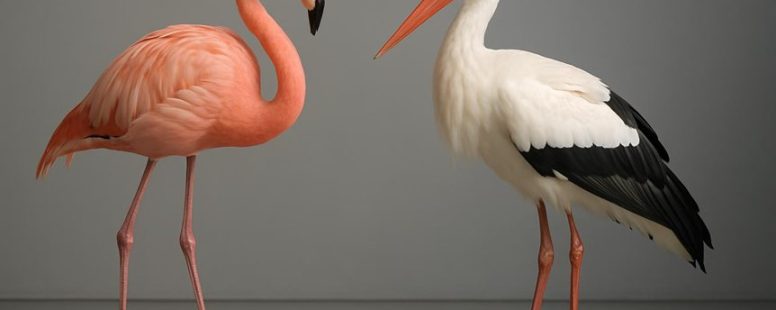
Flamingos and storks often blur together in the mind, like shadows dancing in the twilight. But look a little closer, and you’ll see they’re as different as fire and ice.
Knowing these subtle clues can turn a confusing sighting into a quick victory—saving you time and sparking your curiosity. Did you know that spotting their unique beaks or feather hues can reveal secrets about their habits and habitats?
It’s a small detail with a surprisingly big payoff—like unlocking a hidden puzzle in the bird world.
Ready to distinguish these elegant creatures in just seconds? Let’s dive in.
How Can You Quickly Tell a Flamingo From a Stork?
To tell a flamingo from a stork quickly, focus on a few key features. Flamingos are usually pink or reddish because of what they eat, while storks are mostly white or grayish. When they fly, flamingos often stretch their necks and legs straight out, gliding smoothly close to the ground. Storks fly with their necks pulled back and beat their wings strongly, flying with more power.
One simple way to tell them apart is by their colors. If a bird is bright pink, it is most likely a flamingo. If it is mostly white or gray, it is probably a stork. Another way is by their flight style. Flamingos fly with long necks and legs extended, while storks have their necks bent back and flap their wings loudly.
Some people might get confused because both birds are big and have long legs. But knowing these differences helps you identify them fast. For example, if you see a bird walking in a shallow lake with pink feathers, it is a flamingo. If you see a tall bird with white feathers and a steady flight, it is a stork.
Keep in mind that in some cases, young flamingos are gray or white, so color alone might not always work. Also, during certain seasons, storks can look a little duller. So, it’s good to look at both color and how they fly to be sure.
What Are the Main Physical Differences Between Flamingos and Storks?
Flamingos and storks are both tall birds with long legs, but their main physical differences are easy to see. Flamingos are famous for their bright pink or reddish feathers. Their color comes from the food they eat, like shrimp and algae. Storks usually have white feathers with black on their wings, which looks more plain compared to flamingos.
Another big difference is their beaks. Flamingos have curved beaks that bend downward. They use these beaks to filter tiny bits of food from water. Storks, on the other hand, have straight, pointed beaks that help them catch fish, frogs, and insects. Imagine trying to scoop food with a spoon versus stabbing at it with a fork—that’s how their beaks work.
Their legs are different too. Flamingos often stand on one leg, and their legs are long and skinny. This helps them stay cool and rest. Storks have thicker, sturdier legs that they use to walk through wetlands and fields easily.
When it comes to migration, flamingos usually fly in big groups called flocks to find new places to breed. Many stork species also travel long distances, but their flight styles and times can be different. Some storks migrate during the day, while flamingos often migrate at night.
How Do Flamingos and Storks Feed Differently?
Flamingos and storks feed very differently. Flamingos use a unique method called filter-feeding. They turn their heads upside down and put their beaks into the water. Their beaks have tiny comb-like structures that catch small food particles like algae and tiny crustaceans. Flamingos often feed in groups in shallow water, making it easier to find food together. Their pink color comes from the food they eat, mainly from carotenoids in algae.
Storks, on the other hand, hunt by probing mud and shallow waters with their long beaks. They grab larger prey such as fish and insects. Unlike flamingos, storks usually hunt alone or in small groups. Their long beaks help them reach food hidden in the mud or water.
The way each bird feeds is linked to their physical traits. Flamingos are built for filter-feeding, while storks are good at grabbing bigger prey. Both methods work well for their environments. However, flamingos are more social when feeding, while storks tend to hunt alone or with just a few others.
In short, flamingos filter tiny food particles by turning their beaks upside down in water, while storks probe mud with their long beaks to catch bigger prey. Each bird’s feeding style shows how they are adapted to their specific habitats.
Where Do Flamingos and Storks Live? A Habitat Comparison
Flamingos and storks live in different types of habitats, and these habitats match their feeding habits and body features. Flamingos mainly stay in shallow, salty lakes and lagoons. These places are perfect for their unique way of eating, which involves filtering food from the water with their beaks. Flamingos usually stay in the same spot all year, but sometimes they move to find better places depending on the season.
Storks, on the other hand, live in wetlands, marshes, and open fields. They often travel long distances during migration to find food and avoid bad weather or predators. Unlike flamingos, storks move around a lot during the year. Their habitats are more varied, and they need different kinds of wetland areas to survive.
Both birds have habitats that fit their body shapes and feeding styles. Flamingos are built to filter food from salty water, so they stay in salty lakes. Storks are better at hunting in wetlands and fields, so they move around to find those places. Each habitat has its own dangers, like predators or pollution, which can make survival challenging.
In simple terms, flamingos are more like residents in salty lakes, while storks are travelers in wetlands and fields. Both have special ways to live in their homes, but their choices come with risks. For example, if a salty lake dries up, flamingos might have to find a new home. Similarly, if wetlands are drained for farming, storks might struggle to find food. Both birds show how animals adapt to their surroundings, but they also face threats from humans and changing environments.
Why Are Flamingos Pink? Understanding Their Coloration
Flamingos are pink because of their diet. They eat algae, small crustaceans, and plankton that contain carotenoid pigments. When flamingos digest these foods, the pigments break down and turn into color that gets stored in their feathers, skin, and beak. This is what makes their feathers bright pink or orange.
Many people think flamingos are born pink or that their color depends on how they fly, but that’s not true. Their color mainly depends on what they eat. If they don’t eat enough of these pigments, their color can fade and become less vibrant.
So, in simple words:
Flamingos are not born pink; they get their color from food.
Their diet affects how bright or dull their feathers look.
Carotenoids are the main pigments that give them their color.
Changing what they eat can make their color fade over time.
Understanding this helps us see that their striking pink color is not natural at birth but a result of their diet. If flamingos eat a lot of carotenoid-rich foods, they look more vibrant. If they eat less, their color can become duller. This shows how important what they eat is for their appearance.
What Are Typical Behaviors and Social Patterns of Flamingos and Storks?
Flamingos and storks have different social behaviors that help explain how they live. Flamingos are very social birds that usually gather in large groups called colonies. These colonies can have hundreds or even thousands of flamingos. During the breeding season, they perform interesting courtship displays where they dance, stretch their necks, and make loud sounds to attract mates. This shows how important social interactions are for flamingos.
Storks, on the other hand, are more often seen alone or in small groups. They tend to be less social than flamingos. Storks usually nest on tall trees or buildings, and they do not gather in huge colonies. During feeding, storks walk slowly through wetlands or fields, looking for food like fish, frogs, or insects. Their calmer behavior makes them less likely to form large groups.
In terms of feeding and nesting habits, flamingos use their bills to filter food from water while standing on one leg. They often build their nests close together in colonies, which helps protect them from predators. Storks build large nests on high places and take turns caring for their young. Both birds have interesting ways of protecting their nests, but flamingos rely more on their large groups, while storks depend on their height and vigilance.
Some people find it fascinating how different these two birds are. Flamingos are loud and active, while storks are quieter and more solitary. Both behaviors fit their environments and help them survive. However, it is worth noting that these patterns can change if their habitat is disturbed or if there are fewer food sources. Understanding these behaviors helps us see how animals adapt to their surroundings.
Group Dynamics and Flirting
Flamingos and storks are both social birds, but they have different ways of interacting and attracting mates. Flamingos use synchronized dancing and head-flagging as their main flirting method. They gather in large groups called colonies during migration to perform these elaborate displays. These dances help them find mates and stay connected as a group. For example, flamingos often move together in perfect rhythm, like a choreographed dance team. This behavior also helps their colonies stay strong even when their habitat changes.
Storks, on the other hand, bond with their mates through mutual bill-tapping and sharing nest-building duties. They usually form smaller, more stable pairs rather than large groups. During migration, storks rely on social cues from their partners to stay connected. Their behaviors help keep their pair bonds strong and ensure they can raise their young successfully.
Both types of birds use their social behaviors to help with migration. Flamingos coordinate with their large colonies to move together, which helps protect them from predators and makes travel easier. Storks, with their smaller groups, depend on their social signals to stay close and support each other during long flights.
Some people might wonder if these behaviors are enough to protect the birds. Flamingos’ big colonies can help them survive habitat loss because they can work together. But, large groups also mean they are more vulnerable to habitat destruction or hunting. Storks’ smaller pairs might be safer from some threats but risk losing their group if something happens to their nest or partner.
In the end, understanding how flamingos and storks behave helps conservationists protect these birds better. Both species show how social behaviors are key for survival, but they do it in very different ways.
Feeding and Foraging Habits
Feeding and foraging habits are key to understanding how flamingos and storks find food and live in their habitats. Flamingos feed by using their special beaks to filter mud and water. They scoop water into their beaks and then push it out, catching algae, tiny crustaceans, and plankton. Flamingos usually stand in shallow water and move their bodies together in groups, sometimes in synchronized waves. This helps them find enough food and stay safe from predators.
Storks, on the other hand, use different ways to find food. They probe the soil with their long beaks to find insects or small animals. Some storks stalk prey in wetlands, sneaking close before catching it. Others catch insects flying in the air. Storks are more often seen alone or in small groups when they search for food, unlike flamingos that gather in big colonies.
Both birds have adapted their feeding habits to fit their environments and what they eat best. Flamingos prefer shallow, salty lakes where they can filter food easily. Storks like wetlands and marshes, where they can hunt a variety of prey. These habits show how each bird has found its own way to survive and share space with other animals.
People who study birds say that these feeding styles help flamingos and storks avoid competing for the same food. But sometimes, if the environment changes or food sources run out, both species might struggle. So, understanding their habits can help protect these birds and their habitats.
Nesting and Mating Patterns
Nesting and mating behaviors are quite different between flamingos and storks. Flamingos, which are part of the Phoenicopteridae family, tend to gather in big colonies for breeding. They often do synchronized displays that help strengthen social bonds. Flamingos build their nests out of mud in shallow waters. Sometimes, they migrate, bringing different colonies together during certain seasons.
Storks belong to the Ciconiidae family. They are usually more solitary or gather in small groups when nesting. Storks prefer tall trees or rooftops for building their nests. Their migration habits are well known. Some stork species travel long distances between their breeding places and winter homes.
These behaviors show how each bird species adapts to its environment. Flamingos use large colonies and migration to stay safe and reproduce successfully. Storks, on the other hand, use tall nests and long migrations to find good places for breeding and wintering. Both strategies help them survive and reproduce in their own ways.
Which Birds Are More Common in Wetlands: Flamingos or Storks?
Storks are more common in wetlands than flamingos. Storks can live in many types of wetlands all around the world. They are very good at changing their habits and can migrate long distances to find food or a place to breed. You might see storks in rural wetlands near farms or even in cities, nesting close to people. Flamingos prefer specific types of wetlands like salt flats and lagoons, which are not as common. They also migrate, but their trips are usually shorter and more seasonal. Because of their wider range and better ability to adapt, storks are seen more often in wetlands than flamingos. So, if you visit a wetland and see a bird, chances are it’s a stork, not a flamingo.
What Do Flamingo and Stork Calls Sound Like?
Flamingo and stork calls are easy to tell apart once you know what to listen for. Flamingos make soft, rhythmic sounds like gentle hums, which help them stay connected in large groups. Their honks, grunts, and low rumbles often happen together during social activities or when they are showing off during breeding season. These sounds are quieter and more musical compared to other birds, making them easier to recognize if you listen closely.
Storks, on the other hand, have much deeper and louder calls. Their croaks and trumpeting sounds can carry over long distances, which is helpful when they are migrating or trying to find each other across big wetlands. Stork calls sound more commanding and resonant, like a loud horn, and are often heard from far away.
Why do these sounds matter? Farmers, bird watchers, and conservationists listen to bird calls to learn about bird movements and how they use their habitats. For example, if you hear stork trumpets early in the morning, it might mean they are starting their migration for the season. Listening carefully to these calls can give clues about where birds are breeding or resting.
Some people might find it tricky to tell these sounds apart at first. Flamingo calls are gentle and rhythmic, while stork calls are deep and loud. If you’re new to bird watching, try listening to recordings or visiting wetlands where these birds live. It can be fun to learn their sounds and see them in real life.
Quick Tips: How to Remember Which Bird Is Which
If you want to tell a flamingo from a stork quickly, focus on their appearance and sounds. Flamingos are bright pink and usually stand on one leg. Their pink color comes from the food they eat, like shrimp. Storks are taller and sleeker with long, straight beaks. They stand more upright and don’t have the bright pink feathers.
In terms of sounds, flamingos make honking noises that sound like a loud, deep quack. Storks are quieter but make softer croaking sounds. During migration, flamingos stay in warm wetlands, where they can find plenty of food. Storks often travel long distances to find good places to breed and nest.
You can also tell them apart by their habits. Flamingos are very social and live in big groups called colonies. Their bright pink color makes them easy to spot in the wild. Storks tend to be more solitary or in smaller groups, and their size and straight beaks help you recognize them.
If you are outside and want to identify one, look at where they are and how they look. Remember, flamingos are pink and stand on one leg, while storks are tall with straight beaks. Knowing these simple tips can help you tell the birds apart fast, even if you are busy watching nature.
To provide the best experiences, we use technologies like cookies to store and/or access device information. Consenting to these technologies will allow us to process data such as browsing behaviour or unique IDs on this site. Not consenting or withdrawing consent, may adversely affect certain features and functions.
Functional
Always active
The technical storage or access is strictly necessary for the legitimate purpose of enabling the use of a specific service explicitly requested by the subscriber or user, or for the sole purpose of carrying out the transmission of a communication over an electronic communications network.
Preferences
The technical storage or access is necessary for the legitimate purpose of storing preferences that are not requested by the subscriber or user.
Statistics
The technical storage or access that is used exclusively for statistical purposes.The technical storage or access that is used exclusively for anonymous statistical purposes. Without a subpoena, voluntary compliance on the part of your Internet Service Provider, or additional records from a third party, information stored or retrieved for this purpose alone cannot usually be used to identify you.
Marketing
The technical storage or access is required to create user profiles to send advertising, or to track the user on a website or across several websites for similar marketing purposes.