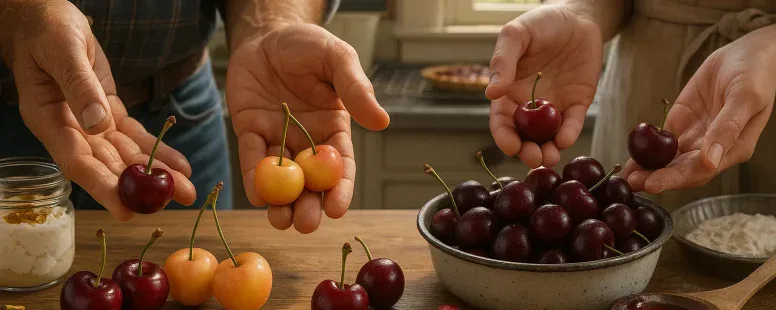
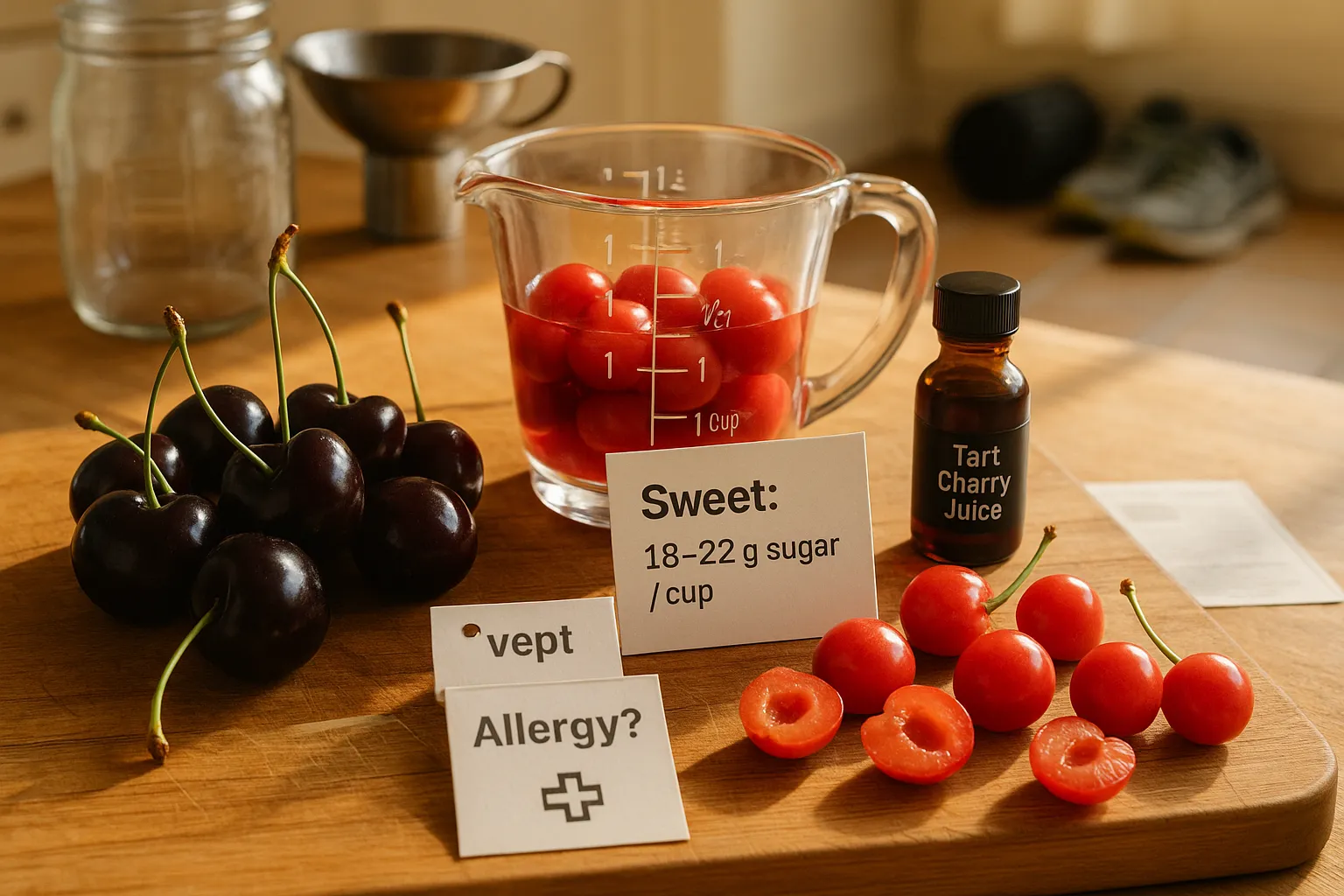
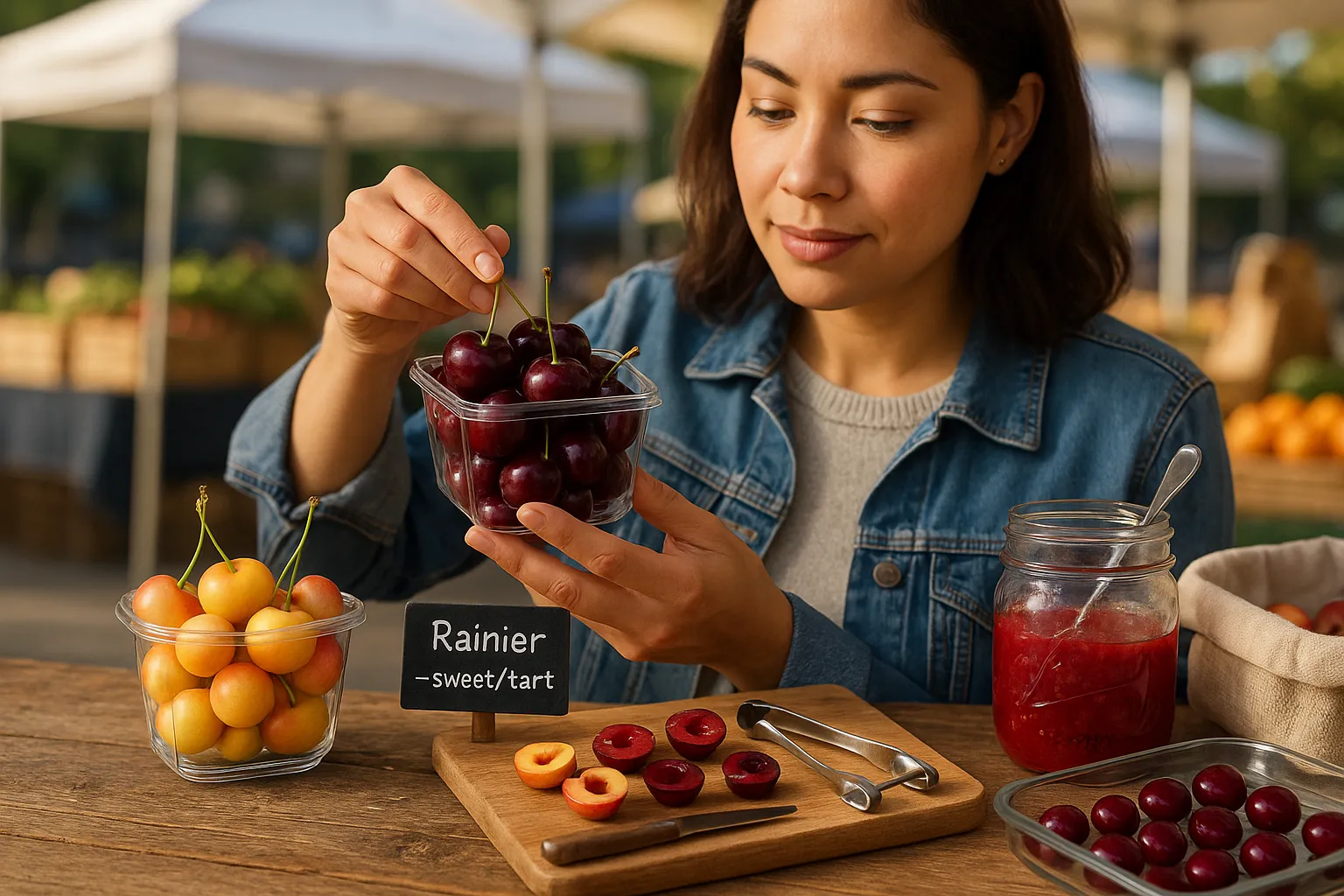
Sweet Cherry vs. Acid Cherry isn’t just a taste test, it’s a choice that changes how a recipe performs, how long fruit keeps, and what wine or cheese you pair with it. You can tell cherries apart the moment you bite: sweet cherries give plush, honeyed flesh: acid cherries snap with tart, bright juice. This guide shows you the clear, practical differences and gives hands-on buying, storage, and cooking advice so your cherries always play the role you need in the kitchen.
What Defines Sweet Cherries And Acid Cherries
Fact: Sweet cherries and acid cherries are different species or varieties with distinct taste chemistry and culinary roles.
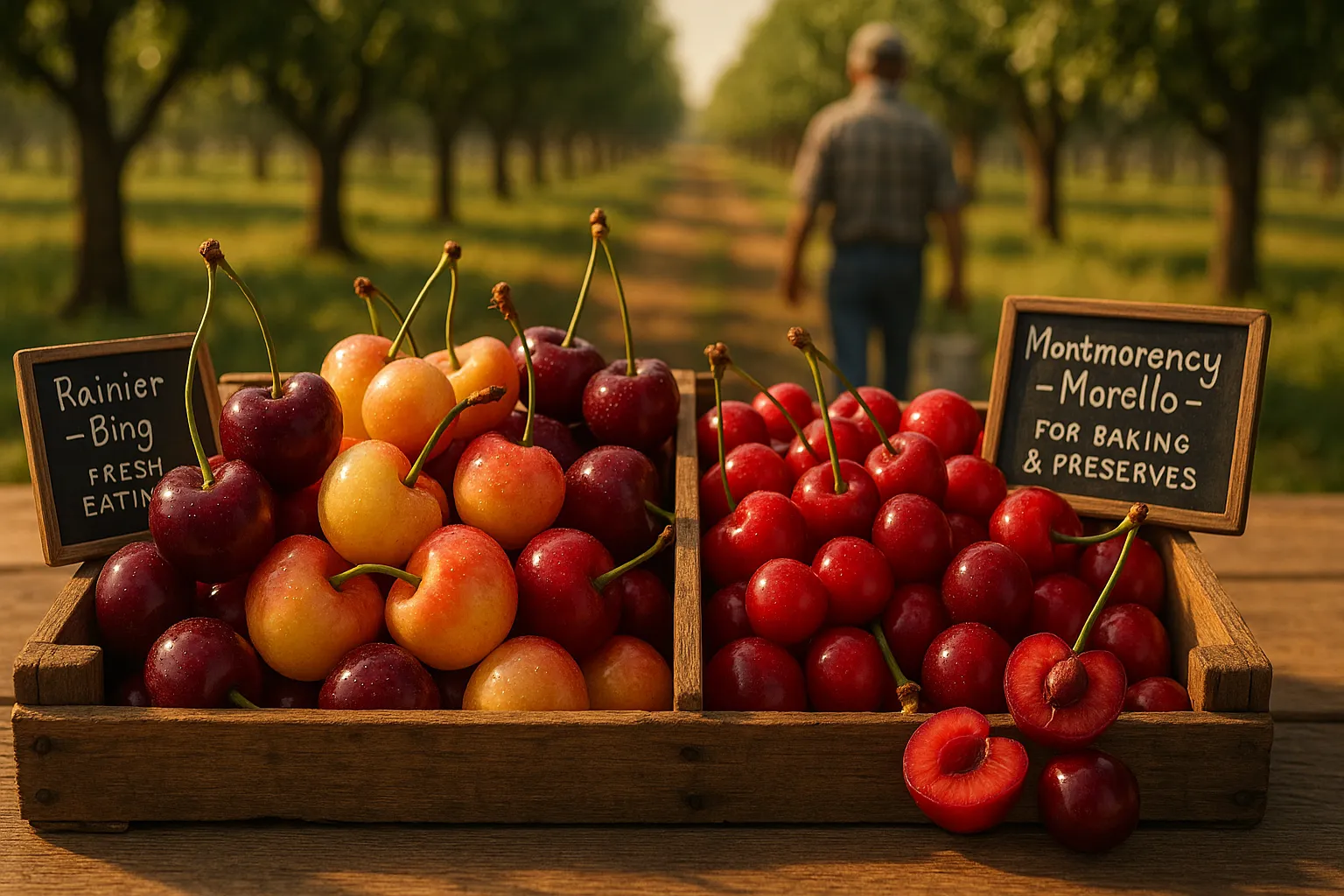
Sweet cherries are mostly Prunus avium. Common cultivars include Bing, Rainier, and Lambert. These fruits grow with larger, firmer flesh and higher sugar levels. Acid cherries are typically Prunus cerasus, think Montmorency and Morello. They are smaller, softer, and higher in organic acids.
Botanical Varieties And Common Cultivars
Fact: The main botanical split is Prunus avium (sweet) vs. Prunus cerasus (sour/acid).
Prunus avium (Bing, Rainier). Bing is deep red, dense, and sweet. Rainier is pale yellow-pink with floral sweetness. These are what you buy for fresh eating.
Prunus cerasus (Montmorency, Morello). Montmorency is tart and bright: Morello is darker and richer with a pronounced tartness useful in cooking.
A small grower story: a Washington orchardist switched half his Montmorency block to Rainier because customers asked for fresh cherries, but he kept Montmorency for pies, they tolerated shipping and made the best preserves.
Sweet cherries: Pacific Northwest (Washington, Oregon), California, parts of Europe like Italy. Peak season: late May through July depending on location.
Acid cherries: Michigan, New York, parts of Eastern Europe. Peak season overlaps but often runs slightly earlier to mid-summer.
Seasonality tip: If you want sweet cherries for a midsummer picnic, watch local harvest calendars: Rainier often appears earlier than Bing. If you plan to bake or jar, buy acid cherries or frozen Montmorency out of season.
Key Flavor And Chemical Differences
Fact: Sugar and acid levels drive the perceived taste difference between sweet and acid cherries.
Sugar, Acidity, And pH Levels
Fact: Sweet cherries have higher soluble solids (sugar): acid cherries have higher titratable acidity and lower pH.
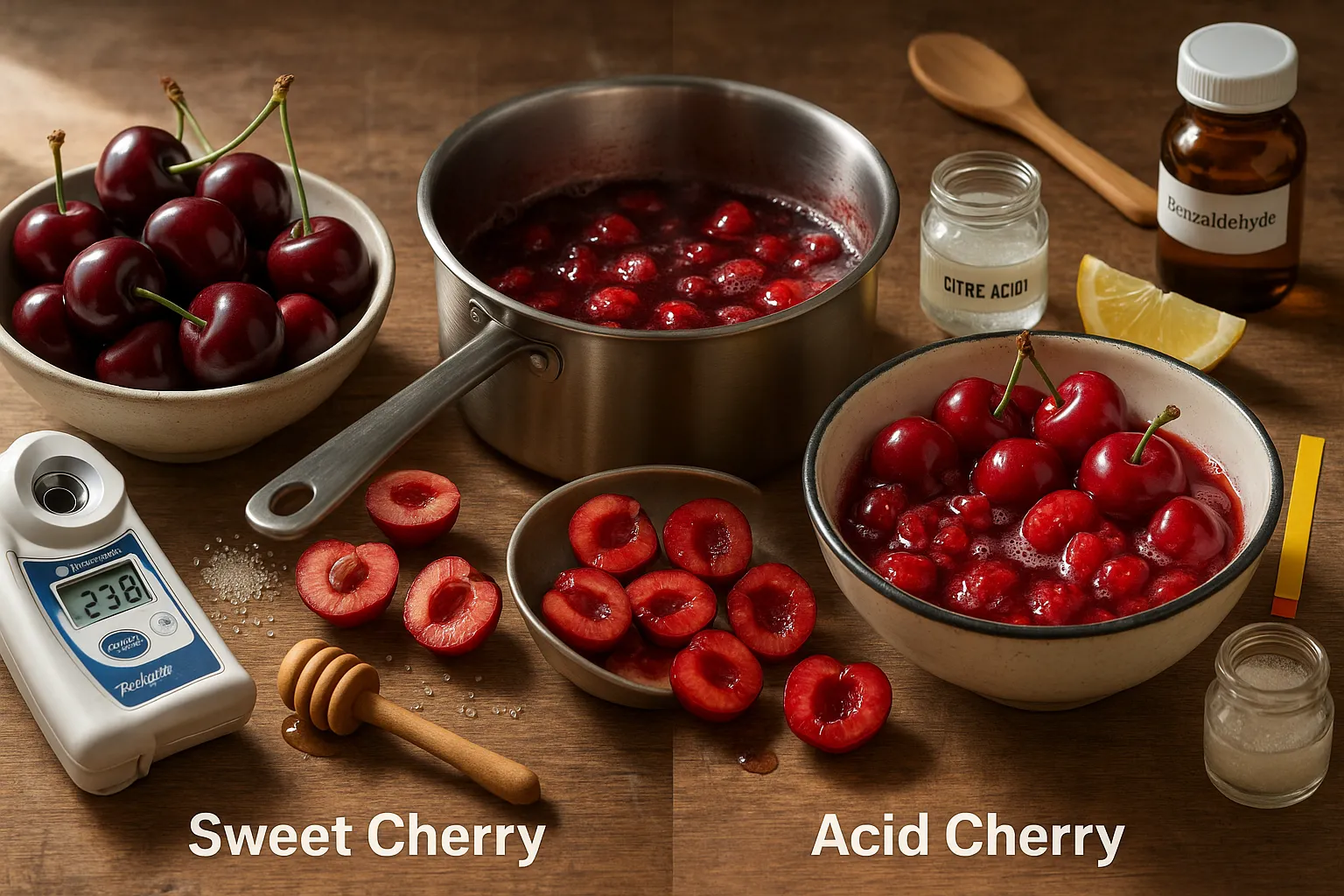
Sweet cherries often hit 16–18% soluble solids (Brix). Acid cherries commonly measure lower sugar and higher titratable acidity.
pH values: sweet varieties trend closer to neutral (around 3.8–4.2), while acid cherries commonly fall below 3.6. The numbers affect microbial safety in canning and the balance in desserts.
Practical consequence: When you make jam, acid cherries may need less added lemon juice for safe acidity, but they might need more sugar to balance flavor, or less if you want a tangy result.
Aromatic Compounds And Texture Differences
Fact: Volatile aromatics and cell structure create different aromas and mouthfeel.
Aromas: sweet cherries present floral, honeyed esters: acid cherries offer bright, green, and tart phenolic notes. Compounds like benzaldehyde (almond-like) appear in both but at varying intensities.
Texture: sweet cherries have firmer cell walls and crispness. Acid cherries have softer flesh that breaks down faster when cooked, which is useful in sauces and compotes.
Quick note: If you want a jam with intact fruit pieces, choose a firmer sweet cherry. If you want a glossy, saucy filling, acid cherries will collapse and thicken faster.
How Flavor Affects Culinary Function
Fact: Flavor profile determines the best culinary application for each cherry type.
Best Uses For Sweet Cherries (Fresh Eating, Salads, Desserts)
Fact: Sweet cherries excel fresh and in uncooked preparations.
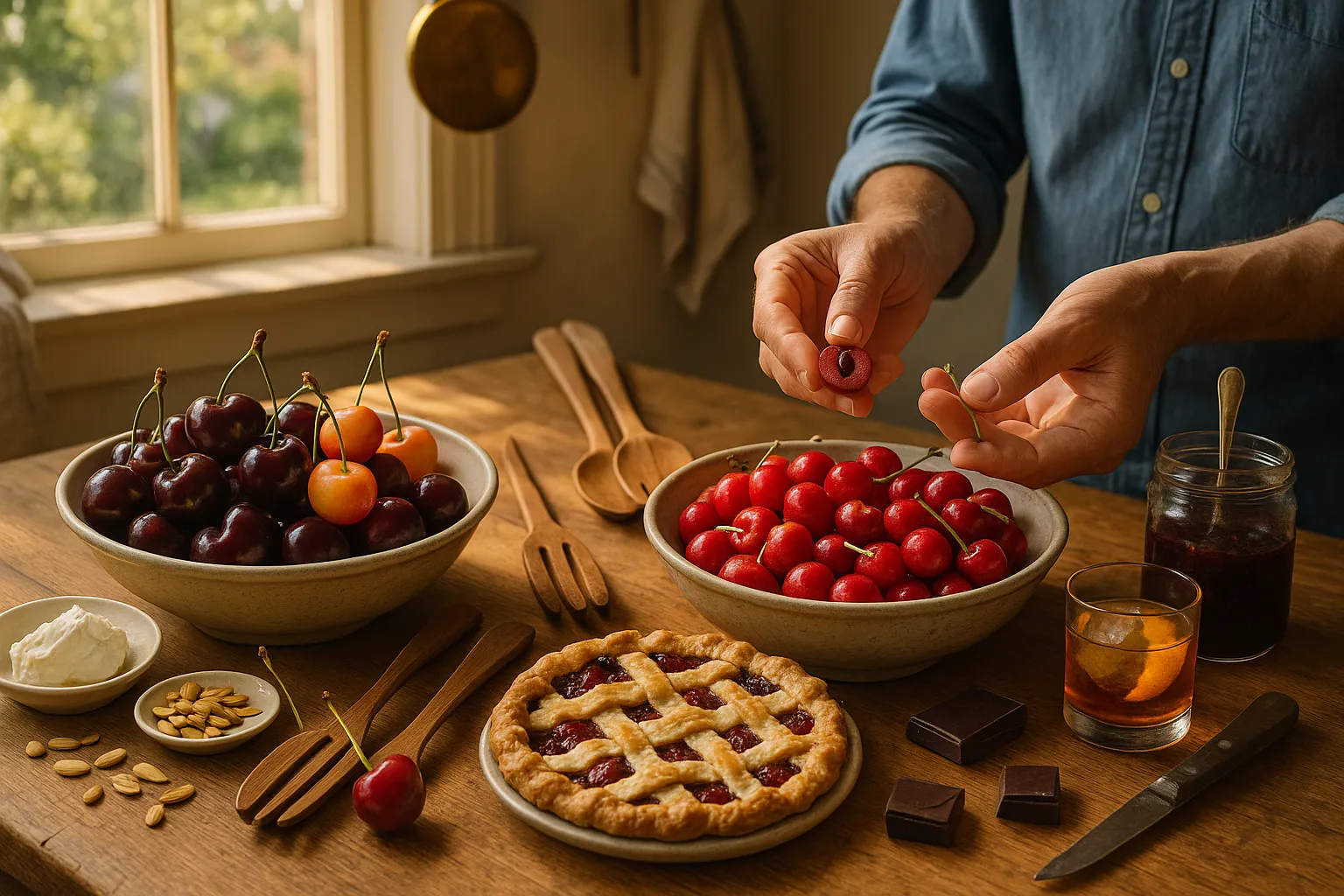
Fresh eating: sweet cherries shine raw. Their sugar and texture pair well with cheeses like Burrata, goat cheese, or Manchego.
Salads: slice Bing or Rainier into summer salads with arugula, toasted almonds, and a citrus vinaigrette.
Desserts: use sweet cherries in tarts that benefit from intact fruit, in pavlovas, or as an ice cream mix-in where you want chew.
Anecdote: I once used Rainier in a simple almond tart: the gentle sweetness kept the crust crisp and avoided a soggy base, a small win but memorable.
Best Uses For Acid Cherries (Baking, Preserves, Liqueurs)
Fact: Acid cherries are best when cooked, preserved, or infused.
Baking: Montmorency keeps a bright lift in pies and crisps, cutting through sweet pastry.
Preserves: acid cherries make bold jams and chutneys. Their acidity helps gel and balances sugar.
Liqueurs and syrups: sour cherries infuse alcohol and syrup with tart flavor that ages well.
Practical warning: When you substitute sweet for acid in a pie, add a tablespoon of lemon juice per quart of fruit to regain brightness.
Pairings With Other Ingredients And Drinks
Fact: Sweet and acid cherries pair differently with proteins, herbs, and drinks.
Sweet cherries: pair with cream, mild cheeses, toasted nuts, and light wines like Pinot Gris.
Acid cherries: pair with darker chocolate, aged cheeses (Comté, aged Gouda), bourbon, and tart beers. Acid cherries work well with thyme, star anise, and clove in preserves.
Pairing tip: Use acid cherries to cut richness in fatty dishes, they act like a bright acid that cleans the palate.
Nutrition, Health Benefits, And Potential Downsides
Fact: Both cherry types provide vitamins and antioxidants, but sugar and acid levels change serving advice.
Vitamins, Antioxidants, And Anti-Inflammatory Properties
Fact: Cherries contain vitamin C, potassium, and polyphenols like anthocyanins.
Anthocyanins are higher in darker cherries and contribute antioxidant and anti-inflammatory effects. Studies (including USDA phytochemical data) show cherries may reduce markers of muscle soreness and inflammation.
Both types supply vitamin C and potassium: values vary by variety and harvest conditions.
Real-life example: Athletes often use tart cherry juice (concentrated Montmorency) to reduce post-exercise soreness. The effect is modest but reproducible across several small trials.
Sugar Content, Serving Size Considerations, And Allergies
Fact: Sweet cherries contain more sugar per serving: portion control matters for people managing blood sugar.
One cup of whole sweet cherries can have 18–22 grams of sugar depending on ripeness. Acid cherries are usually lower but still contain natural sugars.
If you have diabetes, count cherries in your carbohydrate allotment and prefer whole fruit over juice to retain fiber.
Allergies: cherry is related to birch pollen and peach, oral allergy syndrome can occur. If you experience itchy mouth or throat after eating cherries, stop and consult an allergist.
Practical safety note: Acid cherries’ low pH makes them safer for canning, but you still must follow tested recipes for home canning to avoid botulism risks.
Practical Buying, Storage, And Preparation Tips
Fact: Picking the right fruit at the market and storing it correctly maximizes flavor and shelf life.
How To Select Ripe Cherries At The Market
Fact: Ripe cherries should be firm, glossy, and have green stems.
Look for firm flesh, bright skin, and attached green stems, stems signal recent picking. Avoid dull, wrinkled, or soft fruit.
Color cues: deep red often means sweetness, but Rainier’s pale color hides high sugar. Smell: a fresh, light cherry aroma at the stem indicates ripeness.
Buyer honesty: I once bought a pint that looked good but had a few hidden soft spots. You will learn to turn the container and inspect the undersides.
Storage, Freezing, And Prep Techniques For Different Uses
Fact: Refrigerate cherries unwashed and use within 3–7 days: freeze for long-term use.
Storage: keep cherries dry in the fridge in a breathable container. Wash only before eating.
Freezing: pit cherries for quick use in baking. Spread single layer on a tray, freeze, then transfer to sealed bags to prevent clumping.
Prep: for preserves, acid cherries need less added pectin: for fresh uses, halve and pit just before serving to keep juices bright.
Tip: If you want cherry compote fast, toss pitted acid cherries with a small sugar sprinkle and a splash of water, simmer 5–10 minutes until thickened.
Simple Recipes And Substitution Guidelines
Fact: You can swap sweet and acid cherries if you adjust sugar or acid in the recipe.
Quick Fresh Cherry Snack Ideas
Fact: Simple preparations highlight each cherry type’s strengths.
Sweet cherry snack: halved Rainier with ricotta, honey, and toasted pistachios, the fruit stays firm and sweet.
Acid cherry snack: Montmorency over Greek yogurt with a drizzle of maple and toasted oats, the tartness brightens the cream.
Beverage: muddle sweet cherries with mint and soda for a refreshing spritz: use acid cherries in a sour cocktail with bourbon and simple syrup.
Baking And Preserve Substitutions Between Sweet And Acid Varieties
Fact: When substituting, adjust sugar or acid to preserve balance and texture.
Sweet for acid in pies: add 1–2 tablespoons lemon juice per 4 cups fruit and reduce added sugar by 10–20% depending on your taste.
Acid for sweet in salads or eating fresh: toss with a small sugar syrup or pair with honeyed cheeses to soften the edge.
Jam and preserves: acid cherries may require less added lemon: but check a tested recipe because pectin and sugar ratios change the set.
Final nudge: Try both types side-by-side in a single recipe (half sweet, half acid) to see how they interact. You will learn subtle effects quickly and it helps you build confidence with substitutions.
To provide the best experiences, we use technologies like cookies to store and/or access device information. Consenting to these technologies will allow us to process data such as browsing behaviour or unique IDs on this site. Not consenting or withdrawing consent, may adversely affect certain features and functions.
Functional
Always active
The technical storage or access is strictly necessary for the legitimate purpose of enabling the use of a specific service explicitly requested by the subscriber or user, or for the sole purpose of carrying out the transmission of a communication over an electronic communications network.
Preferences
The technical storage or access is necessary for the legitimate purpose of storing preferences that are not requested by the subscriber or user.
Statistics
The technical storage or access that is used exclusively for statistical purposes.The technical storage or access that is used exclusively for anonymous statistical purposes. Without a subpoena, voluntary compliance on the part of your Internet Service Provider, or additional records from a third party, information stored or retrieved for this purpose alone cannot usually be used to identify you.
Marketing
The technical storage or access is required to create user profiles to send advertising, or to track the user on a website or across several websites for similar marketing purposes.