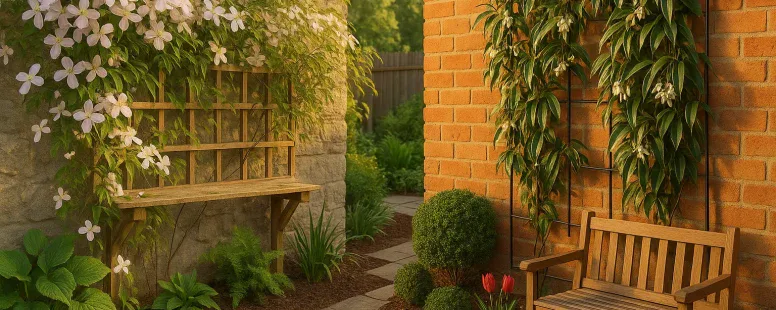
Clematis Montana Vs. Clematis Armandii: Choosing The Right Climbing Clematis
You can pick the wrong climber and end up with months of pruning regret, or you can choose the clematis that matches your wall, climate, and patience level. Clematis montana and Clematis armandii are two dependable, vigorous climbers that often get confused because both make lush green screens and prolific spring flowers. But they differ in leaf shape, bloom scent, cold tolerance, and how they respond to pruning. This guide gives you clear, actionable contrasts so you can decide which species fits your garden and lifestyle. Expect frank trade-offs, sensory details (mountain-sweet perfume vs. jasmine-like citrus), and a simple decision checklist you can use the next time you stand at the nursery with a promising label in your hand.
Quick Side-By-Side Comparison
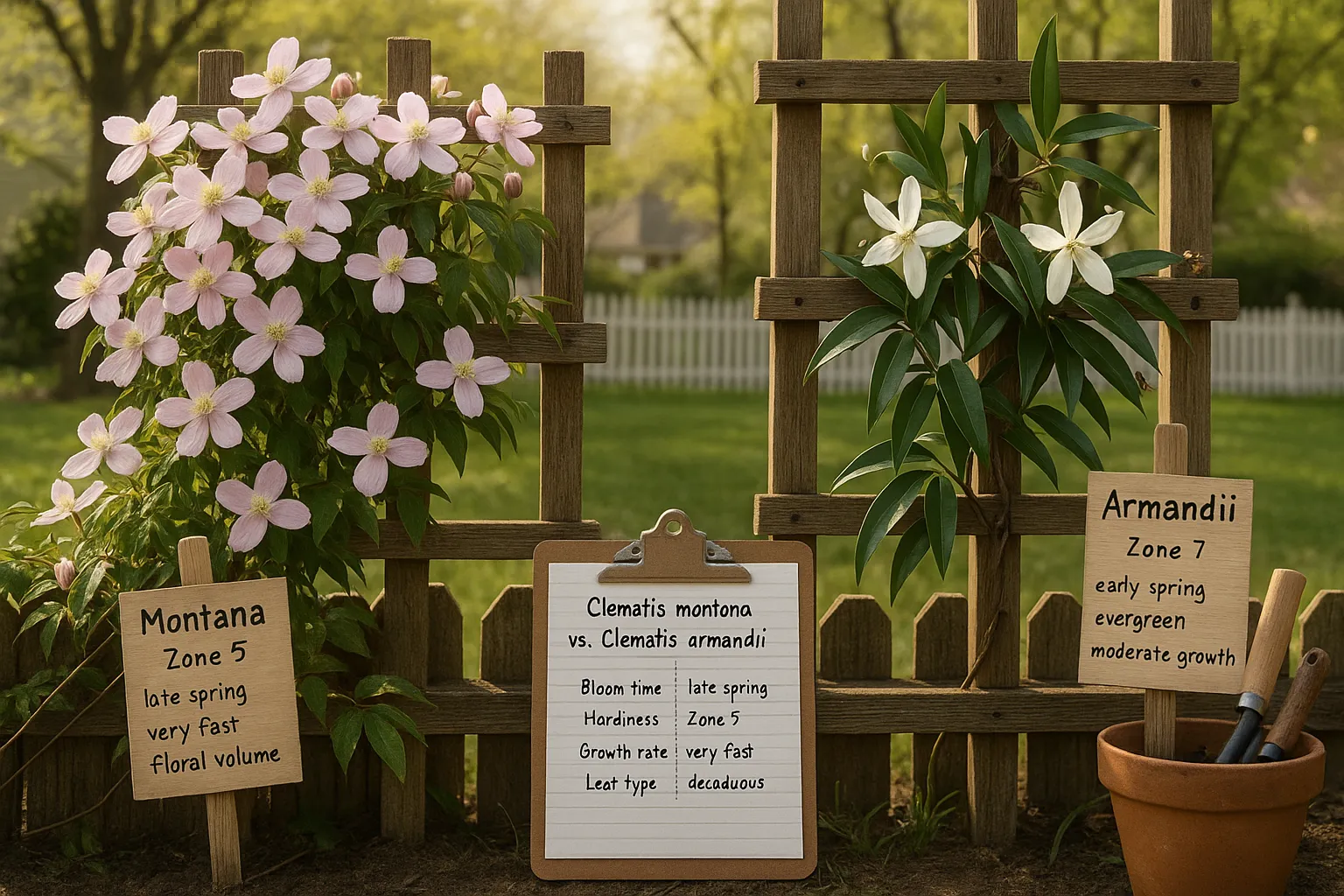
Fact: Clematis montana blooms earlier and in greater profusion: Clematis armandii offers glossy evergreen foliage and stronger fragrance in mild winters.
Clematis montana: a deciduous or semi-evergreen vine with masses of single-petaled pink or white flowers in late spring. It grows fast, often 10–30 feet in a single season on a good support. It tolerates colder winters down to about USDA zone 5 (depending on cultivar) but dies back each year in cold sites.
Clematis armandii: an evergreen (or semi-evergreen) woody climber prized for glossy leaves and fragrant, nodding white flowers in early spring. It prefers milder winters (hardy typically to zone 7), and it grows more slowly than montana, usually 8–20 feet.
Use this snapshot to decide quickly: choose montana for sheer floral volume and cold tolerance: choose armandii for year-round foliage, scent, and a neater habit.
Quick specs (entities: Royal Horticultural Society, USDA):
- Bloom time: montana, late spring: armandii, early to mid-spring
- Hardiness: montana, down to zone 5: armandii, zone 7 (some sources list zone 6b for sheltered sites) [see Royal Horticultural Society and Missouri Botanical Garden]
- Growth rate: montana, very fast: armandii, moderate
- Leaf type: montana, pinnate, softer: armandii, leathery, evergreen
- Scent: montana, light, floral: armandii, strong, jasmine-like
Origins, Species Characteristics, And Growth Habit
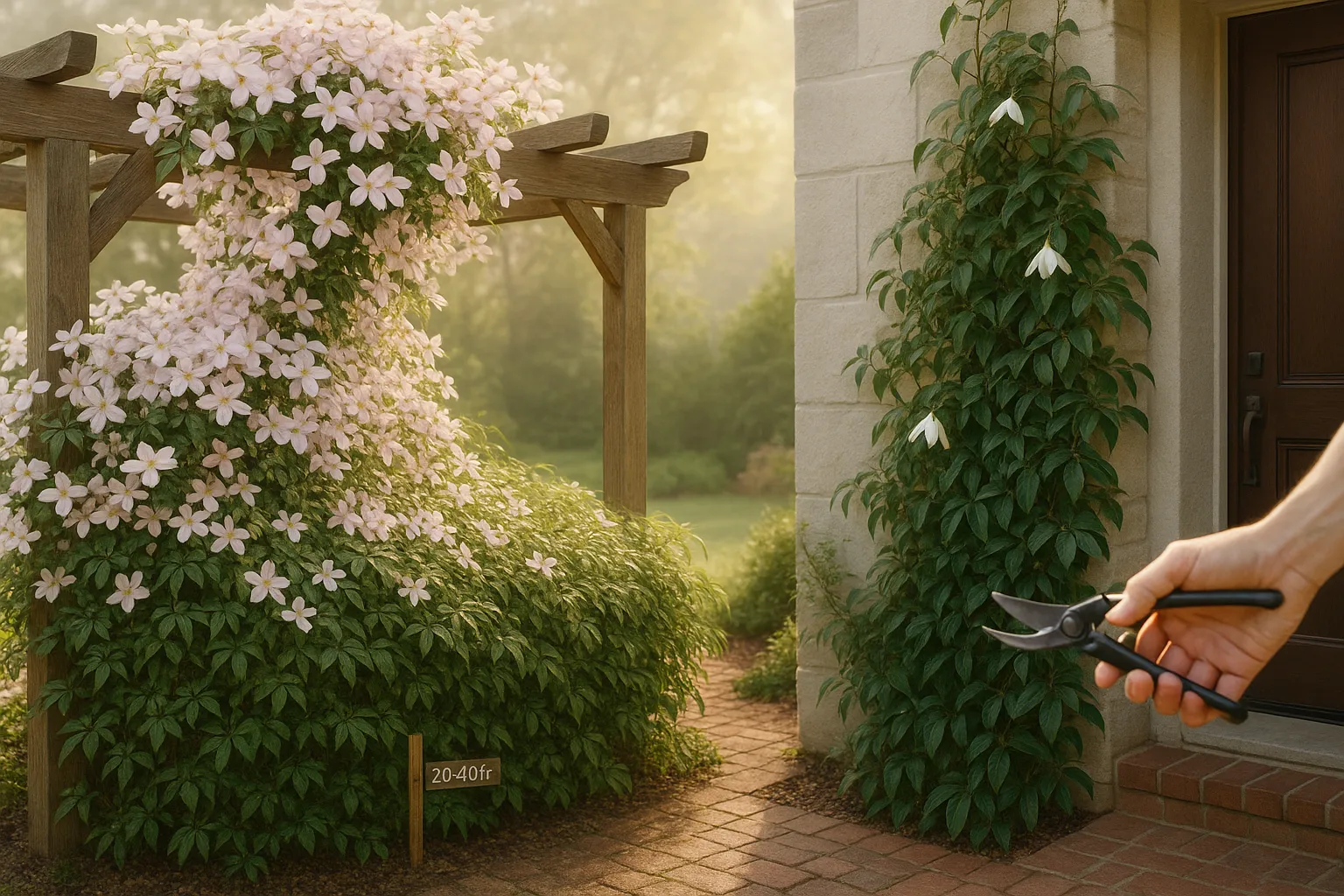
Fact: Montana and Armandii come from different parts of Asia and that shapes their hardiness and habit.
Botanical Differences
Clematis montana is native to the mountain regions of Asia, notably the Himalayas and China. It is a member of the Ranunculaceae family and typically shows pinnate leaves with three to five leaflets. The flowers are single, star-like, and produced in clusters. Cultivars include ‘Elizabeth’, ‘Grandiflora’, and ‘Tetrarose’.
Clematis armandii originates from southwestern China. It has simple, leathery, elliptic leaves and larger, nodding, bell-shaped flowers. Named cultivars include ‘Apple Blossom’ and ‘Snowdrift’. Missouri Botanical Garden lists armandii as evergreen in mild climates, which informs how you plant it near patios or entrances when you want year-round interest.
Typical Mature Size And Growth Rate
Fact: Montana usually outgrows armandii in the first few seasons.
Montana can reach 20–40 feet given ideal support and pruning neglect. Your montana will scramble, root a little, and smother nearby shrubs if you let it. Growth is vigorous: expect rapid long-term coverage.
Armandii reaches 8–20 feet. Your armandii forms a denser, woodier framework and holds its shape better under light pruning. The vine thickens into woody stems with age and becomes a stable part of the structure it climbs.
Foliage, Flowers, And Fragrance
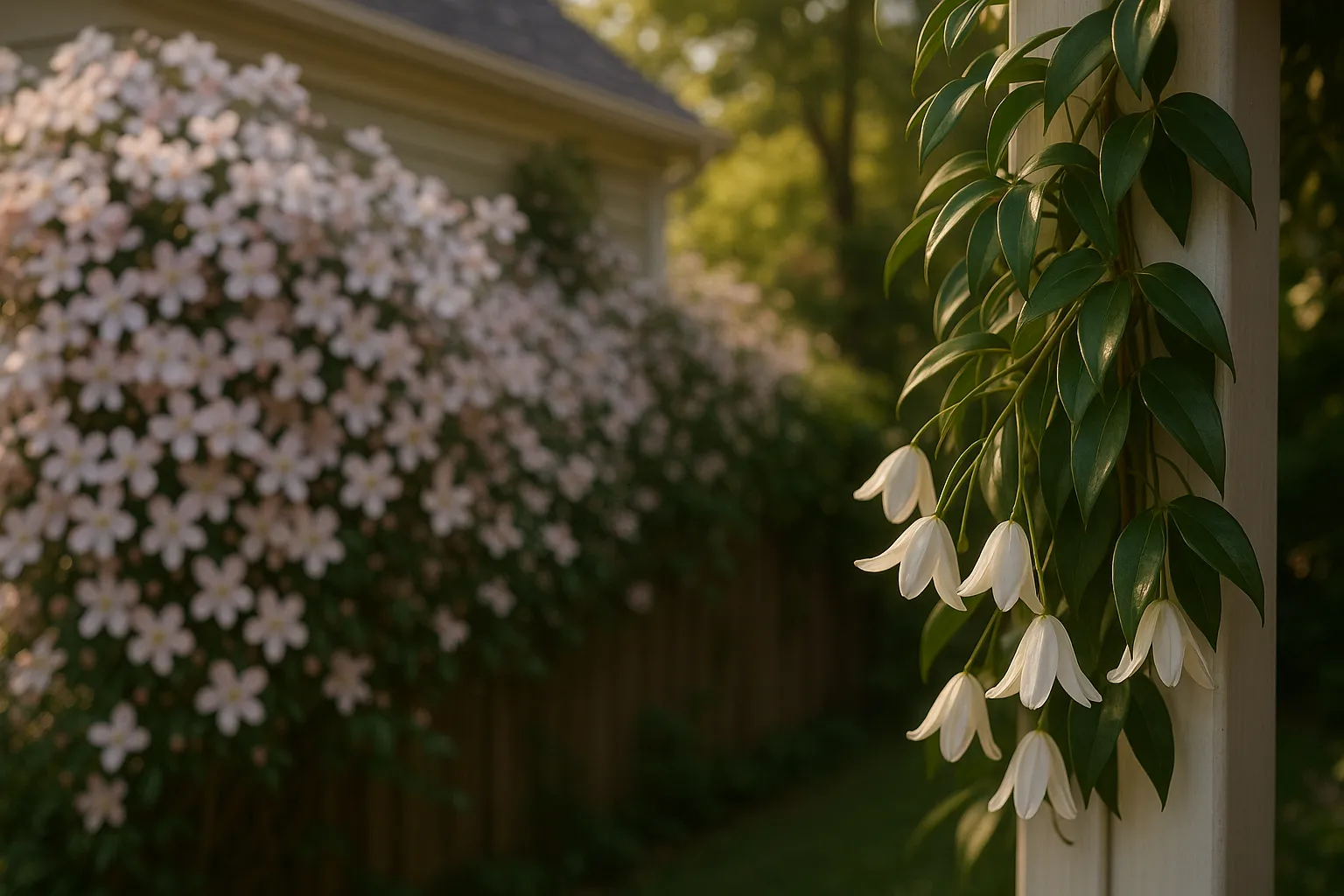
Fact: Armandii gives evergreen foliage and stronger scent: montana gives a floral avalanche in spring.
Flower Timing, Color, And Form
Montana blooms in late spring and often repeats lightly in summer. Flowers range from white to deep pink: single forms predominate, creating a froth of petals that can hide a wall. Armandii blooms slightly earlier. Its white, nodding flowers are usually single and look like small bells. Because armandii blooms before leaf flush completes on some plants, the flowers appear against glossy foliage which boosts visual contrast.
Use case: If you want a dramatic spring display that hides an ugly fence, pick montana. If you want early-season perfume on a porch, pick armandii.
Fragrance And Seasonal Interest
Armandii produces a noticeable jasmine-like scent that carries into evening. Montana’s scent is lighter, sweet and fresh, but not as linger-ing. Both offer seasonal interest: montana with its large spring show and some cultivars giving autumn color: armandii with evergreen leaves that keep a structure in winter, and early-spring flowers that herald the season.
Climate, Hardiness, And Site Requirements
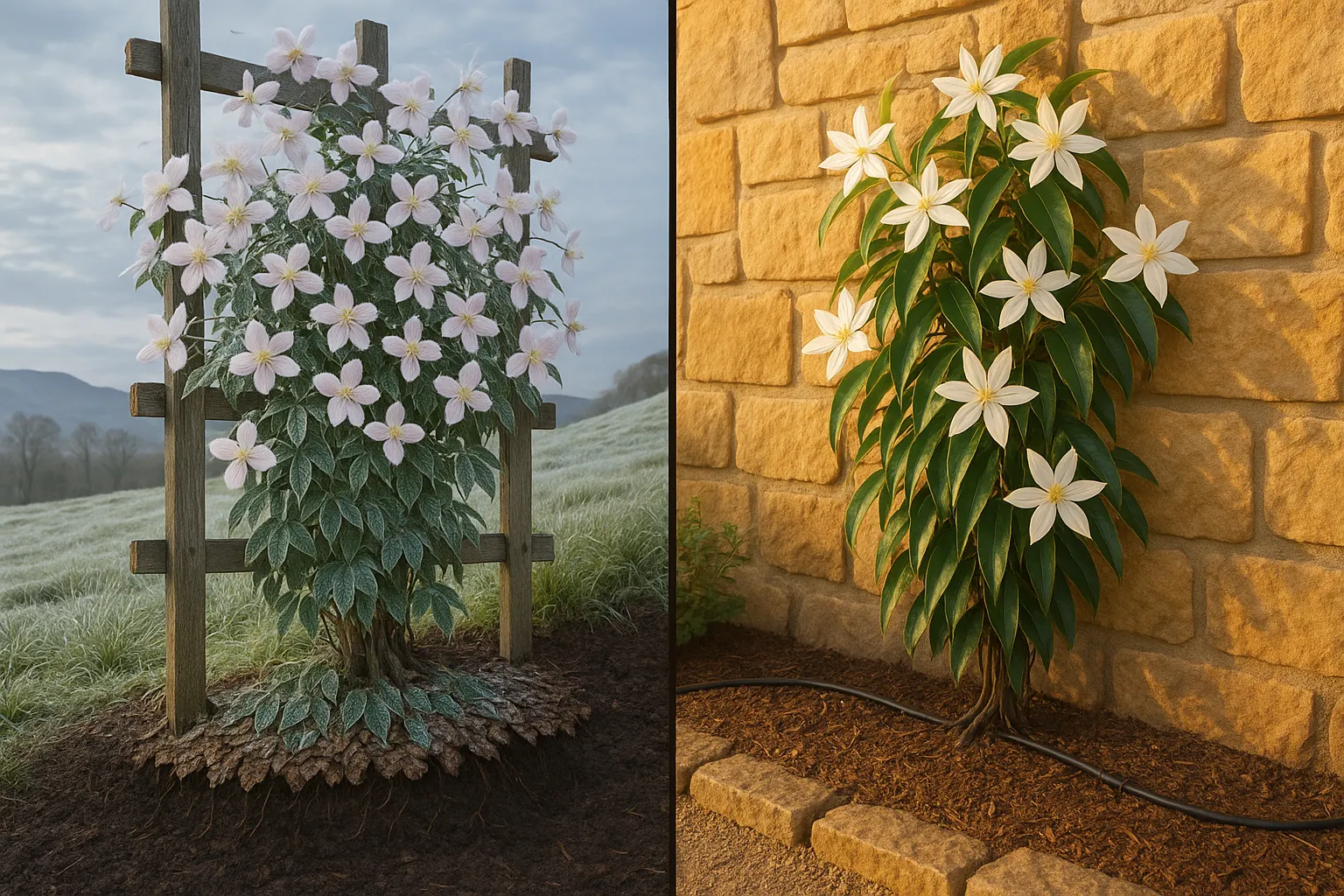
Fact: Choose montana for colder, exposed sites: choose armandii for milder, sheltered spots.
Hardiness Zones And Microclimate Preferences
Montana tolerates zones roughly 5–8. It can survive mountain climates and colder urban lots. Armandii generally prefers zones 7–9 and benefits from a south- or west-facing terraced wall in cooler areas.
Microclimate matters: armandii thrives if you plant it against a warm wall where it gets reflected heat. Montana tolerates wind and frost better but needs a protected root area (cool, shaded base) to keep roots from overheating.
Light, Soil, And Moisture Needs
Both prefer well-drained soil and benefit from humus-rich topsoil. They need full sun to part shade for best flowering. Plant roots in shade or mulch the base because their roots like cool soil while crowns and foliage like sun. You must water both deeply in dry spells the first two seasons. Soil pH doesn’t demand much, neutral to slightly alkaline is fine.
Care, Pruning, And Maintenance
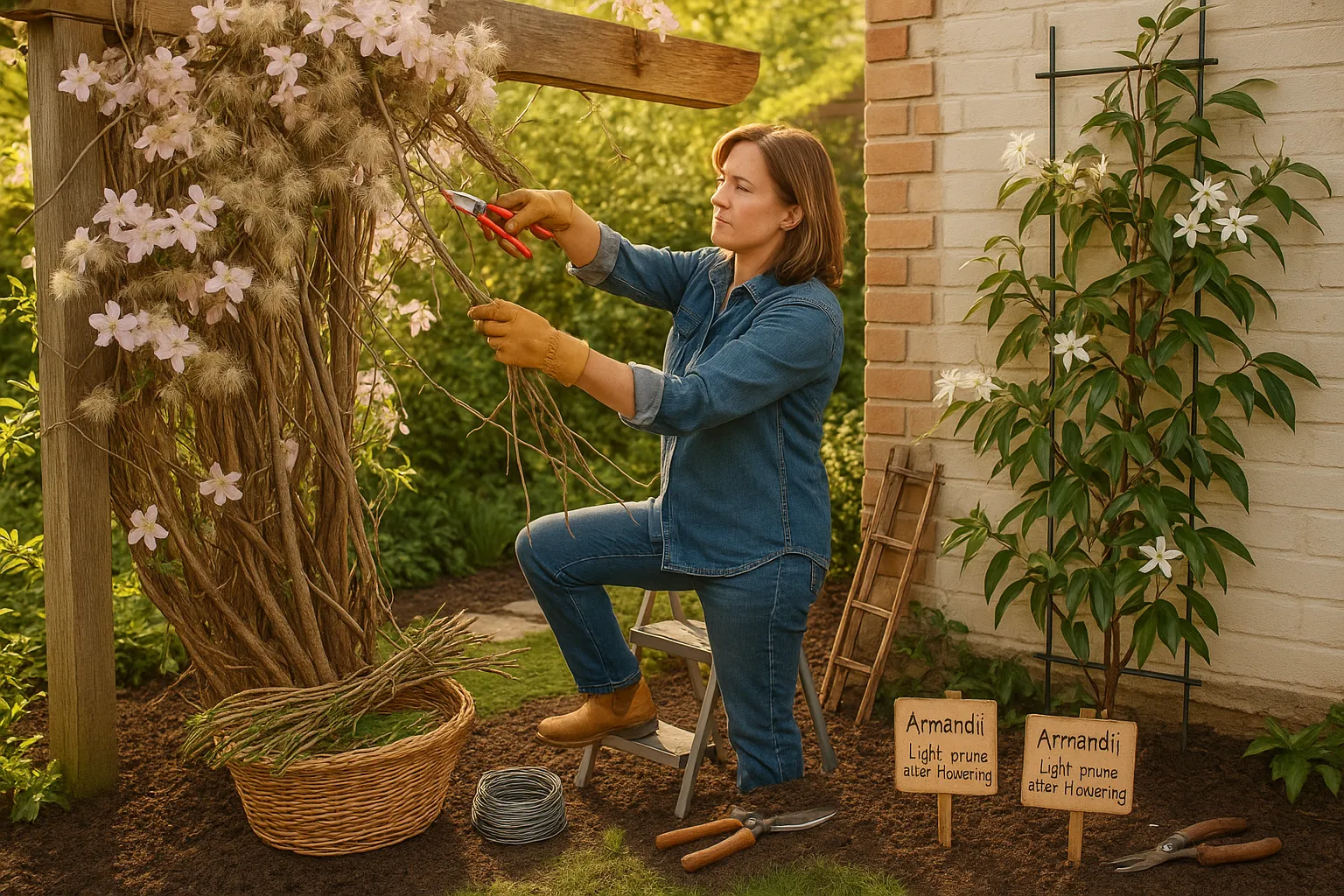
Fact: Montana belongs to pruning group 3 (heavy pruning later) in most systems: armandii fits group 2 (light pruning after flowering), check cultivar labels for specifics.
Pruning Group, Timing, And Techniques
Montana: prune after flowering. Cut back long shoots by a third to a half to control spread and encourage side shoots. If montana gets woody and bare at the base, you can cut it to the ground in early spring to regenerate, though bloom will be reduced that year.
Armandii: prune lightly immediately after flowering to shape. Remove crossing stems and thin older wood selectively. Avoid hard pruning on armandii because it flowers on last year’s wood: heavy cutting reduces next spring’s blooms.
Training, Support, And Rejuvenation Tips
Use strong wires, trellis, or a pergola for montana: it will need room to sprawl. Train stems horizontally to encourage more flowers. For armandii, install a sturdy trellis close to the wall, the vine will cling and not require frequent retraining. Rejuvenate old plants by gradually removing oldest stems over a few seasons. Mulch and feed in spring with a balanced fertilizer to maintain vigor.
Landscape Uses And Design Considerations
Fact: Montana suits mass spring displays and wild garden styles: armandii suits formal entrances and evergreen screening.
Best Uses (Walls, Fences, Pergolas, Groundcover)
Montana: ideal for rustic fences, pergolas where a floral drape is wanted, and for masking large unsightly walls. It can also be used as a groundcover on slopes if left unchecked. Its mass bloom works well when draped over a pergola roof.
Armandii: best for formal walls, entryways, and mixed shrub borders where you want year-round green. It functions as a neat screen when trained carefully and pairs well with stone or timber structures.
Companion Plants And Planting Combinations
Pair montana with sturdy shrubs that can withstand its vigor, like hawthorn or robust roses (choose disease-resistant varieties). Plant low-growing shade lovers like hostas or ferns at the base to hide roots.
Pair armandii with spring bulbs (tulips, daffodils) and evergreen shrubs like boxwood or euonymus for structure. Lavender and rosemary make good companions on warm walls where armandii will thrive.
Common Problems, Pests, And Disease Management
Fact: Both species are generally healthy: montana can become invasive in some settings and armandii is prone to fungal issues in poorly drained soil.
Typical Pests And Diseases And How To Treat Them
Pests: aphids, scale, and clematis borer can attack both species. Use targeted insecticidal soap for aphids and horticultural oil for scale. Monitor for vine weevil larvae in containerized specimens.
Diseases: clematis wilt (caused by fungi) can strike many clematis species. Montana is more likely to recover quickly because it grows strongly from basal shoots. Armandii may suffer more if roots stay wet: improve drainage and remove affected tissue. Fungicides are a last resort: sanitation and good airflow work best.
Invasive tendency: montana can self-seed and smother native shrubs in some regions. Keep seedheads clipped or remove seedlings early.
Sources to consult: Royal Horticultural Society plant pages, local extension services, and the Missouri Botanical Garden species notes.
When To Choose Montana Vs. Armandii: Practical Decision Guide
Fact: Choose montana for cold climates and big floral impact: choose armandii for milder climates and evergreen screening.
Planting Checklist And Quick Care Plan
- Climate match: if your USDA zone is 5–6, favor montana: if 7–9, armandii is safer. In zone 6 you can try armandii near a warm wall, but expect some winter leaf loss.
- Site: plant roots in shade and crowns in sun. Protect roots with 3–4 inches of mulch. Use a raised bed or improved soil in heavy clay.
- Support: install a trellis or wires before planting. Montana needs more horizontal room: armandii prefers closer trellis spacing.
- Pruning plan: montana, prune after bloom: armandii, light prune after flowering. Label your plants with pruning group to avoid mistakes.
- Water and feed: water deeply for two seasons. Apply a balanced granular feed in early spring. Watch for pests in warm months.
Decision prompts you can use at the nursery:
- Do you want year-round leaves? If yes, choose armandii.
- Do you want the biggest spray of spring flowers? If yes, choose montana.
- Is your site exposed and cold? Choose montana. Is your site sheltered and visible from a patio? Choose armandii.
If you still can’t decide, plant one of each on opposite walls. They contrast well and they will teach you which habit you prefer, just remember to manage the montana so it doesn’t run away.

- Top Yfinance Alternatives Recommended by Reddit - October 11, 2026
- Uflex Competitors - October 11, 2026
- Pme Competitors - October 10, 2026
by Ellie B, Site Owner / Publisher