You can tell Cherry laurel and Portugal laurel apart by looking at three things first: the leaves, the flower clusters, and the growth habit. Picture standing in a spring garden where the air smells faintly of almond and bitter cherry, those scents give clues. Both species make dense evergreen hedges, but they behave differently in size, flowering, and tolerance to drought. In the next sections you’ll get clear identification points, real-world planting advice, and a short decision checklist so you pick the right laurel for your site and goals.
Quick Comparison At A Glance
Fact: Cherry laurel (Prunus laurocerasus) and Portugal laurel (Prunus lusitanica) look similar at a distance but differ in leaf shape, flower structure, and mature habit.
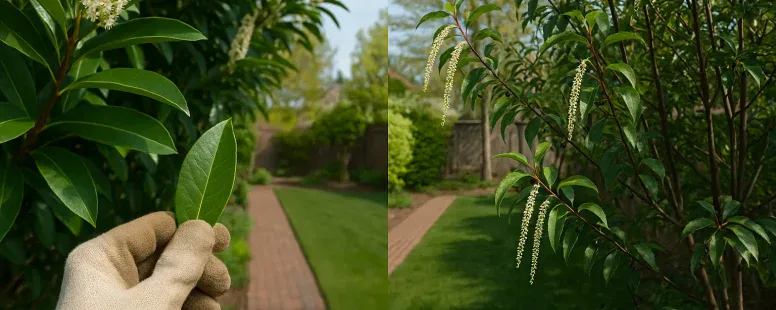
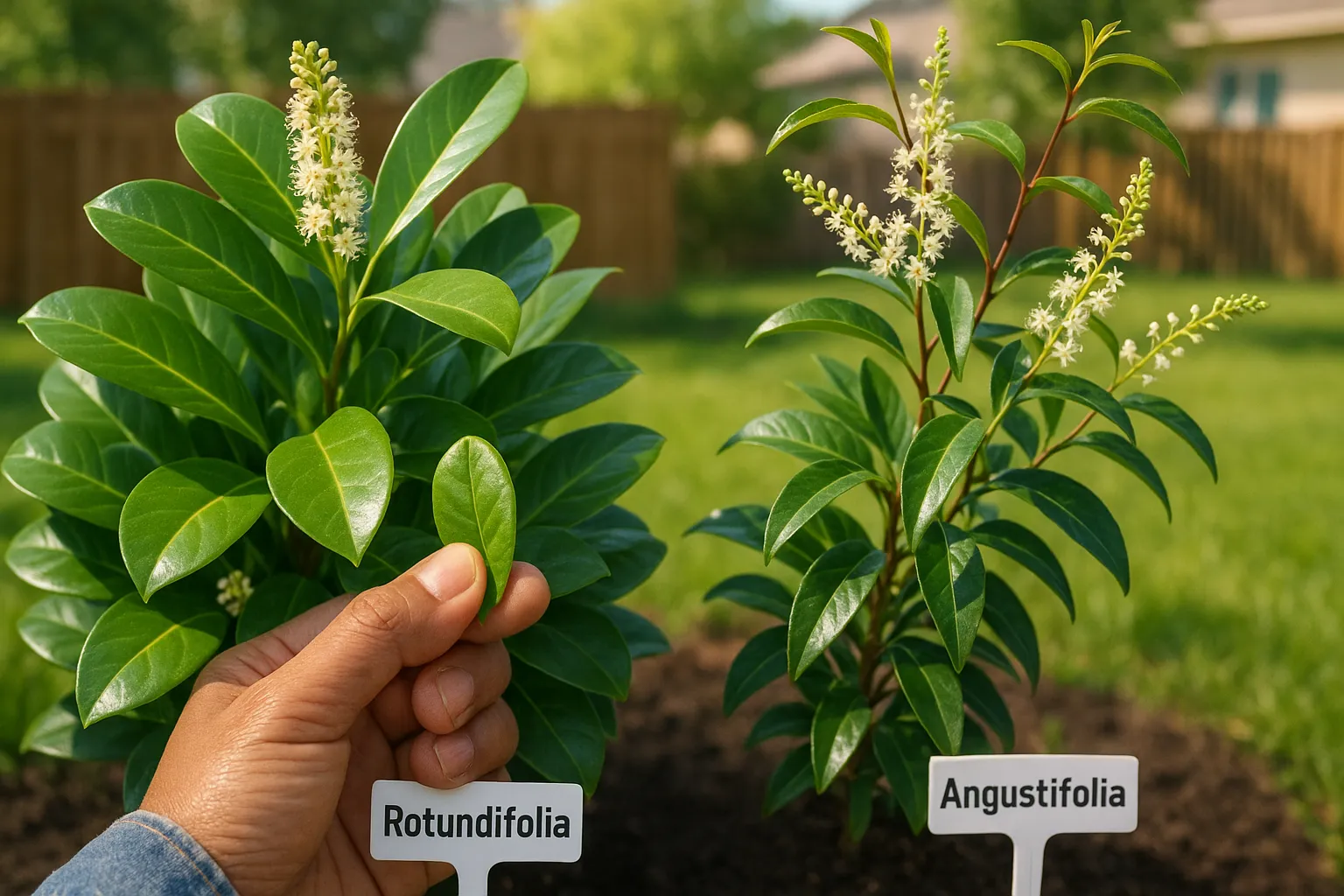
Cherry laurel: broader, glossier leaves: dense, rounded habit: racemes of creamy-white flowers that appear in spring. Common cultivars include ‘Rotundifolia’ and ‘Novita’.
Portugal laurel: narrower, more lance-shaped leaves often with a reddish petiole: airy, multi-stemmed habit: longer, more open flower panicles. You’ll see cultivars like ‘Angustifolia’ and ‘Herbergii’.
Quick uses: choose cherry laurel when you need a fast, thick screen: choose Portugal laurel when you want a slightly more refined, tree-like specimen or a softer-looking hedge.
Follow-up: If you want a simple test, crush a young leaf. Cherry laurel often gives a stronger bitter-almond scent than Portugal laurel. This isn’t foolproof, but it helps when trees stand close together.
Identification And Key Botanical Differences
Fact: Leaf shape, flower form, and fruit timing give the clearest botanical differences between these laurels.
Leaves, Flowers, And Fruit
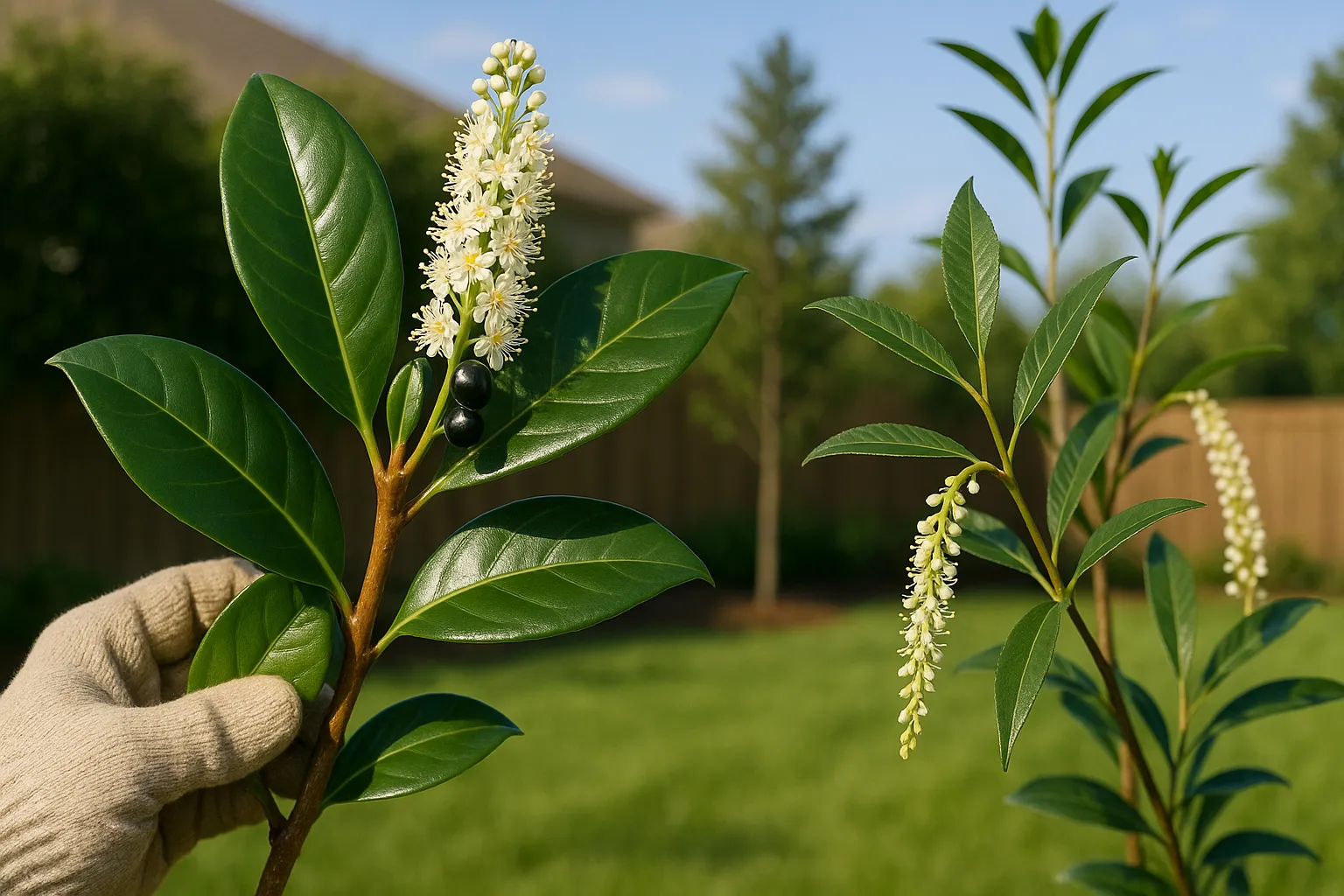
Cherry laurel has large, glossy, elliptic leaves 6–12 cm long. Portugal laurel leaves are narrower (4–10 cm) and often have a slightly serrated margin. Cherry laurel flowers form on short, dense racemes: Portugal laurel produces longer, pendulous racemes.
Both species set small black drupes in summer. Birds eat the fruit of both, but cherry laurel fruit and leaves contain cyanogenic compounds, handle prunus leaves with care. In practice, if you see thicker leaves with a shiny finish and tight clusters of flowers in spring, that is likely Prunus laurocerasus.
Size, Habit, And Growth Rate
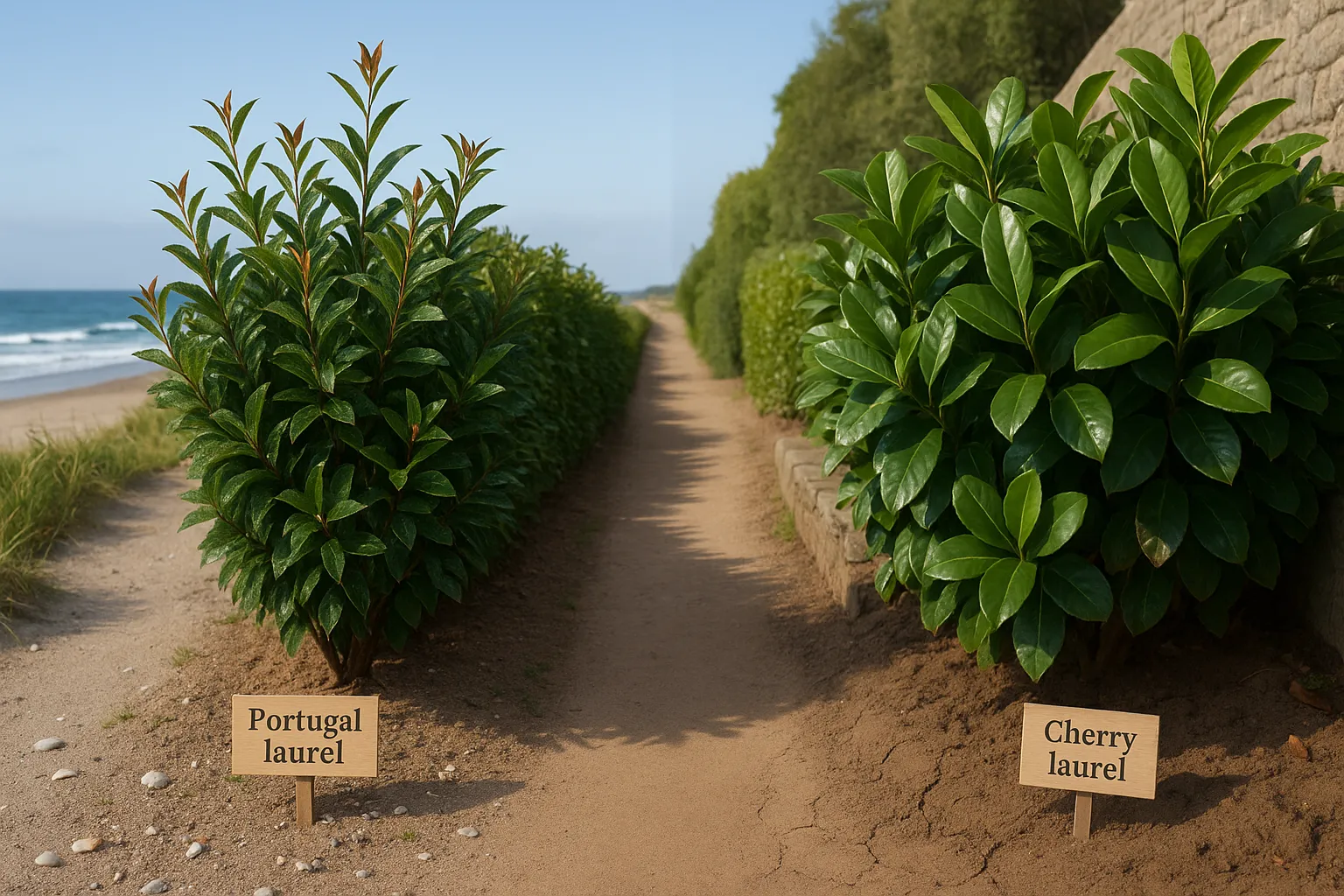
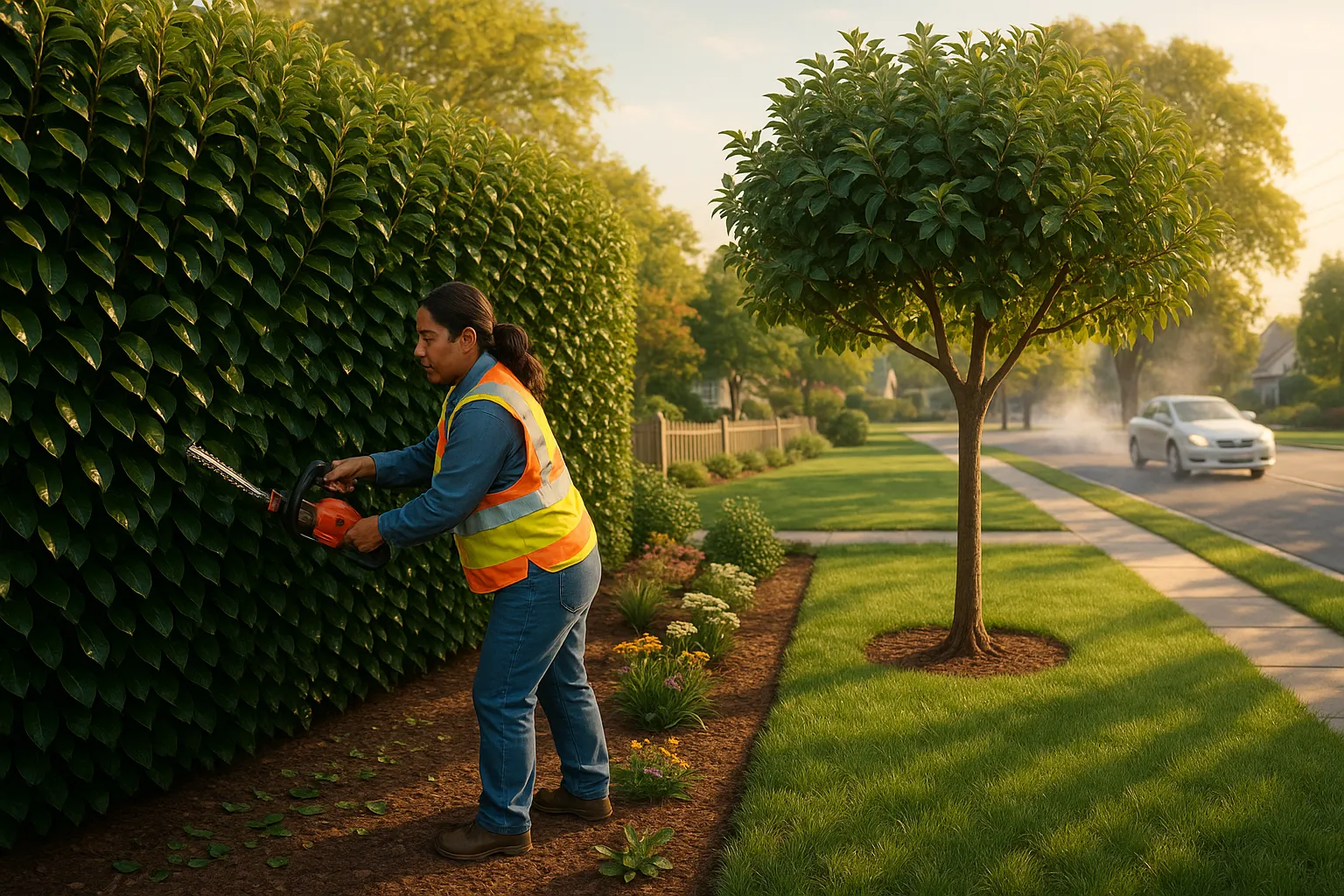
Cherry laurel grows faster and often forms a solid, wall-like hedge within a few years. Mature height commonly reaches 10–15 feet (3–4.5 m) in landscapes, but can be taller if left unpruned. Portugal laurel grows more slowly: it often shows a multi-stemmed, upright habit and feels more tree-like at 15–20 feet (4.5–6 m) over time.
If you want quick screening and don’t mind heavier pruning, pick cherry laurel. If you prefer a refined vertical accent or a specimen with airy branches, Portugal laurel fits better.
Bark, Scent, And Other Visual Clues
Cherry laurel bark is typically smooth and brown, with occasional lenticels. Portugal laurel bark is similar but usually darker and may have a slightly rougher texture on older stems. The scent: when crushed, cherry laurel often releases a stronger bitter-almond odor due to prunasin: Portugal laurel’s smell is milder. Also note seasonal cues: cherry laurel tends to flush leaves later in spring than some Portugal laurel cultivars.
Origins, Hardiness, And Native Range
Fact: Cherry laurel originates from southeastern Europe and Asia Minor: Portugal laurel has its roots on the Iberian Peninsula and Macaronesia.
Climate Tolerance And USDA Zones
Cherry laurel typically thrives in USDA zones 6–9. Portugal laurel tolerates similar zones but often shows slightly better resilience to mild coastal conditions and salt spray: it is usually listed for zones 7–9. In colder inland sites, both can suffer foliar damage when temperatures drop below their hardiness limits.
If you are planting near the coast in California, Portugal laurel often performs better. Conversely, in inland gardens with colder winters, choose hardy cultivars of cherry laurel and site them in sheltered spots.
Soil Preferences And Adaptability
Both laurels prefer well-drained, fertile soil but tolerate clay soils if drainage is reasonable. Cherry laurel tolerates heavier, clayey soils better than Portugal laurel. Portugal laurel tolerates a little more drought once established and often handles slightly poorer soils with less fertilizer. Both prefer pH near neutral but will tolerate slightly acidic to slightly alkaline soils.
Common Landscape Uses And Situations
Fact: Both species are common in hedging, screening, and as specimen plants, but they serve different aesthetic roles.
Hedges, Screens, And Windbreaks
Cherry laurel works well for fast screens and tight hedges. It responds well to clipping and can form a dense, privacy wall. Portugal laurel makes a looser, more textured hedge that lets light pass through: it suits parks or gardens where you want a softer edge.
Specimen Trees And Mixed Borders
Portugal laurel makes a better single-stem specimen or small garden tree because of its elegant branches. Cherry laurel can serve as a specimen but often looks boxier without careful pruning.
Urban Planting And Tolerance To Pollution
Fact: Portugal laurel usually tolerates urban pollution modestly better than cherry laurel. Both handle city conditions okay, but Portugal laurel often shows fewer leaf scorch issues near busy streets. If your site sits next to a roadway, Portugal laurel is often the safer bet.
Care, Maintenance, And Pruning Guidelines
Fact: Both laurels are low-maintenance but differ in pruning needs and establishment speed.
Watering, Feeding, And Soil Management
Water both species deeply during establishment for the first two growing seasons. Cherry laurel often requires more consistent moisture to avoid leaf drop. Feed in early spring with a balanced granular fertilizer (10-10-10). Mulch 2–3 inches (5–7.5 cm) to retain moisture and moderate soil temperature.
Pruning Timing, Techniques, And Size Control
Prune in late spring or early summer after flowering. Cherry laurel tolerates hard clipping and can be reduced heavily: Portugal laurel resprouts more slowly and benefits from lighter, formative pruning. Use thinning cuts to maintain air flow and avoid leaving stubs. If you need a formal hedge, plan on annual trimming for cherry laurel: for Portugal laurel, trim once or twice a year lightly.
Propagation And Establishment Tips
Both species propagate from semi-ripe cuttings in summer or by seed, though seeds require stratification. For reliable cloning of desirable cultivars, use cuttings with a rooting hormone and bottom heat. Plant young trees with root flare visible and water in well. Be patient: Portugal laurel will feel slow at first, but it often rewards you with better long-term form.
Pests, Diseases, And Problem Diagnosis
Fact: Laurel species face similar pests and fungal issues: early diagnosis prevents long-term damage.
Common Insect Pests And Management
Aphids, scale insects, and vine weevils attack both species. Inspect new growth for sticky honeydew (aphids) or small armored bumps (scale). Use horticultural oil for scale, insecticidal soap for aphids, and beneficial insects like lady beetles where possible. For severe vine weevil damage, apply nematodes (Steinernema kraussei) to the soil.
Fungal Diseases, Leaf Spot, And Root Problems
Leaf spot and powdery mildew can appear in humid sites. Cherry laurel sometimes shows more leaf spot due to denser foliage and poorer air circulation. Improve airflow by pruning and remove infected leaves. Root rot occurs in poorly drained soils: if you see wilting even though moist soil, check the roots for brown, soft tissue and consider replanting with raised soil or better drainage.
Prevention And When To Call A Professional
Prevent problems by siting plants with good airflow, avoiding overwatering, and using clean tools. Call a certified arborist or plant pathologist when you see large-scale dieback, suspected Phytophthora root rot, or when chemical controls seem necessary. They can run lab tests and recommend targeted treatments.
Choosing Between Cherry Laurel And Portugal Laurel
Fact: Your site, maintenance willingness, and aesthetic goals decide which laurel is right for you.
Pros, Cons, And Landscape Tradeoffs For Cherry Laurel
Pros: fast growth, dense screening, tolerant of heavy soils, easy to clip into formal hedges.
Cons: can become too large if neglected: denser foliage can trap moisture and increase leaf-spot risk: contains cyanogenic compounds.
You should pick cherry laurel when you need privacy quickly and can commit to regular pruning. I once had a client who planted Cherry laurel for a quick screen: within three years they had full privacy but also a tough pruning schedule, lesson learned: plan for maintenance in year one.
Pros, Cons, And Landscape Tradeoffs For Portugal Laurel
Pros: refined habit, better specimen qualities, tolerates coastal conditions and pollution modestly well, slightly better drought tolerance once established.
Cons: slower to fill in, less suitable for heavy clay without amendment, needs gentler pruning.
Choose Portugal laurel if you want an elegant garden feature and prefer lower annual clipping. In a seaside property in Portland, Oregon, Portugal laurel outperformed multiple cherry laurel hedges nearby: the owners reported fewer leaf symptoms and less pruning time.
Decision Checklist: Which Laurel Is Right For Your Site
Do you need a fast, dense screen? Choose Cherry laurel.
Is coastal exposure or air pollution a concern? Lean toward Portugal laurel.
Do you prefer a formal clipped hedge or a relaxed, tree-like form? Formal = Cherry: Relaxed = Portugal.
Is soil heavy clay? Cherry laurel tolerates it better.
Do you want lower annual pruning commitment? Portugal laurel likely fits better.
If you still feel unsure, take photos of leaves and flower clusters in spring and consult a local extension office or nursery (for example, the Royal Horticultural Society or your state extension). They’ll help you confirm species and select cultivars that match local conditions.
To provide the best experiences, we use technologies like cookies to store and/or access device information. Consenting to these technologies will allow us to process data such as browsing behaviour or unique IDs on this site. Not consenting or withdrawing consent, may adversely affect certain features and functions.
Functional
Always active
The technical storage or access is strictly necessary for the legitimate purpose of enabling the use of a specific service explicitly requested by the subscriber or user, or for the sole purpose of carrying out the transmission of a communication over an electronic communications network.
Preferences
The technical storage or access is necessary for the legitimate purpose of storing preferences that are not requested by the subscriber or user.
Statistics
The technical storage or access that is used exclusively for statistical purposes.The technical storage or access that is used exclusively for anonymous statistical purposes. Without a subpoena, voluntary compliance on the part of your Internet Service Provider, or additional records from a third party, information stored or retrieved for this purpose alone cannot usually be used to identify you.
Marketing
The technical storage or access is required to create user profiles to send advertising, or to track the user on a website or across several websites for similar marketing purposes.