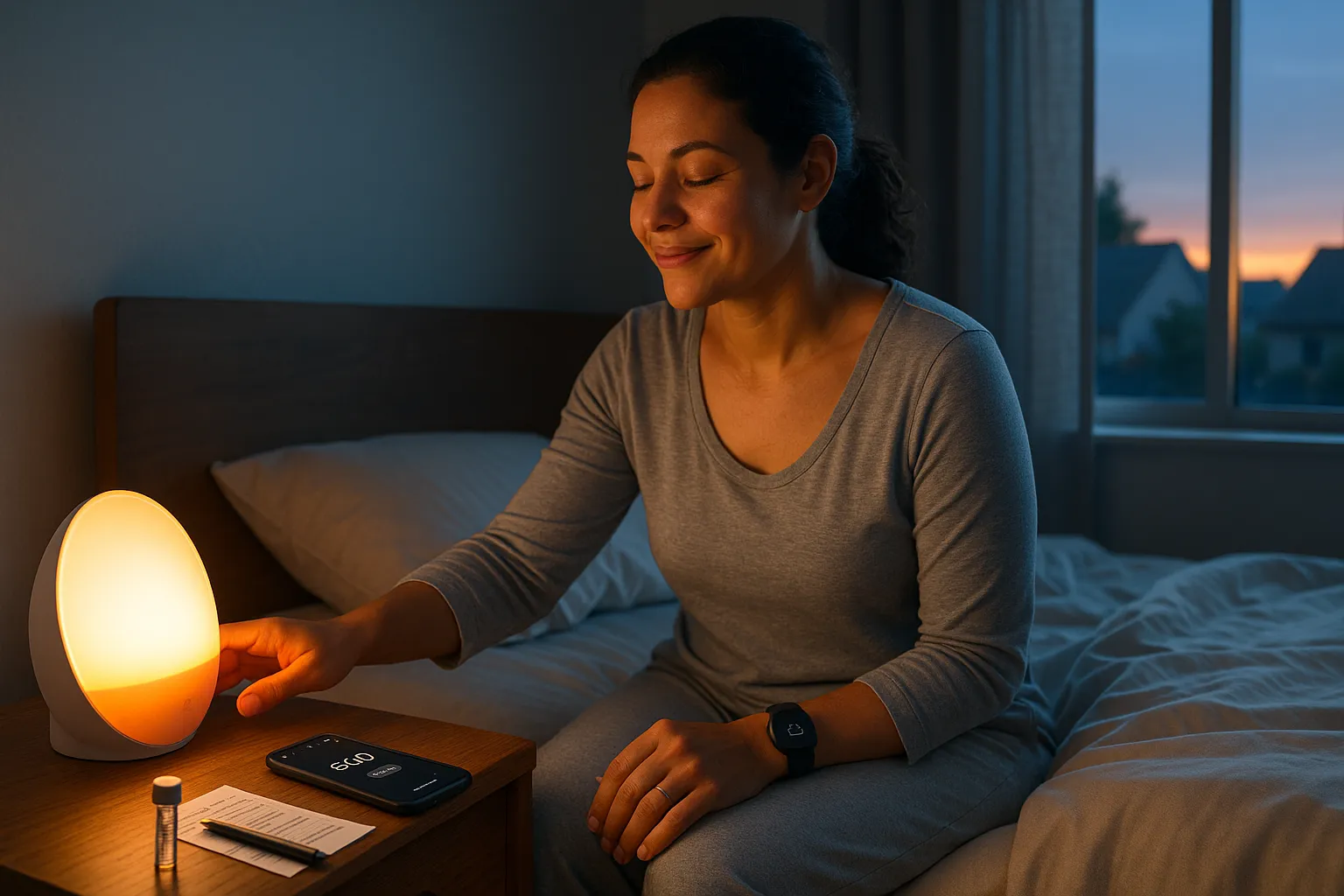
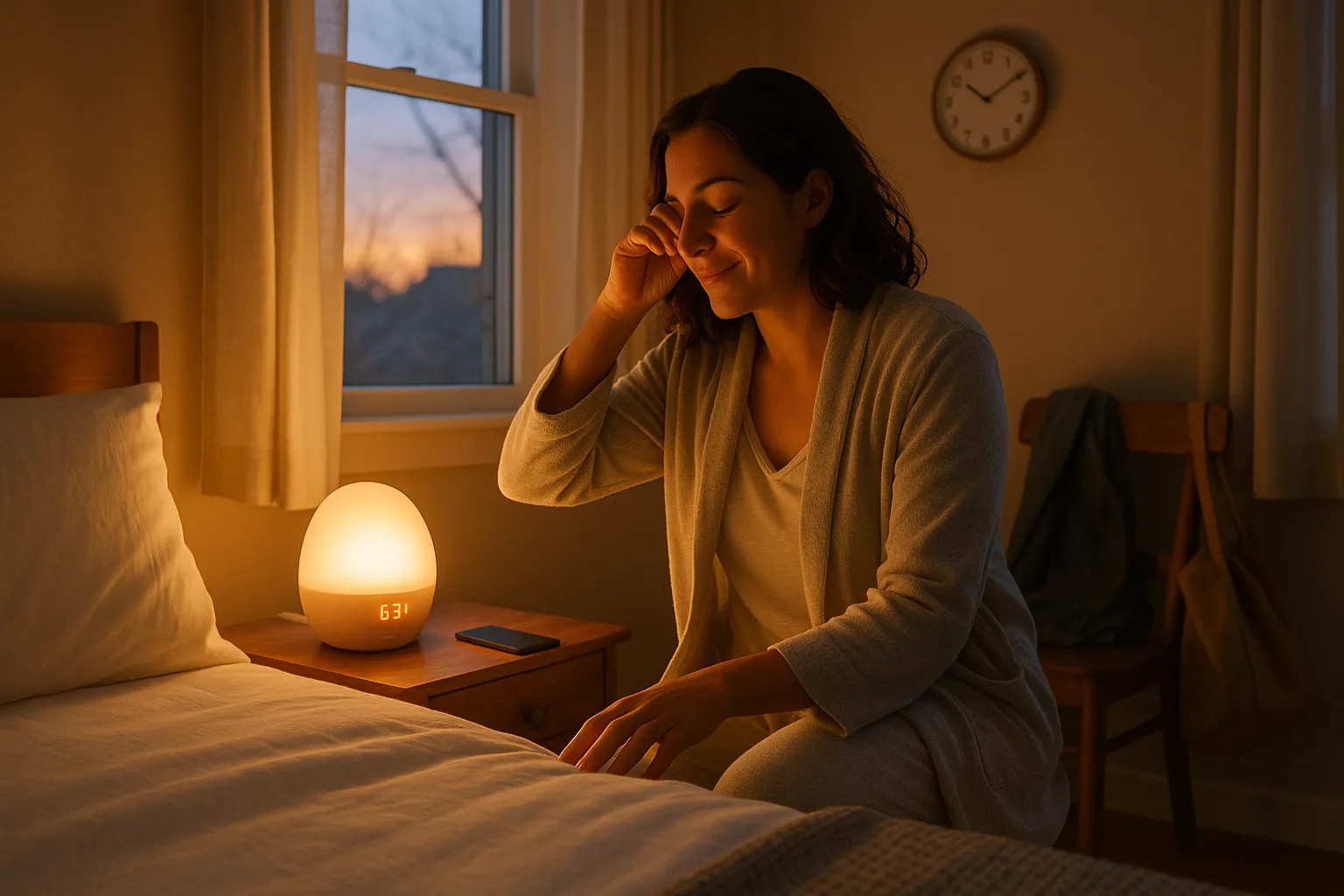
Light controls a surprising piece of your morning chemistry: cortisol. If you wake to a jarring phone buzz, your body often mounts a fast, large cortisol spike. If you wake slowly to increasing light, like a simulated sunrise, your cortisol rise can be gentler and better timed to daytime demands. This article compares sunrise alarms and standard phone alarms through the lens of the cortisol awakening response (CAR), giving you evidence-based steps you can try, practical warnings, and clear measures to watch when you test what works for your sleep and mornings. Expect actionable guidance, a few real-world examples (including devices like the Philips Somneo and Sleep Cycle app), and honest limitations from the research.
Morning Cortisol 101: Biology, Rhythm, And Why It Matters
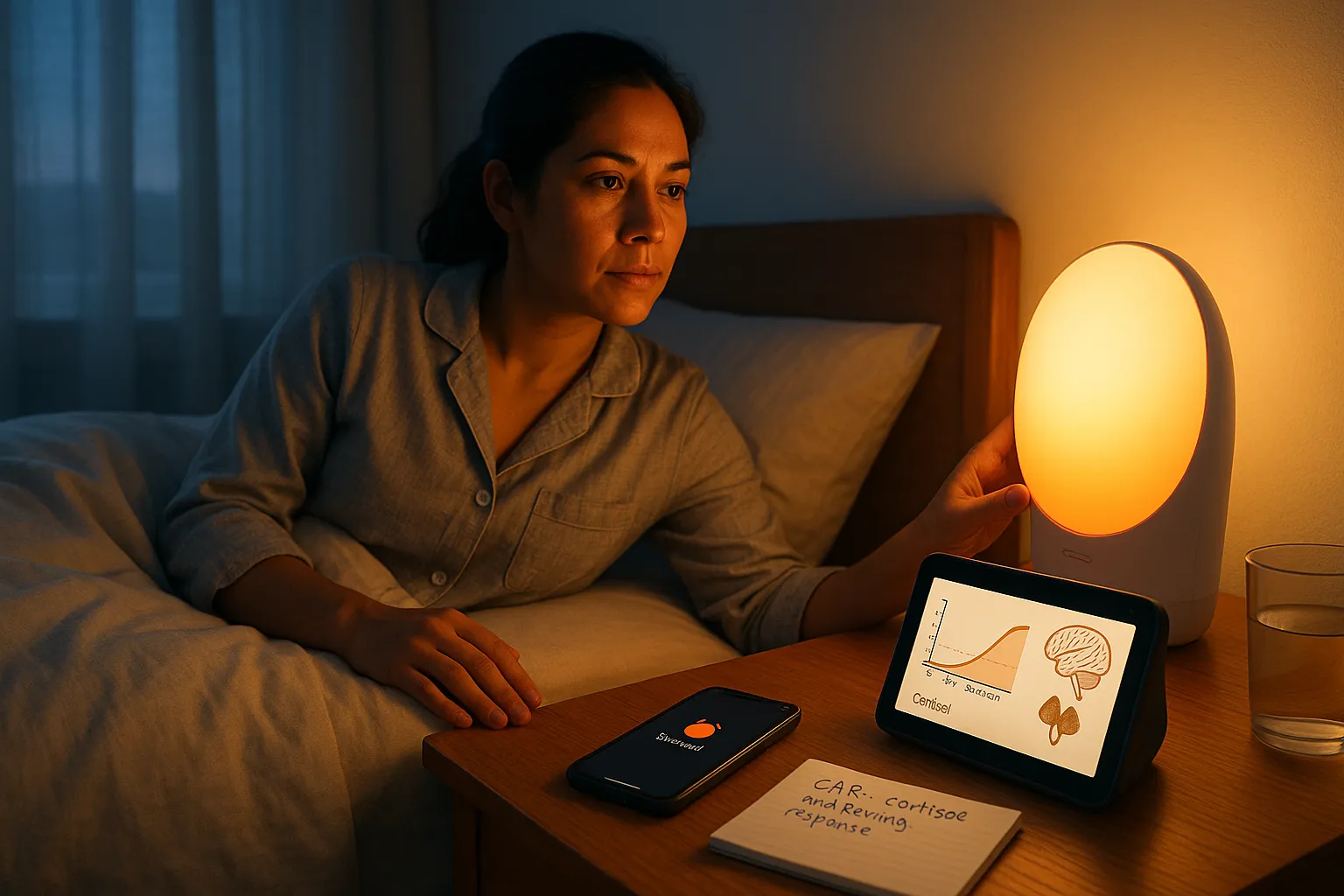
Fact: Cortisol follows a predictable daily pattern with a sharp rise after awakening known as the cortisol awakening response (CAR). The hypothalamic–pituitary–adrenal (HPA) axis drives cortisol secretion from the adrenal cortex. Cortisol levels are low during the first part of sleep, then begin rising in the last hour before your habitual wake time, peaking about 30–45 minutes after you open your eyes.
Why that matters to you: cortisol helps mobilize energy, sharpen attention, and regulate immune and metabolic processes. A well‑timed CAR supports alertness and performance. But an exaggerated or poorly timed spike can worsen anxiety, impair glucose regulation, and extend sleep inertia, the groggy phase after waking.
Simple biology in dependency terms: light signals from your retina (subject) affect the suprachiasmatic nucleus (verb) and shift circadian timing (object). That shift changes downstream cortisol timing. Named entities matter: the suprachiasmatic nucleus (SCN), adrenal cortex, and common devices like the Philips Somneo and Amazon Echo Show appear in studies or product tests.
Common patterns you’ll notice: people who wake to abrupt sounds often report faster heart rate and higher perceived stress on waking. People who wake to gradual light often report softer transitions and sometimes less morning grogginess. But subjective reports don’t always mirror hormone measures, so you need both objective and subjective data when you test changes in your routine.
How Sunrise Alarms Work And Their Intended Physiological Effects
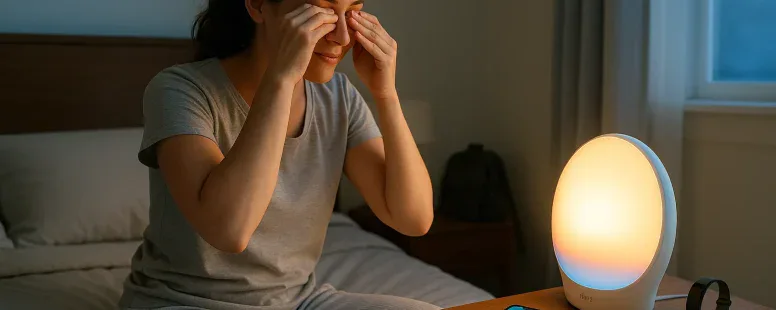
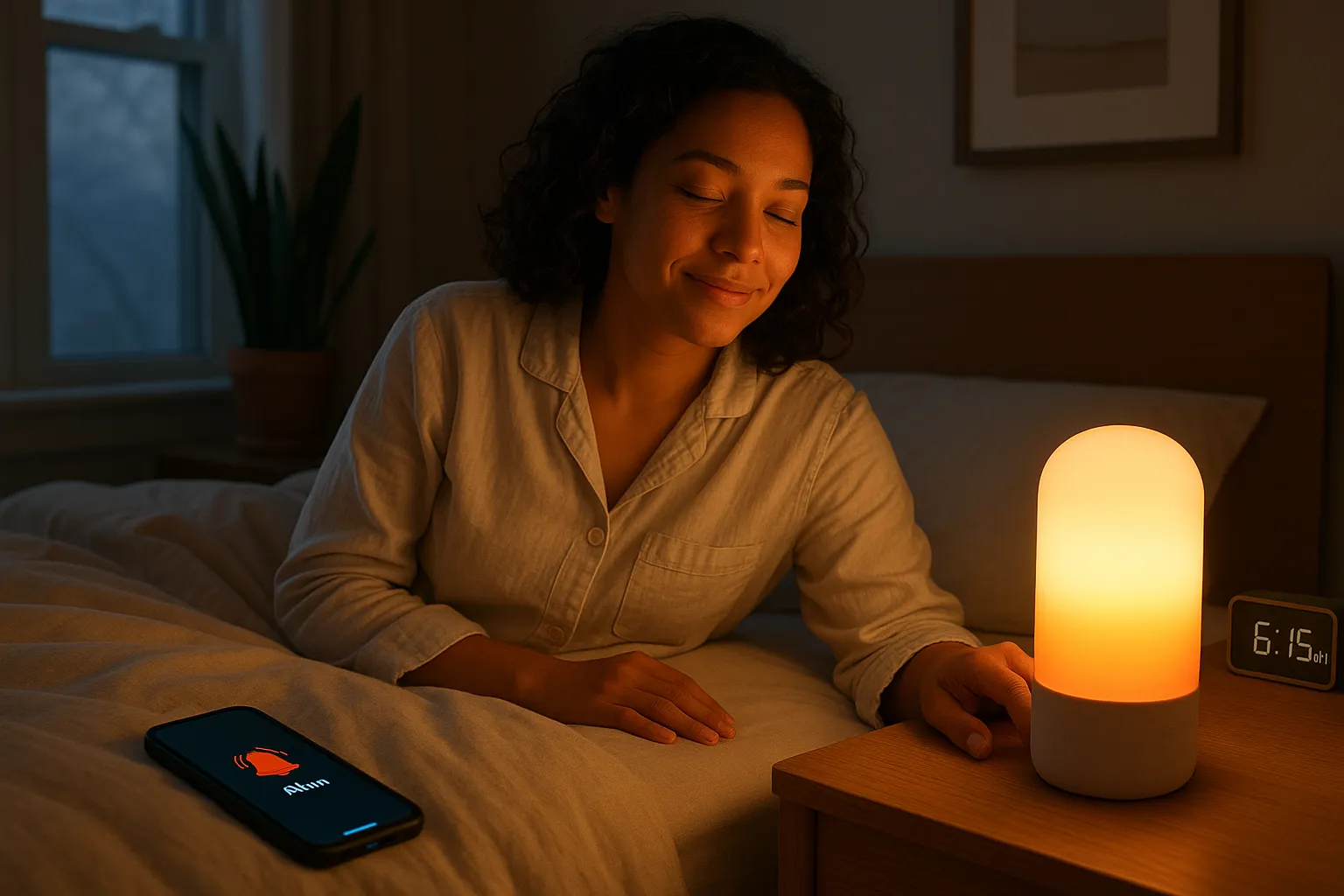
Fact: Sunrise alarms gradually increase ambient light to mimic natural dawn, typically over 15–60 minutes. The device lights the room with increasing intensity and often shifts color temperature from warm to cooler white, which mimics morning spectral change.
Mechanism in clear terms: retinal light (subject) triggers melanopsin‑containing retinal ganglion cells (verb), which send signals to the SCN and other brain areas (object). Those signals suppress melatonin and advance wake‑related processes so cortisol rises timed with light exposure rather than a sudden sound.
Design variations matter. Brands like Philips Somneo and Casper Glow vary intensity and color. Some devices include gentle sounds or nature recordings. Apps such as Sleep Cycle and Gentle Alarm let your phone simulate sunrise using the screen and speaker, though screen brightness and spectrum differ from dedicated lamps.
Expected effects: you should see a smoother subjective awakening, reduced sleep inertia, and possibly a lower peak CAR amplitude compared with abrupt alarms. The intended goal is to align your CAR with light exposure so the HPA axis rises in a managed way, supporting cognitive performance without an overactive stress response.
How Standard Phone Alarms Trigger Wakefulness
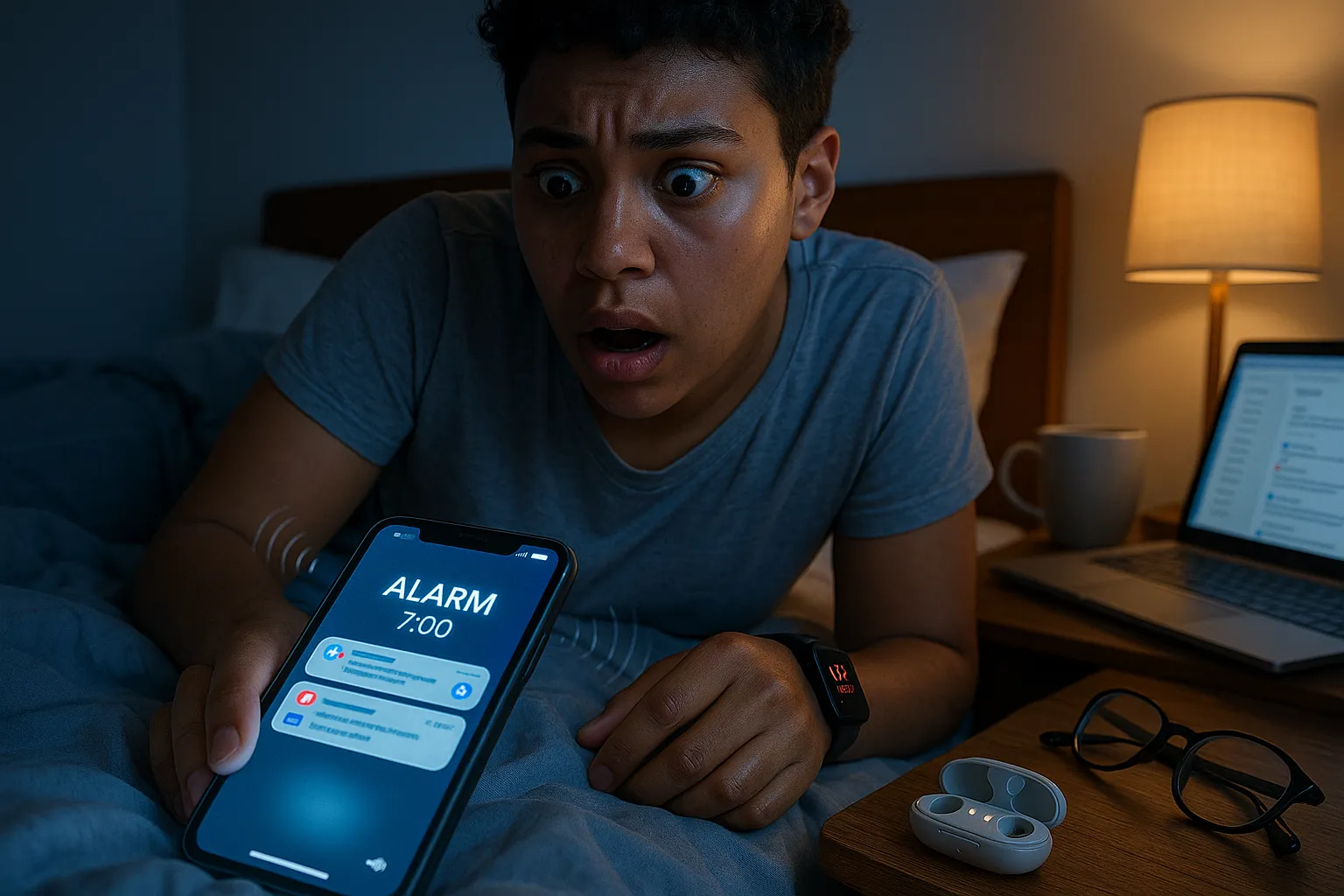
Fact: Standard phone alarms typically rely on sudden auditory cues that produce an immediate sympathetic response. The abrupt sound acts as a startle stimulus. That stimulus triggers the autonomic nervous system: your heart rate increases, blood pressure rises, and cortisol can spike quickly.
Simple causal chain: the alarm sound (subject) activates the brainstem and sympathetic circuits (verb), which elevates heart rate and stress hormones (object). This sequence can shorten the rise time for cortisol, producing a steeper CAR.
Real world example: you hit snooze repeatedly, each buzz ramps your stress system anew. That repeated micro‑stress may leave you feeling scattered and more anxious than if you woke once to a softer cue. Phone alarms with vibration or bright screens add multimodal stimulation that can further amplify arousal.
Context matters: early‑morning social media checks or email immediately after silencing the alarm compound cortisol activation. So the device is only part of the chain: the behaviors you do after waking also shape cortisol dynamics.
Evidence Comparing Sunrise Alarms And Phone Alarms On Cortisol And Wake Quality
Fact: Controlled trials show mixed but promising evidence that gradual light reduces subjective sleep inertia and can alter CAR modestly. Several randomized studies (for example, studies of dawn simulators in the 1990s and more recent small trials using wake‑light devices) report reduced morning lethargy and improved mood.
What the data say: some smaller CAR peaks after dawn simulation compared with sudden alarms. Others show no difference in cortisol but do show better subjective alertness. A 2019 trial using a light‑therapy alarm reported faster cognitive reaction times in the first hour after waking, but only a small change in salivary cortisol.
Why results vary: differences in study design (sample size, baseline sleep patterns, timing of light, spectral composition, and whether participants had sleep disorders) drive inconsistent outcomes. Devices with higher blue‑enriched light and longer ramp times tend to produce clearer physiological signals because melanopsin sensitivity peaks in the blue range.
Practical takeaway: the balance of evidence supports better subjective wake quality with sunrise alarms and suggests modest CAR modulation in many people. But you should test changes in your routine and, when possible, measure both objective sleep metrics (actigraphy) and subjective scales (sleep inertia scores) to see if the device helps you personally.
Practical Implications: Who Benefits And When
Fact: People with regular schedules, seasonal mood changes, or pronounced sleep inertia tend to benefit most from sunrise alarms. Shift workers or those with erratic wake times may get less consistent benefit.
Who benefits:
Early commuters who need gentle, reliable morning activation.
People with mild seasonal affective symptoms who respond to morning light.
Anyone who reports prolonged grogginess and wants to try a low‑risk intervention.
Who may see less benefit:
Night shift workers whose circadian phase is shifted: morning light could misalign their sleep further.
People with certain eye conditions or photosensitivity, consult an eye doctor first.
Realistic expectations: a sunrise alarm can reduce perceived grogginess and may slightly modulate CAR. It may not erase chronic sleep deprivation. If you sleep too little, light alone can’t produce restorative recovery: you need longer sleep.
How To Choose And Use A Sunrise Alarm To Support Healthy Cortisol Awakening
Fact: Choose a sunrise alarm that delivers sufficient illuminance and appropriate spectrum for morning activation. Look for devices that offer a gradual ramp (20–45 minutes), adjustable intensity, and a blue‑enriched morning setting.
Stepwise selection and use:
Pick devices with documented lux output near the bed. Aim for 100–300 lux at eye level during the final ramp minutes: many bedside lamps use higher output because distance matters. Philips Somneo and Lumie models publish these specs.
Set ramp time to at least 20 minutes. Shorter ramps can feel abrupt and lose the physiological benefit.
Position the light across from you on a nightstand or across the room so light reaches your eyes indirectly.
Pair light with soft sounds if you like. Gentle nature sounds or low‑volume chimes work: avoid harsh tones.
Avoid phone screens and bright device use for 30 minutes before bed and for the first 10–20 minutes after waking, light from phones can interfere with circadian signaling.
Testing and tracking: try the alarm for two weeks while tracking mood, perceived sleep inertia, and if possible salivary CAR samples at wake and +30 minutes. Use an app like Sleep Cycle for subjective reports and actigraphy devices like Fitbit or Oura for objective sleep timing.
Limitations, Safety Considerations, And Open Research Questions
Fact: Evidence is promising but incomplete: sample sizes are small, and study designs vary. You should weigh benefits against limits and safety.
Key Studies And Metrics To Watch When Evaluating Research
High‑quality trials often report salivary cortisol, CAR area under the curve, actigraphy, and validated subjective measures (e.g., Stanford Sleepiness Scale). Look for randomized designs and pre‑registered protocols.
Cortisol Awakening Response (CAR) Measurements
CAR is measured with saliva samples at wake, +15, +30, and sometimes +45 minutes. Measures include peak amplitude and area under the curve (AUC). Timing and compliance strongly affect results.
Objective Sleep And Wakefulness Metrics (Actigraphy, Polysomnography, HRV)
Actigraphy gives sleep timing: polysomnography measures sleep stages. Heart rate variability (HRV) during wake transition can show autonomic balance changes tied to alarm type.
Subjective scales are sensitive to personal preference. Many sunrise alarm benefits show up first in self‑report before physiological markers shift.
Light Intensity, Spectrum, And Timing: Practical Setup Tips
Use cooler (blue‑enriched) light for the final ramp but avoid extreme intensity. Keep consistent wake times to amplify benefit. If you wake earlier than usual, the ramp may not match your internal phase.
Combining Light With Sound: Best Practices For Gradual Arousal
Start with light alone or soft ambient sound. Introduce sound only if light alone doesn’t wake you reliably. Keep sounds predictable to avoid startle responses.
Who Should Avoid Sunrise Alarms Or Use Caution
People with bipolar disorder should consult a clinician before morning light therapy because bright morning light can trigger mania in rare cases. Persons with photosensitive epilepsy or macular disease should seek medical advice. Also avoid excessive early light if you need to delay circadian phase (e.g., some night shift protocols).
Common Limitations In Existing Studies And How They Affect Interpretation
Small samples, short interventions, and heterogeneous device specs limit generalizability. Many studies rely on subjective outcomes, which inflate effect sizes. Compliance with saliva sampling also varies, biasing CAR results.
Suggested Areas For Future Research
Larger randomized trials that compare standardized light doses, spectral profiles, and sound pairings. Studies should include diverse populations (shift workers, older adults) and combine CAR with HRV and cognitive performance metrics. Longitudinal work on mood and metabolic outcomes would be valuable.
Practical closing nudge: if you want a gentler morning, try a sunrise alarm for 2–4 weeks while tracking your sleep and morning mood. Test changes, be patient, and consult clinicians for special medical concerns.
To provide the best experiences, we use technologies like cookies to store and/or access device information. Consenting to these technologies will allow us to process data such as browsing behaviour or unique IDs on this site. Not consenting or withdrawing consent, may adversely affect certain features and functions.
Functional
Always active
The technical storage or access is strictly necessary for the legitimate purpose of enabling the use of a specific service explicitly requested by the subscriber or user, or for the sole purpose of carrying out the transmission of a communication over an electronic communications network.
Preferences
The technical storage or access is necessary for the legitimate purpose of storing preferences that are not requested by the subscriber or user.
Statistics
The technical storage or access that is used exclusively for statistical purposes.The technical storage or access that is used exclusively for anonymous statistical purposes. Without a subpoena, voluntary compliance on the part of your Internet Service Provider, or additional records from a third party, information stored or retrieved for this purpose alone cannot usually be used to identify you.
Marketing
The technical storage or access is required to create user profiles to send advertising, or to track the user on a website or across several websites for similar marketing purposes.