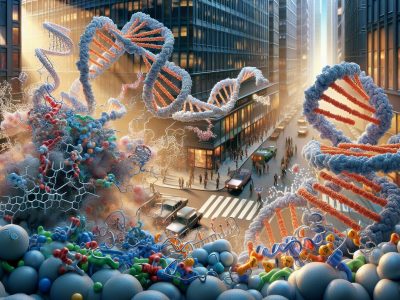
Imagine your body as a bustling city, where every system works in perfect harmony to keep things running smoothly. Among the key players in this intricate network are enzymes and hormones—two fascinating biological tools that often get lumped together but serve entirely different purposes. While one acts like a skilled craftsman speeding up vital reactions, the other works as a messenger, delivering instructions to keep everything on track.
You might not think about them often, but enzymes and hormones are behind the scenes of almost every process in your body, from digesting your favorite meal to managing stress. Understanding their differences isn’t just fascinating—it can also deepen your appreciation for how your body operates. So, what sets them apart, and why does it matter? Let’s unravel the unique roles these unsung heroes play in keeping you healthy and thriving.
Understanding Enzymes
Enzymes serve as biological catalysts, significantly speeding up chemical reactions essential for life. These specialized proteins unlock the body’s potential for efficient functioning by facilitating complex processes with remarkable precision.
What Are Enzymes?
Enzymes are proteins designed to accelerate chemical reactions without being consumed in the process. Each enzyme targets specific substrates, following a lock-and-key mechanism to perform its role effectively. The shape of an enzyme ensures that it interacts only with its corresponding substrate. For example, amylase interacts with starch molecules but not proteins.
These proteins operate under specific conditions. Their activity depends on pH levels, temperature, and the concentration of the substrate or enzyme. Extreme changes in these conditions can inhibit or halt enzymatic activity, showing their dependency on a stable environment.
Functions of Enzymes in the Body
Enzymes regulate various physiological functions by controlling the rate of biochemical reactions. They participate in digestion, energy production, detoxification, and cellular repair.
Digestion: Enzymes like lipase and protease break down fats and proteins in the digestive system. Lipase splits triglycerides into glycerol and fatty acids, and protease breaks proteins into amino acids.
Metabolism: Metabolic enzymes help the conversion of nutrients into usable energy. For instance, ATP synthase generates ATP, the primary energy currency of cells.
DNA replication: Enzymes such as DNA polymerase ensure accurate DNA synthesis, which is critical for cell division and genetic continuity.
Detoxification: Liver enzymes like cytochrome P450 process and neutralize toxins, such as alcohol and drugs.
Examples of Common Enzymes
Common enzymes are found in both specific organ systems and general cellular activity. Below are several examples showcasing their roles:
Enzyme
Function
Location
Amylase
Breaks starch into sugar molecules
Saliva, pancreas
Lactase
Converts lactose into glucose and galactose
Small intestine
Pepsin
Breaks proteins into smaller peptides
Stomach
Catalase
Decomposes hydrogen peroxide into water and oxygen
Cells in the liver
RNA Polymerase
Synthesizes RNA strands during transcription
Nucleus of the cell
Enzymes illustrate how the body functions in harmony, maintaining balance across physiological systems. Their specific roles and precise mechanisms highlight their importance in sustaining life.
Understanding Hormones
Hormones function as chemical messengers that regulate numerous physiological processes. These molecules, secreted by endocrine glands, influence growth, metabolism, emotions, and homeostasis.
What Are Hormones?
Hormones are biochemical substances released into the bloodstream. Produced by endocrine glands like the pituitary, thyroid, and pancreas, they’re distributed to target cells and organs. Hormones maintain equilibrium by responding to internal and external stimulii. Unlike enzymes, which help chemical reactions locally, hormones circulate to convey instructions systemically.
Functions of Hormones in the Body
Hormones coordinate complex bodily functions. They control metabolism by regulating how energy is stored and utilized. Growth hormones manage physical development from childhood through adulthood. Hormones like cortisol and adrenaline modulate stress responses, while insulin controls blood sugar levels. Reproductive hormones, such as estrogen and testosterone, govern sexual development and fertility. These multi-functional messengers ensure bodily systems operate in harmony.
Examples of Common Hormones
Insulin: Regulates blood glucose levels by promoting cellular glucose uptake.
Thyroxine (T4): Produces by the thyroid gland, it controls metabolism and energy generation.
Estrogen: Supports female reproductive health, secondary sexual characteristic, and bone strength.
Testosterone: Facilitates development of male reproductive tissues and overall muscle mass.
Key Differences Between Enzymes and Hormones
Enzymes and hormones play distinct roles in the body, differing in their structure, function, and production. Understanding these differences enhances your insight into how the human body achieves complex regulation and balance.
Structural Differences
Enzymes are specialized proteins that act as biological catalysts. They possess a three-dimensional structure allowing specific binding sites for substrates, like amylase breaking down starch. Hormones, on the other hand, include proteins, steroids, or amines, each adapted for its role as a chemical messenger. For example, insulin is a protein hormone, while cortisol is a steroid hormone, demonstrating their varied biochemical nature.
While enzymes only interact with substrates, hormones travel through the bloodstream. Their differing compositions reflect their unique purpose—enzymes for local actions and hormones for systemic communication.
Functional Differences
Enzymes speed up biochemical reactions, ensuring essential life processes occur efficiently. For instance, digestive enzymes like lactase break down lactose in food, while DNA polymerase assists in gene replication. Hormones regulate broader physiological processes like growth, metabolism, and mood. Insulin controls blood sugar levels, and thyroxine influences metabolic rates across bodily tissues.
One key distinction is location of action. Enzymes work locally, such as in the stomach or liver, while hormones have a widespread effect, targeting distant organs and tissues after secretion.
Production and Regulation
Enzymes are produced by specific cells in glands or organs, like the pancreas producing enzymes for digestion. Their activity is controlled by environmental factors such as pH and temperature, with optimal conditions required for functioning. Hormone production occurs within endocrine glands, like the pituitary or adrenal glands. Their release is tightly regulated by negative feedback loops, ensuring balance. For instance, high blood sugar triggers insulin secretion, which decreases glucose levels.
The role of hormones and enzymes, though complementary in maintaining homeostasis, are distinct.
Similarities Between Enzymes and Hormones
Enzymes and hormones, even though their different roles, share several characteristics critical to sustaining life. Both are biological molecules that contribute to maintaining homeostasis, the balanced state of internal processes within your body.
Protein Composition
Many enzymes, like amylase and lactase, and hormones, such as insulin and growth hormone, are composed of proteins. This shared molecular basis enables them to perform highly specific functions essential for regulating physiological activities.
Biological Specificity
Both enzymes and hormones operate with specificity. Enzymes interact with particular substrates, while hormones target specific receptors on cells. For example, insulin binds to insulin receptors to regulate blood sugar levels, and lactase breaks down lactose into glucose and galactose.
Influence on Metabolic Processes
Enzymes and hormones are interconnected in managing metabolism. Enzymes like amylase initiate the breakdown of carbohydrates, while hormones like glucagon trigger processes to release glucose when energy is needed. Together, they ensure the metabolic system functions effectively.
Regulation by External and Internal Factors
Both are sensitive to conditions such as temperature and pH. For instance, enzyme activity peaks within a particular pH range, and hormone levels fluctuate due to internal feedback mechanisms, such as the thyroid hormone adjusted by TSH (thyroid-stimulating hormone).
Integral Role in Feedback Systems
Enzymes and hormones participate in feedback loops. An example is the regulation of blood calcium levels, where parathyroid hormone influences calcium absorption, and calcitriol works enzymatically in the kidneys to maintain balance.
These shared attributes underline their critical contributions to biological equilibrium, yet their mechanisms and impacts remain distinctly specialized.
Importance of Enzymes and Hormones in Health
Enzymes and hormones are vital for sustaining life. Enzymes help rapid chemical reactions essential for processes like digestion, breaking down macronutrients into absorbable molecules. For example, lipase aids in fat breakdown, while lactase processes lactose in dairy products. Without enzymes, these reactions occur too slowly to support immediate bodily needs.
Hormones ensure balanced regulation across systems. They oversee growth, metabolism, stress responses, and reproductive health. Insulin, for instance, regulates glucose levels to prevent hyperglycemia or hypoglycemia. Also, hormones like adrenaline activate the “fight or flight” response, demonstrating their role in immediate survival.
Your health depends on the synchronized interplay between enzymes and hormones. Enzymes initiate biochemical actions like food breakdown; hormones, such as ghrelin and leptin, coordinate hunger and satiety signals. Any disruption in either can contribute to issues like metabolic disorders or chronic fatigue.
Both molecules respond to environmental variables. Enzyme activity depends on conditions like optimal pH and temperature, while hormonal balance can be disrupted by stress or diet. For instance, excessive cortisol from prolonged stress affects metabolism and immunity. Recognizing such interactions can help you understand the importance of lifestyle in maintaining optimal health.
Conclusion
Understanding the unique roles of enzymes and hormones gives you a deeper appreciation for the intricate systems that keep your body functioning smoothly. These specialized molecules, though distinct in their structures and purposes, work together to maintain balance and ensure your overall well-being.
By recognizing how enzymes and hormones interact and influence various processes, you can make more informed decisions about your health. Supporting these vital components through proper nutrition, stress management, and a balanced lifestyle is key to promoting optimal body function.
To provide the best experiences, we use technologies like cookies to store and/or access device information. Consenting to these technologies will allow us to process data such as browsing behaviour or unique IDs on this site. Not consenting or withdrawing consent, may adversely affect certain features and functions.
Functional
Always active
The technical storage or access is strictly necessary for the legitimate purpose of enabling the use of a specific service explicitly requested by the subscriber or user, or for the sole purpose of carrying out the transmission of a communication over an electronic communications network.
Preferences
The technical storage or access is necessary for the legitimate purpose of storing preferences that are not requested by the subscriber or user.
Statistics
The technical storage or access that is used exclusively for statistical purposes.The technical storage or access that is used exclusively for anonymous statistical purposes. Without a subpoena, voluntary compliance on the part of your Internet Service Provider, or additional records from a third party, information stored or retrieved for this purpose alone cannot usually be used to identify you.
Marketing
The technical storage or access is required to create user profiles to send advertising, or to track the user on a website or across several websites for similar marketing purposes.