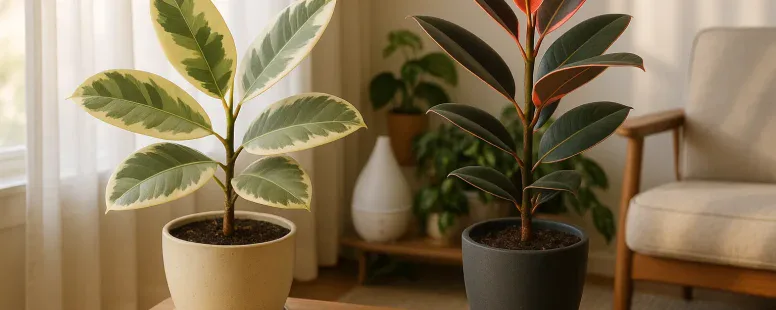
Rubber Plant Tineke Vs. Ruby
You can spot the difference between Tineke and Ruby in a glance: one shouts soft cream and green, the other whispers pink and deep burgundy. These two variegated Ficus elastica cultivars share a species but ask for different light, care, and placement choices. In this guide you’ll get clear, practical contrasts, how each looks, what each needs, and which fits your space, backed by real examples and hands-on tips. Expect exact signs to watch for, propagation moves that work, and honest trade-offs every plant owner faces.
Key Differences At A Glance
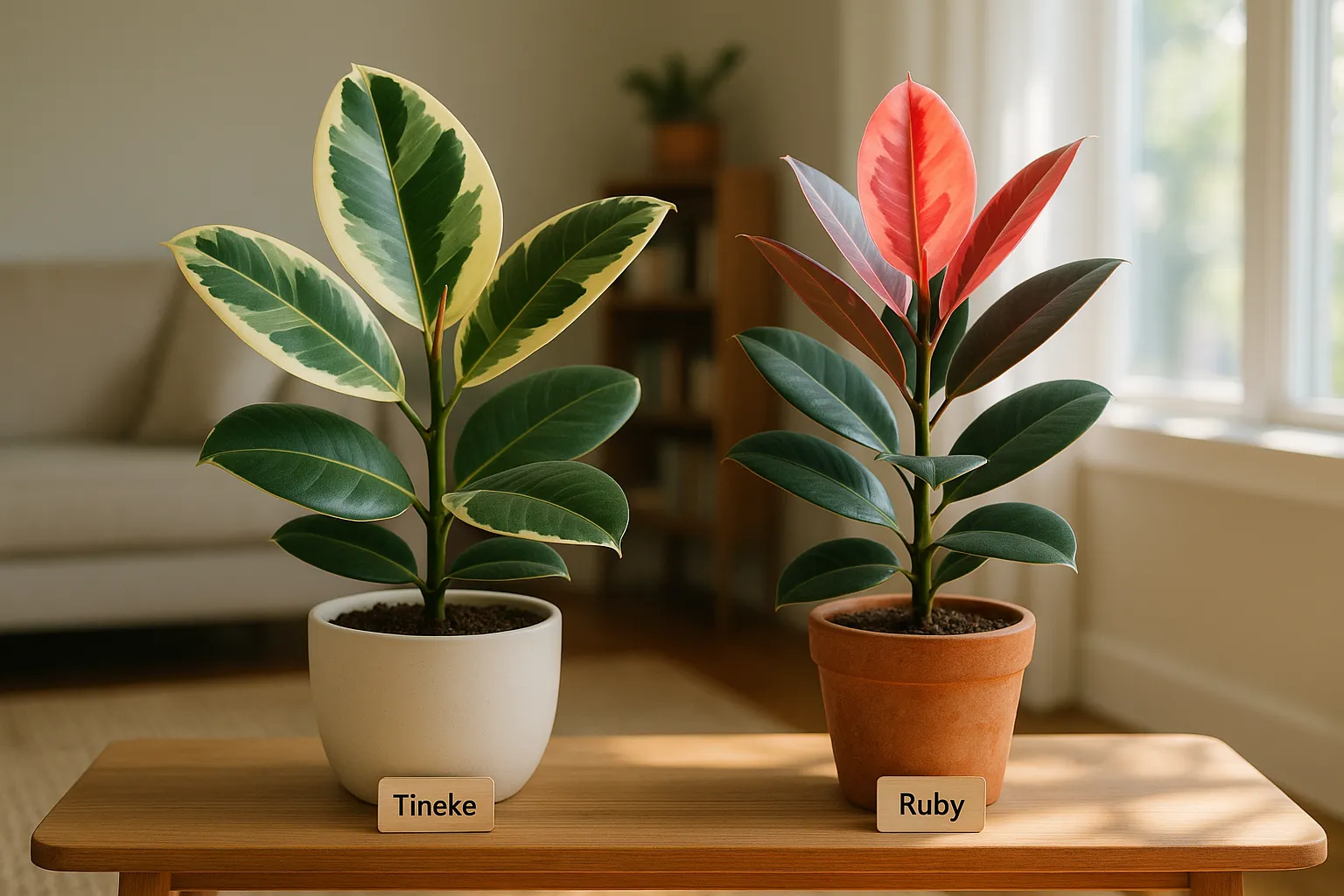
Fact: Tineke shows broad cream variegation with green margins: Ruby displays pink to red variegation on new growth and darker undersides.
Tineke and Ruby are both Ficus elastica cultivars, but they prioritize different visual effects and light needs. Tineke is prized for large, creamy patches that remain stable on mature leaves. Ruby is prized for its rosy flush on emerging leaves and a more dramatic contrast between pink, green, and burgundy.
Quick comparison you can use before you buy:
- Appearance: Tineke, creamy, white, and green: Ruby, pink, red, and deep maroon.
- Light: Tineke tolerates moderate light: Ruby wants brighter, indirect light to keep its pink hues.
- Growth: Tineke often grows a bit faster and retains variegation: Ruby can be slower and sometimes reverts under poor light.
- Price/rarity: Ruby tends to be rarer and commands higher prices, especially for well-pigmented specimens.
These points guide the rest of the article. If you need to decide quickly, choose Tineke for stability and lower fuss: choose Ruby if you want showy pink new leaves and you can provide bright conditions.
Appearance And Variegation: Tineke Vs. Ruby
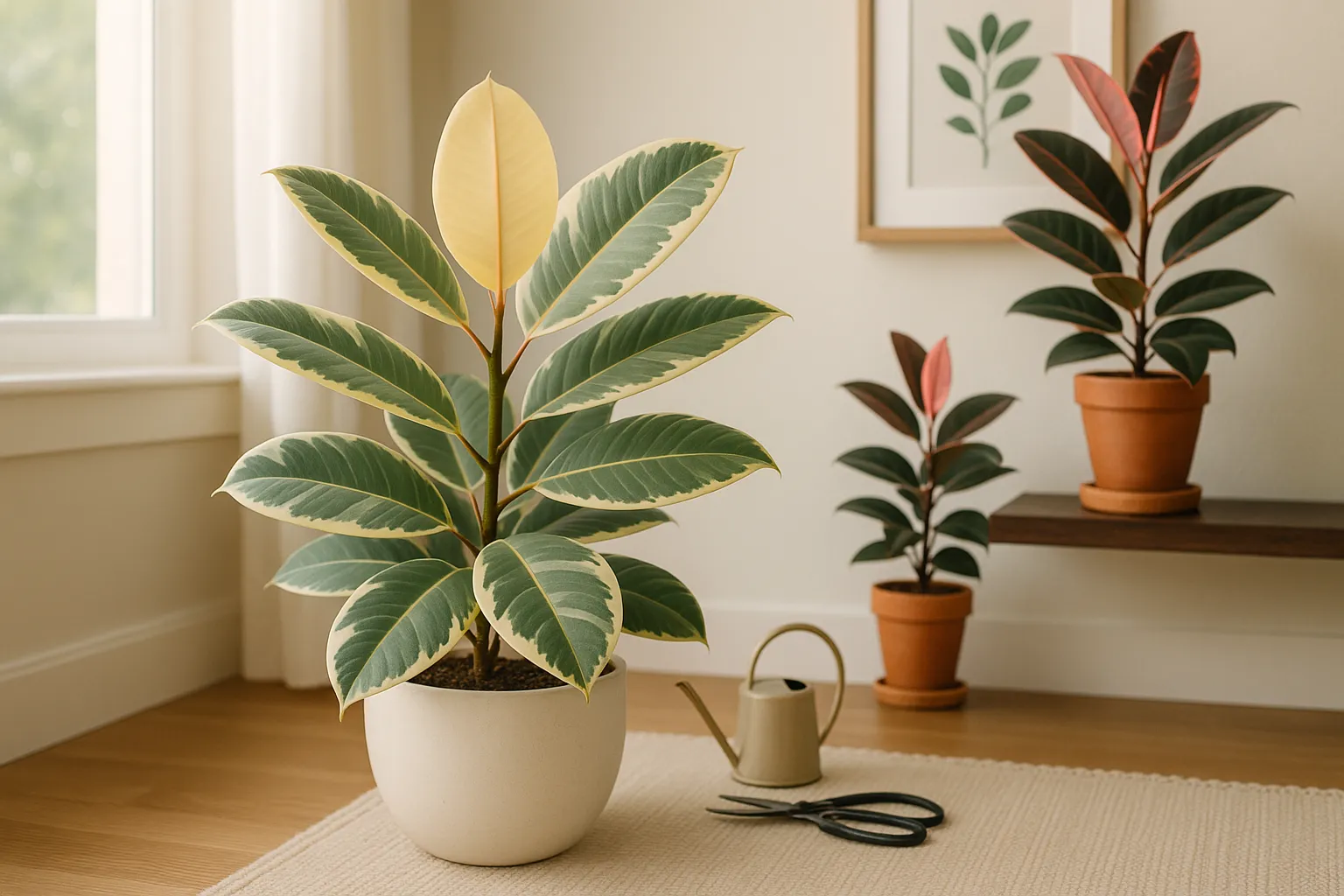
Fact: Variegation pattern and color palette determine both the plant’s look and its light needs. Start here to match your aesthetic goals.
Variegation Patterns And Color Palette
Tineke exhibits broad white or cream patches that cover large areas of the blade, often with irregular islands of green. The white is chlorophyll-poor, so Tineke’s leaves can look almost pastel when new. Ruby differs: new leaves emerge vivid pink, then age to burgundy or deep green on the lower surface. That pink comes from anthocyanins, not chlorophyll, so it needs bright light to persist.
If you want a calm, neutral palette for a minimal room, Tineke fits better. If you want a focal point or a pop of color, Ruby gives you living color without flowers.
Leaf Size, Shape, And Growth Habit
Fact: Both cultivars share the typical rubber plant leaf shape, broad, elliptical blades, but they differ in size and posture. Tineke tends to produce larger leaves with a flatter habit: Ruby often keeps slightly narrower leaves with a glossy finish and a more upright growth. Tineke will often spread out more, making it a good floor specimen. Ruby keeps a compact, columnar silhouette that suits shelf or corner placement.
You should also watch new shoots: Ruby’s new leaves can be slower to open and more fragile, while Tineke’s flushes are robust and quicker.
Light, Watering, And Soil Requirements
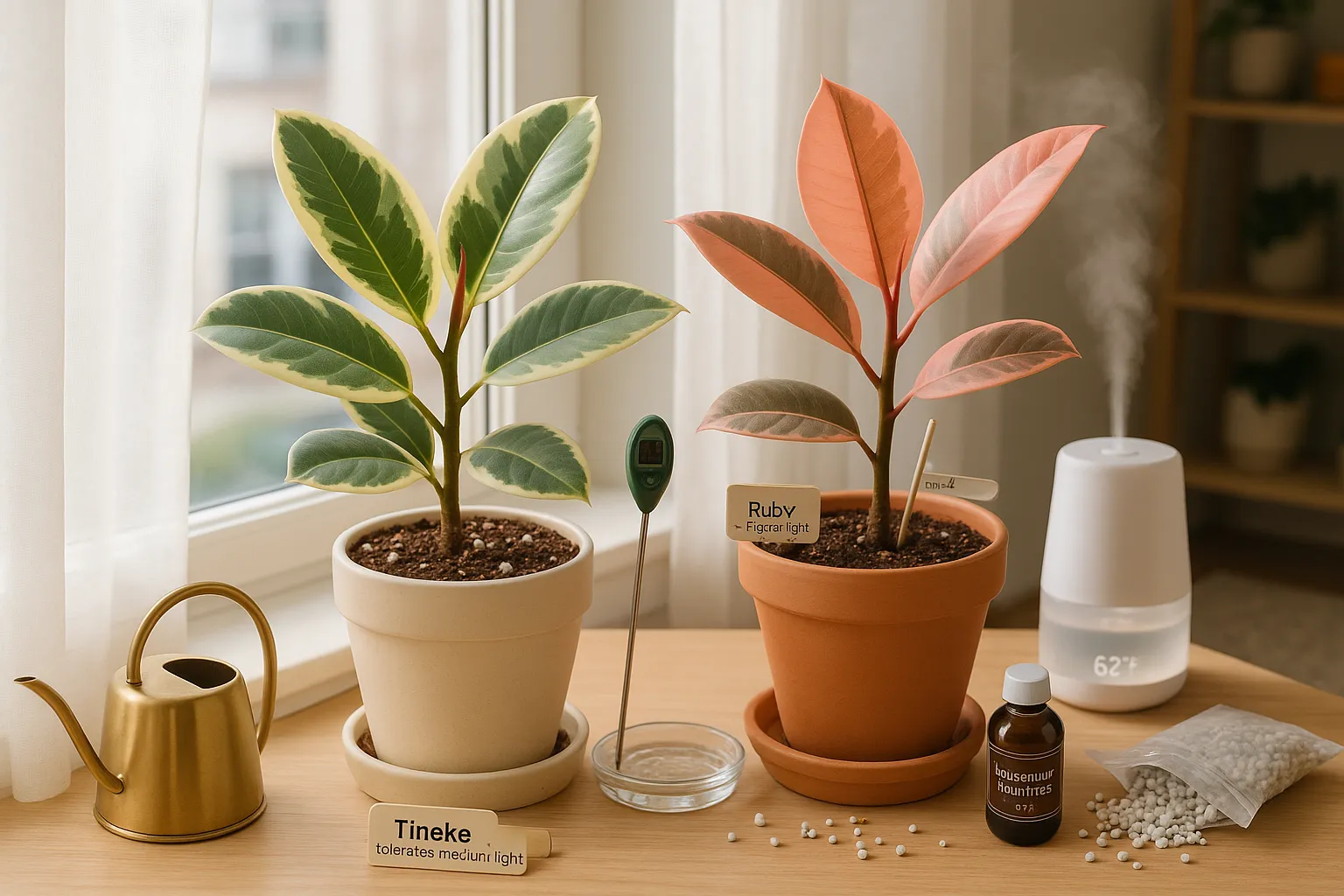
Fact: Light level directly affects color and vigor: water and soil affect root health and variegation stability. Get these basics right and both plants thrive.
Light Preferences And How Variegation Affects Needs
Both need bright, indirect light. Tineke tolerates medium light because its green margins supply chlorophyll: Ruby needs brighter light to keep the pink pigments visible. Put Ruby near an east- or west-facing window filtered by sheer curtains. If Ruby gets dim light its pink fades and green takes over.
Tip: Rotate the pot weekly so leaves color evenly and the plant grows straight.
Watering Frequency And Signs Of Over/Underwatering
Fact: Overwatering causes root rot: underwatering causes leaf drop. Water when the top 1–2 inches of soil dries for both cultivars. Tineke can handle slightly drier cycles: Ruby prefers a more consistent schedule because vivid pigments depend on steady growth.
Signs to watch:
- Overwatered: yellowing lower leaves, soft stems, musty soil smell.
- Underwatered: crispy brown margins, slow growth, leaf curl.
If you see yellow patches on a variegated leaf, test soil moisture before changing fertilizer or light.
Soil, Drainage, And Fertilizer Recommendations
Use a free-draining mix: equal parts potting soil, perlite, and pine bark or coco coir works well. Good drainage reduces root disease risk. Feed during spring and summer with a balanced liquid fertilizer at half strength every 4–6 weeks. For Ruby, a slightly higher phosphorus formula can support vibrant pigmentation during the growth season.
Temperature And Humidity Considerations
Fact: Both prefer warm, stable temperatures and moderate humidity. Keep them above 60°F (15°C) and away from cold drafts. Ruby benefits from 50–60% humidity to reduce leaf stress: Tineke tolerates average home humidity but still prefers moist air. A pebble tray, humidifier, or grouping plants helps.
Propagation, Repotting, And Training
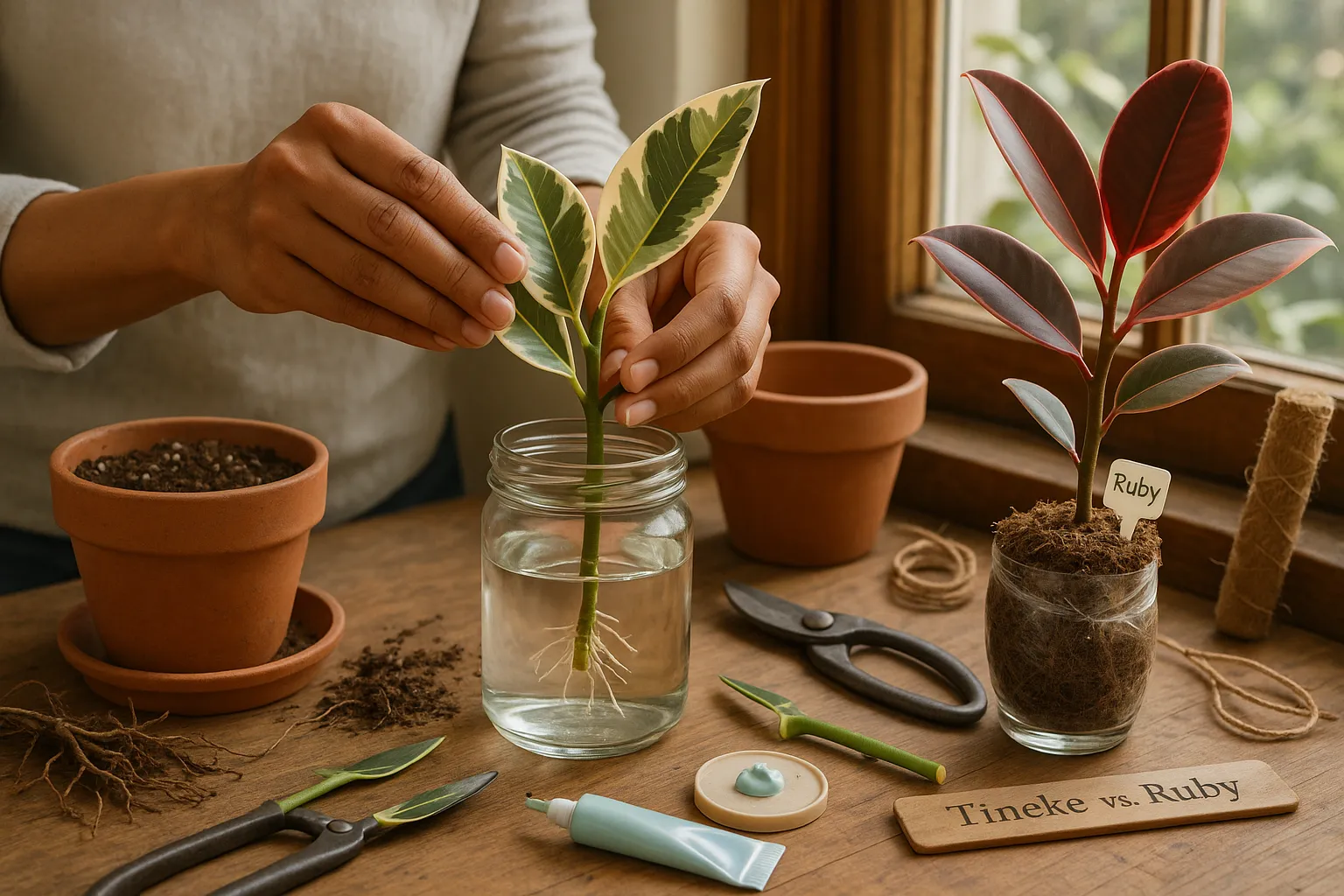
Fact: Both propagate well from stem cuttings and air layering: technique affects success rate and appearance of new plants.
Propagation Methods (Cuttings, Air Layering)
Stem cuttings: take a 4–6 inch node with at least one leaf. Let the cutting callus for a day, then place in water or a moist rooting mix. Tineke roots quickly in water: Ruby can root slower and might show less pink initially until new leaves form.
Air layering: good for creating larger, color-stable specimens. Girdle a stem, apply sphagnum moss, wrap with plastic, and wait 4–8 weeks for roots. This produces a stronger plant with less shock than single-node cuttings.
Tip: Label your cuttings. Variegation names get mixed up at swap meets and online groups.
When And How To Repot
Repot in spring when roots show at the surface or the pot dries out too quickly. Choose a pot 1–2 inches larger in diameter. Gently tease roots: don’t over-disturb, they prefer to be slightly root-bound. Use fresh, airy mix and water thoroughly after repotting.
Pruning And Supporting Growth For Shape And Size Control
Prune above a node to encourage branching and bushier form. For a single-stem look, remove lower shoots. Use stakes or a moss pole for taller specimens. When you prune, cut at an angle to reduce water sitting, and seal large cuts with horticultural paste if you worry about sap issues. Pruning also helps manage variegation: removing heavy green shoots keeps the plant balanced.
Common Problems And Troubleshooting
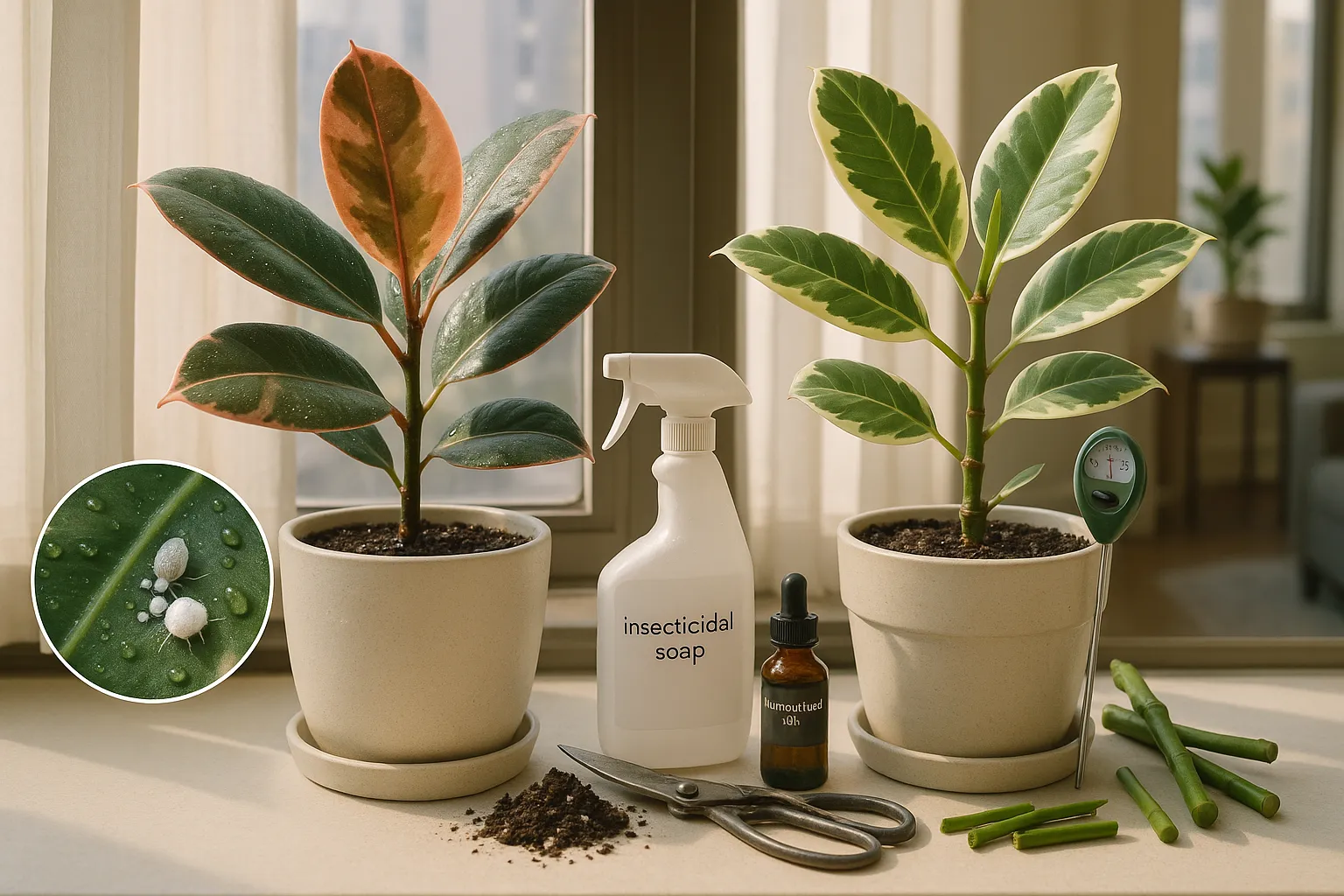
Fact: Pests, reversion, and sunburn are the main challenges: fast diagnosis improves recovery.
Pests And Disease Susceptibility
Both attract common houseplant pests: scale, mealybugs, and spider mites. Ruby’s glossy new leaves can hide scale, so inspect undersides. Treat infestations early with insecticidal soap or horticultural oil and isolate affected plants. Root rot appears with soggy soil: trim soft roots and repot into fresh, dry mix.
Variegation Loss (Reversion) And How To Prevent It
Reversion happens when green sectors overtake variegation. High light, balanced feeding, and removing fully green shoots helps prevent it. If reversion begins, prune the green shoots back to a variegated node or remove them entirely. For Ruby, keep strong light to maintain pink tones. For Tineke, maintain steady light: too-low light increases white sectors’ vulnerability because the plant produces more green to compensate.
Sunburn, Leaf Browning, And Nutrient Issues
Sunburn: direct midday sun causes brown, papery patches, especially on Ruby’s delicate new leaves. Move plants to filtered light and treat sunburned leaves by trimming damaged tissue. Nutrient problems show as pale leaves or stunted growth. Adjust fertilizer and check pH (around 6.0–6.5 is ideal).
Choosing Between Tineke And Ruby: Practical Considerations
Fact: Your choice should reflect your light conditions, patience for care, and aesthetic aim. Make that decision before purchasing.
Aesthetic Goals, Light Availability, And Maintenance Willingness
If you want a stable variegated look with lower risk, choose Tineke. If you want pink drama and can provide bright, consistent light, choose Ruby. Ruby requires more attention: steady water, careful light placement, and vigilance for reversion. Tineke forgives more mistakes and still looks elegant.
Placement Suggestions (Indoor Spots, Containers, And Styling Tips)
Tineke: place in living rooms or offices with north to east windows: use larger ceramic pots to anchor its size. Ruby: place near bright east or west windows with a sheer curtain: use darker pots or stands to contrast the pink leaves. Both respond well to groupings, pair them with Calathea or Pothos to raise humidity and create a lush vignette.
Where To Buy And How To Verify Authenticity
Fact: Authenticity matters because mislabeling is common: inspect leaf patterns and ask for provenance.
Tips For Inspecting Plants At Nurseries Or Online Listings
Check new leaves: they reveal true color and variegation more than older leaves. Inspect stems and leaf undersides for pests. Ask the seller for cultivation history, how much light the plant received and how long they grew it. For online buys, request multiple current photos and a short video of the plant rotating. Reputable sellers include local independent nurseries and specialty growers on platforms like Etsy or dedicated plant shops.
Price Expectations And Rarity Notes
Tineke usually costs less than Ruby. Tineke might range from $20–$80 for common sizes: Ruby often starts higher, especially for larger or strongly pigmented specimens, expect $50–$200 or more for mature plants. Prices vary by region and season. Remember: rare doesn’t always mean better for your space. Choose the one that fits your light and care readiness.
If you want verification, ask for a botanical name (Ficus elastica ‘Tineke’ or ‘Ruby’) and any grower certificates. That helps you avoid expensive mistakes and long-term disappointment.

- The Top GT86 Alternatives for Sports Car Enthusiasts - September 16, 2026
- Vitamix Product Comparison: Which Blender Should You Buy? - September 15, 2026
- MGS6 Competitors: Top Stealth & Action Games - September 15, 2026
by Ellie B, Site Owner / Publisher