Begonia Tuberous Vs. Fibrous: Which Is Right For Your Garden?
Begonia tuberous and fibrous types offer two very different paths to summer color. One gives you thunderous, ballroom-sized blooms that demand attention: the other offers steady foliage, continuous flowers, and forgiving care. Which suits your patch of shade, your schedule, and your taste? This guide lays out clear, practical differences so you can choose with confidence. You’ll learn how each type grows, what they need to thrive, common problems to expect, and which cultivars work best for containers, hanging baskets, and shady beds. Expect concrete comparisons, real examples, and a few honest admissions from gardeners who got it wrong the first season.
Quick Comparison Snapshot
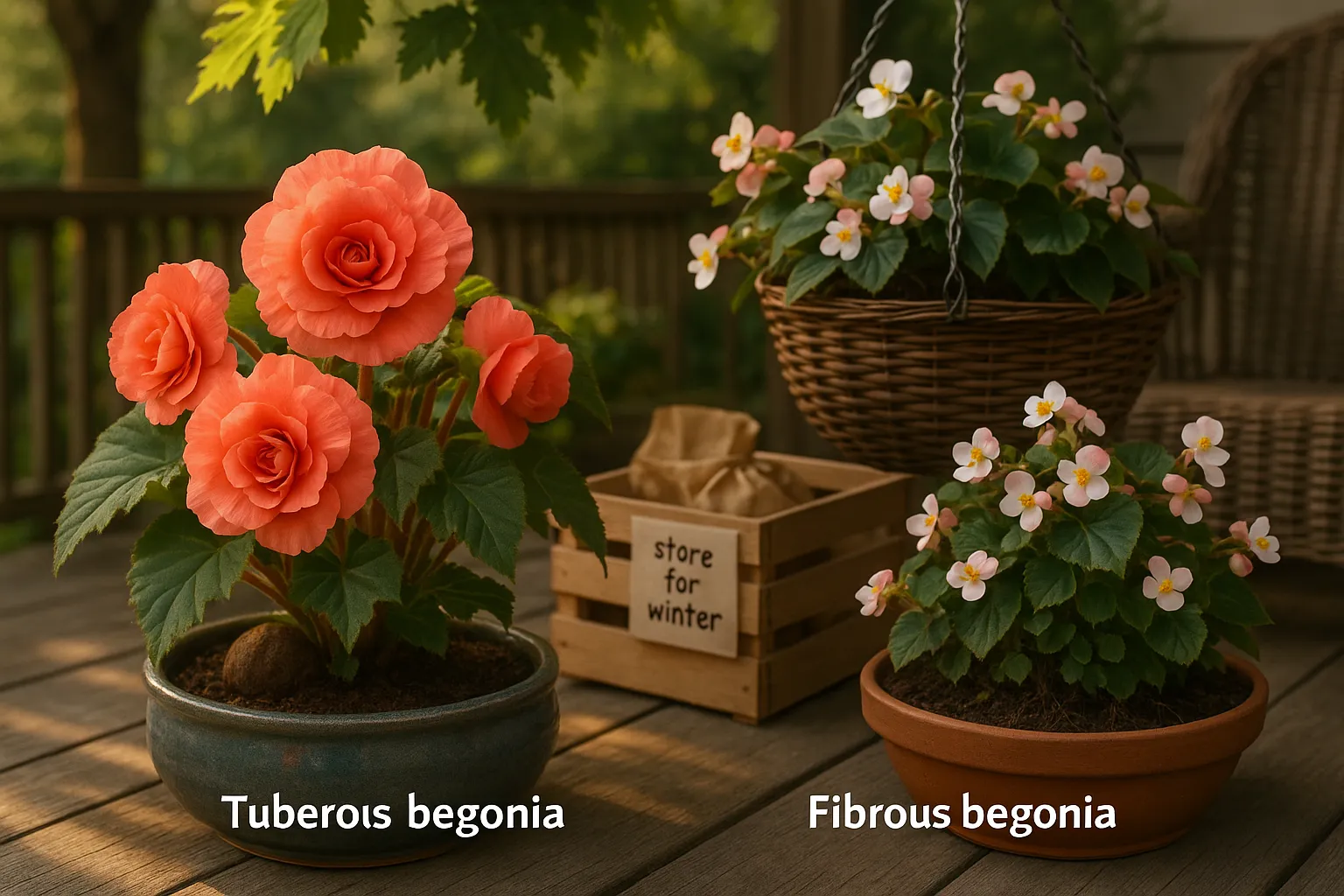
Fact: Tuberous begonias produce large seasonal flowers and need winter storage: fibrous begonias are mostly evergreen in mild climates and flower longer.
Growth Habit and Size
Tuberous begonias form a swelling underground tuber. The plant above ground often becomes a mound or a loose bush with cane-like or succulent stems. Flowers can be single or double and range from 2 inches to 6 inches across on some hybrids. Fibrous begonias have a network of thin roots and often show a trailing, upright, or shrub habit depending on species like Begonia semperflorens (wax begonia) or Rex begonias. They stay more compact and usually reach 6–24 inches tall.
Flowering Timing and Display
Fact: Tuberous types peak in mid to late summer with concentrated, dramatic blooms: fibrous types flower steadily from spring into fall.
Tuberous begonias bloom in flushes. You’ll get a short period of very intense color, perfect for a focal container or a floral display. Fibrous begonias give you endurance: smaller flowers but longer season length and continuous color when you deadhead or pinch back occasionally.
Hardiness and Climate Suitability
Fact: Tuberous begonias tolerate cool, shaded summer spots but are not frost-hardy: many fibrous types tolerate light frost and indoor conditions better.
Tuberous types thrive in USDA zones roughly 9–11 as outdoor growers for a single season, though many gardeners treat them as annuals in cooler zones and lift tubers for winter. Fibrous begonias include hardy bedding types and houseplant varieties: they manage humidity changes and lower light more reliably.
Best Uses in Garden Design
Fact: Use tuberous begonias as show-stopping focal points: use fibrous begonias for massing, borders, and mixed containers.
Tuberous begonias work as centerpiece plants in a shady patio pot or as glamorous underplanting beneath trees. Fibrous begonias fill space well, hide bare soil, and provide continuous texture along shady borders or in hanging baskets.
Botanical Differences Explained
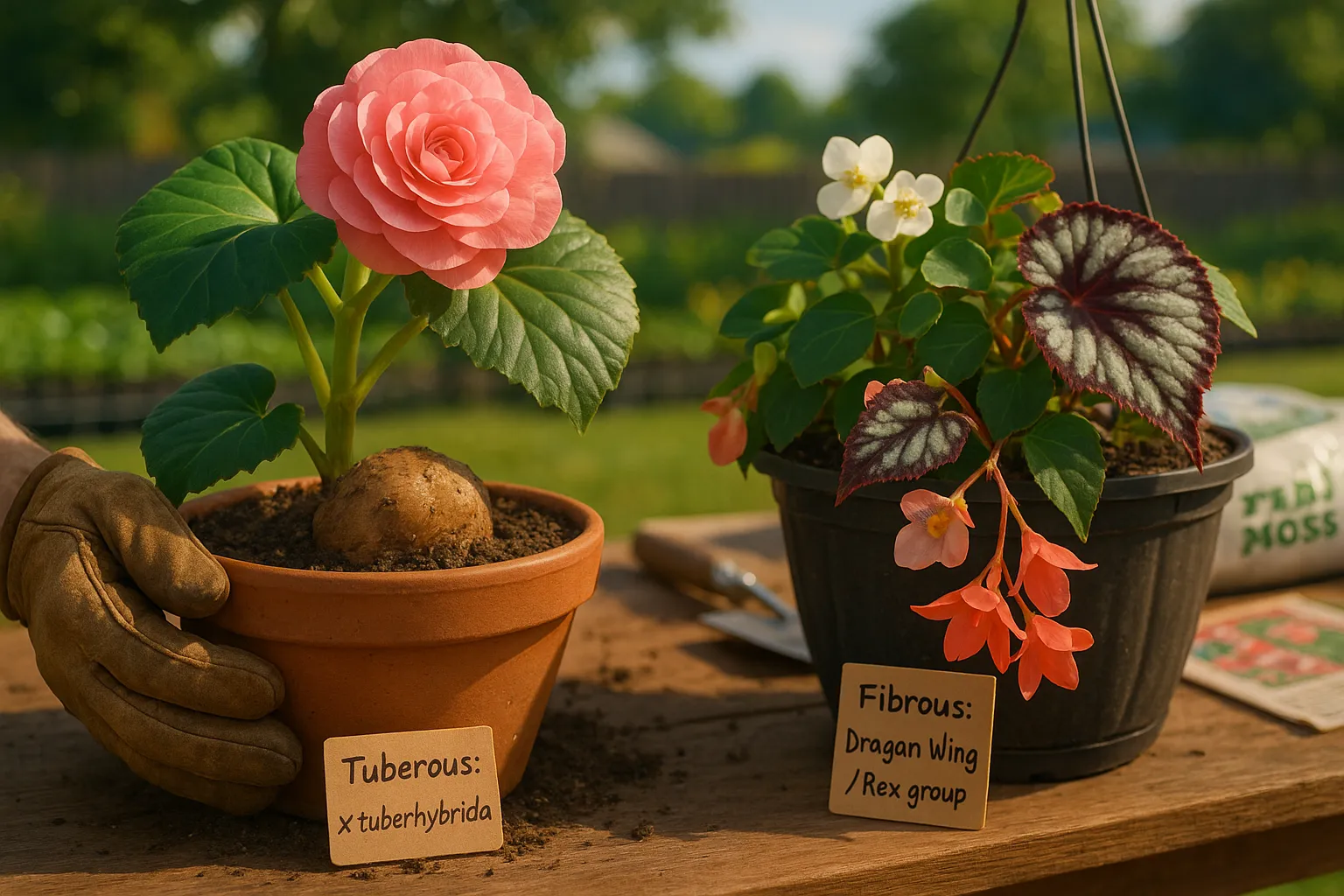
Fact: The primary botanical divide is root structure, tubers vs fibrous roots, and that affects dormancy, propagation, and lifecycle.
Root Structure: Tubers Versus Fibrous Roots
Tuberous begonias grow a swollen, energy-rich tuber. That tuber stores starches and allows the plant to resprout after a dormant period. Fibrous begonias develop many thin roots that feed continuously: they lack a true storage organ and so often don’t go fully dormant.
This structural difference explains care: you lift and store tubers for winter: you often keep fibrous types in place or move them indoors.
Leaf, Stem, and Flower Morphology
Fact: Leaves and stems differ widely and help you ID the type quickly.
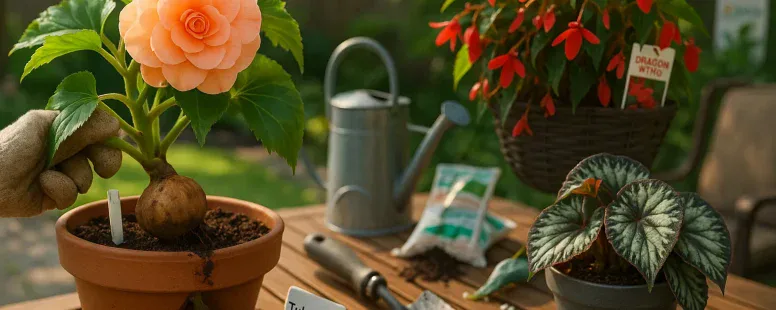
Tuberous leaves are usually large, sometimes heart-shaped, and the stems are succulent. Flowers are often layered doubles, think small camellias on stems. Fibrous begonias include waxy, small leaves on bedding types and bold patterned leaves on Rex cultivars. Their flowers are smaller and more clustered: stems may be cane-like (cane begonias) or trailing.
Common Species and Popular Cultivars
Fact: Certain named cultivars have shaped gardeners’ expectations: ‘Nonstop’ and ‘Whopper’ series (tuberous hybrids) vs ‘Dragon Wing’ (a popular fibrous hybrid) and Begonia rex group for foliage.
Examples: Begonia x tuberhybrida includes classic showy tuberous hybrids. Begonia semperflorens-cultorum group covers the waxy, fibrous bedding types. Begonia ‘Dragon Wing’ (fibrous) gives cascading blooms for baskets. Begonia ‘Escargot’ (Rex-type, fibrous) offers dramatic leaf patterns. Mentioning brand lines like Ball Horticultural’s series helps identify what you’ll find at garden centers.
Growing Requirements and Care
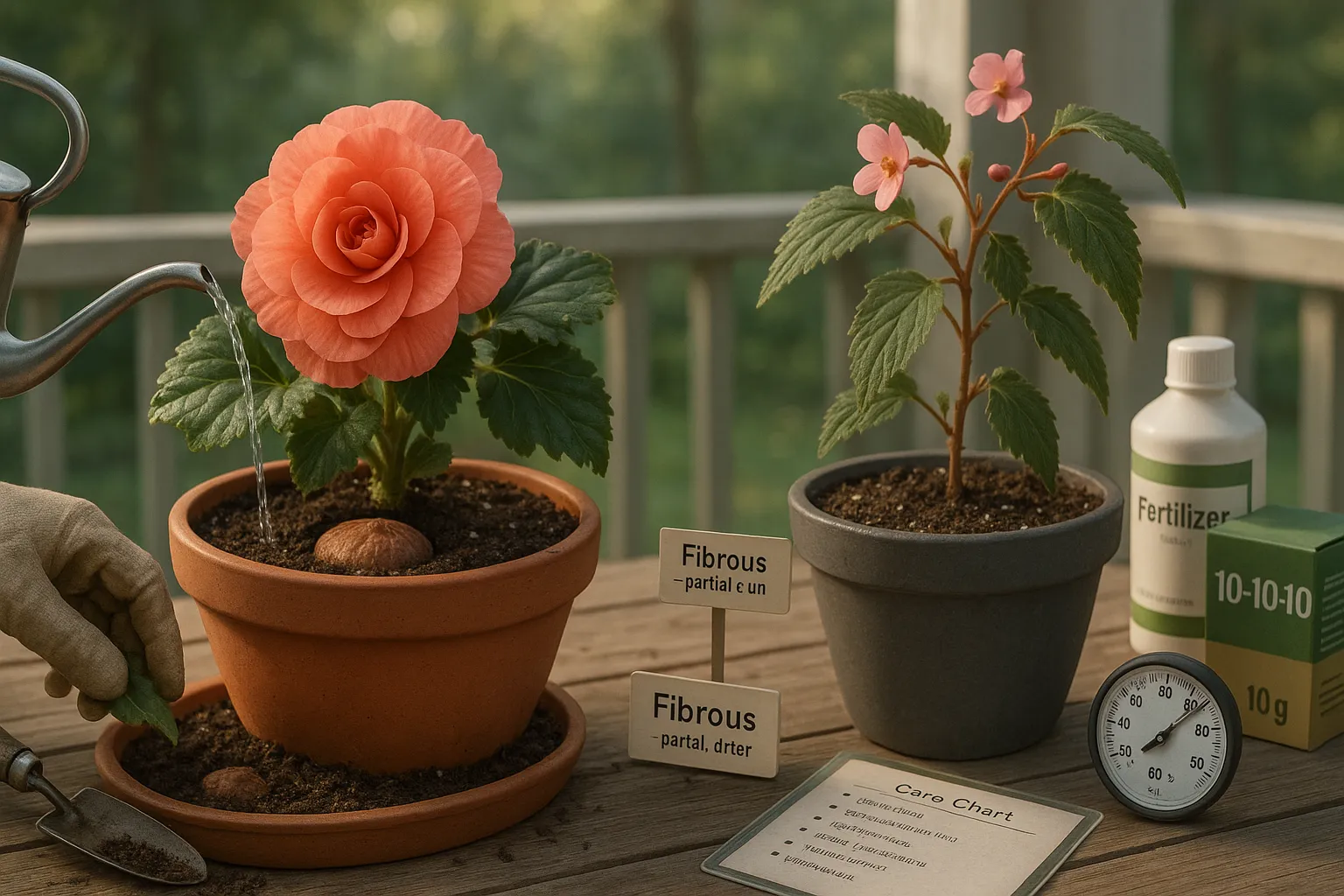
Fact: Light, soil, and moisture rules differ: tuberous begonias want bright shade and consistent moisture: fibrous types tolerate brighter, drier spots but still prefer partial shade.
Light, Soil, and Water Needs
Tuberous: Bright, indirect light: morning sun is okay but avoid hot afternoon sun that scorches petals. Use rich, free-draining soil with organic matter.
Fibrous: Partial shade to dappled sun. Many fibrous types tolerate more light (and less water) than tuberous. Both types like evenly moist soil: avoid waterlogging which causes rot.
Fertilizing and Feeding Schedule
Fact: Feed tuberous begonias lightly but regularly during active growth: feed fibrous types more sparingly over a longer season.
Use a balanced water-soluble fertilizer (e.g., 10-10-10) every 2–4 weeks when plants are actively flowering. For tuberous types, reduce feeding as plants go dormant so the tuber firms up. For fibrous types grown as houseplants, use a half-strength feed monthy.
Temperature, Humidity, and Microclimates
Fact: Tuberous begonias prefer cool nights and moderate humidity: fibrous types handle indoor humidity swings better.
Ideal daytime temps for tuberous types sit between 60–75°F: nights near 50–60°F improve flower set. Fibrous begonias tolerate 55–80°F. High humidity reduces leaf edge browning, especially for Rex and other large-leaf fibrous types.
Potting, Containers, and Soil Mixes
Fact: Use a light, airy mix for both types: tubers need gentle handling when planting.
Mix equal parts peat or coco coir, perlite, and high-quality potting soil for containers. Plant tubers shallowly with the eye or crown facing up. Fibrous types respond well to deeper pots that allow root spread for trailing growth.
Planting, Propagation, and Seasonal Care
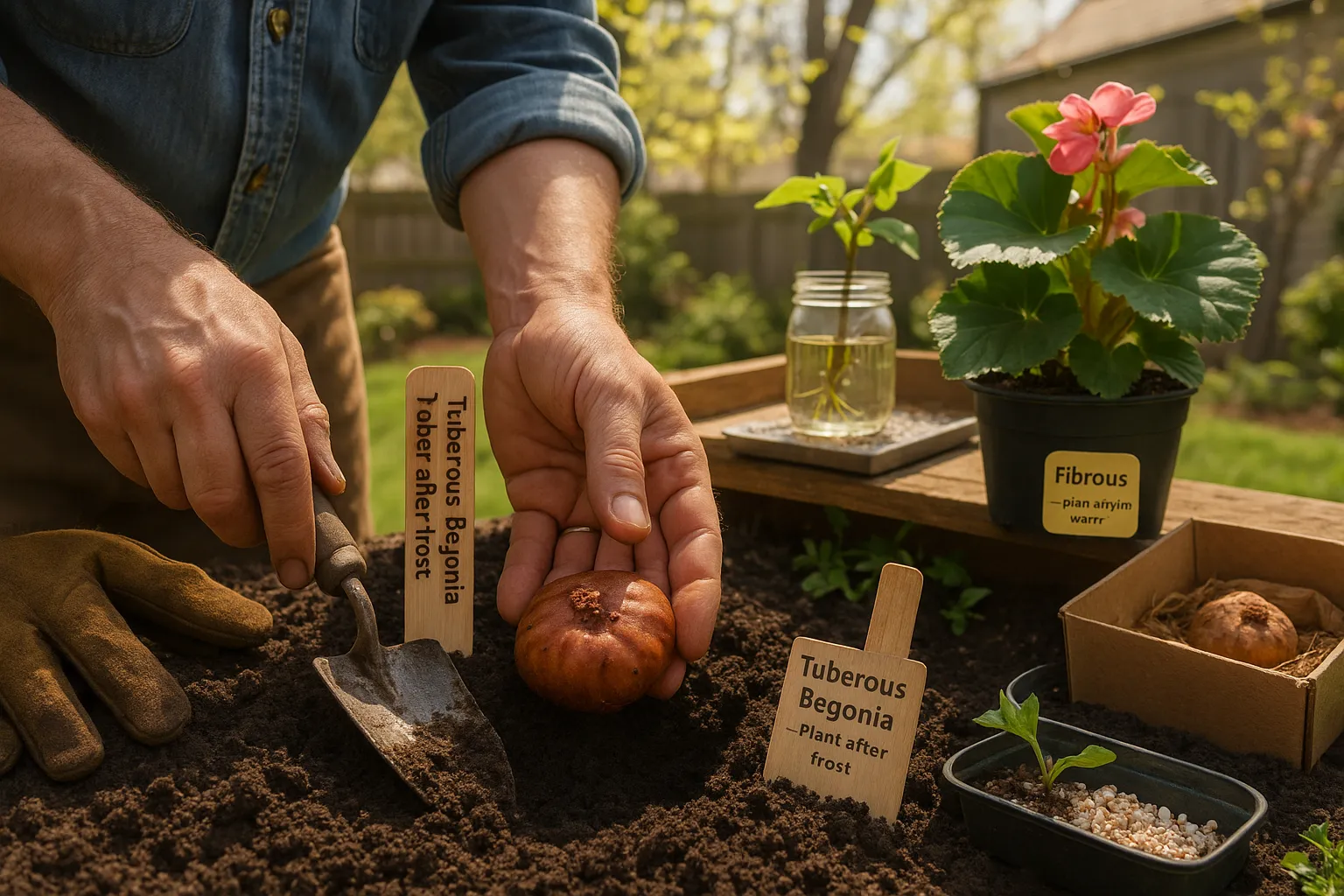
Fact: Plant tubers after frost: plant fibrous types anytime in warm, frost-free conditions.
When and How To Plant Each Type
Tuberous: Plant in spring after danger of frost, once soil warms. Place tuber so the top is just level with soil. Water sparingly until new shoots appear to avoid rot.
Fibrous: You can plant fibrous begonias in spring or summer. They establish quickly: keep soil moist during first two weeks.
Propagation Methods: Division, Cuttings, And Seeds
Fact: Tubers propagate by division and seeds: fibrous types propagate easily by stem cuttings, division, and seed.
To divide tubers, cut so each piece has an eye. Let cuts callus before replanting. Fibrous begonias root readily from a 3–4 inch stem cutting placed in moist perlite or water. Seeds exist for both, but seeds demand patience and sterile mix.
Overwintering Tubers Vs. Evergreen Fibrous Types
Fact: Tubers require lifting and dry storage in cool, frost-free conditions: many fibrous types can stay in place or overwinter indoors.
For tubers: Wait until foliage dies back, lift tubers, clean, dry for a day, then store in peat or dry vermiculite at ~45–55°F. Mistakes happen, some gardeners store them too wet and lose tubers to rot: I did that year one and lost favorites. Fibrous types: move containers indoors or mulch heavily in mild zones.
Common Problems, Pests, and Solutions
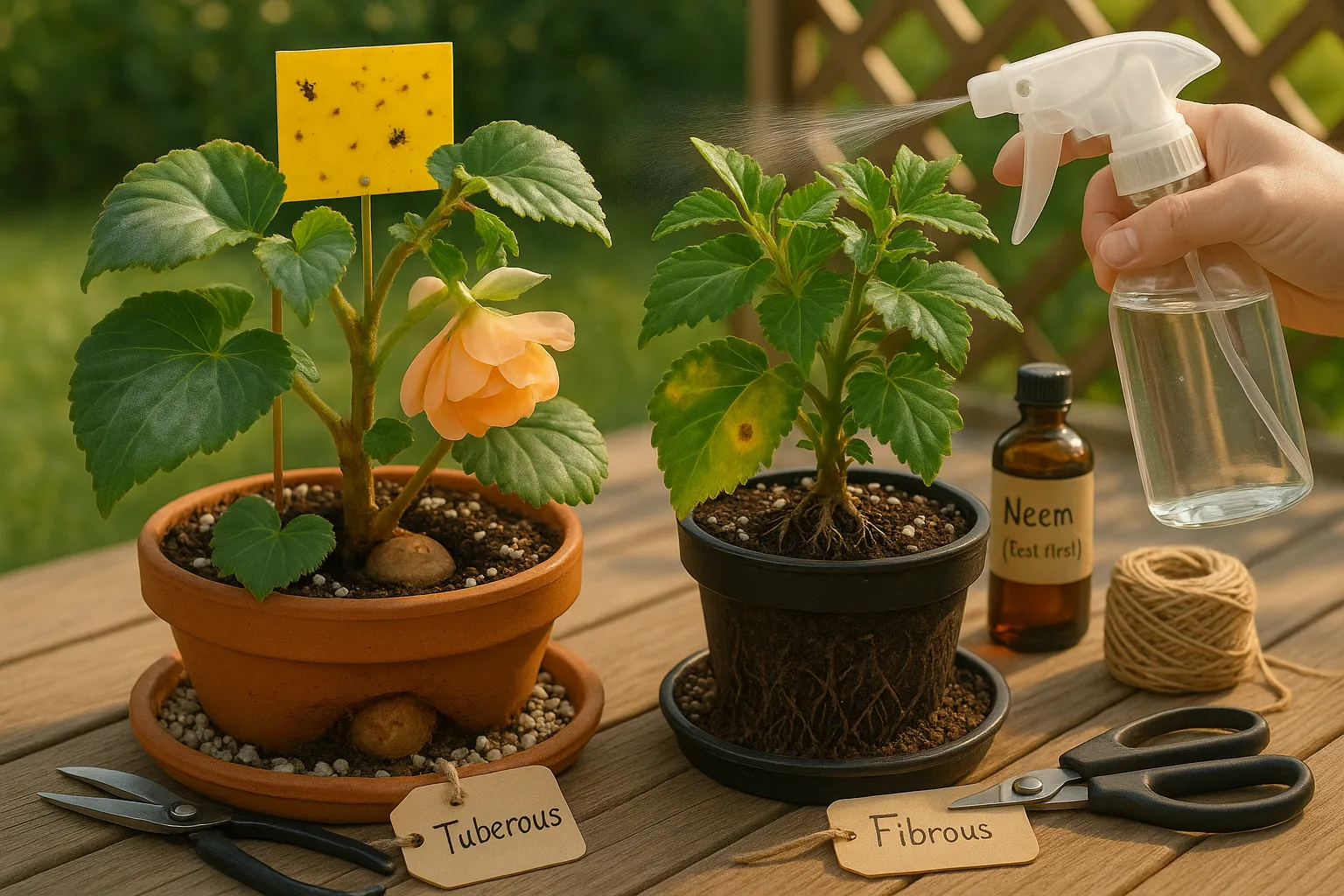
Fact: Rot and pests cause most failures: prevention beats cure.
Diseases And Cultural Issues (Rot, Leaf Spot, Wilting)
Root and tuber rot occur when soil stays soggy. Powdery mildew and bacterial leaf spot can hit fibrous types in poor air flow. Wilt often signals root issues or watering stress.
Actionable steps: Improve drainage, reduce overhead watering, remove infected leaves promptly, and rotate containers. Use clean tools and avoid crowding plants.
Insect Pests And Organic Control Options
Fact: Common insects include aphids, mealybugs, thrips, and fungus gnats.
Control: Blast aphids with water, use insecticidal soap for soft-bodied pests, and yellow sticky traps for gnats. Introduce beneficials like ladybeetles in larger beds. Neem oil helps but test on leaf underside first: some begonias react badly.
Troubleshooting Growth And Flowering Issues
Fact: Lack of flowering usually traces to light, nutrients, or stress.
If tuberous begonias form lots of foliage but few flowers, increase bright, indirect light and ensure regular feeding. If fibrous types drop buds, check for sudden temperature swings or overwatering. Keep notes each season, your microclimate will guide adjustments.
Selecting The Right Begonia For Your Space
Fact: Match plant habit to location: choose tuberous for dramatic pots: choose fibrous for mass plantings and low maintenance.
Best Choices For Containers, Hanging Baskets, And Indoors
Tuberous: Pick a tuberous hybrid with large blooms for a single-specimen container. They steal attention on a shady patio table.
Fibrous: Choose ‘Dragon Wing’ or wax begonias for hanging baskets. Rex and cane types work well indoors for leaf interest: they thrive under bright, indirect window light.
Best Choices For Shaded Beds And Borders
Fact: Fibrous begonias excel in shaded mass plantings: tuberous types create accents.
Massing: Use fibrous begonias in long shady borders for steady bloom. Accent: place tuberous groups at focal points where guests collect, near benches or steps.
Maintenance Level, Cost, And Design Considerations
Fact: Tuberous begonias demand higher seasonal care and slightly more cost due to lifting/storage: fibrous types cost less over time and require less fuss.
If you want low upkeep, choose fibrous types or keep tuberous as annuals and replace them each year. If you enjoy seasonal rituals, lifting tubers, labeling, and curating, you’ll love tuberous varieties. Budget-wise, expect to pay more for named tuberous hybrids and large Rex cultivars: common wax begonias are inexpensive and fill space quickly.
Choose based on your time, climate, and design goals, and you’ll set yourself up for a season of reliable shade color.

- The Top GT86 Alternatives for Sports Car Enthusiasts - September 16, 2026
- Vitamix Product Comparison: Which Blender Should You Buy? - September 15, 2026
- MGS6 Competitors: Top Stealth & Action Games - September 15, 2026
by Ellie B, Site Owner / Publisher