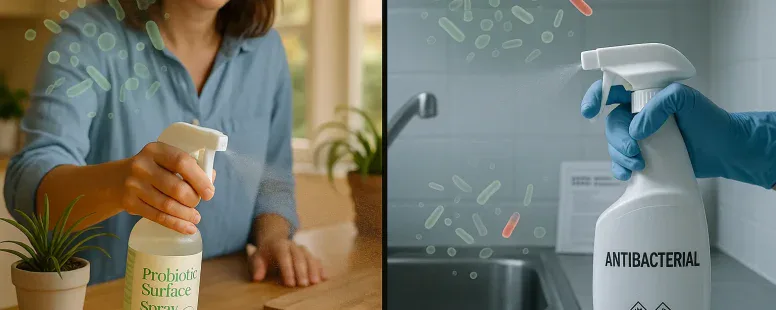
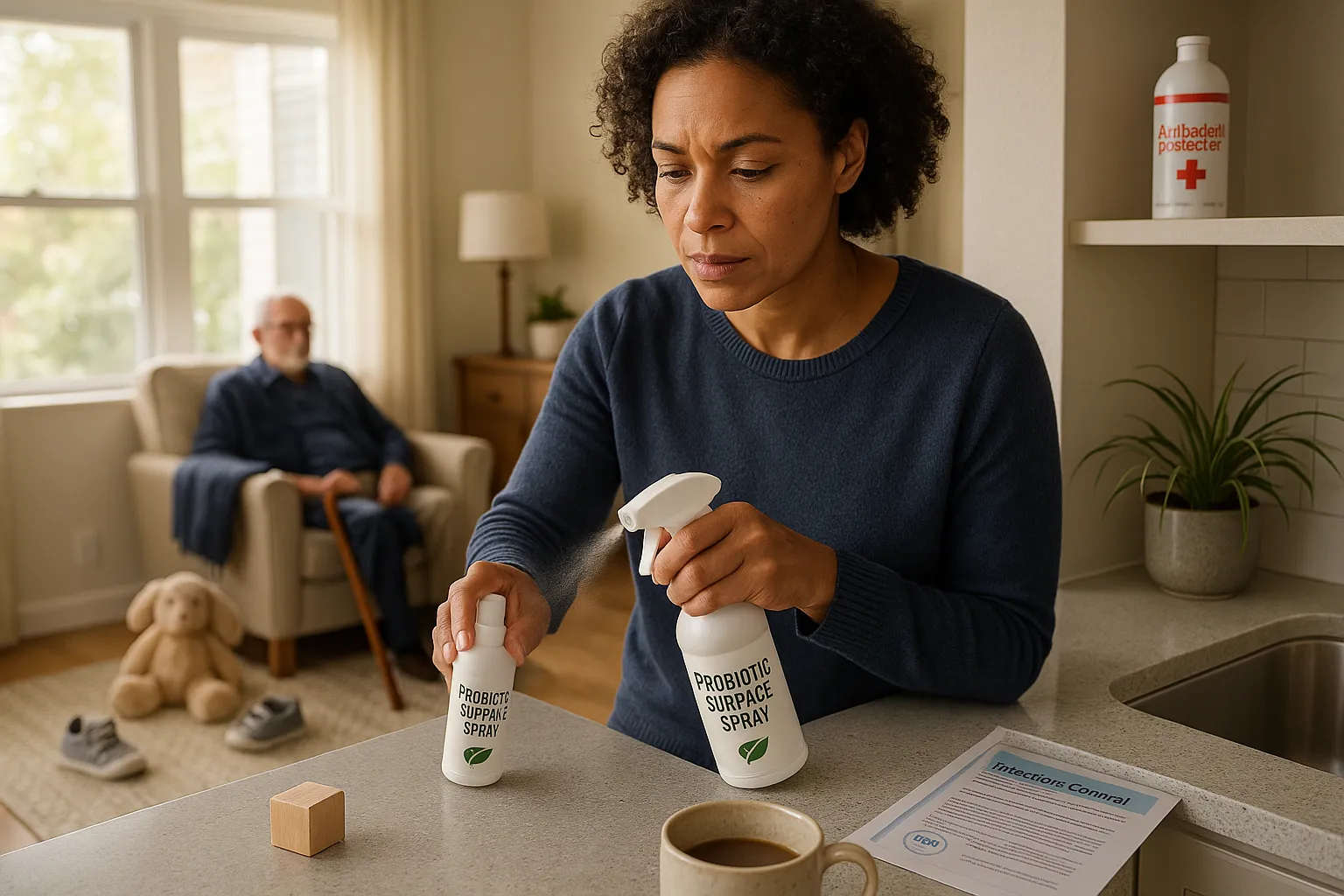
You can change a room’s smell, but you also change its invisible life. When you spray a disinfectant or a probiotic mist, you act on a hidden ecosystem: the surface microbiome. That ecosystem affects odors, material wear, and, even subtly, human exposures that shape immune cues. This article compares probiotic surface sprays and antibacterial sprays, explains how they work, and shows what the science says about short-term kills versus long-term community shifts. Read on to learn when each product helps, when it can harm, and how to make choices that protect both cleanliness and microbial balance.
How Surface Sprays Work: Mechanisms And Active Ingredients
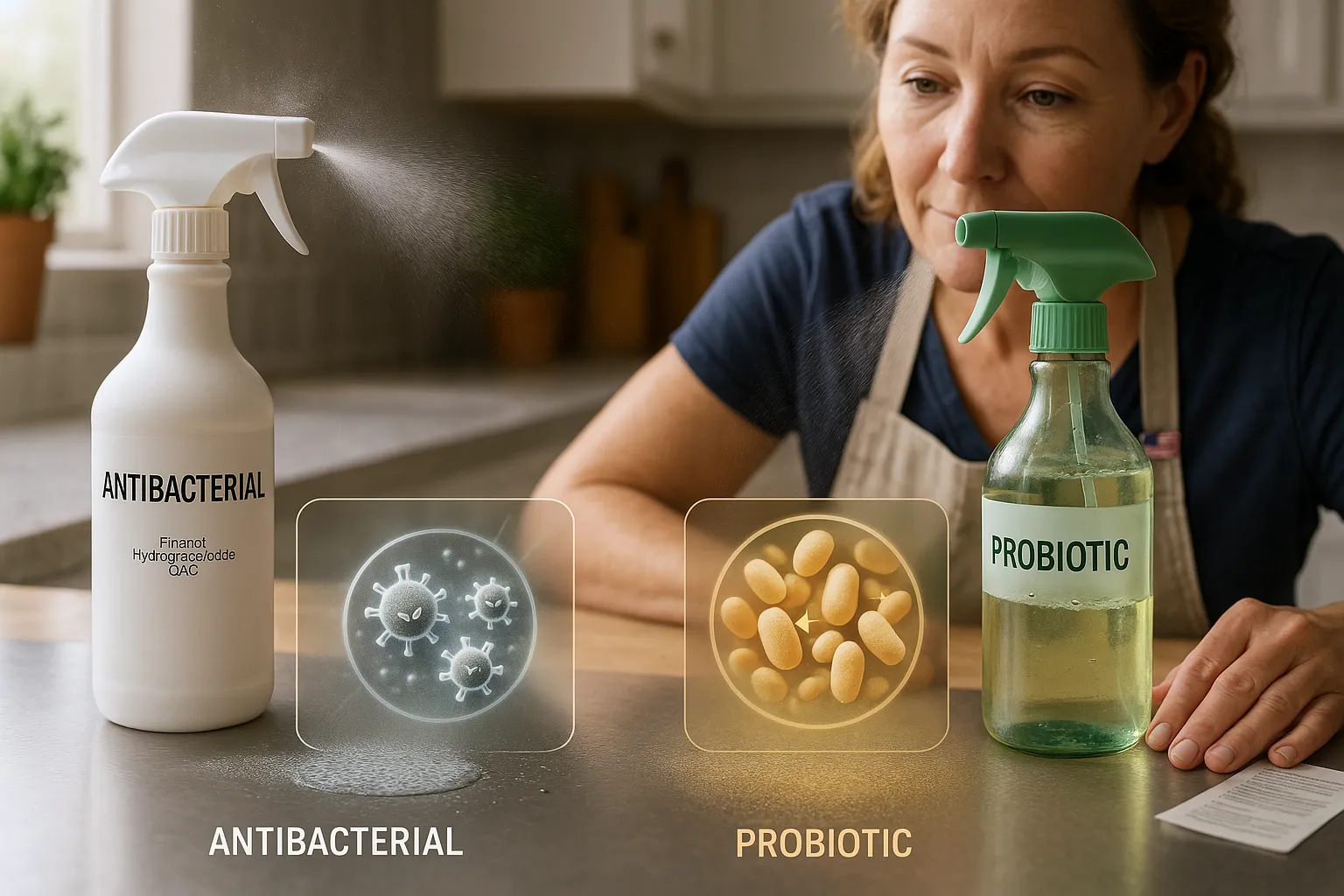
Fact: Antibacterial sprays rely on biocidal chemistry to kill microbes: probiotic sprays introduce live microbes that compete and modify environments.
Antibacterial Sprays: Mode Of Action And Common Chemicals
Antibacterial sprays kill or inactivate microbes on contact. They use active ingredients such as benzalkonium chloride, ethanol (70% and up), hydrogen peroxide, and sodium hypochlorite (bleach). Each chemical has a clear action: ethanol disrupts cell membranes, hydrogen peroxide oxidizes proteins and lipids, and quaternary ammonium compounds (QACs) destabilize cell envelopes. You spray, the biocide meets the microbe, and the microbe often dies within seconds to minutes. This mechanism reduces viable pathogen load immediately. Popular brands you may know, Lysol (Reckitt) and Clorox, list contact times on labels that tell you how long the surface must stay wet to achieve kill rates.
Probiotic Surface Sprays: Mechanisms And Typical Microorganisms Used
Fact: Probiotic sprays seed surfaces with live, beneficial bacteria that change community dynamics rather than killing everything.
Probiotic surface sprays use non-pathogenic strains, often Bacillus species (Bacillus subtilis, Bacillus pumilus) or select lactic acid bacteria. These products work by competitive exclusion: introduced strains consume nutrients, occupy adhesion sites, and sometimes secrete enzymes or bacteriocins that suppress opportunists. The result is a shift in community composition and metabolism. Brands like Probiotic Cleaning Solutions and EvoraProbiotic (examples: check labels) market formulas meant to persist for days to weeks. The mechanism is ecological: you alter the resource map and the competitors, and the surface microbiome reorganizes accordingly.
Immediate Efficacy: Killing Pathogens Versus Competitive Exclusion
Fact: Antibacterial sprays give fast pathogen reduction: probiotic sprays show slower but sustained changes that reduce re-colonization.
Evidence For Pathogen Reduction With Antibacterial Sprays
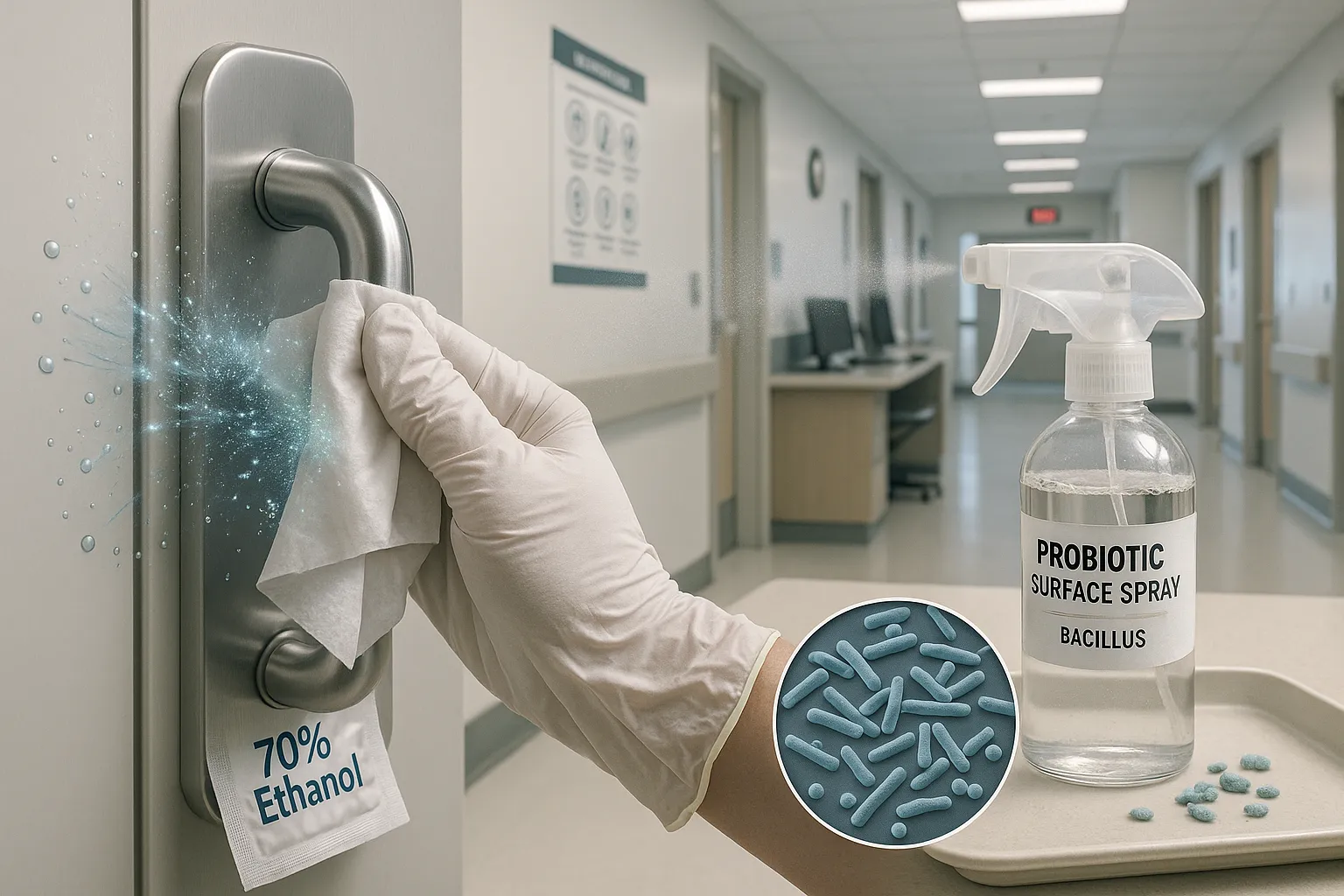
Clinical and laboratory antibacterial sprays lower culturable pathogen counts immediately. For example, ethanol-based wipes remove >99% of Escherichia coli and Staphylococcus aureus within 30 seconds in controlled tests. The CDC recommends disinfectants for use on high-touch surfaces during outbreaks because they reduce transmission risk quickly. But this immediate efficacy has limits. Many studies report rapid recontamination: within hours, surfaces in busy settings regain microbes from hands, air, and fomites. Repeated QAC use can enrich for tolerant strains and select for cross-resistance to some antibiotics, a risk supported by surveillance data from hospitals and wastewater studies.
Evidence For Pathogen Control With Probiotic Sprays Over Time
Probiotic sprays rarely show the instant log reductions that disinfectants produce. Instead, field studies report gradual shifts: within days to weeks the proportion of pathogenic taxa drops, and overall community stability increases. A 2016 pilot in Italian hospitals using Bacillus-based cleaners found reduced surface Staphylococcus counts and fewer healthcare-associated infections over months (note: results vary and more trials exist). You should expect slower onset but longer persistence. The probiotic strains often persist on surfaces and keep opportunists from re-establishing as quickly as after a chemical disinfectant. Still, rigorous randomized trials remain limited: evidence is promising but not universally conclusive.
Impact On Environmental And Human Microbiomes
Fact: Antibacterial sprays reduce microbial diversity and can favor resistant organisms: probiotic sprays increase certain taxa and may improve community resilience.
How Antibacterial Sprays Alter Microbial Diversity And Resistance Risks
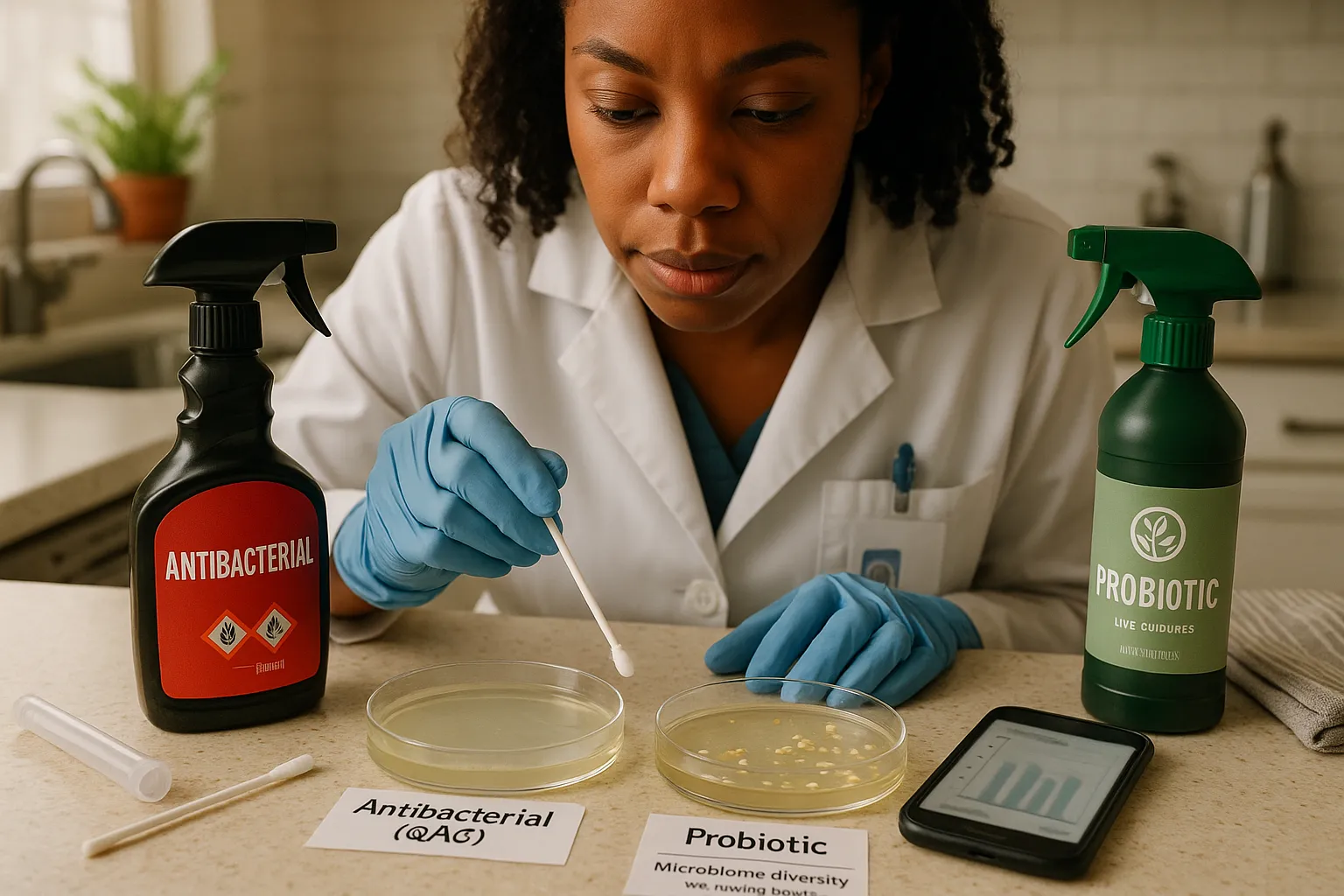
Antibacterial sprays cut overall abundance and diversity on surfaces. Diversity loss matters because diverse communities often resist invasion by pathogens. Studies from homes and hospitals show that heavy disinfectant use correlates with lower alpha diversity and altered beta diversity, meaning both fewer species and different species composition. This creates ecological vacancies that some hardy or resistant species fill. Environmental monitoring studies link frequent QAC exposure to rises in genes encoding efflux pumps and QAC-tolerance determinants. Wastewater surveillance shows these genes circulate beyond the treated environment, suggesting selection pressure can extend to broader microbial pools.
How Probiotic Sprays Influence Microbial Community Structure And Resilience
Probiotic sprays add specific taxa and metabolic functions. This addition increases functional redundancy: if one species dies, others perform similar tasks, making the community more resilient to perturbation. In trials where probiotics were used regularly, researchers observed increases in microbial taxa associated with benign surface functions (biofilm formers that do not harm humans) and decreases in opportunistic pathogens. You should know, but, that adding live microbes can change odor profiles, material biofilm dynamics, and cleaning needs. Long-term ecological effects depend on strain choice, frequency of application, and local human traffic.
Health Implications For Indoor Environments And Occupants
Fact: Surface microbiome shifts can influence allergy risk, immune training, and infection transmission, but effects vary with exposure and population.
Links Between Surface Microbiome Changes And Allergies, Immunity, Or Infections
You change exposure when you change surface microbes. Epidemiological research links early-life exposure to diverse microbes (pet-associated, farm environments) with lower rates of asthma and allergic sensitization. Surfaces that preserve microbial diversity may contribute to that exposure. Conversely, surfaces repeatedly sterilized may reduce benign microbial encounters: some studies hypothesize this alters immune education, especially in young children. For infections, disinfectants reduce immediate transmission risk in outbreaks. But frequent disinfectant use can select for resilient pathogens on surfaces, which may raise long-term risks in closed settings like hospitals.
Special Considerations For Sensitive Populations (Children, Elderly, Immunocompromised)
Fact: Sensitive people need a different balance: sometimes immediate disinfection is essential, other times gentle microbiome-aware approaches help.
If you care for neonates, elderly people with wounds, or immunocompromised patients, follow institutional infection control guidance. In outbreak scenarios, Clostridioides difficile, norovirus, you must use EPA-registered disinfectants with proven efficacy. For general living spaces where occupants are healthy, probiotic approaches may reduce opportunists while preserving exposure to benign microbes. Always weigh risks: a probiotic spray should not replace proper sterilization when infection risk is high. Talk to clinicians when in doubt, and consider hybrid routines that use targeted disinfection for high-risk events and probiotics for routine maintenance.
Practical Guidance: Choosing And Using Surface Sprays Safely
Fact: Use antibacterial sprays for immediate, high-risk disinfection: use probiotic sprays for ongoing microbiome management and odor control.
When Antibacterial Sprays Are Appropriate And How To Use Them Responsibly
You should use antibacterial sprays when you need fast pathogen kill: after raw meat spills, during infectious illness, or in healthcare settings during outbreaks. Read labels and follow contact times: a spray that dries too fast may not disinfect. Avoid overuse in low-risk situations. Rotate active ingredients occasionally to limit selection pressure on microbes. Store disinfectants safely, out of reach of children, and ventilate areas because fumes (bleach, QACs) irritate lungs. The CDC and EPA list registered disinfectants and recommended use cases: check those resources before changing protocols.
Best Practices For Using Probiotic Surface Sprays And Integrating With Cleaning Routines
You can integrate probiotic sprays into regular cleaning. First, remove visible dirt and grease: heavy soils block adhesion of probiotic strains. Apply the probiotic per label, and allow it to dry so microbes can colonize. Use probiotics on low-touch or non-critical surfaces for maintenance and odor control, floors, walls, drains. Do not rely on probiotics for sterilization in medical contexts. Combine methods: disinfect high-touch sites when needed, then use probiotic products on broader surfaces to support a balanced microbiome. Track outcomes: note odor, staining, or changes in skin symptoms among occupants. If problems appear, pause use and consult product data sheets or an industrial hygienist.
Practical warnings: do not mix probiotic sprays with bleach or ammonia, they react poorly. And recognize that probiotic strains come from companies like CleanHealth (example) and some academic spin-offs: check strain safety data and dossiers. You may have to try one product to see how it performs in your home: results vary with humidity, building materials, and foot traffic.
Call-to-action: choose based on risk, test with small-area trials, and keep cleaning records. Your choices will shape the invisible ecology in your home or workplace, for better or worse.
To provide the best experiences, we use technologies like cookies to store and/or access device information. Consenting to these technologies will allow us to process data such as browsing behaviour or unique IDs on this site. Not consenting or withdrawing consent, may adversely affect certain features and functions.
Functional
Always active
The technical storage or access is strictly necessary for the legitimate purpose of enabling the use of a specific service explicitly requested by the subscriber or user, or for the sole purpose of carrying out the transmission of a communication over an electronic communications network.
Preferences
The technical storage or access is necessary for the legitimate purpose of storing preferences that are not requested by the subscriber or user.
Statistics
The technical storage or access that is used exclusively for statistical purposes.The technical storage or access that is used exclusively for anonymous statistical purposes. Without a subpoena, voluntary compliance on the part of your Internet Service Provider, or additional records from a third party, information stored or retrieved for this purpose alone cannot usually be used to identify you.
Marketing
The technical storage or access is required to create user profiles to send advertising, or to track the user on a website or across several websites for similar marketing purposes.