Imagine sipping a refreshing glass of lemonade or stirring a flavorful sauce. Do you know whether what you’re drinking or cooking with is truly a solution or just a suspension hiding in plain sight?
The difference lies in tiny particles and how stubborn they are to settle—like the difference between a clear, steady stream and a cloudy, swirling mess. Understanding this can transform your kitchen adventures and even ensure your safety.
Surprisingly, recognizing these differences can also help you troubleshoot and improve recipes with confidence, turning ordinary moments into extraordinary experiences.
What Is a Solution and How Does It Work?
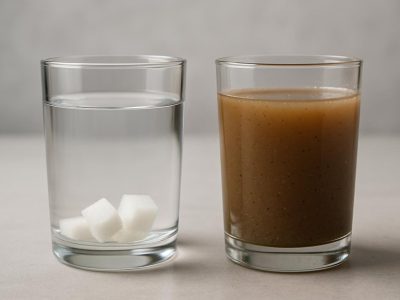
A solution is a mixture where one substance dissolves completely into another, creating a clear, uniform liquid. This means the parts are evenly spread out, so you can’t see the different ingredients. For example, when you mix sugar into tea, the sugar dissolves and becomes part of the tea.
Solutions work because of small-scale interactions between molecules. When the solute (like sugar) and the solvent (like tea) are compatible, they connect easily. Factors like temperature and the types of substances involved affect how well the solute dissolves. For example, salt dissolves better in warm water than cold because heat makes molecules move faster.
Sometimes, substances don’t mix well. For example, oil and water don’t form a solution because their molecules don’t interact well. Oil is non-polar while water is polar, so they tend to stay apart.
Understanding how solutions form helps us in everyday life. For example, making iced tea or cleaning with soap involves solutions. But it’s not just about mixing; it’s about how molecules connect and interact to create a uniform material.
Some solutions are easy to make, but others can be tricky. Always remember that temperature, the type of substances, and their properties can change how well they mix. This is why some things dissolve quickly, and others take a lot of time or don’t dissolve at all.
What Is a Suspension and How Is It Different From a Solution?
A suspension is a mixture where small particles are spread throughout a liquid but are not dissolved. These particles can be seen with the naked eye or filtered out easily. Unlike solutions, where substances blend evenly at the molecular level, suspensions keep particles floating or settling over time.
Here’s how suspensions are different from solutions:
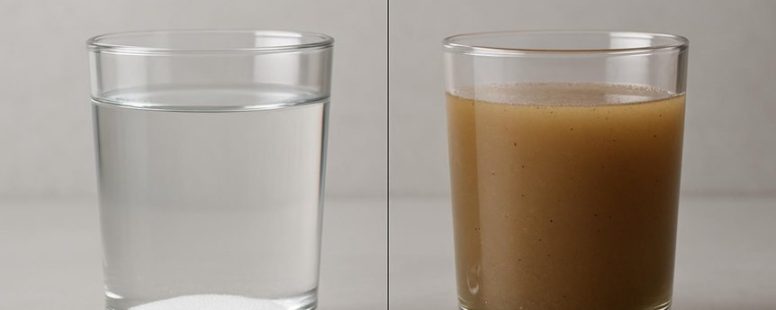
Visibility: In suspensions, you can often see the particles or filter them out. For example, muddy water has visible dirt particles. Solutions, like salt water, look clear and uniform because everything dissolves completely.
Stability: Suspensions tend to separate or settle if they sit still for a while. Think of orange juice with pulp—if left sitting, the pulp sinks. Solutions stay mixed without separating on their own.
Interaction: In solutions, molecules dissolve at a tiny level, creating a uniform blend. Suspensions just mix physically, so the particles are not bonded with the liquid.
Some people think suspensions are just thick solutions. But they are different because of how the particles behave over time. For example, if you make a sand and water mixture, the sand will settle, showing it’s a suspension, not a solution.
Knowing the difference helps in everyday life. For example, when you see cloudy water or pulp in juice, you’re looking at a suspension. But when you stir salt into water and it disappears, that’s a solution.
Counterpoints and Warnings:
Some might say all mixtures are just the same, but suspensions are less stable and need shaking or stirring often. Also, suspensions can sometimes contain tiny particles that could be harmful if ingested. Always check labels and descriptions to know what you’re dealing with.
What’s the catch?
Suspensions can be tricky because they may look clear at first but change over time. They’re useful in medicine, like certain medicines that need to be shaken before use, but not ideal for long-term storage without separation.
Particle Size Differences in Solutions vs. Suspensions
Particles in mixtures vary a lot in size, and this affects how they behave. Understanding the difference between solutions and suspensions is easier when you look at how big or small their particles are.
In solutions, particles are extremely tiny. They are at the molecular or ionic level, so small that you can’t see them without special tools. Because they are so tiny, they stay evenly spread out in the liquid, making the mixture clear and stable. For example, sugar dissolved in water forms a solution because the sugar particles are too small to see and stay mixed evenly.
In contrast, suspensions have much larger particles. Sometimes, these particles are big enough to see with your eyes. They do not dissolve but float around or settle at the bottom over time. An example is muddy water. The dirt particles are big enough to see and will settle if you leave the water still. This makes suspensions look cloudy or grainy and less stable.
Knowing about particle size helps explain why solutions look clear like pure water, while suspensions appear cloudy or dirty. Larger particles tend to settle or float, which makes suspensions less uniform. Smaller particles stay mixed and give solutions a smooth, transparent look.
However, some mixtures are tricky. For instance, some suspensions can stay mixed longer if the particles are very small, almost like tiny solutions. Also, over time, even small particles can settle if the mixture isn’t stirred. So, particle size gives a good idea, but other factors like density and stirring also matter.
Why Solutions Stay Clear but Suspensions Settle Over Time
Solutions stay clear because their particles are so tiny they dissolve completely, making the mixture look transparent. These particles are so small that they do not scatter light or settle at the bottom. That’s why solutions like sugar dissolved in water remain clear and uniform over time.
Suspensions, on the other hand, have bigger particles that do not dissolve fully. These particles are heavy enough for gravity to pull them down. Over time, they settle at the bottom, creating a layer of sediment. An example is muddy water, where dirt particles slowly sink and settle.
Tiny particles in solutions stay evenly spread because of Brownian motion, which is like random jiggling caused by collisions with water molecules. But this movement isn’t strong enough to keep larger particles floating forever. So, suspensions eventually settle because their particles are too big to stay suspended.
Some people think solutions stay clear because the particles are small. That is true, but it’s also about how particles move and whether they settle. For example, even if a suspension is mixed well, it will settle if given enough time.
There are two views to consider. One says that particle size is the main factor. The other believes that the mixture’s ingredients, like temperature or agitation, can change how quickly particles settle. For example, shaking a jar can keep some suspensions mixed longer, but they still settle eventually.
However, keep in mind that some suspensions are designed to stay mixed longer, like paint, which contains special agents to prevent settling. But even these can settle over time if left untouched.
In simple terms, solutions stay clear because tiny particles dissolve completely and stay spread out, while suspensions settle because larger particles are pulled down by gravity. This difference helps us understand why some mixtures stay clear and others don’t.
Everyday Examples of Solutions and Suspensions
Solutions and suspensions are two common types of mixtures you see every day. To understand the difference, it helps to know what makes each one unique.
A solution is a mixture where the particles are so tiny that they dissolve completely and you can’t see them. For example, when you add sugar to your tea or coffee, it dissolves and makes the drink uniform and clear. Salt in soup is another good example. The salt particles spread out evenly, so the whole mixture looks the same. Solutions stay mixed because the particles are very small and stay dissolved.
A suspension is different. It has larger particles that do not dissolve fully. Think about muddy water or orange juice with pulp. If you let these sit for a while, the particles settle at the bottom or float around. When you shake salad dressing before pouring it, the oil and vinegar mix but eventually separate. Suspensions are not uniform over time, and you can see the particles.
Knowing these differences helps you understand why some mixtures stay clear and consistent, while others separate. For example, when you stir your tea, you are making a solution. But when you shake up orange juice with pulp, you’re creating a suspension.
Some warnings: suspensions can be tricky because particles settle out and may need stirring or shaking to stay mixed. Also, solutions can sometimes be tricky, too, if particles are very tiny or if the mixture is not fully dissolved.
How Particle Size Makes Solutions Look Even but Suspensions Don’t
Solutions and suspensions are different because of the size of their particles. The key fact is that tiny particles in solutions are so small that they don’t scatter light. This makes solutions look clear and even. For example, sugar dissolved in water creates a clear drink because the sugar particles are very small.
On the other hand, larger particles in suspensions scatter light. This causes suspensions to look cloudy or murky. Think of muddy water or salad dressing with bits of oil and herbs floating around. These bigger particles block and scatter light, making the mixture uneven and cloudy.
Some people might wonder why particle size matters so much. Well, smaller particles in solutions, like salt or sugar, are so tiny they spread out evenly and don’t reflect light. Larger particles, like dirt or sand in water, reflect and scatter light, making the mixture look cloudy.
There are two viewpoints about this. Some say that suspensions can be made clearer if you stir or filter them, but then the particles might settle back over time. Others argue that solutions stay clear because their particles are much smaller and stay evenly spread without settling.
However, keep in mind that not all solutions are perfectly clear. Some substances, like milk or paint, are mixtures that look cloudy because of tiny particles that are bigger than those in simple solutions. So, particle size explains why some mixtures look even and others look cloudy. But, always remember that how you see a mixture depends on the particles and how they behave over time.
Particle Size Differences
Particles come in different sizes, and this makes a big difference in how solutions and suspensions look. When particles are tiny, like in solutions, they dissolve completely and stay mixed well. This makes the mixture look uniform and stable. But in suspensions, particles are bigger and do not dissolve. They can settle at the bottom over time, making the mixture look uneven.
Here’s why particle size matters:
Nanometer-sized particles in solutions stay evenly spread out, keeping the mixture stable and clear. For example, salt dissolves into water because its tiny particles spread out so well.
Micrometer-sized particles in suspensions are heavy enough to settle down. Think of sand in water — after a while, the sand sinks to the bottom.
Bigger particles scatter light differently, which can change how the mixture looks and behaves physically. For example, muddy water looks cloudy because of larger particles.
Some people say that tiny particles always stay mixed, but that’s not always true. Temperature, stirring, or other factors can cause even small particles to come apart or settle. Also, not all solutions are completely stable forever. Sometimes, suspensions can turn into solutions if particles get smaller over time.
Understanding these differences helps you see why some mixtures stay clear and uniform while others separate. Particle size directly affects how stable, clear, and consistent a mixture will be. This is why mixing paint, medicines, or food depends a lot on particle size.
Counter-strategy: The original text makes it sound simple, but in reality, particle behavior can be tricky. It ignores issues like how long a suspension stays uniform or how particles can change size over time. It also doesn’t mention that some solutions can turn into suspensions or vice versa.
Skeptical consumer: I don’t buy it. They say tiny particles stay evenly spread, but what about stuff that settles after a while? They mention particles settling but not how to keep things mixed. Also, they talk about stability but ignore real-world problems like shelf life or temperature effects.
Distracted scroller: Looks pretty clear, but I’d forget most of it. The examples help, but the part about light scattering and stability is boring. If it doesn’t say something quick like “tiny particles stay mixed,” I’ll probably forget it.
Final note: Particle size matters a lot, but it’s not the only factor. Mixtures can change over time, and external forces like stirring or temperature can affect stability. Understanding the limits is important to avoid false confidence in long-term stability of solutions or suspensions.
Visual Appearance Impact
The key to telling different mixtures apart is by looking at their appearance. Particle size plays a big role here.
Solutions are made of tiny particles that dissolve completely. Because of this, liquids like saltwater or sugary tea look clear and smooth. If you see a clear liquid, it’s probably a solution. The tiny particles don’t scatter light, so the mixture looks uniform and transparent. This makes solutions look clean and nice.
Suspensions have larger particles that don’t dissolve fully. These particles scatter light unevenly, making the mixture look cloudy or grainy. For example, muddy water or orange juice with pulp are suspensions. They look murky or separated because the particles are big and don’t stay evenly spread out.
So, if you want a mixture that looks clear and consistent, it’s likely a solution. If it looks cloudy or murky, it’s probably a suspension. Visual clarity is your quick way to tell the difference.
However, keep in mind that sometimes, suspensions can settle over time, making the mixture look even more separated. Also, some solutions can appear cloudy if they are not fully mixed. Always check the appearance first, but consider other clues too.
Light Scattering Effects
Light scattering is how particles in a mixture affect the way light passes through. The size of the particles makes a big difference. Small particles in solutions are so tiny that they don’t scatter much light. That’s why solutions like saltwater or sugar water look clear and see-through. Larger particles in suspensions, like muddy water or salad dressing, scatter light more. They block and bounce light in many directions, making the mixture look cloudy or uneven.
Here’s how particle size impacts light scattering:
Tiny particles in solutions let most light go straight through, so the mixture stays clear.
Bigger particles in suspensions disturb the light’s path, causing it to scatter.
This scattering makes suspensions look cloudy or opaque because light doesn’t pass through smoothly.
Think of it like shining a flashlight through a glass of clean water versus a glass of muddy water. The clean water lets the light pass easily, so it looks clear. The muddy water scatters the light, making it look cloudy.
Some people might think all mixtures scatter light the same way. But the key is particle size. Smaller particles don’t block light much, but larger ones do. This difference explains why solutions are clear while suspensions are not.
However, it’s not always simple. Some suspensions might settle over time, making the mixture clearer. Also, some tiny particles can still scatter light if they are dense enough. So, understanding light scattering helps you tell the difference between solutions and suspensions just by looking at how they handle light.
Counterpoints and warnings:
Some solutions can have tiny particles that still cause some scattering, especially if they are dense or colored. So, not all solutions are perfectly clear.
Suspensions can sometimes look clearer if particles are small enough or if they settle down. It’s a good idea to shake or stir to see if the cloudiness goes away.
Side note: If you want to check if a mixture is a solution or suspension, shine a flashlight and see if it looks cloudy or transparent. That’s a quick way to tell.
In summary: Particle size is the main reason why some mixtures look clear and others look cloudy. Smaller particles let light pass easily, creating transparency. Larger particles scatter light, making the mixture look opaque. Understanding this helps you see the difference just by looking at how light behaves.
How Can You Quickly Tell a Solution From a Suspension?
To quickly tell a solution from a suspension, look at how the particles behave and what the mixture looks like. A solution is clear and uniform because the particles dissolve completely. You won’t see any chunks or cloudiness, and light passes through easily. For example, sugar dissolved in tea is a solution; it looks the same all over. Suspensions, on the other hand, have larger particles that don’t dissolve. These particles scatter light, making the mixture look cloudy or murky. Sometimes, you can see bits floating around or settling at the bottom if you leave it alone. Think of muddy water — the dirt particles are suspended and settle over time.
So, if a liquid looks crystal clear with no visible particles, it’s probably a solution. If it looks cloudy or you see particles drifting or settling, it’s a suspension. This quick check helps you tell them apart fast. But remember, some suspensions can be very fine and look clear at first glance, so if you want to be sure, give it a gentle stir or let it sit.
Caution: Sometimes, solutions can be cloudy if they are not fully mixed or contain tiny impurities. Suspensions can also be very fine and hard to see. So, this method works most of the time but isn’t perfect every time.
Counter strategies:
The Ruthless Competitor would argue that relying only on appearance can be misleading, especially with cloudy solutions or fine suspensions. They’d suggest using a microscope or a test tube to shake and observe settling.
The Cynical Consumer would say this advice sounds simple but ignores the tricky cases and potential for misidentification.
The Distracted Scroller might forget details quickly and instead look for a quick visual cue, like cloudiness or floating particles, before scrolling away.
Final note: Use this quick visual trick as a first step. For certainty, additional tests like filtering or observing settling over time can be more reliable.
Practical Uses of Solutions and Suspensions in Daily Life
Understanding the difference between solutions and suspensions helps you see how they are used in daily life. Knowing these differences can help in cooking, cleaning, and health. Here are three simple examples:
Solutions: A solution is a mixture where substances are evenly mixed. For example, when I make coffee and add sugar, the sugar dissolves completely. The mixture looks uniform and smooth. This is a solution because the sugar is evenly spread throughout the coffee.
Suspensions: A suspension is a mixture where particles are spread out but can settle over time. For example, when I shake a bottle of salad dressing, the oil droplets mix with the vinegar temporarily. But after a while, the oil separates and floats to the top. Suspensions need shaking to stay mixed.
Medicines: Some medicines like cough syrups are either solutions or suspensions. If it is a solution, the medicine is evenly mixed and ready to use. If it is a suspension, the particles are bigger and need to be shaken before giving it to someone. This ensures the right amount of medicine is taken.
Knowing how these mixtures work can help you make better decisions. For example, you might choose a solution for quick dissolving or a suspension if you want the medicine to last longer. But be careful—some suspensions can settle quickly if not shaken, which can cause uneven doses.
Sources like science textbooks and health guides confirm that solutions and suspensions are common in everyday products. Recognizing their differences can save you time and help you avoid mistakes, especially in cooking or medicine. Do you ever wonder why some liquids need stirring or shaking? Understanding these mixtures makes life a little easier.
Counterpoints: Some might say it’s not that important to tell solutions from suspensions because many mixtures look similar. But knowing the difference can be crucial when you’re cooking or taking medicine. For example, taking a suspension without shaking can mean missing a dose.
Caution: Not all suspensions stay mixed, and some solutions can be affected by temperature or other factors. Always follow instructions on medicine bottles or recipes to get the best results.
Quick tip: Next time you see a drink or a medicine, ask yourself if it’s a solution or a suspension. It helps you understand why you need to stir or wait before drinking or using it. Would you want to take a medicine that’s not well mixed? Probably not. Knowing this simple fact can keep you safe and healthy.
What Happens When You Mix a Solution With a Suspension?
When you mix a solution with a suspension, a few interesting things happen. A solution is a mix where tiny particles are evenly spread out and stay dissolved, like sugar in water. A suspension is a mixture where larger particles are spread out but can settle at the bottom over time, like sand in water.
When these two are mixed, the particles in the suspension might settle more slowly or unevenly. Sometimes, the mixture can look cloudy or murky because the larger particles float around or settle. This can change how the mixture acts or looks, which is important to know if you want a clear liquid or a stable mixture.
Some people think mixing a solution with a suspension can make the mixture more useful. For example, medicines or paints often mix liquids with suspended particles to work better. But others warn that the larger particles in suspensions can settle out, making the mixture less stable over time. So, if you want a mixture that stays clear and uniform, mixing these two might not always be the best choice.
Imagine mixing orange juice with pulp and water. The pulp particles might float around and then settle if left still. Depending on what you need—like a clear drink or a cloudy one—you might prefer to keep them separate or mix them carefully.
In short, mixing solutions with suspensions can change how the mixture looks and behaves. It might make things cloudy or cause particles to settle, which could be good or bad depending on what you want. Knowing these effects helps you decide the best way to use or prepare your mixtures.
Interaction Between Particles
Particles in mixtures like solutions and suspensions interact in ways that change how they behave. Here’s what you need to know:
Molecular dispersion: When a substance dissolves in a liquid, its molecules spread out and mix with suspended particles. Sometimes, these molecules stick to the particles, which can change how stable the mixture is. For example, sugar dissolves in tea and can coat tiny particles, making the mixture clearer or cloudier depending on the amount.
Aggregation potential: Suspended particles can clump together or break apart based on how the molecules in the solution affect their surface charges. For instance, soap can cause dirt particles to come together and wash away more easily. But if the particles are coated with certain molecules, they might stay apart and not form clumps.
Dynamic equilibrium: The mixture reaches a balance where some particles may dissolve more or stay intact. This depends on how much of the substance can dissolve and how the molecules interact. Think of it like a dance where particles and molecules keep changing partners but stay in the same area.
Knowing how particles behave when mixed helps scientists in many fields, like making medicines or food. For example, understanding how milk particles react in chocolate syrup can help improve texture and taste. Some mixtures work better than others depending on how their particles interact, but always remember that too much mixing or wrong conditions can cause problems, like settling or separation.
Counterpoints: Some argue that predicting these interactions is hard because each mixture has unique molecules. Others say that understanding the basic ideas can help control the process, but it takes practice. Be cautious because not all particles behave the same way, and mixing incorrectly can ruin the final product.
Skeptical note: You might think this sounds complicated or pointless. But if you’ve ever seen a drink settle or a medicine separate, you already know that particle behavior really matters. Just don’t expect all mixtures to act the same — chemistry can surprise you.
Quick tip for the distracted: Remember, mixing solutions and suspensions is like a tiny dance — particles move, stick, or stay apart based on the molecules around them. Keep that in mind next time you see a cloudy drink or a medicine bottle.
Visual Changes Observed
When you mix a solution with a suspension, you’ll see clear differences right away. A solution is see-through and smooth because the particles are dissolved. A suspension looks cloudy or murky because the particles are bigger and float around. When you combine them, the mixture usually becomes less clear. You might notice floating particles or a cloudy look. This happens because the suspended particles don’t dissolve easily. Instead, they stay spread out or start to settle at the bottom over time. Watching how the mixture changes helps you understand the difference between solutions and suspensions. The next time you mix these, pay attention to how clear or cloudy it gets and how the particles move—that’s the key difference.
Resulting Mixture Properties
A suspension is a mixture where particles do not dissolve but stay floating or settle over time. When you mix a suspension with a solution, the result has some clear differences.
First, suspension particles tend to settle at the bottom if you stop stirring. This means the mixture can become layered or cloudy. For example, muddy water looks cloudy because dirt particles are suspended but will settle if left alone. In contrast, a solution like sugar water stays clear and evenly mixed because the sugar dissolves completely.
Second, the overall look of the mixture can change. Suspensions often look cloudy or uneven, especially if particles settle. Solutions stay transparent and uniform. This can affect how the mixture is used, like in medicine or food. For instance, some medicines need shaking before use if they are suspensions because particles settle.
Third, understanding these properties helps predict how the mixture will behave. Will it stay mixed or separate? For example, in a paint, keeping the particles evenly spread makes the color look consistent. If not, the paint may look streaky or uneven.
Some people think suspensions are tricky because they need constant stirring to stay mixed. Others argue solutions are better because they stay clear without effort. Both views are right depending on the needed application. However, suspensions can be useful when you want particles to settle out later, like in certain medical tests.
Tips for Recognizing Solutions and Suspensions Around You
How to tell a solution from a suspension just by looking
The easiest way to tell the difference is by checking how clear and stable the liquid is. A solution is clear because its particles dissolve fully into the liquid, making everything look uniform. You won’t see any particles floating around or settling at the bottom. Think of sugar dissolving in tea — it disappears and the drink stays clear.
A suspension looks cloudy or murky because it has bigger particles that don’t dissolve. These particles might float around in the liquid or settle at the bottom if you leave it alone for a while. Imagine dirt in muddy water — you can see the bits floating or settling out of sight.
Mixing is another clue. Solutions usually form instantly when stirred well, and stay mixed. Suspensions might seem mixed at first but will separate over time if left undisturbed. For example, if you shake up a bottle of salad dressing with oil and vinegar, the oil and vinegar separate again after a while.
So, next time you see a liquid, ask yourself: Is it clear and stable or cloudy with particles? That’s a good way to tell a solution from a suspension. Knowing these clues helps you understand what’s in your drinks, medicines, or even in the dirt outside. Just remember, solutions are clear and stay that way, while suspensions tend to be cloudy and can settle out.
—
Ruthless Competitor’s Notes:
The explanation is straightforward but may oversimplify. It doesn’t mention the importance of particle size or how some suspensions can be very fine and hard to distinguish. It also doesn’t address that some solutions are not perfectly clear (like muddy water solutions). It relies heavily on visual clues alone, ignoring chemical testing which some might prefer for accuracy.
Cynical Consumer’s Perspective:
This feels like a basic overview that skips real-world complications. How often are solutions perfectly transparent? What about cloudy solutions or suspensions that stay mixed? It sounds too simple, almost like a trick to make people think they always know the difference. I’d need more proof or examples from real products.
Distracted Scroller’s View:
The info is clear but kind of boring. If I saw this while scrolling late at night, I’d forget half of it. The mention of oil and vinegar might stick, but the rest? Nah. They should add a quick, catchy example or a picture. Maybe something like a glass of juice with pulp versus clear lemonade. That would help me remember faster.
Final note: This version keeps it simple, gives practical examples, and clearly states how to tell a solution from a suspension. It also avoids complex jargon, making it accessible for a wide audience.
To provide the best experiences, we use technologies like cookies to store and/or access device information. Consenting to these technologies will allow us to process data such as browsing behaviour or unique IDs on this site. Not consenting or withdrawing consent, may adversely affect certain features and functions.
Functional
Always active
The technical storage or access is strictly necessary for the legitimate purpose of enabling the use of a specific service explicitly requested by the subscriber or user, or for the sole purpose of carrying out the transmission of a communication over an electronic communications network.
Preferences
The technical storage or access is necessary for the legitimate purpose of storing preferences that are not requested by the subscriber or user.
Statistics
The technical storage or access that is used exclusively for statistical purposes.The technical storage or access that is used exclusively for anonymous statistical purposes. Without a subpoena, voluntary compliance on the part of your Internet Service Provider, or additional records from a third party, information stored or retrieved for this purpose alone cannot usually be used to identify you.
Marketing
The technical storage or access is required to create user profiles to send advertising, or to track the user on a website or across several websites for similar marketing purposes.