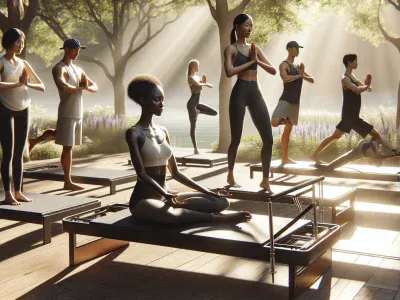
Imagine sculpting your body while feeling a gentle rhythm pulse through your muscles, each movement a whisper of control. Pilates and Barre may seem similar at a glance, both promising improved strength, flexibility, and posture. Yet, their differences are like night and day—one offering a calming, mindful dance, the other igniting energy through high-repetition, dance-inspired routines.
These distinctions go beyond just exercises; they influence how your body and mind transform. Surprisingly, Barre can boost your bone density more than you might expect, making it a hidden gem in your fitness journey.
Choosing between them depends on whether you crave serenity or a fiery sculpt—knowing these nuances is your first step toward discovering which workout truly resonates with your goals.
What Are the Core Principles of Pilates and Barre?
Pilates and barre are types of exercise that focus on different but related ideas. Pilates is a form of exercise that comes from dance and is all about controlled movements, proper breathing, and good posture. Its main goal is to strengthen the core muscles, which are the muscles around your stomach and back, and to make your body more flexible. Pilates exercises are precise and mindful, meaning you pay close attention to how you move. Many instructors get special certification to teach Pilates so they can make sure students do the exercises correctly.
Barre is inspired by ballet and dance. It uses small, focused movements to build strength, improve posture, and increase balance. Barre exercises often use a ballet barre or a sturdy chair for support, and they target specific muscles like those in your legs, arms, and core. Like Pilates, many barre instructors have dance or fitness certifications, and some get extra training to become specialized teachers.
Both Pilates and barre focus on strengthening your core and increasing body awareness. Their roots in dance influence how they look and feel during workouts. For example, Pilates often feels slow and controlled, while barre might feel more like ballet exercises with a focus on posture and balance.
Some people prefer Pilates because it emphasizes breathing and alignment, making it good for people recovering from injuries. Others like barre for its energetic moves and dance-like feel. But both methods require proper instruction to avoid doing exercises incorrectly, which can lead to injury or less benefit.
How Do Pilates and Barre Focus and Techniques Differ?
Pilates and barre are both popular workouts that help improve posture and strength, but they focus on different things and use different techniques.
Pilates is all about controlled and smooth movements. It helps fix posture problems and balance muscles. Imagine moving like a gentle flow of water. Pilates often uses dance-like moves to improve flexibility and coordination. It also connects breath with movement, which helps you stay mindful during exercise. For example, a Pilates class might focus on slow leg lifts or controlled sit-ups that strengthen your core muscles. This method aims to make your whole body align better and move more easily.
Barre, on the other hand, mixes ballet moves with exercises that use your own body weight. It usually involves holding positions for a few seconds and doing many repetitions. Think of it like sculpting your muscles with small, precise moves. Barre classes often include dance steps to help you stay graceful and rhythmic. The main goal is to build muscle endurance by doing lots of high-rep exercises. For example, you might do small leg lifts while holding onto a ballet barre or squat repeatedly to tone your thighs. Barre focuses more on making muscles strong and lasting, rather than just improving posture.
Both workouts can help your posture, but they do so in different ways. Pilates works on deep core muscles and proper alignment, while barre builds muscle endurance through dance-inspired moves. Some people prefer Pilates if they want better posture and flexibility. Others like barre if they want to tone muscles and improve stamina.
However, it’s good to know that each has its limits. Pilates might be slow for those who want quick results, and barre can be tough if you’re new to dance or high repetitions. Trying both can give you a balanced workout, but it depends on your goals and fitness level.
Which Is Better for Building Core Strength: Pilates or Barre?
Pilates is better for building core strength if you want high levels of muscle activation and precise movements. It focuses on slow, controlled exercises that target the deep muscles in your abdomen and back. These exercises help improve posture, stability, and overall strength. For example, Pilates exercises like the hundred or leg circles make you really focus on engaging your core muscles correctly.
Barre can also strengthen your core but in a different way. It uses small, repeated movements that challenge your stability and endurance. Barre workouts often combine ballet-inspired moves with resistance, which can help tone muscles and improve balance. Think of barre as a way to build strength through steady, targeted muscle work that also boosts your flexibility.
Both methods have their strengths and limits. Pilates is great if you want detailed control over your core muscles and better posture. However, it might take longer to see big changes. Barre can quickly tone muscles and improve stability but might not give you the same deep core activation as Pilates.
If you are new to exercising, you might want to try both to see which feels better for your body. Some people prefer Pilates for its focus on breathing and control. Others like barre for its energetic, dance-like moves. Either way, both can help you build a stronger core, just in different ways.
Core Engagement Levels
Pilates is better for building core strength because it focuses on deep, controlled movements. It emphasizes engaging the core muscles through precise exercises, often using breathing techniques to activate the muscles fully. For example, Pilates exercises like the hundreds or single-leg circles help develop a strong and stable core. This method improves posture and balance, which can help with everyday activities and sports.
Barre workouts also build core strength but in a different way. They use small, static movements called isometric exercises that keep the core muscles activated for longer periods. Barre routines often include ballet-inspired moves that challenge the core muscles to stay engaged. While barre can boost endurance and strength, it may not target the deep core muscles as thoroughly as Pilates.
Some people choose Pilates because it focuses on controlled breathing and deliberate muscle activation, which can improve overall athletic skills. Others like barre for its quick, intense work that also helps strengthen the core. Both workouts are good options, but if your main goal is a more targeted core workout that improves posture and balance, Pilates tends to be more effective.
However, keep in mind that both methods have their limits. Pilates might require more focus and proper form to get the best results, while barre can be tough for beginners due to its small, intense movements. Trying both can be a good way to see which one fits your needs better.
Exercise Precision Focus
Pilates is a form of exercise that focuses on precise movements and control. It teaches you to carefully engage your core muscles, which helps build strength in a safe way. This attention to accuracy means each move is done with care, helping improve your posture over time. Pilates also uses breathing techniques that make sure your muscles get enough oxygen. This helps you stay balanced and keeps your movements steady. Many people find that practicing Pilates makes them more aware of how they position their body, which can prevent injuries. It also helps you develop better posture because every move is done with purpose.
Compared to Barre, which also focuses on alignment, Pilates tends to emphasize control and accuracy more. Barre workouts often include faster repetitions and flowing movements, which can sometimes sacrifice precision. If you want to strengthen your core with deliberate, controlled effort, Pilates might be the better choice. However, if you prefer a workout that combines alignment with quick, fluid movements, Barre could work well too. Both workouts have their benefits, but for those seeking the best results in core strength and posture, the focus on precision in Pilates is a key advantage.
Muscle Activation Techniques
Both Pilates and Barre are good for strengthening your core muscles, but they do it in different ways. Pilates is a form of exercise that uses controlled breathing and precise movements to target deep core muscles like the transverse abdominis. This helps you engage your core more intentionally and build stability. For example, when doing a Pilates plank, focusing on your breath and keeping your body aligned helps activate those deep muscles more effectively.
Barre, however, uses small, isometric movements—meaning holding muscles in a steady position—mainly to create tension. It relies less on breath control and more on maintaining proper posture and tension in your muscles. Imagine holding a tiny squat for a long time; this builds strength but doesn’t always involve deep breathing or precise alignment like Pilates does.
If you want the most core activation, Pilates might be better because it emphasizes breathing and alignment to get the deep muscles involved. But Barre can still help you build strength through sustained tension, especially if you prefer shorter, more controlled movements.
Some people may find Pilates more focused and calming, while others might like Barre’s quick, effective moves. Keep in mind, both can improve your core, but each has its limits. For example, Pilates requires more focus on breathing and posture, which can be tricky for beginners. Barre is simpler to follow but may not engage deep muscles as deeply as Pilates.
In short, if your goal is maximum core activation, Pilates’s breathing and alignment techniques offer a more targeted approach. However, combining both methods can give you a well-rounded core workout.
How Do Pilates and Barre Improve Flexibility and Mobility?
Pilates and Barre are both good for improving flexibility and mobility, but they do it in different ways. Pilates focuses on controlled movements that help you stand straighter and stretch your muscles. It helps increase how much your joints can move and keeps your muscles long and strong. For example, exercises like leg stretches or spinal twists in Pilates can make your muscles more flexible over time.
Barre exercises are inspired by dance and use movements that stretch and strengthen muscles at the same time. These dynamic stretches help your muscles move better and improve your overall flexibility. Think about doing small, controlled movements at a ballet barre—these help your muscles extend and your joints become more mobile.
Both practices focus on moving mindfully, which makes you more aware of how your body moves. This awareness can help you avoid injuries and make daily activities easier. If you practice regularly, you’ll notice your flexibility and mobility getting better.
Some people might find Barre more fun because of its dance-like moves, while others prefer Pilates for its emphasis on core strength and stability. However, both methods require consistent practice to see real results. Keep in mind that if you have joint pain or health issues, it’s a good idea to talk to a doctor before starting these exercises.
What Equipment and Class Structures Do Pilates and Barre Use?
Pilates and Barre use different equipment and class structures to meet their unique exercise goals.
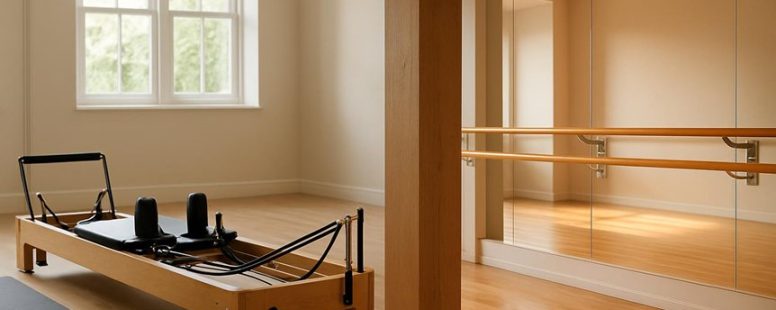
Pilates mainly uses equipment like the reformer, stability balls, and resistance bands. The reformer is a bed-like machine with moving parts that helps control movements and target specific muscles. Stability balls and resistance bands are portable tools that make exercises more challenging and effective. Classes usually last about 45 to 60 minutes. They focus on precise, flowing movements that strengthen the core and improve flexibility. Many people find Pilates good for rehab or building a strong, balanced body.
Barre classes use equipment like ballet barre, light weights, and small balls. The ballet barre is a sturdy handrail you hold onto during exercises. Light weights and small balls add resistance to build strength. Barre combines ballet-inspired moves with strength and stretching exercises, often with some cardio. Classes are typically around 45 minutes long. They aim to improve posture, muscle tone, and endurance.
Both Pilates and Barre use equipment to make workouts more effective, but their class structures reflect their different goals. Pilates emphasizes controlled movements to build core strength and flexibility, while Barre combines dance-inspired moves with strength training to improve muscle tone and endurance.
Some people might find Pilates equipment intimidating at first, especially the reformer. Others might enjoy the ballet feel of Barre. It’s good to try both to see which one fits your fitness style better.
Who Should Try Pilates? Who Should Opt for Barre?
Pilates is a type of exercise that focuses on strengthening your core muscles, improving flexibility, and making you more aware of how your body moves. It uses controlled movements and breathing to help you build strength without putting too much strain on your joints. If you are recovering from an injury or just starting to exercise, Pilates can be a good choice because it is gentle and low-impact. Many dancers and athletes also use Pilates to improve their posture and overall movement.
Who should consider Pilates?
People recovering from injuries or with limited mobility.
Dancers or athletes who want to build better body control.
Beginners looking for a slow, mindful workout that doesn’t hurt your joints.
Barre is a workout inspired by ballet and dance moves. It combines small, quick movements with strength exercises to give you a full-body workout. Barre is often faster and more energetic than Pilates and uses a lot of repetitions. It is great if you want to burn calories while doing dance-inspired moves. Many people enjoy Barre because it feels fun and helps tone muscles quickly.
Who should try Barre?
Those who love dance or want to try dance-inspired workouts.
People wanting a more lively, dynamic exercise session.
Those looking for a workout that is high in repetitions but still gentle on your joints.
Both Pilates and Barre have their strengths. Pilates is better if you want to focus on core strength and flexibility in a slow, controlled way. Barre might be better if you want an energetic workout that combines dance with strength training. Just remember that Barre can be intense for some beginners, so start slow and listen to your body.
In the end, choosing between Pilates and Barre depends on your fitness goals and what you enjoy most. Trying both can help you find what makes you feel good and keeps you moving.
How Do Costs and Class Availability Compare?
The cost of Pilates and Barre classes depends on where you live and the studio you pick. Generally, Barre classes are cheaper, especially if you go for drop-in rates. But some fancy studios charge more, and their prices can be similar to Pilates classes. Many studios offer membership plans. These can give you unlimited classes for a monthly fee or charge per session. If you want to save money, look carefully at these options. Sometimes, buying a package or membership saves you more in the long run.
Availability is different too. Pilates classes are often scheduled throughout the day, so you can find a time that works for you. This makes Pilates more flexible. Barre classes might have fewer times, especially in small boutique studios. If your schedule is busy, Pilates might be easier to fit in. But if you prefer a specific time or studio, check their schedule first.
Some studios in big cities like New York or Los Angeles may charge more for classes. Smaller towns may have cheaper options. So, always compare prices and schedules before you decide. Knowing how much classes cost and when they are available helps you pick the best fit for your budget and lifestyle.
Which Workout Offers More Mindfulness and Mental Benefits?
Both Pilates and Barre can give you mental benefits, but they do it in different ways. Pilates is great for mindfulness because it focuses on breathing and feeling your body move. This can help clear your mind and bring a sense of calm. Barre, on the other hand, uses repetitive, precise movements that demand your full attention. This makes it good for sharpening your focus and staying present.
If you want to relax and find mental peace, Pilates might be better for you. It promotes a calm, meditative state by connecting breath to movement. Many people say Pilates helps reduce stress and improve mental clarity. For example, a person doing Pilates might feel more centered after a session because they focus on their breath and body.
Barre can boost your mental alertness. The quick, repetitive moves require concentration, which keeps your mind active. Some say Barre gives them a boost of energy and helps them stay focused during the day. However, Barre can also be intense, and if you’re not used to quick movements, it might feel overwhelming at first.
Both workouts can improve mental health, but it depends on what kind of mental benefit you want. Do you prefer a calming practice that helps you relax? Or do you want a workout that keeps your mind sharp? Keep in mind that both can help reduce stress, but Pilates tends to create a calmer feeling, while Barre makes your mind alert through movement.
Should You Combine Pilates and Barre in Your Fitness Routine?
Combining Pilates and Barre can be a good idea if you want to get the benefits of both workouts. Pilates focuses on strengthening your core and increasing flexibility. Barre emphasizes muscle endurance and balance. When you put them together, you can improve your posture, strength, and body awareness.
To do this safely, find classes with instructors who know both Pilates and Barre well. A good instructor can show you the right way to move and breathe during each workout. This helps you stay safe and get the most out of your exercise. For example, some gyms like Equinox or local fitness centers often have qualified teachers who teach both styles.
Some people worry that combining these workouts might cause overtraining or injury. That is a real concern, especially if you push too hard or don’t listen to your body. Start slow and see how your body reacts. If you feel tired or sore, take a break or switch to a lighter session.
There are two main points to consider. First, Barre builds muscular endurance and improves balance, which can help with daily activities. Second, Pilates improves core strength and flexibility, making your movements more fluid. Combining these can give you a balanced workout, but it’s best to balance your schedule so you don’t overdo it.
In the end, mixing Pilates and Barre can be a smart way to keep your workouts interesting and beneficial. Just remember to choose qualified instructors and pay attention to how your body feels. That way, you can enjoy the benefits safely.
To provide the best experiences, we use technologies like cookies to store and/or access device information. Consenting to these technologies will allow us to process data such as browsing behaviour or unique IDs on this site. Not consenting or withdrawing consent, may adversely affect certain features and functions.
Functional
Always active
The technical storage or access is strictly necessary for the legitimate purpose of enabling the use of a specific service explicitly requested by the subscriber or user, or for the sole purpose of carrying out the transmission of a communication over an electronic communications network.
Preferences
The technical storage or access is necessary for the legitimate purpose of storing preferences that are not requested by the subscriber or user.
Statistics
The technical storage or access that is used exclusively for statistical purposes.The technical storage or access that is used exclusively for anonymous statistical purposes. Without a subpoena, voluntary compliance on the part of your Internet Service Provider, or additional records from a third party, information stored or retrieved for this purpose alone cannot usually be used to identify you.
Marketing
The technical storage or access is required to create user profiles to send advertising, or to track the user on a website or across several websites for similar marketing purposes.