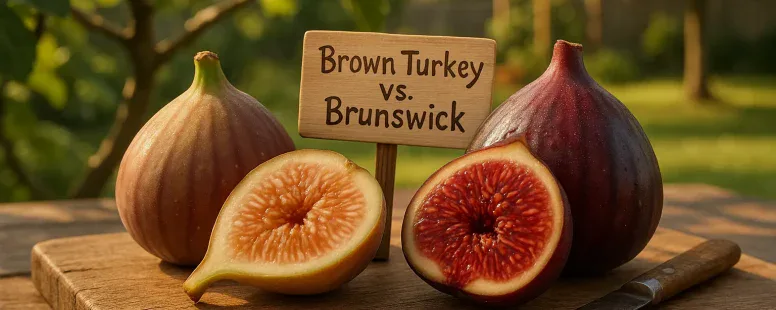
You can smell the fig leaf before you see the tree: green, almond-sweet, a sharp edge that promises fruit. Between two of the most planted backyard varieties, Brown Turkey and Brunswick, you’ll find more than color and size differences. You’ll find distinct textures that change how the fruit behaves in a jam, and different winter limits that decide whether you harvest for years or lose a branch. This comparison zeroes in on what matters when you choose a fig tree for your yard, patio, or small farm: fruit traits, cooking uses, growth habits, and how much care each needs. Read on to discover the clear tradeoffs so you can pick the fig that fits your life and climate.
Quick Comparison At A Glance
Fact: Brown Turkey is more widely adaptable: Brunswick makes larger, sweeter fruit.
Brown Turkey (Ficus carica ‘Brown Turkey’) gives you a reliable, dual-crop habit and tolerance to varied soils. Brunswick (often listed as Ficus carica ‘Brunswick’) produces larger fruit with a fuller red flesh and is prized where summers are long and warm.
Key quick points you need to know:
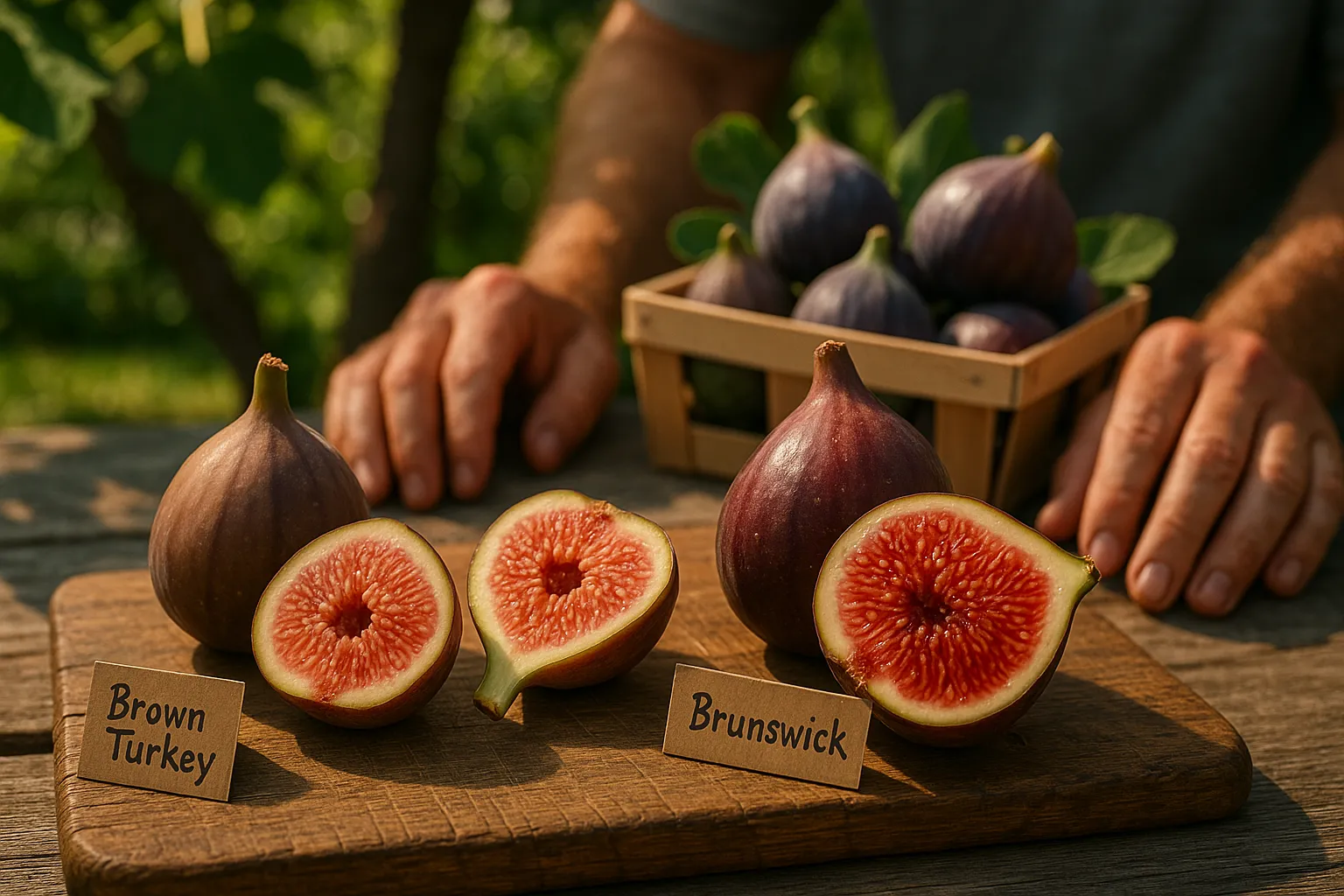
Fruit: Brown Turkey, medium, brownish-purple skin: Brunswick, larger, reddish-purple to brown skin.
Flavor: Brown Turkey, mild and stewed-sweet: Brunswick, richer, more concentrated sweetness.
Hardiness: Brown Turkey, hardier into cooler USDA zones: Brunswick, best in warmer zones with long summers.
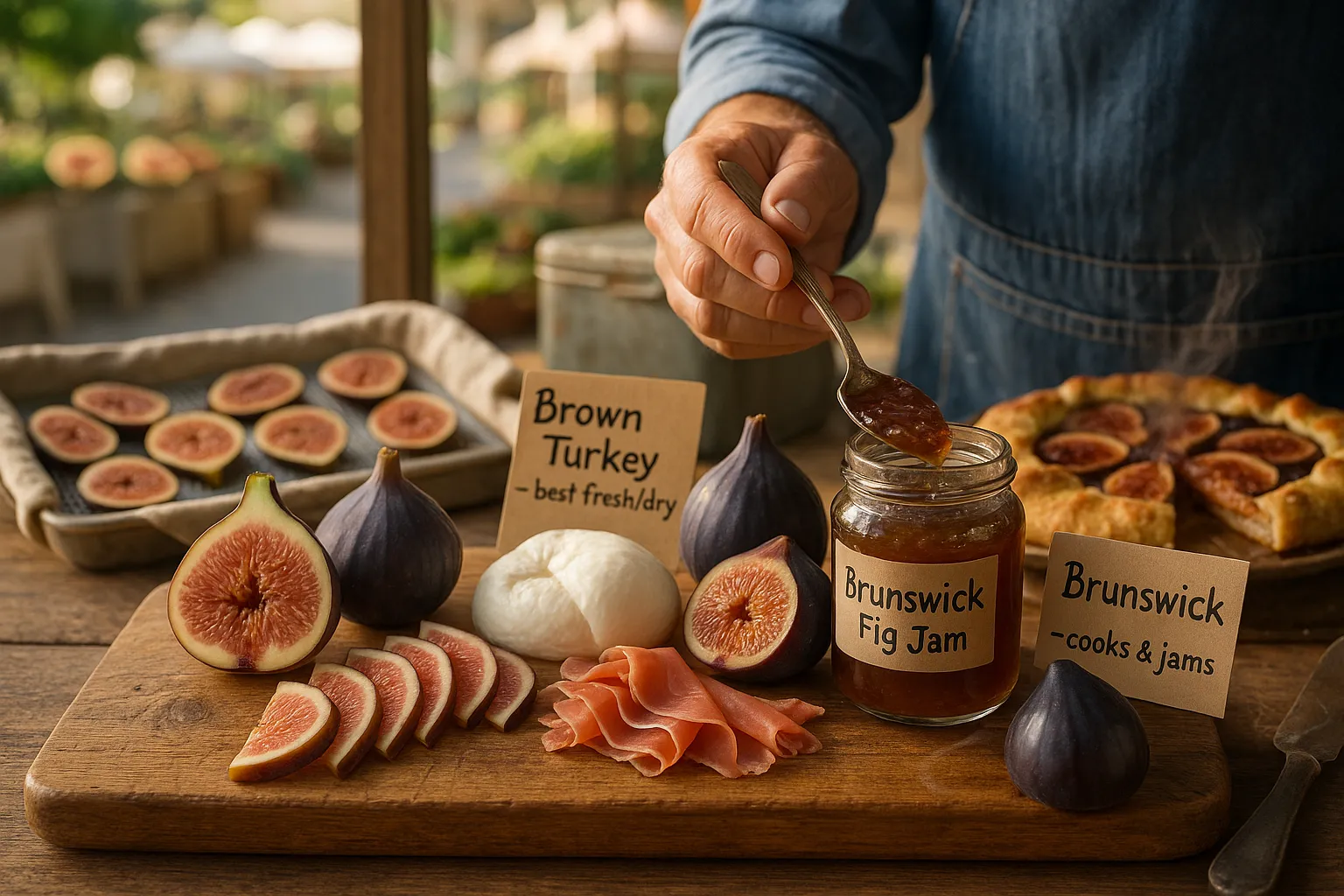
Use: Brown Turkey, great for fresh eating and drying: Brunswick, excellent for preserves and fresh sales.
This snapshot helps you decide fast: pick Brown Turkey for broader climates and lower fuss: pick Brunswick when you want bigger fruit and top-tier flavor for markets or preserves.
Appearance And Fruit Characteristics
Fact: Appearance differences are obvious and useful for identification.
Fruit Size, Color, And Texture
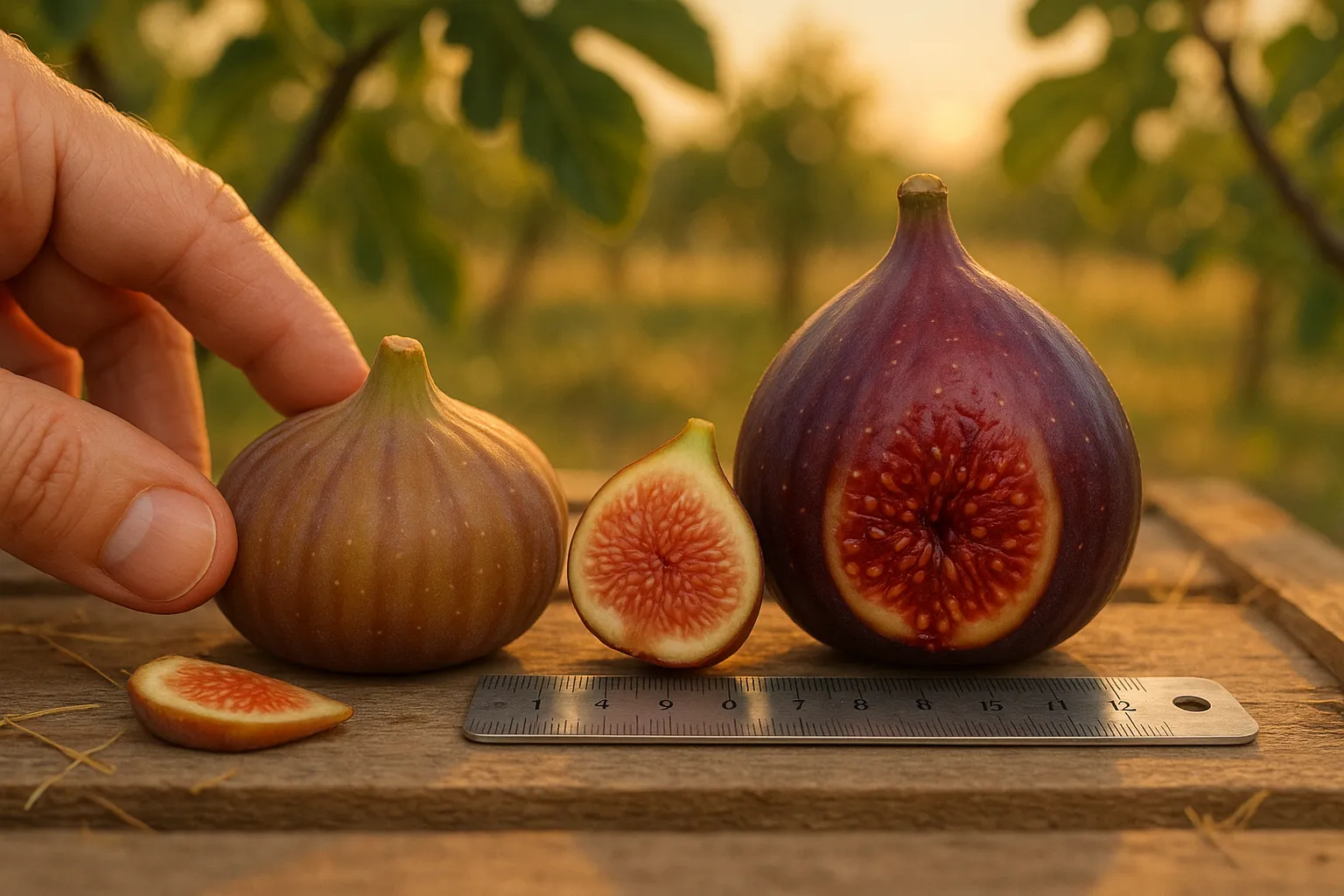
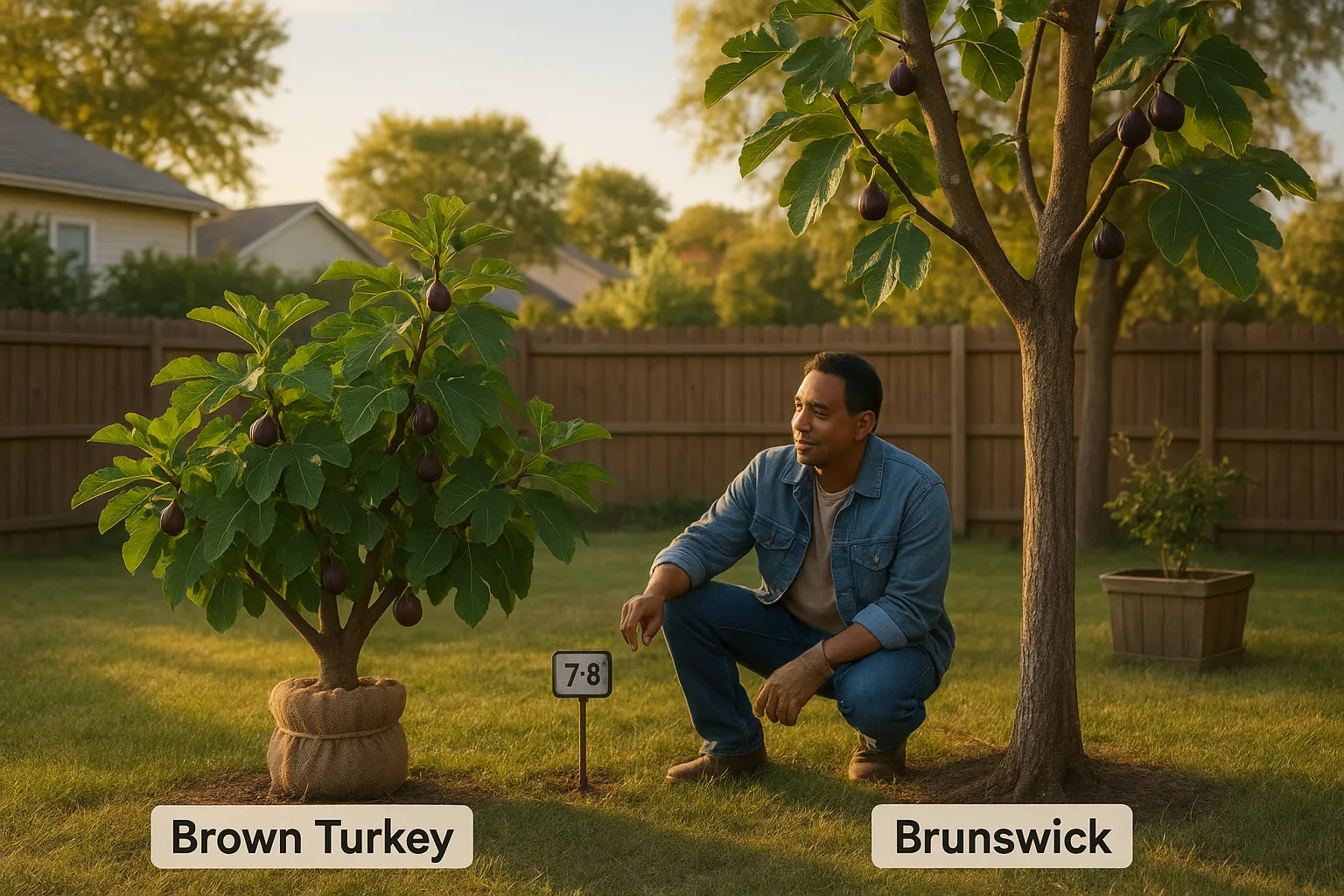
Brown Turkey fruit is medium-sized (about 1.5–2 inches in diameter). The skin ranges from light brown to purplish-brown and often has a matte finish. Flesh tends to be amber to pink with a slightly grainy texture that softens quickly when ripe. Brunswick fruit runs larger (2–2.5+ inches), with skin tones from deep reddish-purple to brown: the flesh is a deep red and denser, with a jammy interior that holds up better during cooking.
Visual cues you can use in the field: Brown Turkey often displays a flattened, squat shape with a wider neck. Brunswick often looks plumper and rounder, with a pronounced shoulder near the stem. Touch the fruit: Brown Turkey yields faster to pressure: Brunswick feels firmer even when sweet.
Flavor Profile And Ripening Season
Fact: Flavor differences follow size and sugar concentration.
Brown Turkey offers a mild, honeyed taste with subtle tannins and floral hints. It usually has a clean finish that works well for daily snacking. Brunswick packs a deeper, molasses-like sweetness and a pronounced berry note, it often rates higher on sugar tests and holds complexity when cooked.
Ripening: Brown Turkey produces an early breba (spring) crop in warm climates and a main crop in late summer to early fall. Brunswick tends to concentrate its production in late summer and early fall: in marginal climates you may only see one main crop. Timing affects harvest planning: if you want two harvests for fresh sales or home use, Brown Turkey is often more reliable.
Culinary Uses And Storage
Fact: Brunswick keeps structure better in cooked recipes: Brown Turkey excels fresh and when dried.
Fresh Eating, Cooking, And Preserving
You should pick Brown Turkey if you primarily want fresh fruit. It slices easily on a cheese board and pairs well with salty cheeses, prosciutto, and crisp salads. Brown Turkey also dries quickly and makes a clean, light-flavored dried fig. Brunswick excels when you cook or preserve. Because the flesh is denser and more intensely flavored, Brunswick yields rich jams, conserves, and baked goods with concentrated fig character. Make a small batch of Brunswick fig jam and you’ll notice the fruit’s color and aroma cut through sugar without losing depth.
Marketability And Shelf Life
Fact: Brunswick sells better fresh at markets but both types have limits.
Shelf life for Brown Turkey is short, ripe fruit often lasts 2–4 days in the fridge before softening to unusability. Brunswick stores a bit better (3–6 days) thanks to firmer flesh and slightly thicker skin. For farmers market sellers, Brunswick often commands a premium because of size and appearance. Brown Turkey can still sell well as a convenient snack fruit or dried product. Proper postharvest handling (gentle picking, cooling, quick sale) matters for both.
Brown Turkey grows to a medium tree, typically 8–15 feet when pruned to a bush form, and can reach 20 feet if left unpruned. It shows vigorous suckering and regrowth after pruning, which makes it forgiving for casual gardeners. Productivity is steady: you get regular crops without intense fertilization.
Brunswick trees are similarly vigorous but can show less suckering and a more upright habit. They often produce slightly heavier fruit sets per shoot but may need more careful canopy management to expose fruit to sunlight. Commercial growers prize Brunswick for per-tree yield in long seasons.
Cold Tolerance And Best Growing Zones
Fact: Brown Turkey is hardy to about USDA zone 7 (sometimes zone 6 with protection): Brunswick is best in USDA zones 8–10.
If you garden in zones 7 or cooler, Brown Turkey gives you a safety margin, wrap the root crown and you’ll survive colder winters. Brunswick can survive occasional mild freezes but will suffer dieback in repeated cold snaps. For container growers: both can live in pots, but you must move Brunswick inside in borderline zones during winter.
Planting, Care, And Maintenance
Fact: Both figs demand full sun and good drainage: care differences are minor but real.
Soil, Site Selection, And Watering Needs
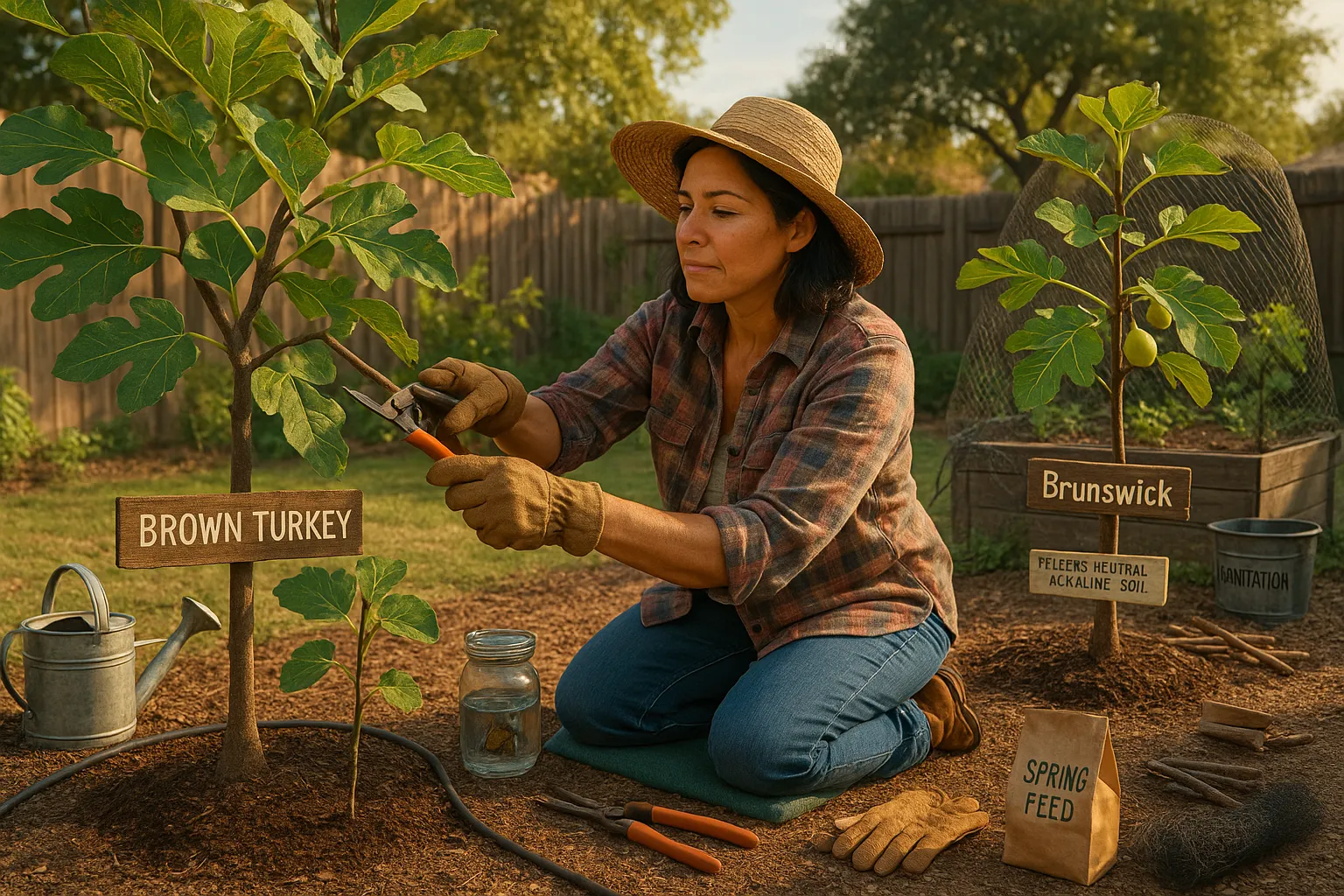
Plant figs in full sun with at least 6–8 hours daily. Choose well-drained loam or sandy loam: figs do not like standing water. Brown Turkey tolerates a wider soil pH range, while Brunswick prefers neutral to slightly alkaline soils. Water young trees deeply once or twice a week to develop roots: mature trees need regular water in fruiting season but resist soggy soil. Mulch the root zone to retain moisture and suppress weeds.
Pruning, Fertilization, And Common Pests/Diseases
Prune to open the canopy and remove damaged wood. Brown Turkey responds quickly to hard pruning and resprouts vigorously: Brunswick responds too, but aggressive cuts can reduce next season’s fruit if you prune at the wrong time. Fertilize lightly in spring with a balanced fertilizer: excess nitrogen causes too much leaf growth and fewer figs.
Watch for pests: fig beetles, birds, and scale insects attack both varieties. Diseases include root rot in poorly drained sites and occasional leaf rust. Apply integrated pest management: netting for birds, manual removal of beetles, and timely sanitation. You’ll learn the timing by watching: figs signal stress early via leaf drop and reduced fruit set.
Propagation, Availability, And Cost
Fact: Both varieties propagate easily from hardwood cuttings: availability varies by region.
How They Are Propagated And Where To Buy
Nurseries and online retailers sell both Brown Turkey and Brunswick as grafted trees or own-root plants. Propagation from hardwood cuttings works well: take 12–18 inch cuttings in late winter, root them in a mix, and plant in spring. Many growers prefer own-root plants for winter resilience. Reliable sources include local nurseries, Raintree Nursery, and Brentwood-Gardens for certain regions, check local availability.
Relative Cost, Nursery Availability, And Cultivar Variants
Fact: Brown Turkey is usually cheaper and more widely stocked than Brunswick.
Brown Turkey appears in big-box garden centers and small nurseries alike: Brunswick is more common in specialty nurseries or online. Price differences are modest: expect Brown Turkey to cost 10–30% less per plant at retail. Cultivar variants and rootstock types influence cost (grafted vs own-root). If you want a named strain like ‘Brown Turkey Improved’ or regionally selected Brunswick clones, be prepared to pay a premium but get more uniform fruit.
How To Choose Between Brown Turkey And Brunswick
Fact: Choose based on climate, intended use, and how much risk you accept.
Best Choices For Home Gardens, Containers, And Commercial Use
For home gardens: Pick Brown Turkey if you want low fuss, earlier fruit, and a forgiving plant that tolerates cooler weather. Pick Brunswick if you prize larger, showy fruit for fresh presentation or rich preserves and you live in USDA zones 8–10.
For containers: Brown Turkey is slightly better because it tolerates root restriction and cooler wintering indoors. Brunswick will thrive too, but you must move it inside in cooler zones and provide a larger pot for its more robust root mass.
For commercial use: Brunswick often edges out Brown Turkey for market growers seeking larger, premium fruit and stronger flavor profiles that command higher prices. Brown Turkey suits small-scale sellers focused on reliability, dual crops, or dried fig products.
Practical test: Plant one of each if you can. Watch fruit timing, flavor, and how each tree handles your yard’s microclimate. Your hands-on experience will reveal local differences that books and labels can’t predict. Go ahead, try both, compare harvests, and keep the tree that fits your routine and taste.
To provide the best experiences, we use technologies like cookies to store and/or access device information. Consenting to these technologies will allow us to process data such as browsing behaviour or unique IDs on this site. Not consenting or withdrawing consent, may adversely affect certain features and functions.
Functional
Always active
The technical storage or access is strictly necessary for the legitimate purpose of enabling the use of a specific service explicitly requested by the subscriber or user, or for the sole purpose of carrying out the transmission of a communication over an electronic communications network.
Preferences
The technical storage or access is necessary for the legitimate purpose of storing preferences that are not requested by the subscriber or user.
Statistics
The technical storage or access that is used exclusively for statistical purposes.The technical storage or access that is used exclusively for anonymous statistical purposes. Without a subpoena, voluntary compliance on the part of your Internet Service Provider, or additional records from a third party, information stored or retrieved for this purpose alone cannot usually be used to identify you.
Marketing
The technical storage or access is required to create user profiles to send advertising, or to track the user on a website or across several websites for similar marketing purposes.