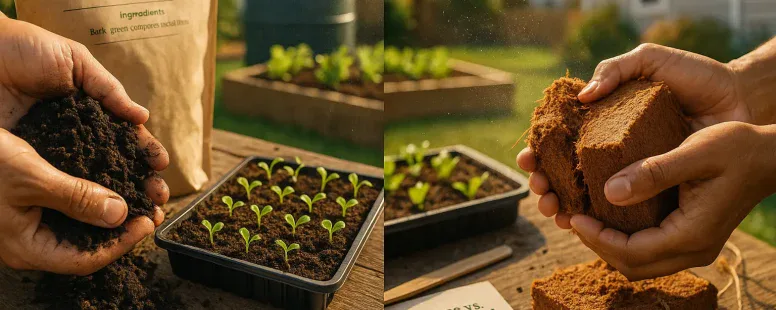
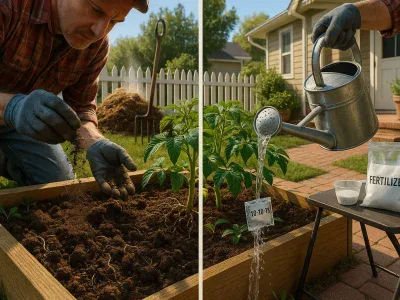
You can cut greenhouse impact by choosing the right compost. The choice between peat-free and coir-based mixes shapes more than your garden’s soil, it touches wetlands, coastal economies, and water use. Picture the scent of damp earth after rain, and beneath that smell lies a debate: one material is ancient carbon-rich peat, the other a byproduct of coconut farming. Both promise dark, friable medium for seedlings and containers, but they deliver different trade-offs. This article shows what each term means, compares environmental costs, and gives clear, practical guidance so you can pick or mix with confidence.
What “Peat-Free” Means And Why It Matters
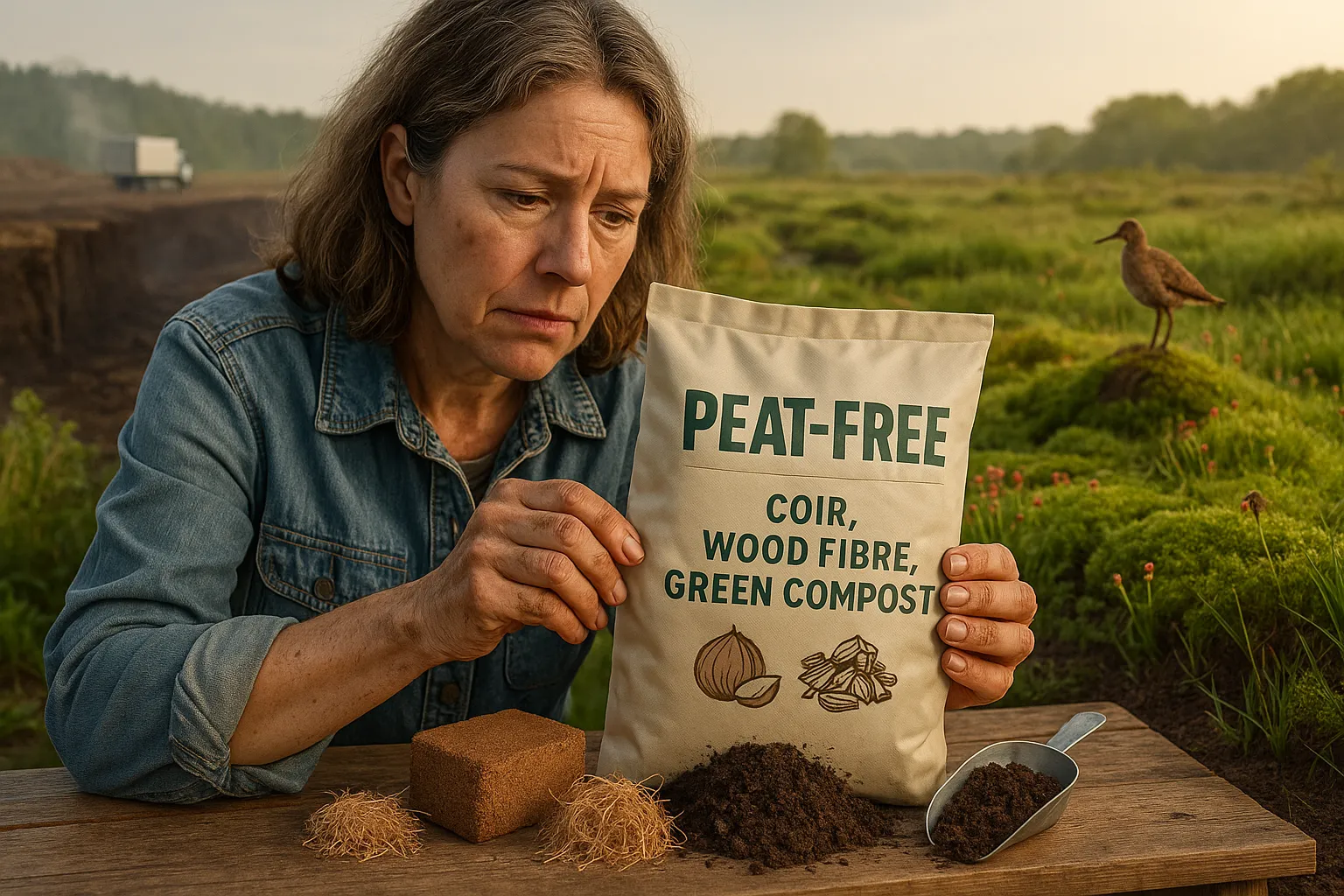
Fact: “Peat-free” means a product contains no, or very little, sphagnum peat moss. Peat forms in bogs over thousands of years and stores large amounts of carbon. Removing peat releases carbon dioxide and destroys unique habitats used by birds like the Eurasian curlew and specialized plants such as sundews.
Peat-free labels cover many ingredients: green compost (from food or garden waste), bark, woodfibre, coir, and sometimes composted straw. Manufacturers use the label to signal lower impact on bogs and to appeal to gardeners who care about carbon and biodiversity. But the label alone doesn’t guarantee low impact in other areas, transport emissions and production methods vary.
Practical check: You should read the ingredient list. If a bag says “peat-free” but lists imported wood fiber or municipal green waste, consider where and how those were produced. Some peat-free bags use peat substitutes that need heavy processing or long-distance shipping, which shifts the environmental burden. In short, peat-free often reduces peat extraction harms, but it’s not an automatic green stamp for all other impacts.
What Coconut Coir Is And How It’s Produced
Fact: Coconut coir (coir) is the fibrous material between a coconut’s shell and its outer husk. Producers harvest coconuts in countries like the Philippines, Sri Lanka, India, and Indonesia, then separate and process the husk to extract fiber and the finer coir dust (also called coir pith).
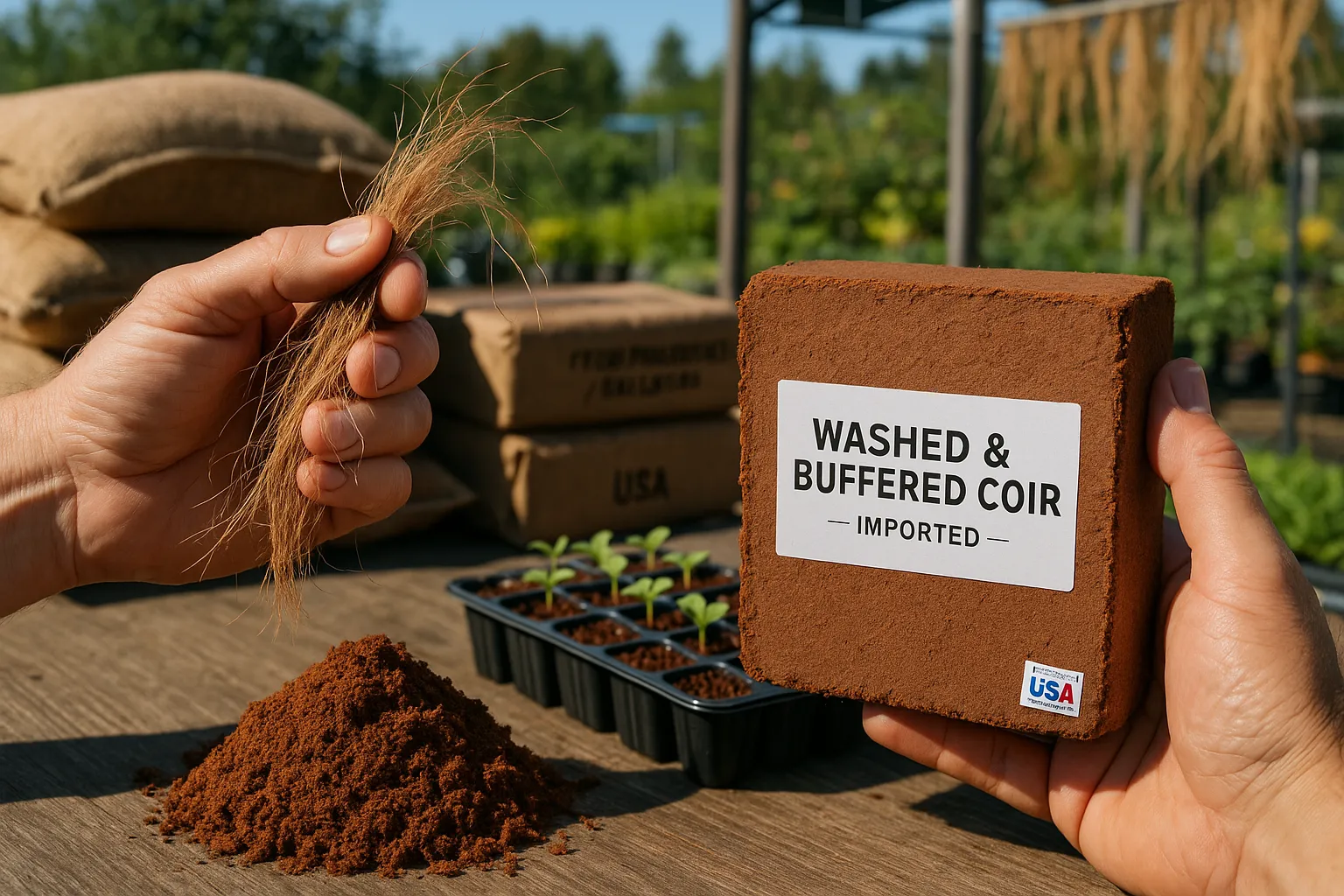
Processing steps: husk collection → retting or mechanical separation → fiber extraction → drying and screening → compression into blocks or bags. Some producers wash coir to remove salts, then buffer it with calcium and magnesium to stabilize pH. Brands such as Espoma and SunGro import processed coir into markets like the US and EU.
Coir comes in coarse fibers and finer chunks or compressed bricks of pith. The coarse fiber improves aeration: pith holds water. You should choose based on use: coarse for large container mixes, pith for seed starting when mixed with other components. Note: unwashed coir can carry high salt levels that harm seedlings, always check for “washed” or “buffered” on the label if you plan to use it for sensitive plants.
Environmental Comparisons: Peat Extraction Versus Coir Production
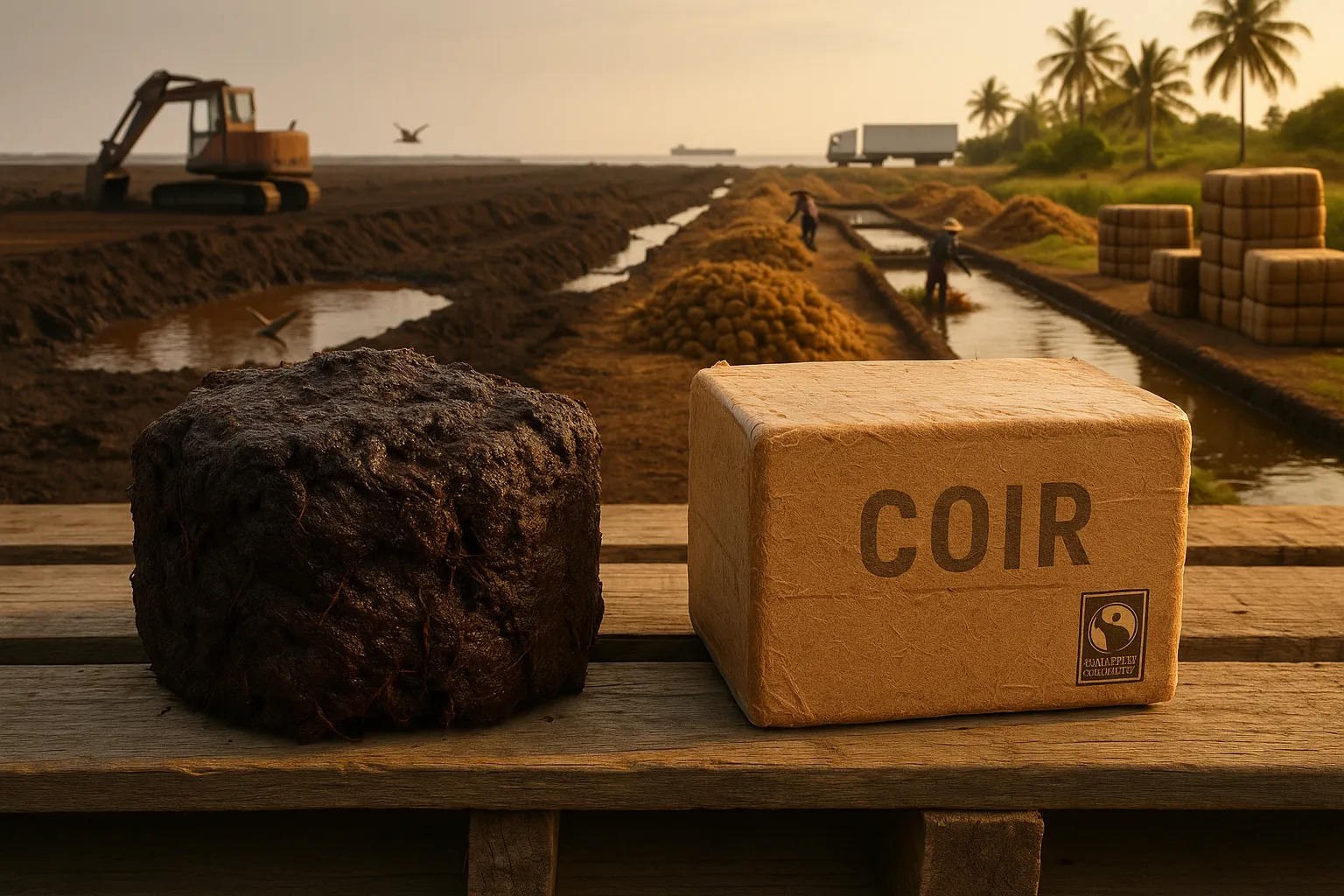
Fact: Peat extraction releases stored carbon and destroys peatland ecosystems: coir production shifts environmental costs to agricultural land and transport. Peatlands cover about 3% of the global land area but store roughly 30% of the world’s soil carbon. When peat is harvested, that carbon emits as CO2. Countries such as Ireland and Estonia have historically exported peat widely, and conservation groups now push for peat-free potting soils to protect those habitats.
Coir avoids direct peatland damage. But coir’s environmental footprint includes: water use during retting, in some places retting pollutes waterways, salt runoff, and the energy and emissions of shipping heavy coir bricks thousands of miles to markets in Europe and North America. For example, coir shipped from Sri Lanka to Rotterdam travels long distances by sea and truck.
You should weigh local context: a locally produced wood-based peat-free mix might have lower transport emissions than imported coir. Conversely, coir made from coconut waste that would otherwise be discarded can add circularity in tropical supply chains. Also consider certification: look for Fairtrade or Rainforest Alliance on coir products if you care about social and environmental standards.
Bottom line: Peat extraction is more damaging to carbon stores and biodiversity. Coir is generally better than peat for preserved carbon and bog habitats, but it’s not impact-free.
Growing Performance: How Coir-Based Compost Compares
Fact: Coir-based compost can match or outperform peat in water retention and aeration when formulated correctly. Many growers use coir in soilless mixes for vegetables, ornamentals, and container plants because it holds water well while keeping air pockets for roots.
Coir benefits roots by creating a stable structure that resists compaction. It drains faster than the heaviest peats but retains moisture better than pure sand or perlite mixes. But, raw coir often lacks nutrients and has a near-neutral to slightly acidic pH after buffering, so nutrient management matters.
You should expect slightly different watering rhythms with coir: it often looks wetter at the surface while still supplying water to roots. That can trick inexperienced gardeners into overwatering, or underestimating evaporation rates.
To provide the best experiences, we use technologies like cookies to store and/or access device information. Consenting to these technologies will allow us to process data such as browsing behaviour or unique IDs on this site. Not consenting or withdrawing consent, may adversely affect certain features and functions.
Functional
Always active
The technical storage or access is strictly necessary for the legitimate purpose of enabling the use of a specific service explicitly requested by the subscriber or user, or for the sole purpose of carrying out the transmission of a communication over an electronic communications network.
Preferences
The technical storage or access is necessary for the legitimate purpose of storing preferences that are not requested by the subscriber or user.
Statistics
The technical storage or access that is used exclusively for statistical purposes.The technical storage or access that is used exclusively for anonymous statistical purposes. Without a subpoena, voluntary compliance on the part of your Internet Service Provider, or additional records from a third party, information stored or retrieved for this purpose alone cannot usually be used to identify you.
Marketing
The technical storage or access is required to create user profiles to send advertising, or to track the user on a website or across several websites for similar marketing purposes.