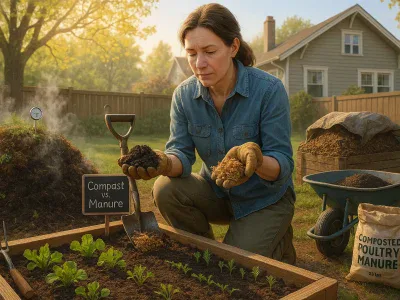
Ever wondered about the difference between farmyard manure (FYM) and compost? While both are organic materials used to enrich soil, they’re not quite the same. As an avid gardener or a farming enthusiast, understanding these differences can be crucial for your plant’s health.
In this text, we’ll jump into what sets FYM apart from compost. We won’t just scratch the surface; we aim to give you a comprehensive insight that could fundamentally change how you nurture your garden or field. So if you’ve been mulling over which one is better for your green friends – FYM or Compost – stick around! You might find some surprising facts in store.
Understanding FYM and Compost
Embarking on this journey, let’s investigate deeper into the realms of Farmyard Manure (FYM) and compost.
What is FYM?
Farmyard Manure or FYM comes from animal waste mixed with straw or litter used in bedding. The mixture undergoes decomposition over a period to transform into an organic substance brimming with nutrients.
Source: It primarily originates from livestock like cows, horses, sheep, among others.
Nutrient Content: Packed full of nitrogenous compounds along with smaller quantities of phosphorus and potassium,
Texture: It’s typically bulky in nature due to its high fibre content – great for improving soil structure!
Usage: Ideal for use before planting crops as it releases nutrients slowly over time.
Remember, though beneficial; if not properly decomposed prior usage can potentially introduce weed seeds into your garden beds!
What is Compost?
Shifting gears towards compost – another fantastic source material enriching our soils! Unlike farm manures which are raw materials transformed naturally overtime – you play God here by controlling what goes inside your own homemade nutrient-rich mix!
1: Materials Used: Green kitchen wastes such as vegetable peelings alongside yard trimmings form primary inputs
2: Process Involved: A faster process than creating fym involves turning regularly these scraps under heat facilitating quicker breakdown
3: End Product Features: Resultant product carries less smell compared to fyms while also being finer-textured richly black loam-like end produce
4: * Usage Benefits*: Due its quick-release property- serves best applied during growing season offering plants immediate access vital minerals
So there you have it! You now understand the basic distinctions between two valuable resources available at hand enhancing overall plant health thereby boosting yields phenomenally!.
The Core Difference Between FYM and Compost
Diving deeper into the core differences between Farmyard Manure (FYM) and compost, it’s all about nutrient content, preparation method, and decomposition process. Let’s break these down for better understanding.
Nutrient Content
When you compare FYM to compost in terms of nutrients provided, there are stark distinctions. Both improve soil fertility but do so differently. For instance, FYM contains more Nitrogen than Phosphorous or Potassium making it a valuable slow-release fertilizer before planting season starts.
Compost on its flip side is richer in micronutrients like Iron or Zinc that plants can access immediately during growth phases – this difference isn’t trivial when your goal is optimized plant health!
Method of Preparation
The way each product gets prepared brings further divergence into focus too! For starters: farm animals produce the waste used for creating FYM – bedding materials add bulk here as well. Soaking such mixtures under rainwater ensures proper fermentation over time resulting in high-quality manure after few months’ period; whereas with kitchen scraps & yard wastes forming base material – processes involved convert organic matter quickly via aerobic bacteria which speeds up their conversion by many folds compared to traditional methods.
Decomposition Process
Finally comes decomposition where again both vary significantly due to different timelines they follow! With longer decay times required- Farmyard manure usually undergoes an anaerobic breakdown happening at slower pace providing steady release rate across extended periods while simultaneously improving overall soil structure considerably so ensuring optimal moisture retention capacity besides enhancing microbial activities within same zone leading towards enhanced crop yield eventually!
Benefits of Using FYM and Compost
Farmyard Manure (FYM) and compost, each boasting unique benefits, play pivotal roles in the area of farming and gardening. This section delves into these advantages, helping you to optimize plant health effectively.
Benefits of FYM
Nutrient Enrichment: FYM is a powerhouse of nitrogen which gradually releases nutrients vital for robust plant growth.
Soil Conditioning: Incorporating FYM enhances soil structure – it improves water retention ability ensuring moist soil conditions ideal for root penetration.
Natural Fertilizer: As an organic manure source derived from animal waste mixed with straw bedding materials fermented over time, it’s eco-friendly while enriching your garden or farm soils.
Immediate Nutrient Supply: A wealth in micronutrients sets compost apart; it offers instant access to essential minerals promoting healthier plants right away.
Microbial Activity Promotion : Decomposing rapidly due to aerobic bacteria activity from kitchen scraps and yard wastes used as ingredients boosts microbial life enhancing crop yield significantly.
3 .Waste Management Solution: Transforming daily household biodegradable rubbish like vegetable peels or coffee grounds into nutrient-rich compost not only reduces landfill but also contributes positively towards environmental sustainability by recycling such wastes back into our gardens efficiently.
Choosing Between FYM and Compost
Exploring the decision between using Farmyard Manure (FYM) and compost can be quite a challenge. Let’s investigate deeper into some key factors that might influence your choice.
Factors to Consider
When deciding between FYM and compost, consider these aspects:
Nutrient Content: Remember how we highlighted FYM for its nitrogen-rich content? That could make it more suitable if you’re targeting plants needing higher levels of nitrogen. In contrast, remember, compost provides an immediate supply of micronutrients.
Rate of Decomposition: Another crucial point is the rate at which they decompose – while FYM releases nutrients gradually due to slower decomposition, with compost nutrient release happens quickly because aerobic bacteria rapidly break it down.
Soil Conditioning Properties: Pay attention also to soil conditioning properties: if improving water retention or enhancing overall soil structure is on top of your list, then go back again over why we recommend organic manures like FYM.
With this information in mind let’s look at common scenarios where one may be preferred over another.
Common Scenarios
Here are few instances when choosing either option would serve best:
Choose Compost when dealing with potted plants or small home gardens — quick-release micronutrients will jump-start growth effectively.
Opt for FYM during large-scale farming operations as its gradual nutrient release offers sustained nourishment catering well to extensive crop cultivation needs.
Select Compost when aiming toward efficient waste management; since kitchen scraps & yard waste form the bulk ingredients here their recycling generates dual benefits – managing household biodegradable wastes plus creating rich-in-nutrient feedstocks!
4.Whenever eco-friendly measures matter most pick out FYM, given it derives from animal waste along straw bedding hence promoting sustainable agricultural practices by reducing reliance upon synthetic fertilizers.
As you examine your specific needs, these guidelines can help guide the decision-making process when it comes to FYM and compost.
Practical Applications of FYM and Compost
Delving deeper into the application side, let’s explore how Farmyard Manure (FYM) serves farming practices while compost enriches gardening activities.
FYM in Farming
Farmers use FYM extensively due to its rich nutrient content – particularly nitrogen, which is a key player for plant growth. The slow release of nutrients from this organic manure ensures a steady supply throughout the crop cycle.
For instance, consider large-scale cereal cultivation such as wheat or corn. These crops demand high levels of nitrogen during their growth phase. Here’s where FYM shows up on stage with its long-lasting nutrient reserves that continually feed these plants over time.
Also, applying farmyard manure improves soil structure by increasing water-holding capacity and promoting beneficial microbial activity in soils prone to erosion or degradation.
Compost in Gardening
Contrarily, when you’re dealing with small garden spaces or potted plants at home- it’s compost you want on your team! It helps manage kitchen waste efficiently turning it into nutrient-rich food for your green buddies.
Composting presents an immediate supply of micronutrients needed by houseplants like succulents or herbs grown indoors since they are restricted to limited potting media volume.
Besides, integrating compost also aids improving soil texture enhancing root penetration thereby creating healthier environments even within confined pots.
Remember though; make sure you properly matured the composter before using – raw materials can burn delicate roots!
Conclusion
It’s clear that both FYM and compost have unique advantages. You’ll find FYM is a powerhouse of nitrogen, ideal for large-scale farming due to its slow nutrient release and soil conditioning properties. On the other hand, you’ve got compost – an instant provider of micronutrients with excellent waste management capabilities perfect for your gardening needs. It all boils down to what suits your specific requirements best when it comes choosing between these two potent natural fertilizers.
So don’t just stick with one! Both Farmyard Manure and compost can be valuable tools in your farming or gardening toolkit, depending on the situation at hand. Embrace their differences and use them wisely based on individual plant needs as well as scale of operation.
To provide the best experiences, we use technologies like cookies to store and/or access device information. Consenting to these technologies will allow us to process data such as browsing behaviour or unique IDs on this site. Not consenting or withdrawing consent, may adversely affect certain features and functions.
Functional
Always active
The technical storage or access is strictly necessary for the legitimate purpose of enabling the use of a specific service explicitly requested by the subscriber or user, or for the sole purpose of carrying out the transmission of a communication over an electronic communications network.
Preferences
The technical storage or access is necessary for the legitimate purpose of storing preferences that are not requested by the subscriber or user.
Statistics
The technical storage or access that is used exclusively for statistical purposes.The technical storage or access that is used exclusively for anonymous statistical purposes. Without a subpoena, voluntary compliance on the part of your Internet Service Provider, or additional records from a third party, information stored or retrieved for this purpose alone cannot usually be used to identify you.
Marketing
The technical storage or access is required to create user profiles to send advertising, or to track the user on a website or across several websites for similar marketing purposes.