Fuchsia Hardy vs. Tender
Fuchsia hardy and tender types look similar at a glance, but they ask for very different care. Picture a late-summer porch saturated with pendulous, teardrop flowers, some plants shrug off frost and come back each year, while others sulk and die after the first hard freeze. This guide shows you how to tell those two apart, what each needs to thrive, and which one fits your garden goals. You’ll learn surprising benefits, hardy fuchsias often support native pollinators in cooler regions, and many tender varieties produce more spectacular, long-lasting displays in warm climates, plus practical steps you can take this season to keep them flowering.
What Distinguishes Hardy and Tender Fuchsias
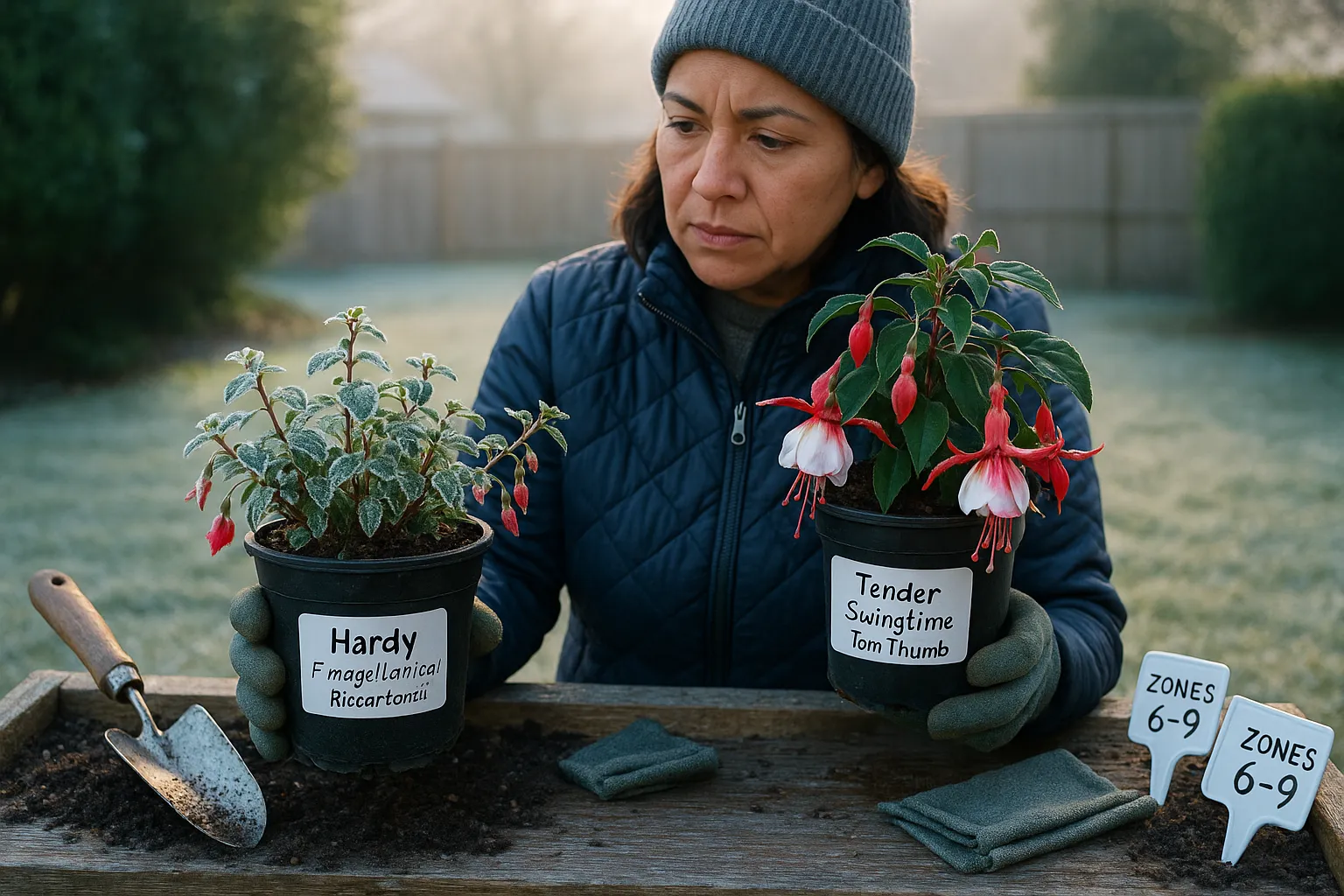
Fact: Hardy fuchsias survive cold winters: tender fuchsias do not. Start there and everything else falls into place.
Key Differences: Hardiness, Growth Habit, and Blooming
Hardy fuchsias (Fuchsia magellanica and hybrids like ‘Riccartonii’) tolerate frost and regrow from root or basal stems in spring. Tender fuchsias (including many Fuchsia × hybrida cultivars such as ‘Swingtime’ and ‘Dollar Princess’) die back when temperatures drop below freezing. You’ll notice differences in growth habit: hardy types often form shrubby mounds with wiry stems, while tender types produce lush, softer growth and more prolific, larger flowers. Bloom timing also differs. Hardy types tend to bloom later and can have a second flush after pruning: tender ones produce continuous blooms from late spring until frost in warm sites.
Typical Varieties and Appearance Traits
Hardy: Fuchsia magellanica, ‘Riccartonii’, ‘Versailles’. These show smaller, simpler flowers, often two-toned, with a more delicate look. Leaves are smaller and sometimes toothed.
Tender: ‘Swingtime’, ‘Tom Thumb’, ‘Gartenmeister’. These show bigger, flamboyant corollas and long pendulous tubes, classic basket material. Leaves are larger and more glossy.
Climate Zones and Cold Tolerance Explained
Hardy fuchsias usually survive USDA Zones 7–9, some proven performers go into Zone 6 with mulching and microclimate help. Tender fuchsias prefer Zones 9–11 outdoors and otherwise need frost-free indoor shelter. The Royal Horticultural Society lists cold-hardy fuchsia accessions and suggests protection below -5°C (23°F) for more vulnerable cultivars. When you pick a type, match its zone rating to your winter minima and don’t rely on local averages alone, look at record lows.
Growing Requirements: Side-by-Side Care Comparison
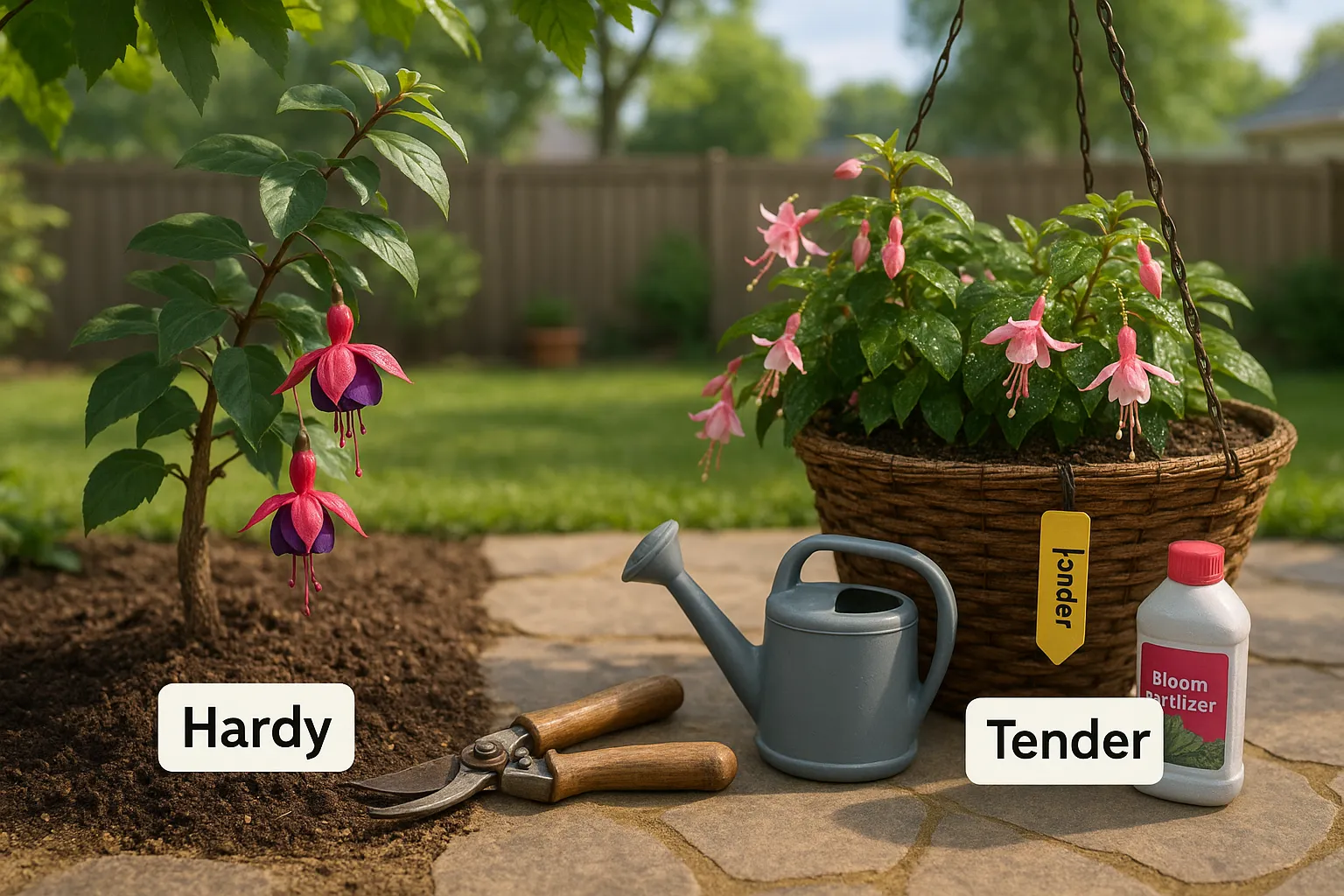
Fact: Both types want consistent moisture and rich soil, but their stress tolerances differ.
Light, Soil, and Water Needs for Hardy Fuchsias
Hardy fuchsias prefer partial shade to dappled sun. In summer they tolerate morning sun and cool afternoon shade. Use well-draining loam with organic matter: pH neutral to slightly acidic (6.0–7.0) works well. Water deeply during dry spells: the plant resists short droughts but will drop buds if the soil dries completely. Feed with balanced fertilizer in spring and a low-nitrogen bloom feed midseason.
Light, Soil, and Water Needs for Tender Fuchsias
Tender fuchsias like bright, indirect light. They handle more sun than hardy types only if kept moist and shaded in the hottest hours. Use a free-draining potting mix rich in organic matter for containers. You must water more frequently, containers dry faster, so check soil daily in heat waves. Fertilize every two to four weeks with a higher-phosphorus formula during bloom to keep flowers abundant.
Pruning, Feeding, and Training Techniques for Each Type
Hardy: Prune in late winter or early spring to shape and remove dead wood. Hard pruning every few years rejuvenates old shrubs, cut back to healthy buds. Feed once when growth begins. Train into screens or mixed borders by spacing 24–36 inches apart.
Tender: Pinch tips in spring to encourage bushy habit and more flowers. Deadhead spent blooms constantly to prolong display. For hanging baskets, pinch and tie shoots to create a cascading effect. Apply regular liquid feed: reduce feeding in winter when growth slows.
These contrasts let you plan maintenance time and placement: hardy types need less season-long fuss: tender types reward attention with heavier flowering.
Planting and Landscape Uses
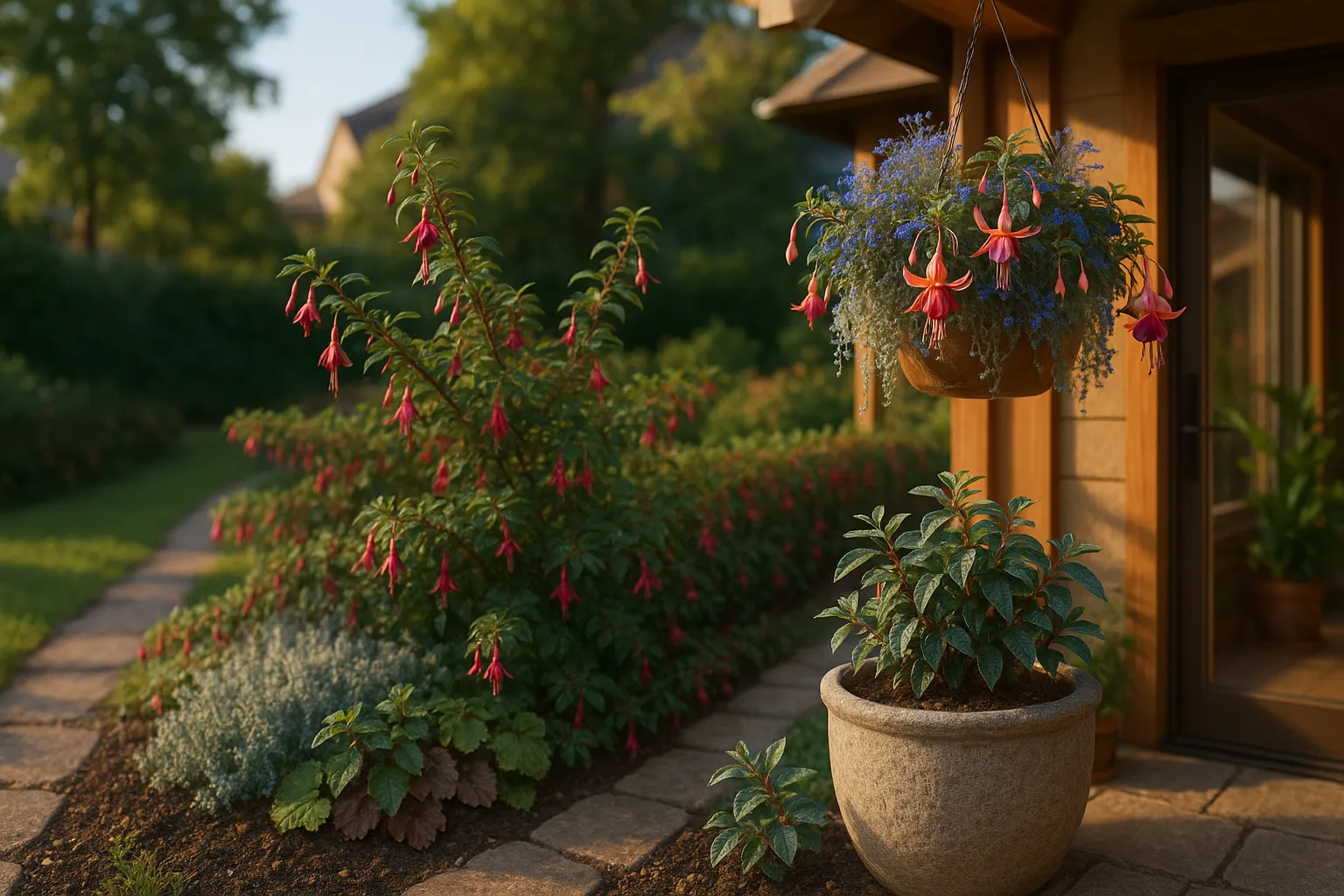
Fact: Hardy fuchsias anchor mixed borders: tender ones excel in containers and indoor displays.
Best Uses for Hardy Fuchsias in Borders and Containers
Use hardy fuchsias as a mid-border shrub under taller perennials like catmint (Nepeta) or Heuchera, where they fill shade gaps with late-season color. They also make informal hedges along pathways. Varieties like Fuchsia magellanica ‘Riccartonii’ work well in gravel-edge beds where drainage is good. In containers, plant hardy types in larger pots with good insulation (stone or double-walled plastic) so roots don’t heave in freeze-thaw cycles.
Best Uses for Tender Fuchsias in Hanging Baskets and Indoor Settings
Tender fuchsias are ideal for hanging baskets, where their trailing stems create the classic fuchsia silhouette. They also perform well on covered porches and bright indoor rooms with high humidity. Use them as focal points on patios or in greenhouse displays. Combine them with trailing lobelia or dichondra for contrast. Keep tender plants mobile so you can move them indoors before the first frost.
Overwintering and Seasonal Care Strategies
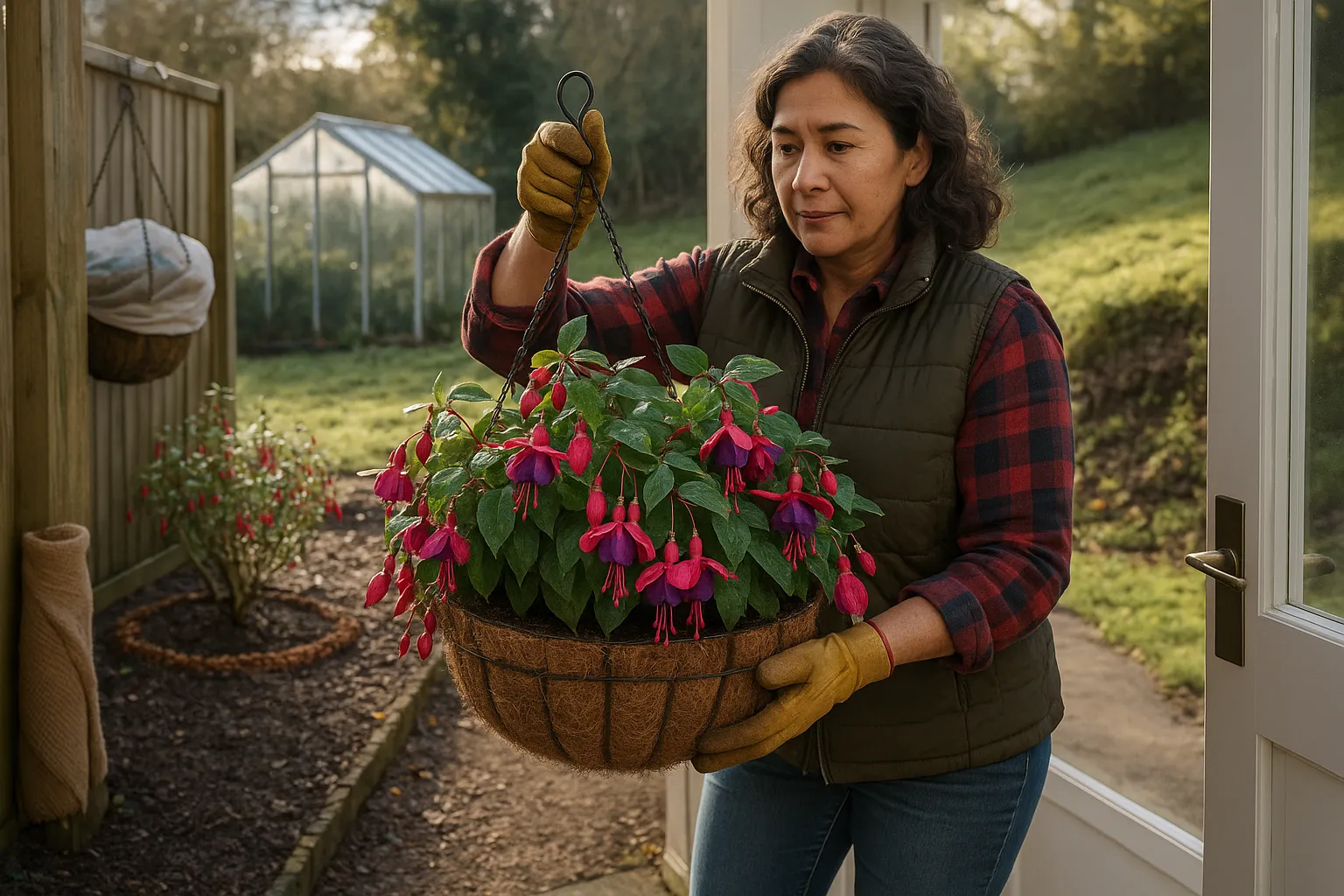
Fact: Overwintering strategy depends entirely on type, hardy outdoors, tender often indoors.
How to Overwinter Hardy Fuchsias Outdoors
Leave hardy fuchsias in place. In late autumn, reduce water gradually and cut back long shoots to tidy the plant. Apply a 2–3 inch mulch of compost or shredded bark around the root zone to insulate against freeze-thaw. Avoid heavy nitrogen late in the season. In Zone 6, consider a temporary burlap windbreak or planting on a south-facing slope to reduce frost exposure.
How to Protect and Overwinter Tender Fuchsias (Indoor and Outdoor Methods)
Move tender fuchsias indoors before nights drop near freezing. Reduce watering and place plants in bright, cool spots (50–60°F/10–16°C) for dormancy: they will take up less water. Alternatively, for a short-term outdoor approach, wrap hanging baskets in horticultural fleece and group them near warm walls, this can extend the season but rarely prevents hard freeze damage. For greenhouse storage, keep humidity moderate and check for pests weekly.
Honest trade-off: indoor overwintering keeps plants alive but often reduces bloom the following year: it also invites spider mites and whiteflies if ventilation is poor.
Propagation, Troubleshooting, and Common Pests/Diseases
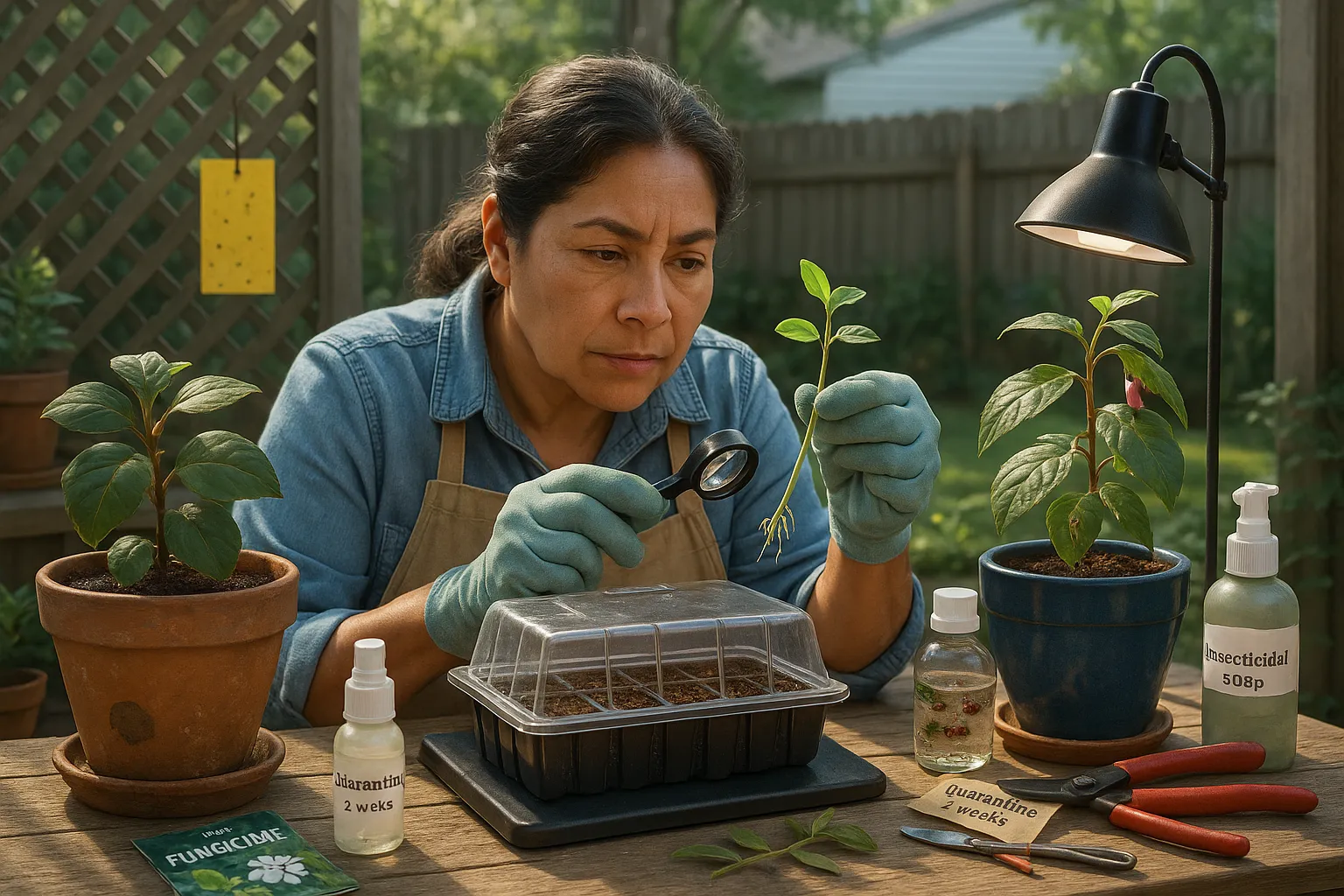
Fact: Both types root easily from cuttings: their vulnerabilities differ.
Propagation Methods: Cuttings, Division, and Seed for Each Type
Cuttings: Soft-tip cuttings root within 2–4 weeks in a free-draining mix. This works for tender and hardy types, use bottom heat for faster rooting on tender cultivars. Division: Hardy fuchsias can be divided in spring if the rootball is robust. Seed: Fuchsia seed grows true only in species: hybrids rarely come true from seed so you’ll lose parent traits. Use cuttings when you want identical offspring.
Common Problems and How They Differ Between Types
Hardy problems: winter heaving, crown rot in poorly drained soils, and occasional foliar fungal spots in humid summers. Tender problems: bud drop from inconsistent watering, sunscald in hot sun, and more frequent mite infestations. Both types can suffer from nutrient imbalance, iron chlorosis shows as yellow leaves with green veins, fixable with chelated iron or soil pH adjustment.
Pest and Disease Management: Practical Tips
Inspect plants weekly. For whitefly and aphids use insecticidal soap or introduce predatory insects like ladybirds and lacewings. Treat spider mites with higher humidity and miticides if necessary. For fungal leaf spots use good air circulation, remove infected leaves, and apply a fungicide labeled for ornamentals. Always follow label directions.
Vulnerable moment: I once lost a tender collection to overwintering indoors because I failed to check for scale: learn from that, quarantine sweet new purchases for two weeks.
Choosing the Right Type for Your Garden: Quick Decision Guide
Fact: Choose hardy if you want low-risk perennials: choose tender for dramatic, high-maintenance displays.
Decision Flow: Climate, Maintenance, and Aesthetic Priorities
If your minimum winter temperature falls below 25°F (-4°C), favor hardy types or plan on indoor protection. If you want a hanging basket as a focal point and can water regularly, choose tender varieties. Ask yourself: how much time will you spend on feeding and overwintering? If the answer is little, pick hardy. If you love fussing and love continuous blooms, pick tender.
Top Recommended Varieties by Use Case (Low-Maintenance, Showy, Shade-Loving)
Low-Maintenance: Fuchsia magellanica ‘Riccartonii’, hardy, wildlife friendly, reliable.
Showy: Fuchsia × hybrida ‘Gartenmeister’ or ‘Swingtime’, large flowers, dramatic colors, best for baskets.
Shade-Loving: Fuchsia magellanica varieties and cultivars labeled for dappled shade, they tolerate low light better than many tender hybrids.
Decision tip: write your site conditions (light, winter low, container vs. ground) on a card and match each variety’s needs before you buy. That simple act prevents most regrets.

- Vitamix Product Comparison: Which Blender Should You Buy? - September 15, 2026
- HBM Competitors in High-Bandwidth Memory Tech - September 15, 2026
- Free Alternatives to Soothe 2 - September 15, 2026
by Ellie B, Site Owner / Publisher