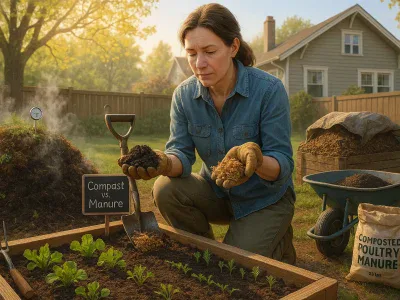
Your garden’s soil is more than just dirt—it’s a living ecosystem that craves nourishment. But boosting its health, do you reach for fertilizer or rely on manure? While both aim to enrich the soil and fuel plant growth, they’re worlds apart in composition, benefits, and impact on the environment.
Picture choosing between nature’s slow but steady magic or a quick fix packed with nutrients. Fertilizers often promise instant results, while manure takes the organic route, nurturing your plants over time. Understanding their differences isn’t just about gardening; it’s about making choices that align with your goals—whether it’s lush greenery or sustainable practices.
What Are Fertilizers?
Fertilizers are substances designed to supply essential nutrients that plants require for optimal growth. They aim to replenish nutrient deficiencies in soil, enhancing crop yield and plant health.
Definition And Composition
Fertilizers consist of chemical or natural substances formulated to provide specific nutrients like nitrogen (N), phosphorus (P), and potassium (K). These macronutrients are often referred to as NPK and play critical roles in plant development. For example, nitrogen promotes leaf growth, phosphorus aids root formation, and potassium enhances resistance against diseases. Many fertilizers also contain secondary nutrients such as calcium or magnesium.
Inorganic fertilizers are synthetically produced using chemical processes, while organic variants derive from natural sources like bone meal or composted materials. The distinction lies in their composition—chemical fertilizers dissolve quickly for immediate absorption, whereas organic types release nutrients more gradually.
Types Of Fertilizers
Chemical Fertilizers: These include urea or ammonium nitrate, widely used for rapid nutrient delivery.
Organic Fertilizers: Examples include fish emulsion and seaweed extract, providing a sustainable option with slower nutrient release.
Compound Fertilizers: Pre-mixed formulas combining multiple nutrients for convenience; an example is 10-20-10 fertilizer containing 10% nitrogen, 20% phosphorus, and 10% potassium.
Specialty Fertilizers: Designed for specific crops or purposes; controlled-release variants minimize runoff by releasing nutrients over time.
Each type addresses unique agricultural needs depending on soil quality and crop requirements.
Advantages Of Using Fertilizers
Enhanced Growth Rates: Nutrient-rich formulas ensure faster plant development compared to untreated soils.
Targeted Nutrition Delivery: Specific blends cater directly to deficiencies; for instance, adding phosphate-based products boosts flowering in fruiting plants.
Higher Crop Yields: Increased availability of key elements results in larger harvests across various crops like wheat or corn.
Customizable Formulas: Farmers can select compositions tailored precisely to their field’s nutrient profile using detailed soil tests.
What Is Manure?
Manure, a natural soil amendment, originates from the decomposition of organic matter like animal waste and plant residues. It enriches the soil over time by improving its structure and microbial activity.
Definition And Composition
Manure consists primarily of decomposed animal excreta combined with bedding materials such as straw or hay. Its composition includes essential nutrients like nitrogen, phosphorus, and potassium but in lower concentrations than fertilizers. These nutrients release gradually as the organic material breaks down, promoting long-term soil fertility.
For example, cow manure is rich in nitrogen and ideal for leafy crops. Poultry manure contains higher phosphorus levels suitable for flowering plants. The nutrient content varies depending on factors like the type of animal and diet.
Types Of Manure
Green Manure: Derived from plowed-under cover crops (e.g., clover or alfalfa), it enhances soil quality through added organic matter.
Farmyard Manure (FYM): A combination of livestock dung, urine, and bedding materials that provides balanced nutrition over time.
Compost Manure: Produced by composting plant waste along with animal manure to create a nutrient-rich amendment.
Liquid Manure: Collected from livestock urine storage systems; it’s diluted before application to avoid root damage.
Each type suits specific uses based on crop requirements and existing soil conditions.
Advantages Of Using Manure
Improves Soil Structure: Organic components loosen compacted soils while enhancing water retention in sandy soils.
Promotes Microbial Activity: Beneficial microbes thrive on decaying organic material, which aids nutrient cycling.
Minimizes Chemical Dependency: By replenishing nutrients , you can reduce reliance on synthetic inputs.
Using manure not only supports eco-friendly practices but also ensures gradual nutrient supply for healthier plant growth over time.
Key Differences Between Fertilizer And Manure
Both fertilizers and manure enhance plant growth, but they differ significantly in composition, impact on soil health, cost, accessibility, and environmental effects. Understanding these differences helps you choose the best option for your gardening or farming needs.
Composition And Nutrient Content
Fertilizers are manufactured products containing high concentrations of essential nutrients like nitrogen (N), phosphorus (P), and potassium (K). For example, a chemical fertilizer might have an NPK ratio of 20-10-10, delivering precise nutrient amounts directly to plants. Organic fertilizers also exist but release nutrients slower than synthetic variants.
Manure is an organic material derived from decomposed animal waste or plant residues. It contains lower nutrient levels compared to fertilizers; for instance, cow manure may have about 0.5% nitrogen content. But, it includes beneficial microorganisms that support long-term soil enrichment.
Impact On Soil Health
Fertilizers provide immediate nourishment but don’t improve soil structure or microbial activity. Overuse can lead to issues like soil acidification or reduced fertility over time.
Manure enhances both physical and biological properties of soil. It improves aeration, water retention capacity and promotes beneficial microbial diversity which sustains healthy soils for years ahead.
Cost And Accessibility
Fertilizers often come with higher upfront costs due to their production processes and targeted formulations. They’re widely available in stores catering to various agricultural scales.
Manure is usually more affordable or free if sourced locally from farms or through composting household organic waste—though application requires larger quantities due its lower nutrient density.
Environmental Implications
Fertilizer usage contributes significantly too environmental concerns such as waterway contamination through runoff leading eutrophication events affecting aquatic ecosystems negatively [source EPA]. Also synthetic variants rely on non-renewable resources during manufacturing stages raising sustainability questions further still..
When To Use Fertilizer Vs. Manure?
Use fertilizer when plants demand immediate nutrient availability or when soil shows deficiencies in specific macronutrients like nitrogen, phosphorus, or potassium. Fertilizers suit intensive farming and home gardening for rapid growth and higher yields. For instance, applying a high-nitrogen chemical fertilizer benefits leafy vegetables like spinach or lettuce during their vegetative stage.
Choose manure for improving long-term soil health and structure rather than quick results. Manure fits organic farming practices by enhancing microbial activity and retaining moisture in the soil. Crops like root vegetables (e.g., carrots) thrive with manure due to its gradual nutrient release that supports sustained growth.
Avoid using fertilizers if over-application risks contaminating water sources through runoff or degrading soil quality by reducing its natural fertility over time. In contrast, use manure cautiously on crops sensitive to pathogens unless it’s well-composted to ensure safety.
Evaluate your goals—opt for fertilizer in short-term scenarios requiring targeted nutrition but rely on manure if emphasizing eco-friendly practices or building healthy soil ecosystems over years.
Conclusion
Choosing between fertilizer and manure depends on your gardening goals and priorities. Fertilizers deliver quick, targeted nutrients for immediate plant growth, while manure supports long-term soil health through organic enrichment. Both have unique advantages, but understanding their differences helps you make more informed decisions about what’s best for your plants and the environment.
By aligning your choice with your needs—whether it’s rapid results or sustainable practices—you can create a thriving garden that reflects your values.
To provide the best experiences, we use technologies like cookies to store and/or access device information. Consenting to these technologies will allow us to process data such as browsing behaviour or unique IDs on this site. Not consenting or withdrawing consent, may adversely affect certain features and functions.
Functional
Always active
The technical storage or access is strictly necessary for the legitimate purpose of enabling the use of a specific service explicitly requested by the subscriber or user, or for the sole purpose of carrying out the transmission of a communication over an electronic communications network.
Preferences
The technical storage or access is necessary for the legitimate purpose of storing preferences that are not requested by the subscriber or user.
Statistics
The technical storage or access that is used exclusively for statistical purposes.The technical storage or access that is used exclusively for anonymous statistical purposes. Without a subpoena, voluntary compliance on the part of your Internet Service Provider, or additional records from a third party, information stored or retrieved for this purpose alone cannot usually be used to identify you.
Marketing
The technical storage or access is required to create user profiles to send advertising, or to track the user on a website or across several websites for similar marketing purposes.