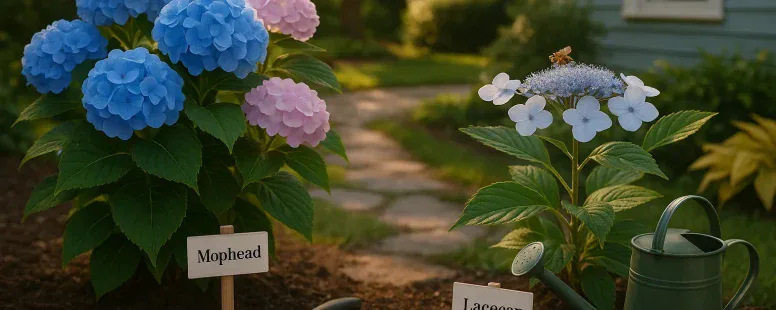
Mophead Hydrangeas vs. Lacecaps is a question many gardeners ask when they stand before a nursery bench full of hydrangea tags. One type offers big, pom-pom blooms that read like floral punctuation: the other presents a delicate halo of tiny flowers surrounding a central cluster. That visual difference matters: it changes how you use the plant in the garden, how you prune it, and which microclimates will let it thrive. You’ll learn surprising practical benefits, like which type holds color longer, which tolerates wind, and which gives pollinators more value, so you can pick the right hydrangea for your yard and your style.
Quick Comparison: Key Differences At A Glance
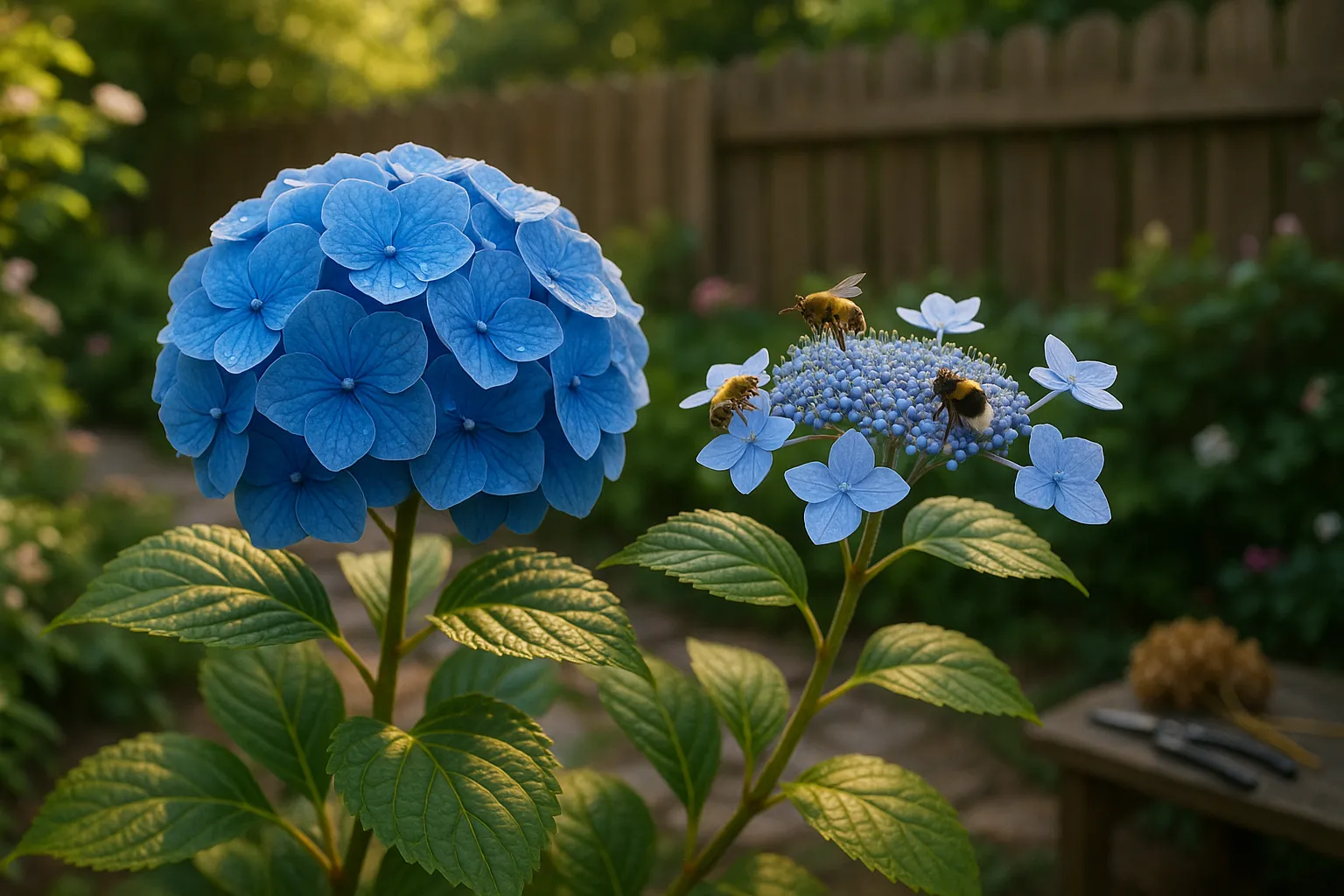
Fact: Mophead hydrangeas form large, rounded heads of sterile flowers: lacecaps present a flat or slightly domed disk with fertile flowers in the center and showy sterile florets on the rim.
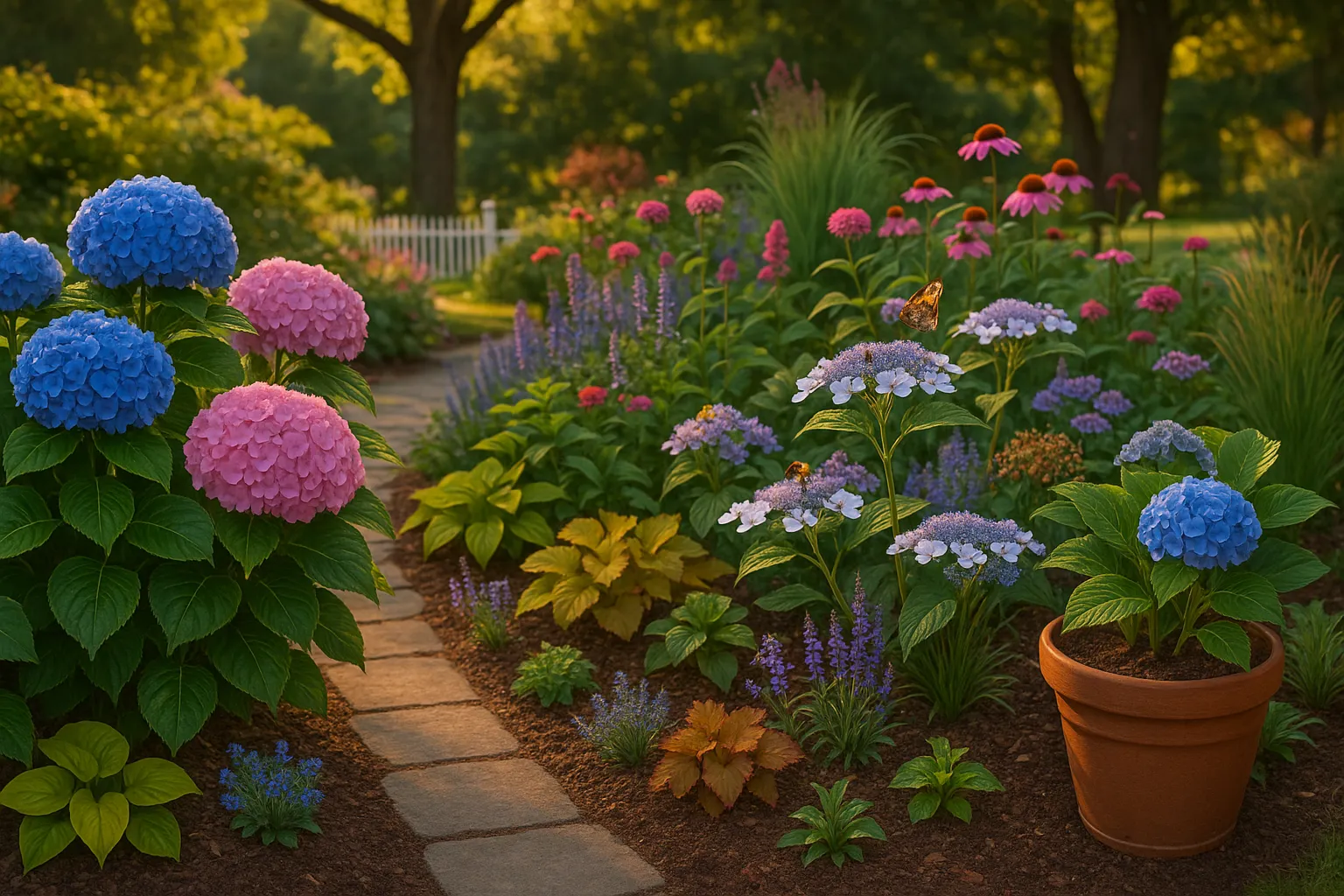
At a glance, choose mopheads if you want bold, architectural blooms that stop the eye. Choose lacecaps if you prefer a lighter, more textural look that invites pollinators. Mopheads (commonly Hydrangea macrophylla ‘Annabelle’ or ‘Nikko Blue’) create big color blocks and dry well for winter arrangements. Lacecaps (like Hydrangea macrophylla ‘Blue Wave’ or wild H. serrata varieties) give a layered look and often rebloom more freely on secondary stems.
Pruning sensitivity: Mophead = more prone to bloom loss if pruned incorrectly: Lacecap = somewhat more forgiving.
This quick contrast helps you decide before you dig deeper into care and placement.
Flower Structure And Appearance
Fact: Mophead and lacecap hydrangeas differ first at the flower-anatomy level: those anatomical differences drive appearance, pollinator value, and maintenance.
Bloom Anatomy: Sterile Versus Fertile Flowers
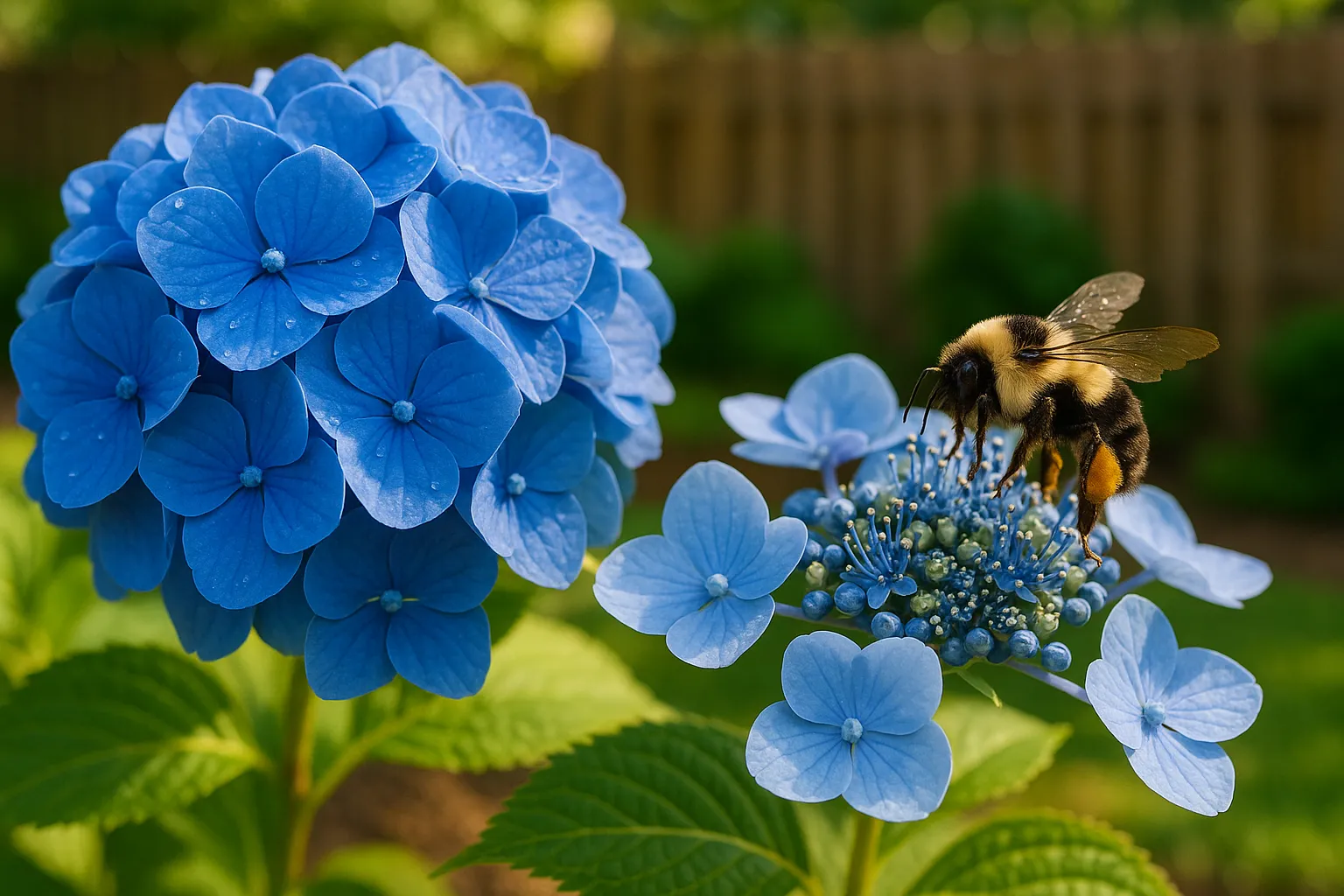
Mophead hydrangeas produce large heads dominated by sterile flowers. The sterile florets have big showy sepals: they don’t make pollen or seeds. Lacecaps combine a ring of sterile florets with a center of small, often nectar-rich fertile flowers. That center is where pollinators land and where seeds form.
Think of a mophead like a showy billboard, high visibility but little internal activity. The lacecap is like a plaza: decorative edges but a busy center where insects work. This difference explains why bees favor lacecaps: they can land on the fertile center and feed, whereas mopheads are mostly visual.
Color, Size, And Seasonal Blooming Patterns
Fact: Both types show the same color range (pink, blue, purple, white) depending on cultivar and soil pH, but mopheads often present more saturated, uniform color across a large surface.
Mophead blooms can reach 6–12 inches across on vigorous cultivars. Lacecaps are usually smaller and subtler, with individual florets often under an inch. Seasonality is similar: both bloom from late spring through summer, with peak in early to mid-summer. Some lacecaps, especially Hydrangea serrata, have a longer season or repeat bloom on new wood, giving a longer display.
Color note: If you want vivid blue, choose an aluminum-accumulating cultivar like ‘Nikko Blue’ and manage soil pH: both mopheads and lacecaps respond, but mopheads give a larger blue surface at once.
Growing Conditions And Care Requirements
Fact: Both mophead and lacecap hydrangeas prefer moist, well-drained soil and partial shade, but small differences in tolerance and timing affect your care plan.
Soil, pH, And Nutrient Needs
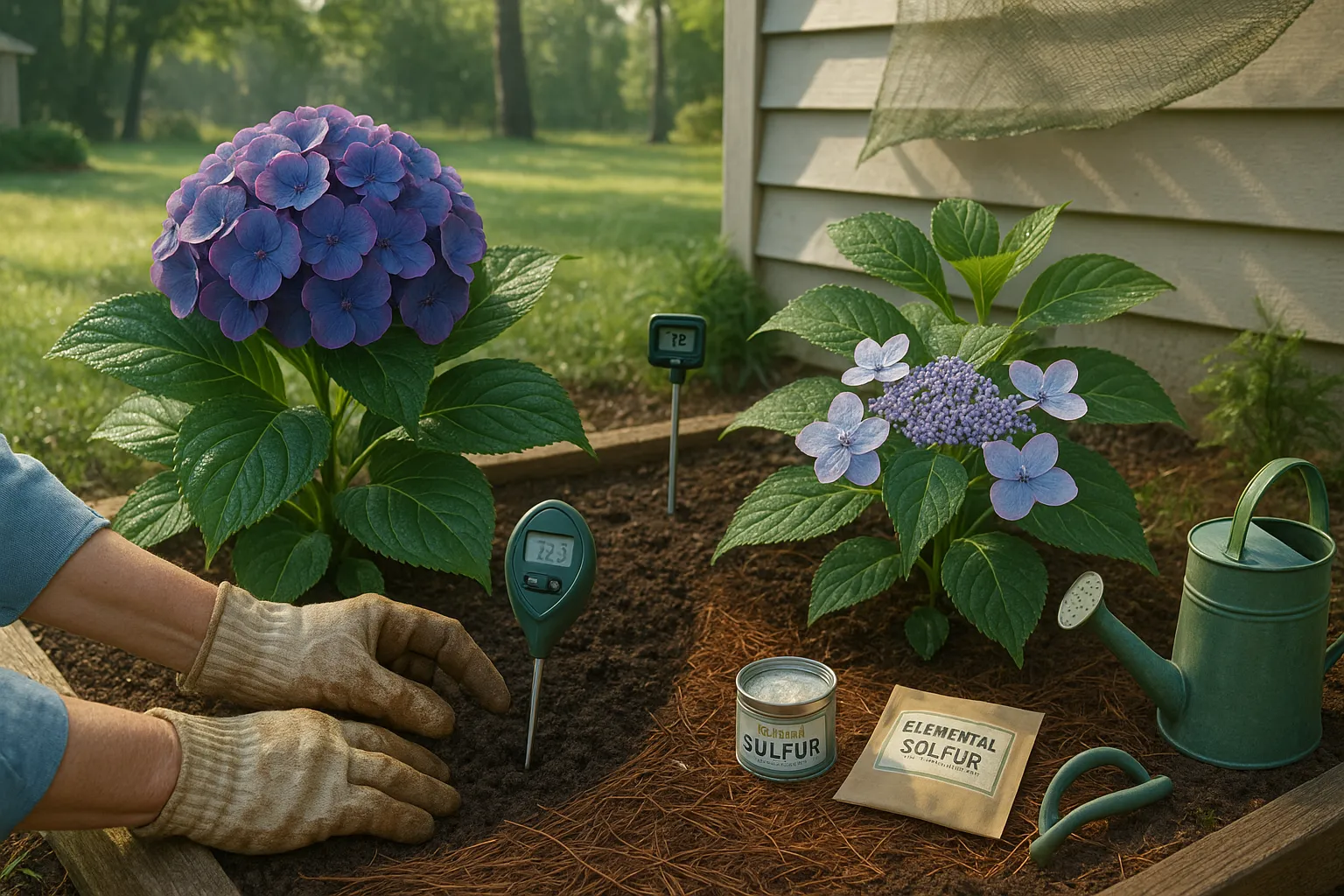
Hydrangeas respond to soil pH for color in many cultivars. Acidic soils (pH below 6) favor blue flowers in aluminum-available varieties: alkaline soils (pH above 7) push color toward pinks. Both types need fertile soil with organic matter. Use a balanced, slow-release fertilizer, an N-P-K like 10-10-10 in spring, or a product formulated for acid-loving shrubs.
If you test your soil and it’s very alkaline, add elemental sulfur or use an acidic mulch such as pine needles. Remember: changing pH is gradual: you won’t flip color overnight.
Light, Watering, And Microclimate Considerations
Fact: Hydrangea macrophylla generally likes morning sun and afternoon shade.
If you plant in hot afternoon sun, expect leaf scorch and shorter bloom longevity. Lacecaps often tolerate slightly more sun because their smaller blooms shed heat better: mopheads with large heads can wilt faster. Water deeply once or twice a week during dry spells rather than shallow daily sprinkling: deep water encourages deeper roots.
Microclimates matter: plant on north or east sides of houses in USDA zones 6–8 to protect from heat, or give afternoon shade cloth in hotter zones.
Hardiness Zones And Winter Care
Fact: Most mophead and lacecap Hydrangea macrophylla types thrive in USDA zones 5–9, though specific cultivars vary.
In colder zone 5 winters, buds on old wood can die if exposed to extreme cold: protect crowns with mulch and avoid late summer fertilizing that promotes tender growth. In zones 9 and warmer, watch for summer heat stress, use shade and mulch. Some serrata varieties or mophead cultivars bred for cold hardiness (like ‘Endless Summer’ series) offer better bud survival and reblooming after winter damage.
Pruning, Training, And Propagation
Fact: Pruning timing depends on whether your hydrangea blooms on old wood (last year’s stems) or new wood (this year’s growth). Mopheads are usually old-wood bloomers: many lacecaps include new-wood bloomers.
Pruning Timing And Techniques For Mopheads
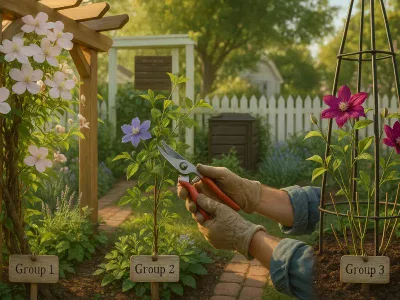
Start with the clear rule: prune mopheads right after flowering in summer, and prune lightly. Mopheads set next year’s buds on current-season shoots that then harden: heavy pruning in late winter removes those buds and you lose the next season’s show.
Technique: remove dead wood first, then thin crossing branches to improve air flow. You can cut some stems back to a pair of healthy buds, but don’t reduce the shrub by more than one-third if you want reliable bloom next year.
Pruning Timing And Techniques For Lacecaps
Lacecaps may be slightly more forgiving. If your lacecap variety blooms on both old and new wood (check cultivar notes), you can do a light pruning in late winter to shape and a heavier pruning after flowering. For serrata-type lacecaps that rebloom, you can shear more aggressively in early spring because they produce blooms on new growth.
Propagation: Cuttings, Layering, And Division
Fact: Both types root well from softwood or semi-ripe cuttings: layering works for older plants.
Take 3–4 inch softwood cuttings in late spring or early summer, dip in rooting hormone, and place in a moist, sterile medium. For layering, bend a low branch to soil, wound the segment, and peg it down: roots form in a season. Division is rare for Hydrangea macrophylla but possible for multi-stemmed clumps, best in early spring.
Landscaping Uses And Design Ideas
Fact: Mopheads and lacecaps play different visual roles: mopheads provide bold focal points: lacecaps offer texture and pollinator interest.
Garden Roles: Specimen, Massing, And Borders
Use mopheads as specimen plants or in mass plantings to create bold color blocks. A row of mopheads near a walkway makes a strong statement. Use lacecaps in mixed borders where you want layering with grasses, salvias, or bearded iris: the flat blooms tuck between upright foliage and don’t overwhelm smaller perennials.
Container Planting And Small-Space Solutions
Fact: Both types grow in containers if you give consistent moisture and a large enough pot.
Choose a 15–20 gallon container for sustained health. Mopheads create a dramatic container focal point: pick dwarf cultivars like Hydrangea macrophylla ‘Pia’ or ‘Tiny Tuff Stuff’ for patios. Lacecaps fit balcony planters better because their blooms are smaller and less likely to flop.
Companion Plants And Color Combinations
Fact: Color pairing boosts visual impact and seasonal interest.
Pair blue mopheads with golden hostas or Heuchera ‘Caramel’ to create strong contrast. Pair lacecaps with butterfly-attracting plants like Monarda, Nepeta, or Echinacea to highlight pollinators. White hydrangeas (both types) make good backdrops for colorful perennials and evening gardens.
Common Problems And Troubleshooting
Fact: Many hydrangea problems trace to water stress, improper pruning, or soil pH imbalances.
Pests And Diseases Specific To Each Type
Hydrangeas face similar pests: aphids, spider mites, and hydrangea scale. Lacecaps may show more insect activity at the fertile centers because insects feed there. Diseases include powdery mildew, leaf spots (Cercospora), and root rot in poorly drained sites. Use neem oil or insecticidal soap for soft-bodied insects: provide good airflow to reduce fungal issues.
Nutrient Deficiencies, Leaf Issues, And Bloom Failure
Chlorosis (yellow leaves with green veins) usually means iron deficiency or high pH. Slow-release iron chelates help. If your mophead fails to bloom, likely causes are pruning at the wrong time, winter bud kill, or over-fertilizing with high nitrogen fertilizer. Lacecaps that fail to bloom may have similar causes, but if they’re new-wood bloomers, late-winter pruning could help.
When To Replace Versus Revive A Plant
Fact: Revive a plant when structural roots are healthy and decline is due to correctable issues: replace when the crown is rotted or the plant shows repeated dieback.
Try revival steps first: correct drainage, prune dead wood, adjust fertilizer, and test soil pH. If the shrub fails to leaf out from multiple stems in spring or the crown mushes when pressed, replacement is safer. When you replace, match the cultivar to your site, choose reblooming varieties if you want extra insurance.
To provide the best experiences, we use technologies like cookies to store and/or access device information. Consenting to these technologies will allow us to process data such as browsing behaviour or unique IDs on this site. Not consenting or withdrawing consent, may adversely affect certain features and functions.
Functional
Always active
The technical storage or access is strictly necessary for the legitimate purpose of enabling the use of a specific service explicitly requested by the subscriber or user, or for the sole purpose of carrying out the transmission of a communication over an electronic communications network.
Preferences
The technical storage or access is necessary for the legitimate purpose of storing preferences that are not requested by the subscriber or user.
Statistics
The technical storage or access that is used exclusively for statistical purposes.The technical storage or access that is used exclusively for anonymous statistical purposes. Without a subpoena, voluntary compliance on the part of your Internet Service Provider, or additional records from a third party, information stored or retrieved for this purpose alone cannot usually be used to identify you.
Marketing
The technical storage or access is required to create user profiles to send advertising, or to track the user on a website or across several websites for similar marketing purposes.