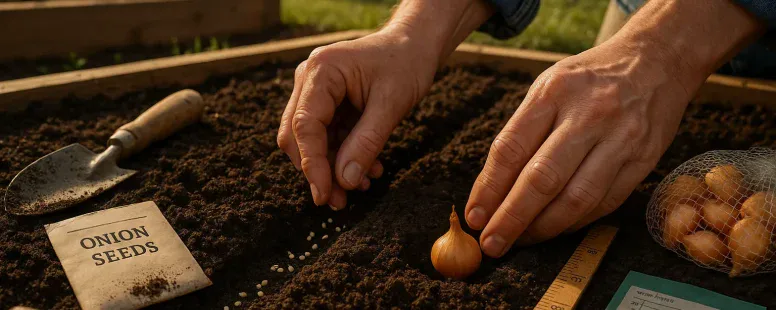
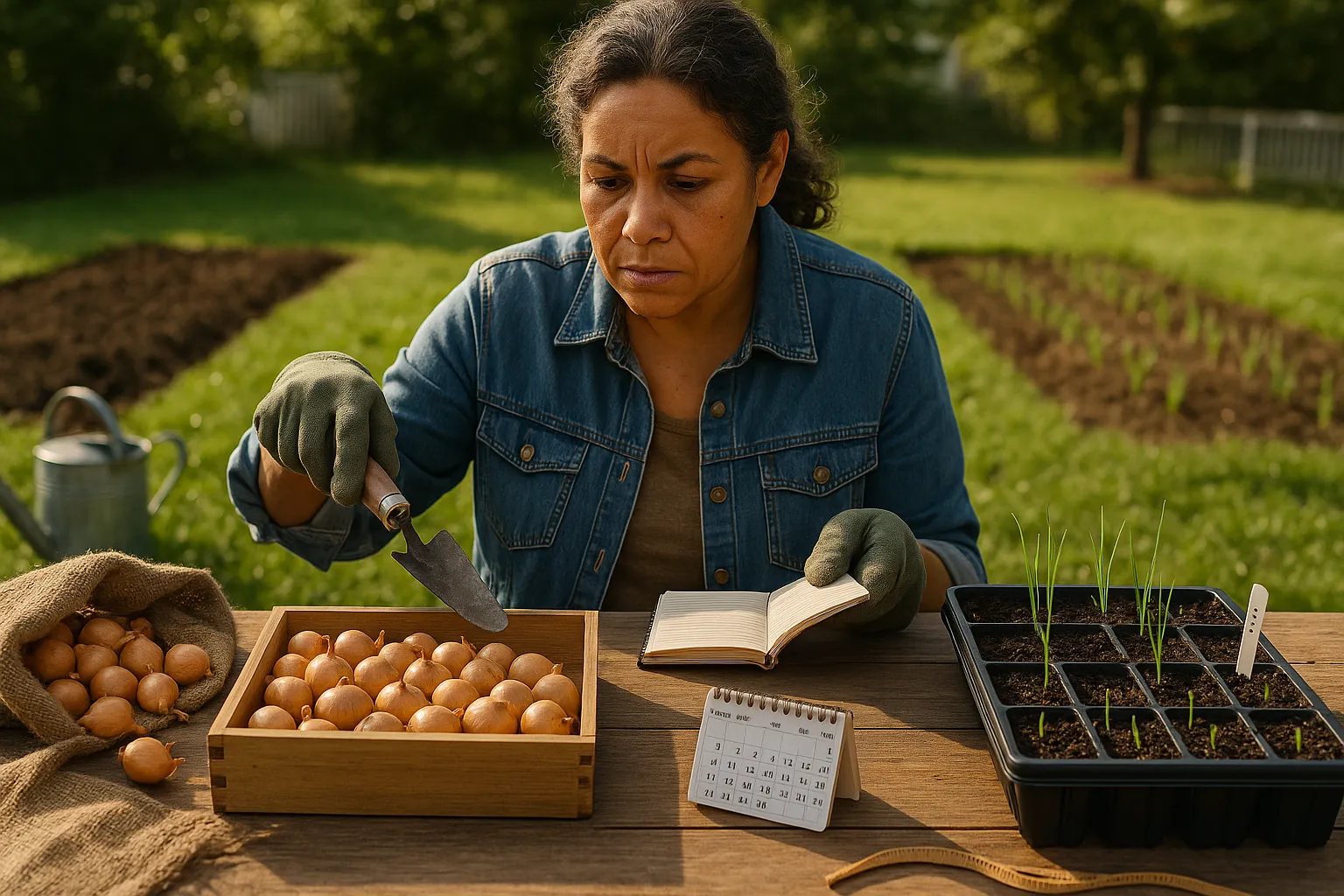
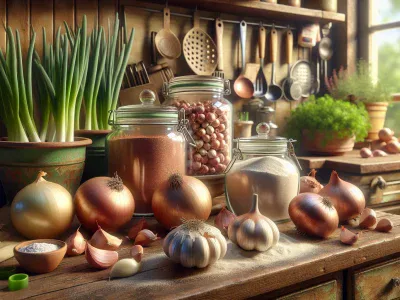
Onion Sets vs. Seeds is a question you’ll face early in your growing season. Choosing one method shapes timing, labor, cost, and the very flavor of your harvest. Picture cool soil crumbling between your fingers as you press tiny onion seeds into neat rows, or picture tucking plump, soil-cured sets into the bed and watching green shoots jump up within days. Both paths lead to onions on your plate, but they do so with different rhythms, risks, and rewards. This guide gives direct, practical comparisons so you can pick the approach that fits your garden, schedule, and palate.
How Onions Grow: Basics Every Gardener Should Know
Fact: Onions are biennial plants grown as annuals for their edible bulbs. You plant them to produce a bulb in the first year: if left in the ground, they would flower (bolt) in the second year. Onions depend on day length to form bulbs: short-day, intermediate-day, and long-day types respond differently to daylight.
Start with the life stages: seed -> seedling -> vegetative growth -> bulbing -> maturity. Seeds germinate, develop true leaves, and establish roots. Bulbing begins when plants sense the critical day length for their variety. The bulb is a storage organ of layered fleshy scales: that’s what you harvest.
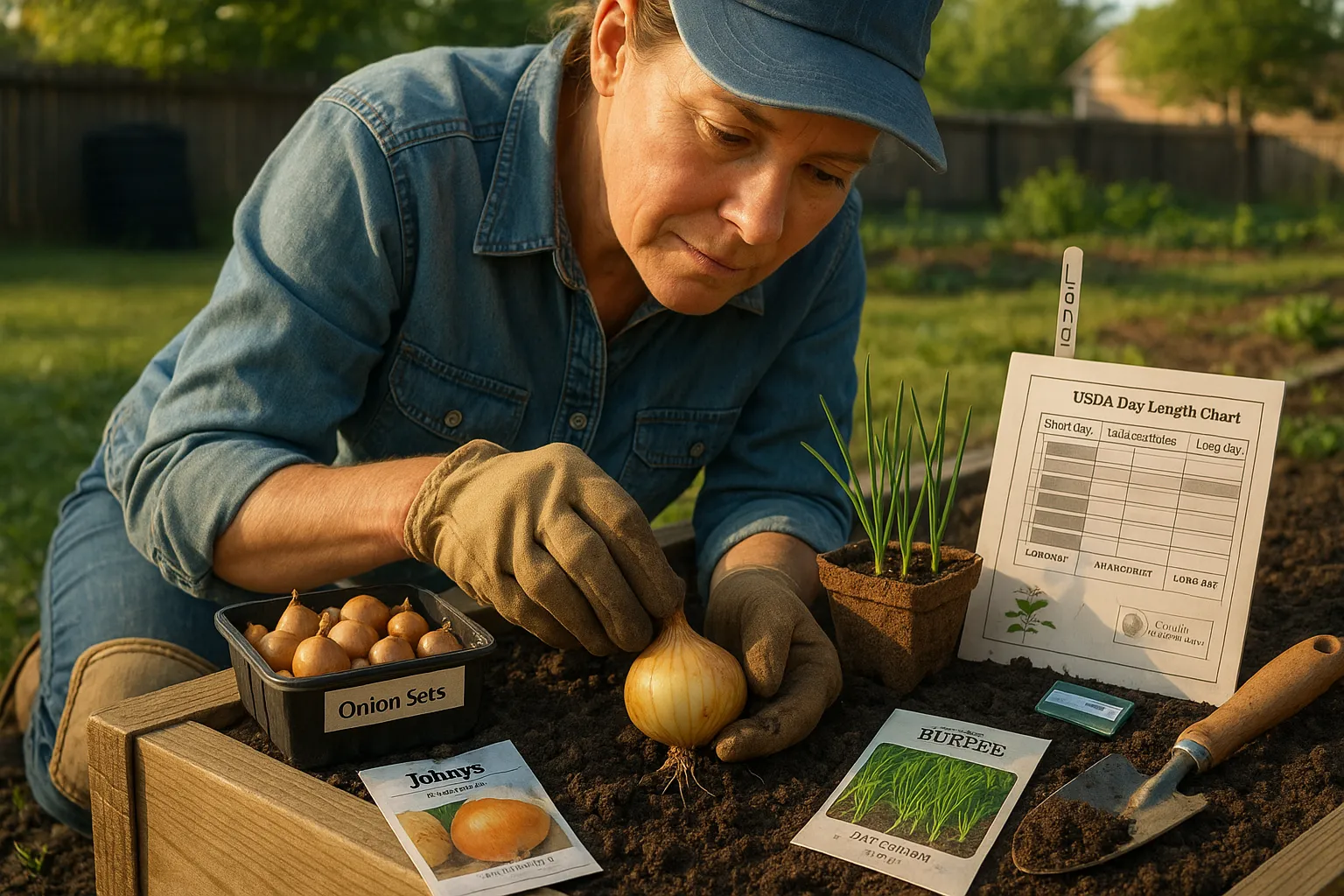
Named entities matter: the USDA and local extension services (for example, your county extension office) provide day-length charts for regions. Johnny’s Selected Seeds and Burpee list day-length categories on seed packets. If you choose the wrong day-length type for your latitude, your onions will fail to bulb properly.
Practical insight: soil fertility, especially available sulfur and nitrogen, affects bulb size and flavor. Onions like loose, well-drained soil with pH 6.0–7.0. Overcrowding reduces bulb size: under-fertilizing produces thin necks and small bulbs. You will want evenly moist soil during the formative bulbing stage, but never waterlog it.
What Are Onion Sets And What Are Onion Seeds?
Fact: Onion sets are small, immature onion bulbs grown the previous season and sold for planting: onion seeds are raw seed that you start yourself.
Sets: A set is a nursery-grown bulb, typically 1/2 to 1 inch across. Companies like Johnny’s Selected Seeds and local nurseries sell cured sets in fall or early spring. You plant sets and they quickly produce mature bulbs. Sets save time and give you a jump start on the season. But they may limit variety choice and sometimes harbor diseases such as onion scales infected with Botrytis or pink root.
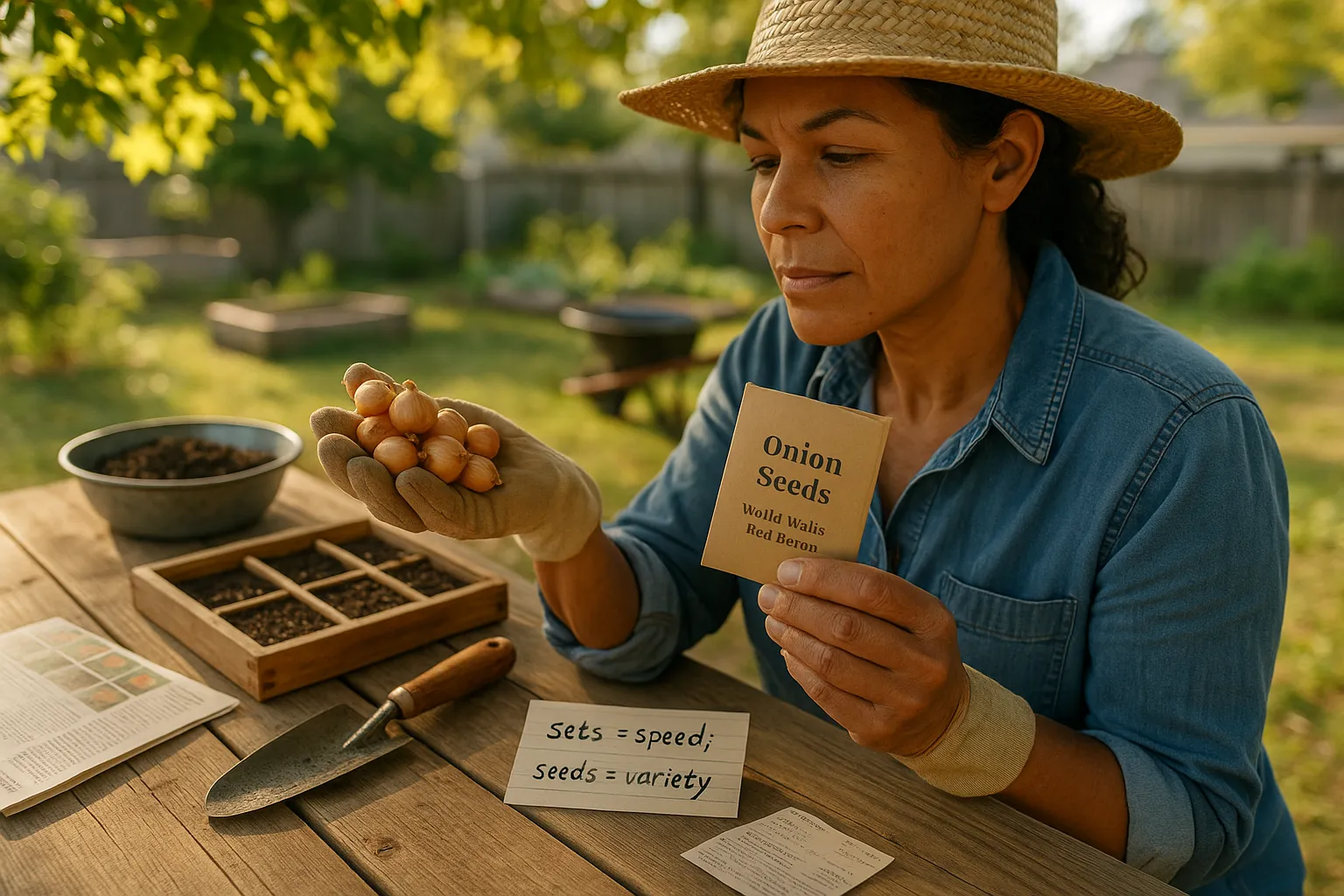
Seeds: Seeds let you grow any variety listed by seed companies, sweet onions like ‘Walla Walla’, storage types like ‘Red Baron’, or heat-tolerant varieties. Seeds are cheap per unit and allow selection for flavor and storage traits. Seeds require more time, more skill (to thin, transplant, or start indoors), and close attention to timing.
Simple tradeoff: sets = speed and ease: seeds = variety and control. Your decision will hinge on how much time you have, how picky you are about variety, and whether your local suppliers carry disease-free sets.
Key Advantages And Disadvantages: Sets Vs. Seeds
Fact: Sets reduce time to harvest but often limit choices: seeds offer variety at the cost of extra labor.
Advantages of Sets:
Fast establishment: greens appear within days, letting you harvest earlier.
Lower early-season labor: no indoor seed-starting.
Good for short seasons or late starts.
Disadvantages of Sets:
Limited varieties: most sets are popular, common types not heirlooms.
Higher per-plant cost: sets cost more per bulb than seeds do per plant.
Potential disease carryover: poor-quality sets can pass viruses or fungal diseases into your bed.
Advantages of Seeds:
Vast variety: you can choose sweet, storage, gourmet, or unusual types.
Cost-effective for large plantings: a packet of seeds grows dozens of plants.
Cleaner start: seeds have lower disease risk than reused bulbs.
Disadvantages of Seeds:
Requires more time: start indoors 8–10 weeks before transplant or sow very early in cold frames.
Higher early care: thinning, transplant shock, and unpredictability.
Delayed harvest: you will wait weeks longer compared to sets.
Real example: a gardener in Maine told their local extension they switched to sets after two failed seed starts: they gained harvest two weeks earlier but missed growing a preferred red storage variety only available as seed.
Choosing Based On Your Goals And Garden Conditions
Fact: Choose sets if you need speed or have a short season: choose seeds if you want specific varieties or lower cost per plant.
Ask yourself three quick questions: How long is your growing season? Do you need a specific variety? How much time will you invest in seed starting? If your season is short (high latitudes or late spring), sets are the pragmatic choice. If you want a rare heirloom or a particular storage onion, seeds give you that control.
Garden condition matters: if your soil is compacted or high in pathogens from previous onion crops, start from seed in sterilized media to reduce disease risk. Conversely, if you rotate crops and your beds are clean, sets will perform well.
Budget and scale: for planting fewer than 50 onions you might buy sets for convenience. For larger plots 200+ onions, seeds drop your cost per plant dramatically.
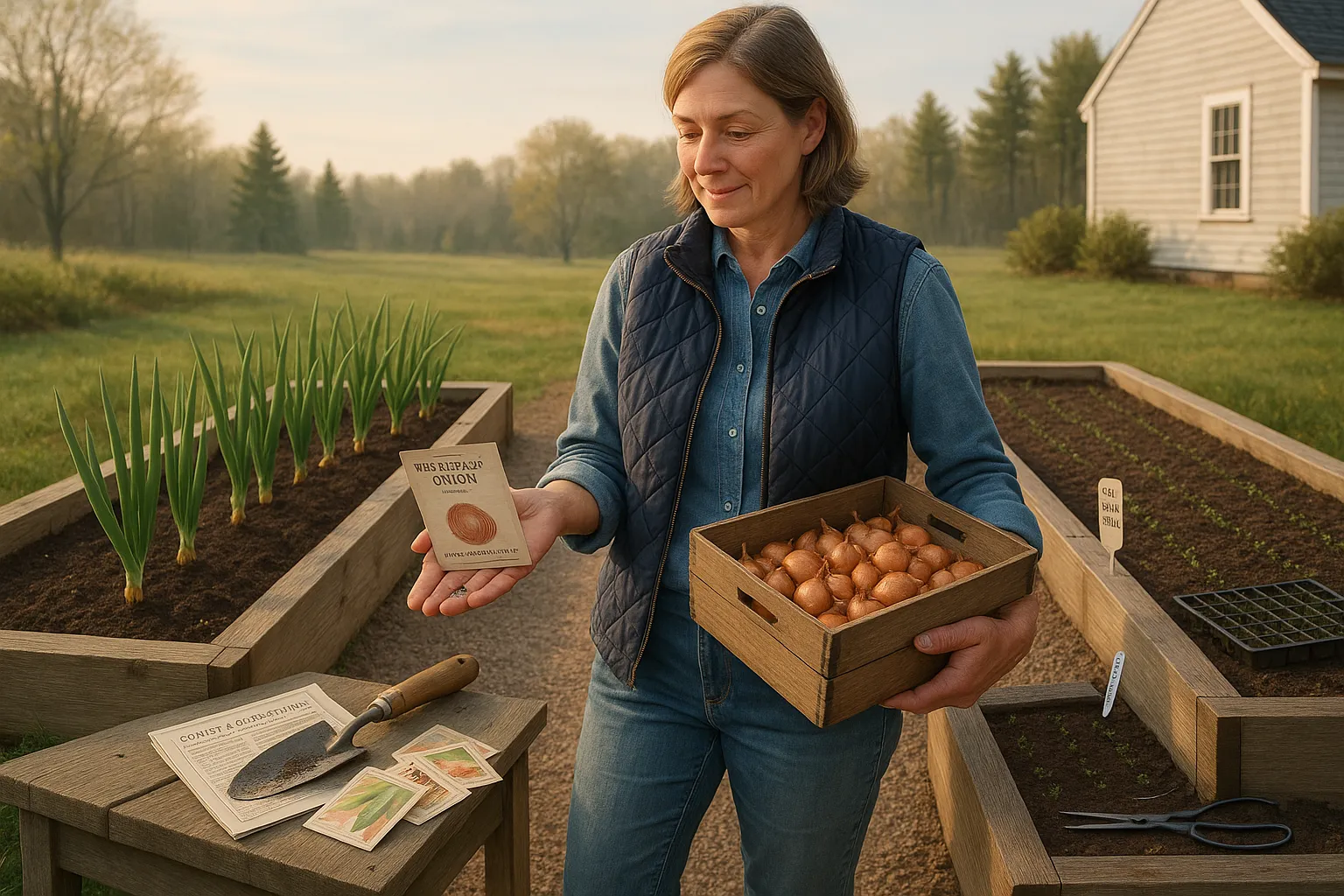
Timing strategy: many gardeners mix both methods, start prized varieties from seed and fill remaining rows with sets for early harvest. That hybrid approach balances variety with early yield, and it’s used by small-scale market farmers.
Planting And Care: Practical Steps For Sets And For Seeds
Fact: Sets plant shallow and fast: seeds require more careful timing and early attention. Below are step-by-step actions for each method.
When To Plant And How To Time Your Crop
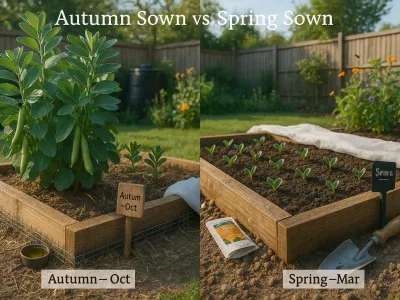
Fact: Plant sets in early spring as soon as soil is workable: start seeds indoors 8–10 weeks before last frost or sow outdoors in spring if you can protect seedlings.
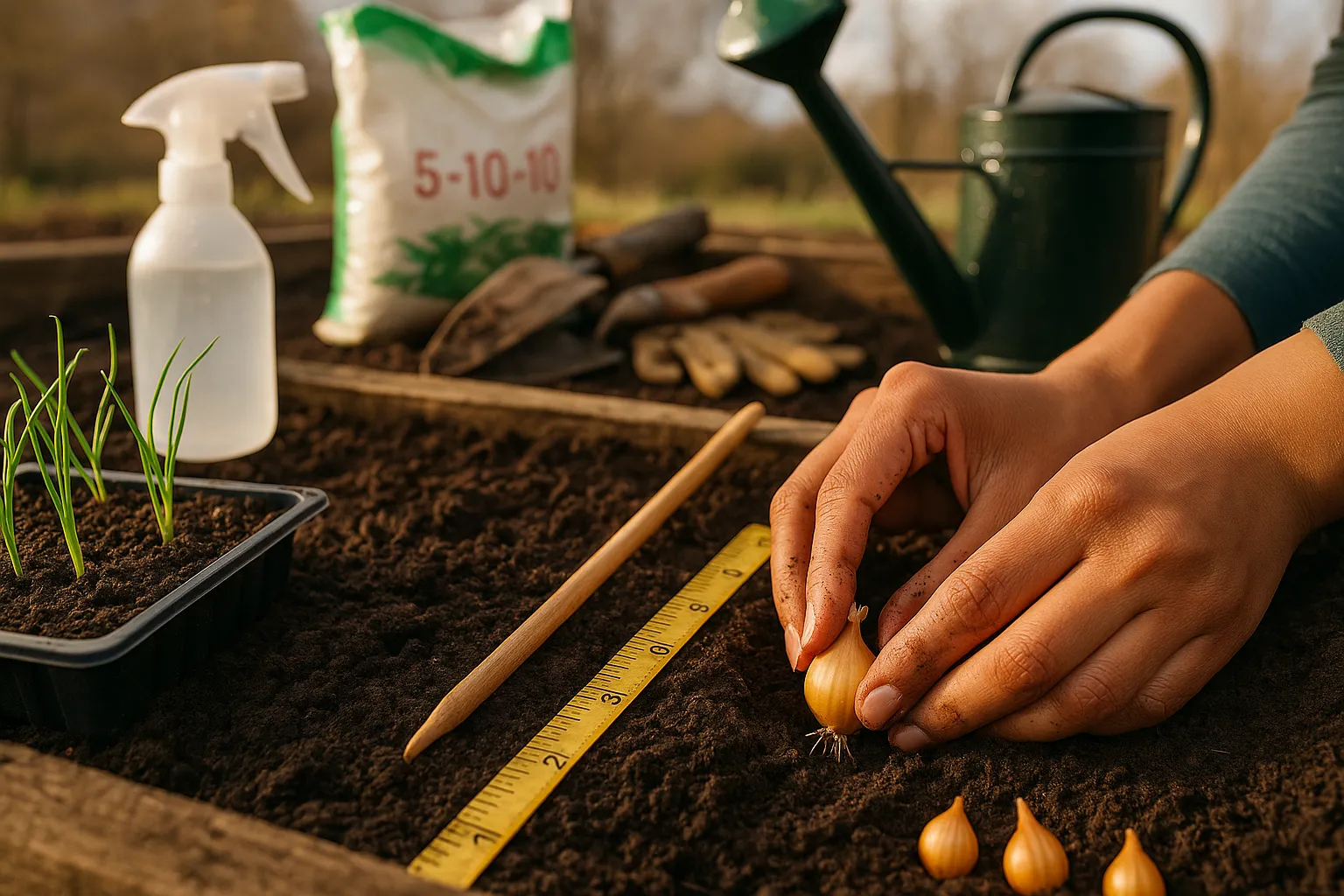
Sets: Plant sets 1–2 weeks before average last frost if soil drains. They sprout quickly. Space depends on target bulb size: 3–4 inches apart for large bulbs if you plan to thin less, 2–3 inches if you will harvest small.
Seeds: Sow indoors 8–10 weeks before transplanting. Transplant when seedlings have 3–4 true leaves and soil temperatures reach roughly 50°F at night. You can also direct-sow very early but expect slower and less uniform stands.
Soil, Spacing, Watering, And Fertilization Differences
Fact: Both prefer loose, fertile soil: seeds need consistent moisture for germination while sets need quick root establishment.
Soil: Work compost and balanced fertilizer (5-10-10) into top 6 inches. Seed beds benefit from a fine seedbed: sets tolerate slightly coarser soil.
Spacing: Seeds: start thick, then thin to 4–6 inches for full-size bulbs. Sets: plant 3–4 inches apart for standard bulbs. Row spacing: 12–18 inches.
Watering: Seeds: keep surface moist until germination. Sets: water after planting to settle soil, then keep even moisture. Avoid overwatering during maturation to prevent rot.
Fertilization: Side-dress with nitrogen early in vegetative growth, then reduce N as bulbing begins to avoid soft, non-storing bulbs. Use foliar tests or soil tests from your extension to fine-tune: too much nitrogen delays bulb maturity.
Troubleshooting, Common Problems, And How To Fix Them
Fact: Most onion problems stem from timing, water, or variety mismatch. Here are diagnoses and fixes.
Bulbing Issues, Bolting, And Stunted Growth: Diagnosis And Fixes
Fact: Incorrect day-length type or uneven watering causes poor bulbing: bolting often results from stress or cold snaps.
Poor bulbing: Check variety day-length. If you planted a long-day onion in a short-day region, switch varieties next season. Ensure even soil fertility and avoid high nitrogen late in the season.
Bolting: Bolting occurs when plants experience stress (cold or drought) or genetic tendency. Remove bolting plants to reduce seed spread: save seed only from controlled stock.
Stunted growth: Likely nutrient deficiency, compacted soil, or root issues. Test soil for pH and nutrients. Loosen soil and add compost: correct pH with lime or sulfur per extension recommendations.
Pests And Diseases Specific To Sets Or Seeds And Management Tips
Fact: Sets can carry scale-borne diseases: seeds reduce that risk but face seedling damping-off.
Sets: Watch for pink root (caused by Phoma terrestris) and onion smut. Buy certified disease-free sets from reputable suppliers like local extension-approved nurseries. Rotate crops: avoid planting onions in the same bed more than once every 3 years.
Seeds: Damping-off and fungal issues hit seedlings in cool, wet conditions. Use sterile seed-start mix and proper air flow: avoid overwatering.
General pests: Thrips, onion maggot, and foliar diseases affect both methods. Use row covers early to deter onion maggot. Encourage beneficials (lady beetles) for thrips and follow IPM practices recommended by your county extension.
Variety Selection, Sourcing, And Cost Considerations
Selection: Decide by day-length class and intended use: sweet, storage, or green bunching. For example, ‘Walla Walla’ (short-day sweet) suits southern areas: ‘Copra’ (long-day) is better for northern, long-summer regions. For scallions, choose bunching types like ‘White Lisbon’.
Sourcing: Buy seeds from reputable sellers (Johnny’s Selected Seeds, Baker Creek Heirloom Seeds, Burpee). Buy sets from local nurseries or certified suppliers to reduce disease risk. Your county extension can recommend regionally trusted suppliers.
Cost: Seeds cost pennies per plant: a packet may grow 200+ onions. Sets cost more per plant but save time. Example: a packet of seeds at $3.50 might yield 300 plants: a tray of 50 sets may cost $15–$25. Do the math for your plot size.
Vulnerable moment: If you once bought cheap sets from an unknown vendor and lost half your crop to disease, you’re not alone. Many gardeners learned to prioritize certified sources after a bad year.
Actionable tip: If you want both early onions and rare varieties, plant sets for early harvest and start special varieties from seed. That choice spreads risk and satisifes both convenience and curiosity.
To provide the best experiences, we use technologies like cookies to store and/or access device information. Consenting to these technologies will allow us to process data such as browsing behaviour or unique IDs on this site. Not consenting or withdrawing consent, may adversely affect certain features and functions.
Functional
Always active
The technical storage or access is strictly necessary for the legitimate purpose of enabling the use of a specific service explicitly requested by the subscriber or user, or for the sole purpose of carrying out the transmission of a communication over an electronic communications network.
Preferences
The technical storage or access is necessary for the legitimate purpose of storing preferences that are not requested by the subscriber or user.
Statistics
The technical storage or access that is used exclusively for statistical purposes.The technical storage or access that is used exclusively for anonymous statistical purposes. Without a subpoena, voluntary compliance on the part of your Internet Service Provider, or additional records from a third party, information stored or retrieved for this purpose alone cannot usually be used to identify you.
Marketing
The technical storage or access is required to create user profiles to send advertising, or to track the user on a website or across several websites for similar marketing purposes.