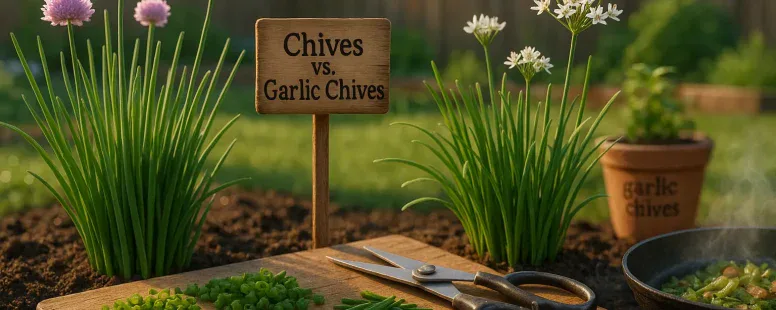
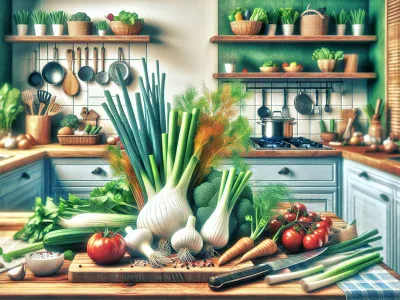
You can tell chives and garlic chives apart by more than smell, they behave differently in the garden, the kitchen, and on your plate. Picture a spring meadow of slender green blades dotted with lilac pom-poms, then picture flat, grass-like leaves with white, starry blooms and a faint garlic whisper. That contrast shapes how you plant them, how you cook with them, and why you might choose one over the other for a specific dish. This article lays out clear, practical differences between chives and garlic chives so you can pick, grow, and use the right Allium for your needs, and get more flavor from less fuss.
Botanical Identity And Appearance
Fact: Chives and garlic chives are both members of the onion family but they are different species with distinct looks.
Scientific Names And Family
All chives belong to the genus Allium in the Amaryllidaceae family. The common chive you see in herb beds is Allium schoenoprasum. Garlic chives are Allium tuberosum (also called Chinese chives). Both are true Alliums and share sulfur compounds that give them savory notes, but they have different botanical traits and chromosome counts that make them separate species.
Leaf, Flower, And Bulb Differences
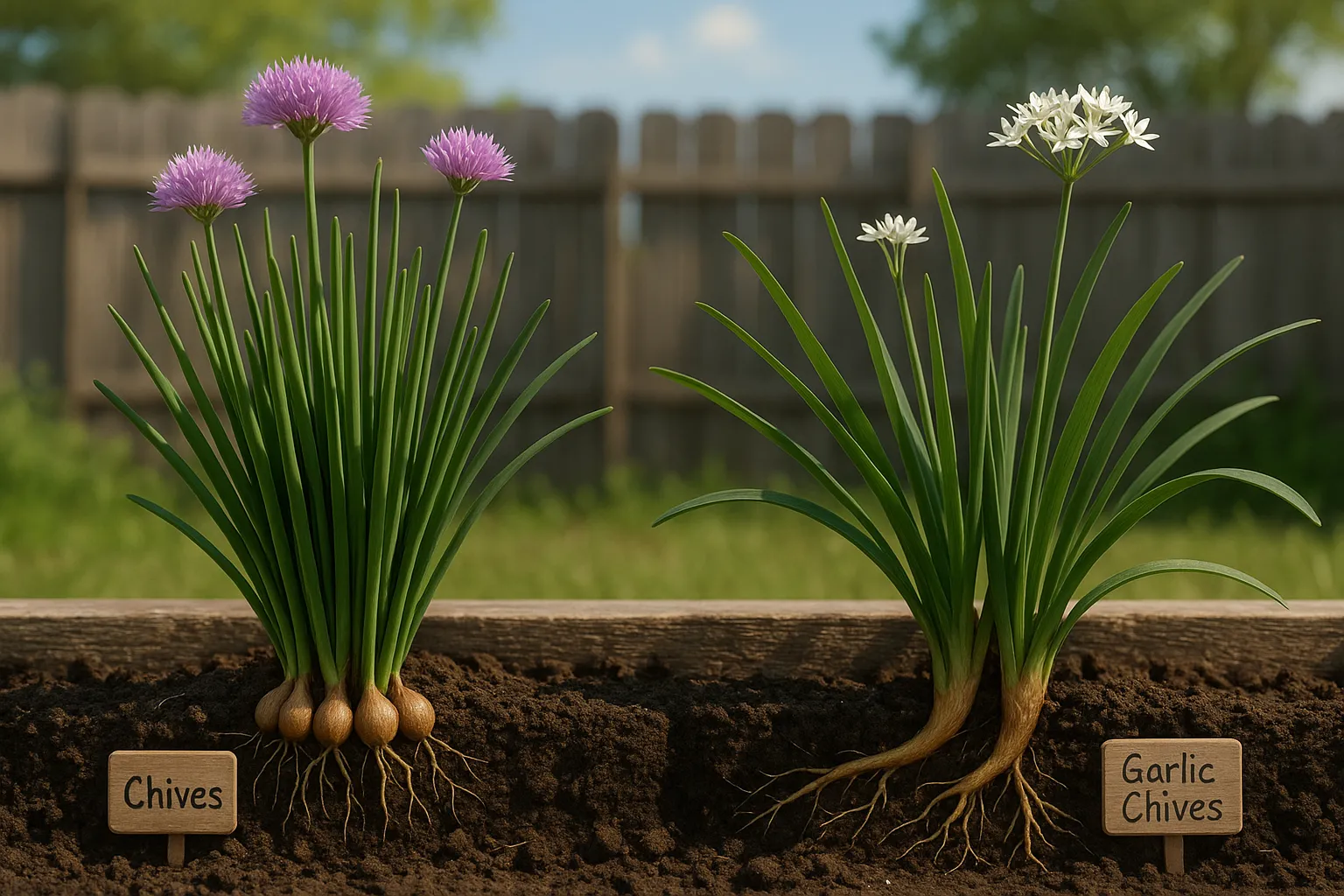
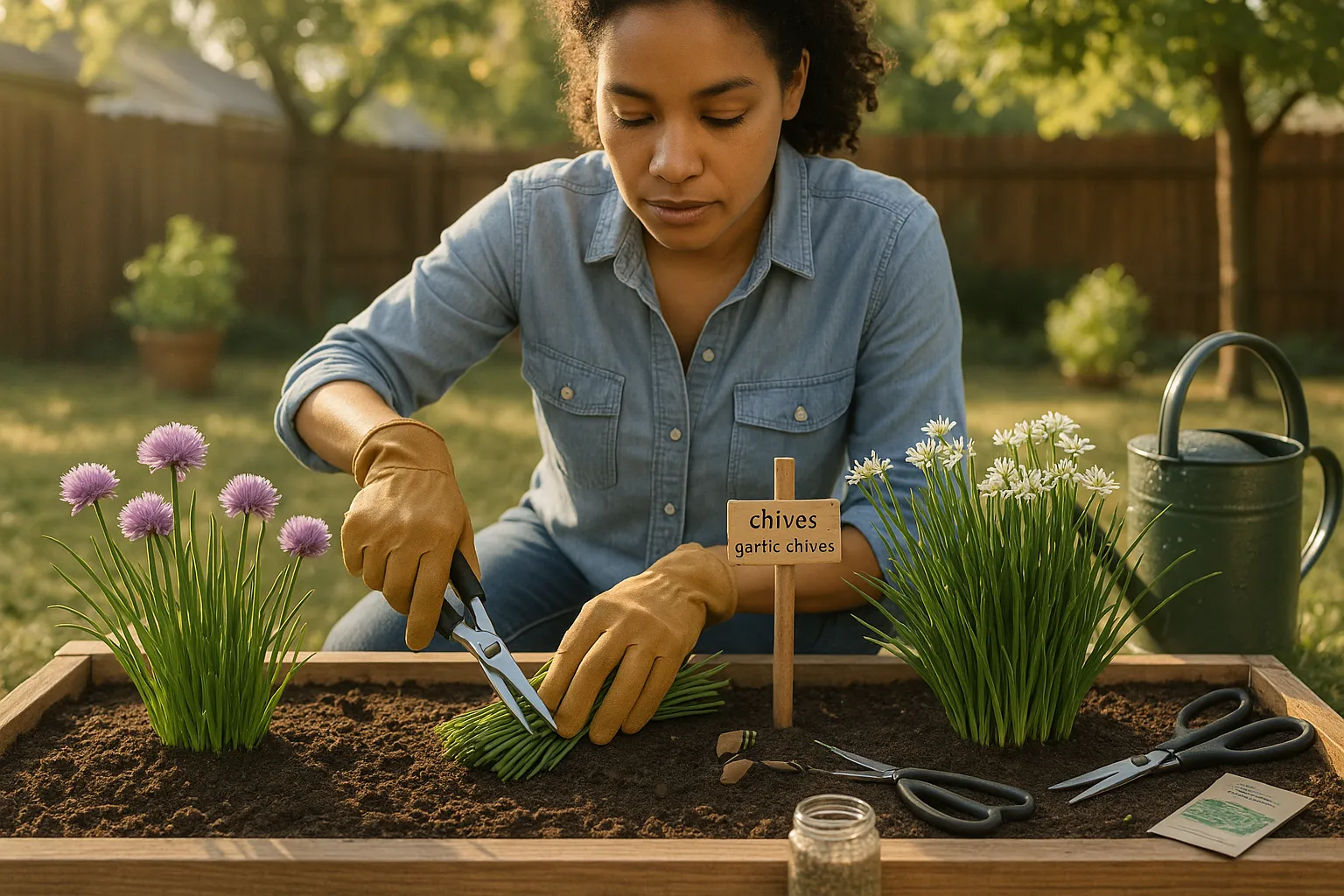
Chives (Allium schoenoprasum) have hollow, tubular leaves that look like thin grass. Their flowers form round, purple to pink globes atop thin stems. Garlic chives (Allium tuberosum) have flat, strap-like leaves, white star-shaped flowers in loose clusters, and they lack the hollow tubes. Bulbs are subtle: common chives form small clumping bulbs, while garlic chives develop shallow, elongated rhizomes in some cultivars, not big bulbs like garlic.
Size, Growth Habit, And Seasonal Behavior
Chives stay relatively compact: 8–12 inches tall with a clumping habit. They die back in winter in colder zones but regrow early spring. Garlic chives grow 12–20 inches tall and spread more aggressively by seed and rhizome: they can naturalize in beds. Garlic chives also tolerate warmer climates and often keep foliage longer into fall. Both are hardy, but garlic chives sometimes act like a perennial that wants to take over if you let it.
Flavor, Aroma, And Culinary Uses
Fact: The main difference you taste is that chives offer a mild onion note while garlic chives add a gentle garlic edge.
Taste Profiles And How They Differ
Chives give a light, onion-like flavor with grassy freshness. They add a bright finish without overpowering. Garlic chives contain allyl sulfides in a slightly different balance, so you’ll notice a faint garlic aroma and a rounder, richer savory note. Use chives when you want delicate lift: use garlic chives when you want a soft garlic background without cooking raw garlic.
Cooking Applications And Pairings
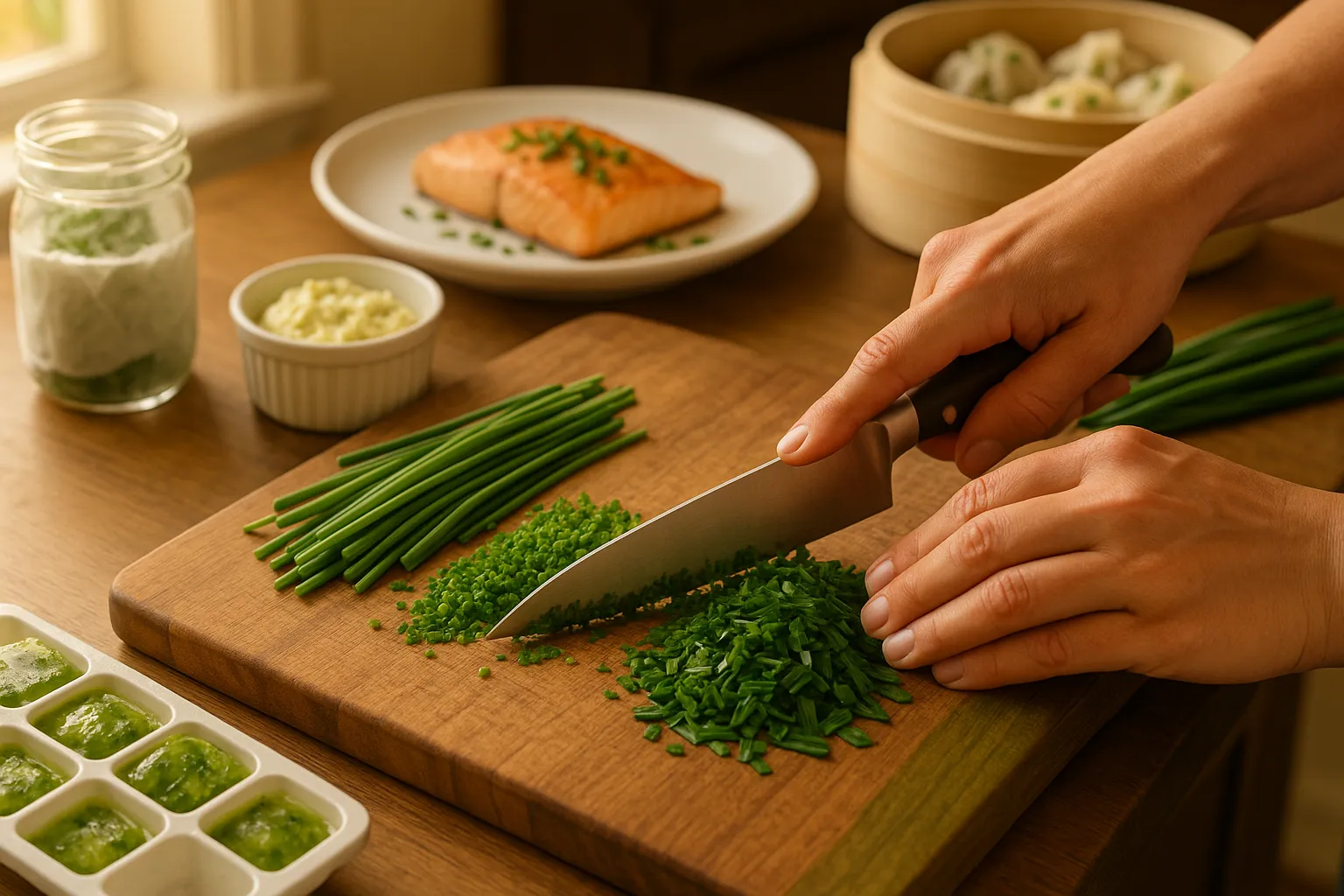
Chives: sprinkle raw on salmon, deviled eggs, baked potatoes, and cream-based sauces. They pair with dairy (butter, sour cream), eggs, and mild fish. Garlic chives: use in stir-fries, dumpling filling, Asian noodle dishes, and garlic butter. They can be sautéed briefly to release flavor. Think of chives as a finishing herb and garlic chives as both garnish and light-cooking ingredient.
Practical tip: If you need garlic flavor but want a milder hit than a clove gives, chop garlic chives and fold them into sauces or compound butter.
Preserving, Storage, And Flavor Retention
Fact: Fresh leaves hold the best flavor: both lose nuance when frozen or dried.
To store fresh chives, wrap stems loosely in a damp paper towel, place in a sealable bag, and refrigerate: they’ll last about a week. For longer storage, chop and freeze in ice cube trays with a little water or oil, this preserves much of the profile. Drying flattens their scent: dried chives keep color but lose punch. Garlic chives store similarly, but their flat leaves freeze more evenly. Commercial freeze-dried products can work when fresh herbs aren’t available, though flavor is never quite the same.
Nutritional Profile And Health Benefits
Fact: Both herbs are low-calorie and provide modest amounts of vitamins and antioxidants: they complement meals without adding calories.
Key Nutrients And Caloric Overview
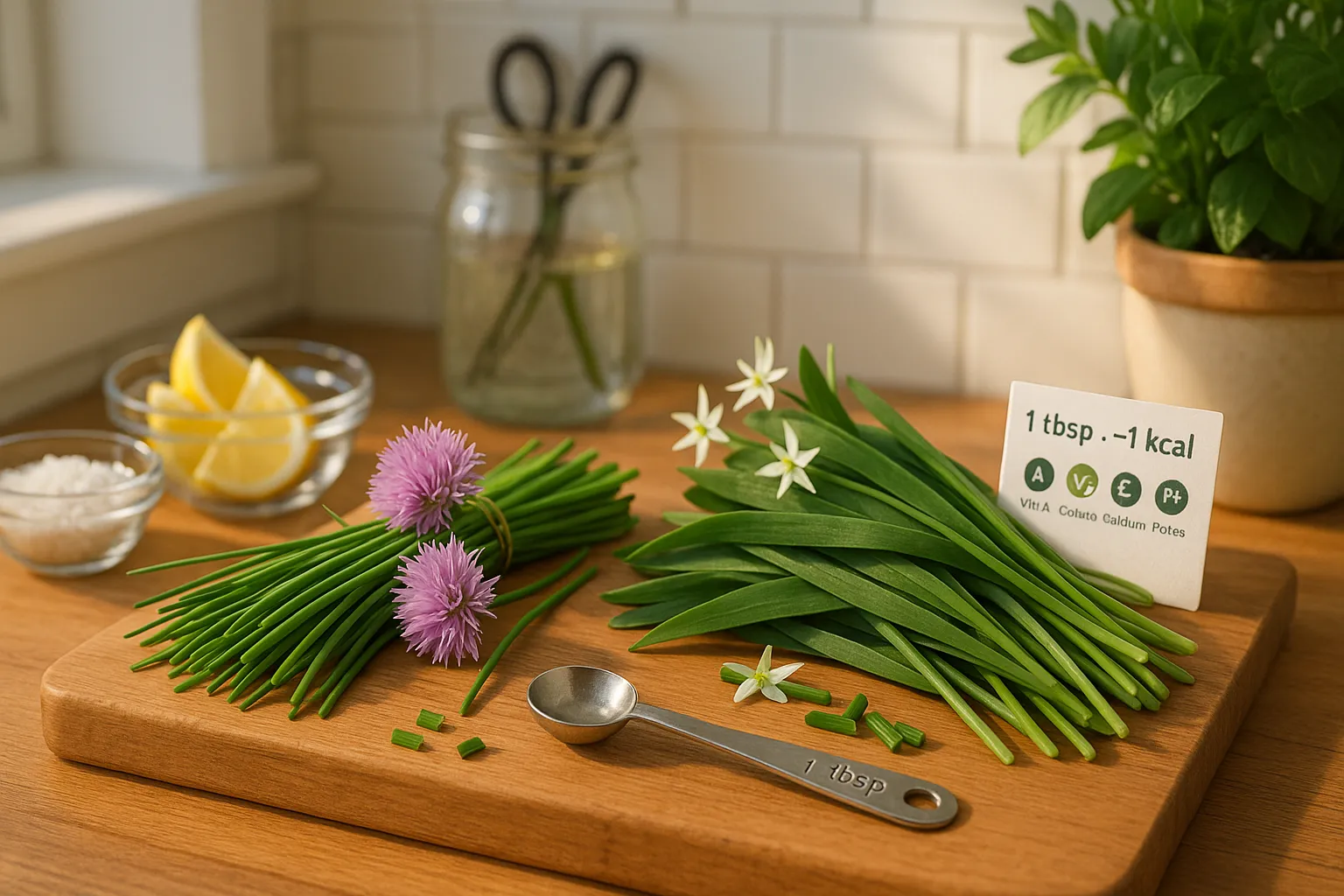
Per 1 tablespoon (about 3 grams) of fresh chives you get roughly 1 calorie, small amounts of vitamin A, vitamin C, and folate, plus trace minerals like calcium and potassium. Garlic chives offer similar micronutrients but often show slightly higher vitamin C and carotenoid levels by weight. Both contain flavonoids (like quercetin) and sulfur compounds that act as antioxidants. The USDA nutrient database lists these herbs as minor contributors to daily needs, but they boost flavor so you use less salt, that’s a real health win.
Traditional And Potential Medicinal Uses
Fact: People have used all Allium species for digestive and circulation benefits for centuries.
Traditional medicine in Europe and Asia used chives and garlic chives for mild digestive aid and as tonic herbs. Modern research on Allium species shows antibacterial and modest cardiovascular benefits linked to sulfur compounds: but, specific clinical trials on chives or garlic chives are limited. Use them as part of a varied diet rather than a cure. If you take anticoagulants, mention frequent large intakes of garlic-like herbs to your clinician, there may be interactions. (This is general information, not medical advice.)
Growing, Harvesting, And Care
Fact: Both are low-maintenance perennials you can grow from seed or division, but garlic chives demands slightly more space.
Planting, Site Selection, And Timing
Plant chives in full sun to partial shade. They prefer morning sun and some afternoon shade in hot climates. Sow seeds after the last frost or start transplants indoors 6–8 weeks earlier. Garlic chives germinate reliably but a little slower: start them in spring or late summer for fall growth. If you want spring blooms, plan planting the previous year.
Soil, Watering, And Fertilizer Needs
Chives like well-draining soil with moderate fertility and pH 6.0–7.0. They tolerate average garden soil: heavy feeds produce lush foliage but fewer flowers. Water evenly, keep soil moist but never waterlogged. Apply a balanced, low-dose fertilizer in early spring. Garlic chives will happily take slightly richer soil and regular feeding if you want more leaf production for cooking.
Pests, Diseases, And Common Problems
Fact: Pests are rare: overwatering and poor air flow cause most problems.
Watch for onion thrips, aphids, and fungal leaf spot. Remove diseased foliage and improve spacing for air flow. Rot from standing water will kill crowns. Both species resist deer and rabbits more than many herbs, but slugs may nibble young shoots in damp weather.
When And How To Harvest For Best Flavor
Harvest chives by snipping leaves at the base with scissors: cut frequently to encourage fresh growth. Harvest before flower buds open for the mildest flavor. For garlic chives, cut leaves flush at the soil level: remove flower stalks if you want more leaf production. Use harvested leaves within a week fresh, or process for freezing right away, flavor declines with age.
Propagation, Varieties, And Container Growing
Fact: You can propagate both by seed or division: division gives faster production and maintains cultivar traits.
Division, Seed Propagation, And Best Practices
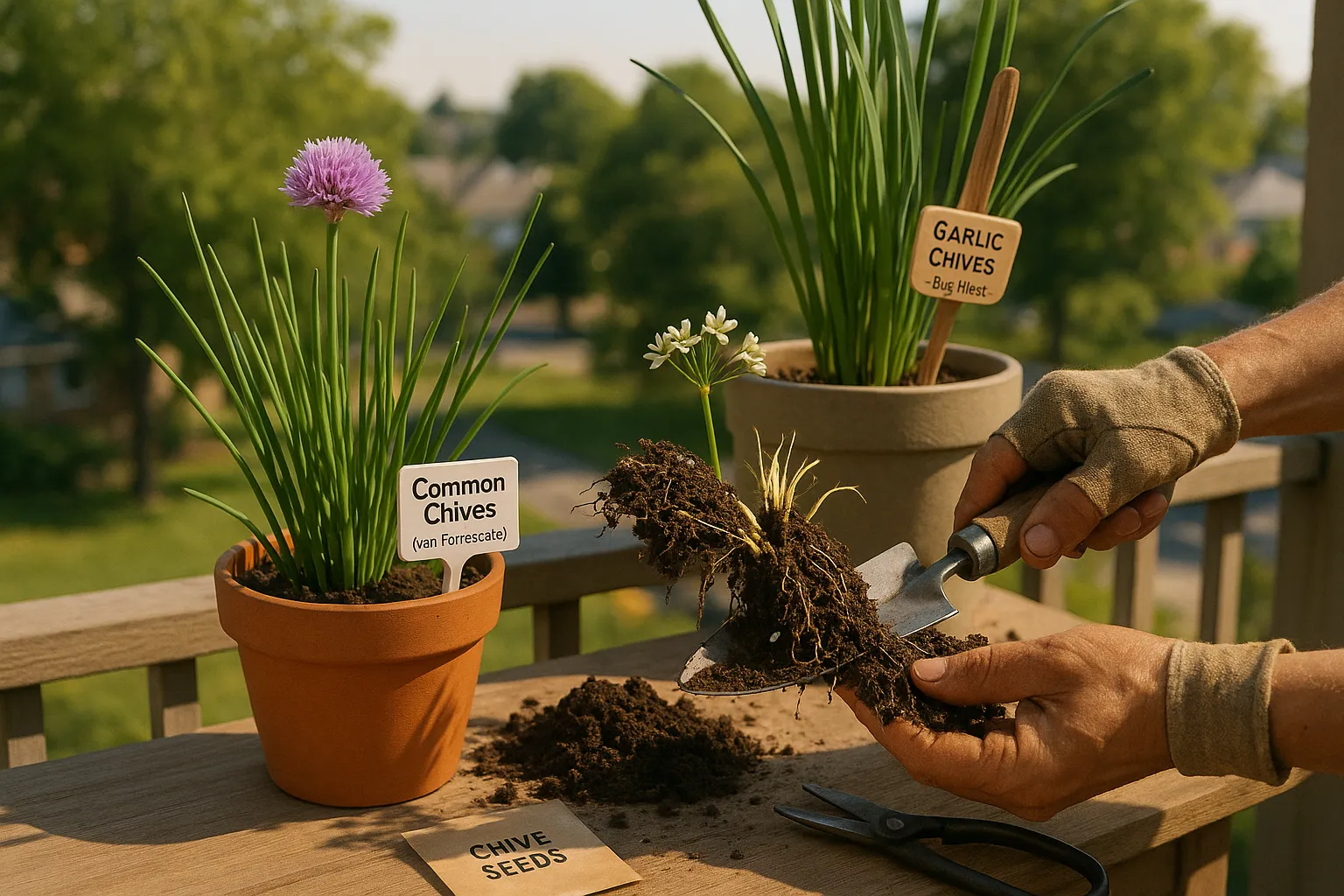
Divide established clumps in early spring or fall. Use a sharp spade to split crowns into sections with roots and shoots. Seed propagation is simple but cultivar traits may vary: chive seeds usually come true, while some garlic chive seed strains vary in vigor. For reliable flavor and predictable flowering, buy named cultivars or divide a healthy patch.
Popular Varieties And Cultivar Differences
Fact: Several named cultivars emphasize flower color, leaf form, or hardiness.
Chive varieties: ‘Common Chives’ (standard purple flowers), ‘Silver Lace’ (variegated leaves), and ‘Forescate’ (larger leaves and late bloom). Garlic chive varieties include ‘Early White’ and ‘Big Host’ (bred for larger leaves). Each cultivar offers small differences in flavor intensity, bloom time, and spreading habit. If you plan to dry seeds, choose the variety known for good seed set.
Growing In Pots, Raised Beds, And Indoors
Fact: Both herbs adapt well to containers: chives suit small pots, garlic chives need room.
Use a 6–8 inch pot for chives and a 10–12 inch container for garlic chives to allow root spread. Choose a high-quality potting mix with good drainage. Place containers on a sunny windowsill or balcony that gets 4–6 hours of sun. Indoors, rotate pots weekly for even growth and pinch flowers to keep energy in the leaves. Containers let you control soil and moisture, and they keep garlic chives from escaping into garden beds.
How To Choose Between Them For Your Garden Or Kitchen
Fact: Choose chives when you want a delicate onion finish: choose garlic chives when you need mild garlic flavor and more leaf mass.
Decision Factors: Flavor, Space, And Climate
Flavor: If you use herbs as a finishing touch on eggs, salads, or soft cheeses, choose common chives. If you cook Asian dishes, stir-fries, or want garlic notes without raw garlic’s bite, pick garlic chives.
Space: Choose chives for small containers or compact herb gardens. Pick garlic chives if you have room for a larger clump or want a hearty perennial that you can harvest repeatedly.
Climate: In colder zones, both surviving is typical, but chives may rebound earlier in spring. In warm zones, garlic chives often stay vigorous longer. Consider local hardiness: Allium schoenoprasum is hardy across USDA zones 3–9: Allium tuberosum handles zones 4–9 and tolerates heat better.
Garnish when you want color and a mild onion note: chives.
Garnish when you want garlic aroma plus leaf texture: garlic chives.
If you can, grow both. They complement different recipes and they each save you time and calories by replacing salt or raw garlic. Try a small pot of each next season and you’ll quickly learn which one your kitchen uses most, and then plant more of that one.
To provide the best experiences, we use technologies like cookies to store and/or access device information. Consenting to these technologies will allow us to process data such as browsing behaviour or unique IDs on this site. Not consenting or withdrawing consent, may adversely affect certain features and functions.
Functional
Always active
The technical storage or access is strictly necessary for the legitimate purpose of enabling the use of a specific service explicitly requested by the subscriber or user, or for the sole purpose of carrying out the transmission of a communication over an electronic communications network.
Preferences
The technical storage or access is necessary for the legitimate purpose of storing preferences that are not requested by the subscriber or user.
Statistics
The technical storage or access that is used exclusively for statistical purposes.The technical storage or access that is used exclusively for anonymous statistical purposes. Without a subpoena, voluntary compliance on the part of your Internet Service Provider, or additional records from a third party, information stored or retrieved for this purpose alone cannot usually be used to identify you.
Marketing
The technical storage or access is required to create user profiles to send advertising, or to track the user on a website or across several websites for similar marketing purposes.