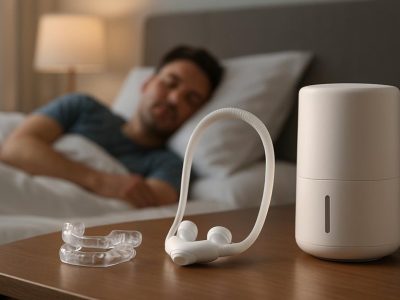
Snoring starts as a sound, but it often signals a mechanical problem: tissues vibrating, airways narrowing, or airflow rerouting. You want quiet nights and better daytime energy, and two low-tech fixes, mouth tape and internal nasal dilators, claim to help. This article compares them directly so you can pick a practical path. I’ll show how each method changes airflow, when one outperforms the other, and how to test them safely at home. Expect clear guidance, honest limits, and usable trial plans that cut through marketing hype.
How Snoring Happens: Key Causes And Mechanisms
Fact: Snoring is sound from tissue vibration due to impaired airflow. When you breathe during sleep, air moves through the nasal passages, the soft palate, and the throat. If any segment narrows, air speeds up and soft tissues vibrate. These vibrations create the familiar snore.
Anatomy and physiology matter. Nasal congestion, deviated septum, enlarged turbinates, and narrow nostrils increase nasal resistance. A low tongue posture or relaxed soft palate narrows the oropharynx. Being overweight adds tissue around the neck: alcohol and sedatives relax muscles more. Sleep position matters too, back sleeping lets the tongue fall toward the throat.
Two common mechanical patterns cause most snoring: nasal-resistance snoring (you breathe through the mouth because the nose is blocked) and oropharyngeal snoring (tissues in the throat vibrate). Distinguishing these patterns guides choice between mouth tape and nasal dilators.
Follow-up question you might have: how do you tell which pattern you have? Later sections give simple home tests and signs to watch for.
Mouth Tape: What It Is And How It Works
Fact: Mouth tape prevents mouth breathing by keeping lips closed, promoting nasal breathing instead. The idea is simple: if you stop mouth breathing, you reduce air moving over the soft palate and decrease oropharyngeal vibration for many people.
Mouth tape comes in strips designed for sleep. They use medical-grade adhesive that peels off skin gently. By creating a sealed lip barrier you raise nasal airflow demand: this can open collapsible nasal routes through increased negative pressure, and it stabilizes the jaw and tongue position.
Mouth taping works best when nasal passages are reasonably patent. If your nose is severely blocked, forcing nasal breathing can cause distress. You should also know that mouth tape helps reduce dry mouth and morning sore throat in many users, because inhaling through the nose humidifies air better.
Types Of Mouth Tape And Application Techniques
Fact: There are strips, porous tapes, and hypoallergenic tapes: fit and adhesive strength vary. Brand examples include SomniFix (adhesive strips with a breathing port alternative) and generic porous surgical tapes sold for sleep. Kinesiology-style tapes give more stretch and some users prefer them for comfort.
Apply tape to dry skin and trim excess. Place strip horizontally across the lips, just above or along the vermillion border. Leave a small vent if you worry about obstruction, some tapes come with a micro-vent. Test a single night before regular use. If adhesive irritates you, try hypoallergenic options or use a thin barrier like a petroleum jelly film, though that may reduce adhesion.
Evidence On Mouth Tape Effectiveness For Snoring And Breathing
Fact: Controlled mixed results but positive trends for mouth tape in selected users. Small trials and observational reports indicate that people whose snoring stems from habitual mouth breathing often experience quieter sleep and less dry mouth with mouth tape. A randomized crossover trial published in a peer-reviewed journal found improved subjective snoring scores in habitual mouth-breathers using tape versus placebo strip.
But, mouth tape is not a cure for obstructive sleep apnea (OSA). If you have loud gasping, witnessed apneas, or excessive daytime sleepiness, tape may hide a dangerous problem without addressing it. Use tape as a low-risk trial if you suspect primary mouth-breathing snoring, but consult a sleep specialist if you have red-flag symptoms.
Internal Nasal Dilators: What They Are And How They Work
Fact: Internal nasal dilators expand the nasal valve from inside, reducing nasal resistance and improving airflow. They sit in the nostrils to physically prop open the narrowest part of the nasal airway, the external nasal valve, so air moves through the nose more easily.
These devices often complete two tasks: increase inspiratory flow and reduce the need to breathe through the mouth. For people whose snoring stems from nasal obstruction, improving nasal airflow can lower snoring volume and frequency.
Brands include Rinovum, Mute, and Breathe Right Nose Strips (the latter are external, not internal). Internal dilators vary by material, silicone, soft plastic, or adjustable polymer frames. They come in sizes: fit is crucial.
Types Of Nasal Dilators And Fit Considerations
Fact: Rigid, semi-rigid, and soft-flex designs all exist: you must match size to your nostrils. Rigid devices hold shape better but can cause pressure points. Soft silicone devices are gentler but may move. Some devices expand after insertion: others use an outward spring.
Measure with manufacturer guides: try smaller sizes first. If you wake with nasal pressure or pain, the device is too large or incorrectly placed. Hygiene is non-negotiable, clean after each use to avoid infection.
Evidence On Nasal Dilator Effectiveness For Snoring And Nasal Breathing
Fact: Research shows modest benefits for nasal dilators in people with nasal airway limitation. Trials report reduced snoring intensity and improved nasal breathing, especially in people with septal deviation or nasal valve collapse.
But like mouth tape, nasal dilators rarely treat throat-based snoring or OSA. A 2016 randomized study found that nasal dilators improved subjective sleep quality and nasal patency, but objective reductions in apnea-hypopnea index (AHI) were minimal. Use dilators when your main issue is nasal obstruction, not throat collapse.
Direct Comparison: Mouth Tape Vs. Internal Nasal Dilators
Fact: Mouth tape targets mouth breathing and jaw/tongue position: nasal dilators reduce nasal resistance. Both reduce snoring, but they address different primary mechanisms.
Mouth tape is effective when snoring follows mouth breathing or low tongue posture. Nasal dilators help when nasal resistance pushes you to mouth-breathe. If your nose is the bottleneck, dilators relieve the cause: if the throat is the main issue, tape helps by discouraging oral airflow.
Which Works Better For Different Snoring Causes
Fact: Match the device to the cause. If you have nasal congestion, deviated septum, or valve collapse, choose a nasal dilator first. If your nose is clear but you snore through open-mouth breathing, try mouth tape.
Clinical signs: chronic nasal congestion, difficulty breathing through the nose when awake, or noticeable nasal obstruction on self-exam suggest dilator first. Dry mouth, dental mouth-open posture on waking, or reports of mouth-breathing point to tape.
Combining Strategies: Mouth Tape Plus Nasal Dilators
Fact: Combining both often gives the best results for mixed-pattern snorers. Use a nasal dilator to make nasal breathing comfortable, and tape to keep the mouth closed, this reduces compensatory breathing and stabilizes airway mechanics.
Some users report dramatic quieting with both devices used together. But combine cautiously: ensure nasal patency before taping. If the dilator dislodges during sleep, you may suddenly be unable to breathe through your nose if taped, so a safe vent or tape with easy-release is wise.
Safety, Risks, And Who Should Avoid Each Option
Fact: Both options are low-risk when used correctly, but each carries specific warnings. Mouth tape risks include skin irritation, anxiety in claustrophobic people, and potential masking of sleep apnea. Nasal dilator risks include nasal mucosa irritation, epistaxis (rare), and device aspiration if the product is faulty.
People who should avoid mouth tape: those with moderate to severe OSA, those who use CPAP, people with significant nasal obstruction, and anyone with claustrophobia or panic triggered by taped lips. Avoid nasal dilators if you have frequent nosebleeds, active nasal infection, or structural issues that make insertion unsafe.
When To See A Doctor: Red Flags And Sleep Apnea Concerns
Fact: Seek medical review if you have loud gasping, witnessed apneas, choking at night, excessive daytime sleepiness, morning headaches, or an AHI diagnosis. These are signs of obstructive sleep apnea and need formal testing with a sleep study and professional treatment like CPAP, oral appliances, or surgery.
If trialing tape or dilators causes breathing discomfort, stop immediately and consult your clinician. If you have heart disease, stroke history, or uncontrolled hypertension, screen for sleep apnea before self-treating snoring.
How To Choose The Right Option For You
Fact: Choose based on where the airflow problem begins, nose or mouth/throat. Start with simple self-assessment and then plan a brief trial.
Assessing Snoring Pattern, Nasal Anatomy, And Sleep Habits
Fact: Look and listen. If you breathe through your mouth while awake or wake with dry mouth, mouth-breathing likely causes snoring. If you feel congested, have nasal blockage when lying down, or you see narrow nostrils, nasal obstruction may be the culprit.
Record sleep or ask a partner to note snoring sounds and breathing events. Use a smartphone audio recording app for two nights: compare intensity with and without mouth open. Observe timing, snoring that worsens with colds or allergies points to nasal causes.
Trial Planning: How To Test Effectiveness At Home
Fact: Run short, controlled trials. Test one device at a time for 7–10 nights, logging snoring intensity, sleep quality, and side effects. Use partner reports or an app like SnoreLab for objective comparison. If you try both, allow a washout period between tests.
Start with a nasal dilator if you have clear nasal symptoms. If you then still mouth-breathe, add mouth tape but leave a small vent or choose tape with an easy-release strip. Stop if you feel short of breath, anxious, or develop pain.
Practical Tips For Using Mouth Tape And Nasal Dilators Comfortably
Fact: Proper fit and hygiene improve comfort and outcomes. Small adjustments change whether the device helps or irritates.
Hygiene, Fit, And Maintenance Best Practices
Fact: Clean devices and face before use. Wash silicone dilators with mild soap after each night and let them air dry. Replace disposable dilators per manufacturer guidance. Store tapes in a dry place and use fresh strip each night.
Fit matters: choose the smallest comfortable nasal dilator that maintains airflow. For tape, trim to your lip width to avoid adhesive on delicate skin. Do a patch test for tape adhesive on your cheek to check for allergy.
Troubleshooting Common Problems (Irritation, Dislodgement, Dry Mouth)
Fact: Adjustments fix most problems. If you get irritation, try a softer material or alternate nights. If dilators fall out, try a different size or model with better retention. If tape causes anxiety, use a strip with a small vent or trial a nights with the tape loosely applied first.
Honest note: I once taped without testing and woke panicked one night, lesson learned: always test one night and leave a quick-release edge. Small fails teach big lessons, and with careful trials you’ll find what helps your sleep most.
To provide the best experiences, we use technologies like cookies to store and/or access device information. Consenting to these technologies will allow us to process data such as browsing behaviour or unique IDs on this site. Not consenting or withdrawing consent, may adversely affect certain features and functions.
Functional
Always active
The technical storage or access is strictly necessary for the legitimate purpose of enabling the use of a specific service explicitly requested by the subscriber or user, or for the sole purpose of carrying out the transmission of a communication over an electronic communications network.
Preferences
The technical storage or access is necessary for the legitimate purpose of storing preferences that are not requested by the subscriber or user.
Statistics
The technical storage or access that is used exclusively for statistical purposes.The technical storage or access that is used exclusively for anonymous statistical purposes. Without a subpoena, voluntary compliance on the part of your Internet Service Provider, or additional records from a third party, information stored or retrieved for this purpose alone cannot usually be used to identify you.
Marketing
The technical storage or access is required to create user profiles to send advertising, or to track the user on a website or across several websites for similar marketing purposes.