Monstera Deliciosa vs. Monstera Adansonii
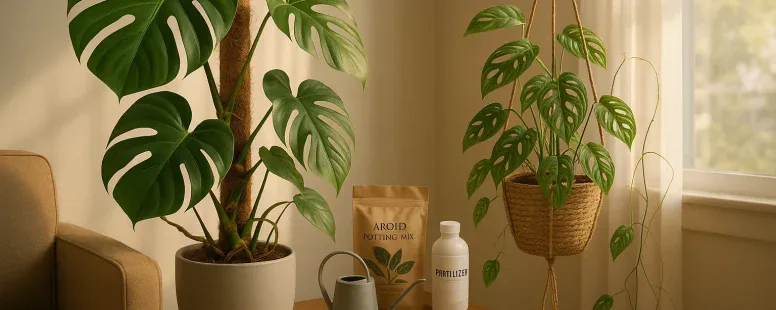
You can tell these two Monsteras apart at a glance, once you know what to look for. Monstera deliciosa often reads as the bold, theatrical relative: large, glossy leaves with dramatic splits. Monstera adansonii behaves like a delicate cousin: thinner leaves peppered with round holes that let light and air pass through. Both bring a jungle feel to your room, but they give it in different voices. This comparison will show you practical differences and honest trade-offs, so you can pick the plant that fits your light, space, and patience. Expect clear ID markers, care steps you can follow, and buying tips tied to real costs and sources.
Quick At-a-Glance Comparison
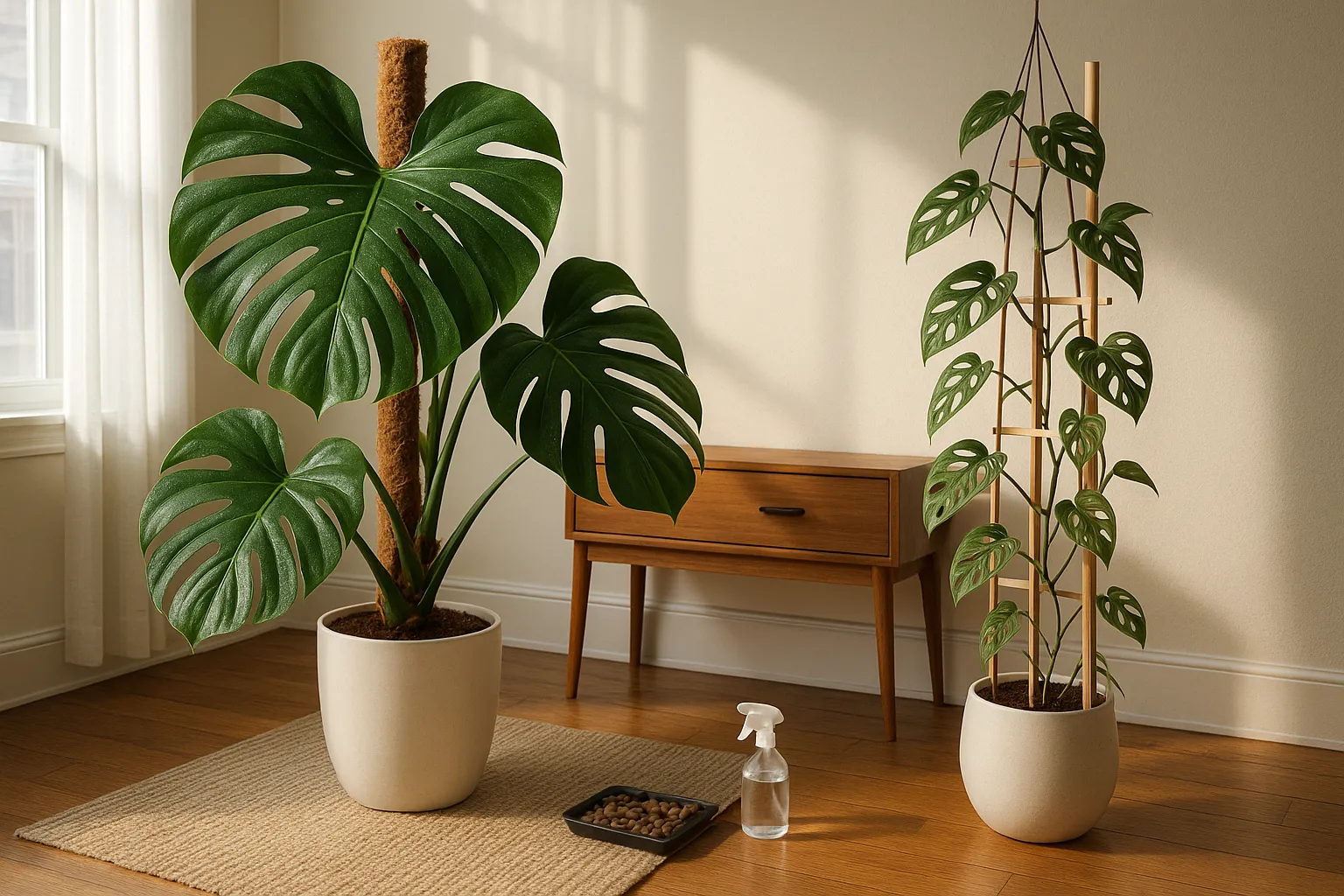
Fact: Monstera deliciosa is larger and more dramatic: Monstera adansonii is smaller and more vine-like.
Key Visual Differences
Monstera deliciosa has big, heart-shaped leaves that develop deep lobes and long splits (fenestrations) as the plant matures. The leaf surface is thick and glossy. Monstera adansonii features thinner leaves with multiple oval or round holes: the holes often appear earlier in leaf development. Think of deliciosa as a broad-leaved canopy and adansonii as a perforated lace.
Size, Scale, And Growth Rate
Monstera deliciosa can reach several feet indoors, often 3–8 ft in typical homes when given a moss pole. It grows faster in bright indirect light and with support. Monstera adansonii remains viny and slender: it reaches 2–6 ft in length indoors but usually occupies vertical or trailing space rather than forming a single large mass. Deliciosa’s growth is more robust: adansonii grows quicker along supports but produces less bulk.
Typical Indoor Care Needs
Both plants prefer bright, indirect light, moderate humidity, and well-draining soil. Deliciosa tolerates a bit lower humidity and can handle brighter spots near east- or west-facing windows. Adansonii prefers more consistent humidity and indirect light to keep leaf holes pronounced and edges healthy. In short: deliciosa is forgiving: adansonii asks for steadier conditions.
Identification And Appearance
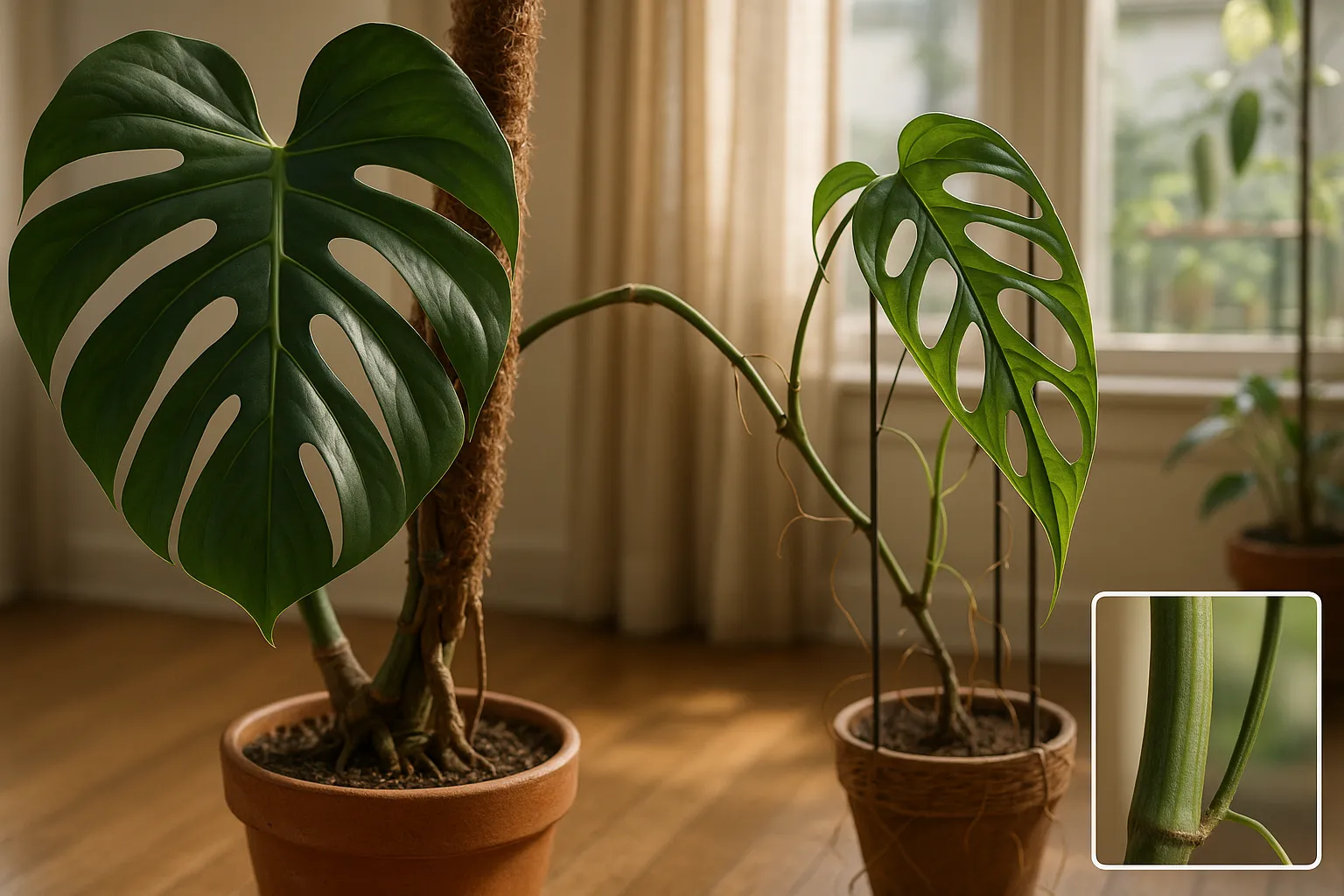
Fact: Leaf shape and fenestration are the fastest, most reliable ID clues.
Leaf Shape, Fenestration, And Texture
Monstera deliciosa leaves are usually broad with deep lobes and slits that can span most of the leaf as it matures. The texture is leathery. Monstera adansonii leaves are narrower and more elongated, with multiple rounded holes (fenestrations) that give a swiss-cheese effect. The adansonii leaf feels thinner and more papery. If you hold a leaf to the light, deliciosa often appears denser: adansonii transmits more light through its perforations.
Stem, Aerial Roots, And Overall Habit
Monstera deliciosa develops thick, woody stems and thick aerial roots that clamp onto moss poles and tree bark. The petioles sometimes have ridges. Monstera adansonii has thinner, more flexible stems and many fine aerial roots. Its habit is trailing and climbing: you’ll see longer internodes as it searches for light. When grown on a trellis, adansonii twines: deliciosa tends to bulk up around a central support.
Mature Size And Lifetime Potential
Monstera deliciosa can become a long-lived focal plant that outgrows apartments and moves into larger spaces. In favorable conditions it may produce fruit (the edible “deliciosa” fruit) outdoors or in greenhouse settings. Adansonii rarely produces significant trunk mass: it lives as a perennial vine and can be maintained indefinitely as a hanging or climbing specimen. Both plants can live decades under good care, though deliciosa often commands more vertical real estate.
Care Requirements Compared
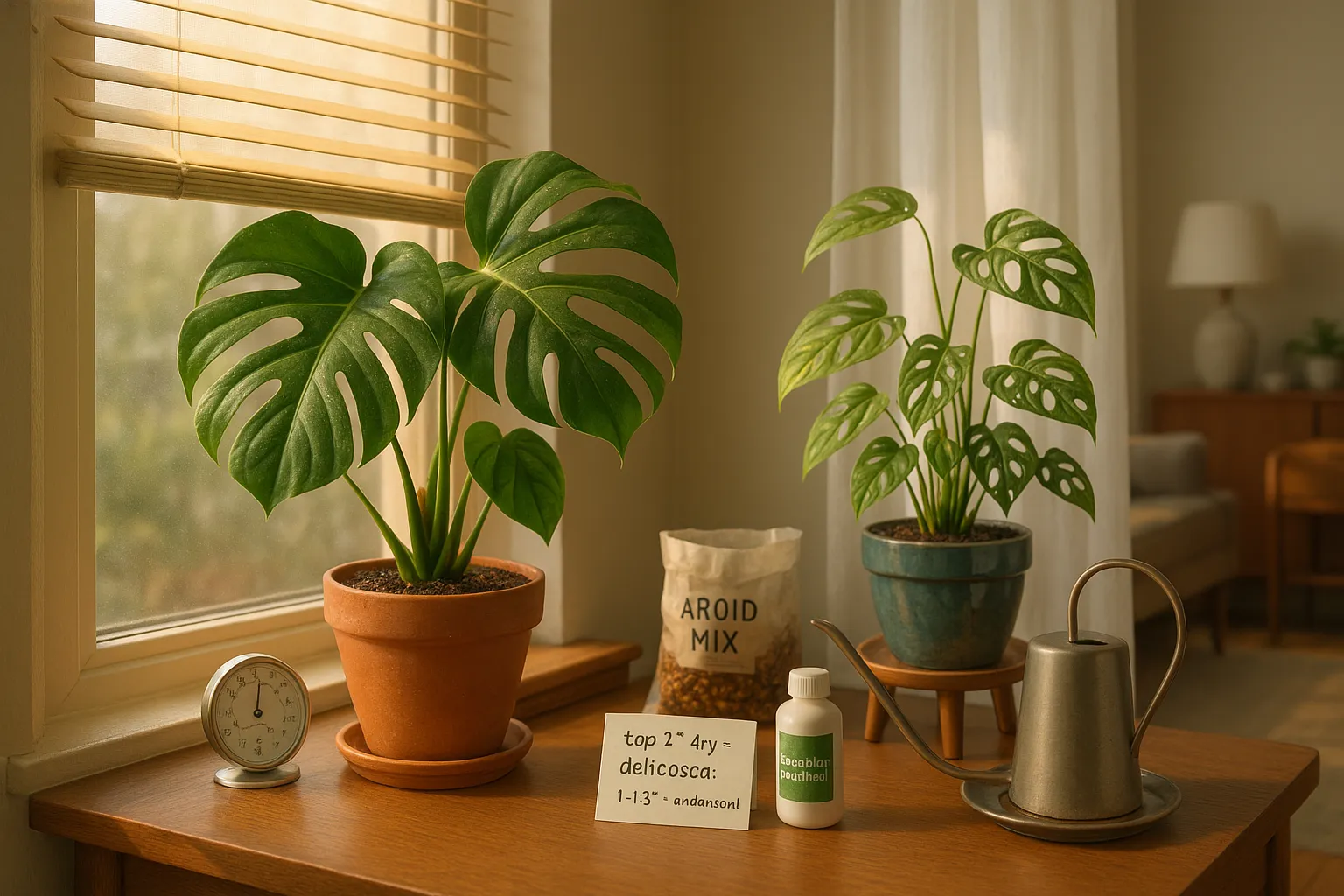
Fact: Light and humidity decisions drive most care differences between these two.
Light: Intensity And Placement
You should place Monstera deliciosa in bright, indirect light: an east window with some morning sun is ideal. It tolerates bright filtered light near a west window but avoid harsh midday sun which will scorch large leaves. For Monstera adansonii, place it in bright, indirect light but slightly shadier than you would for deliciosa, too much direct sun will bleach thin leaves and reduce hole definition. If you keep them in the same room, put the adansonii a few feet back from windows or behind a sheer curtain.
Watering Frequency And Soil Preferences
Both plants prefer well-draining, airy potting mix. Use a peat-based mix with perlite, or aroid mix with orchid bark for better drainage. Water schedules differ: deliciosa can handle watering when the top 2 inches of soil dry: adansonii likes the top 1–1.5 inches to dry before watering. Overwatering quickly leads to root rot in adansonii because its thinner roots sit less well in saturated soil. Feed both with a balanced houseplant fertilizer during spring–summer growth months, but cut back in fall.
Humidity, Temperature, And Fertilizing
Monstera deliciosa thrives at 40–60% humidity and typical home temps of 65–80°F. Monstera adansonii prefers higher humidity, 50–70%, to keep leaves glossy and prevent edge crisping. Both like stable temperatures: avoid sudden drafts or cold windows. Fertilize with a diluted 10-10-10 or similar balanced fertilizer every 4–6 weeks in active growth. If you use a commercial brand like Miracle-Gro or a slow-release pellet, follow label rates, less is better than more for these aroids.
Potting, Support, And Training Techniques
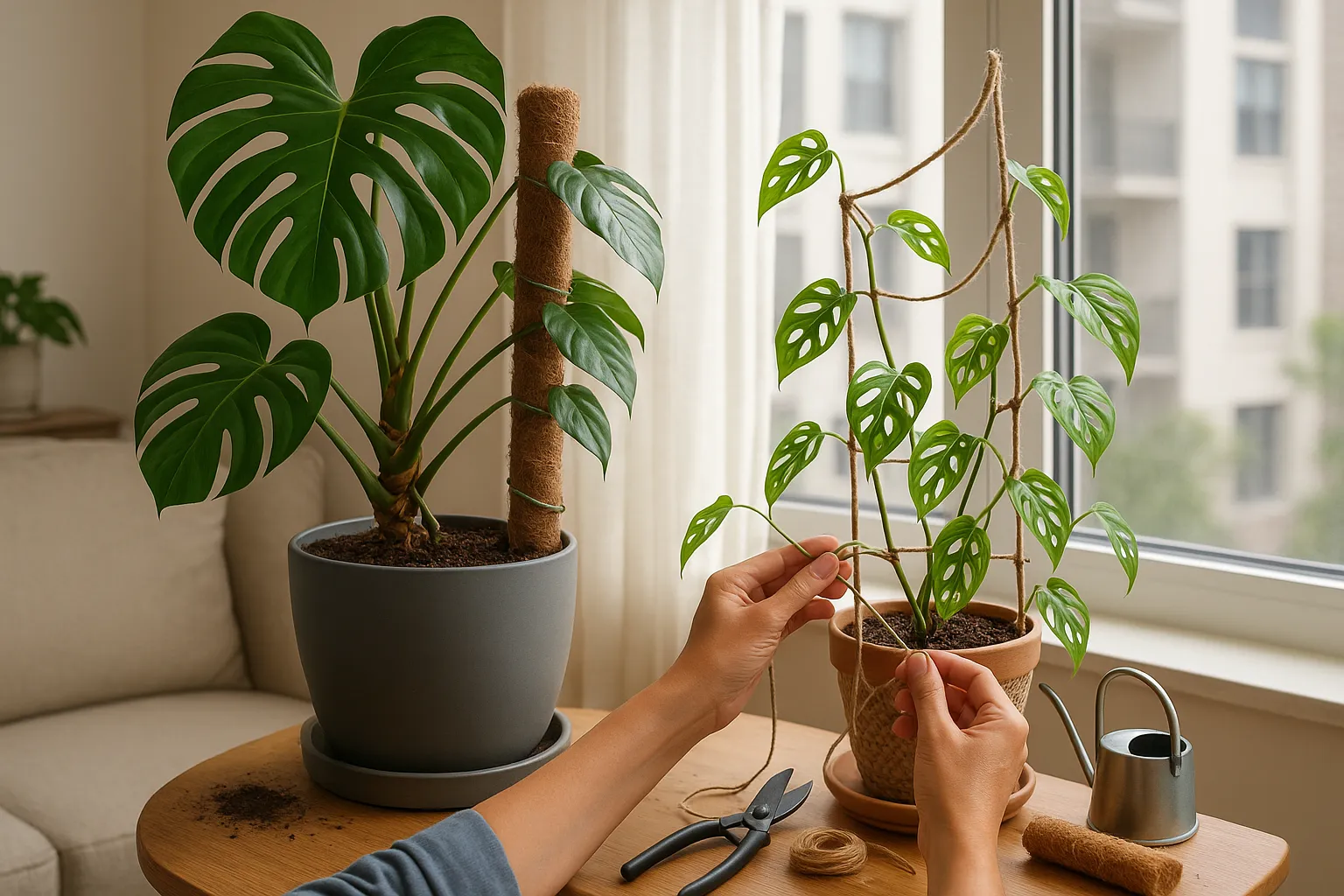
Fact: Deliciosa benefits from a strong upright support: adansonii rewards trailing or light trellising.
Best Containers And Support Options
Choose a sturdy pot for Monstera deliciosa because its mass can topple lightweight containers. Use 6–10 inch pots for young plants and upsize gradually: pick a pot with drainage. A moss pole, coconut coir pole, or thick trellis supports aerial roots and encourages vertical growth. For Monstera adansonii, hanging planters, shallow wide pots, or a lightweight trellis work well. A simple jute trellis or macramé hanger suits adansonii’s vine habit.
Pruning, Training, And Managing Vigor
Start pruning when either plant outgrows its space. For deliciosa, prune lower leaves and aerial stems to shape and direct growth upward. For adansonii, cut back long runners to encourage fuller branching. You can train both with soft plant ties: attach stems gently to supports to avoid damage. When you prune, always cut above a node to encourage new shoots. And watch vigor: deliciosa can quickly become heavy and needs periodic repotting: adansonii can look leggy if you don’t pinch tips regularly.
Propagation And Common Problems
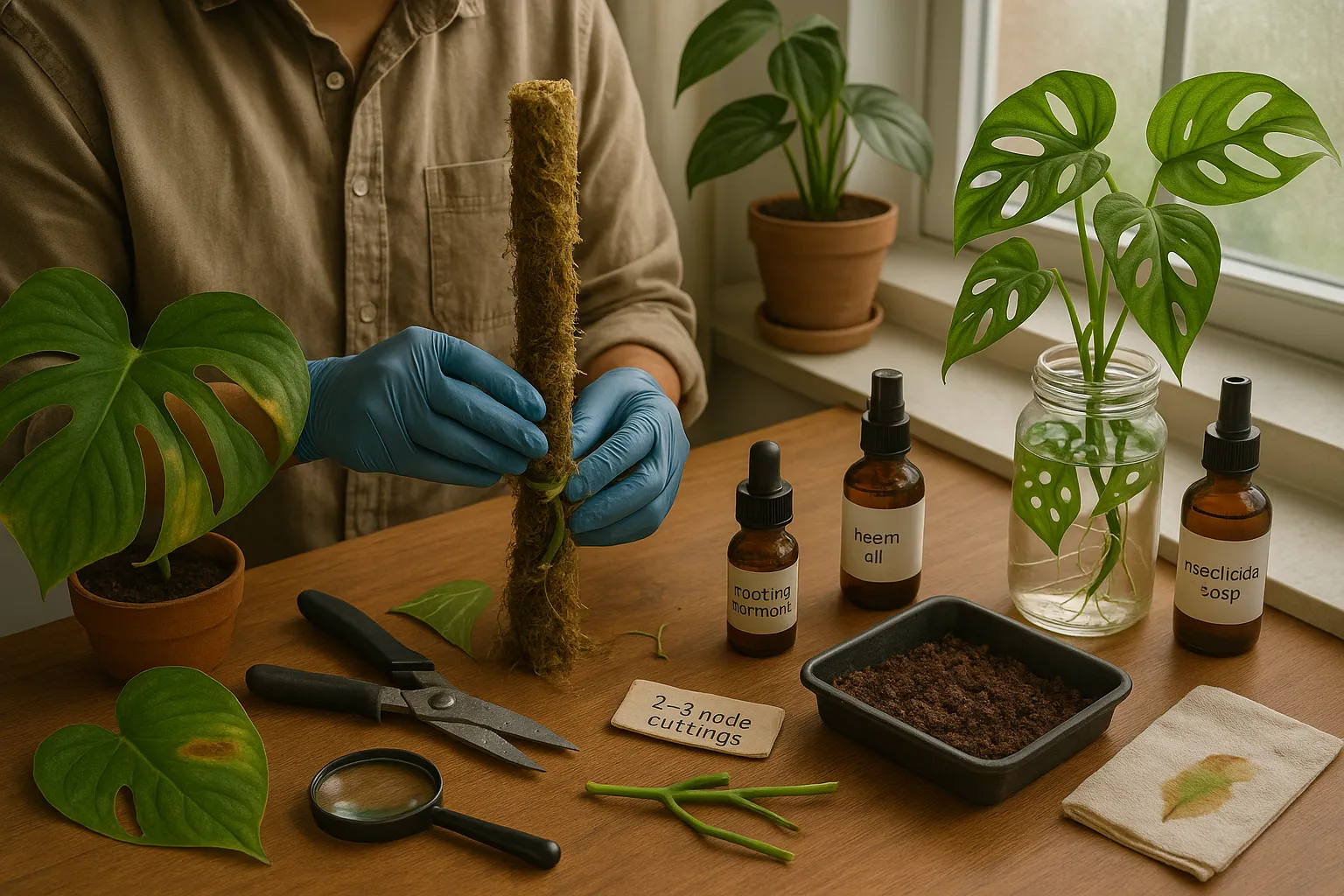
Fact: Both propagate easily from stem cuttings, but success rates vary with method and humidity.
Propagation Methods (Stem Cuttings, Air Layering)
You can root Monstera deliciosa or adansonii from 2–3 node stem cuttings in water or in a moist soilless mix. Deliciosa cuttings often root into thicker stems and can be air-layered for faster establishment on a pole. Air layering involves wounding a node, wrapping it with moist sphagnum, and waiting for roots to appear before cutting. Adansonii roots readily in water: place cuttings in bright indirect light and change water every 5–7 days. For both, use a clean, sharp tool and a rooting hormone to improve results.
Pests, Diseases, And Troubleshooting Tips
Common pests include spider mites, scale, and mealybugs: adansonii’s thinner leaves can make pests easier to spot. Treat infestations with insecticidal soap or neem oil and isolate the plant. Root rot from overwatering is the most frequent disease, repot into fresh, dry mix and trim rotten roots. Yellow leaves on deliciosa often mean overwatering or low light: brown crispy edges on adansonii usually signal low humidity. If you see small brown spots, check for fungal leaf spot and improve air circulation. Frequent checkups catch problems early.
Choosing The Right Plant For Your Space
Fact: Pick deliciosa if you want a statement floor plant: choose adansonii for shelves, hanging baskets, or dense trellis displays.
Which Plant Suits Beginners Versus Experienced Growers
Beginners will find Monstera deliciosa more forgiving of typical indoor conditions, it’s tolerant of minor light swings and sporadic watering. If you forget water once in a while, deliciosa will likely shrug it off. Monstera adansonii suits growers who can maintain steadier humidity and who check moisture more often. If you live in a humid climate or use a humidifier, adansonii rewards you with lacy foliage.
Aesthetic And Placement Recommendations (Shelves, Climbers, Terrariums)
Use deliciosa as a floor specimen beside a sofa or in a bright corner, its leaves read like living art. Use adansonii on high shelves, in hanging planters, or draped over bookcases where its vines can cascade. Adansonii works in large terrariums if you maintain humidity and provide support for climbing. Mix them in a larger indoor garden for contrast: the big leaves of deliciosa set off the delicate holes of adansonii, giving depth and texture.
Buying, Varieties, And Cost Considerations
Fact: Prices vary widely by size, variegation, and seller, expect mass-market vs. collector differences.
Where To Buy, Variegation, And Popular Cultivars
You can buy both plants at local garden centers, chains like The Sill, or on marketplaces like Etsy and Facebook Marketplace. Popular Monstera deliciosa cultivars include the standard and variegated forms like ‘Albo Variegata’ and ‘Thai Constellation’. For adansonii, look for variegated cultivars like ‘Variegata’ or the rarer white-variegated forms. The Royal Horticultural Society and reputable nurseries provide care sheets if you need official guidance.
Price Range, Rarity, And Ethical Sourcing Tips
Young, common plants often cost $20–$60. Variegated or large specimens can run several hundred dollars. Adansonii generally costs less for common forms but rare variegations raise the price. Buy from reputable sellers that disclose propagation methods and plant health: avoid wild-collected specimens. Ask for photos of the actual plant, request pest-free guarantees, and prefer local sellers to reduce shipping stress on the plant. If price is a concern, propagate a small cutting from a friend or local swap: you’ll save money and get a plant adapted to your climate.

- Top Free Alternatives to VTube Studio for Streamers - October 24, 2026
- Software Development Models Comparison: SDLC Frameworks - October 23, 2026
- WxWidgets Alternatives for Cross-Platform GUI Development - October 22, 2026
by Ellie B, Site Owner / Publisher