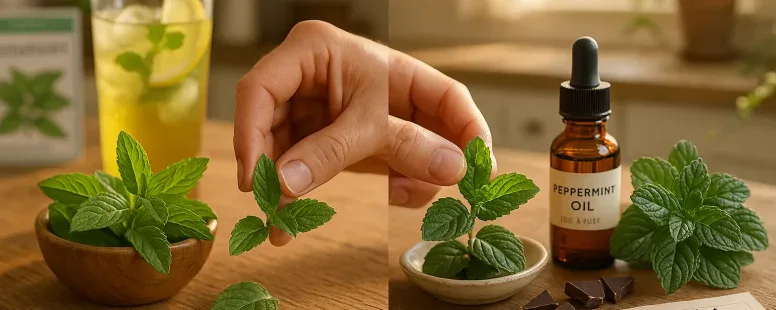
You can smell the difference before you taste it: one leaf brightens a glass of iced tea with a crisp, green sweetness: the other hits your throat like a cool wave and lingers. That immediate sensory split is the simplest way to tell spearmint and peppermint apart, but the story runs deeper, through chemistry, culinary fits, and medicinal uses. In this guide you’ll get clear answers on which mint suits a salad, an after-dinner tea, or a stash of homemade tincture. Expect practical tips, surprising research, and a few honest caveats so you’ll choose the right mint, every time.
Quick Comparison: Key Differences At A Glance
Fact: Spearmint is milder and sweeter: peppermint is stronger and more menthol-rich.
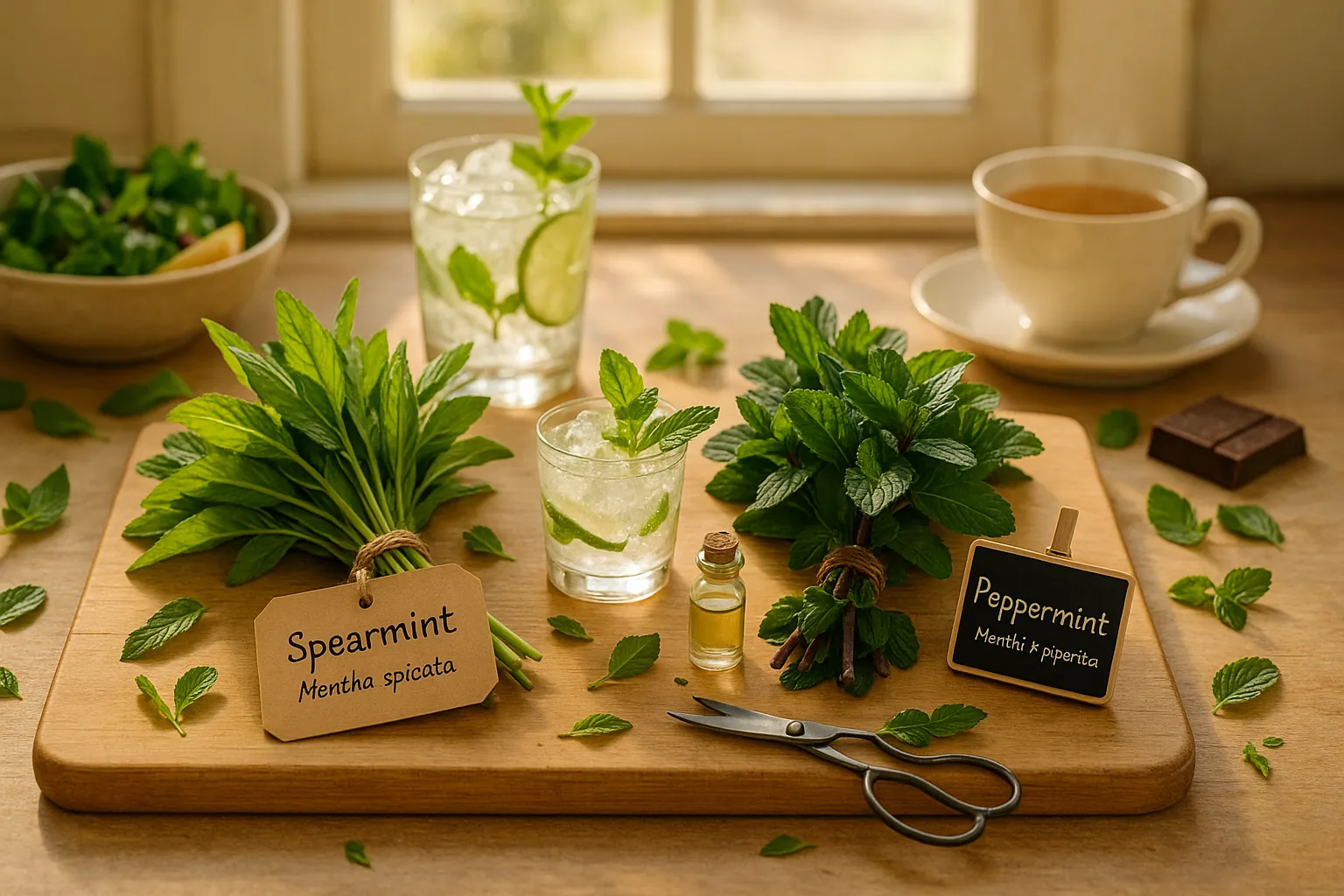
Botanical identity: Spearmint is Mentha spicata: peppermint is a hybrid, Mentha × piperita.
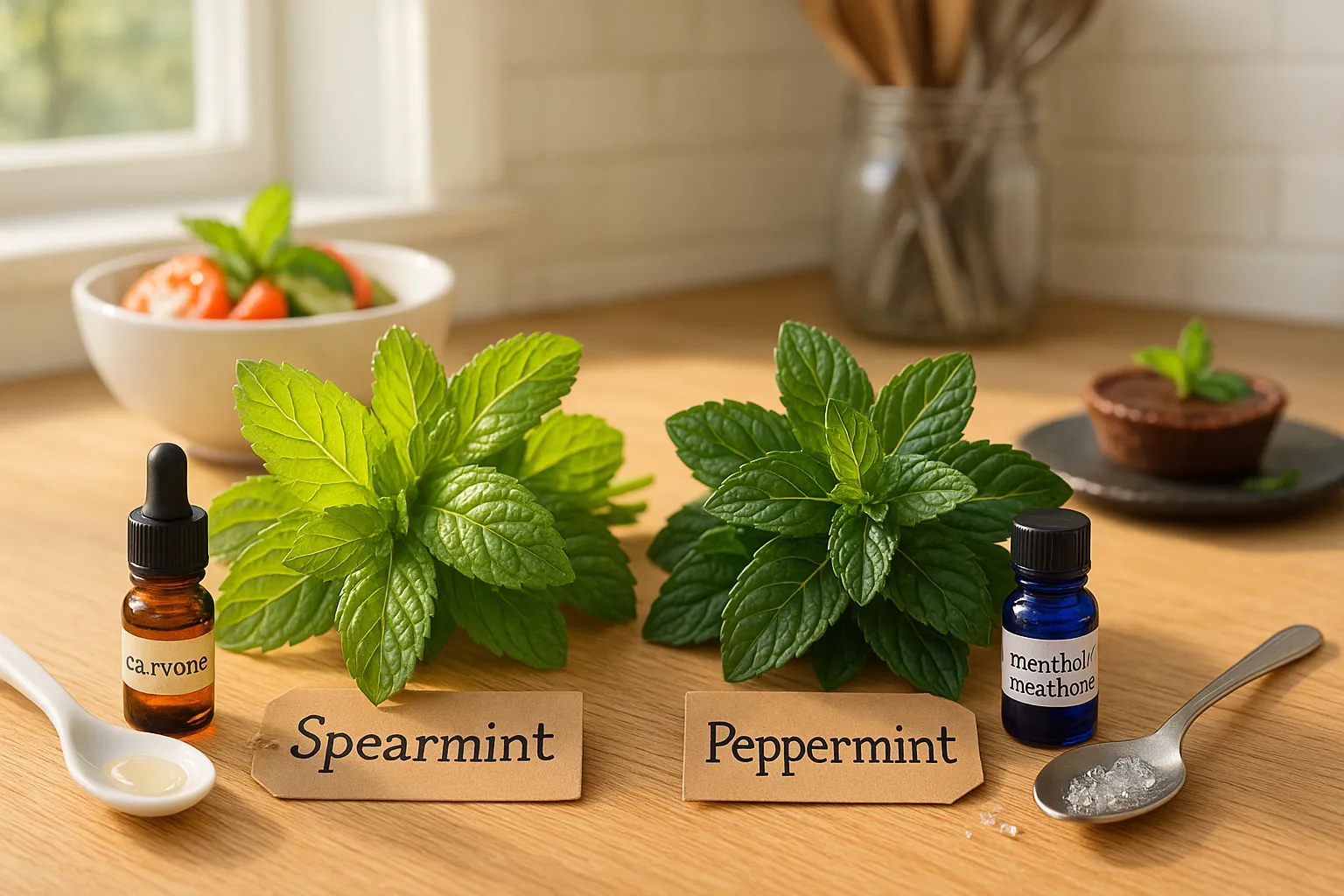
Primary compound: Spearmint has high carvone: peppermint has high menthol.
Flavor: Spearmint tastes green, sweet, and slightly fruity. Peppermint tastes cooling, sharp, and intense.
Typical uses: Spearmint pairs with salads, lamb, and cocktails. Peppermint suits chocolate, confections, and digestive teas.
Growing habit: Spearmint spreads fast and likes full sun: peppermint prefers moist soil and can tolerate partial shade.
You’ll use spearmint when you want subtlety: pick peppermint when you want a punch. These rules work for home cooks, bartenders, and herbalists alike.
Origins, Botany, And Varieties
Fact: Spearmint is native to Europe and Asia: peppermint arose in Europe as a natural hybrid.
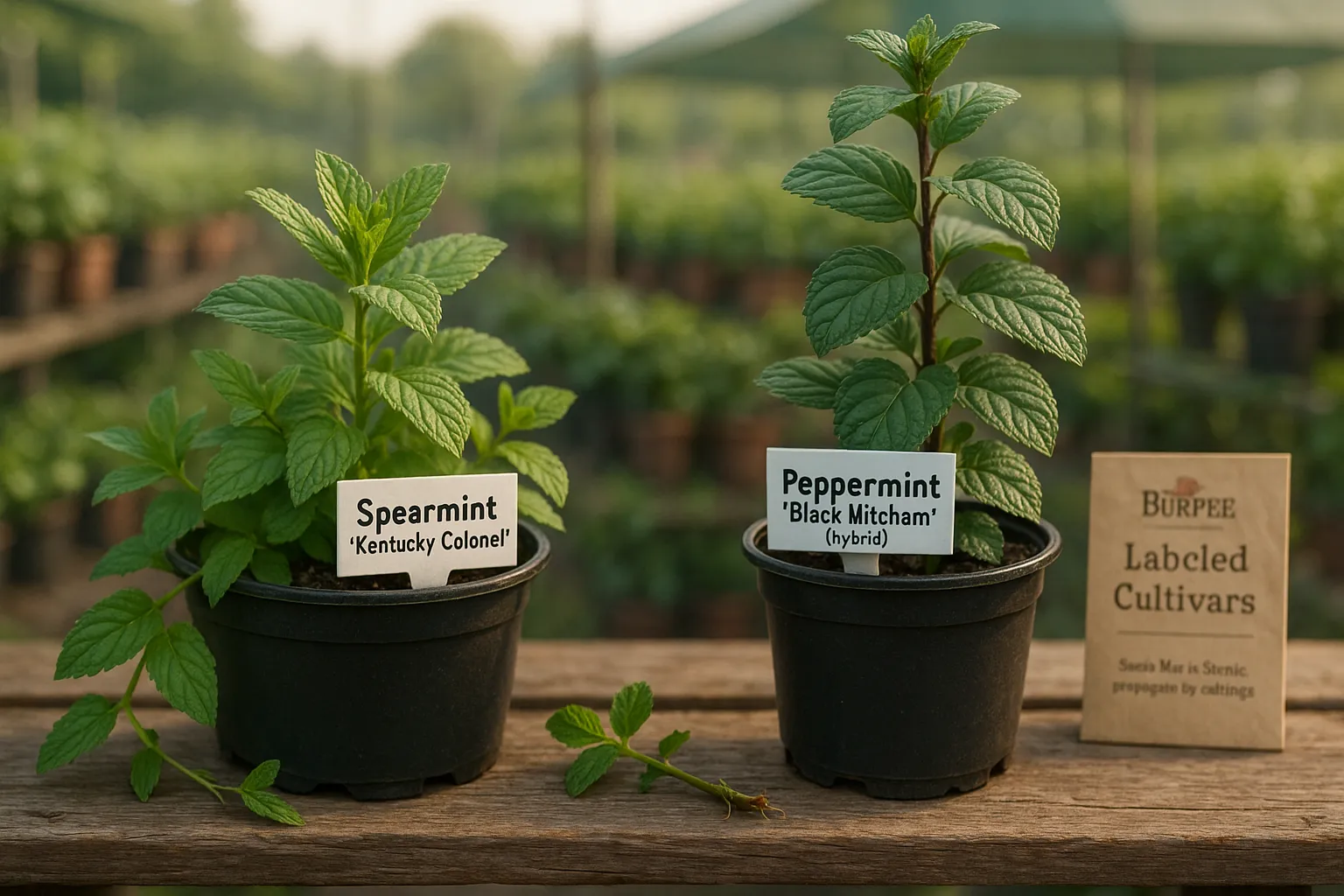
Spearmint (Mentha spicata) has long been cultivated across the Mediterranean. You’ll find named varieties like ‘Moroccan’, ‘Native’, and ‘Kentucky Colonel.’ Peppermint (Mentha × piperita) appeared when watermint and spearmint crossed: it’s now grown widely in Europe, North America, and India. Commercial peppermint strains include ‘Black Mitcham’ and ‘Madalene’.
Spearmint plants produce lance-shaped leaves and spiked flower clusters. Peppermint often shows darker leaves and a more upright habit. The hybrid nature of peppermint means its seeds are often sterile: producers propagate it by cuttings or runners.
Both species belong to the Lamiaceae family. You’ll notice both mints cross easily, which creates many garden variants. If you want consistent flavor for a recipe, buy labeled cultivars from a reputable nursery such as Burpee or Johnny’s Selected Seeds.
Flavor And Aroma Profiles
Fact: The flavor difference comes from dominant volatile compounds in the leaves.
Chemical Compounds Behind The Taste And Scent
Carvone dominates spearmint. Carvone gives a sweet, caraway-like note and usually makes up 50–70% of spearmint oil. Peppermint oil centers on menthol and menthone: menthol often comprises 30–50% and creates the cooling sensation. Smaller compounds, limonene, cineole, and pulegone, add citrus, herbal, or green notes.
These compounds follow SVO order in description: leaves produce oils: oils contain menthol or carvone: you perceive cooling or sweet notes. That structure helps you predict how a mint will behave in food or aromatherapy.
Sensory Descriptors And How They Affect Use
Spearmint: sweet, bright, and green. It complements tomatoes, cucumbers, lamb, and yogurt. Use it fresh to retain its delicate aroma.
Peppermint: sharp, cooling, and persistent. It pairs with chocolate, coffee, and rich desserts. Use it sparingly in fresh form: dried, its strength concentrates.
Think of spearmint as a clear flute solo, light and melodic. Peppermint is a brass blast, bold and attention-grabbing. You choose which instrument fits the dish.
Culinary Uses And Recipe Applications
Fact: Spearmint favors savory and fresh applications: peppermint suits sweets and concentrated flavors.
Both herbs act as a finishing note in dishes. You’ll tear spearmint leaves and scatter them over salads, tabbouleh, or a bowl of chilled peas. Peppermint often works in infused syrups, candies, and as a drop in chocolate ganache.
Best Food And Drink Pairings
Spearmint pairs: lamb (Greek dishes), yogurt sauces (raita), citrus fruit salads, green tea, and mojitos (use Cuban-style spearmint if available).
Peppermint pairs: dark chocolate, peppermint mocha, peppermint bark, digestive bitters, and strong black tea.
Named restaurant example: At many Mediterranean spots, chefs use spearmint in tzatziki to brighten fattier meats. In contrast, pastry kitchens like those at Magnolia Bakery use peppermint oil in small amounts for candy canes and frostings.
Simple Recipe Ideas And Substitutions
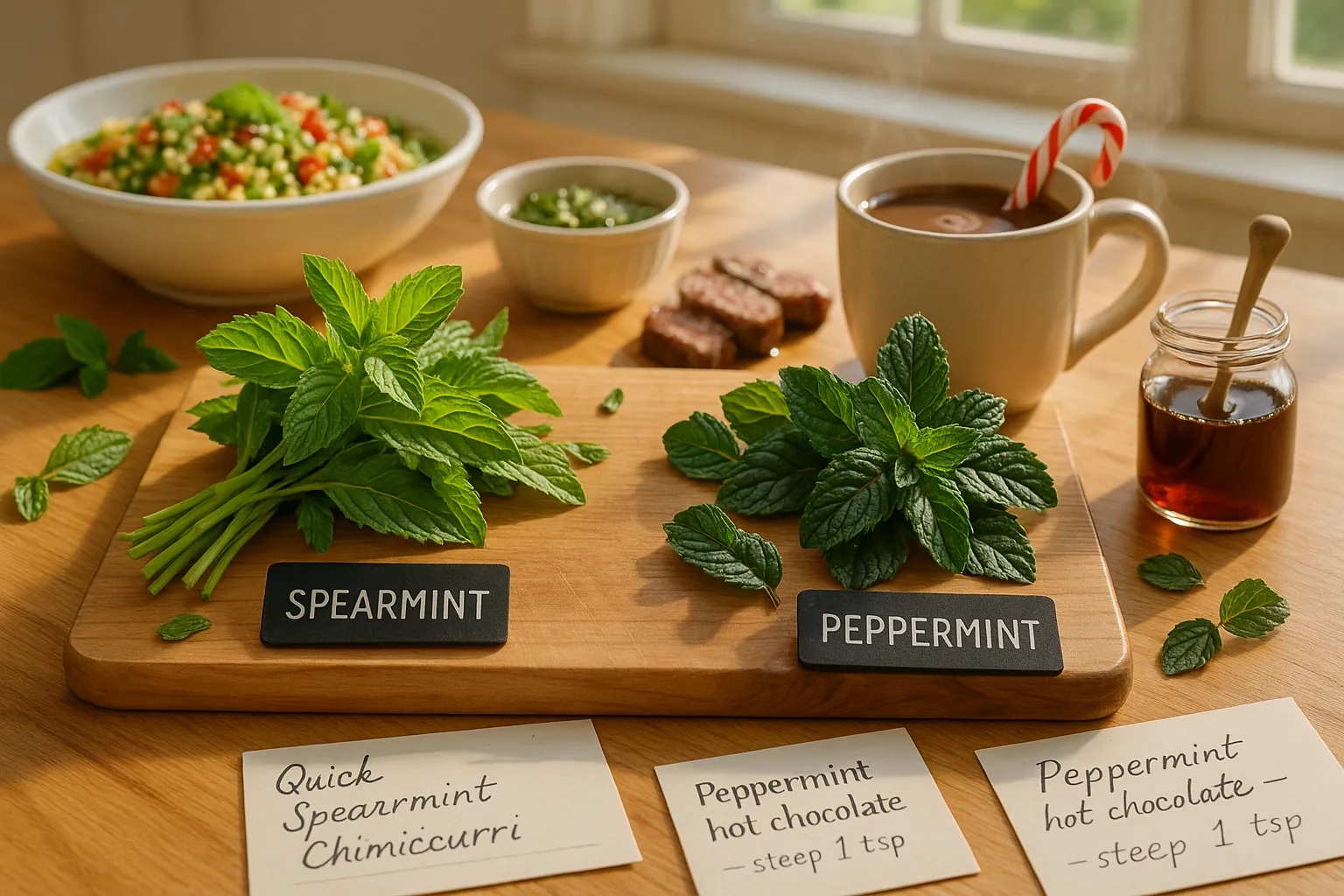
Quick spearmint chimichurri: chop 1 cup spearmint, 1 cup parsley, 2 cloves garlic, 1/4 cup olive oil, lemon juice, salt. Spoon over grilled lamb.
Peppermint hot chocolate: steep 1 tsp crushed peppermint leaves in 1 cup milk for 5 minutes: strain, then add 2 oz dark chocolate and sweeten to taste.
Substitution rule: Swap spearmint for peppermint at a 3:1 ratio (three parts spearmint for one part peppermint) when you need milder mint. Reverse the swap only when you want intensity: use less peppermint to avoid overpowering the dish.
Health Benefits, Evidence, And Precautions
Fact: Peppermint oil has clinical support for treating irritable bowel symptoms: spearmint shows promise for hormonal balance and antioxidant effects.
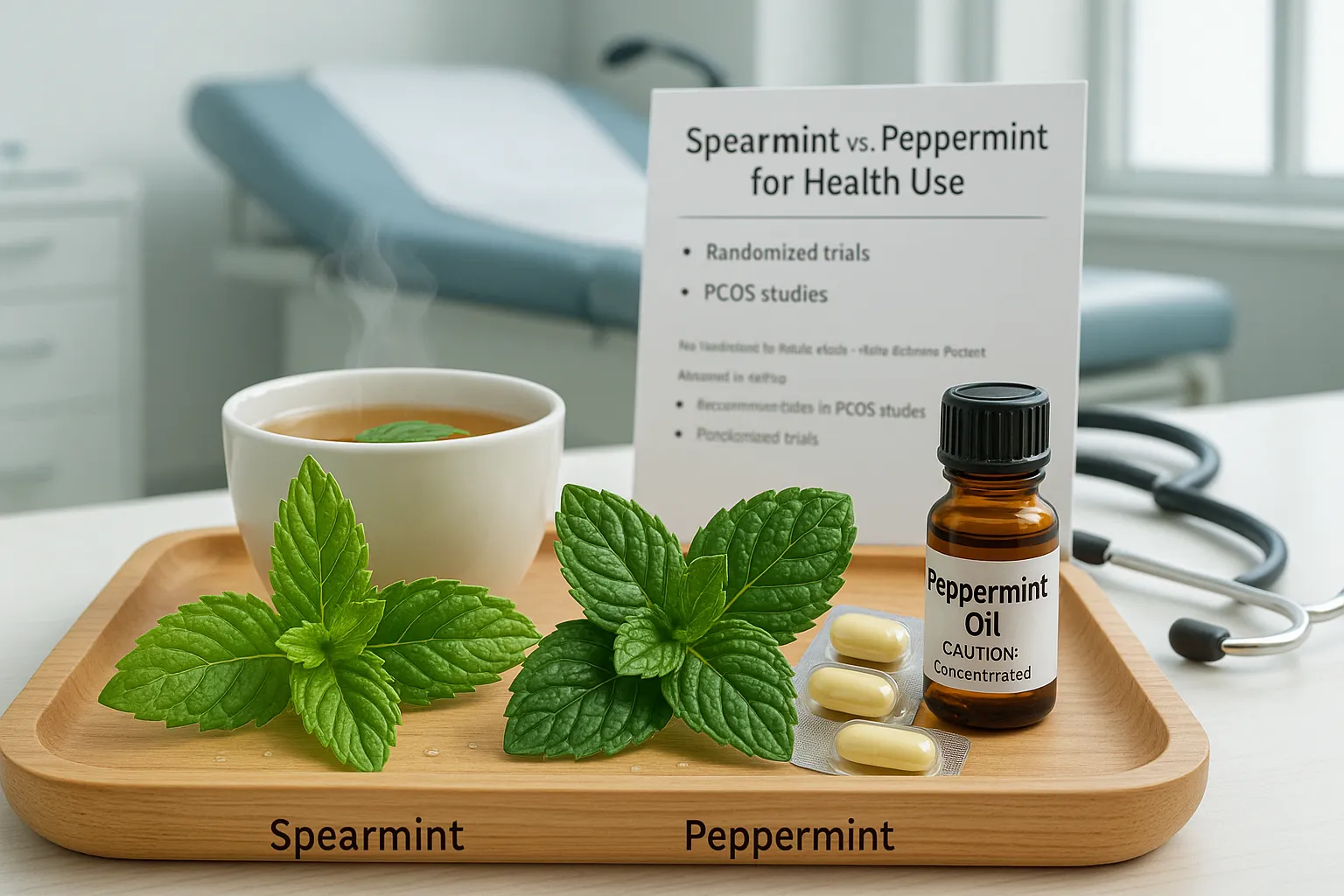
Both mints contain antioxidants and volatile oils that can affect digestion and mood. You’ll see peppermint oil in OTC products like Colpermin for IBS, because randomized trials and meta-analyses report symptom relief. Spearmint has lower menthol and sometimes is used in studies on polycystic ovary syndrome (PCOS) where spearmint tea reduced free testosterone in small trials.
What Research Shows About Therapeutic Uses
Peppermint oil and IBS: Multiple randomized controlled trials and reviews (for example, meta-analyses indexed in PubMed) report decreased abdominal pain and bloating with enteric-coated peppermint oil capsules.
Spearmint and hormones: Small clinical studies report that daily spearmint tea may lower certain androgen levels in women with PCOS, but sample sizes are limited.
These findings are promising but not definitive. You’ll want to consult a clinician for chronic conditions.
Safety, Dosage Considerations, And Interactions
Peppermint oil can relax the lower esophageal sphincter: it may worsen heartburn in reflux patients. Enteric-coated capsules reduce this risk. Typical therapeutic peppermint oil doses range from 0.2 to 0.4 mL per capsule, taken up to three times daily, follow product labels.
Spearmint is generally gentle as a tea. High concentrations of pulegone (in some mint species like pennyroyal, not typical spearmint) can be toxic: avoid pennyroyal oil. Both mints can interact with certain drugs by altering enzyme activity: consult your pharmacist if you take prescription medications.
Be cautious with essential oils: they are concentrated and not for internal use unless a trained practitioner advises it. Keep oils away from children and pets.
Growing, Harvesting, And Selecting Fresh Herbs
Fact: Both mints grow fast: spearmint is more forgiving and spreads aggressively.
Basic Growing And Care Tips For Each Mint
Spearmint: Plant in full sun to partial shade. Use well-draining soil. Expect runners: contain them in pots or a root barrier. Harvest young leaves for best flavor.
Peppermint: Plant in moist, rich soil. It prefers partial shade in hot climates. Propagate by division or cuttings to maintain cultivar traits.
You’ll water regularly: mints do not like drought. Pinch flowering spikes to encourage leaf growth and delay bitterness. Harvest in morning when oils are highest.
How To Buy, Store, And Use Fresh Or Dried Leaves
Buy: Choose vibrant, unblemished leaves from farmers markets or grocery stores like Whole Foods. For consistent flavor, look for labeled cultivars.
Store fresh leaves: wrap in damp paper towel, place in a sealed bag in the refrigerator: use within 5–7 days. Freeze: chop and freeze in ice cube trays with water or oil for later use.
Drying: Hang small bunches in a cool, dark place. Store dried leaves in airtight jars away from light. Dried leaves lose some aroma: use 3 times the volume of fresh leaves when substituting.
How To Choose Between Spearmint And Peppermint For Your Needs
Fact: Choose based on desired intensity and application.
If you want a subtle, green note for salads, sauces, or cocktails, pick spearmint. If you need a pronounced cooling effect for confections, oral care, or digestive relief, choose peppermint.
Ask yourself these quick questions:
Do you want gentle brightness or strong cooling? (spearmint vs. peppermint)
Is the mint a background herb or the star? (background = spearmint: star = peppermint)
Are you using essential oil internally or as flavor? (prefer food-grade peppermint oil and consult guidance)
Practical tip: Keep both. You’ll reach for spearmint for savory dinners and mojitos, and for peppermint when making syrups, candies, or a calming digestive tea. Over time you’ll learn cultivar quirks, for example, ‘Black Mitcham’ peppermint gives more menthol than some American strains, and Moroccan spearmint shines in tea.
A final honest note: you will make mistakes. You’ll add too much peppermint to a salad once. Learn from it, next time use less, or mix with spearmint to soften the effect.
To provide the best experiences, we use technologies like cookies to store and/or access device information. Consenting to these technologies will allow us to process data such as browsing behaviour or unique IDs on this site. Not consenting or withdrawing consent, may adversely affect certain features and functions.
Functional
Always active
The technical storage or access is strictly necessary for the legitimate purpose of enabling the use of a specific service explicitly requested by the subscriber or user, or for the sole purpose of carrying out the transmission of a communication over an electronic communications network.
Preferences
The technical storage or access is necessary for the legitimate purpose of storing preferences that are not requested by the subscriber or user.
Statistics
The technical storage or access that is used exclusively for statistical purposes.The technical storage or access that is used exclusively for anonymous statistical purposes. Without a subpoena, voluntary compliance on the part of your Internet Service Provider, or additional records from a third party, information stored or retrieved for this purpose alone cannot usually be used to identify you.
Marketing
The technical storage or access is required to create user profiles to send advertising, or to track the user on a website or across several websites for similar marketing purposes.