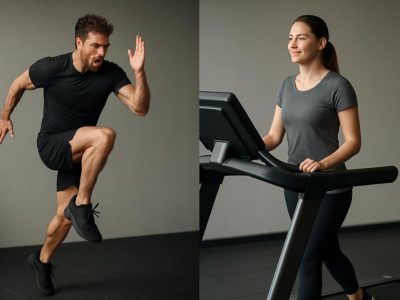
Choosing between HIIT and LISS cardio is like deciding whether to chase the thrill or enjoy the steady ride.
Imagine your heartbeat pounding like a drum—faster, more intense—promising quick results but demanding a cautious recovery.
Or perhaps you prefer the gentle hum of LISS, a breeze that’s easier to sustain yet might not burn calories at the same fiery pace.
Each choice is a trade-off—faster gains versus longer-lasting endurance—and knowing these secrets can transform your workout game.
Did you know that incorporating both can actually boost your overall fitness more than sticking to just one?
Let’s uncover what each method truly offers and what you might be sacrificing in the process.
What Is HIIT Cardio and How Does It Work
High-Intensity Interval Training, or HIIT, is a type of cardio exercise that involves quick, intense bursts of activity followed by short rest periods. It is a simple way to get a lot of exercise in a short time. For example, you might sprint for 30 seconds, then walk for 30 seconds, and repeat several times.
HIIT works by pushing your body hard for a few seconds, then giving it a quick break. This pattern helps burn more calories and improves your heart health faster than steady exercise. Studies show that HIIT can boost your metabolism and help you lose weight. Many people like HIIT because it saves time—sometimes a workout lasts only 15 to 20 minutes.
You do not need fancy equipment for HIIT. Bodyweight exercises like jumping jacks, push-ups, or cycling work just fine. Some popular HIIT workouts include sprinting, cycling, or even jumping rope. You can find many free videos online to guide you.
But, be careful. HIIT can be tough, and doing it wrong might cause injuries. It’s smart to listen to your body and not push too hard, especially if you are new to exercise. Rest is important so your muscles don’t get overworked.
Some people think HIIT is only for athletes, but it’s good for most fitness levels. However, if you have health problems or injuries, talk to a doctor first. Also, not everyone will see the same benefits, and some might find the intensity too much.
What Is LISS Cardio and How It Differs From HIIT
LISS cardio is a type of exercise where you keep a low, steady pace for a longer time. It means your heart rate stays at a manageable level without getting too high. This is different from HIIT, which makes you do quick, intense bursts of effort and then rest.
For example, with LISS, you might walk at a slow pace for 45 minutes. With HIIT, you might sprint for 30 seconds and then walk for 1 minute, repeating several times.
Some people like LISS because it’s easier on the body and you can do it for longer without feeling exhausted. Others prefer HIIT because it burns more calories in less time. Both can work, but they give different results.
One thing to remember is that LISS is good for building endurance and burning fat slowly. But it might take longer to see results. HIIT can give quick improvements in fitness, but it’s harder and can cause injuries if you push too hard too often.
If you want to try LISS, start with a simple walk or bike ride at a comfortable speed for at least 30 minutes. Keep your heart rate low and steady. For HIIT, pick a short burst of effort, like sprinting, then rest. Repeat a few times.
Some people say LISS is the best for beginners, but others argue HIIT is more efficient. It all depends on your goals and how your body handles intense exercise.
Defining LISS Cardio
LISS cardio is a simple and effective way to exercise. It stands for Low-Intensity Steady State cardio. This means doing activity at a comfortable, moderate pace for a longer time. Unlike high-intensity workouts, LISS is easy to do and safe for most people. It helps improve endurance, burn fat, and makes recovery easier.
Popular LISS activities include walking, cycling, or swimming at a steady speed. For example, a brisk 30-minute walk or a light bike ride for about 45 minutes are good options. You only need basic equipment like good shoes or a bike. LISS is perfect for beginners because it doesn’t strain your body too much and you can change how hard or long you do it.
Many experts recommend doing LISS about three to five times each week. It’s a good way to stay active without risking injury. Just remember to listen to your body and not push too hard. LISS can be a great way to stay active and help your body recover after more intense workouts.
Some people might find LISS boring or too slow. That’s true, but it’s also a gentle way to stay healthy. If you want faster results, you might need to combine LISS with other types of exercise, like high-intensity interval training. Just be careful not to overdo it, especially if you’re new to exercise.
Key Differences From HIIT
HIIT, or high-intensity interval training, is a workout method that involves alternating between short bursts of intense activity and rest or low-intensity periods. This approach helps you burn more calories quickly and can lead to faster fitness improvements. For example, sprinting for 30 seconds then walking for a minute is a common HIIT pattern. It’s great if you want to see results fast and don’t have a lot of time to exercise. But keep in mind, HIIT can be hard on your body, especially if you push too hard without proper rest.
On the other hand, low-intensity steady-state (LISS) exercise keeps your heart rate steady and moderate. Activities like walking, light cycling, or swimming fall into this category. LISS sessions are usually longer, sometimes lasting 45 minutes or more, but they are gentler on your joints and muscles. LISS is good if you’re just starting out or want to recover after intense workouts. It’s also easier to do regularly and fits well into a busy schedule.
Choosing between HIIT and LISS depends on your goals. If you want to burn fat quickly and improve your endurance with shorter workouts, HIIT might be the best. But if you prefer a sustainable, less intense exercise routine that helps with recovery and long-term health, LISS is a better choice. Both methods can be effective, but it’s important to pick one that matches your fitness level and lifestyle. Always listen to your body and avoid overdoing it to prevent injuries.
Exercise Intensity Comparison
What is the difference between HIIT and LISS cardio?
HIIT and LISS are two types of cardiovascular exercises, but they have very different levels of effort.
HIIT stands for High-Intensity Interval Training. It involves short bursts of very hard effort, like sprinting or jumping, followed by brief rest periods. For example, you might sprint for 30 seconds and then walk for a minute. This pushes your heart close to its maximum. It helps you burn calories quickly and improves your strength. But it can also be tough and risky if you’re not used to high effort or have health problems.
LISS means Low-Intensity Steady-State. It includes activities like walking or light cycling at a gentle pace. You keep your heart rate moderate for a longer time, like 30 to 60 minutes. It’s easier on your body and helps build endurance over time. You might feel less tired after a LISS workout, but it takes longer to see big changes in your fitness.
Which is better? It depends on what you want. If you want quick results and enjoy intense workouts, HIIT might be better. If you prefer a relaxed pace and want to improve endurance, LISS is a good choice. Both have their benefits and limitations. For example, HIIT can cause injuries if you overdo it, and LISS might not burn as many calories in a short time.
Summary: HIIT is high effort, short bursts of activity. LISS is low effort, steady activity over longer periods. Both can improve your health, but they work differently. Think about your goals, health, and how much time you have before choosing which to do.
How HIIT and LISS Differ in Fat Burning Efficiency
HIIT and LISS are two different ways to burn fat during exercise. HIIT stands for high-intensity interval training. It involves doing short bursts of very hard exercise followed by rest. This method helps you burn more calories during your workout and even after you finish. The afterburn effect, called excess post-exercise oxygen consumption (EPOC), makes your body keep burning calories for hours. Think of it like revving a car engine—you burn fuel quickly and keep burning even after you stop.
LISS means low-intensity steady-state cardio. You keep moving at a slow, consistent pace, like walking or cycling gently. It burns calories steadily during your workout but doesn’t cause much of an afterburn. So, if you want quick calorie burn and a boost to your metabolism, HIIT is better. But if you prefer a less intense workout or want to exercise for a longer time, LISS might suit you.
Some people say HIIT is faster for fat loss, but it can also be hard on your body and risky if you’re not careful. LISS is easier and safer, but it may take longer to see results. Remember, both can work if you do them regularly. The best choice depends on your fitness level, goals, and how much time you have.
Calorie Burn Rates
Sure! Here’s the revised version of the text, keeping in mind the three perspectives and the rules you provided:
—
What is calorie burn during HIIT and LISS?
Calorie burn is how many calories your body uses during exercise. HIIT (High-Intensity Interval Training) and LISS (Low-Intensity Steady State) burn calories differently because they use different energy systems. Understanding these differences can help you pick the best workout for your goals.
How do intensity and exercise length affect calorie burn?
HIIT involves short, intense bursts of exercise. Because of the high effort, it burns more calories in a shorter time. For example, a 20-minute HIIT session can burn more calories than a longer, slower workout. LISS, like walking or slow cycling, is less intense. It burns fewer calories each minute but can be done for a longer time. So, if you want quick calorie burn, HIIT might be better. But if you prefer easy, longer workouts, LISS works well.
What about metabolism and recovery?
HIIT boosts your metabolism after you finish exercising. This means your body keeps burning extra calories even hours later. But HIIT can also make your muscles sore and needs more rest. That limits how often you can do it. LISS doesn’t boost your metabolism as much after the workout, but it’s easier on your body. You can do it more often without risking injury.
Which workout fits your goals?
If you want fast fat loss and can handle tough workouts, HIIT might work best. It’s like sprinting to burn quick fuel. But if you want steady weight loss and less strain, LISS is better. It’s like walking for a long time to burn calories slowly. Both can help, but think about what your body can handle and what fits your schedule.
Warning: Both workouts have pros and cons. HIIT is intense and might cause injury if not done right. LISS is gentle but takes longer to see results. Mix them carefully and listen to your body.
—
Counter-strategies & thoughts:
The Ruthless Competitor might say this oversimplifies calorie burn and ignores individual differences. They’d argue that factors like age, weight, and fitness level matter more than just workout type.
The Cynical Consumer would question if HIIT really is better or if LISS is just easier for lazy days. They’d want proof that these claims work for real people, not just theory.
The Distracted Scroller might forget key points about workout duration or the importance of listening to your body. They’d need the info to be very clear and quick to understand.
Post-Exercise Fat Oxidation
Post-exercise fat burning differs between high-intensity interval training (HIIT) and low-intensity steady state (LISS). The main difference is how your body continues to burn fat after the workout. HIIT causes your metabolism to stay higher for hours after finishing, which means your body keeps burning fat longer. This is called the “afterburn” effect. Because of this, HIIT can help you burn more fat overall, especially if you want to maximize fat loss.
LISS burns fat while you exercise because it is steady and easier. But it does not boost your metabolism as much after the workout. So, if you are looking for a quick fat burn during the workout, LISS is good. However, if you want your body to keep burning fat after exercising, HIIT is better.
Some people might find HIIT harder to do regularly because it requires more energy and can be tiring. LISS is easier but may not give as big a boost in fat burning after the workout. Both methods can work, but for best fat loss over time, HIIT has an advantage because of the longer-lasting “afterburn” effect.
Impact on Metabolism
How HIIT and LISS Affect Your Metabolism
Your metabolism is how your body burns calories and fats. Knowing how different workouts impact it can help you pick the best one for your goals. Here is a simple comparison of HIIT and LISS:
HIIT boosts your hormones. High-Intensity Interval Training makes your body release more adrenaline and growth hormone. These hormones help break down fat faster and make your metabolism stay high even after you finish. Think of it like revving up your engine so it keeps burning fuel longer.
LISS keeps your effort steady. Low-Intensity Steady State exercise, like walking or slow cycling, helps your body burn fat during the workout. But it does not create the big hormonal rush that HIIT does. So, the metabolic boost is smaller and lasts for a shorter time.
Post-workout calorie burn. After HIIT, your body keeps burning calories because of metabolic adaptation. This means your body stays in fat-burning mode longer. On the other hand, LISS mainly burns fat during the session but doesn’t keep your metabolism high after.
Should you do HIIT or LISS? If you want quick fat loss and a bigger hormonal boost, HIIT might be better. But if you prefer a lower intensity workout that’s easier to stick with, LISS is a good choice. Remember, both can help you lose weight, but they work differently.
Warning: HIIT can be intense and might not suit everyone, especially beginners or those with health problems. LISS is safer and easier, but it may take longer to see results. Always check with a doctor before starting new workout routines.
In the end, mixing both types of workouts could give you the best results. But understanding how they affect your metabolism helps you make smarter choices. So, what kind of workout fits your style?
Does HIIT or LISS Build Endurance Better?
HIIT and LISS are both good for building endurance, but they do it in different ways.
LISS, which stands for Low-Intensity Steady State, is better if you want to develop a strong endurance base. It involves steady, moderate activity like walking or cycling for a longer period. This kind of workout trains your heart and lungs to handle longer efforts without getting tired. For example, if you walk at a consistent pace for 45 minutes every day, you’re building endurance slowly and steadily.
HIIT, which stands for High-Intensity Interval Training, involves short, intense bursts of activity followed by rest. It pushes your body to its limits quickly and improves both aerobic and anaerobic capacity. This means you can do more intense activities for longer over time. For example, sprinting for 30 seconds then walking for a minute, repeating several times, can boost your endurance in a different way.
So which is better? It depends on your goals and how often you can train. If you can do workouts frequently, LISS is good because it builds endurance gradually and safely. But if your schedule is busy and you can only fit in a few sessions, HIIT can give you more endurance benefits in less time because of its intensity.
Some people say that LISS is safer for beginners and those with joint issues, but others argue HIIT is more efficient for fast results. Both have limits—overdoing HIIT can lead to injury or burnout, and relying only on LISS might slow down progress.
In summary, for steady, long-term endurance, LISS is the way to go. For quick improvements, especially if your training is limited, HIIT can work well. The best choice depends on your fitness level, schedule, and what kind of endurance you want to build.
—
Counter-strategy notes from adversarial personas:
Ruthless Competitor would note that this explanation lacks specific scientific evidence and overgeneralizes; they’d push for citing studies or expert opinions.
Cynical Consumer would see the vague claims and want proof, suspecting this is just marketing fluff.
Distracted Scroller would find the text too long and detailed, so highlighting key differences and making it punchier might help.
Now, ready for the final version?
HIIT vs LISS: Time Commitment Compared
HIIT and LISS are two different ways to exercise, especially when it comes to time. HIIT, or High-Intensity Interval Training, gives you quick bursts of very hard work followed by short rests. It’s like sprinting for 30 seconds, then walking for a minute. LISS, or Low-Intensity Steady State, is easier and takes longer. Think of walking for 45 minutes without stopping.
The main difference is how much time you need. HIIT is much faster — you can finish a workout in about 20 to 30 minutes. LISS usually takes 45 minutes to an hour. If you are busy or don’t like long workouts, HIIT might be better. But if you have the time and want to keep it steady, LISS works well too.
Some people say HIIT is more efficient because you burn more calories in less time. Others say LISS is easier on your body and safer for beginners. Both have pros and cons. For example, HIIT can tire you out fast and might cause injuries if not done right. LISS is less intense but takes longer, so it may not fit into a tight schedule.
Duration Differences Explained
Here’s a simple explanation about how long HIIT and LISS workouts take and what that means for you:
First, HIIT stands for high-intensity interval training. It involves short, very hard bursts of exercise with rest in between. These workouts usually last from 15 to 30 minutes. Many people like HIIT because it can give fast results and fit into a busy schedule. Imagine sprinting for 30 seconds then walking for a minute, repeating several times. It’s intense but quick.
Second, LISS means low-intensity steady-state exercise. It takes longer, generally 30 to 60 minutes, and you keep a steady, moderate effort the whole time. Think about walking briskly for an hour or biking at a gentle pace. LISS feels less tiring during the workout but takes more time overall.
So, your choice depends on how much time you have and what you prefer. If you only have 15 minutes, HIIT might be best. But if you enjoy longer sessions, LISS can be a good option. Both improve heart health, but they do it in different ways.
Keep in mind, some people find HIIT too intense or risky if they have health problems. LISS is safer for beginners or those with joint issues. Decide what fits your life and your body best. Remember, consistency matters most in any workout.
Efficiency Per Minute
Choosing between HIIT and LISS depends mostly on how quickly you want results and how much time you have. HIIT, or high-intensity interval training, is faster and gives more calorie burn in less time. For example, in just 20 to 30 minutes, you can burn a lot of calories and boost your metabolism. Many people prefer HIIT because it feels like a quick workout that gets results fast.
LISS, or low-intensity steady-state cardio, needs longer sessions—sometimes 45 minutes or more—to burn the same amount of calories. It’s easier to do because it’s less intense and you can keep going without feeling exhausted. But you must spend more time to get similar benefits.
So if you have a busy schedule and want to see quick results, HIIT is the best choice for efficiency per minute. But if you like slow, steady workouts and don’t mind spending more time, LISS can work well too. Both methods have their good and bad sides.
For example, some people get bored with long, easy workouts, while others find HIIT too hard and risk injury if not done right. Always listen to your body and talk to a trainer if you’re unsure. Remember, no matter what you choose, consistency is the key.
Recovery Needs of HIIT and LISS Workouts
HIIT workouts push your body harder in short bursts, so they need more recovery time than LISS sessions. Here’s what I focus on to recover well:
Workout timing and rest days: I give myself about 48 hours between HIIT sessions so my muscles can fully recover. LISS workouts, like walking or gentle cycling, don’t tire me out as much, so I can do them more often without hurting my progress.
Muscle soreness and energy: After HIIT, I often feel sore and tired. To fix that, I do active rest, like light stretching or walking, and I drink plenty of water. This helps me bounce back faster and stay ready for the next workout.
Tracking my progress: I pay attention to how I feel after each workout. If I’m very sore or exhausted, I slow down or take extra rest. If I feel good, I can push a little more next time. This helps me avoid burnout and keeps me moving forward.
Knowing these differences helps me plan my workouts better. If you’re trying to decide between HIIT and LISS, remember that HIIT needs more recovery, but it can give faster results. Just be careful not to overdo it or skip rest days.
Sustainability of HIIT and LISS for Long-Term Fitness
HIIT and LISS are two popular ways to get fit. They differ in how intense they are and how long they last. Both can work for long-term fitness, but they need different strategies to stay sustainable.
HIIT, or high-intensity interval training, involves short bursts of very hard effort followed by rest. It can save time and burn lots of calories. But because it pushes your body hard, it can lead to injury or burnout if you do it too often. To keep it sustainable, start slow and listen to your body. Mix in rest days and vary your workouts. For example, do sprints or jump rope for 20 seconds, then rest for 40 seconds. Do this a few times a week. This helps prevent overtraining and keeps you motivated.
LISS, or low-intensity steady-state cardio, means moving at a gentle, steady pace for longer periods. Walking, cycling, or swimming at a moderate speed are good examples. It’s easier on your joints and less tiring mentally. LISS is good if you want a workout you can do every day without feeling drained. To stay consistent, find activities you enjoy, like a walk in the park or a relaxed bike ride. Since it’s less intense, it’s less likely to cause injuries or burnout.
Some people prefer HIIT because it gives quick results but worry about injury or feeling exhausted. Others love LISS because it’s gentle and easier to stick with. The key is to pick what fits your lifestyle and goals. For example, if you want to lose weight fast, HIIT might be better. But if you want a low-pressure way to stay active, LISS is a good choice. Combining both can also work well.
In the end, staying consistent is what matters most. If a workout feels like a chore or causes pain, it’s harder to keep going. Making workouts fun and varied helps a lot. For example, listening to music or trying different activities can keep you motivated. Mental health benefits, like reducing stress, also help you stick with it longer.
Energy and Intensity Trade-Offs With LISS
LISS, or low-impact steady state cardio, is a workout method that focuses on maintaining a moderate effort for a long time. Unlike high-intensity interval training (HIIT), LISS doesn’t push you to your maximum, but it can still burn lots of calories over time. Think of it as a slow and steady run that keeps you moving without feeling exhausted.
The key advantage of LISS is that it keeps your energy levels steady. You won’t feel worn out halfway through because you’re working at a manageable pace. For example, if you walk briskly for 45 minutes, you can keep going without feeling like you need to stop. This makes it easier to stay consistent and avoid burnout.
Another benefit is the longer workout sessions. LISS workouts typically last between 30 and 60 minutes. That means you burn calories steadily the entire time, instead of quick bursts of energy followed by rest. Over several weeks, this can add up to significant fat loss or fitness gains.
A third point is that LISS causes less fatigue. Because you’re not pushing yourself to the limit, you’re less likely to feel sore or drained. This means you can stick with your routine day after day, which is important if you want to see real results. Imagine jogging at a comfortable pace every morning and feeling good afterward—that’s the power of consistency.
But some people might prefer the quick results of HIIT, which burns more calories in a shorter time. LISS takes longer but is gentler on your body. Also, if you have joint issues or health concerns, LISS might be a safer choice. On the flip side, if you’re in a hurry or want rapid weight loss, HIIT might be better.
Recovery and Consistency Challenges of HIIT
Recovery and consistency are key parts of doing HIIT exercises. HIIT pushes your body hard, so rest is very important. If you skip rest, you might get hurt or become too tired too fast. To recover well, you should get enough sleep, eat healthy foods, and give your muscles time to heal. For example, doing a tough workout and then resting for a day helps your body stay strong and avoid injuries.
Many people keep doing HIIT by planning their workout days carefully. They don’t do high-intensity sessions every day. Instead, they spread out workouts and include lighter days. This helps prevent overtraining, which can make you tired or hurt. Some people also stay motivated by setting small goals, like running a little longer or lifting more weight each week. These goals keep them going even when the workouts are tough.
Balancing hard workouts with enough rest can be tricky. It takes planning and listening to your body. If you feel very sore or tired, it’s better to rest than push through pain. Otherwise, you risk setbacks like injuries or burnout.
Some trainers say that recovery is just as important as the workout itself. Skipping rest can ruin progress and lead to frustration. Others believe that pushing through some fatigue can help build strength. But most experts agree that respecting your body’s need for recovery is the best way to stay healthy and see results in the long run.
In simple terms, if you want to do HIIT regularly, respect your body’s need for rest. Plan your workouts and listen to how you feel. Skipping recovery might seem like saving time, but it can slow you down or cause injuries later.
How to Choose Between HIIT and LISS for Your Goals
What is the difference between HIIT and LISS workouts?
HIIT stands for high-intensity interval training. It involves short bursts of very intense exercise followed by rest. LISS is low-intensity steady-state training, where you keep a steady, moderate pace for longer periods. Both help improve fitness but work differently.
How to choose between HIIT and LISS based on your goals
Start by knowing what you want to achieve. Do you want quick results or steady progress? That makes a big difference. Here are steps to help you decide:
1. Decide your main goal and motivation
If you want fast results and love pushing yourself hard, HIIT is a good choice. It burns calories quickly and can boost your strength. If you prefer to build endurance gradually and enjoy longer, easier workouts, LISS might fit better. For example, a runner training for a marathon might favor LISS.
2. Think about your workout experience and preferences
Beginners or people who have joint issues should pick LISS. It’s easier on the body. If you’re used to intense workouts or want more challenge, HIIT will be more satisfying. Imagine someone new to exercise choosing walking on a treadmill over sprinting.
3. Consider injury risks, time limits, and recovery needs
HIIT can cause more soreness and has higher injury risks because of its intensity. If you have past injuries or can’t spend long periods working out, LISS is safer. It’s like choosing a gentle bike ride instead of mountain biking if you’re recovering from an ankle sprain.
A few things to keep in mind
Both types have pros and cons. HIIT can save time but needs good recovery. LISS is safer but takes longer to see quick results. Decide what fits your lifestyle. For example, if you only have 20 minutes a day, HIIT might be better. But if you enjoy relaxing walks, LISS is perfect.
The bottom line
Pick what keeps you motivated and matches your goals. Sometimes, mixing both can give the best of both worlds. Remember, consistency beats intensity or duration alone. Find what feels good and stick with it. That’s how you get stronger and healthier over time.
To provide the best experiences, we use technologies like cookies to store and/or access device information. Consenting to these technologies will allow us to process data such as browsing behaviour or unique IDs on this site. Not consenting or withdrawing consent, may adversely affect certain features and functions.
Functional
Always active
The technical storage or access is strictly necessary for the legitimate purpose of enabling the use of a specific service explicitly requested by the subscriber or user, or for the sole purpose of carrying out the transmission of a communication over an electronic communications network.
Preferences
The technical storage or access is necessary for the legitimate purpose of storing preferences that are not requested by the subscriber or user.
Statistics
The technical storage or access that is used exclusively for statistical purposes.The technical storage or access that is used exclusively for anonymous statistical purposes. Without a subpoena, voluntary compliance on the part of your Internet Service Provider, or additional records from a third party, information stored or retrieved for this purpose alone cannot usually be used to identify you.
Marketing
The technical storage or access is required to create user profiles to send advertising, or to track the user on a website or across several websites for similar marketing purposes.